
Experts Matter. Find Yours.
Connect for media, speaking, professional opportunities & more.

Back to School: Experts Available to talk ChatGPT, Food Insecurity and Education Leadership
With the school year starting very soon, the University of Delaware media team have rounded up some education stories, experts and research to consider for feature/publication. Experts: Gary Henry is dean of the University of Delaware’s College of Education and Human Development and professor in the School of Education and the Joseph R. Biden, Jr. School of Public Policy & Administration. He specializes in education policy, educational evaluation, educator labor markets, and quantitative research methods. Gary can lend context and steps to take to reverse/adapt to this new educational landscape. Allison Karpyn is an associate professor who can speak to topics related to hunger, obesity, school food, supermarket access, food insecurity, healthy corner stores and strategies to develop and maintain farmer’s markets in low-income areas. She has spoken extensively about food in schools and can offer context to those subjects. Joshua Wilson is an associate professor and has been featured in WaPo for his AI/ChatGPT knowledge in the past. His research broadly focuses on ways to improve the teaching and learning of writing and specifically focuses on ways that automated writing evaluation systems can facilitate those improvements. Stories: UD professor partners with Sesame Workshop to create Stories with Clever Hedgehog Among the casualties of the Ukraine war are 2 million-plus children. In an effort to restore some sense of normalcy to their education years, University of Delaware professor Roberta Golinkoff—a nationally recognized expert in childhood literacy—has partnered with Sesame Workshop and others to develop Stories with Clever Hedgehog, a website with free interactive e-books, games and other resources. Books are available in both Ukrainian and English, prompting a global experience for readers of any background. There are photos and video ready for this coverage. Golinkoff and Sesame Workshop leadership are open for interviews. Research: Study finds teachers’ anxiety in mathematics and science was associated with the mathematics and science anxiety of their low-SES students To reach out to specific experts, please click on their "View Profile" button.





Optical research illuminates a possible future for computing technology
Nathaniel Kinsey, Ph.D., Engineering Foundation Professor in the Department of Electrical and Computer Engineering (ECE), is leading a group to bring new relevance to a decades-old computing concept called a perceptron. Emulating biological neuron functions of the messenger cells within the body’s central nervous system, perceptrons are an algorithmic model for classifying binary input. When combined within a neural network, perceptrons become a powerful component for machine learning. However, instead of using traditional digital processing, Kinsey seeks to create this system using light with funding from the Air Force Office of Scientific Research. This “nonlinear optical perceptron” is an ambitious undertaking that blends advanced optics, machine learning and nanotechnology. “If you put a black sheet outside on a sunny day, it heats up, causing properties such as its refractive index to change,” Kinsey said. “That’s because the object is absorbing various wavelengths of light. Now, if you design a material that is orders of magnitude more complex than a sheet of black plastic, we can use this change in refractive index to modify the reflection or transmission of individual colors – controlling the flow of light with light.” Refractive index is an expression of a material’s ability to bend light. Researchers can harness those refractive qualities to create a switch similar to the binary 1-0 base of digital silicon chip computing. Kinsey and collaborators from the U.S. National Institute of Standards and Technology, including his former VCU Ph.D. student Dhruv Fomra, are currently working to design a new kind of optically sensitive material. Their goal is to engineer and produce a device combining a unique nonlinear material, called epsilon-near-zero, and a nanostructured surface to offer improved control over transmission and reflection of light. Kinsey’s prior research has demonstrated that epsilon-near-zero materials combine unique features that allow their refractive index to be modified quite radically – from 0.3 to 1.3 under optical illumination – which is roughly equivalent to the difference between a reflective metal and transparent water. While an effective binary switch, the large change in index requires a lot of energy (~1 milli-Joules per square centimeter). By combining epsilon-near-zero with a specifically designed nanostructure exhibiting surface lattice resonance, Kinsey hopes to achieve a reduction in the required energy to activate the response. The unique response of a nanostructure exhibiting surface lattice resonance allows light to effectively be bent 90 degrees, arriving perpendicular to the surface while being split into two waves that travel along the surface. When a large area of the nanostructure is illuminated, the waves traveling along the surface mix, where they interfere constructively or destructively with each other. This interference can produce strong modification to reflection and transmission that is very sensitive to the geometry of the nanostructure, the wavelength of the incident light and the refractive index of the surrounding materials. The mixing of optical signals along the surface can also selectively switch regions of the epsilon-near-zero material thereby performing processing operations. A key aspect of Kinsey’s work is to build nonlinear components, like diodes and transistors, that use optical signals instead of electrical ones. Transistors and other traditional electronic components are nonlinear by default because electrical charges strongly interact with each other (for example, two electrons will tend to repel each other). Creating optical nonlinear components is challenging because photons do not strongly interact, they just pass through each other. To correct for this, Kinsey employs materials whose properties change in response to incident light, but the interaction is weak and thus requires large energies to utilize. Kinsey’s device aims to reduce that energy requirement while simultaneously shaping light to perform useful operations through the use of the nanostructured surface and lightwave interference. The United States Department of Defense sees optical computing as the next step in military imaging. Kinsey’s work, while challenging, has potential to yield an enormous payoff. “Let’s say you want to find a tank within an image,” Kinsey said, “Using a camera to capture the scene, translate that image into an electrical signal and run it through a traditional, silicon-circuit-based computer processor takes a lot of processing power. Especially when you try to detect, transfer, and process higher pixel resolutions. With the nonlinear optical perceptron, we’re trying to discover if we can perform the same kinds of operations purely in the optical domain without having to translate anything into electrical signals.” Linear optical systems, like metasurfaces and photonic integrated circuits, can already process information using only a fraction of the power of traditional tools. Building nonlinear optical systems would expand the functionality of these existing linear systems, making them ideal for remote sensing platforms on drones and satellites. Initially, the resolution would not be as sharp as traditional cameras, but optical processing built into the device would translate an image into a notification of tanks, troops on the move, for example. Kinsey suggests optical-computing surveillance would make an ideal early warning system to supplement traditional technology. “Elimination or minimization of electronics has been a kind of engineering holy grail for a number of years,” Kinsey said, “For situations where information naturally exists in the form of light, why not have an optical-in and optical-out system without electronics in the middle?” Linear optical computing uses minimal power, but is not capable of complex image processing. Kinsey’s research seeks to answer if the additional power requirement of nonlinear optical computing is worthwhile given its ability to handle more complex processing tasks. Nonlinear optical computing could be applied to a number of non-military applications. In driverless cars, optical computing could make better light detection and ranging equipment (better known as LIDAR). Dark field microscopy already uses related optical processing techniques for ‘edge detection’ that allows researchers to directly view details without the electronic processing of an image. Telecommunications could also benefit from optical processing, using optical neural networks to read address labels and send data packets without having to do an optical to electrical conversion. The concept of optical computing is not new, but interest (and funding) in theory and development waned in the 1980s and 1990s when silicon chip processing proved to be more cost effective. Recent years have seen many advancements in computing, but the more recent slowdown in scaling of silicon-based technologies have opened the door to new data processing technologies. “Optical computing could be the next big thing in computing technology,” Kinsey said. “But there are plenty of other contenders — such as quantum computing — for the next new presence in the computational ecosystem. Whatever comes up, I think that photonics and optics are going to be more and more prevalent in these new ways of computation, even if it doesn’t look like a processor that does optical computing.” Kinsey and other researchers working in the field are in the early stages of scientific exploration into these optical computing devices. Consumer applications are still decades away, but with silicon-based systems reaching the limit of their potential, the future for this light-based technology is bright.


Inspired by Palm Trees' Resilience, Florida Tech Researcher Seeks to Strengthen Made Materials
Inspired by the tiny, circular vessels in the trunks of palm trees that allow the iconic plants to bend but not snap in strong winds, an assistant professor of aerospace engineering is researching how to recreate Mother Nature’s handiwork in additive manufacturing. Mirmilad Mirsayar received a three-year, $200,627 research grant from the National Science Foundation’s highly competitive Mechanics of Materials and Structures program under the Division of Civil, Mechanical and Manufacturing Innovation to study the mechanics and physics of crack propagation in functionally graded cellular structures made by additive manufacturing. That’s the process of creating an object by building it one layer at a time. Mirsayar is the sole principal investigator of the project, “Understanding Mixed-Mode Fracture Mechanics in Additively Manufacturable Functionally Graded Microcellular Solids.” His research is inspired by cellular patterns seen in palm trees and butterfly wings. For example, unlike oak trees and some others, the palm tree’s center contains those vessels, distributed non-uniformly throughout the trunk, that help it survive in Florida’s windy environment. Other biological systems, such as bone, honeycombs and marine sponges, also serve as inspirations from nature. “I’m enjoying this research because I’m learning from nature and I’m applying fundamentals of physics and mathematics to solve a very important engineering problem while training the next generation of engineers and researchers,” Mirsayar said. Materials with cellular structures, such as aircraft wings and artificial bones, are widely used in industries such as aerospace and biomedical. As additive manufacturing has advanced, materials with cellular structures and increasingly complex geometrical patterns can be precisely manufactured. Mirsayar is looking at ways to optimize these strong and light cellular structures made by additive manufacturing to achieve the highest resistance against failure under complex operational loading conditions, such as bending tension, compression and torsion. What could this mean for additive manufacturing? How could stronger materials change what or how we build? Contact Florida Tech Media Communications Director Adam Lowenstein at adam@fit.edu to schedule an interview with Dr. Mirsayar.


#Expert Insight: US Firms 20 Years Out of Date on Customer Diversity
Diversity, equity, and inclusion have steadfastly risen to the top of corporate agendas in the U.S. and elsewhere over the course of the last few years. From 2022, all 100 of the Fortune 100 companies had clearly-defined diversity, equity, and inclusion (DEI) initiatives outlined on their websites—good news for their workforce, suppliers, and distributors. But what about their customers? A landmark new study by Goizueta Business School’s Omar Rodriguez-Vila finds that while intra-organizational DEI efforts are robust, many U.S. firms are lagging behind societal reality when it comes to fully representing diversity in their marketplace actions. Rodriguez-Vila finds that in terms of skin type, body type, and physical (dis)ability, actions by the top 50 American brands are a good 20 years behind the current demographic makeup of the country. Rodriguez-Vila, who is a professor in the practice of marketing at Goizueta, has teamed with Dionne Nickerson of the University of Indiana’s Kelley School of Business, and Sundar Bharadwaj of The University of Georgia’s Terry College of Business, to measure brand inclusivity; a term that he and his colleagues have coined to describe how well brands serve underrepresented consumer communities. Inclusive brands, he says, are those that “enhance consumers’ perceptions of acceptance, belonging, equity, and respect through their actions and market offerings.” To assess how well some of the biggest firms are doing in terms of this kind of marketplace inclusivity, Rodriguez-Vila worked with a team of full-time MBA and undergraduate students[1] to assess the 50 most valuable brands across 10 consumer-facing industries. Using machine learning and human coders they analyzed these brands’ social media posts on Facebook, Instagram, and TikTok, looking for patterns of representational diversity across four measures: skin type; body type; hair type; and physical ability. Altogether, they processed just short of 11,000 social media posts made between June 2021 and July 2022. What they find is stunning. “We used our data to apply the Simpson’s Diversity Index (SDI) to the population of social media posts by the largest brands in the United States. The SDI is a commonly used equation to measure the diversity of a population,” says Rodriguez-Vila. According to the 2020 U.S. Census, the racial diversity index of the country is 61 percent, and has been consistently increasing over the past 20 years. Applying the SDI calculation to measure the diversity in social media messages is a novel idea and one that provides clarity on the state of inclusion in brand communications, he adds. We found that the racial diversity index of social media messages by the top U.S. brands was just 41%. The last time the racial diversity index was in that range was in the year 2000. Omar Rodriguez-Vila In other words, the racial diversity these brands are collectively representing in their messages is 20 years behind the reality of the country. Interestingly, this lag between representation and demographic reality is common to brands in virtually all of the industries studied—from airlines to fashion, consumer packaged goods to financial services, hospitality to retail. The only sector that bucks the trend in any substantive way, he says, is beauty; even then this is likely only because beauty firms have come under fire for underrepresenting Black and non-white customers in the recent past. “Brands’ social media is typically more nuanced and comprehensive than advertising, so it’s more telling as a measure of what they prioritize. And by this measure, we’re seeing systemic bias across a majority of industries,” says Rodriguez-Vila. “Some, like beauty, fare better than others, but then beauty arguably has the strongest business case for diversity.” That being said, there is a robust business case for organizations across all industries to do better in marketplace inclusion. Not only does representational diversity have the potential to open up new markets, new customer bases, and areas for expansion, but “Feeling represented and included matters to everyone,” says Rodriguez-Vila. “To understand the importance of inclusion to customers we used a discrete choice model where people made trade-offs between price and a collection of product features in order to understand the factors that motivated them to make a purchase,” he explains. “We tested a sample of consumers looking to buy sportswear, and we added representation of diversity and inclusion as a characteristic, to see if it had any impact on their choices.” Again, the results are stunning. On average, 51 percent of customers took inclusion into account as a primary driver of athletic apparel choices. Inclusion was a priority driver of choice among 38 percent of consumers in historically well-represented communities—slim, white, able-bodied people. When Rodriguez-Vila and his colleagues expanded the analysis to other historically under-represented groups they found a significantly greater impact. Here, inclusion was a primary driver among 61 percent of plus-size, Black consumers and for 87 percent of consumers that identified as non-binary. In other words, inclusion can be a critically important factor to a majority of customers who are making decisions about whether to purchase products and services, or not. The marketplace is changing, says Rodriguez-Vila, and brands need new ways of understanding their customer base if they are to avoid missing out on opportunities. To this end, he, Nickerson and Bharadwaj are working with three of the firms in their study, piloting a range of interventions designed to accelerate marketplace inclusion. They have partnered with Sephora, Conde Nast, and Campbells to roll out specific practices both in the workplace and the marketplace—from advocacy to communication and commercial practices to things like greater diversity in marketing operations, and in talent recruitment practices. Early indicators are promising, says Rodriquez-Vila. “Our work is set to deliver tools that will help firms normalize and institutionalize marketplace inclusion as a function of their day-to-day operations. And it’s exciting to see a shift in thinking about DEI—from an exclusive focus on the workplace and how you eliminate bias within the organization, to practices that are geared also to eliminating bias in the way you serve markets.” Looking to know more? Connect with Omar Rodriguez-Vila today. Comply click on his icon now to arrange a time to talk.



CorpusCast with Dr Robbie Love: Dr Miloš Jakubíček on Sketch Engine
The latest episode of the Aston Originals podcast, CorpusCast with Dr Robbie Love, offers listeners a peek into the remarkable evolution of Sketch Engine, the ground-breaking corpus query and management system developed by Lexical Computing. In this episode, Dr Miloš Jakubíček, the CEO of Lexical Computing, takes centre stage to narrate the fascinating journey of Sketch Engine. As an accomplished NLP researcher and software engineer, Dr Jakubíček’s profound expertise in the intersection of corpus linguistics, computational linguistics and lexicography promises to unravel the story behind one of the most widely used and celebrated corpus platforms in existence. For over 20 years, Sketch Engine has been a cornerstone of research in various domains, including lexicography, language learning and, naturally, corpus linguistics. This episode delves into the origins of Sketch Engine, tracing its growth from its inception to its current status as a trusted companion of linguists, researchers and language enthusiasts worldwide. Listeners will get an insider's perspective on the monumental impact of Sketch Engine in processing vast text corpora and deciphering morphologically rich languages. Dr Jakubíček sheds light on the tool's pivotal role in advancing research in these areas, reflecting on its dynamic journey from conception to its position as a game-changing resource for language professionals. Meanwhile Dr Love is thrilled to present this engaging episode, which coincides with the announcement made at the recent Corpus Linguistics Conference. With excitement resonating in his voice, Dr Love shared that Aston University, alongside Birmingham City University and the University of Birmingham, will co-host the upcoming Corpus Linguistics Conference in 2025. This exciting news, revealed during the conference in Lancaster, promises to gather linguists, researchers and enthusiasts in Birmingham for an event that is expected to be a milestone in the world of linguistic exploration. Don't miss out on this riveting episode, where the past, present and future of corpus linguistics converge through the lens of Sketch Engine. Tune in for an enlightening conversation with Dr Miloš Jakubíček, available here and on all major podcast platforms. Dr Robbie Love ? https://bit.ly/3Zcgo36 Dr Miloš Jakubíček ? https://bit.ly/3DHBgWF Aston Centre for Applied Linguistics ? https://bit.ly/3QKHcSF School of Social Sciences and Humanities ? https://bit.ly/3JCRAd1 Find out more about courses related to this show ? https://bit.ly/3pR705k #linguistics #corpuslinguistics #astonuniversity



Five Tips to Choose Sustainable Fashion
Getty Images Fast Fashion is the most popular trend in retail fashion today. Fast Fashion isn’t a specific style but rather clothing produced quickly and cheaply to respond instantly to consumer demand. Low prices and popular online retailers allow people to purchase clothing more often but at a devastating cost to the environment. According to EarthDay.org, the fashion industry is one of the largest global polluters, creating 4% of all greenhouse gas emissions, 40 million tons of landfill waste and 35% of microplastics in the ocean. According to fashion expert Jay Yoo, Ph.D., associate professor of apparel merchandising in the Robbins College of Health and Human Sciences at Baylor University, consumers are learning more about the environmental impacts of fashion and searching for better options. Fashion expert Jay Yoo, Ph.D., associate professor of apparel merchandising in the Robbins College of Health and Human Sciences at Baylor University Fashion expert Jay Yoo, Ph.D. Yoo’s research shows that purchasing apparel products that help reduce negative impacts on the environment has emerged as a lifestyle. “Fashion-conscious consumers are ready and willing to forgo fast fashion for more sustainable options produced in an ecologically and socially responsible way,” said Yoo. Yoo recommends five ways you can use your purchasing power to support sustainable fashion. Choose natural fibers - organic cotton, linen or hemp. Avoid clothing that requires dry cleaning. Donate to and shop at resale stores. Purchase from retailers that are committed to sustainability. Encourage your friends to join you in supporting sustainable fashion. Although fashion is often understood to center on apparel choices, fashion impacts nearly every aspect of human lives, Yoo said, including health, social responsibility and environmental issues involving consumptive behaviors. His additional research interests include appearance-related behaviors and their implications for individual and social well-being from consumer perspectives, from body-tanning behaviors, body image and quality of life among cancer patients, retail therapy and mental health, and irrational shopping and extreme body modification.


Post-pandemic, can America's kids catch up on lackluster literacy rates?
When COVID-19 hit, the education system nearly came to a halt. It went from in-person education in classrooms to virtual learning. Everyone knew there would be learning losses across the board. The question was how severe would they be and could those losses be mitigated? Literacy rates took a big hit, especially in younger students. Without in-classroom instruction, children started to fall further behind. According to the New York Times, about a third of children in the youngest grades are missing reading benchmarks, which is up significantly from before the pandemic. While every demographic has been affected, Black and Hispanic children and those from low-income families have fallen the furthest behind. Can anything be done to help students catch up? Betsy VanDeusen, PhD, director of the Augusta University Literacy Center, said a lot of research is coming out now and what’s being called “high dosage tutoring” is the way kids can catch up. “That just means you have to be able to see students more and more intensive,” said VanDeusen. “So we request for the kids that are at the lowest that we see them three times a week; one time a week won’t do it.” While that works on an individual basis, VanDeusen said there’s no magic bullet. While some schools here and there, and even a few states, may have found a way to help with literacy rates, the field continues to search for ways to implement needed changes across the entire educational system to support all students. She also added the decline in literacy actually started before the pandemic. “We’ve lost a tremendous amount. We lost 20 years of growth on the one national test that’s given. The achievement gap has been documented for decades and it has just been made worse.” This is an important topic and if you're a journalist covering education or how the impacts of COVID-19 are still being felt across the country, then let us help with your coverage. Betsy VanDeusen, PhD, director of Augusta University’s Literacy Center, is available to speak with reporters, simply click on her icon now to arrange an interview today.



Georgia Southern University opens doors to Gullah Geechee Cultural Heritage Center
Georgia Southern University’s Gullah Geechee Cultural Heritage Center officially opened its doors with a grand opening and ribbon cutting on June 19. Coinciding with the Center’s Juneteenth celebration, the public was invited to attend the afternoon festivities at 13040 Abercorn Street in Savannah. The ribbon cutting saw many local dignitaries in attendence, including Savannah Mayor Van R. Johnson, Georgia Rep. Carl Gilliard, Georgia Sen. Derek Mallow and Chatham County Chairman Chester Ellis, as well as Gullah Geechee Cultural Heritage Corridor Executive Director Victoria Smalls, Gullah Geechee historian and preservationist Queen Quet and Georgia Southern Provost and Vice President for Academic Affairs Carl Reiber, Ph.D., offered opening remarks. “This is a monumental occasion,” said Maxine Bryant, Ph.D., director of the Gullah Geechee Center. “To celebrate our grand opening on the nationally recognized Juneteenth is extremely meaningful. We will simultaneously honor the freedom of enslaved Black Americans and the Gullah Geechee culture that has preserved more African traditions than any other group.” The Gullah Geechee people of Coastal Georgia are descendants of enslaved Africans from plantations along the lower Atlantic coast. Many came from the rice-growing region of West Africa and were brought to the Americas for their agricultural and architectural knowledge and skills. The enslaved Africans were isolated on the Sea Islands. This isolation enabled them to create and maintain a unique culture steeped in remnants of Africa. This culture became known as Gullah Geechee and is visible in the people’s distinctive arts, crafts, foodways, use of waterways, music, dance and language. Much of the Gullah Geechee community today, which is estimated to be a population of 1 million, can speak the African Creole language or tell the stories of their ancestors who are credited with influencing southern and American culture. Local Gullah Geechee artists and the McIntosh County Shouters showcased their talent at the event. The Gullah Geechee Cultural Heritage Center, established in 2019, honors myriad contributions made by Gullah Geechee people, provides educational resources for the public, promotes scholarship and research, and serves as a model for national reconciliation and reparations. It is part of the Gullah Geechee Corridor, which stretches across 27 counties in Georgia, South Carolina, North Carolina and Florida. If you're interested in learning more about Georgia Southern University’s Gullah Geechee Cultural Heritage Center - then let us help. Simply reach out to Georgia Southern's Director of Communications Jennifer Wise at jwise@georgiasouthern.edu to arrange an interview today.

Georgia Southern adding two engineering doctorates this fall
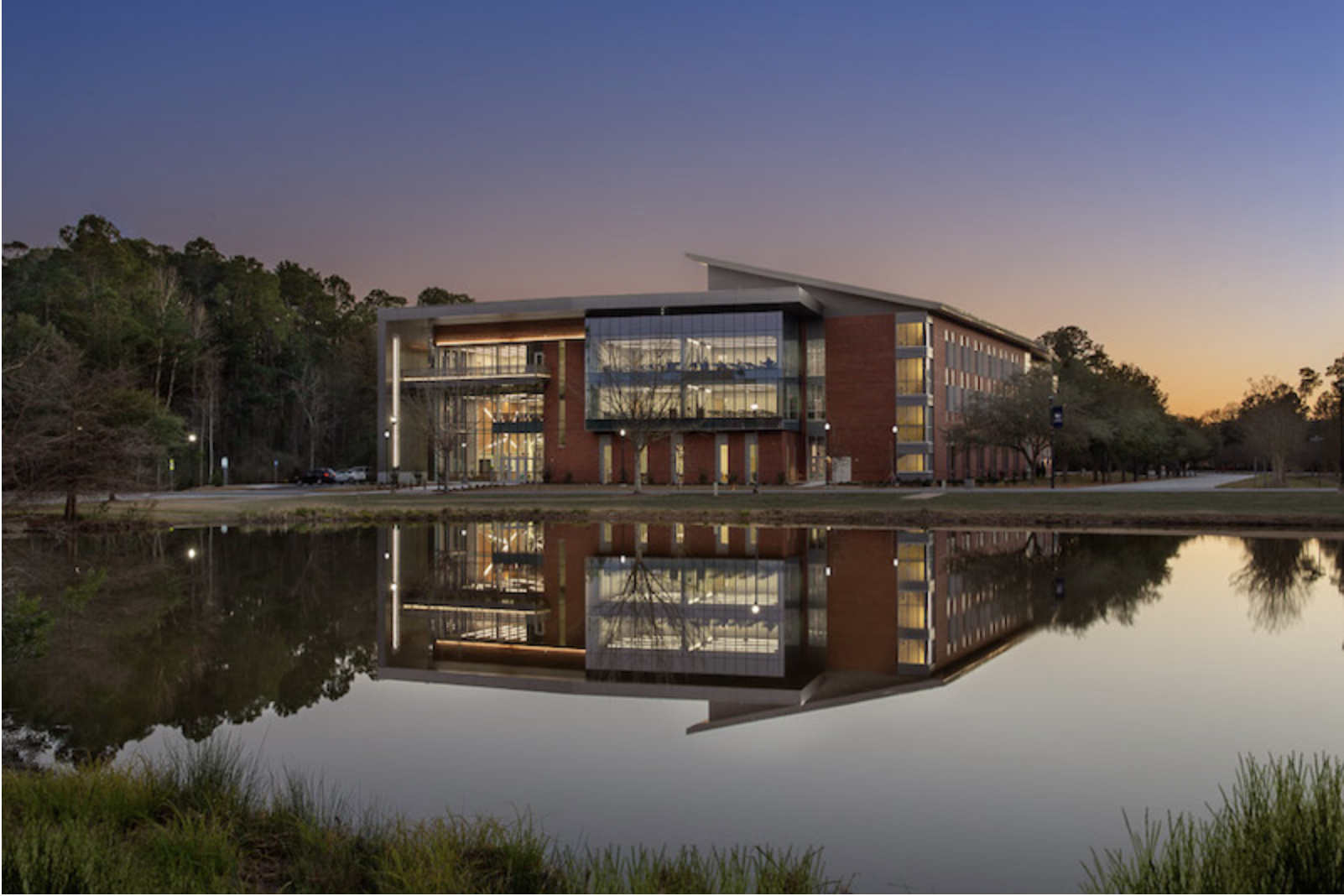
Georgia Southern University is launching two new engineering doctorates – a Ph.D. in applied computing degree and a Ph.D. in engineering – after approval of the programs this week from the University System of Georgia’s Board of Regents. With almost 4,000 students in its programs, Georgia Southern’s Allen E. Paulson College of Engineering and Computing identified the need for the new graduate degrees to sustain growth in the discipline, continue to aid workforce development in the region, add substantially to the university’s research capabilities, and provide additional teacher-scholars for Georgia. “In line with Georgia Southern’s Strategic pillars, the new Ph.D. programs will greatly enhance the University’s research capabilities and further advance key partnerships in the region,” said Carl Reiber, Ph.D., Georgia Southern’s provost and vice president for academic affairs. “A strong Ph.D. program improves faculty recruiting and is a prerequisite for applying for research grants from sources such as the National Science Foundation, the National Institutes of Health, the Department of Energy and the Department of Defense.” The proposed engineering Ph.D. program will have concentrations in civil, electrical, advanced manufacturing and mechanical engineering, and will fuel future multidisciplinary research synergies with other departments and centers within Georgia Southern in fields such as natural sciences, environmental sustainability, public health and education. Greater scholarly collaborations with sister institutions within the university system and beyond are also envisioned. The Ph.D. in engineering program will have a positive impact on the economic and technological development of Southeast Georgia, contributing significantly to the growth of the I-16 technology corridor. The Ph.D. in applied computing degree program will be offered jointly by the Department of Computer Science and the Department of Information Technology within the Allen E. Paulson College of Engineering and Computing at Georgia Southern Universit. The program will provide students with the requisite foundation to conduct basic and applied research to solve advanced technical problems in computing foundations, cybersecurity and machine learning. The program aims to promote the education of individuals who will become exceptional researchers, high-quality post-secondary educators, and innovative leaders and entrepreneurs in the field of applied computing. It will advance research and the generation of new knowledge in applied computing and support the growing knowledge-based economy in Southeast Georgia. The mission of the Ph.D. in applied computing degree program is to ensure student, graduate and faculty success by preparing graduates with the skills and depth of knowledge to advance the computing disciplines through application and scholarship. It will mentor students who will support faculty in their scholarly pursuits as they prepare to assume professional computing and computing-related positions that utilize their applied technical skills, problem-solving aptitude and scholarly abilities upon graduation. “The addition of these two new degree programs is part of Georgia Southern University’s commitment to be a world-class institution that provides a population of advanced graduates who can contribute to regional economic development and public-impact research,” Reiber said. “The programs will enhance the vitality and growth of the bachelor’s and master’s computer science and information technology degree programs by expanding the academic and research missions of the Allen E. Paulson College of Engineering and Computing." For more information about these new engineering doctorates coming to Georgia Southern this fall research or to speak with Carl Reiber, Ph.D., Georgia Southern’s provost and vice president for academic affairs — simply reach out to Georgia Southern's Director of Communications Jennifer Wise at jwise@georgiasouthern.edu to arrange an interview today.

Health Professions Academic Building on the Armstrong Campus in Savannah Georgia’s only public medical school has received funding approval to open a new four-year campus in Savannah, an expansion that will provide greater access to education and training for medical students and ease the state’s ongoing shortage of physicians. The new campus of Augusta University’s Medical College of Georgia (MCG) is expected to enroll its first students on the Armstrong Campus of Georgia Southern University by Fall 2024, pending approval by the Liaison Committee on Medical Education, the accrediting body for medical schools in the U.S. and Canada. The campus will be located in the existing Armstrong Center and the Health Professions Academic Building of Georgia Southern’s Waters College of Health Professions. Located down the street from Savannah’s St. Joseph’s Hospital, it would be MCG’s third four-year campus in Georgia. The MCG educational experience is anchored at its main campus in Augusta, with another four-year campus located in Athens in partnership with the University of Georgia. “Georgia ranks 40th in the nation for both the number of active physicians and the number of primary care doctors,” Georgia House Speaker Jon Burns said. “Georgians experience this reality every day. Increasing opportunities within the University System of Georgia allows Augusta University’s Medical College of Georgia to educate and train more students and meets a clear need to make sure our communities receive better health care. Georgia needs more doctors, and I’m proud we are making this investment in our future.” The Board of Regents of the University System of Georgia (USG) on Tuesday approved $1.7 million for renovations at Georgia Southern’s Armstrong Campus to help make the new campus a reality. The money was included in the fiscal year 2024 state budget passed earlier this year by the Georgia General Assembly and signed by Gov. Brian Kemp on May 5. “We’re grateful to Governor Kemp, Speaker Burns, Lt. Gov. Jones and the General Assembly for their support in helping MCG and the university system expand one of the best public medical colleges in the nation and help get more doctors into our local communities,” USG Chancellor Sonny Perdue said. Four-year campuses provide the full spectrum of medical education, from basic sciences to clinical experiences. “This campus expansion is a momentous milestone for Augusta University and the Medical College of Georgia, standing as a testament to the unwavering support we have received from Speaker Burns, state Rep. Butch Parrish, Governor Kemp, the entire General Assembly and Chancellor Perdue,” said Augusta University President Brooks A. Keel, PhD. “Through this collaboration, we are forging a brighter future for health care in Georgia and fulfilling our shared commitment to producing more doctors for our state. I extend my deepest gratitude to all those who have championed this vision, including St. Joseph’s/Candler Health System, whose exceptional partnership has provided invaluable clinical experiences for our students. Together, we are bolstering the state’s medical community and strengthening Southeast Georgia’s access to quality health care.” MCG’s statewide educational model also has students learning at two-year, clinically focused regional campuses in every corner of the state, including the Southeast Campus, established in 2011 and based at St. Joseph’s/Candler in Savannah, and Southeast Georgia Health System in Brunswick. Other regional campuses include the Southwest Campus based in Albany and the Northwest Campus based in Rome. “This partnership with Augusta University and the Medical College of Georgia is another example of how together, the governor, our legislators, the University System of Georgia and Georgia Southern University are collaborating to meet the growing needs of Southeast Georgia,” added Georgia Southern University President Kyle Marrero. “These programs on our Savannah campus further Armstrong’s history of being a leader in training health care professionals and complement our efforts to expand nursing education and develop our future physician assistant program.” Through this partnership, Georgia Southern is providing approximately 23,000 square feet of instructional and lab space in its Armstrong Center and the Waters College of Health Professions’ Health Professions Academic Building. This includes 10,000 square feet of dedicated student group workspace and faculty and staff offices and 13,000 square feet of shared anatomy lab and large classroom space. The renovations include the creation of a new anatomy lab within the Health Professions Building, as well as minor renovations and new furniture, fixtures and equipment for the student group workspace and faculty and staff offices. The new campus would allow MCG to accept 40 more students per year, increasing its class size, already one of the nation’s largest, to 304 students per class. “As the state’s only public medical school, it is both our responsibility and commitment to produce more doctors for Georgia, and this growth in our class size is one way we can fulfill what I consider to be our most critical mission” said MCG Dean David Hess, MD. “This expansion would not be possible without the support of Governor Kemp, the Georgia Legislature, the University System of Georgia, Augusta University President Brooks Keel, and our colleagues at Georgia Southern University. I am also thankful for the unwavering support of St. Joseph’s/Candler Health System, including its CEO Paul Hinchey and chief medical officer Dr. Julia Mikell, a 1976 MCG graduate. Physicians and staff at St. Joseph’s/Candler have been exceptional educational partners, serving as a home base for our Southeast Campus, and providing rich clinical experiences for our third- and fourth-year students, for well over a decade. I know that commitment will extend to students at this new four-year campus.” “This is a sentinel event not only for the future of health care in Georgia, but also for Savannah and the region,” added Paul P. Hinchey, president and CEO of St. Joseph’s/Candler. “We have had a great relationship with MCG for more than a decade and our physicians have been instrumental as faculty in teaching third- and fourth-year students in Savannah. SJ/C has also served as a longstanding clinical site for nursing students from Georgia Southern and from the Armstrong campus. Creating a four-year medical school campus in Savannah will strengthen the medical community in Savannah and throughout Southeast Georgia. I want to thank Speaker Burns, Dr. Hess and the University System of Georgia for making this great vision a reality.” “I am excited to help build a campus that will continue MCG’s mission of educating the next generation of physicians,” said Elizabeth Gray, MD, associate dean at MCG’s Southeast Campus, based in Savannah and Brunswick. “I am confident that Georgia Southern will be an exceptional educational partner, and am excited to continue working with the leadership, physicians and staff at our longtime partners St. Joseph’s/Candler to help increase the number of physicians in this area of the state and beyond.” Interested in learning more? For more information about this exciting new development — simply reach out to Georgia Southern's Director of Communications Jennifer Wise at jwise@georgiasouthern.edu to arrange an interview today.