
Experts Matter. Find Yours.
Connect for media, speaking, professional opportunities & more.

Covering Climate Change? Let Our Experts Help with Your Coverage
It took a long time, but climate change is part of everyday life. It is now part of the constant news cycle, it is used in shaping public policy, incorporated into marketing plans and owns a part of (most) political party platforms. Climate activism is growing as well. One year ago, 16-year-old Greta Thunberg skipped school to sit in front of Swedish Parliament to protest our climate. Today, those same one-day strikes inspired by her take place in over 800 cities across the planet. Climate change is real and with any growing topic or cause, there’s also a lot of misinformation shared, and some facts just aren’t being interpreted correctly. If you’re a journalist covering climate change – that’s where our experts can help with your questions, stories and ongoing coverage. Dr. Pamela Grothe is an assistant professor in the Department of Earth and Environmental Sciences as the University of Mary Washington. She recently completed a Ph.D. in the Paleoclimatology Lab at the Earth and Atmospheric Sciences department at Georgia Institute of Technology. She’s an #expert in climate change and is available to speak with media – simply click on her icon to arrange an interview.



Multicultural Millennials Respond Positively to Health ‘Edutainment,’ Baylor Marketing Research Says
One-on-one interviews reveal which health issues concern millennials and their longing for optimal health Storytelling that educates and entertains – aka “edutainment” – is a powerful communications tool that can lead to positive health-related changes among multicultural millennials, according to a new marketing study from Baylor University. Tyrha Lindsey-Warren, Ph.D., clinical assistant professor of marketing in Baylor University’s Hankamer School of Business, led the study, “Making multicultural millennials healthy: The influence of health ‘edutainment’ and other drivers on health-oriented diet change,” which is published in the Journal of Cultural Marketing Strategy. Charlene A. Dadzie, Ph.D., assistant professor of marketing at the University of South Alabama, coauthored the research. The research sought to determine which health issues most concerned multicultural millennials and to gauge how effective media can be as a tool to address those issues and drive change. “This study finds that by bolstering self-identity and employing health ‘edutainment,’ it is possible to have a positive impact on the health intentions and behaviors of the millennial generation,” the researchers wrote. There are more than 92 million millennials (ages 20-34) in the United States today, the researchers observed. More than 9 million of those are identified as being overweight, and much of that can be attributed to a sedentary lifestyle and media consumption. White Americans watch an average of 140 hours of television per month (35 hours per week); African Americans watch 213 hours of television per month; and Latino Americans watch 33 hours of television per week and stream more than six hours of video per month. “Millennials are tech-savvy, they love social media, they’re actually more health conscious than previous generations, and they have significant economic power,” Lindsey-Warren said. “With so many millennials – in the scope of this study, multicultural millennials – watching so many screens, there is great opportunity to generate information and increase products and services geared towards health-oriented behavior.” But to take advantage of this opportunity, public and private organizations need to understand what drives millennials’ health choices and communicate accordingly, the researchers wrote. A total of 265 people participated in two components of the study – a health survey of 245 undergraduate students and one-on-one, in-depth interviews of 20 multicultural millennials. ‘I’m old-young and it’s getting real.’ For the second part of the study, the researchers interviewed 20 people – 10 women and 10 men – from two organizations, a large northeastern U.S. university and a mid-sized nonprofit organization in Harlem, New York. The subjects represented cultural, socioeconomic and educational diversity. The interviews were used to better understand the health status of these millennials as well as their relation to storytelling in the media, the researchers said. Participants answered health and wellness questions regarding their own health and personal network (example: “What is your ideal health?”) and questions about their personal media usage (example: “What are the top five health and wellness issues you see regularly portrayed in the media?”). One of the strongest themes to emerge from those interviews was that multicultural millennials “long to be healthy in mind, body and spirit” and are open to “seeing authentic and relevant storytelling regarding health issues in the media that is meaningful.” “They would definitely respond to health messages when they truly see themselves in storytelling that meets them where they are in life,” the researchers wrote. Some of the health-related topics addressed by those being interviewed included healthy eating, asthma, sexual health, mental health and fitness. One interviewee, a 21-year-old woman said she gets “out of breath” when she runs up the stairs and her knees “crack and hurt.” “I would love to have ideal health again. I really would. I would love it. I’m old-young, and it’s getting real,” she said. ‘More involved in the narrative’ In addition to the one-on-one interviews, each of the 20 interviewees watched media clips from two television programs – ABC’s “Private Practice” and the nationally syndicated health show, “The Doctors.” Each show highlighted the accurate health information concerning attention deficit hyperactivity disorder (ADHD). “Private Practice” told its story via fictional characters in an episodic dramatic storytelling format. In this format, health issues were not directly promoted and there was no direct-to-camera discussion of those issues. “The Doctors,” on the other hand, utilized the format of real doctors conveying accurate health information in real-life situations, directly to the camera and in front of a studio audience. “From the interviews, it was apparent that the storytelling in the health edutainment stimuli worked because the participants enjoyed and were more involved in the narrative conveyed in ‘Private Practice’ versus ‘The Doctors,’” the researchers wrote. “For example, the ‘Private Practice’ segment told the story of a young boy and his parents who desperately asked their doctor to give them a prescription for ADHD medicine for their son, even though the son did not want the medicine and the doctor felt that the prescription might not have been needed.” The “Private Practice” story resonated better with those watching and scored high across genders, according to the study. One 21-year-old male university student said he was diagnosed with ADHD as a child and saw himself and his parents in the “Private Practice” clip. He said he took ADHD medicine for a while. “I didn’t like it and I stopped taking it, and that was it. My parents were, ‘OK – if you don’t like it, that’s the way it is – you’re going to study harder, though. And, that was it,” he told the interviewers. A 28-year-old female from the nonprofit program said she saw the “Private Practice” clip and could relate to the situation as a parent. “I felt I could relate because I felt that my son had ADHD, and I really, I kind of diagnosed him myself, and said that, so I was really interested in this topic,” she told the researchers. Marketing and advertising implications Given the constant barrage of media in the lives of millennials, it is only reasonable to question the effect of this environment on their health and well-being, Lindsey-Warren said. The findings of the study are useful for practitioners in marketing, advertising, public relations, digital and branded entertainment. “Ultimately, the key to making a difference in the lives of multicultural millennials and their health, both now and into the future, may be achieving the right balance of educating and entertaining them,” the researchers wrote. “For millennials, Gen Z and alpha – the newest generation – ‘edutainment’ is and will continue to be a primary way to educate them,” Lindsey-Warren said. “It’s through the stories we tell on digital, on streaming, on gaming – that’s the way those generations are learning.” ABOUT BAYLOR UNIVERSITY Baylor University is a private Christian University and a nationally ranked research institution. The University provides a vibrant campus community for more than 17,000 students by blending interdisciplinary research with an international reputation for educational excellence and a faculty commitment to teaching and scholarship. Chartered in 1845 by the Republic of Texas through the efforts of Baptist pioneers, Baylor is the oldest continually operating University in Texas. Located in Waco, Baylor welcomes students from all 50 states and more than 90 countries to study a broad range of degrees among its 12 nationally recognized academic divisions. ABOUT HANKAMER SCHOOL OF BUSINESS AT BAYLOR UNIVERSITY At Baylor University’s Hankamer School of Business, integrity stands shoulder-to-shoulder with analytic and strategic strengths. The School’s top-ranked programs combine rigorous classroom learning, hands-on experience in the real world, a solid foundation in Christian values and a global outlook. Making up approximately 25 percent of the University’s total enrollment, undergraduate students choose from 16 major areas of study. Graduate students choose from full-time, executive or online MBA or other specialized master’s programs, and Ph.D. programs in Information Systems, Entrepreneurship or Health Services Research. The Business School also has campuses located in Austin and Dallas, Texas. Visit www.baylor.edu/business and follow on Twitter at twitter.com/Baylor_Business.


Couples Who Tailgate Together Stay Together, Says New Baylor Research
Marketing researcher and husband team up to study tailgating’s impact on relationships For millions of football fans across the United States, fall is the time to break out the grills, load vehicles with coolers and food and games, and gather with friends for the time-honored tradition of tailgating. It’s a tradition that Baylor University’s Meredith David, Ph.D., assistant professor of marketing, and her husband, Luke Lorick, have been enjoying since their undergraduate years at the University of South Carolina. The couple partnered on a recent research project to better understand tailgating’s impact on relationships and well-being. David is known nationally for her studies of phone snubbing – “phubbing” – and smartphone addiction. Lorick owns and operates Tailgating Challenge, a website devoted to testing and reviewing tailgating equipment, and he launched National Tailgating Day, which is celebrated annually on the first Saturday of September. “I noticed how at tailgates people actually interact with each other and are not glued to their phones like we see in restaurants and many other settings,” David said. “This led us to combine our expertise to study the impact of tailgating together on well-being.” The researchers surveyed 143 tailgating adults (44 percent were female) who answered questions about their partners and their respect toward that person. The results show that individuals who tailgate with their significant other report higher levels of respect and relationship satisfaction, David said. The results of the study will be presented later this month at the Atlantic Marketing Association Conference. “Tailgating fosters the human-to-human, face-to-face interactions and connections that we as humans need but yet find hard to come by as a result of cellphones and ‘phubbing’ tendencies,” David said. With over 70 million people tailgating annually, spending on average $150 on each occasion, David said this research offers important guidance for marketers, particularly in terms of positioning strategies in marketing communications for tailgating-related products and events. “For example, in advertisements, marketers should focus on portraying couples, or even friends, tailgating together as this may resonate more and help build bonds with the products they sell and the markets they are reaching out to,” David said. David said she and her husband knew that tailgating strengthened their relationship, but they wanted to dig in to see if it was – or could be – helpful to others. “We have lived and experienced these effects ourselves, so we wanted to determine if this impacted others the same way,” she said. “We found that tailgating helps strengthen relationships, in part, by helping people escape the hustle and bustle of everyday life. They disconnect from their TVs, laptops and cellphones and make real connections with loved ones and friends.” ABOUT MEREDITH DAVID, PH.D. Meredith David, Ph.D., serves as assistant professor of marketing in Baylor University’s Hankamer School of Business. Her research focuses on marketing strategies with an emphasis on consumer behavior and well-being. Recently, her research has explored how new media technologies, including smartphones, impact personal and workplace relationships. She has also published research related to customized pricing tactics, interpersonal attachment styles and the pursuit of health goals. Her research appears in numerous professional and academic journals and she has been interviewed and quoted for her research in national and international news outlets, including ABC News, Fox News, Oprah.com, Redbook, Consumer Reports and Health magazine. ABOUT BAYLOR UNIVERSITY Baylor University is a private Christian University and a nationally ranked research institution. The University provides a vibrant campus community for more than 17,000 students by blending interdisciplinary research with an international reputation for educational excellence and a faculty commitment to teaching and scholarship. Chartered in 1845 by the Republic of Texas through the efforts of Baptist pioneers, Baylor is the oldest continually operating University in Texas. Located in Waco, Baylor welcomes students from all 50 states and more than 90 countries to study a broad range of degrees among its 12 nationally recognized academic divisions. ABOUT HANKAMER SCHOOL OF BUSINESS AT BAYLOR UNIVERSITY At Baylor University’s Hankamer School of Business, integrity stands shoulder-to-shoulder with analytic and strategic strengths. The School’s top-ranked programs combine rigorous classroom learning, hands-on experience in the real world, a solid foundation in Christian values and a global outlook. Making up approximately 25 percent of the University’s total enrollment, undergraduate students choose from 16 major areas of study. Graduate students choose from full-time, executive or online MBA or other specialized master’s programs, and Ph.D. programs in Information Systems, Entrepreneurship or Health Services Research. The Business School also has campuses located in Austin and Dallas, Texas. Visit www.baylor.edu/business and follow on Twitter at twitter.com/Baylor_Business.


Buying local? Higher price means higher quality in consumers' minds
BLOOMINGTON, Ind. -- Why are we willing to pay much more for a six pack of craft beer, a locally produced bottle of wine or a regional brand item, often choosing them over national brands? It's because when people prefer to "buy local," they more frequently base their decisions on price as a perception of quality, according to research from the Indiana University Kelley School of Business and three other universities. The study, published in the Journal of Marketing, suggests that marketers can use this understanding of local identity versus global identity to shape consumers' price perceptions and behavior. "Consumers tend to use price to judge a product's quality when their local identity is most important to them," said Ashok Lalwani, associate professor of marketing at Kelley. "When promoting high-priced or branded products, marketers can situationally activate consumers' local identity. To accomplish this objective, businesses can encourage consumers to 'think local' or employ local cultural symbols in advertising and other promotional material. The researchers also suggested that the opposite was true for low-price products. "Discount stores, such as dollar stores, should discourage consumers from using the price of a product to infer its quality," Lalwani said. "They would be better served by temporarily making consumers' global identity more prominent. Cues in advertisements that focus on a product's global appeal would help achieve that goal." Many companies find it difficult to set and increase prices in the digital marketplace because of the pricing transparency of the internet, consumers' deal-seeking attitudes and global product availability. For their study, Lalwani and his colleagues conducted in-depth interviews, two field studies and seven experiments, and reviewed secondary data. In their interviews with 15 senior-level managers from Fortune 500 companies, they found that while the executives considered local or global communities in their pricing decisions, none knew when such strategies were effective or why. For example, an executive at a snack food maker told them, "It is important to have a reasonably high price since it communicated 'premium-ness' and then reinforce it with advertising and packaging. But we don't know for sure why such consumers prefer premium brands." A pet products manager said, "In dog sweaters, it is difficult to judge quality, so I am sure that my pet parents use price, in addition to other factors, to choose." Through the field studies, experiments and secondary data, the researchers found that when consumers choose to identify more with others around them, they perceive greater variance among brands, which increases their reliance on price as a cue to judge quality. Past research has found that consumers from more globalized countries and communities, such as the United States and its larger cities, often have a stronger global mindset because they interact with many types of people and cultures and hear news from abroad. In contrast, those living in smaller population areas or from isolated or insular nations often have a stronger local identity because they have less access to other cultures. This paper provides useful guidelines for firms to adapt strategies for different regions and address whether companies should be more locally or globally oriented. "For products to be marketed to the places where people tend to have a more local identity (such as rural areas), local flavors and ingredients can be used in the products. As these consumers are more likely to make price-quality associations, marketers may not need to allocate much ad budget to convince consumers about price-quality associations," Lalwani and his co-authors wrote. The opposite is true as well, according to the authors, indicating that in more metropolitan areas, consumers most often don't have an established connection between price and quality. For marketers, this means that putting additional effort into differentiating their brand will help consumers associate a higher price with higher quality. Lalwani is in the process of reviewing results of a large-scale national survey of the U.S. that measures which states tend to have more of a local identity versus a global one, for a follow-up study. His co-authors on the paper, "How Does Consumers' Local or Global Identity Influence Price-Perceived Quality Associations? The Role of Perceived Quality Variance," are Zhiyong Yang of the University of North Carolina, Sijie Sun of the University of Hawaii at Hilo and Narayan Janakiraman of the University of Texas at Arlington.


Billion reasons why Netflix loves binge-watching
The numbers are out, and the there’s no doubt about it, Netflix despite weaker Q2 figures released this week, streaming is now an industry mainstay. Netflix has transformed the industry and now viewers are no longer willing to wait for that one time a week a show usually airs. In fact, streaming options are now a must have for networks hoping to compete with Netflix and other services. And with Disney and Apple are now spending billions to catch up – audiences are in store for a lot more content. But, as bingeing television becomes the norm, there are also concerns? On the human side, what dangers are posed to people consuming enormous amounts of screen time. And on the industry side – how can show business keep up? And should it? Are you a reporter covering streaming services, binge-watching and the other habits of audiences? Then let our experts help. David A. Schweidel is Professor of Marketing at Emory University’s Goizueta Business School. He is an expert in the areas of customer relationship management and social media analytics as well, his research also includes binge watching. David is available to speak with media – simply click on his icon to arrange an interview.


Social issues and boosting a brand – More companies taking a stand
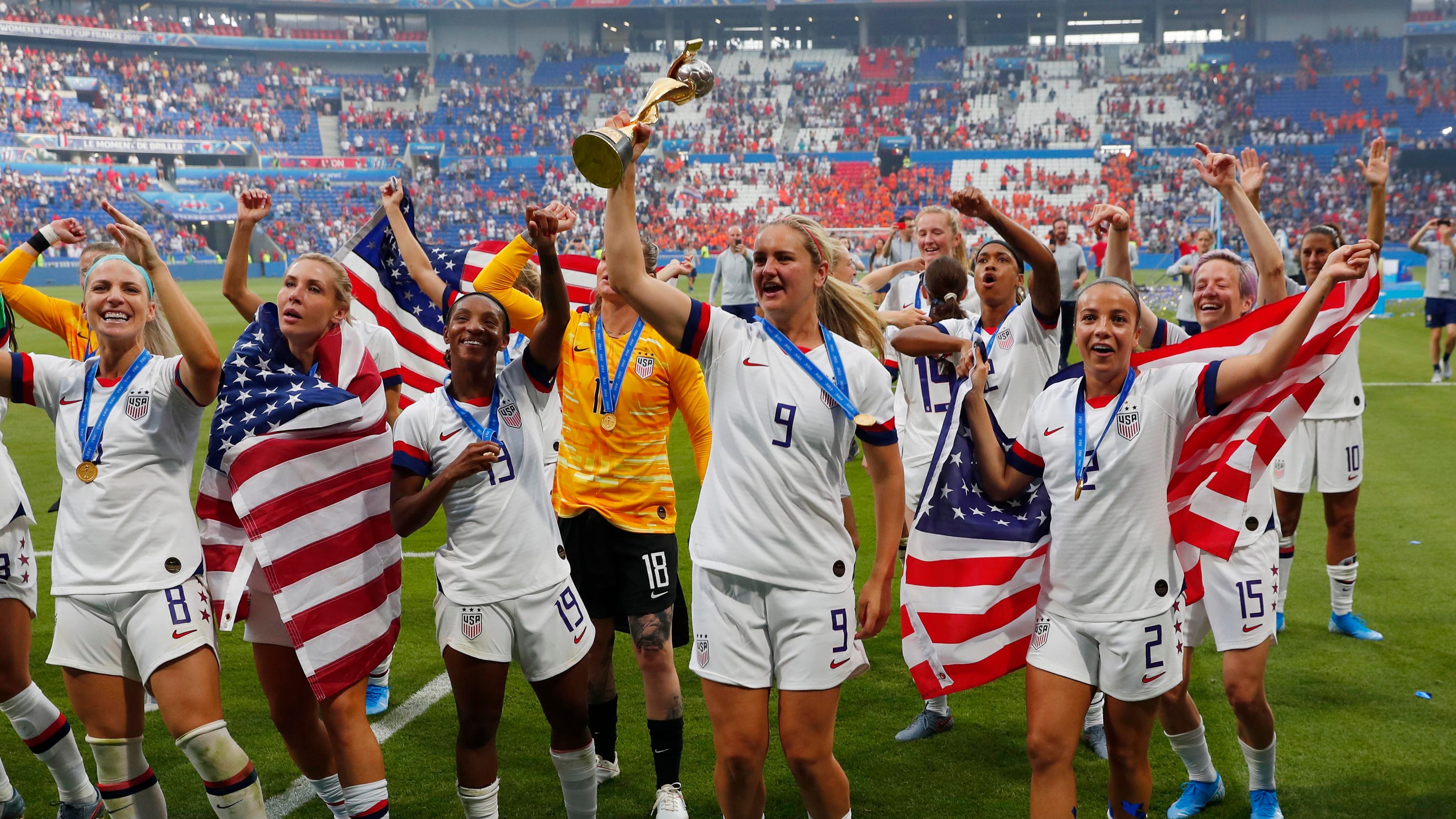
Procter & Gamble this weekend put out a full-page ad in the New York Times supporting equal pay – In fact, the company urged the US Soccer Federation to “be on the right side of history.” P & G also gave $529,000 (which equates to $23,000 for each of the 23 players on the United States Women’s National Soccer Team) to the Players Association to help close the gender pay gap. Indiana University Kelley School of Business clinical professor of marketing Kim Saxton says this is an excellent move for Secret and P & G. “This is brilliant. The Secret brand is all about being strong but 'made for a woman.' It makes sense for the brand to stand up for the very women it serves,” said Saxton. “I was a bit surprised at one level, because P & G is not typically a risk-taking brand. But as long as they stay consistent to the brand, know their target audience and what is important to that audience – which this clearly does -- It’s a brilliant move.” “We now have brands who are willing to take a stand on social issues,” Saxton continued. “In the past, brands may have steered clear of jumping into the conversation if it could offend someone. Now, brands are realizing that coming down on one side of a cause or another has worked well for Nike. Nike has taken flack for taking a stand on a number of issues, but they’ve stood strong and decided that’s what their brand’s about. If you help your target audience accomplish their goals, they will support you back, and that’s what’s happening here." Pay equity is just one issue that has come to the forefront as of late. Nike has also seen its brand benefit substantially when it decided to express its support for former NFL quarterback- turned-activist Colin Kaepernick. In fact, being on the ‘right’ side of that issue has some analysts pointing out it boosted the company’s value by close to 3 billion dollars. Social issues and marketing are emerging as a new trend. There are rewards, but there are also serious consequences as well. If you are a reporter covering this topic -- let our experts help explain. Kim Saxton is a marketing strategy professor who believes marketers should make data-driven decisions to improve their effectiveness. Kim is available to speak with media regarding this topic – simply click in her icon to arrange an interview.

Social media and the road to 2020
It was supposed to be a summit to discuss social media with lawmakers, political campaigners and social media gurus. But never missing an opportunity to take a swipe at Silicon Valley, President Trump unleashed on the tech industry at the White House’s Social Media Summit. “Trump delivered his diatribe against Facebook, Google and Twitter — charges of political bias that all three companies long have denied — at an event at the White House featuring Republican lawmakers, GOP campaign strategists and social media meme-makers, a move that led some critics to express dismay that the president aimed to use the policy summit as a reelection push.” - July 11, Washington Post But will social media play the role it did in previous elections? Has the fad faded or accounts, influencers, followers and friends still as vital as ever? And what have we learned from the past election about account data being used to sway voters? There’s still a lot to know, and that’s where we can help. David A. Schweidel is Professor of Marketing at Emory University’s Goizueta Business School. He’s an expert in the areas of social media and is available to speak with media – simply click on his icon to arrange an interview.

Big trouble for big pharma – let our expert explain
Things are sunny and bright for the usually family-friendly image of Johnson & Johnson. In fact, as more and more evidence and details are presented in a landmark lawsuit between the corporate giant and the State of Oklahoma. The company could be facing financial calamity and its reputation might be a near impossible mission for any PR expert to recover. “As the state of Oklahoma’s multibillion-dollar lawsuit against Johnson & Johnson has unfolded over the past month, the company has struggled to explain marketing strategies its accusers say dangerously misrepresented the risk of opioid addiction to doctors, manipulated medical research, and helped drive an epidemic that has claimed 400,000 lives over the past two decades. Johnson & Johnson profited further as demand for opioids surged by buying poppy growing companies in Australia to supply the raw narcotic for its own medicines and other American drug makers. One expert witness at the forefront of combatting the epidemic, Dr Andrew Kolodny, told the court he had little idea about Johnson & Johnson’s role until he saw the evidence in the case. “I think it’s fair to characterize Johnson & Johnson as a kingpin in our opioid crisis,” he said. – The Guardian, June 19 But what is next? Will this lawsuit be duplicated in other states? Are other big-pharma companies liable or in similar trouble? And is this the gamechanger the industry needs? There are a lot of questions and that’s where we can help. Dr. Marc Sweeney is the Founding Dean of the School of Pharmacy at Cedarville University and is an expert in the fields of drug abuse, prescription drug abuse and Opioid addiction. Marc is available to speak with media regarding this growing issue. Simply click on his icon to arrange an interview.


New book reveals how to successfully navigate the uncertainties that sink most startups
INDIANAPOLIS – Research shows that the majority of startups fail. Even more never get off the ground. So how do you avoid the pitfalls that come with navigating the uncertainties of a startup? A new book entitled The Titanic Effect: Successfully Navigating the Uncertainties that Sink Most Startups, guides early-stage startups and their supporters through the challenges they will encounter as they begin building their venture. Startups are inherently uncertain. Decisions have to be made with incomplete information. These decisions result in unanticipated consequences –- problems that lurk beneath the surface. The book draws on lessons learned from the Titanic, which sunk in 1912 not only because it hit an iceberg, but because of a number of decisions that interacted to create one of the largest maritime disasters. A series of trade-offs and choices in the design, building and operating of the Titanic magnified the catastrophic consequences. Co-authors M. Kim Saxton, clinical professor of marketing at the IU Kelley School of Business, Todd Saxton, associate professor of entrepreneurship and strategy at the IU Kelley School of Business, along with serial entrepreneur Michael Cloran, who has founded multiple startups, leverage decades of startup experience to reveal the often-overlooked human, marketing and technical “hidden debts” that sink startups, while drawing parallels to little known parts of the original Titanic story. “The idea for this book came from a conversation about ‘technical debt,’ often used in a software development context, in which shortcuts taken early in a startup’s life limit potential later,” said Todd Saxton. “But this challenge isn’t unique to product development; it applies to other domains as well. That led us to broaden the idea to a more holistic one—That we call in our book ‘hidden debt,’ or debts that are beneath the surface but can limit growth or sink even the most promising startup.” “Most books about entrepreneurship and startups are ‘how-to’s,’ detailing all the things you have to do to succeed when creating your own venture. Our book tells you what not to do, and it shows you how to identify the potential issues that could keep you from being successful,” said Michael Cloran. The Titanic Effect explains that taking on these hidden debts is inevitable, but startups must be careful to recognize that debt and take steps to mitigate the risks. “Over our more than 20 years of working with student, alumni and venture community startups—and helping launch and investing in them as well--we have seen the same patterns of mistakes repeated over and over again,” explained Kim Saxton. “We made a list of the most common startup mistakes, and that’s the main focus of this book. Our goal is to bring these so-called ‘icebergs’—or ‘debt-bergs,’ as we call them—out of hiding. Debt is not necessarily bad as long as you recognize, measure and manage it.” “Entrepreneurs make a lot of decisions under uncertainty, and often, they don’t fully understand the consequences of those decisions,” Saxton added. “Each decision has the potential to either enable – or hamper – future potential. At best, the wrong decision could limit how the startup can grow. At worst, it could cause ventures to sink.” The Titanic Effect is available as an e-book and will be available June 2019 in print. For more information, head to the book’s website here.

The ‘Heaven 11’: Gospel Music Expert Lists 11 Most Influential Black Gospel Songs
June is African American Music Appreciation Month Photo by Robert Rogers, Baylor Marketing & Communications Baylor Professor Robert Darden attends Baylor University's 2019 Pruit Symposium, "Lord, Make Me An Instrument: Black Sacred Music at the Intersection of Gospel and Jazz." WACO, Texas (May 31, 2019) – Robert F. Darden, professor of journalism, public relations and new media at Baylor University and a former gospel music editor for Billboard Magazine, is leading a national movement to preserve the fast-disappearing legacy of African American sacred music on vinyl. To celebrate African American Music Appreciation Month in June, Darden, who is founder and director of Baylor’s Black Gospel Music Restoration Project, compiled the “Heaven 11” – a list of the 11 most influential black gospel songs. “There is no way to quantify the ‘greatest’ gospel song of all time, but certain songs have been more influential than others through the years,” said Darden, who selected songs from the 1940s through the 1980s. (Listen to the “Heaven 11” on this Spotify playlist, created by Baylor Proud.) The list includes Darden’s comments about each selection: 1. “Move on Up (A Little Higher)” “The Queen of Gospel Mahalia Jackson’s first big hit, and one of the best-selling gospel songs of all time. It was also understood to be an early ‘Freedom Song’ in the African-American community.” 2. “Take My Hand, Precious Lord” “Perhaps the best-known, most beloved of all gospel songs. Written by Thomas Dorsey after the loss of his wife and infant child, it is still sung today at virtually every African-American funeral service in the country.” 3. “Oh Happy Day” “This song by Edwin Hawkins was the first gospel song to be a hit single in the 1960s, and had a revolutionary combination of gospel choir, stirring chorus and a thoroughly modern beat.” 4. “The Reason Why We Sing” “Kirk Franklin did to the ‘80s and ‘90s what Hawkins did to the ‘60s and Andrae Crouch did to the ‘70s, combined straight-ahead gospel with the beat of the day, while paying tribute to the old gospel classic, ‘His Eye is on the Sparrow.’” 5. “People Get Ready” “This tune by Curtis Mayfield is not really a gospel song, but it was so compelling that it was adopted by both the Civil Rights Movement and the African-American church. There are a number of great versions, including the Chambers Brothers, the Blind Boys of Alabama and even Rod Stewart.” 6. “We Shall Overcome” “This is the ‘signature’ song of the Civil Rights Movement, an adaptation of an old gospel tune that has been honed by the fire and blood of a thousand movement events and is still sung by oppressed people around the world.” 7. “Peace Be Still” “This song by the Rev. James Cleveland and the Angelic Choir of the First Baptist Church of Nutley, New Jersey, is the song and the arrangement that made young black people want to join mass choirs and sing. After the assassination of President John F. Kennedy, ‘Peace Be Still’ was the gospel anthem that the black church turned to.” 8. “Through It All” “Andrae Crouch and the Disciples forever changed gospel music, opening it up lyrically and musically. He was also a brilliant composer – you could just as easily substitute “My Tribute,” “The Blood,” “Soon and Very Soon” and any one of several other enduring classics here.” 9. “Touch the Hem of His Garment” “This song by the Soul Stirrers, featuring Sam Cooke, helped invent the hard-charging gospel quartet sound. The popularity of this song helped convince Cooke, the writer and featured singer, to launch a mainstream performing career.” 10. “Mary, Don’t You Weep” “The great old spirituals often make great gospel songs. This is one by the Caravans, featuring Inez Andrews, and is one of my personal favorites.” 11. The next great gospel song “We haven't heard it yet. Few people still alive even know of its existence. But it could be in the next batch of long-lost gospel classics by a hitherto unknown gospel artist donated to the Black Gospel Music Restoration Project.” Search-and-rescue mission to preserve black gospel music Darden founded Baylor’s Black Gospel Music Restoration Project (BGMRP) more than a decade ago in a search-and-rescue effort to identify, acquire, preserve, digitize and catalog recordings from the black gospel music tradition. This music, from the Golden Age of Gospel from 1945 to 1975, was quickly vanishing as albums made the transition to CDs. “Thousands of at-risk songs have been saved for future generations,” Darden said. “These recordings are priceless, irreplaceable and historic in a way that scholars are only now realizing.” Through the work of the Baylor Libraries’ Digital Projects Group, recordings from the BGMRP are available online in the Baylor Libraries Digital Collection, and in some cases includes other materials, such as taped interviews, photographs, press packets, tour books and programs, newspaper and magazine clippings and sheet music. Music from the BGMRP also has been included in a permanent exhibit featuring African-American musical history at the Smithsonian Institution’s National Museum of African American History and Culture, which opened in 2016 in Washington, D.C. The interactive exhibit, “Musical Crossroads,” has featured these key recordings from the BGMRP: · “The Old Ship of Zion” by The Mighty Wonders of Aquasco, Maryland (1972) · “Amen” by Wings over Jordan (1953) · “I Won’t Be Back” by The Caravans (1962) · “Over My Head” by Wings Over Jordan (1953) · “There’s a Tree on Each Side of the River” by The Davis Sisters (1957) Visit Baylor’s Black Gospel Music Restoration Project website to learn more and to listen to the collection of digitized recordings. ABOUT BAYLOR UNIVERSITY Baylor University is a private Christian University and a nationally ranked research institution. The University provides a vibrant campus community for more than 17,000 students by blending interdisciplinary research with an international reputation for educational excellence and a faculty commitment to teaching and scholarship. Chartered in 1845 by the Republic of Texas through the efforts of Baptist pioneers, Baylor is the oldest continually operating University in Texas. Located in Waco, Baylor welcomes students from all 50 states and more than 90 countries to study a broad range of degrees among its 12 nationally recognized academic divisions.