
Experts Matter. Find Yours.
Connect for media, speaking, professional opportunities & more.

A Beginner’s Guide to Expertise Marketing
Audiences today are consuming more digital content than ever, but they’ve also become far more discerning. Algorithms, AI search summaries, and social platforms have changed how information is discovered and trusted. The result is that organizations often get caught up in pushing out content quickly—only to be overlooked when it lacks depth or credibility. From misinformation to shallow click-driven posts, audiences are quick to disengage. What they’re seeking now are authoritative voices backed by proven expertise. That’s where Expertise Marketing comes in: a strategy focused on showcasing real knowledge, research, and experience in ways that build trust, attract attention, and strengthen reputation. According to Edelman’s Trust Barometer Study, experts play a vital role in establishing credibility amongst audiences and developing more meaningful interactions with businesses and organizations. As far back as their 2019 report results showed that 56% of people trust businesses as a source of news and information while only 47% trusted the government. On top of that, they also reported that 73% of participants were worried about false information or fake news being used as a weapon. This distrust has only gotten worse since COVID and the polarizing politics of recent years. With this in mind, there’s a real opportunity for knowledge-based organizations to step up and show their smarts through expertise marketing. What is Expertise Marketing? Expertise marketing is the practice of making the knowledge and skills of your human resources more visible to your partners and audiences. It draws attention to the value that your people can bring as brand ambassadors and strategically leverages the work your experts are doing to tell a more personal story. In many cases, expertise marketing can also be used to showcase your strengths in research and innovation. Creating a stronger digital presence, expertise marketing more effectively uses your channels to connect with audiences such as media, customers, partners and donors. It builds a sense of trust with your audiences and above all else, it helps establish your reputation as an industry leader. Expertise Marketing Defined: The practice of collectively promoting an organization's experts as brand ambassadors to demonstrate their skills or knowledge. Best practices to publish and connect organizational expertise in ways that foster internal discovery, collaboration, shared knowledge and diversity. Activities that leverage expertise to nurture conversations and connections with audiences such as media, customers, partners, government and funding agencies. How to Make Your Expertise More Visible Properly executed, expertise marketing is about harnessing your in-house expertise and making it more visible. By delivering comprehensive, relevant information in a visually engaging format, you can create a window into your organization that helps audiences better understand your offering and encourages more meaningful conversations. Here are three areas where expertise excels: On Your Website There’s a good chance that you already created touchpoints for expertise marketing but they’re just not optimized for audiences. For example, many organizations are unaware that the “About Page” is the second most visited page on a website and may overlook its potential for attracting audiences. Other webpages that strongly benefit from expert content include: Speaker’s Bureaus Media Rooms Employee Directories Faculty Directories Blogs Employee Intranets Awards Recognition Research & Technology Transfer Through Search Engines Content marketing and search engine optimization (SEO) go hand-in-hand – and it’s key to making your expertise more visible. In Google’s search algorithm, factors like trust and authority are significantly impacted by items such as content and expertise. While SEO is no small task, tools like the ExpertFile Platform are designed to make aggregating and optimizing expert content as seamless as possible. In addition, organizations can also improve their rankings by: Identifying and showcasing a range of expertise Using rich media to display expert content Regularly updating your website with expert content Producing content related to current trends and emerging news Through Distribution Networks Showcasing your experts isn’t just about hosting profiles on your own website—it’s about ensuring they are discoverable where key audiences are already looking. By publishing expert content on dedicated search engines such as expertfile.com and the ExpertFile Mobile App, organizations dramatically expand their reach beyond their immediate networks. These channels are designed for the very audiences that matter most—media, event organizers, research partners, donors, and prospective clients—who are actively searching for credible voices to inform stories, shape agendas, and build partnerships. Leveraging these distribution networks amplifies visibility, positioning your experts as go-to authorities well beyond the boundaries of your institutional website. In The Media For many organizations, media opportunities are an afterthought but it’s the perfect way to highlight your expertise and attract a broad range of audiences. Media outlets are constantly on the hunt for topic-specific experts to speak at conferences, weigh-in on their editorials and enhance the overall quality of their reporting. By making your experts more visible to this audience, you’re not only building your brand reputation as an industry authority but you’re also creating opportunities for new revenue. Starting an Expertise Marketing Program Bringing an expertise marketing program to life starts by taking a deeper look at your human resources and pinpointing the people in your organization who can support your expertise marketing initiatives. This post on Identifying Expertise is a great starting point for understanding what makes someone an expert and how you can position them for various tasks in your expertise marketing program. From there, it’s about getting buy-in from key stakeholders, collaborating across departments to surface expert content and strategizing with your team about where your expertise is best served. Download The Complete Guide to Expertise Marketing For a comprehensive look at how expertise marketing benefits the entire organization and drives measurable return on investment, follow the link below to download a copy of ExpertFile’s Complete Guide to Expertise Marketing for Corporate & Professional Services, Higher Education Institutions, Healthcare Institutions or Association & Not-for-Profits.





Georgia Southern achieves record enrollment post-consolidation
Georgia Southern University has set several enrollment records according to official Fall 2024 enrollment data, verified by the University System of Georgia. The University continues to experience growth across various areas including enrollment on the Armstrong Campus in Savannah, online classes, dual enrollment, and graduate program enrollment, among others. The University’s official Fall 2024 total enrollment is 27,506, a 5.4% increase over Fall 2023, and the highest enrollment the University has recorded post-consolidation. “This record enrollment highlights the strength of our academic programs and the commitment of our faculty and staff to Georgia Southern’s mission of preparing career-ready graduates to meet the talent and workforce needs of a growing region,” said Georgia Southern President Kyle Marrero. Records set this year include: Total number of dual enrolled students (new and returning) – this year there are 1,550 enrolled, an increase of 492 students (46.5%) from last fall. New dual enrolled students – this year there are 1,063 enrolled, an increase of 290 students (37.5%) from last fall. The previous record was 773 in Fall 2023. Total number of graduate students (new and returning) – this year there are 3,888 enrolled, an increase of 135 students (3.6%) from last fall. The previous record was 3,753 in Fall 2023. Honors College students – this year there are 340 beginning freshmen enrolled, up from 302 (12.6%) last fall. Masters degree students – this year there are 2,883 enrolled, an increase of 125 students (4.5%) from last fall. The previous record was 2,758 in Fall 2023. Doctoral students – this year there are 705 enrolled, an increase of 17 students (2.5%) from 2023. The previous record was 688 in 2023. Out-of-state students (new and returning) – this year 3,674 students are enrolled, an increase of 805 students (28.1%) from last fall. The previous record was 2,869 in Fall 2023. International students – this year there are 671 international students enrolled, an increase of 59 students (9.6%) from the previous records in 2016 and 2017. Here’s how some of Georgia Southern’s numbers break out in the last 5 years: “This post-consolidation record enrollment reflects our commitment to expanding access to a Georgia Southern education and underscores the unwavering support we provide our students to help them persist, retain and graduate,” said Executive Vice President for Enrollment, Marketing and Student Success Alejandra C. Sosa Pieroni, Ed.D. If you're interested in learning more about Georgia Southern University and all the amazing things happening on campus then let us help - simply contact Georgia Southern's Director of Communications Jennifer Wise at jwise@georgiasouthern.edu to arrange an interview today.


Holiday shopping season set to begin with questions about Black Friday, consumer behavior
Is Black Friday still a thing? Online sales have been outpacing brick-and-mortar sales for years, resulting in shorter lines and less of a frenzy at stores on the day after Thanksgiving. Many stores have also gone online with deals to compliment in-person shopping. University of Delaware experts can comment on this and other topics related to the holiday shopping season and gift-buying behavior. Andong Cheng: Can provide tips on what to prepare for during this unique holiday shopping season. Her research focuses on defining and identifying the picky consumer segment, and explores how pickiness impacts other judgments and decisions. She advises consumers to consider the phenomenon of double mental discounting, where shoppers experience a “mental accounting phenomenon” when offered promotional credit. Jackie Silverman: Research examines several facets of judgment and decision making and consumer psychology. According to Silverman, there are many potential benefits of online shopping for consumers, including some unconventional approaches to gift giving this season. Philip Gable: Can talk about the science behind the art of gift-giving that goes beyond the material exchange — emotional nuances that also can be applied to charitable work and philanthropy. He says that significance contributes to the happiness we experience in gift-giving. Matthew McGranaghan: Studies the economics of consumer attention and the indirect effects of marketing interventions. He explains that there is a difference in how businesses are innovating and utilizing online retail methods to connect with consumers this holiday season. Bintong Chen: Can discuss the systematic nature of supply chain issues. He recommends shoppers use major retailers like Amazon and Walmart, whose companies use their own shipping fleets to minimize disruptions. Caroline Swift: Examines supply chain transparency and the interactions between regulation and business performance.


Black Friday Shoppers Seek Deals on Electronics, Early Sales and Convenience in a Competitive Market
This year’s Black Friday shopping will bring a fresh wave of trends for both consumers and retailers. With electronics, online convenience and competitive pricing at the forefront, the landscape of Black Friday is evolving to match the shifting shopping habits of today’s consumers, said Baylor University consumer behavior expert James A. Roberts, Ph.D. Roberts – who serves as The Ben H. Williams Professor of Marketing at Baylor’s Hankamer School of Business – keeps a close watch on Black Friday, including what he sees as the Top 5 trends for holiday shopping in 2024. Top Trends for Black Friday 2024 The Shift in Shopping Habits: The balance between online and in-store sales remains steady, with consumers enjoying a 50/50 split in shopping preference, Robert said. While COVID-19 accelerated a surge in online shopping, this year, both are expected to perform equally as shoppers appreciate the flexibility of both options. Holiday Deals Start Early: As the competitive landscape has grown, Black Friday sales now launch weeks in advance. This early kickoff benefits consumers who are eager to lock in discounts and spreads out the typical holiday rush, providing retailers a longer window to capture consumer interest, Roberts noted. Electronics Dominate Sales: As in previous years, electronics will be the driving force of Black Friday 2024, accounting for nearly half of all sales. Roberts said that shoppers are especially focused on deals for televisions, laptops, smartwatches and gaming consoles – underscoring the lasting demand for high-quality technology at competitive prices. Gen Z and Millennials Drive Online Growth: Digital natives like Gen Z and Millennials continue to shape holiday shopping habits. Roberts said their comfort with online shopping – coupled with their mobile-first approach – makes them a powerful force in the online retail space. Retailers can expect these younger consumers to leverage social media, mobile apps and seamless e-commerce platforms for their holiday purchases. Rising Categories: Beyond electronics, Roberts predicts that other sectors will see strong sales this season, particularly in clothing, cosmetics and home appliances. As consumer preferences expand, brands in these categories should prepare for increased demand. Factors shaping consumer choices For Black Friday in 2024, competitive pricing and convenience remain top priorities, Roberts said. “Retailers who offer the best deals alongside quick and reliable delivery options stand out among consumers,” he said. Additionally, low-cost brands – such as Shein – have set consumer expectations for affordable pricing, even as “Buy Now, Pay Later” options have increased in popularity – though Roberts said retailers and consumers alike should be cautious when using this financing option at the risk of overspending. Future of Black Friday Looking ahead, Roberts said Black Friday’s trajectory appears geared more towards online channels, with each year seeing a slight shift away from brick-and-mortar shopping. Retailers are encouraged to keep an eye on pricing expectations and financing trends, as they’ll play an increasingly influential role in the holiday season. ABOUT JAMES A. ROBERTS, PH.D. James A. Roberts, Ph.D., is The Ben H. Williams Professor of Marketing at Baylor University’s Hankamer School of Business. A noted consumer behavior expert, he is among the "World's Top 2%" most-cited scientists in a database compiled by Stanford University. In addition to journal citations, Roberts has often been called upon by national media outlets for his consumer expertise and latest research. He has appeared on the CBS Early Show, ABC World News Tonight, ABC Good Morning America, NBC’s TODAY Show and NPR’s Morning Edition, as well as in articles in The New York Times, USA TODAY, The Wall Street Journal, TIME and many others. Roberts’ research has focused on how individual consumer attitudes and behavior impact personal and collective well-being. His research has investigated the factors that drive ecologically and socially conscious consumer behavior, the impact of materialism and compulsive buying on well-being and the impact of smartphone and social media use on personal well-being. He is the author of “Shiny Objects: Why We Spend Money We Don’t Have in Search of Happiness We Can’t Buy” and “Too Much of a Good Thing: Are You Addicted to Your Smartphone?”


SEO: Why Expertise Ranks Higher
When the internet took off in the mid-90s, finding content wasn’t for the faint of heart. There were no directories or search engines and if you didn’t know where you wanted to go, you weren’t going very far. In the wild west of URLs, it became abundantly clear that we needed a better way to search. Yahoo brought us our first directory but in a list of websites, everyone’s content looked equal. That’s when Google stepped up to the plate. Right from the early days of search algorithms, they understood that people valued expert content and we needed a way to rank the credibility and integrity of a webpage. Drawing on his academic background, Larry Page introduced the concept that links could act like citations in a research paper. The original idea operated like a voting system; the more links, the higher the rank. While Google still places tremendous value on expertise, their algorithm for search engine optimization (SEO) has become significantly more complex. We know that it’s combination of on-page and off-page factors but at the end of the day, it boils down to delivering the quality content people are searching for. Source: Search Engine Land Give the People What They Want Today’s audiences want to build more meaningful connections with the institutions and businesses they engage, and that requires information. It’s not enough to put out an unimaginative website or tri-fold brochure. While these tactics may have worked a short time ago, traditional marketing often fails to deliver the level of detail audiences need to make purchasing decisions. From transparency to accountability, they have high expectations for organizations and the content they provide. They want to know how a product or service will uniquely work for them and how your organization aligns with their vision and values. Most of all, they need expert perspectives and proof you can deliver results. If you want to remain competitive, it’s essential to keep up with these rising demands for easy-to-find, high-quality content and secure you a key spot on Google’s SERP. Climbing the Ranks with Expertise Organizations, particularly those in knowledge-based industries (academia, consulting, professional services, medicine etc.), need to pay special attention to how Google is tuning its search algorithm to index information that is attributed to experts. Factors like quality, keyword research and freshness are all on-page tactics that help webpages improve their rank. With this in mind, here are just a few ways your experts and their content are contributing to your rank on Google: Meta-Tagging: Meta tags are snippets of text or rich media that help audiences understand what’s on your webpage from the Google SERP. To ensure they deliver the most relevant search results, both Google and YouTube have been updating their meta tagging and schema options to allow expert content to be indexed more descriptively. This includes everything from author attribution to expert answers the prestigious Rank Zero which highlights the best possible result to users at the very top of the page. Freshness: The freshness of content is correlated with content relevance, and it’s something Google highly values when ranking search. Not only will outdated employee biographies and profiles on your site negatively impact your ranking on search engines, but failing to deliver timely, relevant content on trending topics will also hold you back. By regularly updating your website with expert content, you’re showing that you’re an active contributor to that topic – building trust your audiences and increasing your rank on Google. Keywords: Google collects and indexes searches from users every day, so the richness of your keywords is critical to your search ranking. In many cases, you’ll find that expert content has a holistic way of providing information about high-searched topics in your industry. When an expert creates content, they not only include the targeted keywords, but they naturally incorporate latent semantic indexing as well which accounts for related terms. This all feeds into Google’s desire to surface the most relevant content and who better to do that than your experts. All of these factors are important considerations for improving your organic search rank. As a key driver in inbound traffic, improving your organic rank will not only increase brand awareness, but it also delivers higher-quality leads. And by sharing expert content on your digital channels, you’re showing your audiences and Google exactly what makes you an industry authority and why they should engage your business. Download The Complete Guide to Expertise Marketing For a comprehensive look at how expertise marketing benefits the entire organization and drives measurable return on investment, follow the link below to download a copy of ExpertFile’s Complete Guide to Expertise Marketing for Corporate & Professional Services, Higher Education Institutions, Healthcare Institutions or Association & Not-for-Profits.

Villanova Professor Releases Study on Gender Dynamics in the Beer-Drinking Community
Earlier this month, thousands of revelers donned dirndls and lederhosen to mark Oktoberfest, the annual celebration of Bavarian fare, oompah music and, above all else, beer. The fall festival is just one of many occasions, including happy hours, brewery tours and sporting events, where Americans enjoy the beverage. In fact, based on a recent report by the Pew Research Center, the U.S. population consumes approximately 6.6 billion gallons of beer each year, which averages out to about 26.5 gallons per adult of legal drinking age. However, while ales, lagers and stouts remain popular choices that bring people together, not everyone feels equally included. A new study by Shelly Rathee, PhD, the Diana and James Yacobucci '73 Assistant Professor of Marketing and Business Law, highlights a gender-based divide within the beer-drinking community, with female consumers often feeling overlooked and left out. "Due to the structure of the beer industry and marketplace, there is reason to believe that firms overproduce products that appeal to male audiences and overly communicate masculine aspects of beer consumption," says Dr. Rathee. "As a result, female consumers are made to feel (and may continue to feel) excluded by beer culture, on average. From a business standpoint, the beer industry may be limiting its total market potential in the process." As Dr. Rathee explains, the beer industry and marketplace are predominately populated by men, and academic literature has long indicated that male dominance in a social or business setting can alter the behaviors of women in myriad ways. In her project, "The Female Consumer Response Implications of Male Dominance in a Product’s Online Community," the professor sought to understand how this trend might manifest itself in an internet forum for beer aficionados, hobbyists and critics. By examining customer review data from the online community BeerAdvocate and conducting tests aimed at assessing gender-based differences in contributions, Dr. Rathee found that female consumers are inclined to defer to the male majority in such settings. In general, women either refrain from sharing their perspectives on products or adopt language characterized by what are commonly referred to as "masculinity themes." "Masculinity and femininity themes were drawn from the text of the online reviews and were identified using dictionaries derived from previous research on these topics," shares Dr. Rathee. "For example, if the consumer liked the taste of the beer, a more feminine way of describing this might be 'pleasant,' while a more masculine way might be 'strong.'" In these terms, the difference in expression might seem subtle. However, as Dr. Rathee contends, the prevalence of tens of thousands of reviews that lean toward a more masculine tone, with few offering a counterbalance, can have noticeable effects. A quick look at the beer aisle in your local supermarket reveals its impact, with bottles and cans featuring images of axe-wielding warriors, dinosaurs and gargoyles. "We found in our research that male dominance in a marketplace leads to lower trial intentions [plans to try or buy something] and brand attitudes among women," elaborates Dr. Rathee. "Therefore, we can argue that companies are likely to produce products, and marketing appeals, that are more targeted at male audiences." Although men are currently more than twice as likely as women to name beer as their preferred alcoholic beverage, Dr. Rathee suggests that there is potential to create opportunities that encourage more female drinkers to engage with beer culture. By fostering environments where women can express their preferences and perspectives, she believes the beer industry can become more inclusive and representative, ultimately enriching the community as a whole. "When featuring reviews on websites, an effort to balance out the presentation of ideas from male and female voices could be helpful," Dr. Rathee says. "Special categories could also be created to drive interest based on demographic characteristics that may include gender, among other factors. A more extreme measure would be to simply avoid including gender as a reviewer characteristic that is publicly viewable." Much like opening tents beside a beer hall, these steps could provide the necessary space and conditions for a more open and robust discussion of products to take place—to the benefit of both consumers and the industry. In the event they're increasingly pursued, that's something to which we can all raise a toast.


It's October ... and that means one thing in America: Major League Baseball playoffs are set to begin. It means wall to wall broadcasts of games, massive advertising buys and gate receipts that means a serious stream of revenue for all of the teams, players and owners who made it through a long season and survived to be one of the dozen teams left to play for the Commissioner's Trophy. It's going to be a wild few weeks for baseball fans and the reporters covering the games. And if you're a journalist looking to know how important the marketing and business sides are to the the playoffs - then let us help with your stories. Kirk Wakefield, Ph.D., is The Edwin W. Streetman Professor of Retail Marketing at Baylor University, where he is the Executive Director of the Curb Center for Sales Strategy in Sports and Entertainment (S3E) program in the Hankamer School of Business. Kirk is available to speak with media - simply click on his icon ow to arrange an interview today.

If You Hate University Rankings Here’s One You Might Like
If your university cares about fostering research and innovation and you haven’t heard of the PitchBook Startup Index, you might want to pay closer attention to this data. While it doesn't look like the PitchBook folks are aiming to be a big player in the world of academic rankings, their detailed tracking activity of startup investments, which includes deal size, school affiliation, and employees, gives us a window into how each institution is performing on startup activity. Why This Is a University Ranking We Can Trust It's Objective: These rankings are based on detailed startup data that PitchBook dutifully tracks as part of many paid services it provides for clients that include VC's, Private Equity Funds and government agencies. The investors who pay for access to the underlying data expect accuracy and there is a considerable amount of meta information available for tracking as startups raise money and hire employees. It's Simple: The PitchBook rankings are free of the typical complexity found in other rankings such as the US News & World Report. They simply use a few key metrics including the number of startup founders affiliated with new ventures created at each institution and how much investment capital they have raised. It's Revealing: Ranking this data as a Top 100 Index gives us a good comparative view of which Universities are doing a good job of creating an entrepreneurial environment that stimulates learning and research while attracting investment capital and creating high-value jobs. Universities Need to Tell the Story Behind this Data to Build Support for Their Research & Startups This data is followed closely by University Research and Tech Transfer Offices. However, it should also be actively used by other departments, such as University Marketing and Communications, Government Affairs, Enrolment and Fundraising/Development which need to build support with legislators, policymakers, funding agencies, donors, and corporate partners - and yes, new student prospects. The relevance and accuracy of these rankings make this an important opportunity for you to tell your story and engage these audiences. "Promoting stories about your startups provides the perfect opportunity to demonstrate the relevance of your programs and narrow the gap between "town and gown." It's an opportunity to show how your faculty experts and researchers are nurturing innovation through startups to improve the lives of people in your local community and beyond." Did Your University Make the List? If the answer is yes, congrats! We would be remiss if I didn't recognize our clients who made the Top 100. Take a bow University of Florida, Vanderbilt University, University of Massachusetts, Michigan State University, University of California, Irvine and Rensselaer Polytechnic. Now it's time to get to work. As someone who has worked closely with startups and Universities over the past two decades, I see the immense value they create. That's why I'm surprised whenever I see university marketing teams missing valuable opportunities for promoting their faculty and research through the lens of startup activities. The Benefits of Celebrating Startups Research on startups (Shenkoya, 2023) shows that key factors such as access to research funds, dedicated faculty, size of dedicated staff (academic and non-academic), access to practical entrepreneurship courses, and non-regular curriculum startup activities are key factors responsible for success of University startups. However, proper funding for these programs in a challenging environment requires that Universities more effectively communicate the value they are delivering. Here's where you can shine: Media: This is an obvious opportunity, especially with local outlets. It provides the perfect opportunity to demonstrate the relevance of your programs and narrow the gap between "town and gown." Show how these startups are looking to improve the lives of people in the community. Corporate Partners: Startups are a natural focal point for conversations with industry partners, especially when you can speak to key market sectors and breakthrough research that faculty are focused on. Speak to how you are giving them more direct access to a pool of talented graduates. Also, don't forget to speak to programs you may be running in the areas of internships, mentorship programs, sponsored research, and curriculum development. Don't forget that engaging in educational partnerships helps companies improve their CSR profile, which can enhance their public image and brand. Also, explore how partners can financially support needed infrastructure improvements on the campus with funding for new facilities or new equipment. Students: Giving startups an opportunity to tell their stories and celebrate their achievements is one of the best ways to demonstrate how you are aligning your educational and entrepreneurship programs with industry needs. And don't forget to include your corporate partners. As employers, they are in the best position to show how you are preparing students for next-generation jobs. Show students how they will get direct exposure to the industry through programs you may be running, such as co-op terms, internships, and mentorships, and startup events such as boot camps and pitch competitions. Government: The data clearly shows that startups create high-value jobs and contribute to GDP growth. But governments today need constant reassurance that the funds they put into education and research are generating impact. You have to show the relevance of your startups by outlining how they are solving big societal problems that matter to voters. How are your startups leading socio-economic transformation for local communities and competing effectively on a global stage? Tips for Telling Your Startup Stories Focus on People Humanize your story by speaking directly to how founders and their teams are approaching key market and societal challenges. Focus on important "origin story" elements such as their personal challenges or insights that led them to their first discovery. Focus on notable collaborations they formed. How were faculty members or alumni involved in helping with research and market development or industry relationships? Create a story arc. Give your audience an appreciation for how hard startups are and the amount of uncertainty and risk they face in developing new innovations. Startups are not an overnight success. People are even more inspired by non-linear journeys that show the grit and determination that founders need to bring to their startups. Focus on Programs Always be thinking about how founders and their stories can help boost student enrolment by connecting their origin stories to specific experiences they had on the campus. Ask them how specific courses and programs prepared them for their entrepreneurial journey. Also ask them what other experiences such as campus mentorship programs, hackathons or pitch competitions helped them achieve specific breakthroughs and milestones. Focus on Photos & Videos Startups provide a great opportunity to engage your audience visually. Go beyond boring headshots, monolithic campus buildings, and staged stock images. Instead, use imagery that shows people creating new and exciting things together. This is not a time to be shy about asking founders, faculty, and funders to get in the shot and be recognized for their contributions. While you may think photo ops are overly promotional, they often help your partners communicate back to their constituency the importance of supporting your work. Walk the campus to get behind the scenes and show lab facilities, technology prototypes, and in-field work. Partners Profile notable investors, faculty, foundations, government agencies, alumni and corporate partners who may have invested time, money and other resources that help validate the quality of the startups you are helping build. Remember, startups are like a barn-raising, that involves a larger community. Give these partners an opportunity to be visible part of the story and they will celebrate with you and amplify your message to reach a bigger, more engaged audience. Proof Show evidence that the startups you are supporting are making a difference. Use your startups as an opportunity to speak to the bigger picture of why your institution matters. Speak to how they are tackling bigger challenges in areas such as environment, healthcare, social justice, the economy, physical infrastructure, security, election integrity and social innovation. Also make sure to demonstrate measurable impact in key areas such as: Total Addressable Market Job creation Investment activities Industry Awards Partnerships Patents Customer /Revenue Milestones It's Your Time to Shine In an era where impact is increasingly measured by the ability to translate research into real-world applications, universities have a unique opportunity to show the value of their startup ecosystems. But you need to get the stories out beyond the campus. Use your momentum to build a compelling narrative that makes your startups the heroes of your institution's story.

Expert Insight: NFL Fandom: The Last Cultural Unifier?
In 2024, few cultural touchstones unify America. One of the remaining cultural unifiers is the NFL. It is almost guaranteed that the Super Bowl will be the most watched television program each year. Add Taylor Swift (another rare cultural unifier) attending to watch her boyfriend and an appealing halftime musical guest, and you can have over 120 million people watching the same program at the same time. Nothing else comes close. There is little doubt that the NFL is the undisputed champion of American sports. But how do the various NFL fandoms compare? Which team has the top fandom, and which struggles (struggle is relative here, as the lowest-ranked NFL fandom is still impressive)? This is an interesting question in a couple of ways. First, it reveals something important about the level of connection in different cities. Cities with stronger fan bases tend to have more of a shared identity. Boston residents share more love across their teams (Celtics, Red Sox, Bruins, Patriots) than folks from Tampa Bay. “Sports” cities are fundamentally different. It's also an interesting marketing analysis. Fandoms are people who share passion and love for what are essentially brands. Examining fandom can reveal something critical about how brands that inspire fandom are built. Comparing fan bases can also inflame passions. Sports fans are (often) the ultimate fans as they closely identify with their teams and feel each victory as a personal triumph and each loss as a defeat. Because fans’ identities are tied to their teams, ranking fan bases can feel like an attack. Saying Browns fans aren’t as good of fans as Ravens fans feels like an attack on Cleveland. The deeper perspective motivating this analysis is that fandom is about cultural passion, so what people are fans of largely dictates the tone and content of our societies. A society that loves baseball, country music, and trucks feels very different from one that favors soccer, opera, and Vespas. The fandom rankings are a snapshot in time of how fandom works in the NFL. And remember, the NFL is not just the top sports league in America but also the closest thing we have in 2024 to a shared societal passion. Analyzing Fandoms I have been ranking NFL and other fan bases for more than a decade. These fandom analyses are an example of brand equity analytics, and they use two types of data. The goal is to understand the relationship between market characteristics and fandom outcomes at the league level. We can then evaluate each team based on how it performs relative to league norms. The fandom or market outcome measures include things like data on prices, attendance, and social media following. These are measures of fan engagement. Prices provide a signal of how much market power a team has created. Attendance shows the enthusiasm of fans in the market to pay for tickets and take the time to travel and attend. Social media following reveals how many fans the team has in and out of their home market. Each metric has advantages and limitations. Social media following provides an indication of national fandom, but it also captures casual fans who would never pay for a ticket. The second aspect of the analysis focuses on market potential. NFL markets vary from New York, with a population of 20 million, to Green Bay, with a few hundred thousand. Income levels in San Francisco are far higher than in Jacksonville or Cleveland. I use a range of demographics, but income and population are the major factors. Again, the metrics are good but not perfect. For example, using MSA populations isn’t perfect because teams have different footprints. The Packers are more of a Wisconsin team than a Green Bay team. The teams in New York and LA share a market. Should they each get half of the metro area population? One factor that I do not control for is competition. In the southeast, NFL teams may compete with SEC teams. I have debated this issue (with myself) and have decided to neglect it. This year's analysis includes a significant change from last year. The significant change is that I am not controlling for team performance. Controlling for team performance is helpful because it isolates core or unchanging fandom. This approach has appeal, as we can argue that teams with more passionate fandoms will be more resilient against losing seasons. The downside of controlling for performance is that we get less of a measurement of the fandom's overall value. If a team like Kansas City is on an extended winning streak, then the Chiefs brand is very valuable at the moment. Controlling for winning makes the analysis more about the core, near-permanent passion of a fandom, while not controlling makes the results more relevant to current brand power. The analysis involves three steps. The first step creates measures of each team’s relative fandom outcomes and market potential. The second step develops a statistical model of the relationship between market potential and fandom outcomes. The third step compares each team's fandom outcomes with the statistical model's predictions. The third step is a comparison of actual results versus predicted – the key point is that the prediction is based on leaguewide data. As these analyses are always imperfect, the best way to consider the fandom rankings is as tiers. I like the idea of quadrants. Some brief comments on the members of each quadrant (Elite, Solid, Role Players, Benchwarmers). I will be discussing each fandom on social media. TikTok: @fanalyticspodcast Instagram: @fanalyticsmikelewis YouTube: @fanalyticsmike A bonus figure follow the Quad overviews. The Results Quadrant 1: The Elite The Dallas Cowboys lead the top group of teams, followed by the Packers, Eagles, Chiefs, 49ers, Raiders, Patriots, and Steelers. Sounds a lot like what the man on the street would list as the top NFL brands. The Cowboys and Packers leading the way is no surprise. The Cowboys are second in social following and the leaders in attendance. The Packers are an astonishing fandom story as the team is located in the definitive small market. The Eagles leading the Steelers is going to be troubling in Western Pennsylvania, but the Eagles have more pricing power and more social following. The 49ers are a solid NFL fandom with few weaknesses. The Patriots are in a new era, and it will be fascinating to see if they maintain their top-tier position as Brady and Belichick become memories. The Chiefs' presence in the top group is a change from past years and is due to the shift away from controlling for performance. The Chiefs have a great fandom, but the team’s success currently pumps them up. The Chiefs are in a brand-building phase as the team continues building its dynasty. The question for the Chiefs is where they end up long-term. I don't fully understand the Raiders' ranking. The Raiders are midrange in attendance and social following but do well because are reported to have the highest prices in the league. I suspect this is more an idiosyncrasy of the Las Vegas market than a reflection of significant passionate fandom. Quadrant 2: Solid Performers The Quadrant 2 teams are the Broncos, Giants, Panthers, Seahawks, Saints, Ravens, Texans, and Browns. These are the solid performers of NFL fandoms (brands). These are teams with above expected fandom outcomes for their relative market potentials. The Quadrant 2 clubs are all passionate fanbases (maybe one exception) despite very different histories. For example, the AFC North rival Ravens and Browns differ in both relative history and frequency of winning. Cleveland fandom involves significant character, while the Ravens are a “blue-collar” brand that has been a consistent winner. There are a lot of great stories in Quad 2. The Saints were once the Aints but are now a core part of New Orleans. The Broncos and Giants are great fandoms who are probably angry to be left out of Quad 1. The Panthers' position is unexpected and may be due to some inflated social media numbers. This is the challenge when an analysis is based only on data. When data gets a little weird, like an inflated social media follower count dating back to Cam Newton's days, the results can also get a little weird. This is a teachable moment—do not analyze and interpret data without knowing the context (the data-generating processes). Quadrant 3: Role Players Quadrant 3 fandoms are teams whose fandom outcomes are slightly below average league performance (for similar markets). The Quadrant 3 teams include (in order) the Bills, Falcons, Buccaneers, Jets, Vikings, Bears, Dolphins, and Bengals. There are some interesting teams in Quad 3. The Bills have a great and notorious fandom. Jumping through flaming tables in subzero weather should get you into the top half of the rankings? The big-market Jets and the small-market Bengals have two of the most fascinating QBs in the league. Both clubs could be poised to get to Quad 2 with a Super Bowl or two. Da’Bears may be one of the most disappointing results. A team with an SNL skit devoted to their fandom in a market like Chicago shouldn’t be in Quad 3. Other quick comments: The Falcons need to win a title. Florida is tough for professional teams. The Vikings should play outside. Quadrant 4: Hopium These are the NFL's weakest fandoms, with the key phrase being “the NFL’s.” The Quad 4 teams, in order, are the Lions, Rams, Jaguars, Colts, Titans, Commanders, Chargers, and Cardinals. It’s a lot of teams who have not won regularly and have many moves and name changes. The Lions are poised for a move upward and maybe a sleeping giant of a fandom. They have the most watchable coach in the league and the most surprising celebrity fan. An interesting side story in Quad 4 is the battle for Los Angeles between the Rams (formerly of Saint Louis) and the Chargers (previously San Diego). They play in the same market, but the Rams have won more. But will Herbert lead the Chargers past the Rams? Quad 4 illustrates an important lesson: consistency. The Rams moved from St. Louis and then back to LA. The Chargers went from San Diego to LA. The Colts left Baltimore in the middle of the night. The Titans were the Oilers and moved from Houston to Nashville. The Cardinals were the other NFL team Saint Louis lost. The Commanders should have stopped with their previous name. The Fandom Outcomes / Market Potential Matrix The following figure is a bit of bonus material that may provide some insight into the inner workings of the analysis. The figure below shows the performance of each team on the Fandom Outcome and the Market Potential Indexes. The upper left region features teams with less lucrative markets but above-average fandoms, like the Packers, Steelers, and Chiefs. The lower right region is the teams with below-average fandom outcomes despite high potential markets, like the Commanders, Chargers, and Rams. This pictorial representation is also interesting as it shows teams with similar positions. These similarities can be somewhat surprising. For example, the Lions and Dolphins have very similar profiles despite the differences between Detroit and Miami. Mike Lewis is an expert in the areas of analytics and marketing. This approach makes Professor Lewis a unique expert on fandom as his work addresses the complete process from success on the field to success at the box office and the campaign trail. Michael is available to speak with media - simply click on his icon now to arrange an interview today. Interested in following Future Fandom! Subscribe for free to receive new posts.


#Expert Insight: Political Fandom
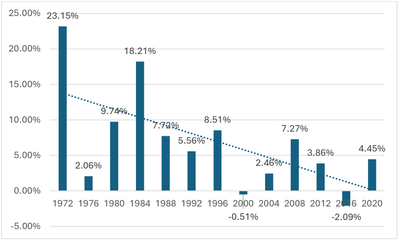
The 2024 Presidential campaign has been a roller coaster ride this summer. The upheavals are so fast and unprecedented that the reaction to each event often seems too muted. An assassination attempt and sudden pre-convention withdrawal? In a past generation, these events would be decisive, but in 2024, they seem like just the latest blip in the news cycle. The polls never seem to move more than a couple of points. In such an oddly volatile but also stable environment, our best bet to understanding what is going to transpire during the last 100 days of the election cycle is to look at data that gets to the heart of how voters view the candidates. My choice of fundamental data or essential metric is candidate fandom. Fandom is an unusual metric in politics, but it should be more common. Fandom is about passion for and loyalty to a cultural entity, be it a team, singer, university, or even politician. In fact, MAGA Trump supporters and Bernie Bros share many characteristics with Swifties and Lakers fans. Fans of all these things show up, spend, wear branded apparel, and fiercely defend the object of their fandom. The politicians who inspire fandom, such as AOC, Donald Trump, Barack Obama, and Marjorie Taylor Green, enjoy many advantages and are the celebrities of the political world. Fandom is critical in politics because fans are loyal, engaged, and resilient. Fans are not casual potential voters who may change preferences and are unlikely to make an effort to stand in line to vote. Fans are the voters who will show up rain or shine and who can’t be swayed. In 2024, a fan will interpret a conviction of their candidate as political “lawfare” rather than evidence of criminality. Also, in 2024, a fan will make excuses for signs of aging that would result in children taking a senior’s car keys. The flip side of fandom, anti-fandom, is also a powerful political force. Indeed, politics may be the cultural context in which anti-fandom has the most impact. Taylor Swift may have haters, but these anti-Swifties are not buying tickets to see Katy Perry in protest. But in politics, hatred of a candidate might be as powerful a tool for generating a vote as fandom. Joe Biden’s 2020 campaign was notoriously bad at drawing crowds, suggesting he inspired little passion. In contrast, Trump’s rallies looked like rabid sports crowds complete with matching hats. However, the hatred and fear of Donald Trump inspired sufficient anti-fandom to make Biden competitive. Of course, fandom doesn’t entirely decide elections. In most elections, there isn’t all that much fandom or passion. Beyond the presidency and senatorial contests, most candidates are barely known, and identity factors (race, gender, party affiliation) and candidate awareness are the determining factors. Even in presidential elections, get-out-the-vote efforts (ballot harvesting) and election regulations (voter suppression) combined with effective marketing to the few percent of swing (low information) voters are often the determining factors. Looking toward the future, fandom may be an increasingly salient political metric for multiple reasons. First, the last two decades have witnessed many candidates raised quickly from obscurity with somehow Hollywood-worthy origin stories (Barack Obama, AOC, JD Vance, etc.). In the modern media environment, candidates’ reputations (brands) are increasingly the product of marketing narratives rather than a lifetime of real-world accomplishments. In this new world of politics, fandom will be a critical metric. Second, with the increasing diversity of the American electorate, voting will be increasingly based on identity rather than ideology. Identity-based voting segments are likely to be driven by fandom (and anti-fandom) rather than policy. We see a form of this in 2024, as high inflation has barely made a dent in voters’ preferences for the two parties. A fragmented electorate comprised of racial and gender segments whose preferences are driven by fandom and anti-fandom will lead to increasingly negative campaigns featuring ads highlighting the threat of the non-preferred party’s candidates. When voters are focused on identity, negative advertising becomes the ideal method to use fear to create anti-fandom (hate) to motivate turnout. Kamala Harris versus Donald Trump Barring further disruptions, the matchup is set for the 2024 presidential contest (as of this writing, we do not know the Democratic VP). We do know the matchup between Donald Trump and Kamala Harris is a contest between polarizing figures. Donald Trump is a movement candidate who has redefined the Republican party. He inspires passionate fandom from his followers and amazing antipathy from major media and cultural outlets. Harris is also polarizing. In the immediate aftermath of Biden’s withdrawal, Harris received massive media and donor support. However, Harris has not demonstrated any significant national voter appeal, and her time as VP has generated ample blooper real material. My approach to assessing the race is to examine each candidate's fandom and anti-fandom. Fandom is the candidate’s core, resilient support, while anti-fandom is about antipathy. Fandom and anti-fandom are especially powerful metrics for a candidate because they are relatively fixed after a candidate gains high awareness. Once an individual identifies with the candidate (e.g., they are on the same team), an attack on the candidate is an attack on the individual. This means attack ads do not work because fans feel they are being attacked. Anti-fans are also important because they constrain a candidate’s support. A Trump anti-fan is unpersuadable by efforts from the Trump campaign because their identity is steeped in opposition to him. Fans and anti-fans are trapped in a cycle of confirmation bias where all information is processed to fit their fandom. I use data from the Next Generation Fandom Survey to assess candidate fandom and anti-fandom. The Next Generation Fandom Survey involves a nationwide sample of the U.S. population regarding fandom for sports and other cultural entities. In the 2024 edition, political figures such as Donald Trump, Joe Biden, Kamala Harris, and RFK Jr were included. The survey captured responses from 2053 subjects split evenly across the four primary generations (Gen Z, Millennials, Gen X, and Baby Boomers), and the sample is representative in terms of racial background. The survey does not focus on likely or registered voters, so the results reflect overall societal sentiments rather than the electorate's opinions. The critical survey question asks subjects to rate how much of a fan they are of a celebrity on a 1 to 7 scale. In the following discussion, individuals who rated their fandom a 6 or 7 on the 7-point scale are categorized as Fans, while those who rate their fandom a 1 or 2 are classified as Anti-Fans. Table 1 shows the Fandom and Anti-Fandom rates for the entire sample. Donald Trump has a 27% fandom rate compared to Harris's 21%. The fandom rate is crucial because it identifies the candidate's core support. It also indicates something important about the candidate’s potential likability. In terms of anti-fandom, Harris has a slightly higher Anti-Fandom rate. Anti-Fandom is also critical as it shows the percentage of people who hate a candidate. The data suggests that Americans find Harris to be more dislikable than Trump. Notably, the anti-fandom rates are significantly higher than the fandom rates. The American public has significant disdain for politicians. The high anti-fandom rates are both the product of past negative advertising and the cause of future negative campaign strategies. Table 1: Candidate Fandom and Anti-Fandom Table 2 reports fandom rates based of the two gender segments. Trump has a 7%-point advantage with men and a surprising 4% advantage with women. This is a stunning result as Trump is generally regarded as having weakness with female voters. However, this weakness shows up in the anti-fandom rates. In the male segment, Trump has a 5%-point advantage in anti-fandom (fewer anti-fans), but a 3% disadvantage in the female segment. This reveals that Trump is polarizing to women, and almost half of women find Trump to be highly dislikable. This finding is why the Harris campaign is likely to use advertising that casts Trump as misogynistic or a threat to women to motivate turnout by female voters. Table 2: Candidate Fandom by Gender Table 3 shows the fandom rates for the two younger demographic segments: Gen Z and Millennials. This Table also shows Trump’s relative performance versus Biden (in parentheses in the last column). Trump enjoys higher fandom and lower anti-fandom than Harris in both the Gen Z and Millennial segments. In terms of fandom, Trump is plus 6% in Gen Z and plus 11% with Millennials. Critically, Harris outperforms Biden. The Gen Z anti-fandom gap between Trump and Biden favored Trump by 6% points. However, this gap shrinks to just 1% point when Harris is the comparison. The data suggests that Harris is stronger with Gen Z than Biden. Table 3: Candidate Fandom in Younger Generations Table 4 reports the fandom rates based on a racial segmentation scheme. Specifically, the sample is divided into White and Non-White categories. This is a crude segmentation, but it illustrates some essential points. Trump enjoys a significant 14% positive fandom advantage in the White demographic. He also enjoys a 10-point edge in (lower) anti-fandom. The pattern essentially reverses in the Non-White segment, as Harris has a 10-point advantage in fandom and a 17-point edge in anti-fandom. Trump’s anti-fandom in the Non-White segment is critical to the campaign. Nearly half of this segment has antipathy or hate for Trump. This high anti-fandom suggests an opportunity for the Harris campaign to emphasize racial angles in their attacks on Trump. Table 4: Candidate Fandom by Race In addition to fandom and anti-fandom rates across demographic categories, insights can be gleaned by looking at segmentation variables that reflect cultural values or personality. Table 5 shows fandom and anti-fandom rates for Trump and Harris for segments defined by fandom for Taylor Swift (Swifties) and Baseball. The Swifties skew towards Harris. The implication is that young women engaged in popular culture have more positive fandom for Harris and more negativity toward Trump. This is unsurprising given the content of the popular culture and Swift’s personal liberalism. The Swiftie segment shows a much stronger skew for Harris than all but the Non-White segment. Examining the data at a cultural level is vital as it indicates that it isn’t necessarily youth or gender where Harris has an advantage but a combination of youth, gender, and a specific type of cultural engagement. The table also includes fandom rates for baseball fans. In the Baseball Fan segment, Trump enjoys an 8% point fandom advantage and a 7% anti-fandom advantage (lower anti-fandom). Like the case of the Swifties, the fandom rates of Baseball Fans reveal something about Trump’s core support. Baseball is a very traditional game with an older fan base, and traditionalism is probably the core value of Trump fans. Trump’s negative advertising is likely to focus on the threats to traditional values (i.e., Harris is a San Francisco liberal). Table 5: Candidate Fandom and Cultural Segments Commentary and Prediction Fandom is a powerful metric for predicting political success, but like most data points, it doesn’t tell the whole story. Fandom is a measure of unwavering core support while anti-fandom measures the group that will never support and is likely to show up to vote against a candidate. Examining fandom rates across multiple segments reveals that Harris’ core support is concentrated in specific cultural and racial segments. The analysis also suggests that Trump's core support is broader than is usually acknowledged and that his main problem is significant anti-fandom with women and minorities. Harris’ problem is a lack of love, while Trump’s is too much hate. Notably, I am not paying too much attention to the current wave of excitement and enthusiasm surrounding Harris. The recent enthusiasm is likely more a manifestation of the Democratic base’s hopes and a relentless media onslaught than an actual increase in passion for Harris. Maybe there will be a permanent shift upward in Harris’s fandom, but I don’t see any logic for why this would occur. Harris isn’t suddenly more likable or aspirational than she was last month. The argument that the American people are becoming more acquainted with her is dubious, given that she has been the Vice President or a major presidential candidate for almost five years. What are the implications for the upcoming election? Voting is not only about fandom or hate, so we must consider some additional factors. For instance, many potential voters lack passion and knowledge and are more prone to vote based on identity rather than ideology. If a region or demographic segment consistently votes for a party 75% of the time, that’s voting more based on fixed identities than current societal conditions. The American electorate has many of these types of fixed-preference voter segments. Furthermore, as the American electorate becomes more diverse, identity-based voting seems to be making presidential contests more predictable. The baseline seems to be that the Democratic candidate will win the popular vote by a few percentage points, and the Electoral College will come down to a few states, such as Michigan, Pennsylvania, and Wisconsin. Examining past electoral maps shows far more shifting of states across elections. Now, all but a handful of states are regarded as non-competitive. The Figure below shows the presidential popular vote margins for the last 50 years. It shows a trend towards smaller margins for the winning candidate, which is at least partly due to growing ethnic diversity and more fixed (at least in the near and medium terms) identity-based voting. Over the last 13 cycles, the margin of victory has dropped by about 1% every four years. Demographic change has also locked in a high baseline level of support for Democratic candidates. The last time a Republican won the popular vote was in 2004, with George Bush as the incumbent. Figure 1: Presidential Vote Margin 1972 to 2020 In addition to shrinking election margins, demographic change promises to change future campaign tones. The increasing relevance of fandom and anti-fandom, combined with the growing diversity of the electorate, will make 2024 an extremely negative campaign. The 2024 election will be determined by identity-based demographic trends and negative (anti-fandom) marketing campaigns. Demographics are destiny, and America is changing rapidly in ways that make it increasingly difficult for the Republicans to win the popular vote. It doesn’t matter if the Democrat is Harris, Newsom, Clinton, or Whitmer while the Republican is Rubio, Haley, Cruz, or Burgum. The baseline is probably 52% to 48%, D to R. Candidate fandom and anti-fandom probably shift the vote 2 or 3 percent in either direction. The correlation of demographic traits with voting behaviors creates incentives for campaign strategies that focus on identity. Republicans are eager to shift some percentage of Black or Hispanic voters to their cause because it simultaneously reduces the Democrats' base and grows Republican totals. In contrast, Democrats need to motivate marginal voters in the female, Black, and Hispanic segments to turn out. Fear-based appeals are the most effective tool for both parties' goals. Negative messaging is also prevalent because of the general view of politicians. Politicians tend to inspire more antipathy (anti-fandom) than admiration (fandom). The fandom data shows this, as both candidates have far more anti-fans than fans (this holds with other politicians) . The modern election calculus is, therefore, focused on aggressive negative ads that inspire marginal voters to take the initiative to vote against a hated candidate. Passion drives behavior, and it's far easier to drive fear and hatred of a candidate than to inspire passion and admiration. Considering the fandom data and the current electorate, I have two predictions. First, we will witness an incredibly nasty race. Harris’s best bet is to demonize Trump to motivate the anti-Trump voters to turn out. The American culture of 2024 includes constant repetition that many Democratic voting constituencies are marginalized and threatened. These segments are best motivated by using messages that cast the Republicans as the danger or oppressor. Women will fear losing reproductive rights, and African Americans will be primed with threats to voting rights. Trump will also employ negative messaging, but Trump’s adoption of a negative campaign comes from a slightly different motivation. Trump’s core support consists of conservatives who are frustrated by a lack of cultural power and representation. This group is looking for someone who will fight for their values. This desire for a “fighting advocate” explains much of Trump’s appeal, as his supporters are enthusiastic about his “mean tweets and nicknames.” There will also be fear-based advertising as Harris will be positioned as wanting to defund police and open the border. Second, Trump wins in a close contest. Comparing Trump’s and Harris’ fandom and anti-fandom suggests the Harris campaign faces an uphill challenge. Despite the current blitz of enthusiasm for Harris as a replacement for a failing Joe Biden, her “brand” has not shown an ability to stimulate passion, and her dislike levels exceed Trump's. It seems unlikely that she will be able to inspire fans. While Trump has a significant fanbase and weaknesses in terms of strong anti-fandom levels in minority and cultural segments, he probably beat Clinton in 2016 because her anti-fandom was equivalent to his. In contrast, he lost to Biden because Biden had less anti-fandom (in 2020). Kamala Harris seems more like Clinton than Biden, so look for a similar outcome as in 2016. The bottom-line prediction: An exceptionally negative campaign, with Trump’s greater baseline fandom and Harris’s charisma deficit leading to a narrow Trump victory. As in 2016,Trump wins the Electoral College while losing the popular vote. Addendum: Future Fandom Lesson The structure of the American electorate and the propensity of people to vote based on identity rather than ideology mean that negative campaigns are the standard in the near future. The essential observation is that demographic trends create an electorate that is more a collection of identity segments than a homogeneous population that varies in ideology. An increasingly diverse electorate likely means increasingly negative presidential campaigns as negative or fear-based appeals are especially effective when elections focus on threats to identity groups. The tragedy of this situation is that the negative messages of campaigns amplify racial division and acrimony. When the next election occurs, the electorate is even more polarized, and negative or fear-based appeals are again the most effective. Mike Lewis is an expert in the areas of analytics and marketing. This approach makes Professor Lewis a unique expert on fandom as his work addresses the complete process from success on the field to success at the box office and the campaign trail. Michael is available to speak with media - simply click on his icon now to arrange an interview today. Interested in following Future Fandom! Subscribe for free to receive new posts.