
Experts Matter. Find Yours.
Connect for media, speaking, professional opportunities & more.

LSU astrophysicist weighs in on potential release of UFO records
Dr. Eric Burns is a leading researcher in high-energy astrophysics, he studies neutron star mergers and gamma-ray bursts and helped lead the first multimessenger discovery of a binary neutron star merger. "Given the vast size of the universe, most scientists think life beyond Earth likely exists, and we are actively searching for it. However, there is no credible evidence that extraterrestrials have visited Earth or made contact with humanity. Previous government reviews of UFO reports have not produced convincing proof of alien technology. Astronomers are terrible at keeping secrets — if even one of us had solid evidence of aliens, the entire world would know by lunchtime. I strongly support transparency and look forward to the release of additional information, but extraordinary claims require extraordinary evidence."


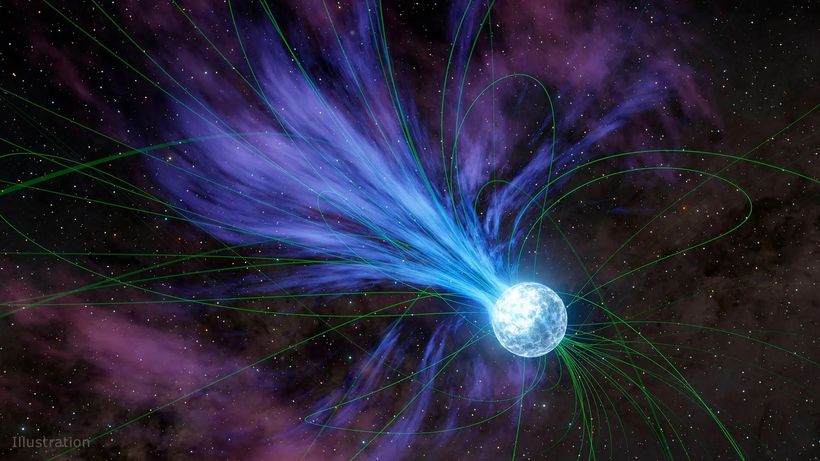
BATON ROUGE – Since the Big Bang, the early universe had hydrogen, helium, and a scant amount of lithium. Later, some heavier elements, including iron, were forged in stars. But one of the biggest mysteries in astrophysics is: How did the first elements heavier than iron, such as gold, get created and distributed throughout the universe? A new answer has come from an unexpected place – magnetars. Neutron stars are the collapsed cores of stars that have exploded. They are so dense that one teaspoon of neutron star material, on Earth, would weigh as much as a billion tons. A magnetar is a neutron star with an extremely powerful magnetic field. On rare occasions, magnetars release an enormous amount of high-energy radiation when they undergo “starquakes,” which, like earthquakes, fracture the neutron star’s crust. Starquakes may also be associated with powerful bursts of radiation called magnetar giant flares, which can even affect Earth’s atmosphere. Only three magnetar giant flares have been observed in the Milky Way and the nearby Large Magellanic Cloud, and seven from other nearby galaxies. Astrophysicist Eric Burns and his team of researchers at Louisiana State University in Baton Rouge study magnetars extensively through the observation of gamma-rays. These are the most energetic photons, most famous for turning Bruce Banner into the Incredible Hulk. Burns joined with researchers at Columbia University and other institutions to see if we could use gamma-rays to understand if magnetar giant flares forge the heaviest elements, and unexpectedly found the smoking-gun signature in decades-old data. The study, led by Anirudh Patel, a doctoral student at Columbia University in New York, is published in The Astrophysical Journal Letters. “It’s answering one of the questions of the century and solving a mystery using archival data that people had just forgotten about, demonstrating something that occurred when the Universe was younger,” said Burns. “Giant flares should occur just after the first stars died, meaning we have identified what could be the origin of the first gold in the universe.” How could gold be made at a magnetar? Patel and colleagues, including his advisor Brian Metzger, Professor at Columbia University and senior research scientist at the Flatiron Institute in New York, have been thinking about how radiation from giant flares could correspond to heavy elements forming there. This would happen through a “rapid process” of neutrons forging lighter atomic nuclei into heavier ones. Protons define the element’s identity on the periodic table: hydrogen has 1 proton, helium has 2, lithium has 3, and so on. Atoms also have neutrons which do not affect identity, but do add mass. Sometimes when an atom captures an extra neutron the atom becomes unstable and a nuclear decay process happens that converts a neutron into a proton, moving the atom forward on the periodic table. This is how, for example, a gold atom could take on an extra neutron and then transform into mercury. In the unique environment of a disrupted neutron star, in which the density of neutrons is extremely high, something even stranger happens: single atoms can rapidly capture so many neutrons that they undergo multiple decays, leading to the creation of a much heavier element like uranium. When astronomers observed the collision of two neutron stars in 2017 using NASA telescopes and the gravitational wave observatory LIGO, they confirmed that this event could have created gold, platinum, and other heavy elements. “LIGO tells us there was a merger of compact objects, and Fermi tells us there was a short gamma-ray burst. Together, we know that what we observed was the merging of two neutron stars, dramatically confirming the relationship,” said Burns. But neutron star mergers happen too late in the universe’s history to explain the earliest gold and other heavy elements. Finding secrets in old data At first, Metzger and colleagues thought that the easiest signature to study from the creation and distribution of heavy elements at a magnetar would appear in the visible and ultraviolet light, and published their predictions. But Burns in Louisiana wondered if there could be a gamma ray signal bright enough to be detected, too. He asked Metzger and Patel to work out what that signal could look like. Burns looked up the gamma ray data from the last giant flare that was observed, which was in December 2004. He realized that while scientists had explained the beginning of the outburst, they had also identified a smaller signal from the magnetar, in data from ESA (European Space Agency)’s INTEGRAL, a retired mission with NASA contributions. “It was noted at the time, but nobody had any conception of what it could be,” Burns said. Metzger remembers that Burns thought he and Patel were “pulling his leg” because the prediction from their team’s model so closely matched the mystery signal in the 2004 data. In other words, the gamma ray signal detected over 20 years ago corresponded to what thought it should look like when heavy elements are created and then distributed in a magnetar giant flare. "This is my favorite discovery I've contributed to,” said Burns. “My colleagues found this signal in the past, but nobody knew what it could be at the time. Once these models were ready, everything fit like a perfect puzzle, which is extremely rare in science." Researchers supported their conclusion using data from two NASA heliophysics missions: the retired RHESSI (Reuven Ramaty High Energy Solar Spectroscopic Imager) and the ongoing NASA Wind satellite, which had also observed the magnetar giant flare. Other collaborators on the new study included Jared Goldberg at the Flatiron Institute. Next steps in the magnetar gold rush Patel’s study estimates that magnetar giant flares could contribute about 10% of the total abundance of elements heavier than iron in the galaxy. Since magnetars existed relatively early in the history of the universe, the first gold could have been created this way. LSU PhD candidate Aaron Trigg, a NASA FINESST (Future Investigators in NASA Earth and Space Science and Technology) fellow, who works with Burns, is responsible for finding more magnetar giant flares to study. “These are gargantuan outbursts of energy from the strongest magnets in the Universe, which are powerful enough to affect Earth’s atmosphere,” said Burns. Trigg’s work will help us better understand these sources.” NASA’s forthcoming COSI (Compton Spectrometer and Imager) mission can follow up on these results. COSI, a wide-field gamma ray telescope, is expected to launch in 2027 and will study energetic phenomena in the cosmos, such as magnetar giant flares. COSI will be able to identify individual elements created in these events, providing a new advancement in understanding the origin of the elements. LSU is one of the lead science institutes for COSI. Burns and LSU Assistant Professor Michela Negro have key responsibilities in the mission, and Trigg is working through how best to study giant flares with COSI. These LSU astrophysicists will be growing their research group as they approach launch in 2027. “I have so many questions about the cosmos and our place in it,” said Trigg. “This research allows me to explore those questions and share the answers with the world.”

Executive Order - Energy and Power Perspective
The tariffs imposed by the Executive Order (EO) are expected to significantly impact the energy and infrastructure sectors. New build energy projects in the United States heavily depend on importing components such as inverters, transformers, cabling, solar panels, mounting racks, and batteries from regions such as Southeast Asia, China, and the European Union. These tariffs are likely to affect all energy and infrastructure projects. We are seeing large capital projects across the United States impose caveats within their EPC contracts; allowing for steep and continual price adjustments upward. This is impacting billions of dollars of critical material and contractual obligated componentry. This also includes all materials with high volatility (steel, copper, aluminum). Not only are projects costs on the rise but so are supply chain disruptions, potentially causing delays in project timelines and/or project cancellations. The United States continues to grow in energy demand requirements, provided the vast deployment of data centers. Because of this grid reliability, modernization and new build implementation is critical in the coming decade. The tariffs are likely to have a large impact on these projects as well, given their requirement for componentry from all the regions impacted. As this situation continues to develop, the full implications and responses for the energy and infrastructure industry will become more apparent. Jeremy Erndt is a seasoned power development, engineering, and operations professional, with experience in power generation, infrastructure, and the sector with J.S. Held. He has led utility-scale power, transmission, port, and water projects from early development and conceptual design through NTP and eventual operation. He is an international development expert and supports a variety of programs for capital project development. Jeremy is a subject matter expert in project due diligence, engineering, and constructability for large-scale projects. Jeremy has been involved in various project-related and company mergers and acquisitions, thus providing a comprehensive track record and perspective of financial transactions at all stages. He has nearly two decades of experience in the development, engineering, construction, and operations of energy and infrastructure projects, spanning more than 30 GW within energy projects and over $60B of capital expenditures within infrastructure. Looking to know more or connect with Jeremy Erndt? Simply click on the expert's icon now to arrange an interview today. For any other media inquiries - contact : Kristi L. Stathis, J.S. Held +1 786 833 4864 Kristi.Stathis@JSHeld.com


Winning a Grammy Can "Catapult" Your Career
At the 62nd Annual Grammy Awards, Billie Eilish became the first woman to take home the big four awards: Album of the Year, Record of the Year, Song of the Year and Best New Artist. Villanova's David Fiorenza, an assistant professor of economics, says that winning a high-profile award, like a Grammy, has the potential to catapult your career for decades, particularly for a lesser-known artist like Eilish. However, he notes that it's important to be wary of changes to the music industry. "Musical trends change. Creative destruction of the music industry has occurred for decades. Radio station mergers and business cycles have all contributed to dozens of artists careers fizzling a year or so after the Grammys," Fiorenza says. "One way to keep your career going economically: touring the U.S. and looking for markets in Europe, Japan and South America."


One Tweak That Can (Instantly) Add Significantly To The Value Of Your Business
If you’re trying to figure out what your business might be worth, it’s helpful to consider what acquirers are paying for companies like yours these days. A little internet research will probably reveal that a business trades for a multiple of your pre-tax profit, which is Sellers Discretionary Earnings (SDE) for a small business and Earnings Before Interest Taxes, Depreciation and Amortization (EBITDA) for a slightly larger business. Ian Fitzpatrick is a Chartered Professional Accountant and a Chartered Business Valuator. He is an expert in advising business owners and entrepreneurs on all aspects of corporate sales, mergers, acquisitions, litigation, succession and ownership issues. In a recent piece, Ian highlights how business owners can take simple steps to add significant value to their enterprises. To learn more, simply click on the short article attached at the bottom. To contact Ian directly, simply click on his icon to arrange an appointment regarding this topic. Source:


Reducing home equity bias through transparency
One of the goals of global stock exchange mergers is to create a consolidated trading platform that makes listed firms available to a greater number of investors while providing firms with larger pools of liquidity. But the problem of equity home bias—the tendency of investors to overinvest in domestic securities and underinvest in foreign securities—can thwart optimal global portfolio diversification. In a recent study, Grace Pownall, professor of accounting; Maria Vulcheva 05MBA 11PhD (FIU); and Xue Wang (Ohio State) examine such home bias in Euronext, which was created in 2002 when four European countries merged their stock exchanges. The researchers focus in particular on two structural mechanisms adopted by Euronext: (1) the integration of trading platforms across the four exchanges, and (2) the creation of named segments open to firms that voluntarily pre commit to greater transparency in financial reporting and corporate governance. In their investigation of these mechanisms, the researchers find that firms that choose not to join the segmented list see no diminution of home bias, while the segmented, more transparent firms reap significant increases in all categories of foreign holdings relative to domestic holdings. Source:



The role of behavior in managing mergers
Despite corporate interest in M&As as a growth strategy, research indicates that financial returns on such deals often fall short of expectations. Corporate leaders spend considerable time looking at the financial and quantitative aspects of mergers and acquisitions; however, Sandy Jap, Sarah Beth Brown Professor of Marketing; A. Noel Gould (Texas State U); and Annie H. Liu (Texas State U) argue that factoring in people should also be a major consideration when it comes to a proposed deal. Their research indicates that better employee and customer management is especially critical to an organization’s M&A strategy and implementation success. The trio analyzed ANZ New Zealand’s horizontal merger with the National Bank of New Zealand to better understand the impact of employee and customer behavior on the deal. They contend that this brand and technology merger succeeded due to ANZ’s commitment to ensuring customer satisfaction and addressing employee concerns about the merger. ANZ New Zealand also focused on business efficiencies and rebranding efforts. Jap, Gould, and Liu note that collaboration became a big key to the success of the merger with ANZ’s financial, IT, marketing, and communications personnel working closely together to retain customers. Source:

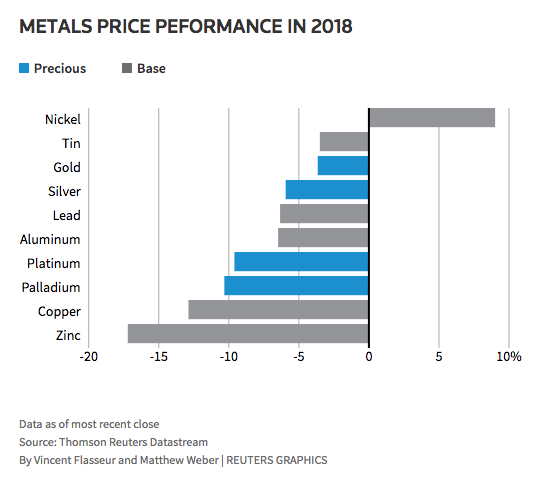
With the shine coming back on nickel – what will it mean for Ontario’s local and wider economies.
It’s boom or bust in the nickel business. From cycles, to slumps to super-cycles and even the most recent decade-long crash, it appears the time for nickel to rebound is near. The last big boom at the turn of the 21st Century saw nickel soar above 20 dollars per pound. It led to multi-billion dollar takeovers of smaller mining companies by industry giants and saw local economies flourish as bonuses skyrocketed, overtime was uncapped and investments in service, supply, innovation and industry support were elevated almost exponentially. Today, with analysts projecting the price of nickel to at least double over the next four years, what can local and provincial economies expect? After a 10-year slump can we expect the same rush to invest and spend? Will companies be more cautious and what will it mean for investors, the markets and businesses. There are a lot of questions and speculation out there about just how big of a splash there will be if nickel finally makes its comeback. And that’s where the experts from Freelandt Caldwell Reilly LLP can help. Ian Fitzpatrick is a Chartered Professional Accountant and a Chartered Business Valuator. He is an expert in advising business owners and entrepreneurs on all aspects of corporate sales, mergers, acquisitions, litigation, succession and ownership issues. To contact Ian directly, simply click on his icon to arrange an appointment regarding this topic. Source:

Done in by digital? What will the sale of Time mean for the industry?
On Monday, a once mighty media juggernaut was sold off for $2.8 billion dollars. Time Inc. – the publisher of Time, Fortune, Sports Illustrated and People was now property of the Meredith Corporation. The Des Moines, Iowa-based company better known for its Better Homes and Gardens, Family Circle, Parents and Family Fun magazines. It’s a bitter and sad end for Time. The company was once the industry leader in magazines and world-respected periodicals. The magazines were’ must-reads’ for the informed. But times have changed, and Time never did catch on or catch up with the digital wave that has transformed journalism as we know it. So, what will all of this mean? Can the world of print media survive and adapt to changing times and tastes? As well, with shrinking circles of media ownership – will regulators let this sale proceed? And what will this mean for the many journalists? More job cuts and shrinking news rooms? Will they move from NYC to Iowa? Has the lustre and allure of being a New York based journalist lost its shine? There are a lot of questions that still need to be addressed and answered. That’s where the experts from Cedarville University can help. Dr. Marc Clauson is a professor of history and law at Cedarville. Marc is an expert in the fields of anti-trust regulation and the economic impact of mergers and takeovers like this. Dr. Clauson is available to speak with media – simply click on his icon to arrange an interview. Source:


Seeing the light of neutron star collisions
UNIVERSITY PARK, Pa. — When two neutron stars collided on Aug. 17, a widespread search for electromagnetic radiation from the event led to observations of light from the afterglow of the explosion, finally connecting a gravitational-wave-producing event with conventional astronomy using light, according to an international team of astronomers. Previous gravitational-wave detections by LIGO (Laser Interferometer Gravitational-Wave Observatory) and Virgo, a European observatory based in Pisa, Italy, were caused by collisions of two black holes. Black hole collisions generally are not expected to result in electromagnetic emissions and none were detected. "A complete picture of compact object mergers, however, requires the detection of an electromagnetic counterpart," the researchers report online today (Oct. 16) in Science. The Aug.17 detection of a gravitational wave from the collision of two neutron stars by gravitational wave observatories in the U.S. and Europe initiated a rapid cascade of observations by a variety of orbiting and ground-based telescopes in search of an electromagnetic counterpart. Two seconds after detection of the gravitational wave, the Gamma Ray Burst monitor on NASA's Fermi spacecraft detected a short gamma ray burst in the area of the gravitational wave's origin. While the Swift Gamma Ray Burst Explorer — a NASA satellite in low Earth orbit containing three instruments: the Burst Alert Telescope, the X-ray Telescope and the Ultraviolet/Optical Telescope — can view one-sixth of the sky at a time, it did not see the gamma ray burst because that portion of the sky was not then visible to Swift. Penn State is in charge of the Mission Operations Center for Swift. The satellite orbits the Earth every 96 minutes and can maneuver to observe a target in as little as 90 seconds. Once the Swift team knew the appropriate area to search, it put the satellite's instruments into action. Swift is especially valuable in this type of event because it can reposition to a target very quickly. In this case, the telescope was retargeted approximately 16 minutes after being notified by LIGO/Virgo, and began to search for an electromagnetic counterpart. Read more about Swift's involvement in detecting the neutron star collision here: https://www.eurekalert.org/pub_releases/2017-10/ps-stl101617.php To speak with Penn State's Swift researchers, contact Joslyn Neiderer at jms1140@psu.edu. Source:
