
Experts Matter. Find Yours.
Connect for media, speaking, professional opportunities & more.
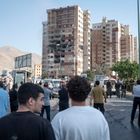
Israel carried out strikes against Iran on Friday, targeting its nuclear and military sites, after US President Donald Trump warned of a possible "massive conflict" in the region. Israel's operation struck at the "heart of Iran's nuclear enrichment programme", taking aim at the atomic facility in Natanz and nuclear scientists, Prime Minister Benjamin Netanyahu said. The operation against Iran will "continue as many days as it takes," Netanyahu said. June 12 - AFP Connect with our experts about the latest escalation between Israel and Iran: Check out our experts here : www.expertfile.com


Remembering the Tiananmen Square Crackdown in 1989
The anniversary of the Tiananmen Square crackdown on June 4, 1989, marks one of the most pivotal and censored events in modern Chinese history. What began as a peaceful student-led demonstration demanding political reform, freedom of expression, and anti-corruption measures, ended in a violent military response that shocked the world. The Chinese government's suppression of the protests, including the deaths and detentions of countless civilians, continues to shape how the nation is viewed both internally and globally. As public remembrance is restricted in China, the event remains a powerful lens through which to examine human rights, authoritarian governance, and the limits of collective memory. Key story angles include: What Led to the Protests: Exploring the economic and political climate of late-1980s China, the influence of global democratic movements, and the demands of the student protestors. The Crackdown and Casualties: Reconstructing the timeline of events, the military response, estimated death tolls, and the international reactions in real-time. Global Response and Diplomatic Fallout: Analyzing how countries responded with sanctions, condemnation, or silence—and how the crackdown affected China’s foreign relations. Censorship and Erasure in China Today: Investigating how the Chinese Communist Party has erased public memory of the event through internet censorship, media control, and surveillance. Legacy for Chinese Civil Society: Looking at how the crackdown shaped political activism, dissent, and civil rights movements in China and among the Chinese diaspora. Symbolism and Cultural Memory: Examining how iconic images, like the “Tank Man,” became global symbols of resistance, and how artists, scholars, and activists continue to commemorate the event. As China rises on the world stage, the legacy of Tiananmen Square remains a crucial marker of its internal contradictions and its contested role in global discussions on freedom, history, and accountability. Connect with our experts about Tiananmen Square and its enduring global impact: Check out our experts here : www.expertfile.com

Covering the latest developments in Iran? Our experts are here to help with your coverage.
Iran’s nuclear program remains one of the most closely watched issues in international security, diplomacy, and nonproliferation. Originally launched in the 1950s with Western support, the program has since evolved into a focal point of global concern over nuclear weapons, regional stability, and international trust. As negotiations continue to stall and enrichment capabilities increase, understanding the historical context, scientific progress, and geopolitical consequences of Iran’s nuclear ambitions is critical for public awareness. This topic provides journalists with high-impact angles spanning diplomacy, science, and security. Key story angles include: Origins and Evolution of the Program: Tracing the nuclear program from its U.S.-backed beginnings under the Shah to its secret expansion after the 1979 Islamic Revolution. The JCPOA (Iran Nuclear Deal): Examining the 2015 Joint Comprehensive Plan of Action, its successes, its unraveling after the U.S. withdrawal in 2018, and current attempts to revive it. Scientific Advances and Enrichment Capacity: Analyzing Iran’s current uranium enrichment levels, centrifuge technology, and what experts say about its "breakout time." Regional and Global Security Concerns: Investigating how Iran’s program affects Middle Eastern tensions, Israeli security policy, and broader nuclear proliferation risks. Diplomatic Stalemates and Sanctions: Reviewing the impact of international sanctions, diplomatic efforts by the EU, China, and Russia, and the political dynamics within Iran. The Risk of Escalation or Military Conflict: Exploring scenarios that could lead to open confrontation and what military analysts say about preemptive strikes or deterrence strategies. Iran’s nuclear program is not just a regional issue—it’s a global flashpoint at the intersection of science, diplomacy, and international law. Journalists covering this story have an opportunity to unpack a decades-long narrative with renewed urgency. Connect with our experts about Iran’s Nuclear Program: History, Progress, and Global Risks: Check out our experts here : www.expertfile.com

Georgia Southern University announces Cassie N. Morgan as Vice President for Enrollment Management
A seasoned leader in higher education, Morgan brings nearly two decades of experience in strategic enrollment planning, student success and organizational leadership. She returns to Georgia Southern with a proven record of innovation and impact, having previously served as associate vice president for Enrollment Management, providing strategic oversight to Financial Aid, the Registrar’s Office, and Enrollment Services. Her leadership during that time contributed directly to steady enrollment growth, improved student service delivery, and the development of a comprehensive strategic enrollment plan. Morgan consistently champions data-informed strategies, operational excellence, staff development, and a deep commitment to student-centered services and leads with a strong commitment to collaboration, innovation and service excellence. She has held significant roles at Appalachian State University, Gadsden State, Liberty University, the University of North Alabama and the University of West Georgia. “Cassie is a dynamic and visionary leader whose experience and values align perfectly with our mission,” said Alejandra C. Sosa Pieroni, Ed.D., executive vice president for Enrollment, Marketing, and Student Success. “Her return brings invaluable leadership as we build on our success and accelerate progress toward enrollment goals. Cassie leads with clarity, purpose and a student-first mindset. We are thrilled to welcome her back to Eagle Nation.” In her new role at Georgia Southern, Morgan will lead the enrollment management unit, overseeing all facets of the enrollment lifecycle, including undergraduate and graduate admissions, financial aid and enrollment services, the registrar’s office, military and veteran services, and international student services. She will also play a key role in institutional planning, marketing alignment and collaboration with academic and system partners. “I’m truly honored to return to Georgia Southern in this pivotal leadership role,” said Morgan. “It’s a privilege to serve an institution I deeply respect and cherish. I’m grateful for the opportunity to help shape its future and to build on the momentum already in place. I couldn’t be more excited about what lies ahead and to once again be part of a community that means so much to me.” Morgan holds a bachelor’s degree in psychology and a master’s degree in education from the University of West Georgia. If you want to book time to talk or interview with Vice President for Enrollment Management, Cassie Morgan then let us help - simply contact Georgia Southern's Director of Communications Jennifer Wise at jwise@georgiasouthern.edu to arrange an interview today.


#ExpertSpotlight: India-Pakistan Conflict: Historical Roots and Ongoing Tensions
The India-Pakistan conflict remains one of the most enduring and complex geopolitical disputes in modern history. Rooted in the partition of British India in 1947, the conflict has evolved over decades to include territorial disputes, religious and cultural divisions, and nuclear rivalry. With both countries possessing significant military power and global influence, tensions between India and Pakistan have far-reaching consequences for regional stability, international diplomacy, and global security. As new developments continue to emerge, understanding the conflict’s origins and timeline is critical for comprehensive reporting. Key story angles include: The Partition of 1947 and Its Aftermath: Examining the division of British India, the creation of Pakistan, and the resulting violence and mass displacement. Kashmir: A Disputed Territory: Analyzing the root of territorial disputes over Kashmir, including the wars of 1947, 1965, and 1999, and ongoing claims from both nations. Nuclear Deterrence and Military Escalation: Exploring the impact of both nations becoming nuclear powers and how this has shaped diplomatic and military strategy. Cross-Border Terrorism and Insurgency: Investigating allegations of state-sponsored terrorism, militant activity, and their role in inflaming tensions. Peace Initiatives and Diplomatic Breakdowns: Highlighting past attempts at peace talks, confidence-building measures, and why many efforts have faltered. Global Implications and International Mediation: Assessing how global powers like the U.S., China, and the U.N. view the conflict and what role they play in de-escalation efforts. As tensions between India and Pakistan continue to affect regional and international relations, revisiting the historical context and current stakes provides crucial insights for journalists covering conflict, diplomacy, and security. Connect with an expert about India and Pakistan: To search our full list of experts visit www.expertfile.com

Alcatraz Island, once home to America’s most infamous prison, remains a powerful symbol in the nation’s historical, cultural, and political landscape. Originally a military fortification before becoming a federal penitentiary, Alcatraz gained notoriety for housing high-profile criminals like Al Capone and “Machine Gun” Kelly. Yet its legacy extends far beyond crime and punishment—it was also the site of a landmark Indigenous occupation that helped spark a national conversation about Native rights. Today, Alcatraz continues to fascinate as a tourist destination, a case study in penal reform, and a platform for telling underrepresented stories. Journalists looking to explore the island’s rich past and present may consider: The transformation of Alcatraz from military post to maximum-security prison Daily life behind bars and profiles of the prison’s most infamous inmates The 1969–1971 Indigenous occupation and its impact on Native American activism Alcatraz’s role in shaping modern conversations about incarceration and justice reform The cultural legacy of Alcatraz in film, literature, and popular imagination How the National Park Service is preserving and interpreting the island’s layered history Alcatraz offers more than just a tale of escape—it’s a gateway into deeper stories of resistance, rehabilitation, and remembrance. Connect with an expert about Alcatraz: To search our full list of experts visit www.expertfile.com

A final disbursement of $8.8 million completes the $17.8 million grant awarded by the Department of Defense (DoD) to Virginia Commonwealth University’s (VCU) Convergence Lab Initiative (CLI). The funding allows CLI to continue advancing research in the areas of quantum and photonic devices, microelectronics, artificial intelligence, neuromorphic computing, arts and biomedical science. “The Convergence Lab Initiative represents a unique opportunity to drive innovation at the intersection of advanced technologies, preparing our students to tackle the critical challenges of tomorrow,” said Nibir Dhar, Ph.D., electrical and computer engineering professor and CLI director. “By combining cutting-edge research in electro-optics, infrared, radio frequency and edge computing, we are equipping the next generation of engineers with the skills to shape the future of both defense and commercial industries.” Working with Industry Partnership is at the heart of CLI and what makes the initiative unique. CivilianCyber, Sivananthan Laboratories and the University of Connecticut are among several collaborators focusing on cutting-edge, multidisciplinary research and workforce development. The lightweight, low-power components CLI helps develop are capable of transforming military operations and also have commercial applications. The Convergence Lab Initiative has 25 collaborative projects in this area focused on: Electro-optic and Infrared Technologies: Enhancing thermal imaging for medical diagnostics, search-and-rescue operations and environmental monitoring. This improves military intelligence, surveillance and reconnaissance capabilities. Radio Frequency and Beyond 5G Communication: Developing ultra-fast, low-latency communication systems for autonomous vehicles, smart cities and telemedicine. Accelerating advancements in this area also address electronic warfare challenges and security vulnerabilities. Optical Communication in the Infrared Wavelength: Increasing data transmission rates to create more efficient networks that support cloud computing, data centers, AI research and covert military communications. Edge Technologies: Creating low size, weight and low power-consuming (SWaP) computing solutions for deployment in constrained environments, such as wearables, medical devices, internet of things devices and autonomous systems. These technologies enhance real-time decision-making capabilities for agriculture, healthcare, industrial automation and defense. Benefits for Students College of Engineering students at VCU have an opportunity to engage with cutting-edge research as part of the DoD grant. Specialized workforce development programs, like the Undergraduate CLI Scholars Program, provide hands-on experience in advanced technologies. The STEM training also includes students from a diverse range of educational backgrounds to encourage a cross-disciplinary environment. Students can also receive industry-specific training through CLI’s Skill-Bridge Program, which facilitates direct connections between business needs and academic education. Unlike the DoD program for transitioning military personnel, the CLI Skill-Bridge is open to students from VCU and other local universities, creating direct connections between industry needs and academic training. This two-way relationship between academia and industry is unlike traditional academic research centers. With the College of Engineering’s focus on public-private partnerships, VCU becomes a registered partner with the participating businesses, collaborating to design individualized training programs focused on the CLI’s core research areas. This approach ensures students receive relevant, up-to-date training while companies gain access to a pipeline of skilled talent familiar with the latest industry trends and innovations. “The significance of this grant extends beyond immediate research outcomes. It addresses critical capability gaps for both the DoD and commercial sectors,” says Dhar. “This dual-use approach maximizes DoD investment impacts and accelerates innovation in areas that affect everyday life — from healthcare and environmental monitoring to communication networks and smart infrastructure. Breakthroughs emerging from these collaborations will strengthen national security while creating commercial spinoffs that drive economic growth and improve quality of life for communities both locally and globally. Advances in infrared technology, in particular, will position the VCU College of Engineering as a center for defense technologies and new ideas.”


Myanmar’s earthquake crisis demands international humanitarian intervention - before it’s too late
We are at a crossroads. Will the international community intervene in Myanmar to save lives, or will it once again retreat into silence until it is too late? In the shadow of disaster, silence is complicity. The devastating earthquake that recently struck Myanmar, registering a magnitude of 7.7 and claiming over a thousand lives with the potential for fatalities to rise into the tens of thousands, is far more than a natural calamity - it is a preventable humanitarian catastrophe. The international community must confront a difficult question: How many more lives must be lost before the world steps in? As someone who has studied disaster governance for over two decades, I can say with a heavy heart that what we are witnessing in Myanmar is a textbook case of systemic failure - of national crisis management, of international humanitarian coordination and, most disturbingly, of disaster diplomacy. A Crisis Exacerbated by Inaction The situation on the ground is dire. Entire villages lie in ruins across Shan State and Mandalay. Liquefaction, caused by the shifting of tectonic plates, has turned many areas into unstable wetlands, with water seeping through the ground continuously. With countless bodies left unrecovered and proper sanitation systems overwhelmed, the risk of cholera and other waterborne diseases looms large. In past disasters - be it Haiti in 2010, Nepal in 2015 or the Turkey-Syria earthquake of 2023 - we saw the tragic consequences of slow and politicised humanitarian responses. But Myanmar’s case is uniquely perilous. The country is not only facing a natural disaster but also the aftermath of years of civil conflict, military rule and geopolitical paralysis. The ruling junta’s statements and figures are unreliable at best and disinformation is hampering coordinated international support. When Aid Needs Armour The reality is that humanitarian intervention in Myanmar now requires more than blankets and bottled water - it needs boots on the ground. Given the multiplicity of armed rebel groups and the entrenched conflict dynamics, any aid convoy risks becoming a pawn in a larger power struggle. We need an international peacekeeping force, mandated strictly for humanitarian purposes, to ensure safe and unfettered access to affected populations. This must be a neutral, apolitical force, equipped to operate in a complex, high-risk environment - not to take sides, but to protect lives. Without such security guarantees, humanitarian agencies cannot function, and the crisis will evolve into famine, mass migration, and possibly regional instability across Southeast Asia. A Crisis of Leadership The United Nations, ASEAN, WHO and other key global institutions have yet again fallen short of timely action. The ineffectiveness of their response should prompt a critical reevaluation of their governance structures and crisis leadership models. The deeper issue is not just logistical - it’s moral. In the absence of strong, scientifically-informed and transparent leadership, international aid becomes another layer of dysfunction. We need a new generation of disaster governance professionals - leaders trained not only in logistics and law, but in negotiation, ethics and diplomacy. The Cost of Indifference Myanmar’s crisis will not remain confined within its borders. Already, we are seeing early signs of mass displacement towards India, Thailand and Bangladesh. If left unchecked, these flows will eventually extend to Europe, the UK and beyond, burdening an already overstretched global refugee system. The longer we delay, the greater the consequences - not just for Myanmar, but for the world. A Call for Science, Transparency and Regional Solidarity As academics and practitioners in the field of Disaster Risk Reduction (DRR), we must hold ourselves to the highest standard of integrity. DRR in regions like South and Southeast Asia must be built on inclusive science, open data, regional collaboration and local knowledge. Taiwan and Singapore offer examples of how early warning systems and data transparency can save lives - why aren't we replicating these models more widely? If this disaster teaches us anything, it is that sovereignty cannot be used as a shield for inaction. A disaster of this magnitude transcends politics. It is a test of our global conscience.


Ku Writes ‘National Review’ Article
Maurice A. Deane Distinguished Professor of Constitutional Law Julian Ku recently penned the article “The President Can Act Unilaterally to Defend America Abroad,” for the National Review. Professor Ku argues that President Trump’s military campaign against the Houthis in Yemen has a strong legal basis under both constitutional and international law. He stated: “there are many historical examples of U.S. presidents invoking authority to defend U.S. lives and property abroad – including maritime commerce –without getting specific authorization from Congress or the United Nations.”


ExpertSpotlight: History of Yemen and the Houthi Rebels
The history of Yemen and the rise of the Houthi rebels is essential to understanding one of the world’s most complex humanitarian and geopolitical crises. Once considered a crossroads of ancient trade, Yemen has in recent decades become a focal point of conflict, regional power struggles, and human rights challenges. The conflict involving the Houthi movement has had global ramifications—from maritime security and oil trade routes to civilian displacement and famine. This topic matters to the public because it highlights the intersection of war, diplomacy, and humanitarian need, while prompting critical questions about international responsibility, peace-building, and regional stability. Key story angles that may interest a broad audience include: The roots and rise of the Houthi movement: Tracing the group’s origins, ideology, and evolution into a key political and military force in Yemen. Regional power dynamics: Analyzing the involvement of Saudi Arabia, Iran, and other actors in fueling or resolving the conflict. The humanitarian crisis in Yemen: Investigating the scale of famine, disease outbreaks, displaced populations, and access to aid. The role of the international community: Exploring arms sales, ceasefire negotiations, and accountability in the context of international law. Maritime security and global trade: Understanding how conflict in Yemen affects Red Sea shipping routes and international energy markets. The future of peace and governance: Examining potential pathways to a political resolution and the reconstruction of a stable Yemeni state. Connect with an expert about Yemen and the Houthi rebels: To search our full list of experts visit www.expertfile.com