
Experts Matter. Find Yours.
Connect for media, speaking, professional opportunities & more.

Photo Credit: Sandy Nicholson / FUZE Reps Longing for your next adventure? Look no further because CAA South Central Ontario (CAA SCO) has unveiled a new set of luxurious travel packages designed for travellers who are ready to embark on an iconic Canadian adventure. As part of each package, travellers will be flying on a CAA chartered jet with all business class seating, offered in partnership with Air Canada. They will be joined only by those travelling on a Premier Collection tour. Itineraries are curated with affordable luxury in mind. “Our research has shown us that Canadians are looking to experience travel in a more intimate setting and at this time, are still looking to stay closer to home,” said Susan Postma, Regional Manager, CAA. “By coupling the best of Canadian culture, food and heritage, with the safety and luxury of travelling on a CAA chartered plane, we are confident that these packages will give travellers a delightful option to start exploring again.” Travellers will rediscover the nation’s greatest sights, sounds and smells on one of five journeys showcasing Canada’s unforgettable wonders and hidden gems. “For many of us, travelling again for the first time is a momentous occasion and we wanted to make that extra special by cultivating a premium experience with the utmost attention to health and safety,” said Postma. “Each destination encourages travellers to immerse themselves in every moment and create lasting memories.” Packages feature everything from stargazing to whale watching; enjoying a pancake brunch on a maple farm to World Famous “Digby Scallops” in Nova Scotia; witnessing the highest tides in the world in New Brunswick to taking in Quebec’s most breathtaking waterfall and many more unique experiences in between. “We are very pleased that CAA is recognizing our superior customer service in choosing Air Canada for its unique, luxury travel packages. Our private charter service, Air Canada Jetz, is specially designed for ultra-premium customers, such as pro athletes, celebrities and music stars, ensuring CAA’s explorers will travel in extraordinary style wherever their adventure takes them,” said Eric Bordeleau, senior director, Network Scheduling and Charters at Air Canada. Tours and dates include: Glorious Lakes and Glaciers: Banff, Jasper and Beyond (August 13-20, 2022) – 8 Days Savour Quebec: A Culinary Journey Through Quebec City, Charlevoix and Montreal (August 15 – 24, 2022) – 10 Days Rich and Enticing Quebec: Explore the Spectacular Gaspé Peninsula (August 15 – 24, 2022) – 10 Days Magical Maritimes: Acadian Culture, Delicious Flavours and Historic Charms (September 10-19, 2022) – 10 Days Platinum Journey - Mountains and Memories: Wonders of the West and Rocky Mountaineer (September 13-21, 2022) – 9 Days CAA Travel has over 50 years of experience in helping members plan and book unforgettable travel excursions around the world. CAA’s new Premier Tours Collection packages are part of CAA’s Extraordinary Explorations collection and range in price starting at $6,300 CDN. Extraordinary Explorations is CAA’s collection of unique travel adventures designed for adventurous travellers looking to embark on a luxe vacation for an affordable price. Experience one-of-a-kind destinations, intriguing itineraries and exceptional excursions. Available as escorted and hosted packages, every exploration is guaranteed to create lasting memories. The 2022 Premier Collection packages can be purchased at all CAA stores or by phone at 1-844-202-8045. Click here for more information.


The world's gone crazy for Wordle - Our expert explains why
You can't avoid it these days - Wordle is everywhere. Social media is peppered with people's results, it's the topic of talk shows, and even SNL did a parody of it - essentially baptizing Wordle as a part of American culture. It's a phenomenon that has caught fire - and media everywhere are trying to figure out why. That's why when the Washington Post was trying to spell out just what makes Wordle so enticing - the reporter contacted Dimitris Xygalatas from UConn to get to the source of this five-letter craze. In the beginning, Americans created sourdough starters. As people looked for rituals to cope with the early uncertainties of the pandemic, many bought Peloton bikes, built gardens and watched “Tiger King.” And in Brooklyn, a software engineer said: “Let there be Wordle!” And there was Wordle. Big-time. In recent weeks, the online game has become a kind of ritual for its players, who pilgrimage daily to a website to solve a five-letter puzzle. After completing the game, many share their score with their friends, along with the grid of yellow and green squares that show how many tries it took them to solve the puzzle. The game with no ads was created in late 2021 by Josh Wardle for his partner as a way to kill time during the pandemic. Humans’ brains are designed for pattern-seeking in order to help us make sense of the world, said Dimitris Xygalatas, an anthropologist and cognitive scientist at the University of Connecticut. When humans aren’t able to find patterns, we can experience stress, he said. Something like doing Wordle daily can give people a sense of regularity and a sense of control. Xygalatas’s studies have found that people who participate in collective rituals have lower levels of cortisol that correspond with lower stress and are often able to build social-support networks. This is why, he said, communal rituals — such as cheering for health-care workers from apartment balconies — took off in the early months of the pandemic. “Our mind craves regularity,” he said. “It’s one of the main ways we try to fight anxieties.” Professor Xygalatas is an anthropologist and cognitive scientist at the University of Connecticut who specializes in some of the things that make us human, including ritual, sports, music, cooperation, and the interaction between cognition and culture. He is available to speak with media, answering all your Wordle questions. Click on his icon to arrange an interview today.



Ask an Expert - Are American Fan-Based Businesses at Risk for Decreased Revenue?
Modern fandom, according to Mike Lewis, is about having a passion for something—a sports team, entertainer, politician, fashion brand, a university—something. Lewis, professor of marketing and faculty director, Emory Marketing and Analytics Center (EmoryMAC) and host of the podcast, Fanalytics, considers fandom important because what people are fans of defines a modern culture. We can laugh at the sports fan with the painted face and the open shirt and the spikes on the sleeves, but the reality is, the traits that drive that level of enthusiasm and commitment are the traits that change the world outside of the arena. Mike Lewis, professor of marketing and director of EmoryMAC To better understand modern fandom and its effect on culture, Lewis, along with Yanwen Wang, Associate Professor of Marketing and Behavioral Science, and Canada Research Chair in Marketing Analytics, University of British Columbia, created EmoryMAC’s “Fandom Analytics Initiative.” The Fandom Analytics Initiative’s first report, Next Generation Fandom Survey, Generation Z: The Lost Generation of Male Sports Fans, published in September 2021, examines the results of a national survey the initiative commissioned. Nearly 1,400 people across four demographic groups—Generation Z, Millennials, Generation X and Baby Boomers—participated in the survey. Is Gen Z the Lost Generation of Male Sports Fans? The results reveal a somewhat troubling trend: Generation Z males (those born between 1990 and 2010) “seem to be increasingly indifferent and negative to traditional sports,” Lewis and Wang write in their report. “Generation Z’s relative lack of passion for sports and other categories is troubling for fandom-based businesses and a curiosity for those interested in the state of American society.” While only 23 percent of Generation Z defined themselves as “avid sports fans,” 42 percent of Millennials did, along with 33 percent of Gen Xers and 31 percent of Baby Boomers. Perhaps even more revealing is the percentage of respondents who considered themselves “anti-sports fans”—a startling 27 percent of Generation Z tagged themselves as “anti-sports” compared to 7 percent of Millennials, 5 percent of Gen X, and 6 percent of Baby Boomers. “That was unexpected,” says Lewis, who thought Generation Z would line up similar to Millennials, given that both groups are digital natives. “I’m still more and more surprised at how different Generation Z is than Millennials and, frankly, everyone else.” When Lewis and Wang took a look at the differences between male and female Generation Zers, things got even more interesting. In traditional sports categories (football, basketball, hockey, baseball, soccer), more Generation Z females defined themselves as “avid sports fans” than did their male counterparts. When it came to football, 20 percent of both Generation Z males and females described themselves as avid fans (the lowest percentage of all the demographic groups). But in every other traditional sport, Generation Z “avid sports fan” females outnumbered males by a discernable margin. Only when it came to eSports did Generation Z males outnumber Generation Z females. “I think there’s a very deep issue going on,” says Lewis. “Something fundamental has shifted.” The survey included questions about fandom-related psychological traits, specifically, community belonging and self-identity. On both, Generation Z males scored lower than Millennials. “The findings related to sports are particularly germane from a cultural perspective,” states the report. “Part of the lack of Generation Z fandom is due to younger individuals having less intense feelings of group belonging in general.” Beyond the Playing Field, How Does Loyalty Shine? While the report doesn’t take a deep dive into the psychology behind Generation Z’s fandom differences, it does note that Generation Z came of age during a time of “ubiquitous social media, dramatic demographic changes, and a hyper-partisan political environment,” they write. “These dramatic changes may fundamentally alter how members of Generation Z engage with cultural industries.” Overall, Millennials were shown to have the “highest preference across all sports,” according to the report. Millennials are not only willing to watch games, but they also enthusiastically wear team gear. Baby Boomers are up for watching games but are less interested in following teams on social media. As it turns out, note the authors, Generation Z isn’t totally disconnected. Across the entertainment categories, Generation Z is similar to other generations. “Sports fandom is the outlier,” they state. In addition to sports, Lewis and Wang looked at six other fandom segments: new and now celebrities, social justice culture, athletic excellence, old school personalities, brand fanatics, and Trump Fans. Lewis points to the fact that whatever one thinks of Donald Trump, he does generate fandom. “That passion for whatever it is—sports, politics, movies, music—that’s really what drives the world,” says Lewis. Because of its importance, fandom is, notes the study, “increasingly actively managed,” whether to garner viewers, money, or votes. Recent trends such as streaming across devices, the ubiquity of social media, an increase in demographic diversity (not to mention a once-in-a-lifetime pandemic), have affected mainstream sports and entertainment. As a result, Lewis believes it’s important to study how fans are changing across generations. Leagues, teams, networks, studios, celebrities, and others need to understand why there is less engagement to formulate strategies for acquiring the next generation of fans. Authors Mike Lewis and Yanwen Wang As sports leagues and teams see more growth opportunities with women and increasingly diverse fan bases, Lewis wonders if some sports teams may alienate their current fan bases by marketing to non-traditional groups. “If you’re a league or a team, you’ve got a real dilemma at this point,” he explains. “If the NFL wants positive press, it has to market to the non-traditional fan segments. If they do that, are the traditional fan segments going to be less interested? Perhaps.” EmoryMAC’s research on fandom in the modern age is ongoing. A study into how eSports’ fandom differs from traditional sports fandom is also in process—as is research on how younger demographic groups see colleges and universities as institutions worthy of fandom. EmoryMAC will continue to make data and insights available on its fandom analytics website. “Looking at the fandom and passion of young groups now will tell you a lot about what the world will look like in 20 years,” says Lewis. I suspect that the era of sports being a mass marketing product and also a cultural unifier is probably going to end. Mike Lewis While that strikes Lewis as sad, he and EmoryMAC are merely following the data. “It may be the reality of where this is going,” he adds. If you're a reporter looking to know more - then let us help. Professor Michael Lewis is an Associate Professor of Marketing at Emory University’s Goizueta Business School. In addition to exploring trends in the overall marketing landscape, Lewis is an expert in sports analytics and marketing. He is available for interview - simply click on his icon to arrange a discussion today.


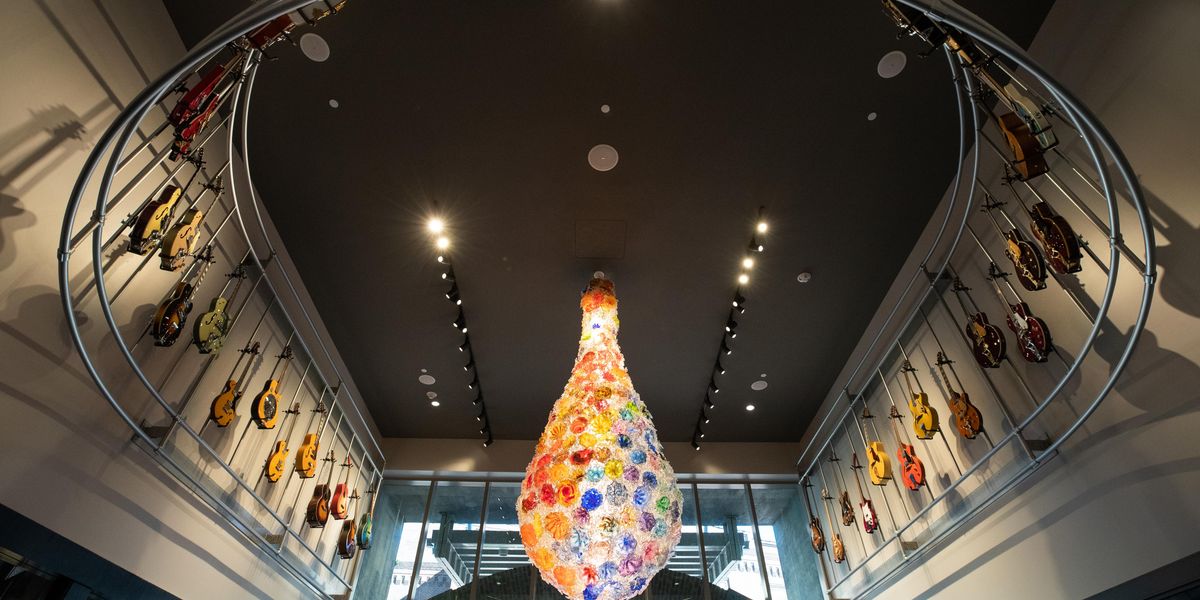
Striking a chord! New Savannah museum tells the storied history of Gretsch instruments
Drums, guitars, history, business and education have come together in a spectacular new interactive museum and exhibit in downtown Savannah that will pique the interest of any music lover. That Great Gretsch Sound! museum is a new destination where Georgia Southern University helps tell the story of a family-owned company that is still regarded as one of the music industry’s most influential and innovative instrument manufacturers. The permanent display of music memorabilia, highlighting more than 135 years of Gretsch instruments, is featured in District Live’s new lobby and performance space on the banks of the Savannah River. The museum is the latest addition to the Plant Riverside District. The museum’s opening was recently featured in Premium Guitar : The exhibit space highlights some of the most popular and unique pieces of Gretsch's historic catalog. The museum lobby features some of the most iconic instruments the company has produced, including the White Falcon™, the Chet Atkins® Country Gentleman®, a Brian Setzer Signature G6120, and a vintage 1963 Jet™ Firebird popularized by AC/DC's Malcolm Young. In the District Live performance hall, visitors will be treated to a visual timeline that will allow them to explore the evolution of Gretsch instruments dating back to the 1920s. Approximately 100 guitars are on display in the exhibit, 48 of which were recently on display in Nashville's Country Music Hall of Fame. The museum was developed through a special partnership between the Fred and Dinah Gretsch School of Music at Georgia Southern University and The Kessler Collection. In addition to the instruments that line the performance hall and upper section of the lobby, the museum features three sound dome displays with original videos that highlight Gretsch history, instrument production, the worldwide community of past and present Gretsch artists from Chet Atkins and George Harrison to Phil Collins, and the family's storied commitment to music education. Several other display cases take guests on a visual journey from Gretsch's beginnings as a local manufacturer of calf-skin drums, banjos, and accordions to one of the most popular and sought-after producers of guitars and drums during the height of the Rock & Roll era. Downtown Savannah is now helping tell that Gretsch story. The Gretsch museum includes Gretsch instruments and storyboards with QR code links to detailed narratives. "We hope this new museum will preserve the long history and legacy of the Gretsch Family and the Gretsch Brand," Dinah Gretsch said. "It is wonderful to share our history with the city of Savannah, the loyal Gretsch fans and all the tourists that will visit the museum." The museum's artifacts were curated and installed by Aaron Phillips, Georgia Southern's project curator for the Fred and Dinah Gretsch Artifacts Collection. Through his research to prepare the museum, he is confident that the Gretsch Museum will provide a unique musical experience. "My goal was to create a space that is expressive, inspirational, and true to the roots of the Gretsch family and community," Phillips said. "I am in awe of how this turned out!" To learn more – the full media release from Georgia Southern is attached below: If you’re a journalist looking to cover That Great Gretsch Sound! – then let us help. Aaron Phillips, Georgia Southern's project curator for the Fred and Dinah Gretsch Artifacts Collection is available, simply reach out to Georgia Southern Director of Communications Jennifer Wise at jwise@georgiasouthern.edu to arrange an interview today.


Is it better to give than receive? Our expert explains the science behind holiday gift giving
It's the holiday season -- full of merriment and cheer and gift giving. But why do we give gifts? And why is it a ritual that cuts across cultures on just about every continent on Earth? UConn professor Dimitris Xygalatas, an expert in human rituals, details the social science behind the centuries old tradition of exchanging gifts in a new essay for The Conversation: From the shells exchanged by Pacific islanders to the toys and sweaters placed under Christmas trees, sharing has always been at the center of many ritual traditions. This is fundamentally different from other forms of material exchange, like trade or barter. For the Massim, exchanging a shell necklace for a shell armband is not the same as trading yam for fish, just as giving a birthday present is not the same as handing a cashier money to purchase groceries. This speaks to a more general rule of ceremonial actions: they are not what they appear to be. Unlike ordinary behaviors, ritual actions are nonutilitarian. It is this very lack of obvious utility that makes them special. Professor Xygalatas is an anthropologist and cognitive scientist at the University of Connecticut who specializes in some of the things that make us human, including ritual, sports, music, cooperation, and the interaction between cognition and culture. He is available to speak with media, answering all your holiday ritual questions. Click on his icon to arrange an interview today.

Squid Game: why you shouldn’t be too hard on translators
By David Orrego-Carmona Squid Game has recently become Netflix’s biggest debut ever, but the show has sparked controversy due to its English subtitles. This occurred after a Korean-speaking viewer took to Twitter and TikTok to criticise the subtitles for providing a “botched” translation, claiming: “If you don’t understand Korean you didn’t really watch the same show.” Only this year, Squid Game, Lupin, and Money Heist – all non-English originals – have consistently been at the top of Netflix’s most-watched shows globally. This growing popularity of productions in languages other than English and streaming platforms investing more in them has led to an increase in the visibility of the work of translators. When it comes to translating films and series, subtitling and dubbing are the most common forms of translation. Subtitles show the dialogue translated into text displayed at the bottom of the screen; while in dubbing, the original voices of the characters are replaced with voices in a new language. Translation is not new to viewers, but the instant, almost frictionless access to different language versions of the same film or show definitely is. Streaming platforms allow viewers to swiftly change from watching a film with subtitles to listening to the dubbed version or the original. This creates an opportunity for viewers to compare the different versions. Why do originals and translations differ? Just because the translation doesn’t say exactly the same as the original, it doesn’t mean it’s wrong. Films and TV series are packed with cultural references, wordplay and jokes that require changes and adaptation to make sure what’s said and seen on screen makes sense across languages. Making allowances and adapting what’s said are common practices in translation because, otherwise, the translators would need to include detailed notes to explain cultural differences. Consider the representations of washoku (traditional Japanese cuisine) which are so beautifully embedded in Studio Ghibli films. While additional explanations about the significance of harmony, kinship and care represented in the bowls of ramen in Ponyo or the soft steaming red bean buns in Spirited Away could be interesting, they might get in the way of a viewer who just wants to enjoy the production. Professional translators analyse the source content, understand the context, and consider the needs of the variety of viewers who will be watching. They then look for translation solutions that create an immersive experience for viewers who cannot fully access the original. Translators, similarly to screenwriters and filmmakers, need to make sure they provide good, engaging storytelling; sometimes that implies compromises. For instance, some original dialogue from season two of Money Heist uses the expression “somanta de hostias”. Literally, “hostia” means host – as in the sacramental bread which is taken during communion at a church service. But it is also Spanish religious slang used as an expletive. Original: Alberto, como baje del coche, te voy a dar una somanta de hostias que no te vas ni a mantener en pie. Literal translation: Alberto, if I get out the car, I’m going to give you such a hell (hostia) of a beating that you won’t be able to stay on your feet. Dubbed version: If I have to get out of the car, I’m gonna beat you so hard you don’t know what day it is. Subtitles: Alberto, if I get out of the car, I’ll beat you senseless. The dubbed version of the dialogue adopts the English expression “to beat someone”. The subtitled version uses the same expression but offers a shorter sentence. The difference between the two renderings reflects the constraints of each form of translation. In dubbing, if the lip movements don’t match the sound, viewers often feel disconnected from the content. Equally, if subtitles are too wordy or poorly timed, viewers could become frustrated when reading them. Dubbing needs to match the duration of the original dialogue, follow the same delivery to fit the gesticulations of the characters, and adjust to the lip movements of the actors on the screen. Subtitles, on the other hand, need to be read quickly to keep up with the pace of the film. We talk faster than we can read, so subtitles rarely include all the spoken words. The longer the subtitle, the longer the viewer will take to read it and the less time they will have to watch. According to Netflix policies, for example, subtitles can’t have more than two lines and 42 characters, and shouldn’t stay on the screen for longer than seven seconds. Additionally, in the above example, the translations do not reflect the reference to religious slang, typical of Spanish culture. Rather than fixating on this reference and assuming it is an essential part of the dialogue, a good translator would consider what an English-speaking character would say in this context and find a suitable alternative that will sound natural and make sense to the viewer. New rules of engagement It is encouraging to see that some viewers are so devoted to the content they watch: foreign films and TV shows help promote cultural understanding and empathy. But not all viewers act in the same way and the solutions provided by the translators need to cater to everyone who decides to watch the show. This leads to different viewing experiences, but it only reflects the reality of watching any culturally charged product, even in our own languages. In English, for instance, consider all the references and nuances that a British viewer could miss when watching an English-language film produced in South Africa, Jamaica or Pakistan. Translators do not blindly look for literal translations. On the contrary, in the translation profession, hints of literal translation often signal low-quality work. Translators focus on meaning and, in the case of films and series, will endeavour to provide viewers with a product that will create a similar experience to the original. The case of Squid Game has been instrumental in bringing discussions about translation to the fore. Of course there are good and bad translations, but the main gain here is the opportunity to debate what determines this. Through such discussions, viewers are becoming more aware of the role and complexities of translation.


Aston University to host event for new incoming students aimed at ‘building better democracy’
University experts have developed a unique online system which combines evidence and values to create effective decision-making The Deliberative Practice Network (DPN) has been used for creative teaching over the past three years and is now being looked at as a tool for online democracy The event will create a unique learning experience for new students and others using in-depth deliberation to consider a topical social issue. Aston University will host an event at the end of Welcome Week 2021 aimed at creating a unique learning experience for new students and others using in-depth deliberation to consider a topical social issue. Experts from the University have developed a unique online system called the Deliberative Practice Network (DPN) which combines evidence and values to create effective decision-making. Their system has been used for creative teaching over the past three years and is now being looked at as a tool for online democracy. As part of this pilot project, a ‘deliberative event’ will be held in the Wright Lecture Theatre on Saturday 25 September, at the end of Induction Week, open to everyone interested in 'building better democracy'. At the start of the day the newsworthy issue of ‘mandatory vaccination against Covid’ will be presented; complemented by talks: ‘Vaccination 101’, ‘Available Data’ and ‘Vaccine passport and live music events’. Voting and commenting on a controversial proposal will be encouraged via the DPN, and results will be instantly available. Speakers will then put the case for and against the proposal and delegates will be encouraged to debate in groups, and online. David Seedhouse, professor of Deliberative Practice at Aston Pharmacy School, said: “The event is open to all who wish to explore inclusive democracy, informed debate, and online decision-making. It will interest delegates from a wide range of backgrounds. “It can be difficult for citizens to have a say about decisions which affect us so we want to provide an example of a more inclusive form of democracy, based on detailed consideration over time, rather than a one-off show of hands.” Dr Patrycja Rozbicka, senior lecturer in politics and international relations at the School of Sciences and Humanities at Aston University, said: “This event will be an opportunity for new students to get engaged with what we do at Aston University and to have a bit of fun, before classes kick in. “Over a week there will be more information and discussion, culminating in a second vote on the original proposal." Dr Killian Mullan, lecturer in sociology and policy at Aston University, said: “This event is a fantastic opportunity for students to engage in critical, open, and informed debate on a crucial topic affecting society, helping students develop skills in evaluating competing arguments.” You can sign up to attend the free event HERE.

Baylor Expert: 9/11 Reshaped Every Aspect of American Life – Not Necessarily for the Better
English professor, culture expert says terror attacks damaged America, but it’s not too late to recover sense of purpose and generosity The Sept. 11, 2001, terrorist attacks on the World Trade Center and the Pentagon continue – 20 years later – to have profound effects on everything from America’s political, religious and cultural polarization to American entertainment choices, said Baylor University faith and culture expert Greg Garrett, Ph.D., professor of English. “It shouldn’t surprise anyone that an event that shook our sense of security and our identity would be reflected in every aspect of American life,” Garrett said. “But what does surprise and alarm me is the degree to which 9/11 continues to shape our attitudes about race, religion, immigration and the Other, whether that Other is in Afghanistan or just across town. The United States initiated a perpetual war against terror in response to the 9/11 attacks, and the fear that took root in the American psyche has proven difficult to shake.” Garrett, author of more than two dozen books, is internationally recognized as an expert on faith, culture, race and story, and he argues that the reaction to 9/11 can be measured just as much through literature and culture as through accounts of executive orders and covert military operations. Country music, procedurals and reality TV after 9/11 “Initially, Americans supported the War on Terror across political, religious and cultural lines,” Garrett said. “Country musicians like Toby Keith leaned into militant songs about American greatness and righteous revenge. The top-selling act the Chicks (then the Dixie Chicks) was drummed out of country music for their public stand against going to war. The TV show 24 reflected the growing darkness of America’s extra-legal approach to that war—the willingness to use torture, rendition and the opening of a dark site in Guantanamo Bay to house suspected terrorists—and it actually shaped opinion and policy as it grew in popularity and influence.” Two other types of television shows became extremely popular as a result of 9/11, Garrett said. Procedurals (shows such as CSI, Law and Order and House, M.D.) gained a new popularity because they offered viewers something the ongoing War on Terror never could or will: closure. “A serious problem was introduced in every episode, grappled with and solved by the end of an hour,” he said. Another type of show that leapt in popularity in the months and years following the attacks – reality shows – offered “train-wreck escapism,” Garrett said. “The contestants on Survivor and The Bachelor, and the wayward souls on Jersey Shore and Keeping Up with the Kardashians, presented exaggerated versions of our present moment that allowed viewers to forget about the dark actuality of the times,” he said. Springsteen, Harry Potter and critiquing ‘moral failures of the War on Terror’ Not all popular culture offered reinforcement or escapism, Garrett said, adding that some of the most powerful pop culture from 2001 onward critiqued the “moral failures of the War on Terror and critiqued the American people for so readily accepting them.” “Punk rock, always a prime medium for protest, was one of the earliest forms of dissent,” Garrett said. Green Day’s 2004 album American Idiot reached the top of the charts in the United States and 18 other countries, ultimately selling 16 million albums. But mainstream acts like Bruce Springsteen also asked complicating questions about the attacks and their aftermath. “After primarily offering empathy and comfort in The Rising (2002), Springsteen realized that America had betrayed many of its most important ideals, as revealed by songs like ‘Your Own Worst Enemy’ on the No. 1 2007 album Magic,” Garrett said. “Later novels in J. K. Rowling’s Harry Potter series, the most popular fictional narrative of all time, introduce questions of torture and terror, and powerful TV dramas like Battlestar Galactica and the British import Doctor Who also criticize the choices made by the American government and its allies.” Zombies and the Apocalypse Perhaps the most significant byproduct of 9/11 in our culture is the resurgence in apocalyptic stories such as 28 Days Later, Sean of the Dead, The Walking Dead, Game of Thrones, World War Z and The Road, Garrett said. Stories about the Zombie Apocalypse – whether in games, books, comics, TV or movies – asked serious questions about what it means to be human, and about what moral compromises a person might be willing to take to stay alive, Garrett explained. They also reflected the new 24/7 sense of encroaching menace that “seeped into our culture and lit up our phones at all hours of the day and night.” “You could fight all day every day against this menace, these creatures who look like humans but seek your destruction. And then the next morning, you still have to rise and confront it again,” Garrett said. ‘Not too late’ “People 20 years ago said that 9/11 changed everything, and so it did.” Garrett said. “But 20 years later it is not too late to recognize that the fears those attacks brought to the surface don’t have to be the way we continue to live. In my faith tradition, Jesus constantly admonishes his followers not to be so afraid. We make bad and selfish decisions out of fear. We abridge hospitality, compassion and liberty when we believe we are endangered. That’s not the America I grew up in, and it’s not the America in which I hope to die. That America, the light of the world, the city on a hill, Lady Liberty lifting her torch to welcome all, is the America that our founders dreamed, and that we can dream once again.” ABOUT GREG GARRETT, PH.D Greg Garrett, Ph.D., is a professor of English at Baylor University and Theologian-in-Residence at the American Cathedral of the Holy Trinity in Paris. An award-winning professor, Garrett has written about 9/11 and its aftermath in a number of books, including One Fine Potion: The Literary Magic of Harry Potter (Baylor University Press), Living with the Living Dead: The Wisdom of the Zombie Apocalypse, and A Long, Long Way: Hollywood’s Unfinished Journey from Racism to Reconciliation (both Oxford University Press). ABOUT BAYLOR UNIVERSITY Baylor University is a private Christian University and a nationally ranked research institution. The University provides a vibrant campus community for more than 19,000 students by blending interdisciplinary research with an international reputation for educational excellence and a faculty commitment to teaching and scholarship. Chartered in 1845 by the Republic of Texas through the efforts of Baptist pioneers, Baylor is the oldest continually operating University in Texas. Located in Waco, Baylor welcomes students from all 50 states and more than 90 countries to study a broad range of degrees among its 12 nationally recognized academic divisions. ABOUT THE COLLEGE OF ARTS & SCIENCES AT BAYLOR UNIVERSITY The College of Arts & Sciences is Baylor University’s largest academic division, consisting of 25 academic departments and eight academic centers and institutes. The more than 5,000 courses taught in the College span topics from art and theatre to religion, philosophy, sociology and the natural sciences. Faculty conduct research around the world, and research on the undergraduate and graduate level is prevalent throughout all disciplines. Visit baylor.edu/artsandsciences.


Gas boiler ban: how to make sure everyone can afford low-carbon heating
Most of us only think about central heating when it stops working or when the fuel bills arrive. So reports of an impending ban on gas boilers in the UK – and news that green alternatives such as heat pumps can cost over £10,000 – might have been a nasty shock for many. Most UK households rely on gas boilers, which are more efficient than ever, but still burn fossil fuels. As a result, domestic heating accounts for over a third of greenhouse gas emissions and almost half of energy consumption nationwide. Tackling climate change means changing how we heat our homes. But this is possible without turning warmth and comfort into unaffordable luxuries. Our research has looked at how business models can break this trade-off between people and the planet. One involves reimagining heating as a service. When buying a boiler, a customer typically pays someone to buy and install it. They then sign a contract with an energy company to provide the fuel and find another service provider to fix the boiler when it breaks down. Wouldn’t it be simpler to sign one contract with one company that could guarantee a steady supply of heat? A manufacturer would be responsible for installing the heating system and for ensuring it works. Since the manufacturer would be paid for delivering heat, you wouldn’t be billed for repairs or have to pay steep upfront installation costs – you’d simply have to keep up with flat monthly payments. By aligning the objectives of all parties, “heat as a service” allows the risks and rewards of investing in new technologies like heat pumps to be shared. Fuelling poverty Low-carbon technologies such as heat pumps can go a long way to achieving net zero targets. Unlike a boiler, heat pumps move heat from warm to cold spaces rather than generate it, operating in a similar way to air conditioning. Heat pumps run on electricity and can reduce greenhouse gas emissions if their power comes from low-carbon sources. Waste heat from sewage plants and other facilities can even be redirected to supply home central heating systems with the right infrastructure, such as district heat networks. But most UK homes have gas on tap, and new heating technologies are expensive to install and manage. Much of the required infrastructure needs to be funded. Heat pumps decarbonise home heating by replacing fossil fuel burning boilers. I AM NIKOM/Shutterstock Over two million households in England suffer from fuel poverty. This means that paying fuel bills would leave them with nothing left over for food and other necessities. More efficient, low-carbon heating can bring those bills down, but when faced with the decision to heat or eat, is it fair to expect people to invest in expensive technology? If these technologies are unaffordable, can we hope for the needed revolution in domestic heating? The slow adoption of rooftop solar panels and electric cars demonstrates what a hard sell these technologies can be for cash-strapped consumers. Technology is not enough. Instead, we need to change the business logic for bringing technology into our homes. Heat as a service Digital technology has made it easier for almost everything we use, from music to cars and clothing, to be delivered as a service. Record stores selling albums now compete with online streaming services which offer a vast library of music ready to be played with a monthly subscription. Taxi drivers and car dealers have had to adjust to ride-sharing services and even fast-fashion companies are now threatened by online rental services, which help old clothes find new purpose. Businesses offer software as a service and even manufacturing as a service, which take away the need for upfront investment and unexpected bills and allow customers to access and pay for what they need with a single fee or subscription. Heat as a service does something similar by cutting out the complexity of installing, maintaining and fuelling a boiler or heat pump. In the winter of 2017, over 100 UK homes were offered a heat plan, which guaranteed an indoor temperature for an arranged monthly fee. Customers often struggle to keep track of how much they spend on heating, so the plan offered some peace of mind. The trial involved collaboration between local authorities, an energy company and a boiler manufacturer, plus digital tool providers that helped monitor and control the temperature. Most participants found they were more comfortable and were more likely to consider low-carbon heating on its own, and particularly as part of an arrangement like heat as a service. Paying for heating technologies that are kinder to the planet is likely to be too expensive for lots of people. Relying on households to make these preparations on their own would also be disastrous for decarbonisation. A recent report by the International Energy Agency forecasted that less than 5% of the total emissions reductions needed to reach net zero by 2050 can be expected to come from such behaviour changes among the general public. Rather than expecting households to buy heat pumps, states and energy utilities should offer them low-carbon heating as a service. This article was co-written by Ahmad Beltagui, Andreas Schroeder, and Omid Omidvar, of Aston University

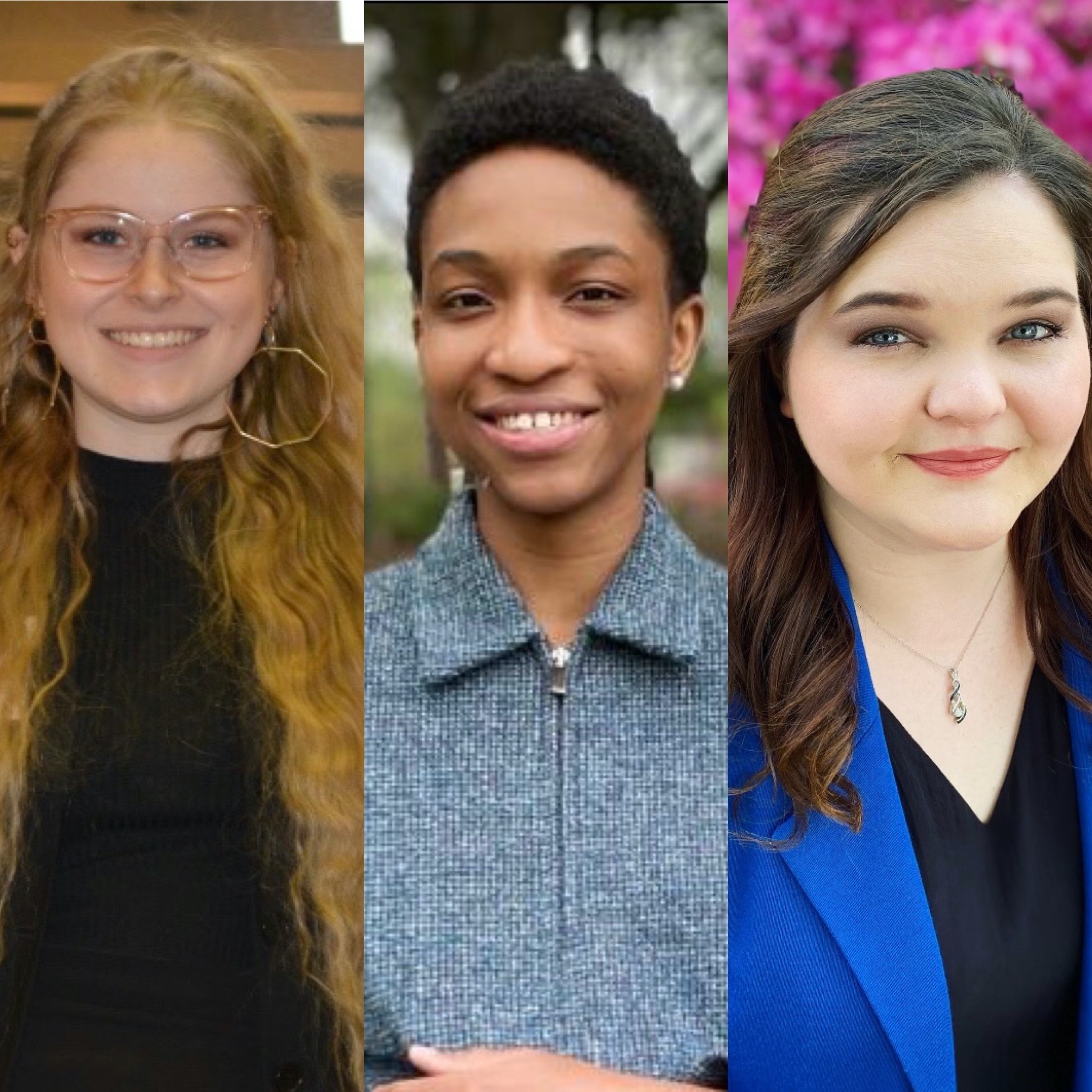
Ambitious student research collaborations with faculty members often lead to much more than good grades. The mentorships encourage professional growth, confidence and creativity, even in the midst of a pandemic. Georgia Southern University’s Spring 2021 Honors Research Symposium, which is being held virtually April 26 through April 30, will showcase faculty-student partnerships through a broad range of scholarly and creative research projects produced by more than 100 honors students across multiple disciplines on the Statesboro and Armstrong campuses. A few of the presenters include: Chelsea Riley, a triple major in international studies, political science and Spanish, worked with political science and international studies professor Srobana Bhattacharya, Ph.D., on her thesis, “The Culture Gap: The Role of Culture in Successful Refugee Settlement.” History and English major Jacey Thomas, mentored by associate professor of history Alan Downs, Ph.D., will present, “Irish Rock Music amid a Time of Troubles: Thin Lizzy and U2 as a Bridge During a Time of Division.” Biology major Susan Ihejirika’s presentation, “A Forward Genetic Screen to Identify Human Genes of Interest and Their Roles in Ovarian Cancer,” was guided by biology assistant professor Dongyu Jia, Ph.D. The Honors College, as the university-wide center for excellence in undergraduate education, plays a crucial role with undergraduate research at Georgia Southern. Since the beginning of the College, students have been required to complete honors theses or capstone projects. The faculty-mentored projects have spanned traditional research models, applied research and creative activities in all academic colleges and majors. “Through faculty-mentored research and scholarly activities, honors students create new knowledge and the Honors Research Symposium is the venue where we share it with the broader scholarly community,” said Honors College Dean Steven Engel, Ph.D. “ I am proud of the fact that they have been able to complete these projects despite the challenges of the past year.” Presentations will be posted on YouTube and the comments section will be open for audience engagement with presenters. If you're a journalist looking to learn more about this year’s Honors Research Symposium — simply reach out to Georgia Southern Director of Communications Jennifer Wise at jwise@georgiasouthern.edu.