
Experts Matter. Find Yours.
Connect for media, speaking, professional opportunities & more.

Decoding the Future of AI: From Disruption to Democratisation and Beyond
The global AI landscape has become a melting pot for innovation, with diverse thinking pushing the boundaries of what is possible. Its application extends beyond just technology, reshaping traditional business models and redefining how enterprises, governments, and societies operate. Advancements in model architectures, training techniques and the proliferation of open-source tools are lowering barriers to entry, enabling organisations of all sizes to develop competitive AI solutions with significantly fewer resources. As a result, the long-standing notion that AI leadership is reserved for entities with vast computational and financial resources is being challenged. This shift is also redrawing the global AI power balance, with a decentralised approach to AI where competition and collaboration coexist across different regions. As AI development becomes more distributed, investment strategies, enterprise innovation and global technological leadership are being reshaped. However, established AI powerhouses still wield significant leverage, driving an intense competitive cycle of rapid innovation. Amid this acceleration, it is critical to distinguish true technological breakthroughs from over-hyped narratives, adopting a measured, data-driven approach that balances innovation with demonstrable business value and robust ethical AI guardrails. Implications of the Evolving AI Landscape The democratisation of AI advancements, intensifying competitive pressures, the critical need for efficiency and sustainability, evolving geopolitical dynamics and the global race for skilled talent are all fuelling the development of AI worldwide. These dynamics are paving the way for a global balance of technological leadership. Democratisation of AI Potential The ability to develop competitive AI models at lower costs is not only broadening participation but also reshaping how AI is created, deployed and controlled. Open-source AI fosters innovation by enabling startups, researchers, and enterprises to collaborate and iterate rapidly, leading to diverse applications across industries. For example, xAI has made a significant move in the tech world by open sourcing its Grok AI chatbot model, potentially accelerating the democratisation of AI and fostering innovation. However, greater accessibility can also introduce challenges, including risks of misuse, uneven governance, and concerns over intellectual property. Additionally, as companies strategically leverage open-source AI to influence market dynamics, questions arise about the evolving balance between open innovation and proprietary control. Increased Competitive Pressure The AI industry is fuelled by a relentless drive to stay ahead of the competition, a pressure felt equally by Big Tech and startups. This is accelerating the release of new AI services, as companies strive to meet growing consumer demand for intelligent solutions. The risk of market disruption is significant; those who lag, face being eclipsed by more agile players. To survive and thrive, differentiation is paramount. Companies are laser-focused on developing unique AI capabilities and applications, creating a marketplace where constant adaptation and strategic innovation are crucial for success. Resource Optimisation and Sustainability The trend toward accessible AI necessitates resource optimisation, which means developing models with significantly less computational power, energy consumption and training data. This is not just about cost; it is crucial for sustainability. Training large AI models is energy-intensive; for example, training GPT-3, a 175-billion-parameter model, is believed to have consumed 1,287 MWh of electricity, equivalent to an average American household’s use over 120 years1. This drives innovation in model compression, transfer learning, and specialised hardware, like NVIDIA’s TensorRT. Small language models (SLMs) are a key development, offering comparable performance to larger models with drastically reduced resource needs. This makes them ideal for edge devices and resource-constrained environments, furthering both accessibility and sustainability across the AI lifecycle. Multifaceted Global AI Landscape The global AI landscape is increasingly defined by regional strengths and priorities. The US, with its strength in cloud infrastructure and software ecosystem, leads in “short-chain innovation”, rapidly translating AI research into commercial products. Meanwhile, China excels in “long-chain innovation”, deeply integrating AI into its extended manufacturing and industrial processes. Europe prioritises ethical, open and collaborative AI, while the APAC counterparts showcase a diversity of approaches. Underlying these regional variations is a shared trajectory for the evolution of AI, increasingly guided by principles of responsible AI: encompassing ethics, sustainability and open innovation, although the specific implementations and stages of advancement differ across regions. The Critical Talent Factor The evolving AI landscape necessitates a skilled workforce. Demand for professionals with expertise in AI and machine learning, data analysis, and related fields is rapidly increasing. This creates a talent gap that businesses must address through upskilling and reskilling initiatives. For example, Microsoft has launched an AI Skills Initiative, including free coursework and a grant program, to help individuals and organisations globally develop generative AI skills. What does this mean for today’s enterprise? New Business Horizons AI is no longer just an efficiency tool; it is a catalyst for entirely new business models. Enterprises that rethink their value propositions through AI-driven specialisation will unlock niche opportunities and reshape industries. In financial services, for example, AI is fundamentally transforming operations, risk management, customer interactions, and product development, leading to new levels of efficiency, personalisation and innovation. Navigating AI Integration and Adoption Integrating AI is not just about deployment; it is about ensuring enterprises are structurally prepared. Legacy IT architectures, fragmented data ecosystems and rigid workflows can hinder the full potential of AI. Organisations must invest in cloud scalability, intelligent automation and agile operating models to make AI a seamless extension of their business. Equally critical is ensuring workforce readiness, which involves strategically embedding AI literacy across all organisational functions and proactively reskilling talent to collaborate effectively with intelligent systems. Embracing Responsible AI Ethical considerations, data security and privacy are no longer afterthoughts but are becoming key differentiators. Organisations that embed responsible AI principles at the core of their strategy, rather than treating them as compliance check boxes, will build stronger customer trust and long-term resilience. This requires proactive bias mitigation, explainable AI frameworks, robust data governance and continuous monitoring for potential risks. Call to Action: Embracing a Balanced Approach The AI revolution is underway. It demands a balanced and proactive response. Enterprises must invest in their talent and reskilling initiatives to bridge the AI skills gap, modernise their infrastructure to support AI integration and scalability and embed responsible AI principles at the core of their strategy, ensuring fairness, transparency and accountability. Simultaneously, researchers must continue to push the boundaries of AI’s potential while prioritising energy efficiency and minimising environmental impact; policymakers must create frameworks that foster responsible innovation and sustainable growth. This necessitates combining innovative research with practical enterprise applications and a steadfast commitment to ethical and sustainable AI principles. The rapid evolution of AI presents both an imperative and an opportunity. The next chapter of AI will be defined by those who harness its potential responsibly while balancing technological progress with real-world impact. Resources Sudhir Pai: Executive Vice President and Chief Technology & Innovation Officer, Global Financial Services, Capgemini Professor Aleks Subic: Vice-Chancellor and Chief Executive, Aston University, Birmingham, UK Alexeis Garcia Perez: Professor of Digital Business & Society, Aston University, Birmingham, UK Gareth Wilson: Executive Vice President | Global Banking Industry Lead, Capgemini 1 https://www.datacenterdynamics.com/en/news/researchers-claim-they-can-cut-ai-training-energy-demands-by-75/?itm_source=Bibblio&itm_campaign=Bibblio-related&itm_medium=Bibblio-article-related


Weird and complex life emerged on Earth as the planet's magnetic field gave way
The Earth’s magnetic field plays a key role in making the planet habitable. It shields lifeforms from harmful solar and cosmic radiation. It helps limit erosion of the atmosphere and keeps water from escaping into space. But new data show a prolonged near collapse of Earth’s magnetic field that took place some 575-565 million years ago coincided with the blossoming of macroscopic complex animal life. We now face the possibility of a new, unexpected twist in how life might relate to the magnetic field, says John A. Tarduno, the William R. Kenan Professor of Geophysics and the dean of research at the School of Arts and Sciences and the Hajim School of Engineering and Applied Sciences at the University of Rochester. “That twist could reach deep into Earth’s inner core,” says Tarduno, who recently wrote about the findings for Physics Today magazine. Tarduno is frequently cited by news outlets, like CNN, The Washington Post, and Smithsonian magazine, on matters related to the Earth’s inner core, or dynamo, and magnetic field. He can be reached at john.tarduno@rochester.edu.


How the Black Sea ceasefire could backfire for Ukraine
Washington is touting the proposed Black Sea ceasefire between Ukraine and Russia, but there are signs that Russia could emerge from the deal with the upper hand. Hein Goemans, a political science professor at the University of Rochester whose research focuses on territorial disputes and what starts and ends wars, says the agreement “doesn’t really mean much.” “What matters is territorial divisions,” Goemans says. “I see this ceasefire deal as Russia trying to play the United States.” Goemans says the deal would be reasonable if the U.S. were willing to enforce it with sanctions if, or when, Russia reneges. “Ukraine should not believe this deal is in any way credible if the U.S. is not willing to commit to sanctions if Russia reneges, which it will,” Goemans says. He adds that the deal also favors Russia if other parts of it, like the repatriation of Ukrainian children, are not effected. “The chance that Russia would effectively help with the repatriation of Ukrainian abducted children is zero,” Goemans says. “It appears Russia has not compromised on any dimension.” Goemans recently shared similar thoughts with Newsweek, and is regularly tapped by news outlets around the world for his insights on the war in Ukraine and territorial disputes in hotspots across the globe. Reach Goemans by clicking on his profile.


Off-channel communications (OCC) occur when employees use unapproved and inadequately protected devices – such as personal cellphones – or applications to communicate with co-workers, counterparties and / or clients. Many financial services firms are required to maintain copies of all communications regarding their business, supervise the same, and produce them in response to regulatory requests. Firms cannot meet those compliance obligations when employees resort to unauthorized OCC for business-related matters. In charging 15 broker-dealers and one affiliated investment advisor in September 2022 with record-keeping violations, the SEC noted that its investigation uncovered employees at all levels of these firms who routinely used text messaging apps on their personal devices to discuss business matters between January 2018 and September 2021 [1]. The firms settled the charges and agreed to pay penalties totaling more than $1.1 billion. Just as important, the firms also agreed to engage independent compliance consultants to ensure the use of OCC meets regulatory standards as part of the settlements. In a related move [2], the Commodity Futures Trading Commission (CFTC) ordered 11 financial institutions to pay more than $710 million for recordkeeping and supervision failures for widespread use of unapproved communication methods such as personal texts, WhatsApp, and Signal. Additionally, the Financial Industry Regulatory Authority (FINRA) has also taken action when it comes to OCC. Antonio Rega, digital forensics, data governance, privacy, security, emerging technology, and discovery expert with J.S. Held, observes, “While the current administration has loosened certain regulatory enforcement near-term, we continue to observe requests from clients in supporting management of “off-channel” communications, with a particular focus on 3rd party chat messaging platforms on mobile devices, such as Whatsapp. These inquiries include supporting corporate stakeholders with internal auditing of their organizational platforms, policies and procedures.” By implementing effective processes and utilizing software and outside experts to monitor and detect OCC, broker-dealers, investment advisers, and other financial institutions can reduce the risk of regulatory enforcement and penalties and ensure that they remain in compliance with regulations. Steve Strombelline, regulatory and enterprise risk management expert with J.S. Held adds, “Although concerns typically impact broker-dealers, firms outside of financial sectors are looking closely at their messaging processes as well, which is advisable." In addition to guaranteeing that these communications are properly documented and retained, the regulations are set up to prevent the use of OCC to manipulate securities transactions or commit fraud and to ensure that it is not used to violate any other securities laws. Firms’ supervisory procedures must be reasonably designed to detect for OCC when they monitor for such activity. The following article discusses the risks that OCC pose for financial services firms, especially as the SEC, FINRA, and the CFTC have made it clear that they are now targeting firms throughout the industry about their OCC to see if they are recording and preserving business information according to regulations. The piece also explains how firms, including broker-dealers of all sizes, should manage their OCC to ensure that they and their employees comply with federal securities laws and regulations. Finally, the authors address the complexity related to the collection of OCC in response to regulatory enforcement investigative requests. As the fines and settlements between those firms and the SEC exemplify, financial services firms of all sizes need to take this regulatory focus seriously and take the proactive step of engaging an independent third-party with expertise and experience in both digital forensics and compliance issues. To read the full article and learn more about the risk of off-channel communications and how companies should manage their OCC to remain compliant, click on the button below: To connect with Antonio Rega simply click on his icon now. To arrange a conversation with Steve Strombelline or any other media inquiries - contact : Kristi L. Stathis, J.S. Held +1 786 833 4864 Kristi.Stathis@JSHeld.com References [1] https://www.sec.gov/news/press-release/2022-174 [2] https://www.cftc.gov/PressRoom/PressReleases/8599-22


A Bumpy Ride Ahead for HigherEd
A confluence of political, economic, and social challenges is threatening the very fabric of US universities. In both red and blue states, the political and economic headwinds facing institutions are fierce, public skepticism is high, and social media has become a polarizing battleground of filter bubbles filled with mis/disinformation. Universities find themselves squeezed by funding cuts, scrutinized by lawmakers, and caught in cultural crossfire. This presents a unique challenge for communications professionals. In this era of declining trust and “alternative facts,” they need to be hyper-informed, adapt quickly, and boldly emphasize the critical value institutions have in society. Communications should function as a vital link, bridging this growing divide between town and gown. In red and blue states, the political and economic headwinds hitting higher education are fierce, public skepticism is high, and social media has become a polarizing battleground of filter bubbles filled with mis/disinformation. It's important to note that throughout history, universities often emerge stronger and more deeply connected to the public during times of turbulence. Universities played a key role in partnering with the government to implement Roosevelt's New Deal, helping with emergency relief and agricultural programs. They helped democratize education with the GI Bill after World War II. They responded to societal demands during the civil rights era. Most recently, they played a key role in public health amidst the COVID-19 pandemic. Campus communicators have a unique set of skills and a vital responsibility to steer their institutions through these tough times. But the road ahead will be hard. The New Reality for Campus Communicators Cuts to Research Funding The lifeblood of academic innovation—research dollars—is under threat. The new political regime in Washington is looking to cut billions in federal research funding. A sudden cap on NIH indirect costs (slashed to 15% from an average of 28%) will have a profound impact on programs. Many researchers report that major grants are frozen or are expected to shrink. This “budget axe” isn’t theoretical for research universities—it’s biting right now. Communicators must convey what’s at stake: essential contributions such as groundbreaking science, community health programs, and innovation pipelines that fuel the economy hang in the balance as money gets tighter. Increasing State Oversight & Regulation In state capitals, politicians are muscling into campus affairs like never before. Republican-controlled statehouses are overhauling higher education governance, introducing over 150 bills in 35 states aimed at tightening control over public institutions. Even tenure is threatened. In the past year, lawmakers in seven states moved to eliminate or curb tenure and impose stricter post-tenure reviews – an unprecedented encroachment on academic freedom. New laws and proposals are creating oversight committees, mandating changes to the curriculum, and even threatening funding for programs out of political favor. The message from some state capitols is clear: “We’re watching you.” This surge in oversight and regulatory meddling means university communicators must navigate an increasingly fine line, demonstrating transparency and accountability at every turn to appease regulators while fiercely defending their institution’s academic autonomy. Political Pressure and DEI Backlash Diversity, equity, and inclusion initiatives are under open attack. What began as partisan rhetoric has evolved into concrete threats – and actions – against campus diversity efforts. Dozens of states have passed or proposed laws to defund DEI offices, ban diversity training, or restrict teaching about race and gender. The result? An “inconsistent and confusing landscape” for colleges as they respond to swelling political pressure. The campaign against campus DEI has dramatically accelerated in 2025, turbocharged by signals from the Trump administration pushing to eliminate DEI efforts across government and higher ed. According to The Chronicle of Higher Education 270 campuses in 38 states have already scaled back or dismantled some DEI programs under this pressure. For communications teams, the DEI backlash creates a messaging minefield. They must affirm institutional values of inclusion and support for marginalized groups, even as those very programs face hostile scrutiny from powerful critics. Threats to the Federal Department of Education In Washington, the unthinkable is suddenly on the table: the U.S. Department of Education itself is in the crosshairs. President Trump has made good on campaign promises by signing an executive order to dismantle the Department of Education. While outright abolition requires Congress, the administration has already laid off nearly half of the department’s staff and moved to strip the agency to its bare bones. “We’re going to shut it down… it’s doing us no good,” Trump declared. This unprecedented move could upend federal support and guidelines for universities – from financial aid administration to civil rights enforcement – leaving states to fill the void. Communications professionals must reassure students, faculty, and the public that education won’t grind to a halt if federal oversight wanes. It’s a communications tightrope: acknowledging the potential for massive change while conveying stability in the university’s core mission. After all, even if Washington pulls back, universities still answer to accreditation bodies and the public trust. The Misinformation Deluge on Social Media The information ecosystem has never been more chaotic – or more dangerous. Universities are grappling with viral misinformation and disinformation that can ignite campus controversies overnight. In the age of TikTok rumors and politicized Twitter (or “X”) feeds, false narratives spread like wildfire before facts can catch up. Recent campus incidents have shown how quickly truth gets muddled: one university saw fake reports about a protest spread widely. At the same time, another dealt with a gross misinterpretation of a student gathering that went viral. Photos and videos are routinely ripped out of context or deliberately edited with misleading labels. The public, meanwhile, is “bombarded with misinformation” online and growing distrustful of experts. For higher ed communicators, countering misinformation means fighting a two-front war: rapidly correcting falsehoods about their institution and proactively pushing out accurate, compelling content to capture attention before the rumors do. Economic Uncertainty and Budget Turbulence. Even aside from targeted funding cuts, universities are feeling economic whiplash. Inflation, endowment fluctuations, and post-pandemic enrolment dips have collided to squeeze campus finances. Many institutions face structural deficits and tough choices about programs and staffing. In fact, according to the Chronicle of Higher Education, two-thirds of colleges now show at least one sign of financial stress – a startling statistic that underscores how widespread the budget crunch has become. From flagship public universities to small private colleges, hiring freezes and spending cuts are the order of the day. Every dollar is scrutinized by trustees and legislators alike. Communications pros must now operate in a climate of fiscal anxiety, where messages about any new initiative or expense can trigger questions about priorities. The task at hand is to highlight the university’s economic stewardship and continued value to students and the community, even as belts tighten. It’s critical to communicate that the institution is navigating the storm responsibly—protecting its academic core and maximizing the impact of every precious dollar. Demands to Prove Real-world Impact “What is higher ed really doing for society?” In 2025, that question echoes from state capitols, donors’ boards, and kitchen tables across America. Universities are under intense pressure to demonstrate the real-world value of their research and teaching like never before. Lawmakers openly discuss ROI (return on investment) for degrees and research grants, seeking data on graduates’ earnings and innovations spawned per taxpayer dollar. Public confidence in higher education has been shaken – a recent Gallup survey found Americans’ confidence in colleges has plummeted to 36%, down from 57% in 2015. Many believe in personal value (a college degree for better jobs) but doubt that higher education delivers for the greater good. In short, the public is skeptical whether campus research and scholarship are worth the cost. University communicators must do more than publicize exciting discoveries – they must connect the dots for people. Every media release, story, or tweet should answer: Here’s how this university’s work benefits you, your community, and the world. Whether it’s a medical breakthrough, a tech startup from the lab, or a student project solving a local problem, the mandate is clear: show impact or risk losing support. In my next post, I'll provide a detailed blueprint to help communications professionals proactively plan and organize their teams for the road ahead. This actionable framework will help you better identify where you can add value for your institution where it needs it the most and confirm your critical role as a trusted resource. To your success! Upcoming Speaking Events April 23 PRSA Virtual Workshop "Cutting Through the Noise: What Thought Leadership Strategies are Working in Today’s Environment” Register Here June 8 IABC World Conference, Vancouver “The Thought Leadership Blueprint: Why & How to Build a High-Impact Program” Register Here Sept. 12-13 PRSA East Central Conference, Cleveland “The New Comms Leadership Skillset” Register Here About ExpertFile ExpertFile is revolutionizing how organizations connect their experts to journalists, podcasters, and conference organizers who need to find credible experts on tight deadlines…fast. Featuring experts on over 50,000 topics, our free Apple and Android mobile app is the go-to resource for journalists at media outlets such as the New York Times, CNN, NPR Radio, Fox News, BBC, The Guardian, ABC News, CBC, AXIOS and Time Magazine. For over a decade, our award-winning software platform has been helping marketing departments better manage and promote their online thought leadership to reach a wider audience. Clients include Carnegie Mellon University, ChristianaCare Health, Villanova University, Aston University and Emory University. Learn more at: expertfile.com/getstarted



President Trump Plans Call to Putin
Dr. Meena Bose talked to Fox News Radio stations around the country about President Donald Trump’s planned call with Russian President Vladimir Putin to help negotiate a ceasefire and an eventual end to the war in Ukraine. Dr. Bose spoke to: WRVA in Richmond, VA; WBAP in Dallas, TX; and WFRK in Florence, SC; WHO in Des Moines, IA; and KURV in McAllen, TX. Dr. Bose is a Hofstra University professor of political science, executive dean of the Public Policy and Public Service program, and director of the Kalikow Center for the Study of the American Presidency.



Upheaval Among TV News Anchors
Mark Lukasiewicz, dean of The Lawrence Herbert School of Communication, talked to Newsday about the wave of notable news anchors and talk show hosts stepping down or being removed from their network or station lineup, including MSNBC anchor Joy Reid, NBC’s Lester Holt, CNN’s Jim Acosta, and CBS’s Norah O’Donnell. “I look at this unquestionably as the biggest collective period of upheaval in network TV news that we’ve seen in a very, very long time,” said Dean Lukasiewicz.


With aviation in the news, Florida Tech's Shem Malmquist offers insight and clarity
Recent news on the safety of airlines in America has detailed tragic fatalities, airplanes flipping over and some crashing into prominent city streets, which has shone a less than flattering light on what is supposed to be a safe industry. Given recent events, Florida Tech College of Aeronautics visiting assistant professor Shem Malmquist has appeared in high-profile interviews on both current and historic aviation incidents. Recently, he spoke with the Boston Globe, Rolling Stone and the news platform FedScoop to lend his insight and expertise as a pilot. Officials have repeatedly warned about a shortage of air traffic controllers. Pilots have made up for that gap by accepting visual approaches and separation from other airplanes to relieve some of the workloads off controllers, said Shem Malmquist, a pilot and visiting instructor at the Florida Institute of Technology, who teaches courses on aviation safety. He noted that was “part of the problem” with the D.C. collision. Still, flying remains safe because “pilots are overcoming the challenges in the system to prevent accidents,” Malmquist said. “Random distribution can create clusters like this. ... That doesn’t mean there’s more risk.” February 21 - Boston Globe One former pilot told FedScoop that the system can be overpopulated with notices, only some of which might be important for a pilot to understand before taking off. Still, there’s generally no automated way of sorting through these notices, which means they can be incredibly long and difficult to completely process before flights. The notices themselves are densely written and use terminology that is often not immediately discernible. An example provided by the FAA shows the notices’ unique format. Textual data can also limit the ability to modernize the NOTAM system, an FAA statement of objectives from 2023 noted. Shem Malmquist, a working pilot who also teaches at Florida Tech’s College of Aeronautics, said the entire NOTAM system “migrated from color pipe machines,” which locked in “certain abbreviations and codes” beyond their point of usefulness. “It’s really great for computers, which is kind of funny because it was created before computers,” Malmquist added. “But it’s … not really very user friendly for the way humans think.” February 21 -FedScoop Recently, Malmquist was featured on National Geographic's TV series, "Air Crash Investigation." There, he spoke about the China Eastern Airlines Flight 583 crash investigation from 1993. Looking to connect with Shem Malmquist regarding the airline industry? He's available. Click on his icon to arrange an interview today.


Expert Opinion: Maneuvering friendships in the age of half-truths can be challenging
I recently shared an op-ed written by my colleague and friend, Ted Petersen, on a few social media sites. His thoughtful piece advocated for media literacy education. Later that day I received an alert that someone had commented on my post. The comment, made by a dear friend, alluded to disinformation about U.S.A.I.D.’s use of funds ― a false assertion that the federal agency supported the news outlet Politico for partisan gain. The comment was a perfect example of why media literacy education is important ― not just for school children. It gives people the tools to navigate a borderless media environment in which news and opinion, verified facts and unsubstantiated statements, and information and entertainment coexist. My dilemma after reading the comment was multi-faceted. What should I do? Do I respond? If so, how do I tell my friend that he is misinformed? If I don’t respond, am I shirking my responsibility as a friend, a citizen, an educator? How do I now live in a world in which my friends and family consume and trust media that actively promote disinformation? And, most importantly, how do I live in a world in which people I love are listening to a barrage of messages telling them that I am evil? That I cannot be trusted? That I should be hated? Because underlying his deceptively simple comment is the possibility that, like many, my friend trusts certain media and messages while castigating all those that don’t always align with their world view. These messages are coming through media channels that give voice to leaders and media personalities who gain traction with their audiences by demonizing those they deem their enemies. They use half-truths and outright lies to gain sway with their followers. Anyone who thinks, looks, believes differently cannot be trusted. As a media scholar I have studied media effects, persuasion, and audiences. I’ve analyzed the meaning audiences give messages and how different approaches affect audience perceptions. I’ve written about the importance of narrative and message framing. I have advocated for the ethical use of these powerful tools. As a human being, I’m saddened as I witness blatant disregard for ethical principles in those leaders and media personalities who wield communication like a weapon to undermine trust. The results are impenetrable walls separating us from those who should be our allies. After spending most of my life believing I was part of a community, able to agree or disagree, discuss and argue, to teach and to learn in conversation with others, I find myself the “other.” Dismissed. Demonized. Hated. Not by faceless strangers, but by those dear to me. I suspect I’m not alone in this feeling ― regardless of ideological preferences. Discord is painful. My heart hurts. Yet, I am stubbornly hopeful. When I see my students from different backgrounds, cultures, and generations, discussing ideas for solutions to social issues, I am hopeful. When I hear my pastor fearlessly speaking to the congregation about loving each other even in disagreement, I am hopeful. When I speak to community groups and listen to their concerns and insights, I am hopeful. When I have a long-overdue conversation with my friend instead of relying on mediated social platforms, I am hopeful. I recently spoke to a Rotary Club and borrowed their four-way test to suggest a healthier relationship with media and communication generally. Of the things we produce, consume, or share, we should ask ourselves: Is it the truth? Is it fair to all concerned? Will it build goodwill and better friendships? Will it be beneficial to all concerned? If the answer to any of those questions is no, we should change the channel, seek another source for context, delete the post, block the sender, or adjust our message so we can answer yes And if you are asking yourself why you should be fair, or build goodwill, or benefit anyone from “the other side” ―perhaps scroll through your photos or look at the pictures on your desk or mantel. We are not adversaries. We’re on the same side. It’s time to stop listening to those who tell us otherwise. Heidi Hatfield Edwards is associate dean in Florida Tech’s College of Psychology and Liberal Arts and head of the School of Arts and Communication where she is a professor of communication. She began her career as a media professional and worked nearly a decade gaining experience across multiple media platforms and in strategic communication. She teaches courses in mass communication, theory, and science communication. Heidi is available to speak with media. Contact Adam Lowenstein, Director of Media Communications at Florida Institute of Technology at adam@fit.edu to arrange an interview today.
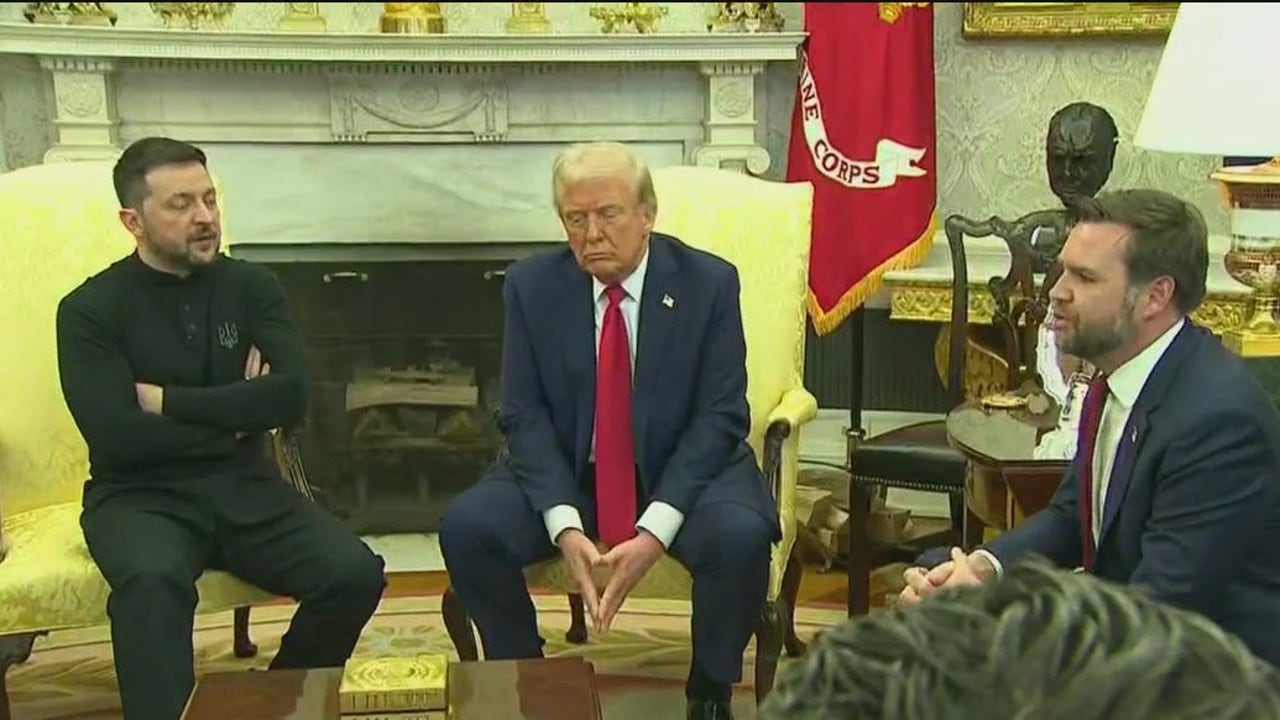
Trump and Zelenskyy Clash in the Oval Office
Dr. Paul Fritz, associate professor of political science, was featured in a Fox 5 WNYW-TV news segment about the tense exchange between President Donald Trump, Vice President J.D. Vance, and Ukrainian President Volodymyr Zelenskyy inside the Oval Office.
