
Experts Matter. Find Yours.
Connect for media, speaking, professional opportunities & more.
Op-Ed: Crypto market bill adds risk, not clarity
Markets function best when participants understand the rules of the road, investors have confidence in the integrity of the system, and regulators have clear authority to police misconduct. The crypto market structure legislation now advancing in Congress promises exactly this clarity. Yet it raises a more troubling question: what happens when legislation written to create clarity instead exempts large parts of the digital asset ecosystem from the very safeguards that make markets safe for everyday Americans? Blockchain technology, tokenization, stablecoins and digital assets can improve efficiency, lower transaction costs, and widen access to financial products. Those opportunities are real. But sustainable innovation requires trust, and trust requires accountability. The legislation under consideration would create broad carve-outs for parts of the digital asset ecosystem, particularly within decentralized finance. Supporters call these provisions pro-innovation. Economically, they are regulatory arbitrage–the practice of avoiding rules and requirements that apply to similar financial activities elsewhere. Regulatory arbitrage does not create better products or services. Instead, it allows some firms to operate with lower costs by avoiding obligations designed to protect consumers and maintain financial stability. When two companies provide the same financial service but follow different sets of rules, the company with fewer requirements will naturally have lower costs. Those savings are not necessarily the result of greater efficiency. They often come from avoiding safeguards that other firms are required to maintain. Consider what the exemptions waive. A bank that holds customer assets must keep those assets separate from their own funds, maintain capital reserves, and fund a supervisory and compliance apparatus. An exempt digital platform performing the same custodial function carries none of these costs, so it can offer the service more cheaply while taking on risks that may not become apparent until problems arise. A bank that pays a return on deposits also pays deposit insurance premiums, holds regulatory capital, and absorbs the cost of anti-money-laundering compliance. An exempt platform passing through the yield on its reserves bears none of these and can therefore advertise a higher net rate on funds that are, economically, deposits. The activity is the same on both sides of the ledger. Only the rulebook differs, and the rulebook is the cost. This asymmetry falls hardest on community banks. Their deposits are the raw material of local lending. When an exempt platform can out-price them on stablecoin yield without carrying the costs that yield is meant to cover, deposits migrate, funding costs rise, and lending capacity contracts. As a result, community banks have less money available to lend, which can make it harder for small businesses to access credit. Community banks are responsible for roughly 60% of small-business loans and 80% of agricultural lending nationwide[1]. In Louisiana, where local banks finance small businesses and family farms, that risk is especially acute. The lesson is straightforward: when economically similar activities–like stablecoin yield and interest payments–operate under very different rules, risk often becomes harder to see until it's too late. History shows where this leads. Before the 2008 crisis, mortgage-related risk migrated out of regulated banks and into the “shadow banking” system–financial entities and investment vehicles that operated with less oversight. Those markets looked innovative and efficient. But because transparency and accountability were weaker, risk accumulated out of sight until it threatened the entire system. The lesson is not that the instruments were novel. It is that economically similar activities were governed by different rules, and risk flowed to the corner where it was hardest to see. The same logic applies to investors. Markets succeed only when participants trust them, which is why registration requirements promote transparency, best-execution standards help ensure fair treatment, and anti-money-laundering tools deter illicit activity. The legislation would let certain digital asset developers operate outside many of these protections. Technology can change how an asset is recorded or transferred. It does not change the risks an investor bears, or the incentives a firm faces when no one is watching. The United States does need a durable framework for digital assets, and regulatory uncertainty serves no one. Entrepreneurs need predictable rules, investors need confidence, and markets need consistency. But a framework built on exemptions delivers none of these. It delivers a two-tier market in which the regulated bear the costs and the exempt reap the advantages, until the risks they shed reassemble somewhere less visible. The most durable financial innovations in American history emerged within systems that paired opportunity with accountability. Digital assets should be no exception. Congress should reject this legislation and pursue a framework that applies the same rules to the same activities. Innovation matters. Trust is what makes it last.



Nearly every Ontario driver has witnessed dangerous driving in the past year, yet many do not believe they contribute to the problem, according to a new survey from CAA South Central Ontario (CAA SCO). The survey found that 96 per cent of Ontario drivers have observed dangerous driving behaviours, including speeding (78 per cent), aggressive driving (69 per cent), unsafe lane changes (68 per cent) and distracted driving (67 per cent). However, only 57 per cent admit to engaging in at least one dangerous driving behaviour, revealing a disconnect between what drivers see on the road and how they assess their own actions. This number rises to 62 per cent among drivers aged 18 to 34. Most Drivers See Dangerous Behaviour, Fewer Admit to It “Most Ontario drivers can identify dangerous behaviours when they see them, but many don't realize they may be contributing to the problem themselves,” says Michael Stewart, community relations consultant, CAA South Central Ontario. “The good news is that small changes in driver behaviour can make a big difference. By slowing down, staying focused and making safe choices behind the wheel, we can help create safer roads for everyone.” Speeding remains the most common dangerous driving behaviour reported by Ontario drivers. More than one-third (38 per cent) admit to speeding, with more than half of those drivers say they typically travel 10 to 19 km/h above the speed limit. Even small increases in speed can significantly increase the likelihood and severity of collisions. Many drivers may not realize that fines increase depending on how far over the speed limit they are travelling and can be doubled in community safety zones. Encouragingly, most Ontarians say they slow down when they realize they are speeding, suggesting awareness and education can play an important role in changing behaviour. According to the data, 87 per cent of drivers also support the fines and penalties for speeding, and 37 per cent claim that penalties and fines affected their driving behaviour in the past year. Distracted Driving Also Remains a Serious Concern Across the Province A separate survey conducted by CAA SCO found that 16 per cent of Ontario drivers have been involved in a collision caused by distracted driving, a figure that has gradually increased in recent years. Rear-end collisions remain the most common type of crash associated with distraction, according to this study. “Distracted driving is preventable, yet it continues to put lives at risk every day,” says Stewart. “Whether it’s checking a notification, interacting with in-vehicle technology or taking your eyes off the road for a few seconds, the consequences can be devastating. The safest choice is to stay focused on driving.” As Ontarians prepare for the upcoming long weekend, CAA South Central Ontario is encouraging drivers to stay focused, alert and aware behind the wheel. For more information about road safety advocacy and research, visit www.caasco.com/advocacy Speeding and Dangerous Driving Behaviour Survey Methodology: The online survey was conducted by DIG Insights from March 10 to March 20, 2026, with 1,504 Ontario drivers aged 18 and older. Based on the sample size of n=1,504 and with a confidence level of 95 per cent, the margin of error for this research is +/- 2%.) Distracted Driving Survey Methodology: The online survey was conducted by DIG Insights from February 3 to February 13, 2026, with 1,500 Ontario drivers aged 18 and older. Based on the sample size of n=1,500 and with a confidence level of 95 per cent, the margin of error for this research is +/- 2%.)


Former bank executive and Retire with Equity founder says "fear of running out" reflects a structural gap in retirement system design — not a failure of individual planning TORONTO, ON — July 23, 2026 — Susan Pimento, founder of Retire with Equity, is a co-author to The Canadian retirement evolution: Why financial institutions and policymakers must rethink retirement, a new report published today by EY examining how Canada's retirement landscape is changing — and why the systems built to support retirees are struggling to keep pace. The report arrives amid a structural shift in how Canadians fund retirement: in 1990, over 70 percent of Canadian workplace pension plans were defined-benefit schemes providing predictable lifelong income; by 2022, that figure had fallen to 37 percent — shifting investment risk, and the fear of running out onto individuals. Drawing on more than 30 years of senior leadership in Canadian banking and frontline lending, including serving as Vice President at a Schedule I bank, Pimento contributed a framework that groups Canadian retirees into three primary categories, each with distinct financial circumstances and priorities — a lens designed to help financial institutions and policymakers move beyond one-size-fits-all retirement planning. Sue Pimento is also the author of the forthcoming Your Retirement Reset: How to Convert Home Equity into Financial Security (ECW Press, to be released September 2026), "Fear of running out — FORO — reflects a structural gap in retirement system design, not a failure of individual planning," said Pimento. "Most retirement frameworks were built for accumulation rather than sustainable income in later life. Canadians aren't failing their retirement plans. In many cases, the plans were never designed for the retirement they're actually living." Pimento's contribution reflects the research focus of Retire with Equity, which provides retirement intelligence to Canada's financial sector on its fastest-growing and wealthiest demographic: adults 55 and over. Her forthcoming book examines how home equity — the largest asset most Canadian households hold — can be strategically converted into retirement income, and argues it belongs in every retirement conversation and product roadmap. "The industry has spent decades perfecting how Canadians save," Pimento added. "The next decade will be judged on how well we help them spend — sustainably, confidently, and without fear." The EY Report: "Canadian Retirement Evolution" is publicly available at: https://www.ey.com/en_ca/insights/financial-services/canadas-retirement-evolution Media availability: Susan Pimento is available for interviews and commentary on: retirement income design the three categories of Canadian retirees financial strategies for aging in place Intergenerational financial conversations about money (between seniors and their adult children) home equity strategies new ways for government and banks to serve the 55+ demographic About Susan Pimento Susan Pimento brings deep experience to the conversation on modern retirement strategies in Canada. With over 30 years of senior leadership in banking and frontline lending — including serving as Vice President at a Schedule I bank — she now advises financial institutions and policymakers on how to modernize retirement solutions and engage Canada's fastest-growing, wealthiest demographic: adults 55+. She is the founder of Retire with Equity and author of Your Retirement Reset: How to Convert Home Equity into Financial Security (ECW Press, September 2026). . Media Contact: Susan Pimento Website: www.retirewithequity.ca Email: sue@retirewithequity.ca


How Virtual Reality Is Teaching Long Island to Survive a Rip Current
There are times when following your instincts in an emergency can put you in even greater danger. A swimmer caught in a rip current fights desperately toward shore, exhausting themselves when swimming parallel to the beach would carry them in seconds to safety. A driver caught in a sudden whiteout may instinctively slam on the brakes, turning a single dangerous moment into an multi-car pileup. Jase Bernhardt, director of Hofstra's meteorology program and associate professor of geology, environment, and sustainability, is Hofstra's lead voice on rip current safety at Long Island beaches — what causes them, how to spot one before wading in, and the counterintuitive escape move that keeps swimmers from panicking themselves under. He's taken that safety mission past the beach-flag-and-pamphlet stage: Bernhardt builds virtual reality simulations that put students and the public inside a rip current, a Category 3 hurricane, a storm surge, and a snow squall, so the correct response is already muscle memory before anyone's actually in danger. What he can speak to: Rip currents: how to identify one at a beach and why swimming parallel to shore (not against the current) is the move that saves lives Why VR training changes real-world behavior in a way a warning sign never does Hurricane risk — what his VR simulation teaches about wind and storm danger that a forecast graphic can't convey Snow squalls and storm surges: why "stay off the road" is the single best piece of advice, and why drivers still ignore it until conditions turn deadly Reach Dr. Bernhardt through the Contact button on his profile below.



A New Tick Is Moving In on Long Island — And Changing the Landscape for Lyme Disease
There's a new tick establishing itself across the region, and it's not the one most people are used to watching for. The Asian longhorned tick, first detected in the U.S. in 2017, has been steadily expanding its range along the East Coast — including into the backyards, parks, and preserves of Long Island. Unlike the blacklegged tick most associated with Lyme disease, this invasive species reproduces asexually, meaning a single tick can start an entire population, and it's showing up in numbers that are hard to ignore. Russell Burke, professor of biology at Hofstra University, has spent more than a decade studying the ecology of Lyme disease on a continental scale — including how tick host diversity affects disease risk across the eastern U.S. That work has now expanded to track a newer arrival: the Asian longhorned tick, and how its invasion and spread is reshaping the tick communities long dominated by the blacklegged tick, the primary vector of Lyme disease. What he can speak to: How the Asian longhorned tick got to the U.S., and why its ability to reproduce without mating makes it uniquely fast at colonizing new areas What the tick's expansion means for the local ecology of ticks on Long Island, and how it may be competing with or displacing established blacklegged tick populations Why the Asian longhorned tick is not currently considered a significant carrier of Lyme disease itself, but why its presence still raises concerns for public health and agriculture What residents, hikers, and pet owners should know about identifying and avoiding exposure to this new tick species The broader pattern of invasive species establishing themselves on Long Island, and what that signals about changing ecosystems Connect with: Russell Burke Professor of Biology Dr. Burke's current research involves diamondback terrapins at Jamaica Bay, wood turtles in northern NJ, ticks and Lyme disease, and the coyote invasion of Long Island. Key Topics: Ecology · Conservation Biology · Herpetology · Urban Ecosystems Reach Professor Burke through the Contact button on his profile below.
Food safety expert available to discuss emerging health risks
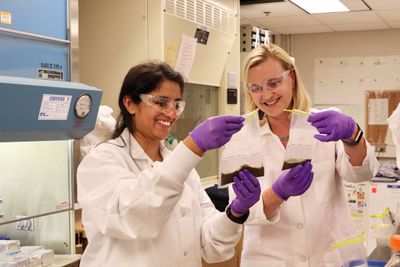
The University of Delaware’s Kalmia Kniel can discuss foodborne parasites and food safety risks, including the ongoing cyclosporiasis outbreak spreading across the United States. Kniel, a professor of microbial food safety, can explain how foodborne parasites spread, why outbreaks (particularly those involving the Cyclospora parasite) can be challenging to investigate and what consumers should know about reducing their risk of illness. She co-authored a study published in December 2025 that examined challenges researchers face in detecting, studying and controlling Cyclospora cayetanensis, including gaps in understanding the parasite and improving prevention strategies. Kniel can also discuss why fresh produce and water are often a focus during investigations and the steps consumers can take to improve food safety. Kniel’s expertise includes: • Foodborne parasites and illness outbreaks • Produce and microbial food safety • Food contamination and prevention • Food safety research Kniel discussed the biology of this specific pathogen in detail at a recent presentation on cyclospora. To arrange an interview with Kniel, visit her profile page and click the contact button. Interested journalists can else email MediaRelations@udel.edu.



University of Delaware structural engineering expert Michael Chajes is available to discuss the engineering challenges involved in assessing and stabilizing high-rise buildings following structural damage, structural failures and concerns about potential collapse. Chajes, a professor of civil and environmental engineering and a registered professional engineer, specializes in structural engineering, structural health monitoring and forensic engineering. He has provided expert commentary to national media outlets on major structural failures, including the Surfside condominium collapse and the Francis Scott Key Bridge collapse. His expertise is particularly relevant to the ongoing situation in New York involving a high-rise that is at-risk of partial collapse. He can discuss. • The conditions that can trigger structural instability during construction, renovation or changes in building use. • How engineers assess damaged structures and determine whether a building can be stabilized or safely repaired. • The engineering challenges involved in converting older office towers into residential buildings, including changes in structural loads, construction sequencing and temporary support systems. • How structural health monitoring and inspection technologies help engineers evaluate the safety of aging infrastructure and high-rise buildings. To arrange an interview with Chajes, visit his profile and click on the contact button. Interested reporters can also send an email to MediaRelations@udel.edu.


The Biological Clock Nobody Talks About
Biology is ageist. There. I said it. Young people have a biological clock that ticks toward new life. It is loud and urgent, and it comes with its own well-funded industry of apps, doctors, and anxious dinner-party conversations. Ours ticks too, but more quietly. Less “the nursery won’t paint itself” and more “the knees are filing a formal complaint.” Same clock. Wildly different countdown. Young people race toward a beginning. We are racing toward… what, exactly? That is the part nobody warned us about in the brochure. I have been thinking about this clock a great deal lately, not in the abstract, philosophical, this-would-make-a-good-dinner-party-topic way. In the personal, slightly unsettling, why-am-I-like-this way. Because somewhere between turning seventy and watching my brother nearly run out of time entirely, I started to suspect that the clock is not just ticking quietly in the background of my life. It may be driving much of my behaviour, and not always in directions I am proud of. At seventy, I have become mildly obsessed with squeezing every drop out of life. Partly because of the birthday. Partly because 33-year-old entrepreneur Steven Bartlett recently declared that a couple of glasses of wine can derail several days of optimal living, causing poor sleep, missed workouts, reduced productivity, and full-scale biological chaos. The internet, predictably, exploded. One side applauded his discipline. The other suggested he put down the smartwatch and pick up a personality (Bartlett, 2025). Then broadcaster Greg James offered a counterpoint worth sitting with maybe measuring every step, calorie, and heartbeat is not making us happier. Maybe it is making us anxious (James, 2025). Let that idea marinate. It hit me harder than I expected. If I call balls and strikes here, I may have become a card-carrying member of Team Optimize. I teach fitness classes. I went back to school. I write books. I hike mountains. I track protein. I have voluntarily reached the age when discussing fibre intake is considered a contribution to the dinner conversation. Normal retirement behaviour, said no one ever. Apparently, I have a track record with this sort of thing. I have written before about my addiction to home improvement, the kind that finds a project the house did not actually need. Self-improvement, I am beginning to suspect, is the same compulsion wearing a different outfit. What I am exploring here is whether I am actually growing, or, as I am increasingly suspecting, just optimizing out of panic. So, I started asking myself an uncomfortable question, one that keeps circling back to that same clock. Am I pursuing excellence, or am I negotiating with my biological clock? Researchers studying aging have found something fascinating about how that clock changes us. As people become increasingly aware that time is finite, their priorities shift: less interested in accumulating and more interested in meaning, less interested in status and more interested in relationships, and less interested in “someday” and more interested in today. Psychologist Laura Carstensen’s landmark work on socioemotional selectivity theory suggests that it is not age itself that changes us. Rather, it is our perception of the time we have remaining (Carstensen, 2006; Carstensen et al., 1999). I am not sure I have made that shift. Not fully. If I am honest, I wonder whether all the doing, the relentless forward motion, is less about passion and more about outrunning something. Maybe I think that if I keep running, Father Time will not catch me. I can smell a fool’s errand a mile away, and yet here I am, lacing up my shoes … possibly while listening to a podcast on slowing down. I have a theory about this. I call it FORO, the Fear of Running Out. Most people assume it means Fear of Running Out of money, and money is certainly part of it. But lately I think money is just the socially acceptable thing we admit to worrying about. The less acceptable version is the fear of running out of time, energy, relevance, and chances to matter. FORO does not always show up as worry. Sometimes it shows up as motion. Another course. Another project. A new certification nobody asked for. A calendar so full it functions less as a planning tool and more as an alibi. If I cannot stop the running out, I can at least look busy while it happens. That is not ambition. That is panic, wearing a blazer and carrying a planner. Then something happened that stopped the clock cold … or at least kept me from ignoring it. Recently, one of my brothers suffered a massive heart attack. One moment, life was proceeding as planned. Next, he was in intensive care fighting for his life. Thankfully, he survived a quadruple bypass and is now on the long road to recovery. I am still processing it. Watching someone you love close to the edge clarifies things faster than any amount of journaling ever has. Suddenly, nobody is talking about productivity hacks or sleep scores. The conversation gets very simple. More time. More laughter. More family dinners. More life. His clock nearly ran out. Mine, presumably, has not. The question is what I plan to do with the difference. And I sat with that, quietly, for a while. Because his heart attack did not just scare me. It held up a mirror. If the people who matter most to me were sitting across the table right now, would they say I have been present, or would they say I have been busy? I am not sure I want to hear the answer. But I think I already know it, because my wife Bonnie and my dog Dottie have been telling me for a while now, in their own ways. Bonnie has not complained, not really, though I have noticed the particular quiet of someone who has learned not to wait up and has become quite good at saving me half a plate of dinner without asking what kept me. That quiet has nothing to do with her and everything to do with me. Dottie has taken a more direct approach. She has started leaving passive-aggressive stuffed toys outside my office door, which I choose to interpret as a formal grievance filed by a ten-pound dog with excellent comic timing. Both have been waiting for me while I try to sort this out. But patience, like biology, has its limits. Here is where I have landed, at least for now. Retirement, at its best, should be a contact sport: full-bodied, fully engaged, leaning into life with both hands. But there is a trade-off in the pursuit of optimization that no one puts on the inspirational poster. By filling every available hour with the next worthy initiative, I risk alienating the very people for whom “more life” was supposed to be. That is not ambition. That is a quietly self-sabotaging way of running out the clock on the wrong things. I do not have a tidy resolution. Maybe it means resisting the urge to add more simply because I can. What I keep coming back to is this: presence, being genuinely and unhurriedly present with the people I love, might be the optimization I have been overlooking all along. Not because it is hard to measure, but because it is hard to schedule, and even harder to admit I have been avoiding it. What I want, at the end of the day, is to be as present as humanly possible. Not present in the mindfulness app, remember-to-breathe sense. Actually present. Available. Unhurried. With Bonnie. With Dottie. With the people who have been waiting for me to look up. I am not going to pretend I have made this shift. I have not. But I have started doing something that feels different from doing nothing while thinking deeply about it, and I will take the small win. I dropped one school course this term. I have started leaving my phone in another room during dinner, which Dottie has not noticed, but Bonnie absolutely has. I am trying to ask myself, before I say yes to the next worthy thing, whether I want it or whether some part of me is still trying to outrun a clock that cannot be outrun. Some days I catch myself in time. Other days I sign up for the nine-week certificate anyway and figure it out later. Progress, not perfection. If you are reading this and recognize yourself, or someone you love, the invitation is not to overhaul your entire life by Tuesday, or to ask them to. It is to ask the same question I am still learning to ask. The next time your calendar fills with another worthy thing, pause and ask who benefits from that time. If the honest answer is mostly you, and mostly in a way that keeps you safely too busy to sit still with the people who love you, that might be worth a second look. Not guilt. Just a look. Which brings me back to the clock, because it always does. The biological clock of aging is not warning us that time is running out. It is reminding us that time is valuable, and that the people keeping time with us deserve more of it than the leftovers. Young people hear the clock and ask, “When should I start?” Older people hear the clock and ask, “What am I waiting for?” I think I finally know the answer. It is not another course. It is not another goal. It is them. Turns out the clock was never my enemy. It has been my alarm, going off for months while I kept hitting snooze and signing up for another nine-week certificate instead. The good news is I have finally found a project worth finishing. The bad news is it does not come with a certificate of completion, only my loved ones and whatever time the clock decides to give me to enjoy them. Biology may be ageist, but it is also, infuriatingly, right. Sue Don’t Retire…ReWire! My Book is Now Available for Pre-Order I hope you will consider pre-ordering a copy of Your Retirement Reset for you, a friend or loved one. It's available September 8, 2026 published by ECW Press - You can now order at Indigo or Amazon. And if you love supporting Canadian booksellers, please also check with your local independent bookstore. Most can easily order it for you.
Heart Disease's Hidden Immune Players Come Into Focus
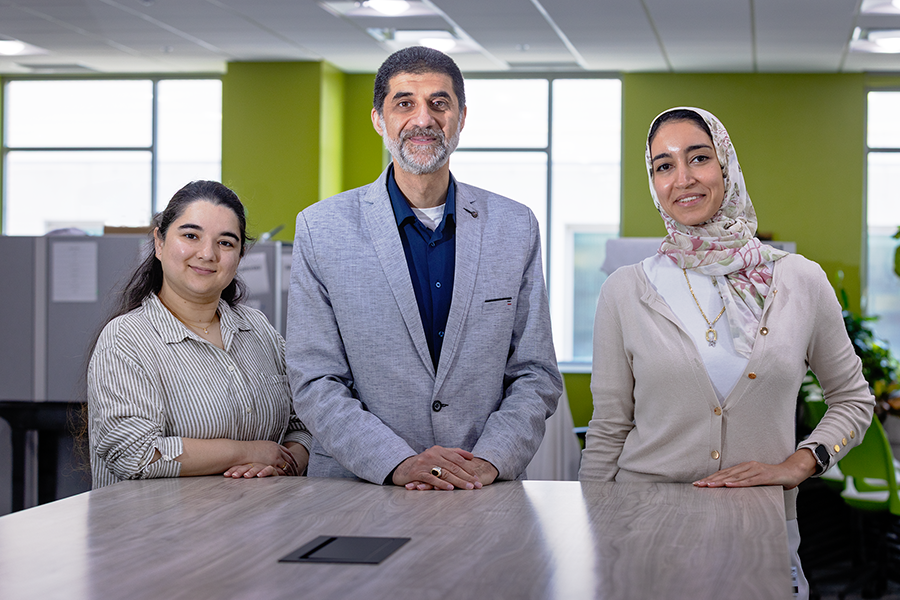
Heart disease has long been linked to familiar risk factors such as high cholesterol, high blood pressure and lifestyle choices. But according to a recent Augusta University Jagwire article highlighting research published in Nature Reviews Cardiology, the immune system might also play a critical role in determining how cardiovascular disease develops and progresses. The review, led by Ishita Tandon, PhD, Hossam Abdelsamed, PhD, and Alaa M. Khalifa, PhD, examines the emerging role of CD8+ T cells, specialized immune cells best known for fighting infections, in atherosclerosis, the chronic inflammatory disease responsible for most heart attacks and strokes. By synthesizing the latest evidence, the researchers show how different populations of these immune cells can either fuel inflammation or help regulate it, revealing new opportunities to better understand, diagnose and eventually treat cardiovascular disease. The review also identifies important gaps in current knowledge and outlines promising directions for future research. As scientists continue to better understand how these immune cells behave within arterial plaques, their discoveries could lead to more precise diagnostic tools and a new generation of immune-targeted therapies for cardiovascular disease. Together, the researchers' work offers journalists valuable insight into one of the fastest-evolving areas of cardiovascular research, where immunology and heart health are converging to reshape how cardiovascular disease is understood and treated. "This study highlights the major role of CD8+ T cells in atherosclerosis and their potential impact on cardiovascular diseases." Hossam Abdelsamed, PhD To learn more about this amazing research and connect with Ishita Tandon, Hossam Abdelsamed or Alaa M. Khalifa, contact AU's External Communications Team mediarelations@augusta.edu to arrange an interview today.

Can One Gene Change the Future of Heart Disease?
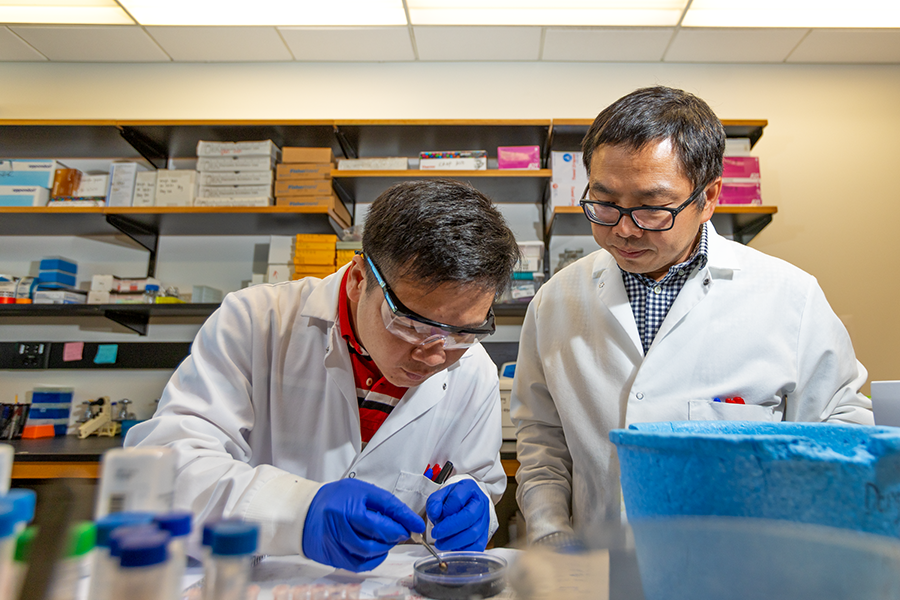
Heart disease remains the world's leading cause of death, but researchers are continuing to uncover the genetic mechanisms that drive it. According to a recent Augusta University Jagwire article highlighting new research, scientists are investigating how a little-studied gene might influence the development of cardiovascular disease and whether it could become a future target for treatment. At the center of the research is Kunzhe Dong, PhD, an investigator at Augusta University's Immunology Center of Georgia, who is examining the role of the SH3BGRL2 gene in cardiovascular cells. While the gene has previously been associated with cancer biology, early findings suggest it might also play an important role in regulating how blood vessels respond to stress and injury. Understanding that relationship could reveal new biological pathways involved in heart disease and identify novel opportunities for precision medicine. The research aims to determine how changes in gene expression affect the function of cardiovascular cells and contribute to disease progression. By better understanding these molecular mechanisms, scientists hope to identify new therapeutic targets and improve the ability to prevent or treat cardiovascular disease before irreversible damage occurs. The work also reflects a broader shift toward precision medicine, where treatments are tailored to the underlying biology of each patient rather than relying solely on traditional risk factors. "This gene is well known in one field, but now we're seeing it's also important in cardiovascular cells." Kunzhe Dong, PhD To learn more about this research and connect with Kunzhe Dong, contact AU's External Communications Team mediarelations@augusta.edu to arrange an interview today.