
Experts Matter. Find Yours.
Connect for media, speaking, professional opportunities & more.
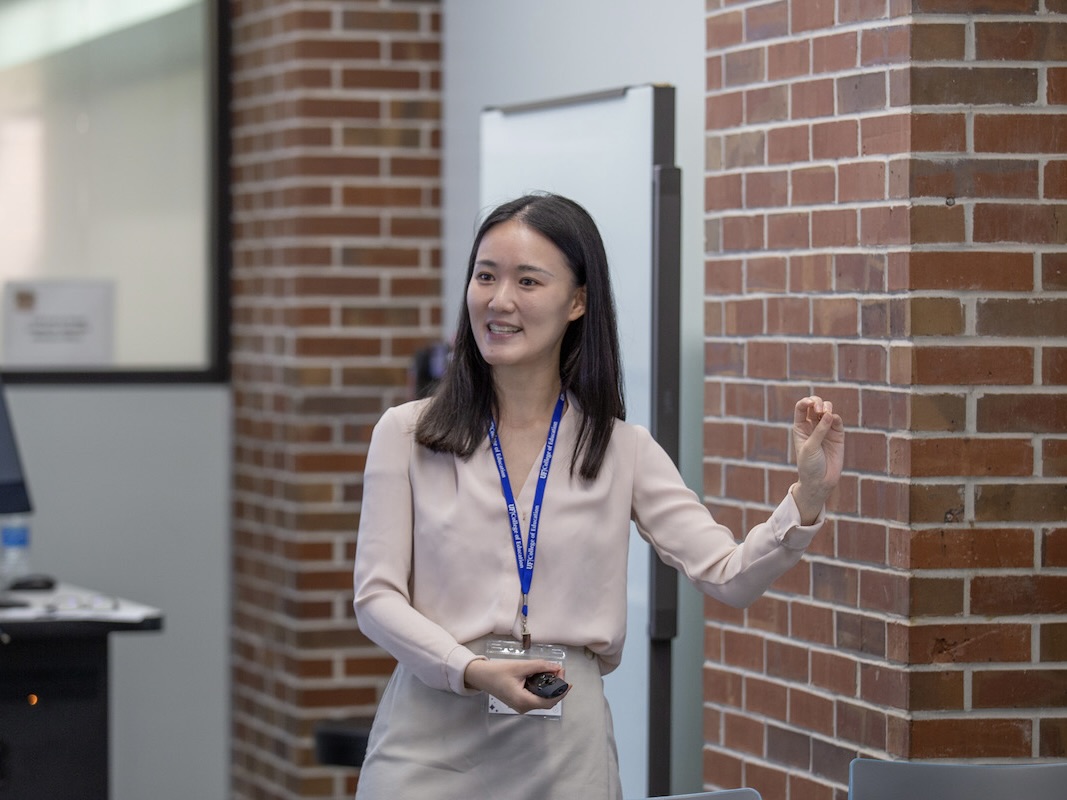
New AI tool matches students with high-impact internships
Finding the right internship can be an important step for students, but it’s not always clear which opportunities will lead to the strongest growth. To help solve that problem, University of Florida researchers have developed an AI-powered tool that helps students identify internships most likely to accelerate their technical and professional development. Unlike traditional recommendation engines, Pro-CaRE not only predicts which opportunities will lead to stronger outcomes, it also explains why each suggestion is a good fit. In testing data collected from the students, Pro-CaRE’s predictions proved highly accurate, accounting for more than 72% of the differences in learning gains among participants. While the pilot is being tested in engineering, the tool could be adopted for other disciplines. “Internships are one of the most critical parts of an engineering education, but students often struggle to know which experiences will actually help them grow,” said Jinnie Shin, assistant professor of research and evaluation methodology in the UF College of Education. “What makes Pro-CaRE unique is that it doesn’t just offer a list of options. It provides personalized recommendations backed by data and it tells students clearly why an opportunity is a good match for them.” Pro-CaRE creates matches by analyzing each student’s coursework, major, background and self-reported interest, confidence and self-efficacy in engineering skills. It then compares that profile with a carefully chosen set of similar peers to refine suggestions. The result is more precise guidance that adapts to students at different stages of their degree programs. “Students shouldn’t have to guess or hope that an internship will be worthwhile,” Shin said. “With Pro-CaRE, they can approach opportunities knowing they’re backed by evidence, whether the role is onsite, hybrid or remote and whether it’s at a startup or a Fortune 500 company.” The system is designed to work across a wide range of companies and contexts, giving students flexibility while ensuring their choices align with their personal and professional goals. Each recommendation comes with a clear “why this?” explanation, so students can make confident decisions and discuss options more effectively with advisors. Pro-CaRE was developed by a cross-disciplinary UF team combining expertise in education and engineering. Alongside Shin, the project’s co-principal investigators include Kent Crippen in the College of Education and Bruce Carroll in the Herbert Wertheim College of Engineering. The team is exploring external funding opportunities to expand the usage and test the efficacy on a larger scale. “Ultimately, our goal is to empower students to invest their time in experiences that will have the greatest impact,” Shin said. “Pro-CaRE bridges the gap between what students hope to gain and what internships can truly deliver.”



Recently named the nuclear program director at the Virginia Commonwealth University (VCU) College of Engineering, Gennady Miloshevsky, Ph.D., associate professor in the Department of Mechanical & Nuclear Engineering, answers some questions about the direction of VCU Engineering’s nuclear program and what he hopes it can accomplish. What are your top priorities for the nuclear program at the VCU College of Engineering? I want to focus on student development, innovative research and our rankings in best program lists, but that is not everything. Strategy is important. We need to align ourselves with the country’s national energy needs. There are many new developments in the energy sector, like small modular reactors or fusion energy systems, and having the right faculty to engage with these advancements is important. Providing students with a well-rounded education and good opportunities for gaining experience benefits the College of Engineering’s public and private sector partners. Nuclear subject matter is complex, so higher education is very important for workforce development. We want to build partnerships, like the one we have with Dominion Energy, that support this goal. A priority for me is continuing to establish relationships with Commonwealth Fusion Systems, which seeks to build and operate the first commercial grid-scale fusion plant in Chesterfield County, Virginia. Our workforce partners will benefit from VCU’s well-trained nuclear engineering graduates joining the workforce. So, aligning our strategy with national energy needs, hiring the right faculty to support our programs and building industry partnerships that benefit our student’s education and career opportunities are important things for VCU Engineering’s nuclear program. Where would you like to see the College of Engineering’s nuclear program 10 years from now? I would like to see growth in the nuclear program. For example, some new graduate courses on topics like nuclear materials or fusion energy. In 2024, I developed a general course for fusion energy, so building out a curriculum that goes more in-depth would be good. When you look at small modular reactors and micro reactors, current energy policy does not allow private companies to build their own. However, as energy demands increase, policy could change to where you see these compact devices installed in places like data centers, for example. A more in-depth curriculum allows VCU Engineering students to step into industry roles that lead growth of the energy industry while also ensuring students are capable of adapting to the changing field and taking advantage of new developments. What sort of cross-disciplinary opportunities are there for the College of Engineering’s nuclear program? Nuclear engineering and nuclear science are very interdisciplinary fields. You have physics that covers the nuclear reaction and the radiation it generates, for example, then chemistry is needed when talking about nuclear fuel cycles and nuclear waste. You also need materials science because good materials capable of withstanding radiation and high temperatures are needed in nuclear fission and fusion energy systems. This science then connects to engineering, building the reactors, the energy distribution systems like a power grid. It is a small sample of the overall work, but you see how mechanical and electrical engineering are key to this part. All these disciplines come together to solve the same problem. One researcher might be figuring out how to confine plasma and make it stable, then another researcher is looking at how plasma can disrupt the containment wall and how to make materials to protect the wall. Within our department, we are making connections between mechanical-focused faculty working on high-temperature ceramics or additive manufacturing techniques and those of us researching nuclear energy systems in order to make joint proposals. We are also collaborating outside VCU. As an example, I am involved with an alliance founded by the Defense Threat Reduction Agency (DTRA) comprised of 17 universities, research labs and military centers. Coordinated through DTRA, we work together on many of the same problems.Through this partnership, my Ph.D. students do summer research rotations with national labs like Lawrence Livermore National Laboratory in California and The Pacific Northwest National Laboratory. We also bring cadets and midshipman into VCU from other institutions, like the DTRA Nuclear Science and Engineering Research Center, United States Military Academy West Point and the Virginia Military Institute, whose students have been part of research experience for undergraduates programs in the summer. How is artificial intelligence impacting the field of nuclear engineering? So, the United States is sponsoring the Genesis Mission, which seeks to transform science innovation through the power of AI. One area of the Genesis Mission is nuclear fission and fusion energy. I see this playing out with the Department of Energy encouraging national labs, universities and industry to work together on applying these AI advancements to solve the research problems of nuclear energy. It is a great opportunity for students, who we can involve in this work to give them real-world experience with topics they will see after graduation. Last semester I taught a course at VCU on the practical applications of AI on nuclear engineering problems. It is not something like ChatGPT or anything like that. What we did is take Google’s TensorFlow platform that is a library of AI models and machine neural networks. Using Python scripting students learn how to apply these AI resources to about 30 problems in mechanical and nuclear engineering. They create scripts, use data sets and run analytics. We have a nuclear reactor simulator and I have some ideas to create AI-based software we can pair with the simulator, then give the software a data set and let it control the operation of the simulator in a safe way. Tell us about your background. What brought you VCU and the Department of Mechanical and Nuclear Engineering? Actually, I am not a mechanical or a nuclear engineer. My background is in physics. I graduated from the Belarusian State University in 1990 and continued to a Ph.D. in physics from the Heat and Mass Transfer Institute of the National Academy of Sciences of Belarus working on topics related to fusion plasmas and nuclear weapon effects. In space, nuclear weapons produce shockwaves and radiation. I computationally model these effects in my research to determine how something like a nuclear warhead detonation in orbit will impact the materials a satellite is made of, for example. My research also crosses over into nuclear fusion, specifically thermodynamic and optical plasma properties, fusion plasma disruptions, melt motion and splashing from plasma facing components. Accelerating Next-Generation Extreme Ultraviolet (EUV) Lithography (ANGEL) is my most recent collaborative project, supported by the Department of Energy’s (DOE) Office of Science, Fusion Energy Sciences. It involves two national laboratories, three universities and a private-sector company focusing on advancement of future micro-electronic chips, EUV photon sources, mitigation of material degradation and plasma chemistry. Prior to joining the VCU College of Engineering I worked at Purdue University at a DOE-funded center investigating nuclear fusion and the effects of plasma on materials. Around 2019 I wanted to develop my own lab, so I came to VCU with startup funds from the Nuclear Regulatory Commission and DTRA. My first priority after joining the VCU College of Engineering was continuing my fusion research, the second was collaborating with an alliance of universities focused on work for DTRA and DOE.


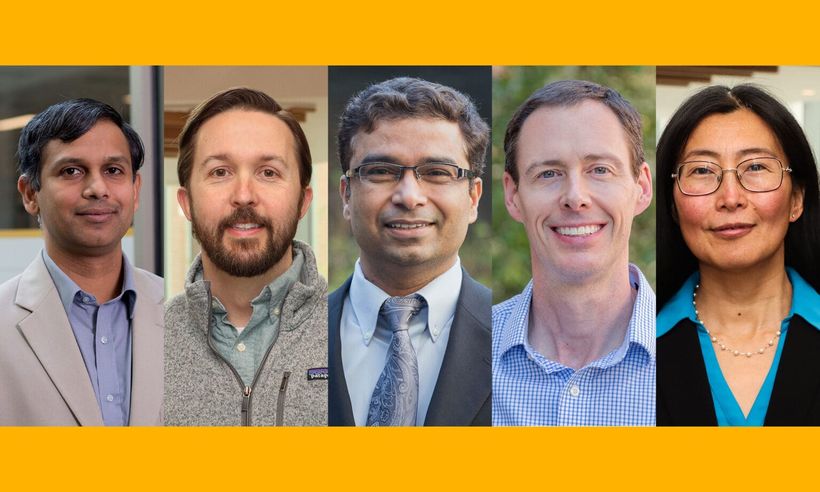
National Academy of Inventors welcomes five VCU College of Engineering researchers
The National Academy of Inventors (NAI) recently inducted five Virginia Commonwealth University (VCU) College of Engineering researchers as senior members. Chosen for their innovative engineering contributions, the honorees are recognized as visionary inventors whose groundbreaking research and patented technologies are driving meaningful societal and economic advancements across the national innovation landscape. “Invention represents the practical application of knowledge and stands as one of the many ways engineers can make a positive impact on their communities and the world,” said Azim Eskandarian, D.Sc, the Alice T. and William H. Goodwin Jr. Dean of the VCU College of Engineering. “This year’s honorees exemplify the interdisciplinary nature of our field, leveraging advanced concepts from mechanical, biomedical, chemical and pharmaceutical engineering to address today’s most pressing challenges. We are immensely proud that our dedicated researchers have earned recognition as members of the esteemed National Academy of Inventors.” The VCU College of Engineering NAI inductees are: Jayasimha Atulasimha, Ph.D. Engineering Foundation Professor Department of Mechanical & Nuclear Engineering An internationally recognized pioneer of straintronics, an approach to electrically control magnetism for ultra-low-energy computing, Atulasimha has made significant research contributions to next-generation memory, neuromorphic hardware and emerging quantum computing technologies. He holds four U.S. patents spanning energy-efficient magnetic memory, nanoscale computing architectures and medical tools. Atulasimha’s commercially viable inventions are funded by organizations like the Virginia Innovation Partnership Corporation and he leads multi-institutional collaborations that drive innovation in computing hardware, AI and quantum technologies with more than $10 million in funded research. Casey Grey, Ph.D. Postdoctoral Research Associate Department of Mechanical & Nuclear Engineering Bridging engineering and medicine, Grey’s work spans life‑saving stroke technologies, breakthrough respiratory and neurological care, and sustainable packaging. As a lead R&D scientist at WestRock, he helped create and commercialize the CanCollar® portfolio, a recyclable paperboard replacement for plastic beverage rings now used on five continents, eliminating thousands of tons of single‑use plastic annually. In medical device innovation, Grey’s patent and development work on a novel cyclic aspiration thrombectomy platform, currently in clinical trials, is advancing stroke treatment by enhancing clot removal efficiency and reducing long‑term disability. At the VCU College of engineering, Grey built a research and commercialization pipeline around neurological and respiratory technologies, securing eight provisional patents and leading multidisciplinary teams in neurology, neurosurgery, surgery, pharmacology and toxicology, internal medicine, and respiratory medicine. His work includes developing dry powder inhaler strategies for delivering life‑saving drugs to patients with acute respiratory distress syndrome (ARDS), a pediatric bubble CPAP system designed to protect brain development in premature infants, and non‑invasive, non‑pharmacological 40 Hz neuromodulation therapies to treat neurodegeneration and conditions with significant central nervous system complications, like sickle cell disease. In collaborations with the VCU Children’s Hospital and VCU Critical Care Hospital, Grey is leading two clinical studies that are translating these innovations to improve patient care. Ravi Hadimani, Ph.D. Associate Professor and Director of Biomagnetics Laboratory Department of Mechanical & Nuclear Engineering Hadimani founded RAM Phantoms LLC, a VCU startup company, commercializing anatomically accurate, MRI-derived brain phantoms for neuromodulation and neuroimaging applications. These brain phantoms help test and tune transcranial magnetic and deep brain stimulation technologies, improving clinical safety and enabling personalized therapy for patients. RAM Phantoms is also developing a highly-skilled workforce for employment in Virginia’s growing biomedical device industry. Beyond commercialization, Hadimani maintains a productive research program with more than $4.5 million in funding resulting in 125 original peer-reviewed publications, 17 current and pending patents, a book, and several book chapters. His biomagnetics lab serves as a training ground for undergraduate, graduate and Ph.D. students to hone their skills in innovation management, intellectual property strategy and startup development. Several students from Hadimani’s lab have engaged in translational research, patent co-authorship and start-up formation, cultivating a new generation of engineer-entrepreneurs equipped to drive future technological advances. Before joining VCU, Hadimani led the development of hybrid piezoelectric–photovoltaic materials that established FiberLec Inc., which commercialized multifunctional energy-harvesting fibers capable of converting solar, wind and vibrational energy into usable electricity. Worth Longest, Ph.D. Alice T. and William H. Goodwin, Jr. Distinguished Chair Department of Mechanical & Nuclear Engineering Uniting aerosol science, biomedical engineering and computational modeling, Longest is revolutionizing inhaled drug delivery. Working with collaborators, his lab has developed novel devices, formulations and delivery platforms that precisely target medications to the lungs, addressing conditions like cystic fibrosis, pneumonia, acute respiratory distress syndrome and neonatal respiratory distress syndrome. These innovations have resulted in multiple patents. Some of them have been licensed through commercial partnerships like Quench Medical, an organization advancing inhaled therapies for applications like lung cancer. Collaborating with the Gates Foundation and the lab of Michael Hindle, Ph.D., from the VCU Department of Pharmaceutics, Longest’s team developed a low-cost, high-efficacy aerosol surfactant therapy for pre-term infants based entirely on technology developed at VCU. The invention eliminates intubation, reduces dosage by a factor of 10, and cuts treatment costs. Over 9 million infant lives are projected to be saved by this technology between 2030 and 2050. Through a long-term collaboration with the U.S. Food and Drug Administration, Longest’s in vitro and computational methods provide federal regulatory guidance for generic inhaled medications. The VCU mouth-throat airway models developed under his leadership are used globally across the pharmaceutical industry and in government laboratories. Hong Zhao, Ph.D. Associate Professor Department of Mechanical & Nuclear Engineering Zhao holds 40 patents with innovations spanning additive manufacturing, stretchable electronics, inkjet printing technologies and superoleophobic materials that repel oils, greases, and low-surface-tension liquids. Her research has applications across health care, sustainable energy and advanced manufacturing. Prior to joining the College of Engineering, Zhao served as a senior research scientist and project leader at the Xerox Research Center, where she developed high-performance materials and printing technologies for commercial deployment. Her industry experience makes Zhao’s lab a hub for innovation and mentorship, with students engaging in innovative research and co-authoring publications. Zhao is an invited reviewer for more than 50 premier journals and grant agencies. “Working with distinguished researchers and innovators like those inducted into the National Academy of Inventors is a great honor for me,” said Arvind Agarwal, Ph.D., chair of the Department of Mechanical & Nuclear Engineering and NAI fellow. “They are an inspiration and showcase the kind of impact engineers can make. Having all five of these innovators as part of our department amplifies the scientific richness of our college and its societal impact. They advance the college’s mission of Engineering for Humanity, with research that brings a positive change to our world.” The 2026 NAI class of senior members, composed of 231 emerging inventors from NAI’s member institutions, is the largest to date. Hailing from 82 NAI member institutions across the globe, they hold over 2,000 U.S. patents.





Do the math: We’re awake roughly 16 hours a day. We spend 10 of those hours staring at screens – phones, tablets, computers, TV, gaming devices. That’s 63% of our waking life. The first platform dedicated entirely to digital balance launching today reveals something even more startling: It's not that we lack willpower to change our behavior. It's that we lack confidence. New proprietary research from Offline.now shows that 8 in 10 people are ready to change their relationship with technology, but more than half are so overwhelmed with their digital habits, they don’t know where to start. “If you don’t learn how to manage the screens in your life, they will manage you,” says Eli Singer, Founder of Offline.now and author of Offline.now: A Practical Guide to Healthy Digital Balance. “When people tell us they feel overwhelmed, it’s not laziness. It’s a crisis of confidence. And confidence is something that can be built.” Digital Wellness Experts Address the Struggles No One Else Will These insights come from digital wellness experts in the Offline.now Digital Wellness Directory – a growing community of licensed professionals across North America specializing in ADHD, relationships, family dynamics, high-achievers, and sustainable behavior change. They’re not offering generic advice. They’re addressing specific digital struggles that define contemporary life. Psychotherapist Harshi Sritharan, who specializes in modern anxiety and ADHD, explains: “The biggest mistake people make is reaching for their phone or turning on their computer first thing in the morning. It injects your dopamine full of uncertainty. You’ve essentially told your brain the most important thing you have to do today is put out fires. I tell clients to delay that first scroll as long as possible and never hit ‘snooze’. You’re fragmenting your REM sleep and making yourself more exhausted. These aren’t willpower issues; they’re about understanding how blue light disrupts your circadian rhythm, especially for those with ADHD who already struggle with sleep regulation.” According to Sritharan, the breakthrough happens when people understand the dopamine cycles driving their dependence and “reframe how they connect with all their screens, whether it’s their phone, gaming console, or streaming TV.” High Achievers Can’t Unplug. The ‘Always-On’ Trap is Killing Productivity, Not Boosting It “A lot of high performers think they need better time management,” says Executive Function Coach, Craig Selinger. “But what they actually need are boundaries. They’ve built empires by being available 24/7, and their phones have become permission slips to say yes to everything.” The difference between old and new technology matters,” he explains. “Back in the day with TV, there was a clear demarcation of beginning and end, right? The episode ends and you move on. Now it’s like Minecraft or TikTok – there’s no ending. And mobility makes it sticky, because you’re physically carrying the drug with you, versus a TV that stayed in one room.” The breakthrough happens when they realize being unavailable on purpose isn’t a weakness. “Things like turning off notifications during deep work, or setting ‘do not disturb’ windows? Those aren’t luxuries. They’re the competitive advantages they’ve been missing.” Digital Dependency as a Third Party in a Relationship Licensed Marriage and Family Therapist Gaea Woods says digital devices are killing interpersonal relationships, not because tech is evil, but because “we use it unconsciously at the moments when connection matters most. When you’re scrolling at dinner, you’re telling your partner ‘my phone is more interesting and important than you’.” The breakthrough happens when couples set explicit agreements: response times, when devices go off-limits – and even what’s it’s OK with AI companions. “We’ve exited the era of meaningful communication without realizing it, and now we must deliberately rebuild it. Nature isn’t ‘Nice to Have’. It’s the Antidote to Screen Fatigue No One is Talking About After running a tech-free camp for 25 years, Personal Development Coach Mark Diamond says he’s seen what happens when kids get genuine face-to-face time interaction outdoors. “Their brains reset. The beauty and physical activity provide perspective that screens can never replicate. Digital dependency has eroded our ability to develop real human connections across all ages, not just teenagers. Screens should not replace the moments that define our wellbeing.” Why This Matters Now The stakes extend beyond personal frustration. Unchecked screen dependency is linked to rising rates of anxiety, deteriorating sleep quality, relationship breakdown, and what mental health experts call “continuous partial attention”, a state where we’re always connected, but never fully present. The Data Reveals When Change is Possible Beyond the confidence divide, Offline.now’s research uncovers the precise moments when users are most open to shifting their digital habits: Evenings from 6 pm-11:59 pm emerge as the “Go Time” window. 40% of self-assessment responders peak readiness to act. Sunday is “Reset Day, when 43% want to set boundaries for the week ahead. Saturdays offer natural opportunities for self-compassion and rest. Afternoons become the “Overwhelm Window”, with 57% feeling consumed by their screens. Critically, Fridays – despite having the highest overwhelm factor – are the worst time for interventions. Users are depleted and change rarely sticks. The Framework That Powers the Platform At the platform’s core is the Offline.now Matrix, a behavioral framework that maps the confidence and motivation levels of users to reveal their starting point: Overwhelmed, Ready, Stuck, or Unconcerned. Based on Singer’s book, Offline.now: A Practical Guide to Healthy Digital Balance, the approach replaces willpower-based advice with microlearning strategies – each taking 20 minutes or less – that track emotional triggers rather than just screen time totals. It offers 100 real-world alternatives to scrolling, from reorganizing a drawer to visiting a thrift shop, and reframes slip-ups as data, not disasters. “The books shows that lasting change doesn’t require deleting Instagram or TikTok tomorrow,” says Singer. “You need to win one personal victory today, and then another tomorrow. That’s how confidence rebuilds.” Propelled by University of Toronto’s Innovation Ecosystem Offline.now is a University of Toronto-affiliated startup, leveraging one of the world’s most powerful innovation networks. U of T is ranked among the top five university-managed business incubators globally and has helped create more than 1,500 venture-backed companies and secured more than CAD$14 billion in investment over the past decade. How Offline.now Works For individuals and families: Take the free self-assessment quiz using the Offline.now Matrix to map your motivation and confidence levels in under three minutes. Receive instant access to practical strategies, curated resources, and a searchable directory of digital wellness experts organized by specialty, location, and insurance coverage. For digital wellness professionals: Join a growing community of licensed mental health practitioners, certified behaviorial coaches, and registered social workers by creating your profile at Offline.now. The platform provides new client leads, professional development opportunities, and visibility in a rapidly expanding market. About Offline.now Offline.now is the first global platform dedicated entirely to achieving digital balance. Founder and author Eli Singer built one of North America’s first social media agencies before seeing technology shift from community-building to attention-harvesting. As a parent, he experienced firsthand the struggle to maintain digital balance. The platform combines proprietary behavioral research, expert guidance and counselling from licensed professionals, and science-backed strategies to help individuals and families build healthier relationships with their screens. Visit Offline.now at https://offline.now Expert Interview Availability Offline.now can arrange interviews with: Eli Singer, Founder – Vision for digital wellness; behavioral data insights Harshi Sritharan, Psychotherapist – Dopamine cycles, ADHD, anxiety and intentional tech use Craig Selinger, Executive Function Coach – Digital distraction in high achievers, family dynamics, ADHD Mark Diamond, Personal Development Coach – Outdoor wellness, sustainable behavior change, happiness, connection Gaea Woods, Licensed Marriage and Family Therapist – Communication, digital third-party relationships, phubbing Additional Resources Free self-assessment quiz - The Offline.now Matrix: https://offline.now/quiz Expert directory and booking: https://offline.now/experts/ Join the directory: https://offline.now/join/ Order Offline.now: A Practical Guide to Healthy Digital Balance: https://offline.now/book/







A Bumpy Ride Ahead for HigherEd
A confluence of political, economic, and social challenges is threatening the very fabric of US universities. In both red and blue states, the political and economic headwinds facing institutions are fierce, public skepticism is high, and social media has become a polarizing battleground of filter bubbles filled with mis/disinformation. Universities find themselves squeezed by funding cuts, scrutinized by lawmakers, and caught in cultural crossfire. This presents a unique challenge for communications professionals. In this era of declining trust and “alternative facts,” they need to be hyper-informed, adapt quickly, and boldly emphasize the critical value institutions have in society. Communications should function as a vital link, bridging this growing divide between town and gown. In red and blue states, the political and economic headwinds hitting higher education are fierce, public skepticism is high, and social media has become a polarizing battleground of filter bubbles filled with mis/disinformation. It's important to note that throughout history, universities often emerge stronger and more deeply connected to the public during times of turbulence. Universities played a key role in partnering with the government to implement Roosevelt's New Deal, helping with emergency relief and agricultural programs. They helped democratize education with the GI Bill after World War II. They responded to societal demands during the civil rights era. Most recently, they played a key role in public health amidst the COVID-19 pandemic. Campus communicators have a unique set of skills and a vital responsibility to steer their institutions through these tough times. But the road ahead will be hard. The New Reality for Campus Communicators Cuts to Research Funding The lifeblood of academic innovation—research dollars—is under threat. The new political regime in Washington is looking to cut billions in federal research funding. A sudden cap on NIH indirect costs (slashed to 15% from an average of 28%) will have a profound impact on programs. Many researchers report that major grants are frozen or are expected to shrink. This “budget axe” isn’t theoretical for research universities—it’s biting right now. Communicators must convey what’s at stake: essential contributions such as groundbreaking science, community health programs, and innovation pipelines that fuel the economy hang in the balance as money gets tighter. Increasing State Oversight & Regulation In state capitals, politicians are muscling into campus affairs like never before. Republican-controlled statehouses are overhauling higher education governance, introducing over 150 bills in 35 states aimed at tightening control over public institutions. Even tenure is threatened. In the past year, lawmakers in seven states moved to eliminate or curb tenure and impose stricter post-tenure reviews – an unprecedented encroachment on academic freedom. New laws and proposals are creating oversight committees, mandating changes to the curriculum, and even threatening funding for programs out of political favor. The message from some state capitols is clear: “We’re watching you.” This surge in oversight and regulatory meddling means university communicators must navigate an increasingly fine line, demonstrating transparency and accountability at every turn to appease regulators while fiercely defending their institution’s academic autonomy. Political Pressure and DEI Backlash Diversity, equity, and inclusion initiatives are under open attack. What began as partisan rhetoric has evolved into concrete threats – and actions – against campus diversity efforts. Dozens of states have passed or proposed laws to defund DEI offices, ban diversity training, or restrict teaching about race and gender. The result? An “inconsistent and confusing landscape” for colleges as they respond to swelling political pressure. The campaign against campus DEI has dramatically accelerated in 2025, turbocharged by signals from the Trump administration pushing to eliminate DEI efforts across government and higher ed. According to The Chronicle of Higher Education 270 campuses in 38 states have already scaled back or dismantled some DEI programs under this pressure. For communications teams, the DEI backlash creates a messaging minefield. They must affirm institutional values of inclusion and support for marginalized groups, even as those very programs face hostile scrutiny from powerful critics. Threats to the Federal Department of Education In Washington, the unthinkable is suddenly on the table: the U.S. Department of Education itself is in the crosshairs. President Trump has made good on campaign promises by signing an executive order to dismantle the Department of Education. While outright abolition requires Congress, the administration has already laid off nearly half of the department’s staff and moved to strip the agency to its bare bones. “We’re going to shut it down… it’s doing us no good,” Trump declared. This unprecedented move could upend federal support and guidelines for universities – from financial aid administration to civil rights enforcement – leaving states to fill the void. Communications professionals must reassure students, faculty, and the public that education won’t grind to a halt if federal oversight wanes. It’s a communications tightrope: acknowledging the potential for massive change while conveying stability in the university’s core mission. After all, even if Washington pulls back, universities still answer to accreditation bodies and the public trust. The Misinformation Deluge on Social Media The information ecosystem has never been more chaotic – or more dangerous. Universities are grappling with viral misinformation and disinformation that can ignite campus controversies overnight. In the age of TikTok rumors and politicized Twitter (or “X”) feeds, false narratives spread like wildfire before facts can catch up. Recent campus incidents have shown how quickly truth gets muddled: one university saw fake reports about a protest spread widely. At the same time, another dealt with a gross misinterpretation of a student gathering that went viral. Photos and videos are routinely ripped out of context or deliberately edited with misleading labels. The public, meanwhile, is “bombarded with misinformation” online and growing distrustful of experts. For higher ed communicators, countering misinformation means fighting a two-front war: rapidly correcting falsehoods about their institution and proactively pushing out accurate, compelling content to capture attention before the rumors do. Economic Uncertainty and Budget Turbulence. Even aside from targeted funding cuts, universities are feeling economic whiplash. Inflation, endowment fluctuations, and post-pandemic enrolment dips have collided to squeeze campus finances. Many institutions face structural deficits and tough choices about programs and staffing. In fact, according to the Chronicle of Higher Education, two-thirds of colleges now show at least one sign of financial stress – a startling statistic that underscores how widespread the budget crunch has become. From flagship public universities to small private colleges, hiring freezes and spending cuts are the order of the day. Every dollar is scrutinized by trustees and legislators alike. Communications pros must now operate in a climate of fiscal anxiety, where messages about any new initiative or expense can trigger questions about priorities. The task at hand is to highlight the university’s economic stewardship and continued value to students and the community, even as belts tighten. It’s critical to communicate that the institution is navigating the storm responsibly—protecting its academic core and maximizing the impact of every precious dollar. Demands to Prove Real-world Impact “What is higher ed really doing for society?” In 2025, that question echoes from state capitols, donors’ boards, and kitchen tables across America. Universities are under intense pressure to demonstrate the real-world value of their research and teaching like never before. Lawmakers openly discuss ROI (return on investment) for degrees and research grants, seeking data on graduates’ earnings and innovations spawned per taxpayer dollar. Public confidence in higher education has been shaken – a recent Gallup survey found Americans’ confidence in colleges has plummeted to 36%, down from 57% in 2015. Many believe in personal value (a college degree for better jobs) but doubt that higher education delivers for the greater good. In short, the public is skeptical whether campus research and scholarship are worth the cost. University communicators must do more than publicize exciting discoveries – they must connect the dots for people. Every media release, story, or tweet should answer: Here’s how this university’s work benefits you, your community, and the world. Whether it’s a medical breakthrough, a tech startup from the lab, or a student project solving a local problem, the mandate is clear: show impact or risk losing support. In my next post, I'll provide a detailed blueprint to help communications professionals proactively plan and organize their teams for the road ahead. This actionable framework will help you better identify where you can add value for your institution where it needs it the most and confirm your critical role as a trusted resource. To your success! Upcoming Speaking Events April 23 PRSA Virtual Workshop "Cutting Through the Noise: What Thought Leadership Strategies are Working in Today’s Environment” Register Here June 8 IABC World Conference, Vancouver “The Thought Leadership Blueprint: Why & How to Build a High-Impact Program” Register Here Sept. 12-13 PRSA East Central Conference, Cleveland “The New Comms Leadership Skillset” Register Here About ExpertFile ExpertFile is revolutionizing how organizations connect their experts to journalists, podcasters, and conference organizers who need to find credible experts on tight deadlines…fast. Featuring experts on over 50,000 topics, our free Apple and Android mobile app is the go-to resource for journalists at media outlets such as the New York Times, CNN, NPR Radio, Fox News, BBC, The Guardian, ABC News, CBC, AXIOS and Time Magazine. For over a decade, our award-winning software platform has been helping marketing departments better manage and promote their online thought leadership to reach a wider audience. Clients include Carnegie Mellon University, ChristianaCare Health, Villanova University, Aston University and Emory University. Learn more at: expertfile.com/getstarted



Higher Education Enters the Ring
Why it matters Yesterday’s announcement that Linda McMahon is President-elect Donald Trump’s pick to lead the Department of Education ushers in a new era for universities and colleges. This signals a sharp pivot toward decentralization and pro-business policies, and it's expected that McMahon’s leadership will focus on dismantling traditional federal education structures, expanding school choice, and aligning education priorities with a business-first agenda. Higher education faces funding uncertainties, new accountability pressures, and the need to demonstrate its relevance in supporting economic growth. The Big Picture McMahon’s appointment reflects Trump’s broader strategy to reframe education policy in a way that prioritizes state control, entrepreneurship, and conservative cultural values. This will likely have significant consequences for higher education, including: Decentralization: Shifting control of education policy and funding to the states. School Choice Expansion: Redirecting public funds to private, religious, and homeschooling options. Economic Alignment: Pressuring institutions to support industry, small business, and workforce development through research, partnerships, and entrepreneurship/startup programs. Cultural Shifts: Rolling back policies on diversity, equity, and inclusion while emphasizing “patriotic” education. What’s at Stake Federal Funding Cuts: Threat: Research funding, Pell Grants, and other federal supports may face cuts. Reality Check: Congressional approval is required to eliminate funding streams like Title I, making complete federal withdrawal unlikely but changes and funding disruptions possible. Policy Shifts: Threat: Federal oversight will likely weaken, and policies favoring vocational and workforce-aligned education will likely put increased pressure on programs such as liberal arts. Universities will also likely face increasing pressure to align with ideological goals, such as restricting DEI (diversity, equity, and inclusion) initiatives. The new administration could wield considerable control over the school accreditation process, which has been seen by some to force ideological changes on campuses. There has been a movement to decentralize accreditation authority, reduce federal oversight, and align educational standards with conservative values. According to the Council for Higher Education, many of the ideas put forward focus on empowering states to authorize accrediting agencies and even serve as accreditors themselves, shifting control from federal to state governments. Action: Institutions must better identify their options amidst a rapidly evolving agenda at both the state and federal levels, develop strategies and secure the resources necessary. For instance, there are calls to prohibit accreditors from requiring institutions to implement Diversity, Equity, and Inclusion (DEI) policies. Institutions also need to understand what the implications of a more diverse accreditation landscape could be, with standards varying significantly across states, potentially affecting the uniformity and transferability of academic credentials nationwide. Reputational Risks: Concern: Growing public skepticism toward higher education undermines enrolment and support. Impact: Conservative narratives favoring alternatives like apprenticeships and other programs that support the economy and job growth will likely gain traction. Preserving Institutional Independence: Pressure: Universities face increased scrutiny of their course curriculum and research priorities that may be deemed ideologically contentious. Opportunity: Institutions must tangibly demonstrate their value to society. The more they can do to break down barriers between “town and gown” and counter the narrative that paints them as too expensive, elitist, and out of touch. Demonstrating Economic Impact: Need: Universities must showcase their role in driving economic growth through research, commercialization, and support for small businesses and entrepreneurs. Opportunity: Institutions should communicate their relevance in relatable ways that engage with businesses, emphasizing tangible contributions to research innovation and job creation as a positive return on investment that can be messaged to taxpayers. Key Questions for Higher Ed Leaders Funding: How can we diversify revenue streams and reduce reliance on federal support? Advocacy: How should universities engage state and federal leaders to protect their interests? Reputation: How can higher education rebuild public trust and counter skepticism? Relevance: How do we better communicate the value of university research and its role in supporting a pro-business agenda? Adaptation: Can institutions innovate by expanding industry partnerships, online education, and workforce-aligned programs? Implications of Project 2025 Project 2025 is a comprehensive initiative spearheaded by the Heritage Foundation, a conservative think tank, aiming to reshape the U.S. federal government through a conservative lens. Launched in April 2023, it serves as a strategic blueprint for a potential conservative administration, detailing policy proposals, personnel strategies, training programs, and a 180-day action plan. Analysis from the Brookings Institution states that "many proposals in Project 2025 would require an unlikely degree of cooperation from Congress, though others could be enacted unilaterally by a second Trump administration.” While we don’t know the full extent to which Project 2025 will be implemented, its agenda seeks to reshape federal agencies, including the Department of Education, with a significant impact on the sector. Key areas of focus include: Title I and Student Aid Proposals to give parents more control over federal funds could deprioritize public education. Tax Credits for School Choice Incentives to support private school tuition may shift K-12 pipelines, impacting university enrolment. Economic Realignment Universities will need to align with business priorities, emphasizing innovation, commercialization, and job creation. Diversity Equity & Inclusion Project 2025 explicitly calls for reducing federal spending on what it deems unnecessary or politicized initiatives, and DEI programs are likely to fall under this categorization. This could have wide-ranging impacts, including changes to school ranking systems that have a DEI component. Ranking bodies such as US News & World Report may need to adjust their methodologies to account for changes in diversity initiatives and data availability. With potential reductions in diversity-related data, rankings might place greater emphasis on other factors such as academic performance, faculty qualifications, and post-graduate outcomes. This also could extend to endowments, which direct funding toward diversity programs through scholarships and fellowships. For institutions that rely heavily on DEI as a cornerstone of their fundraising and donor relations strategies, they may experience reduced donor enthusiasm, particularly from philanthropic organizations or alumni committed to these causes. Regulatory Rollbacks There is the potential for significant changes to Title IX protections and federal loan forgiveness programs, creating legal and financial uncertainty. What Universities Can Do Now: Secure Funding Build relationships with private donors, businesses, and industry partners. Strengthen advocacy efforts at the state level to safeguard funding & other resources. Adopt proactive strategies to mitigate potential policy impacts, such as diversifying revenue sources, engaging donors with aligned government priorities, and ensuring compliance with evolving regulations. Reinforce Public Trust Explain complex topics in accessible ways to help the public and policymakers make informed decisions. Help promote and support faculty who can serve as credible sources for the media, countering misinformation and fostering informed dialogue. Strengthen community connections with your experts through public speaking engagements, workshops, and local events. Position the university as a hub for knowledge and innovation that benefits the community. Capitalize on the reach and influence of alumni. Highlight their successes to show how they benefitted from educational programs and research. Position them as important role models and advocates in the community who are contributing to economic growth. Demonstrate Relevance Showcase faculty and their research breakthroughs. Demonstrate how their work benefits industries, supports entrepreneurship and addresses societal challenges. Speak to real-world outcomes in health, technology, the environment, and more. Use accessible language to connect with policymakers, business leaders and taxpayers. Strengthen Advocacy: Partner with peer institutions to shape policy discussions. Position universities and colleges as vital contributors to a pro-business agenda. Innovate: Expand stackable credentials and micro-credential programs that are aligned with private and public sector requirements and emerging skills-based models. Look at new online education options. Embrace partnerships that connect academic research to real-world economic impact. Universities must deliver a more compelling, data-driven, yet humanized story about their institution’s contributions, fostering stronger relationships with government, the private sector, and taxpayers. What's Next This new era will most certainly challenge higher education to rethink its approach to funding, policy, and public engagement. For all institutions, both public and private, there is no place to hide. As they step into the ring, Higher Education leaders will need lots of support as they look to forge new paths for research, teaching, and community service while engaging their stakeholders in ways that more powerfully communicate their vital contributions to society. The bell has rung—are you ready?

If You Hate University Rankings Here’s One You Might Like
If your university cares about fostering research and innovation and you haven’t heard of the PitchBook Startup Index, you might want to pay closer attention to this data. While it doesn't look like the PitchBook folks are aiming to be a big player in the world of academic rankings, their detailed tracking activity of startup investments, which includes deal size, school affiliation, and employees, gives us a window into how each institution is performing on startup activity. Why This Is a University Ranking We Can Trust It's Objective: These rankings are based on detailed startup data that PitchBook dutifully tracks as part of many paid services it provides for clients that include VC's, Private Equity Funds and government agencies. The investors who pay for access to the underlying data expect accuracy and there is a considerable amount of meta information available for tracking as startups raise money and hire employees. It's Simple: The PitchBook rankings are free of the typical complexity found in other rankings such as the US News & World Report. They simply use a few key metrics including the number of startup founders affiliated with new ventures created at each institution and how much investment capital they have raised. It's Revealing: Ranking this data as a Top 100 Index gives us a good comparative view of which Universities are doing a good job of creating an entrepreneurial environment that stimulates learning and research while attracting investment capital and creating high-value jobs. Universities Need to Tell the Story Behind this Data to Build Support for Their Research & Startups This data is followed closely by University Research and Tech Transfer Offices. However, it should also be actively used by other departments, such as University Marketing and Communications, Government Affairs, Enrolment and Fundraising/Development which need to build support with legislators, policymakers, funding agencies, donors, and corporate partners - and yes, new student prospects. The relevance and accuracy of these rankings make this an important opportunity for you to tell your story and engage these audiences. "Promoting stories about your startups provides the perfect opportunity to demonstrate the relevance of your programs and narrow the gap between "town and gown." It's an opportunity to show how your faculty experts and researchers are nurturing innovation through startups to improve the lives of people in your local community and beyond." Did Your University Make the List? If the answer is yes, congrats! We would be remiss if I didn't recognize our clients who made the Top 100. Take a bow University of Florida, Vanderbilt University, University of Massachusetts, Michigan State University, University of California, Irvine and Rensselaer Polytechnic. Now it's time to get to work. As someone who has worked closely with startups and Universities over the past two decades, I see the immense value they create. That's why I'm surprised whenever I see university marketing teams missing valuable opportunities for promoting their faculty and research through the lens of startup activities. The Benefits of Celebrating Startups Research on startups (Shenkoya, 2023) shows that key factors such as access to research funds, dedicated faculty, size of dedicated staff (academic and non-academic), access to practical entrepreneurship courses, and non-regular curriculum startup activities are key factors responsible for success of University startups. However, proper funding for these programs in a challenging environment requires that Universities more effectively communicate the value they are delivering. Here's where you can shine: Media: This is an obvious opportunity, especially with local outlets. It provides the perfect opportunity to demonstrate the relevance of your programs and narrow the gap between "town and gown." Show how these startups are looking to improve the lives of people in the community. Corporate Partners: Startups are a natural focal point for conversations with industry partners, especially when you can speak to key market sectors and breakthrough research that faculty are focused on. Speak to how you are giving them more direct access to a pool of talented graduates. Also, don't forget to speak to programs you may be running in the areas of internships, mentorship programs, sponsored research, and curriculum development. Don't forget that engaging in educational partnerships helps companies improve their CSR profile, which can enhance their public image and brand. Also, explore how partners can financially support needed infrastructure improvements on the campus with funding for new facilities or new equipment. Students: Giving startups an opportunity to tell their stories and celebrate their achievements is one of the best ways to demonstrate how you are aligning your educational and entrepreneurship programs with industry needs. And don't forget to include your corporate partners. As employers, they are in the best position to show how you are preparing students for next-generation jobs. Show students how they will get direct exposure to the industry through programs you may be running, such as co-op terms, internships, and mentorships, and startup events such as boot camps and pitch competitions. Government: The data clearly shows that startups create high-value jobs and contribute to GDP growth. But governments today need constant reassurance that the funds they put into education and research are generating impact. You have to show the relevance of your startups by outlining how they are solving big societal problems that matter to voters. How are your startups leading socio-economic transformation for local communities and competing effectively on a global stage? Tips for Telling Your Startup Stories Focus on People Humanize your story by speaking directly to how founders and their teams are approaching key market and societal challenges. Focus on important "origin story" elements such as their personal challenges or insights that led them to their first discovery. Focus on notable collaborations they formed. How were faculty members or alumni involved in helping with research and market development or industry relationships? Create a story arc. Give your audience an appreciation for how hard startups are and the amount of uncertainty and risk they face in developing new innovations. Startups are not an overnight success. People are even more inspired by non-linear journeys that show the grit and determination that founders need to bring to their startups. Focus on Programs Always be thinking about how founders and their stories can help boost student enrolment by connecting their origin stories to specific experiences they had on the campus. Ask them how specific courses and programs prepared them for their entrepreneurial journey. Also ask them what other experiences such as campus mentorship programs, hackathons or pitch competitions helped them achieve specific breakthroughs and milestones. Focus on Photos & Videos Startups provide a great opportunity to engage your audience visually. Go beyond boring headshots, monolithic campus buildings, and staged stock images. Instead, use imagery that shows people creating new and exciting things together. This is not a time to be shy about asking founders, faculty, and funders to get in the shot and be recognized for their contributions. While you may think photo ops are overly promotional, they often help your partners communicate back to their constituency the importance of supporting your work. Walk the campus to get behind the scenes and show lab facilities, technology prototypes, and in-field work. Partners Profile notable investors, faculty, foundations, government agencies, alumni and corporate partners who may have invested time, money and other resources that help validate the quality of the startups you are helping build. Remember, startups are like a barn-raising, that involves a larger community. Give these partners an opportunity to be visible part of the story and they will celebrate with you and amplify your message to reach a bigger, more engaged audience. Proof Show evidence that the startups you are supporting are making a difference. Use your startups as an opportunity to speak to the bigger picture of why your institution matters. Speak to how they are tackling bigger challenges in areas such as environment, healthcare, social justice, the economy, physical infrastructure, security, election integrity and social innovation. Also make sure to demonstrate measurable impact in key areas such as: Total Addressable Market Job creation Investment activities Industry Awards Partnerships Patents Customer /Revenue Milestones It's Your Time to Shine In an era where impact is increasingly measured by the ability to translate research into real-world applications, universities have a unique opportunity to show the value of their startup ecosystems. But you need to get the stories out beyond the campus. Use your momentum to build a compelling narrative that makes your startups the heroes of your institution's story.

Aston University student and graduate business startup support programme marks 10th year
BSEEN is a collaboration of four Birmingham universities, led by Aston University It has helped over 800 new businesses to launch through intensive startup bootcamps and a network of business mentors An awards dinner was held on 4 May to celebrate a decade in operation. An Aston University student and graduate business startup support programme has celebrated its 10th year in operation. BSEEN, a collaboration of four Birmingham universities led by Aston University, marked a decade of supporting student and graduate entrepreneurs with an awards dinner on 4 May 2023. Mike Bander, an Aston University alumnus and recipient of an honorary doctorate, was guest speaker and gave a keynote speech. The programme has helped over 800 new businesses to launch through 31 intensive startup bootcamps and a network of 85 business mentors. The awards night at Fazeley Studios in Birmingham showcased the student and graduate entrepreneurs supported by BSEEN and the mentors and professional services organisations who have worked to help startups through surgeries, drop-ins and round table discussions. Mike Bandar, international business trainer and speaker and founding partner of Turn Partners, said: “The power of the collective community has changed “I” into “us”. Personal ambition is essential, but the true spirit of entrepreneurship is to unite, collaborate and transform. Diversity gives us strength by not seeing competitors as rivals, but partners.” Professor Zoe Radnor, pro-vice chancellor and executive dean of the College of Business and Social Sciences at Aston University, said: “I have heard so much about BSEEN that was amazing and I am looking forward to supporting young people to achieve their goals despite European funding for the scheme coming to an end.” Paula Whitehouse, deputy dean for enterprise and engagement at Aston University, said: “The programme has delivered a big social and economic impact with businesses ranging from hand-crafted paper goods to medical devices.” Carolyn Keenan, BSEEN project manager, said: “It has been a privilege to be involved with the programme from the beginning.” The eight awards presented during the event went to the following: BSEEN Rising Star Winner: Ruth Mestel and Charis McRoberts, Calathea Arts Highly Commended: Denise Amory-Reid, Amory R Management BSEEN Champion Award Winner: Ben Brophy, Ad Valorem Accountants Highly Commended: Richard Freeman and Jamie Partington, Higgs LLP Award for Technology Winner: Alliyah and Amirah Khan, Our Tied Camel Highly Commended: Safe Queen Team Award for Creative Industries Winner: Morgan Grice, Odd Orange Highly Commended: Andrea Craciun, Sweetest Mango Illustration Award for Innovation Winner: David Akraka, Akreon Technology Highly Commended: Hardeep Randhawa, ProLimbs Award for Social Impact Winner: Cleo Morris, Mission Diverse Highly Commended: Jamaal O’Driscoll, O’D Collective BSEEN Community Award Winner: Shovon Wiggan, Inspire-a-Doll Highly Commended: Janani Prasad, Supabite.com Award for Small Business Growth Winner: Bobby Bradstock, Serenity Psychotherapy Highly Commended: Joseph Housley and Connor Watt, Narce Media and Ben Curtis, Hobby Store Group. To find out more about the BSEEN programme, click here.


For the third time, Modern Healthcare has selected ChristianaCare President and CEO Janice E. Nevin, M.D., MPH, for its Top 25 Women Leaders list. The editors highlighted the bold strategic enterprise plan that Dr. Nevin has set for ChristianaCare, which focuses on vital areas, including addressing care disparities, effectively supporting employees, simplifying access to health services and accelerating transformation and growth. They noted a number of specific initiatives related to the strategic plan, such as the rollout of Moxi cobots, which have improved the workflows for nurses and patient care technicians by handling low-value tasks like deliveries. Modern Healthcare also cited that this past year ChristianaCare spun off its first-ever private, commercial startup company, CorriXR Therapeutics, which is using CRISPR gene editing technology to develop cancer therapeutics, starting with lung cancer. “Dr. Nevin has set ChristianaCare on a bold path forward,” said Nicholas M. Marsini, Jr., chair of the ChristianaCare Health System Board of Directors. “She leads the health system guided by our values of love and excellence, addressing difficult problems head on with courage and empathy. As ChristianaCare sets a model in so many ways for other health care organizations across the country, Dr. Nevin’s local and national impact make her most deserving of this recognition.” Dr. Nevin has been president and CEO of ChristianaCare since 2014. Under her leadership ChristianaCare has become one of America’s 50 Best Hospitals, according to Healthgrades. The system has also been lauded as one of the nation’s best large employers overall and specifically for inclusion and diversity. Modern Healthcare’s list of the Top 25 Women Leaders acknowledges and honors women executives from all sectors of the health care industry for their contributions to care delivery improvement, health equity, policy and gender equity in leadership. “They are innovators and team-builders advancing their organizations. They are mentoring co-workers while inspiring others to pursue careers in the industry,” said Mary Ellen Podmolik, editor-in-chief of Modern Healthcare. “And externally, they are forging coalitions to improve access to care for all patients. The women we’ve selected this year, from hundreds of nominations, are leading important advancements in the nation’s healthcare system.” This year’s honorees are profiled in the Feb. 20 issue of Modern Healthcare magazine and online at www.modernhealthcare.com/topwomenexecs.


As data breaches soar, how will security evolve?
Awareness of data breaches is growing but not nearly at the pace of the problem itself. Indeed, the total number of data compromises jumped 68% in 2021 to an all-time high, impacting more than 293 million people, according to the Identity Theft Resource Center. Also, as more people work from home and embrace Internet of Things devices, individuals can be as vulnerable to hacks and phishing as big corporations and governments, perhaps more so, given that the top three breached data attributes in 2021 were name, social security number and date of birth, the center reported. Bringing a multifaceted perspective to data security challenges is NJIT’s Kurt Rohloff, an academic researcher and entrepreneur who conducts research for the federal government. Rohloff, director of NJIT’s Cybersecurity Research Center, is co-founder and chief technology officer of Duality Technologies, a startup offering data security through homomorphic encryption. His government work includes projects for the Defense Advanced Research Projects Agency of the U.S. Department of Defense and the National Security Agency. Questions that Rohloff can answer include: How has data security evolved? Which tactics fail and why? What’s the economic impact of data breaches? What’s the future of data security? To reach Kurt, simply click on the button below.

