
Experts Matter. Find Yours.
Connect for media, speaking, professional opportunities & more.

Saving Lives, One Device at a Time: Clinical Engineering
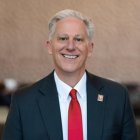
Behind every health care provider, or perhaps already in the palms of their hands, is a piece of equipment necessary to their patient’s health and survival. Modern medical treatment relies on complex equipment to keep patients alive and healthy during procedures and recovery. Take live-saving equipment such as telemetry monitors, MRI machines and ventilators as just a few examples. But what happens when all that equipment needs repair? Enter ChristianaCare’s clinical engineering technicians. This team of 35 employees — one of the largest clinical engineering teams in the nation — is responsible for overseeing the care, testing and repair of the roughly 50,000 pieces of medical equipment in use throughout the ChristianaCare system. The Clinical Engineering team is overseen by Director Blake Collins, MBA, CBET, CHTM, nationally recognized for excellence in the profession. He brings two decades of experience as a clinical engineer in the United States Navy, seven of which were served with the U.S. Marine Corps, to his role. His team has won numerous trade industry awards for its success as a “solutions provider” for the health system. "Think of health care as a triangle,” said Collins. “You have the patient, the provider and the equipment. You can’t have successful health care delivery without those three elements.” Begun in the 1970s as the hospital system’s “TV repair shop,” he joked, the Clinical Engineering department evolved dramatically after subsequent national developments in electrical safety testing and oversight for the care and functionality of medical equipment. ‘Everyone truly cares’ Today, the Clinical Engineering department maintains close to 50,000 pieces of medical equipment throughout the ChristianaCare system, including its three hospitals and all its imaging centers. “From thermometers to linear accelerators, MRIs, CTs — we manage all of it,” Collins said. Last year, the team completed 25,000 work orders, or roughly 2,100 per month. “We get to help people in so many different ways,” said John Learish, Clinical Engineering manager. Samantha Daws, Clinical Engineering supervisor, echoed the sentiment. “The Clinical Engineering Department within ChristianaCare is the most talented group of technicians I have ever had the privilege to work with,” she said. “Everyone truly cares about keeping the equipment working to ensure all caregivers have what is needed to provide quality health care to our community.” Saving lives, one device at a time What’s so important about what Clinical Engineering offers to ChristianaCare? In short: Anyone could need medical care at any time, and if medical equipment were out of commission or wrongly calibrated, lives would be at stake. Collins recalls a pivotal moment during his tenure in the Navy, when he needed an emergency appendectomy while stationed on board an aircraft carrier. “I was the only biomedical technician on the ship,” he said. “And the doctor doing the procedure asked me, jokingly, ‘Hey Collins, is this equipment going to work?’ “He was kidding, but it’s true that we never know when we or a loved one is going to end up under the equipment that we work on as engineers.” This experience gained new significance for Collins after successful open-heart surgery at ChristianaCare in 2022 — followed by his mother, who had the same procedure, also successfully, in 2023. “I had not one inkling or shadow of a doubt that the equipment was going to work fine,” he said. “You never know who will end up needing care. So we take it very, very seriously.” Icon in the field For his outstanding service as Director of Clinical Engineering at ChristianaCare, Collins was presented with the 2024 John D. Hughes Iconoclast Award from the Association for the Advancement of Medical Instrumentation (AAMI), a career-marking honor in health care technology management. The award recognizes innovation and leadership in the field; for Collins, it shows how well the Clinical Engineering team works together to deliver safe medical equipment across the ChristianaCare system. “Blake has been a relentless advocate for ChristianaCare,” read his nomination. “He has implemented numerous initiatives and processes to improve his department … and work smarter through the use of technology and automation.” The next time you see a ChristianaCare provider pick up an instrument or turn on a machine, think about the Clinical Engineering team — and rest assured that your equipment is ready to go.



With tremors in Japan - are we ready if an earthquake hits?
In an era where natural disasters are increasingly becoming a focal point of global concern, earthquake preparedness stands as a critical topic for public safety and resilience. With millions of lives and billions of dollars in infrastructure at risk, the importance of readiness cannot be overstated. This topic is not only timely due to recent seismic activities around the world but also due to its broader implications for disaster response, urban planning, and community resilience. Understanding and implementing effective earthquake preparedness measures can mitigate the devastating impact of these natural disasters, making it an essential subject for public discourse. Key story angles include: Advances in early warning systems: Explore how technology is improving early detection of earthquakes, potentially saving lives by giving communities crucial time to take protective actions. Urban planning and infrastructure resilience: Investigate how cities are adapting their infrastructure to withstand earthquakes, including the retrofitting of buildings and the development of earthquake-resistant structures. Community education and public awareness: Discuss the importance of community-based education programs in promoting earthquake preparedness, including drills, emergency kits, and public information campaigns. Government policies and disaster response: Analyze the role of government policies in disaster preparedness, focusing on how local, state, and federal agencies coordinate to prepare for and respond to earthquakes. The economic impact of earthquake preparedness: Examine the cost-benefit analysis of investing in earthquake preparedness, including the potential savings in terms of reduced damage and faster recovery. Global lessons and best practices: Compare earthquake preparedness strategies from different parts of the world, highlighting best practices that could be implemented in earthquake-prone regions globally. By delving into these angles, journalists can provide comprehensive coverage of earthquake preparedness, offering valuable insights that can help communities better protect themselves against the inevitable threat of seismic events. Connect with an expert about earthquake preparedness: To search our full list of experts visit www.expertfile.com Photo Credit: Chandler Cruttenden


Bridging the language gap: How AWE software fosters inclusivity for ELs and Non-ELs alike
When ChatGPT burst onto the scene in November 2022, many educators and parents worried that new writing tools powered by artificial intelligence (AI) would help their students bypass important learning opportunities. Instead, as University of Delaware associate professor Joshua Wilson has shown, AI-powered writing and evaluation tools have actually helped students develop their writing skills and have supported teachers in providing meaningful feedback. Now, in a recent study published in Learning and Instruction, Wilson and his co-authors turn their attention to elementary English learners (EL), investigating how this growing population of students interacts with and benefits from automated writing evaluation (AWE) software. AWE is a class of educational technology tools that use natural language processing and AI to provide students with automated formative feedback that supports improvements in writing quality. They found that AWE technologies are equally beneficial for ELs as they are for non-ELs. Study participants accessed writing feedback to a similar extent, achieved equal gains in writing quality, focused on consistent dimensions of writing when revising and endorsed the AWE system to similar degrees, regardless of their language status. “As AI-based feedback applications become increasingly prevalent, it’s critical that researchers examine the consequences of implementing those tools in authentic educational settings, with a particular focus on equity,” said Wilson. Wilson’s study focuses on MI Write, an AWE system designed to improve the teaching and learning of writing by providing students with automated feedback and writing scores. To investigate interaction with the AWE software, Wilson and his co-authors looked at three dimensions of engagement: behavioral, or the actions students take in response to feedback; cognitive, or the thinking and revision strategies that students use in response to feedback; and affective, or how students feel about and perceive feedback. Across all three dimensions, Wilson and his co-authors found similar levels of engagement across all students. They also found that the overall improvements in student writing over the course of the school year was not related to language status. But, even in light of these positive findings, Wilson emphasizes that it’s important to view AWE as a teaching tool rather than as a replacement for classroom teaching. For more on Wilson's research or to speak to him about AI in the classroom, click on his profile and reach out to him.


The Vanderbilt Policy Accelerator for Political Economy and Regulation (VPA) is leading the way in research and policy recommendations on the governance of artificial intelligence. At the Third Annual Networks, Platforms & Utilities conference hosted by the VPA in June, the groundbreaking initiative was commended by FTC Chair Lina Khan for its impact on her work with the agency. As part of Discovery Vanderbilt, Vanderbilt Policy Accelerator for Political Economy and Regulation is a groundbreaking initiative to bolster innovative research and education at Vanderbilt. The mission of VPA is to swiftly develop and advance cutting-edge research, education and policy proposals at a pace that aligns with the urgency of today’s challenges. The VPA encompasses several projects, including one dedicated to revitalizing the study of the law and political economy of networks platforms, and utilities (NPUs) in transportation, communications, energy and banking. “Many of our country’s most pressing economic and social challenges are directly tied to how we govern network, platform, and utility industries, including airline flight cancellations, social media regulation, banking failures and electric grid crashes,” said Ganesh Sitaraman, the New York Alumni Chancellor’s Chair in Law at Vanderbilt Law School and director of VPA. VPA’s Project on Networks, Platforms and Utilities has developed a series of papers and policy proposals to improve the governance of these sectors. Among this work are a set of proposals to policymakers for regulating air travel, a plan for stabilizing and regulating the banking sector, and 40 recommendations to promote competition throughout the American economy. With growing interest in AI, VPA has turned its eye to how policymakers can address the harms that come from concentration in the AI technology stack. VPA’s papers have developed an antimonopoly approach to regulating AI, addressed public capacity for AI, and offered proposals on federal procurement of AI resources. VPA’s work in this field has gotten increasing attention. VPA director Ganesh Sitaraman participated in one of the U.S. Senate’s AI Fora in 2023. And during the Third Annual Networks, Platforms & Utilities conference hosted by the VPA in June, FTC Chair Lina Khan specifically noted VPA’s impact on the agency. “I think the work that VPA has been doing on AI has been so enormously useful,” said Khan. “It’s really striking how it took 15 years before the NPU toolkit was even discussed alongside the Web 2.0 giants. So, the fact that from the very get-go this kind of framework is being applied in the context of AI policy discussions really marks that forward movement.” During the June conference, participants—which included 64 attendees from 15 different countries— discussed how their jurisdictions of study approach the regulation of network, platform and utility industries. This year’s conference was structured around eight panels, one on general themes and seven featuring a specific NPU sector: railroads, electricity, banking & finance, airlines, social infrastructure, tech platforms and telecommunications. “Vanderbilt is a leader in research on these topics, and we were very excited to welcome scholars from around the world to Nashville and to Vanderbilt, in order to explore these issues from a comparative and global perspective,” said Sitaraman. In the coming months, the conference organizers intend to compile the papers presented at the conference into an edited volume. To learn more, visit the Vanderbilt Policy Accelerator website.


Veronica Chandler’s north Wilmington home is her sanctuary, and it shows. From the soft instrumental music to the scent of lavender to the comfy seats that invite visitors to put up their feet, the message is clear – rest, relax, recharge. Original artwork by Veronica Chandler In this space, Chandler celebrates her rediscovered self, and it’s a journey she shares with all who visit. Part of the cozy feeling in her home comes from the artwork that lines the walls – mostly her own paintings and drawings created over the last six years as she navigates the challenges and triumphs of motherhood and discovers new ways to care for herself and those she loves. After experiencing anxiety, panic attacks and profound depression following the birth of her daughter in 2018, Chandler sought help at the ChristianaCare Center for Women’s Emotional Wellness, where a combination of medication and therapy helped her feel healthier and reconnected. She also returned to a former passion – art. “When I started painting, I found a way of silencing my brain, of calming it down. Being able to just focus on one thing on its own let my body regulate my nervous system,” she said. “I didn’t know what was happening to me. I just felt amazing.” More than ‘baby blues’ Perinatal mood and anxiety disorders are among the most common complications that occur in pregnancy or in the first year after delivery, according to the American College of Obstetricians and Gynecologists. Although many parents experience feelings of anxiety, fatigue and sadness in the first days with a new baby, postpartum depression can occur several months after childbirth. Symptoms are often more severe and can include extreme stress. Despite increased awareness efforts in recent years, perinatal mood and anxiety disorders – including postpartum depression, which occurs in up to 20% of all births – remain underdiagnosed, untreated or undertreated, even though the health impact extends beyond the person giving birth, said Malina Spirito, Psy.D., MEd, director of the Center for Women’s Emotional Wellness. The center opened in 2013 to help patients and their loved ones understand the challenges associated with perinatal mood and anxiety disorders. Since then, the program has tripled the number of clinicians and expanded services to include inpatient and outpatient consultations, ongoing psychotherapy and psychiatric medication management. “Just because we know something is common does not mean we have to put up with it, especially because the effects will be lasting if we don’t address them,” Spirito said. “Perinatal mood disorders have an impact on the overall health of a family. When a mom feels better, the relationships they have with the people around them are better as well.” Breaking the ‘super mom’ stereotype Looking back, Chandler recognizes her struggles with sleeping and anxiety following the birth of her first child may have been signs of postpartum depression. The symptoms went away only to return after her daughter was born two years later. Veronica Chandler sought help from the ChristianaCare Center for Women’s Emotional Wellness for postpartum depression. Caring for herself helped her rediscover her love of creating art. Although overjoyed by her growing family, Chandler deeply missed her mother, who lived in her native Ecuador. Added to those challenges were longer stays in the hospital for Chandler, who had a Caesarean section birth, and for her daughter, who had some minor health issues. In the weeks after giving birth, Chandler battled dizziness caused by anemia. Though exhausted by caring for a newborn, she couldn’t sleep. She constantly felt on edge, and her skin itched without relief. Worried when her symptoms didn’t abate after three months, Chandler’s husband broached the idea of postpartum depression. For Chandler, it was a relief another person noticed something was wrong, but she was scared to think about what might be needed to get better. “I think we’re programmed by our cultures and by our beliefs to think that we need to be ‘super moms’ and give everything we have,” said Chandler, who grew up in Ecuador and moved to the United States after marrying her husband. “I was in such a fog that I didn’t know I could still shine and be happy and content. The default for so many moms is to pour until there’s nothing left.” ‘Rediscovering who I was’ Chandler sought help at the Center for Women’s Emotional Wellness and soon began taking an anti-depressant as part of her treatment. She also saw a therapist to talk about the feelings she was experiencing. “Therapy was such a big part of this whole journey of rediscovering who I was. When you talk and someone listens, you figure things out,” Chandler said. While on a trip to Arizona with a cousin, Chandler discovered kachina dolls, a Native American art form often used to provide guidance to young people and instill the connection between nature and the spirit. The intricately designed images further fueled Chandler’s reignited passion for art. That passion helped Chandler manage the additional challenges brought on by the COVID-19 pandemic when her anxiety and depression resurfaced. Using painting, sculpture and other media, she has examined her own feelings relating to motherhood, family and society. Her work has been featured internationally in Vogue and closer to home in local art galleries. “Some people like to cook, and some people like to write. Art is my creative outlet that allowed me to come back to who I am,” she said. “We all have to release that creativity in some way.” Entering care sooner While the Center for Women’s Emotional Wellness has always focused on pregnant and postpartum patients, it has grown to address mental health needs related to preconception health, including artificial reproductive technology such as in vitro fertilization, Spirito said. The center also sees patients grieving a pregnancy or neonatal loss. More people are thinking about their mental health before they give birth, said Malina Spirito, Psy.D., MEd, director of the ChristianaCare Center for Women’s Emotional Wellness. “One of the most notable observations I’ve seen over the years is that birthing people are entering care sooner. It isn’t uncommon for women to seek out consultation prior to getting pregnant about how to manage their mood disorder should they become pregnant,” said Megan O’Hara, LCSW, a behavioral health therapist with the Center for Women’s Emotional Wellness. “Patients are educating themselves now and expecting their providers to consider their mental health as well as their physical health when getting care.” Women’s mental health care also has become more accessible, said Cynthia Guy, LMSW, MSCC, a women’s health behavioral consultant with the Center for Women’s Emotional Wellness. Behavioral health services are available in every ChristianaCare women’s health practice, including virtual and in-person care. “I can be the bridge connecting the patient with the resources they need to help them manage symptoms and what they are going through,” Guy said. Filling the cup As a result of her own experiences, Chandler teaches classes to help other mothers create their own art as a means of expression. It’s a small way of helping them to fill their own cup. The woman who once hid in her own closet to hide her feelings speaks openly about mental health with the hope people will lose their preconceived ideas about depression and anxiety. “I am so thankful for the journey and the many people I’ve met that have postpartum depression,” she said. “When we talk about what makes the best moms, I think the best mom is a healthy mom who is in balance and harmony.”


Global Technology Outage Raises Concerns About Ease of Future Cybersecurity Attacks
The world came to a standstill after a technology outage reported Thursday evening grounded airplanes, disconnected hospitals and shut down banks across the globe. A faulty software update was to blame, not cybercriminals, but Florida Tech assistant professor TJ O’Connor said the outage’s cascading effect points to larger concerns about our society’s reliance on the internet. The outage, which affected users’ ability to access Microsoft 365 applications, was traced back to a defect found in a software update from cybersecurity company CrowdStrike. CrowdStrike quickly released a statement confirming that the outage was “not a security incident or cyberattack.” The outage was nonetheless damaging, kicking institutions offline. Issues remained more than a day later. “Once those services go down, there’s this massive cascading effect,” O’Conner said. “If bank processing doesn’t work, then aviation doesn’t work. If aviation doesn’t work, shipping doesn’t work.” Ultimately, O’Connor explained, the biggest concern isn’t the glitch in the system; it’s the number of systems that broke because CrowdStrike wasn’t working. “I think what we’ll see a lot of people learn from this CrowdStrike incident is…that if they want to take the internet down in the future, all they have to do is hit one target,” O’Connor said. “It makes the threat landscape a lot smaller to attack for an adversary.” Over the course of several hours, a blue Microsoft error screen taunted companies worldwide. Airlines including Delta, American and Frontier grounded all flights. Several television news outlets, including the United Kingdom’s Sky News, were unable to hold live broadcasts. Some of the biggest concerns lie in the hospital industry, where planning, evaluation and continuous monitoring are essential, O’Connor noted. “[Hospitals] are constantly processing so much data, and for them to go out for a couple of hours means that decisions aren’t being made on an automated basis,” O’Connor said. “We’ve kicked over so much of our decision making to automated systems that we can’t let those networks fail.” According to the United Kingdom’s National Health Service (NHS), the outage disrupted its appointment and patient record system. Mass General Brigham in Boston, Massachusetts was also one of several U.S. hospitals that cancelled non-urgent surgeries, procedures, and medical visits because of the disruption. 911 outages were also reported in several states, including Phoenix, Arizona, whose computerized dispatch center was affected, the police department posted on social media. In Portland, Oregon, Mayor Ted Wheeler issued a citywide state of emergency due to the outage’s impact on city servers, computers and emergency communications. Although CrowdStrike confirmed the incident was not malicious, O’Connor said it raises questions about overall reliance on the internet to make decisions, as well as ineffectiveness in securing it. “We continually have these wake-up moments where something happens, it’s large scale, it’s a news blip, and then we forget about it… but our adversaries don’t,” O’Connor said. “Unfortunately, the attack infrastructure and the ability to attack is getting easier and easier.” O’Connor also expects future network attacks to get worse, calling the unstable global environment a “national-level issue to address.” While large-scale attacks and outages are mostly out the individuals’ control, O’Connor said, people can take action to protect themselves from personal cybersecurity attacks by using multi-factor authentication as much as possible. Looking to know more? Dr. TJ O’Connor’s research is focused on cybersecurity education, wireless protocols, software-defined radio and machine learning. If you're looking to connect with Dr. O'Connor - simply click on his icon now to arrange an interview today.


From Facial Recognition to Deepfakes: What Could Be Done With Your Image?
Facial Recognition: Convenience and Controversy Facial recognition technology is everywhere, making our day-to-day tasks faster and more convenient. It offers substantial benefits, from enhanced security measures to streamlined user experiences. Airports utilize it for faster check-ins, smartphones use it for secure authentication, and law enforcement agencies employ it for identifying suspects. However, the technology also raises considerable privacy concerns. The pervasive deployment of facial recognition without adequate oversight can lead to unwarranted surveillance, potential biases in profiling, and the erosion of personal privacy. The Rise of Deepfake Technology Meanwhile, deepfake technology has advanced rapidly, leveraging AI to create highly realistic synthetic, or "fake", media. These hyper-realistic videos, showing individuals doing or saying things they never actually did, have become a significant concern. The potential misuse of deepfakes ranges from spreading misinformation and manipulating elections to causing personal distress by enabling crimes like fraud and defamation. Dr. Derek Riley, a seasoned media expert, professor and program director of the B.S. in Computer Science program at Milwaukee School of Engineering, is available to discuss how these technologies work, how they're regulated, how they can be used in a positive manner, and how individuals can protect themselves.



Higher education, biotech and innovation - will the future be part of the 2024 campaign?
As the RNC brings national attention to Milwaukee, discussions are expected to cover pivotal topics such as biotechnology, innovation, and higher education. And as the Republican National Convention 2024 begins, journalists from across the nation and the world will converge on Milwaukee, not only to cover the political spectacle but also to dig deeper on the key issues that may decide the election. To help visiting journalists navigate and understand these issues and how and where the Republican policies are taking on these topics our MSOE experts are available to offer insights. Dr. Wujie Zhang, Dr. Jung Lee, Dr. Eric Baumgartner, Dr. Candela Marini, and Dr. John Walz are leading voices nationally on these important subjects and are ready to assist with any stories during the convention. Dr. John Walz President Expertise: Thought leadership on higher education, relevancy and value of higher ed View Profile “Engineering is not a very diverse field,” Walz said. “I want to continue to push those boundaries and make our programs open, to see more and more under-represented students come here and succeed here, and do well here.” MSOE president John Walz works to make 'hidden gem' not so hidden. Milwaukee Journal Sentinel May 17, 2023 Dr. Wujie Zhang Professor, Chemical and Biomolecular Engineering Expertise: Biomaterials; Regenerative Medicine and Tissue Engineering; Micro/Nano-technology; Drug Delivery; Stem Cell Research; Cancer Treatment; Cryobiology; Food Science and Engineering (Fluent in Chinese and English) View Profile “We accidentally noticed that we can make the hydrogel particle red blood cell shaped,” he explains. “We started then to make artificial red blood cells to mimic pretty much all aspects of red blood cells.” You're Somebody's Type MKE Lifestyle January 24, 2020 Dr. Jung Lee Professor, Chemical and Biomolecular Engineering Expertise: Bioinformatics, drug design and molecular modeling. View Profile Dr. Eric Baumgartner Executive Vice President of Academics Expertise: Thought leadership on higher education, relevancy and value of higher ed, role of A.I. in future degrees and workforce development. View Profile MSOE serves as an educational resource to Wisconsin companies is building an A.I.-ready workforce. In 2018 MSOE was the first in the nation to launch a B.S. in Computer Science with a sole focus on A.I. and machine learning. Wisconsin Governor’s Task Force on Workforce and Artificial Intelligence December, 2023 Dr. Candela Marini Assistant Professor Expertise: Latin American Studies and Visual Culture View Profile “Contrary to stereotypical images of Native Americans trying to stop ‘progress’ by fighting against mines and pipelines projects, the Menominees’ sustainable forestry stands out as a clear example of resource management that actually thinks about, and works for, the future,” said Marini. The MSOE Mindset visits the Menominee Indian Reservation MSOE Online April 11, 2019 . . . Media Relations Contact To schedule an interview or for more information, please contact: JoEllen Burdue Senior Director of Communications and Media Relations Phone: (414) 839-0906 Email: burdue@msoe.edu . . . About Milwaukee School of Engineering (MSOE) Milwaukee School of Engineering is the university of choice for those seeking an inclusive community of experiential learners driven to solve the complex challenges of today and tomorrow. The independent, non-profit university has about 2,800 students and was founded in 1903. MSOE offers bachelor's and master's degrees in engineering, business and nursing. Faculty are student-focused experts who bring real-world experience into the classroom. This approach to learning makes students ready now as well as prepared for the future. Longstanding partnerships with business and industry leaders enable students to learn alongside professional mentors, and challenge them to go beyond what's possible. MSOE graduates are leaders of character, responsible professionals, passionate learners and value creators.




Key topics at RNC 2024: Artificial Intelligence, Machine Learning and Cybersecurity
As the Republican National Convention 2024 begins, journalists from across the nation and the world will converge on Milwaukee, not only to cover the political spectacle but also to cover how the next potential administration will tackled issues that weren't likely on the radar or at least front and center last election: Artificial Intelligence, Machine Learning and Cybersecurity With technology and the threats that come with it moving at near exponential speeds - the next four years will see challenges that no president or administration has seen before. Plans and polices will be required that impact not just America - but one a global scale. To help visiting journalists navigate and understand these issues and how and where the Republican policies are taking on these topics our MSOE experts are available to offer insights. Dr. Jeremy Kedziora, Dr. Derek Riley and Dr. Walter Schilling are leading voices nationally on these important subjects and are ready to assist with any stories during the convention. . . . Dr. Jeremy Kedziora Associate Professor, PieperPower Endowed Chair in Artificial Intelligence Expertise: AI, machine learning, ChatGPT, ethics of AI, global technology revolution, using these tools to solve business problems or advance business objectives, political science. View Profile “Artificial intelligence and machine learning are part of everyday life at home and work. Businesses and industries—from manufacturing to health care and everything in between—are using them to solve problems, improve efficiencies and invent new products,” said Dr. John Walz, MSOE president. “We are excited to welcome Dr. Jeremy Kedziora as MSOE’s first PieperPower Endowed Chair in Artificial Intelligence. With MSOE as an educational leader in this space, it is imperative that our students are prepared to develop and advance AI and machine learning technologies while at the same time implementing them in a responsible and ethical manner.” MSOE names Dr. Jeremy Kedziora as Endowed Chair in Artificial Intelligence MSOE online March 22, 2023 . . . Dr. Derek Riley Professor, B.S. in Computer Science Program Director Expertise: AI, machine learning, facial recognition, deep learning, high performance computing, mobile computing, artificial intelligence View Profile “At this point, it's fairly hard to avoid being impacted by AI," said Derek Riley, the computer science program director at Milwaukee School of Engineering. “Generative AI can really make major changes to what we perceive in the media, what we hear, what we read.” Fake explicit pictures of Taylor Swift cause concern over lack of AI regulation CBS News January 26, 2024 . . . Dr. Walter Schilling Professor Expertise: Cybersecurity and the latest technological advancements in automobiles and home automation systems; how individuals can protect their business operations and personal networks. View Profile Milwaukee School of Engineering cybersecurity professor Walter Schilling said it's a great opportunity for his students. "Just to see what the real world is like that they're going to be entering into," said Schilling. Schilling said cybersecurity is something all local organizations, from small business to government, need to pay attention to. "It's something that Milwaukee has to be concerned about as well because of the large companies that we have headquartered here, as well as the companies we're trying to attract in the future," said Schilling. Could the future of cybersecurity be in Milwaukee?: SysLogic holds 3rd annual summit at MSOE CBS News April 26, 2022 . . . For further information and to arrange interviews with our experts, please contact: Media Relations Contact To schedule an interview or for more information, please contact: JoEllen Burdue Senior Director of Communications and Media Relations Phone: (414) 839-0906 Email: burdue@msoe.edu . . . About Milwaukee School of Engineering (MSOE) Milwaukee School of Engineering is the university of choice for those seeking an inclusive community of experiential learners driven to solve the complex challenges of today and tomorrow. The independent, non-profit university has about 2,800 students and was founded in 1903. MSOE offers bachelor's and master's degrees in engineering, business and nursing. Faculty are student-focused experts who bring real-world experience into the classroom. This approach to learning makes students ready now as well as prepared for the future. Longstanding partnerships with business and industry leaders enable students to learn alongside professional mentors, and challenge them to go beyond what's possible. MSOE graduates are leaders of character, responsible professionals, passionate learners and value creators.


Expert Q&A: Should We Permit AI to Determine Gender and Race from Resumes?
The banner ads on your browser, the route Google maps suggests for you, the song Spotify plays next: algorithms are inescapable in our daily lives. Some of us are already aware of the mechanisms behind a targeted ad or a dating profile that lights up our phone screen. However, few of us may actually stop to consider how this technology plays out in the hiring sector. As with any major technological advancement, it usually takes society (and legislation) a while to catch up and adjust for unintended consequences. Ultimately, algorithms are powerful tools. Like any tool, they have the potential for societal benefit or harm, depending on how they’re wielded. Here to weigh in on the matter is Assistant Professor of Information Systems & Operations Management Prasanna Parasurama, who recently joined Emory Goizueta Business School’s faculty in fall of 2023. This interview has been edited for clarity. Describe your research interests in six words. Six words…that’s difficult to do on the spot. How about “the impact of AI and other digital technologies on hiring.” Is that condensed enough? That works! What first interested you in the intersection of AI and hiring practices? Before I did my PhD, I was working as a data scientist in the HR analytics space at a start-up company. That is where my interest in the topic began. But this was a long time ago. People hadn’t started talking much about AI, or algorithmic hiring. The conversation around algorithmic bias and algorithmic fairness picked up steam in the second or third year of my PhD. That had a strong influence on my dissertation focus. And naturally, one of the contexts in which both these matters have large repercussions is in the hiring space. What demographics does your research focus on (gender identity, race/ethnicity, socioeconomic status, all of the above)? Do you focus on a particular job sector? My research mostly looks at gender and race for two main reasons. First, prior research has typically looked at race and gender, which gives us a better foundation to build on. Second, it’s much easier to measure gender and race based on the data that we have available—from resumes, from hiring data, like what we collect from the Equal Employment Opportunity Commission. They typically collect data on gender and race, and our research requires those really large data sets to draw patterns. They don’t ask for socioeconomic status or have an easy way to quantify that information. That’s not to say those are less important factors, or that no one is looking at them. One of the papers you’re working on examines resumes written by self-identified men and women. It looks at how their resumes differ, and how that influenced their likelihood of being contacted for an interview. So in this paper, we’re essentially looking at how men and women write their resumes differently and if that impacts hiring outcomes. Take resume screening algorithms, for example. One proposed way to reduce bias in these screening algorithms is to remove names from resumes to blind the applicant’s gender to the algorithm. But just removing names does very little, because there are so many other things that serve as proxies to someone’s gender. While our research is focused on people applying to jobs in the tech sector, this is true across occupations. "We find it’s easy to train an algorithm to accurately predict gender, even with names redacted." Prasanna Parasurama What are some of those gendered “tells” on a resume? People write down hobbies and extracurricular activities, and some of those are very gendered. Dancing and ballet tend to denote female applicants; you’re more likely to see something like wrestling for male applicants. Beyond hobbies, which is sort of obvious, is just how people write things, or the language they use. Female applicants tend to use a lot more affective words. Men, on the other hand, use more of what we call agentic words. Can you explain that a little more? In social psychology, social role theory argues that men are stereotyped to be more agentic, whereas women are stereotyped to be more communal, and that their communication styles reflect this. There’s essentially a list of agentic words that researchers have come up with that men use a lot more than women. And women are more likely to use affective words, like “warmly” or “closely,” which have to do with emotions or attitudes. These communication differences between men and women have been demonstrated in social sciences before, which has helped inform our work. But we’re not just relying on social science tools—our conclusions are driven by our own data. If a word is able to predict that an applicant’s resume belongs to a female versus male applicant, then we assign different weights, depending on how accurately it can predict that. So we’re not just operating on theories. Were there any gendered patterns that surprised you? If you were to assign masculinity and femininity to particular words, an algorithm would likely assign “married” to be a feminine term in most contexts. But in this particular case, it’s actually more associated with men. Men are much more likely to use it in resumes, because it signals something different to society than when women use it. "One of the most predictive terms for men was references to parenthood. It’s much easier for men to reference kids than for women to reveal information about their household status. Women face a penalty where men receive a boost." Prasanna Parasurama Studies show that people perceive fathers as being more responsible employees, whereas mothers are regarded as less reliable in the workplace. We haven’t studied this, but I would speculate that if you go on a platform like LinkedIn, men are more likely to disclose details about fatherhood, marriage, and kids than women are. There were some other tidbits that I didn’t see coming, like the fact that women are much less likely to put their addresses on their resume. Can AI predict race from a resume as easily as it can predict gender? There’s surprisingly very little we know on that front. From existing literature outside of algorithmic literature, we know differences exist in terms of race, not just on the employer side, where there might be bias, but we also on the worker side. People of different races search for jobs differently. The question is, how do we take this into account in the algorithm? From a technical standpoint, it should be feasible to do the same thing we do with gender, but it just becomes a little bit harder to predict race in practice. The cues are so variable. Gender is also more universal – no matter where you live, there are probably men and women and people who identify as in between or other. Whereas the concept of race can be very specific in different geographic regions. Racial identities in America are very different from racial identities in India, for instance. And in a place like India, religion matters a lot more than it does in the United States. So this conversation around algorithms and bias will look different across the globe. Beyond screening resumes, how does AI impact people’s access to job opportunities? A lot of hiring platforms and labor market intermediaries such as LinkedIn use AI. Their task is to match workers to these different jobs. There’s so many jobs and so many workers. No one can manually go through each one. So they have to train algorithms based on existing behavior and existing design decisions on the platform to recommend applicants to particular jobs and vice versa. When we talk about algorithmic hiring, it’s not just hiring per se, but spaces like these which dictate what opportunities you’re exposed to. It has a huge impact on who ends up with what job. What impact do you want your research to have in the real world? Do you think that we actually should use algorithms to figure out gender or race? Is it even possible to blind AI to gender or race? Algorithms are here to stay, for better or worse. We need them. When we think about algorithmic hiring, I think people picture an actual robot deciding who to hire. That’s not the case. Algorithms are typically only taking the space of the initial part of hiring. "I think overall, algorithms make our lives better. They can recommend a job to you based on more sophisticated factors than when the job was chronologically posted. There’s also no reason to believe that a human will be less biased than an algorithm." Prasanna Parasurama I think the consensus is that we can’t blind the algorithm to gender or other factors. Instead, we do have to take people’s demographics into account and monitor outcomes to correct for any sort of demonstrable bias. LinkedIn, for example, does a fairly good job publishing research on how they train their algorithms. It’s better to address the problem head on, to take demographic factors into account upfront and make sure that there aren’t drastic differences in outcomes between different demographics. What advice would you give to hopeful job candidates navigating these systems? Years of research have shown that going through a connection or a referral is by far the best way to increase your odds of getting an interview—by a factor of literally 200 to 300 percent. Hiring is still a very personal thing. People typically trust people they know. Prasanna Parasurama is an Assistant Professor of Information Systems & Operations Management at Emory University’s Goizueta Business School. Prasanna’s research areas include algorithmic hiring, algorithmic bias and fairness, and human-AI interaction. His research leverages a wide array of quantitative methods including econometrics, machine learning, and natural language processing. Prasanna is available to talk about this important and developing topic - simply click on his icon now to arrange an interview today.

