
Experts Matter. Find Yours.
Connect for media, speaking, professional opportunities & more.

March 6 is the National Day of Unplugging. Communications Professor Joni Siani at Manhattanville College is spearheading a unique project, the “No App For Life” challenge, to address the unintended consequences affecting the first digitally socialized generation. The challenge encourages a week of refraining from social media apps and reminds students that they are human and have all the apps they need to feel connected. “Our college students are considered the first digitally socialized generation,” said Siani. “We've seen the decline in soft skills along with a rise in anxiety, affecting their success in college and both their professional and personal lives. We're dedicated to giving students the skills they need.” Siani has dedicated her research to creating effective solutions to reverse the effects of growing up online. Beginning with the award-winning documentary “Celling Your Soul,” the No App For Life challenge evolved over a ten-year period into a comprehensive project, meeting students where they are with a deep level of compassion that focuses on empowerment. This portion of the curriculum from her classes was so well received, students encouraged Siani to expand it campus-wide. Siani discovered the benefits of the project were not about "going without, but, going within." This is "not anti-technology, but pro-human." Many educators encourage some type of digital abstinence, but Siani created a more comprehensive curriculum that works in a positive approach. The No App For Life challenge provides a writing activity and observational tasks that teach specific skills to practice and hone. Students report these strategies as "life changing" and incorporate the new behaviors into their daily lives with a positive effect on their relationships and mental health. As Siani explains, "Nobody wants to hear that the thing they love isn't good for them. The No App For Life challenge provides students with the skills they need to navigate their world using their ‘human apps.’ Going without their digital default methods, they build self-esteem and confidence while their phones are on the back burner. When students learn how to communicate to have their needs met and address anxiety and stress, they actually are excited to test out their new skills. They want to learn about themselves. This is a personal motivation strategy." If you are a journalist covering the National Day of Unplugging or looking to know more about how technology is impacting society, let the experts from Manhattanville College help with your stories.


The coronavirus will impact these three things in a major way
The coronavirus has already sent ripple effects through the global economy, according to Michael Ehrlich, professor of finance at New Jersey Institute of Technology. Reports of Wall Street reacting, automakers scrambling to avoid major disruptions and the Mobile World Congress cancellation has demonstrated the effects of COVID-19. According to Ehrlich, some of the biggest indirect impacts of the virus will be felt in tourism and travel, supply chain disruption and the flight to quality. Airlines have begun to cut routes to destinations with high risk, and tourism in major European countries have forecasted a decline, as much as 30-40% in France according to a report in Forbes. "We're already seeing people decide to not go on cruise ships or not to travel on airplanes because of the coronavirus," said Ehrlich. Supply chains are being met with challenges due to China's factory shutdowns. "The real impact of where it's going to affect the economy is supply chain. China is the factory of the world, and those factories are being shut down in order to contain the virus and slow down the transmission of the virus," said Ehrlich. Finally, the third impact is a phenomenon called flight to quality. This is when investors move capital from risky investments to safer ones, a reaction when there is uncertainty in international markets. The move, according to Ehrlich, can see investors take up more U.S. stocks, bonds, and dollars that are viewed as more stable long term investments. The downstream effect could lead to a boost in the U.S. economy as it allows national manufacturing sectors to better compete in a marketplace where they are in higher demand. Michael Ehrlich is an expert on financial markets and institutions, with an emphasis on market failures. Simply click on the button below to arrange an interview.


New Data Protection Agency: Good or Bad? It Depends.
New York senator Kirsten Gillibrand has proposed legislation to create a new data protection agency. She cites the need as personal information is freely sold across the internet without users' knowledge. She specifically calls out Facebook and Google for their misuse of consumer information. Similar legislation has been proposed in California. But is this a good idea or a bad idea? Law professor and privacy expert Doris DelTosto Brogan says it ultimately depends. "It will depend on how well resourced the new agency is both in terms of human and financial resources, and whether it is truly independent," Prof. Brogan said. "The area is huge and complex and ever-changing. The problems are often under the radar until they explode, and the nature of the threats are often nuanced and subtle. So, a good idea to create a dedicated agency? Yes, to the extent the agency comes to the table with real independence, adequate resources and genuine expertise." But the answer isn't all that simple, she says. "In terms of expertise, the agency will need people who understand the threats, and the reality of how the organizations that are managing data work. It will also need the financial resources to pursue a broad range of matters across a wide landscape not only of subject areas (hotels, airlines, credit reporting agencies, social media, financial institutions, etc.) but also the technology of how data is obtained, and accumulated, stored, used, manipulated and 'shared' by the players. "One concern with a subject-specific agency is the tendency to become overly reliant on and enmeshed with the industry being regulated. This is always an issue (like the critiques of the FAA in the Boeing matter), but with the oversized influence of big tech, and the issues of understanding a dense, rapidly evolving, tech-heavy industry the risk is significant. "Finally, if we are going to take seriously an agency dedicated to protecting privacy, in addition to mastering the market and developing technical expertise the new agency, if it is truly privacy-focused, it will have to develop a robust understanding of privacy conceptually—that is, privacy as more than just a consequentialist understanding. "A dedicated agency, if properly created, will come to the task with a deep understanding of privacy beyond just the implications of my social security number being hacked—but rather an understanding of privacy as essential to humanness, to intimacy, to thought and to informed self-governance."


United Nations’ Sustainable Development Goals fall behind initial hopes, lacks needed funding
In 2000, United Nations member states adopted eight Millennium Development Goals (MDGs), which featured a number of ambitious global initiatives, such as eradicating extreme poverty and hunger, and achieving universal primary education in all countries around the world. As these goals were extremely aspirational, most were far from met by the target date. However, by 2015 significant progress was made in a few areas, such as increased official development assistance (foreign aid), reduced trade barriers for developing country exports, and new debt-reduction strategies for some of the heaviest indebted countries. By the target date of the MDGs, the most notable outcome was the number of people living in extreme poverty around the world had been reduced by 50% since 1990. To keep the sustainable development agenda moving forward, at the end of 2015, the United Nations member states adopted 17 new Sustainable Development Goals (SDGs) to be met by 2030. Since the adoption of the SDGs in 2015, some progress has been on two of the SDGs: eliminating preventable deaths among newborns and children under the age of 5, and getting children into primary schools. These are both important initiatives and progress should be celebrated, says Matt Bluem, assistant dean of graduate programs and MBA director of Saint Mary's University of Minnesota's School of Business and Technology. Unfortunately, progress on the other 15 goals has not kept pace. With just 10 years until the target date for meeting all 17 SDGs, it is becoming increasingly clear that most of these goals will not be met. According to the UN, the biggest challenge in meeting the SDGs is funding. An additional $2-3 trillion is needed to help meet funding requirements. A recent report by the Brookings Institution states that sub-Saharan Africa alone would need hundreds of billions of dollars in additional financial support every year in order to meet the SDGs by the target date of 2030, Bluem says. U.N. Secretary-General António Guterres has argued that public investment by governments is not enough, insisting that private industry is going to need to get involved. To meet the aggressive SDGs, the private and public sectors will need to work together to bring about the investment and policy change. In order to encourage governments and the private sector to put the resources and effort necessary into meeting the SDGs, it is imperative to let world leaders know that goals such as the SDGs are important to the international citizenry, Bluem says. Are you a journalist covering this topic and interested in an interview? That’s where we can help. Matt Bluem, Ph.D., assistant dean of graduate programs and MBA director, has taught business and marketing courses at Saint Mary’s University of Minnesota since 2008. Prior to Saint Mary’s, he worked in both the banking and the nonprofit sectors, most recently with a non-governmental organization (NGO) with operations in more than a dozen countries. Bluem is an expert in political and economic development and is available to speak with media. To arrange an interview with him, simply click below to access his contact information.

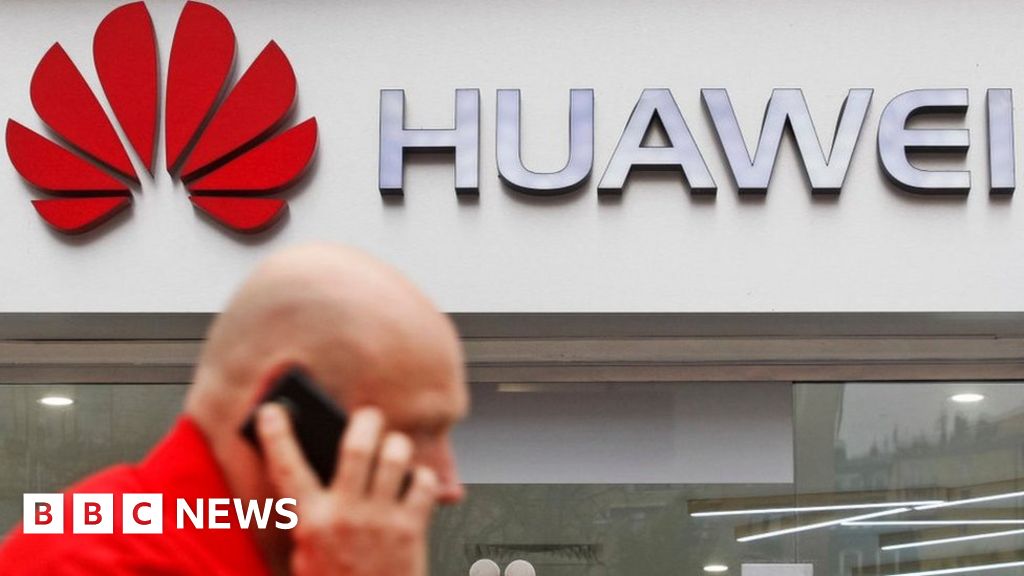
The three-way tug-of war between China, Canada and the United States
It’s a court trial in coastal Vancouver Canada that has gathered the attention of international media and plunged trade talks and international relations between America, China and America into tension, tariffs and a tug-of-war over one Chinese executive accused of fraud in in the United States. Here’s brief background courtesy of BBC: The Story in 100 Words Why is the US targeting Huawei, one of the world's largest smartphone makers, and executive Meng Wanzhou? Authorities claim they misled the US government about the company's business in Iran, which is under US economic sanctions. The US is also pursuing Huawei and Ms Meng in criminal charges including bank fraud and theft of technology. Both reject the claims. US officials want Ms Meng extradited from Canada to face the charges. Her arrest caused a diplomatic dispute between China and the US and Canada. The case against Huawei also comes as Western nations grow increasingly concerned about a possible spying risk related to the widespread adoption of the company's technology. So, is there any diplomatic resolution? What will happen if Meng Wanzhou is extradited to the United States? What will happen if she can return to China? Is Canada in a no - win situation? There are a lot of questions – and that’s where our experts can help. Dr. Glen Duerr's research interests include comparative politics, and international relations theory. Glen is available to speak to media regarding this topic– simply click on his icon to arrange an interview.


Introducing AiMOS, The Most Powerful Supercomputer at a Private University
The most powerful supercomputer to debut on the November 2019 Top500 ranking of supercomputers, also the most powerful supercomputer in New York State, was recently unveiled at the Rensselaer Polytechnic Institute Center for Computational Innovations (CCI). Part of a collaboration between IBM, Empire State Development (ESD), and NY CREATES, the eight petaflop IBM POWER9-equipped AI supercomputer is configured to help enable users to explore new AI applications and accelerate economic development from New York’s smallest startups to its largest enterprises. AiMOS is: The most powerful supercomputer housed at a private university. The 24th most powerful supercomputer in the world. The third-most energy efficient supercomputer in the world. Named AiMOS (short for Artificial Intelligence Multiprocessing Optimized System) in honor of Rensselaer co-founder Amos Eaton, the machine will serve as a test bed for the New York State-IBM Research AI Hardware Center, which opened on the SUNY Polytechnic Institute (SUNY Poly) campus in Albany earlier this year. The AI Hardware Center aims to advance the development of computing chips and systems that are designed and optimized for AI workloads to push the boundaries of AI performance. AiMOS will provide the modeling, simulation, and computation necessary to support the development of this hardware. “The established expertise in computation and data analytics at Rensselaer, when combined with AiMOS, will enable many of our research projects to make significant strides that simply were not possible on our previous platform,” said Christopher Carothers, director of the CCI and professor of computer science at Rensselaer. “Our message to the campus and beyond is that, if you are doing work on large-scale data analytics, machine learning, AI, and scientific computing, then it should be running at the CCI.” Built using the same IBM Power Systems technology as the world’s smartest supercomputers, the US Dept. of Energy’s Summit and Sierra supercomputers, AiMOS uses a heterogeneous system architecture that includes IBM POWER9 CPUs and NVIDIA GPUs. This enables AiMOS with a capacity of eight quadrillion calculations per second. You can watch Rensselaer President Shirley Ann Jackson talk about AiMOS here: Chris Carothers is the director of the Center for Computational Innovations (CCI) at Rensselaer. He is available to speak with media about AiMOS and what it can enable – simply click on his icon to arrange an interview.


Generalists and Specialists – Key Ingredients for an Innovation Ecosystem
David Epstein describes in his book Range: Why Generalists Triumph in a Specialized World, the relationship between specialists and generalists. Specialists being the masters of depth while generalists integrate across a range of options and diverse applications. The combination of the two leads to powerful potential for innovation. InventionShare seeks to create a similar relationship between inventors and corporations. Leveraging inventions that have very broad applicability, InventionShare systematically researches across many industries searching for businesses that are poised to leap forward with a strategic technology injection. One such technology is called Circuit Seed which redefines analog electronic design with a new paradigm that enables configurable analog in a scalable digital format. This technology dramatically lowers the cost, power, noise and temperature thresholds enabling breakthrough advances in a diversity of applications such as: automotive radar, Lab-on-a-chip and many more. By applying Epstein’s principles, InventionShare through its unique business model, is creating an innovation ecosystem spanning many industries through partnership and collaboration. For more information, please contact: Lesley Gent Director Client Relations, InventionShare™ lgent@InventionShare.com (613) 225-7236, Ext 131 Or visit our website at InventionShare.com


Social Media Spaces Can Be Instruments of God’s Unconditional Love, Theologian Says
Being 'always on' can be a source of anxiety or sorrow, but it also can be a way to strengthen faith, Baylor author says Many of us are “always on” — scrolling through social media, checking email or searching the web, says author Angela Gorrell, Ph.D., assistant professor of practical theology at Baylor University’s George W. Truett Theological Seminary. In her book “Always On,” she writes about how social media spaces can be instruments of God’s unconditional love — but also sources of anxiety, jealousy and depression. With the arrival of 2020 — and its potential for change for the better — she discusses in this Q&A some tools for understanding social media and enabling Christian communities to address its use in constructive ways. Q: From your perspective as a practical theologian, are the social media strategies you recommend aimed solely at people of faith? Dr. Gorrell: Practical theology takes different forms. Ultimately, I aim to write about issues — like social media — that matter to people and shine the light of the Gospel on them. I also research and write about theology and faith in practice, how people express and perform their values, hopes and beliefs through practices, rituals, disciplines, activities, relationships, work—through their way of life. While I write about social media from a Christian perspective, much of what I have written about using social media mindfully and having “interested conversation” about media is applicable to people from a variety of religious and philosophical perspectives. Q: There is much talk about how people spend too much time on social media, to the point of ignoring family and friends when in their presence. How much is too much? And what problems can this create for people? Dr. Gorrell: The most important thing for people to realize is that how you spend time online is more important than how much time you spend online. There are a variety of issues that “passive,” unintentional, unregulated, time online can extend and nurture. I say extend because all of these issues can also be in-person issues. For example, empathy burnout, depression, anxiety and jealousy. We often encounter an enormous amount of suffering online. The amount of suffering and the velocity of these encounters — and rapidly seeing multiple examples back to back in articles or our newsfeeds — can nurture empathy burnout. We can become numb to the suffering we see online and take in but do nothing about it or think very little of it. Likewise, being on social media and passively scrolling through people’s status updates, tweets and stories for unbounded sets of time and looking at copious amounts of content but never replying, messaging, posting or sharing has been linked to depression and anxiety. Similarly, passive following, which is following people closely that we do not know (e.g., celebrities) or people we do not see regularly in person (e.g., high school friends) has been linked to jealousy, which can negatively impact how we perceive ourselves and our lives . . . When we see someone a lot in person or talk to them regularly by phone, we know that their lives have a lot more going on than what they are sharing online. Q: What strategies do you suggest help people use social media wisely? Dr. Gorrell: The goal is meaningful participation. I encourage people to limit passive scrolling and following as much as possible. Create something and share it online. Join conversations. Reply to people’s statuses rather than just clicking emojis. When you see that someone is celebrating, share their joy in a significant way. Share it as your status with a note of congratulations or text them or call them. When you notice someone is mourning, message them. When you encounter suffering online, stop scrolling and do something in response. Get offline, take a walk and pray about this suffering. Give money to an organization that is relieving this suffering. Find other articles and educate yourself on the issue. Learn more about how to help or how to invite other people to care. Q: Any suggestions as to how and where people might create a space to ask and answer questions about social media use? Dr. Gorrell: Asking powerful questions about people’s online experiences that encourage storytelling and helping each other think about new media can happen around the dinner table, in a church small group or on a road trip in the car. When family and friends ask each other about one another’s lives, we can include asking questions about and discussing social media experiences. We can ask curious, open-ended questions without simple yes or no answers like: 1. How do you make decisions about what to respond to online? 2. Have you ever been frustrated or sad about new forms of technology? What causes frustration or sadness for you? 3. When have you had a joyful experience online? Could you describe a time when you felt heard, affirmed or understood online? 4. How does social media help you love God and others and/or prevent you from loving God and others? 5. When have you had a painful experience online? Could you describe a time when you felt unheard, bullied, left out or misunderstood online? 6. What are the top two feelings you experience when using social media, and why do you think this is so? Q: How can we do a better job of using social media? Dr. Gorrell: Develop a rhythm for life with your friends or family that specifically addresses technology — when you will use it and for what purposes, when you will not use it, what boundaries you will have. Using social media constructively requires intentionality. I encourage people to find times in their week or month or year to not use devices and social media and to write down their plan on a calendar. A college student told me that he and his friends put all their phones in the center of the table at restaurants and say that the first person to pick up their phone during dinner pays the entire bill. Since they started this ritual, no one has picked up a phone during dinner. Practices like these help people to be present to people they are with in person. It is a great idea to put all devices away at night one to two hours before bed so minds and bodies can get prepared for sleep. I know families that have a basket for this purpose in their homes. I especially encourage parents to make sure children under 18 do not have a device in their room during sleeping hours so they can get adequate rest. I invite people to consider turning off notifications from all social media platforms and email and only check apps and email at a certain time each day. It is also important to have a plan for difficult moments and conversations online. What will you do when you get angry, disagree with someone else or feel depressed about your life or feel left out? What will you do next? It is equally important to think about what you will use social media for. How can you use social media to love people well, truly stay connected to people, expand your thinking on certain subjects, remain humble and open to being corrected, and nurture your creativity and increase your compassion? How might meaningful participation online support goals like these? ABOUT ANGELA GORRELL Angela Gorrell, Ph.D., assistant professor of practical theology at Baylor’s Truett Seminary, is the author of “Always On: Practicing Faith in a New Media Landscape,” which addresses the perils and possibilities of Christian faith in an era of massive technological change. She also is writing a book that addresses America’s crisis of despair, illuminated by its suicide rates and opioid addiction, and describes joy as the counteragent to despair. Gorrell earned a bachelor’s degree in youth ministry from Azusa Pacific University and an M.Div. and Ph.D. from Fuller Theological Seminary. She came to Baylor from the Yale Center for Faith and Culture at Yale Divinity School, where she developed relationships with more than 250 scholars from roughly 150 institutions on four continents while managing metrics and evaluation for the project. She has more than 14 years of experience in congregational and parachurch ministry, including serving as a chaplain at a women’s maximum-security prison. ABOUT BAYLOR UNIVERSITY Baylor University is a private Christian University and a nationally ranked research institution. The University provides a vibrant campus community for more than 17,000 students by blending interdisciplinary research with an international reputation for educational excellence and a faculty commitment to teaching and scholarship. Chartered in 1845 by the Republic of Texas through the efforts of Baptist pioneers, Baylor is the oldest continually operating University in Texas. Located in Waco, Baylor welcomes students from all 50 states and more than 90 countries to study a broad range of degrees among its 12 nationally recognized academic divisions. ABOUT GEORGE W. TRUETT THEOLOGICAL SEMINARY AT BAYLOR UNIVERSITY Baylor University’s George W. Truett Theological Seminary is an orthodox, evangelical school in the historic Baptist tradition that equips God-called people for gospel ministry in and alongside Christ’s Church by the power of the Holy Spirit. Accredited by the Association of Theological Schools, Truett Seminary provides theological education leading to the Master of Divinity, Master of Arts in Christian Ministry, Master of Theological Studies, Doctor of Ministry and Ph.D. in Preaching. The MACM and MTS degrees also can be completed at the seminary’s Houston campus. In addition, Truett Seminary offers joint degrees: M.Div./M.S.W. and M.T.S./M.S.W. with the Diana R. Garland School of Social Work, M.Div./M.B.A. with the Hankamer School of Business, M.Div./J.D. with Baylor Law School, M.Div./M.M. with the School of Music and M.Div./M.S.Ed. or M.Div./M.A. with the School of Education. Visit www.baylor.edu/truett to learn more.


It may be the most wonderful time of the year, but for those delivering packages to houses and homes across America this holiday season it’s also the busiest one. In fact, it’s expected that Amazon alone will ship close to 300 million packages for Christmas. Customers want their purchases quicker and cheaper and it’s changing how the landscape works. It's estimated that free shipping will cost Amazon more than a billion dollars this quarter alone. This explains why shippers are looking at some radical new technologies to cut the cost of the last mile – and this is not just limited to the retail shopping industry. “Technology-driven innovations such as delivery drones or driverless vehicles not only facilitate last-mile delivery, they help with the inclusion of new sets of “customers, especially those in remote locations or rural areas with poor infrastructure, says Morvarid Rahmani, assistant professor of Operations Management at Scheller College of Business at Georgia Institute of Technology. For instance, companies like UPS, CVS, and WakeMed are exploring the idea of drugs and other health-related items being delivered by drones. In a first, collaboration between the FAA and UPS partner Matternet made deliveries from a CVS pharmacy in Cary, North Carolina as well a customer’s retirement community in November. Rahmani thinks this type of delivery shows promise. “Using drones to deliver medical packages can give rural communities access to products and medical supplies, which they would not be able to access otherwise. This delivery model is a way of incorporating social concerns and conditions of underserved populations into business practices. Using drones to deliver medial packages is a great example of collaboration between a governmental agency and for-profit companies, which is toward the dual goals of promoting efficiency and inclusion,” she notes. So, while most consumers are coming to terms with drone technology as a means for the Amazons of the world to replace it’s fleet of trucks, many customers are seeing the future of receiving essential, potentially life-saving drugs to their doorstep. “These technologies enable inclusive retailing and distribution for large (excluded) communities all over the world, says Rahmani. “Successful implementation of inclusive business practices requires collaboration of for-profit firms with the public sector, civil society organizations, and communities”.CBS News - December 15, 2019 Morvarid Rahmani is an Assistant Professor of Operations Management at Scheller College of Business at Georgia Tech. She is an expert in the areas of research is on collaboration in work processes such as new product development, management/IT consulting, and education. Dr. Rahmani is available to speak with media regarding this topic – simple click on her icon to arrange an interview. About Scheller College of Business The Georgia Tech Scheller College of Business is located in a state-of-the-art building in Georgia Tech’s vibrant Technology Square, the core of the Atlanta’s high-tech business community. The College offers an internationally recognized business education, including full-time, evening, and executive MBA options as well as undergraduate and Ph.D. degrees, to approximately 2,000 degree-seeking students each year. Scheller College collaborates across Georgia Tech to offer joint MS degrees in quantitative and computational finance and business analytics. Custom and open enrollment programs for executives and professionals are offered through the Huang Executive Education Center, located within the College. Interdisciplinary centers for teaching and research within the College enrich the educational experience, the campus and the community by providing a direct connection with the real world. They fuel collaborative teaching and research in some of the most relevant areas in business today: leadership, innovation, sustainability, the global enterprise, and business ethics. For more information, contact media@scheller.gatech.edu


It's time to face the reality about the future of artificial intelligence
According to research from International Data Corporation, revenues for big data and business analytics solutions are forecasted to reach $260 billion in 2022. An increase in the use of artificial intelligence (AI) will result in $2.9 trillion of business value by 2030, according to a study by Gartner. “Progressive thinking businesses and organizations cannot afford to ignore the growing applications of artificial intelligence (AI) and data analytics,” says Michael Ratajczyk, the program director for B.A. and M.S. Business Intelligence and Data Analytics programs at Saint Mary’s University of Minnesota. “Sometimes machines can do it better than humans. As people say, machines don’t sleep, they don’t take vacation, they don’t get sick, and they don’t go on camping trips. They do what they’re told and a machine can do the work with far more precision — and without 20 years of training.” AI is here to stay, and it will be up to businesses and humans to adapt, adopt, and adjust to the future — especially in the areas of agriculture, transportation, and health care, where there is great potential for growth. “Businesses can’t afford to ignore AI to remain competitive, and students can’t afford to not keep up with AI trends either,” according to Ratajczyk. “Soon AI will be addressed in all business classes. It’s true that sometimes people can be replaced by machines, and that can be good for businesses and bad for employees. There will always be a need for those who can program AI software, and to prepare, analyze, interpret the data and, importantly, there needs to be a balance between technology and the human touch.” There’s a lot to learn about AI and how it will play a role in very near future. So, if you are a reporter covering this topic — then let our experts help. Michael Ratajczyk works with both undergraduate and graduate business intelligence and data analytics students at Saint Mary’s University. He’s an expert in the field and is available to help with any of your coverage or questions. To book an interview with Michael, simply click on his icon to arrange a time.