
Experts Matter. Find Yours.
Connect for media, speaking, professional opportunities & more.

Baylor Expert: 9/11 Reshaped Every Aspect of American Life – Not Necessarily for the Better
English professor, culture expert says terror attacks damaged America, but it’s not too late to recover sense of purpose and generosity The Sept. 11, 2001, terrorist attacks on the World Trade Center and the Pentagon continue – 20 years later – to have profound effects on everything from America’s political, religious and cultural polarization to American entertainment choices, said Baylor University faith and culture expert Greg Garrett, Ph.D., professor of English. “It shouldn’t surprise anyone that an event that shook our sense of security and our identity would be reflected in every aspect of American life,” Garrett said. “But what does surprise and alarm me is the degree to which 9/11 continues to shape our attitudes about race, religion, immigration and the Other, whether that Other is in Afghanistan or just across town. The United States initiated a perpetual war against terror in response to the 9/11 attacks, and the fear that took root in the American psyche has proven difficult to shake.” Garrett, author of more than two dozen books, is internationally recognized as an expert on faith, culture, race and story, and he argues that the reaction to 9/11 can be measured just as much through literature and culture as through accounts of executive orders and covert military operations. Country music, procedurals and reality TV after 9/11 “Initially, Americans supported the War on Terror across political, religious and cultural lines,” Garrett said. “Country musicians like Toby Keith leaned into militant songs about American greatness and righteous revenge. The top-selling act the Chicks (then the Dixie Chicks) was drummed out of country music for their public stand against going to war. The TV show 24 reflected the growing darkness of America’s extra-legal approach to that war—the willingness to use torture, rendition and the opening of a dark site in Guantanamo Bay to house suspected terrorists—and it actually shaped opinion and policy as it grew in popularity and influence.” Two other types of television shows became extremely popular as a result of 9/11, Garrett said. Procedurals (shows such as CSI, Law and Order and House, M.D.) gained a new popularity because they offered viewers something the ongoing War on Terror never could or will: closure. “A serious problem was introduced in every episode, grappled with and solved by the end of an hour,” he said. Another type of show that leapt in popularity in the months and years following the attacks – reality shows – offered “train-wreck escapism,” Garrett said. “The contestants on Survivor and The Bachelor, and the wayward souls on Jersey Shore and Keeping Up with the Kardashians, presented exaggerated versions of our present moment that allowed viewers to forget about the dark actuality of the times,” he said. Springsteen, Harry Potter and critiquing ‘moral failures of the War on Terror’ Not all popular culture offered reinforcement or escapism, Garrett said, adding that some of the most powerful pop culture from 2001 onward critiqued the “moral failures of the War on Terror and critiqued the American people for so readily accepting them.” “Punk rock, always a prime medium for protest, was one of the earliest forms of dissent,” Garrett said. Green Day’s 2004 album American Idiot reached the top of the charts in the United States and 18 other countries, ultimately selling 16 million albums. But mainstream acts like Bruce Springsteen also asked complicating questions about the attacks and their aftermath. “After primarily offering empathy and comfort in The Rising (2002), Springsteen realized that America had betrayed many of its most important ideals, as revealed by songs like ‘Your Own Worst Enemy’ on the No. 1 2007 album Magic,” Garrett said. “Later novels in J. K. Rowling’s Harry Potter series, the most popular fictional narrative of all time, introduce questions of torture and terror, and powerful TV dramas like Battlestar Galactica and the British import Doctor Who also criticize the choices made by the American government and its allies.” Zombies and the Apocalypse Perhaps the most significant byproduct of 9/11 in our culture is the resurgence in apocalyptic stories such as 28 Days Later, Sean of the Dead, The Walking Dead, Game of Thrones, World War Z and The Road, Garrett said. Stories about the Zombie Apocalypse – whether in games, books, comics, TV or movies – asked serious questions about what it means to be human, and about what moral compromises a person might be willing to take to stay alive, Garrett explained. They also reflected the new 24/7 sense of encroaching menace that “seeped into our culture and lit up our phones at all hours of the day and night.” “You could fight all day every day against this menace, these creatures who look like humans but seek your destruction. And then the next morning, you still have to rise and confront it again,” Garrett said. ‘Not too late’ “People 20 years ago said that 9/11 changed everything, and so it did.” Garrett said. “But 20 years later it is not too late to recognize that the fears those attacks brought to the surface don’t have to be the way we continue to live. In my faith tradition, Jesus constantly admonishes his followers not to be so afraid. We make bad and selfish decisions out of fear. We abridge hospitality, compassion and liberty when we believe we are endangered. That’s not the America I grew up in, and it’s not the America in which I hope to die. That America, the light of the world, the city on a hill, Lady Liberty lifting her torch to welcome all, is the America that our founders dreamed, and that we can dream once again.” ABOUT GREG GARRETT, PH.D Greg Garrett, Ph.D., is a professor of English at Baylor University and Theologian-in-Residence at the American Cathedral of the Holy Trinity in Paris. An award-winning professor, Garrett has written about 9/11 and its aftermath in a number of books, including One Fine Potion: The Literary Magic of Harry Potter (Baylor University Press), Living with the Living Dead: The Wisdom of the Zombie Apocalypse, and A Long, Long Way: Hollywood’s Unfinished Journey from Racism to Reconciliation (both Oxford University Press). ABOUT BAYLOR UNIVERSITY Baylor University is a private Christian University and a nationally ranked research institution. The University provides a vibrant campus community for more than 19,000 students by blending interdisciplinary research with an international reputation for educational excellence and a faculty commitment to teaching and scholarship. Chartered in 1845 by the Republic of Texas through the efforts of Baptist pioneers, Baylor is the oldest continually operating University in Texas. Located in Waco, Baylor welcomes students from all 50 states and more than 90 countries to study a broad range of degrees among its 12 nationally recognized academic divisions. ABOUT THE COLLEGE OF ARTS & SCIENCES AT BAYLOR UNIVERSITY The College of Arts & Sciences is Baylor University’s largest academic division, consisting of 25 academic departments and eight academic centers and institutes. The more than 5,000 courses taught in the College span topics from art and theatre to religion, philosophy, sociology and the natural sciences. Faculty conduct research around the world, and research on the undergraduate and graduate level is prevalent throughout all disciplines. Visit baylor.edu/artsandsciences.



UCI scholars discuss how 9/11 changed America
In recognition of the 20th anniversary of the Sept. 11, 2001, terrorist attacks in the U.S., we asked UCI scholars a single question: How did 9/11 change America? They responded according to their expertise – which ranges from collective trauma, media, air travel, foreign relations, false narratives, political divisiveness, and the war on terror. Contact Tom Vasich at 949-285-6455, tmvasich@uci.edu, to arrange interviews. Roxane Cohen Silver, Distinguished Professor of psychological science, public health and medicine E. Alison Holman, professor of nursing Topic: Media and collective trauma Quote: “The Sept. 11 terrorist attacks – which hijacked our television screens that Tuesday morning as people who sought to do us harm hijacked four airplanes – captured people’s attention throughout the days and weeks that followed. It also ushered in 24/7 media attention to what has become known as a “collective trauma,” transmitting the horrible events of that day throughout the country and, indeed, throughout the world in a matter of seconds. …The 9/11 attacks were tragic for American residents, but they also taught us that the media can broadcast distress alongside the news it’s covering.” Jan K. Brueckner, Distinguished Professor of economics Topic: Air travel Quote: “In response to the revenue shock of 9/11 and to new competition from low-cost carriers, the major airlines behaved conservatively in adding back capacity as traffic returned, so that the carriers eventually offered fewer seats to an ultimately larger number of passengers, leading to fuller flights and today’s less comfortable flying experience. Even though 9/11 is long past, the airline industry continues to operate in a climate of fear of terrorism from the air.” Erin Lockwood, assistant professor of political science Topic: U.S. foreign policy Quote: “The attacks – and the U.S. response – set in motion decades of war, anti-Arab and anti-Islamic bias and violence, and a willingness to sacrifice military and civilian lives and civil liberties for the perception of security. As we mark the withdrawal of U.S. forces from Afghanistan this month, it’s all too apparent that many of those trends continue to reverberate today.” David Kaye, clinical professor of law Topic: National security Quote: “Despite my hopes for something better that might emerge, the attacks reinforced a cult of national security that the United States transformed into the torture of terrorism suspects, drone warfare, the invasion of Iraq, Guantanamo Bay’s indefinite detentions, anti-Muslim discrimination at home and the emergence of the contemporary surveillance state. … The predominance of national security as an ideology and apologia remains among the most significant legacies of that day, a feature of American political life that continues to constrain creativity and a return to normalcy in American law and policy.” Matthew Beckmann, associate professor of political science Topic: War on terror Quote: “To understand the legacy of 9/11 is to define the legacy of George W. Bush. For after the deadliest terrorist attacks on U.S. soil in our nation’s history, American citizens and lawmakers gave President Bush broad support and broader authority to wage the “war on terror” as he saw fit. … Twenty years after the attacks, having seen those lofty aspirations dashed in Afghanistan and Iraq, disregarded in Guantanamo Bay and black site prisons, and discounted even by our staunchest allies, the biggest legacy of Sept. 11 for the United States is that the “shining city on a hill” has less luster and a shorter reach.” David Theo Goldberg, professor of comparative literature Topic: Rise of false narratives Quote: “The events of 9/11 lent themselves to make-believe. The smoke hadn’t yet cleared when conspiracies began to abound, from “weapons of mass destruction” to “the deep state.” That the Trump administration adopted this as its own playbook while insisting on “draining the swamp” required cooking the rules. … Fabrication had become the rule book of the game. Invention and inventedness, disruption and innovation fueled the movement. The “truth” was, well, oh so yesterday.”

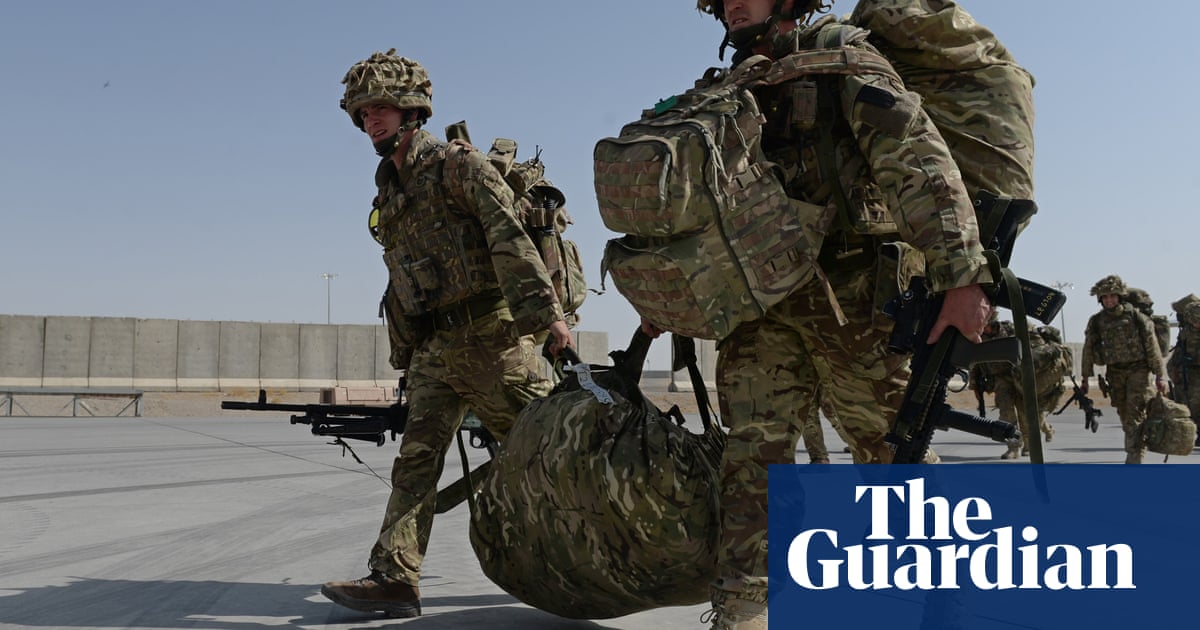
This Saturday marks the 20th anniversary of the September 11 terrorist attack. It was a day that forever changed how the United States viewed terrorism and its approach to foreign policy. The Middle East, especially Iraq and Afghanistan, has seen upheaval in the wake of 9/11. Over the last two decades, America’s approach to how it deals with enemies and how it collaborates with allies has also been drastically altered. University of Mary Washington Political Science and International Affairs Professor Jason Davidson is an expert in American foreign and security policy, and international security. He is also the author of the commissioned study, "The Costs of War to United States Allies Since 9/11," which focuses extensively on the human and monetary sacrifices made by America's allies in these conflicts. Davidson, and the document, made waves this spring, landing in the likes of Forbes, The Guardian and The Daily Mail. If you’re looking to arrange an interview with Dr. Davidson, simply click on his icon.



Early-stage entrepreneurial activity in 2020 had fallen sharply from its pre-pandemic high in the UK as the economy was essentially shut down for long periods due to COVID-19 This decline was due to fewer nascent entrepreneurs than normal – that is, individuals in the first three months of starting their new business venture Nevertheless, around two-thirds of working-age adults looking to set up a business within three years said the pandemic had influenced their decision to re-assess their future engagement with the labour market As in previous economic downturns it is the small business community that drives the recovery across all sectors of the economy. UK entrepreneurs once again stand ready to rise to the challenges and opportunities created by the Coronavirus pandemic and the economic fallout from Brexit, a new report says. The latest Global Entrepreneurship Team (GEM) UK report found that although around of half budding entrepreneurs said that the UK government had so far dealt effectively with the economic consequences of the pandemic, there must be improved programmes, financial support and advice to start-ups and scale-ups through different stages of the business life cycle. GEM is the world’s largest survey of entrepreneurship and is the only global research source that collects data on entrepreneurship directly from individual entrepreneurs. It measures various rates of entrepreneurship in 43 countries in 2020. GEM’s UK team – which is led by Professor Mark Hart of Aston University – compared attitudes, activity and aspirations in the UK, Germany and the United States as well as the four home nations of the UK. Access to finance remained one of the major obstacles to entrepreneurial activity in the UK. Enhanced tax benefits for entrepreneurs, such as tax breaks for start-ups and businesses in difficulty to reduce early exits and better tax incentives for recruitment, investment in managerial and digital practices and skills were also highlighted1. The report also called for more entrepreneurial education, especially at school age as well as improved technical education and improved links between the educational system and industry to boost growth post-COVID and post-Brexit. It found that the UK still lags behind many comparable economies in this respect. Mark Hart, professor of small business and entrepreneurship at Aston Business School and deputy director of the UK’s Enterprise Research Centre, said: “The GEM survey undertaken in the last few months of 2020 showed a sharp fall in the number of individuals in the early stages of setting up a new business compared to the pre-pandemic high in 2019. “This is hardly surprising, but the analysis has also shown that the entrepreneurial foundations of the economy and society are still strong and these will be crucial for the recovery after the pandemic and in dealing with the ongoing economic fallout from Brexit. “Those ethnic-minority communities that have borne the brunt of the pandemic in terms of infection, hospitalisation and sadly deaths demonstrated their resilience by maintaining their previous levels of early-stage entrepreneurial activity (TEA rate) which were significantly higher than for the non-ethnic minority population. “Clearly, the pandemic has had no damaging impact on the level of entrepreneurial activity by immigrants and ethnic-minorities although it has depressed it for life-long residents and the non-ethnic population. “There is undoubtedly an appetite for people to start their own businesses in the next three years and many report new opportunities because of the pandemic but they are delaying the actual decision to get the business operational.” The full GEM UK impact report, sponsored by NatWest, is available for download here.


As Afghanistan falls – what comes next?
After 20 years of war, trillions spent and thousands of casualties, the Taliban claimed control over most of Afghanistan this weekend with little resistance, just a few weeks after withdrawal of American and allied forces. And questions are already being raised: How could this have happened so quickly? Did no one see this coming? What revenge and havoc will the ruling Taliban seek on those who assisted coalition forces? What will happen to the Afghan refugees who are attempting to flee the country? And sadly, was this all for nothing? There will be a lot of coverage as the future unfolds for the people of Afghanistan and how the Taliban’s control will reshape the country and the region. And if you are a reporter covering this ongoing topic – then let us help. University of Mary Washington Political Science and International Affairs Professor Jason Davidson is an expert in American foreign and security policy, and international security. He is also the author of the Brown and Boston universities commissioned study, "The Costs of War to United States Allies Since 9/11," which focuses extensively on the contribution of America's allies in Afghanistan. If you’re looking to arrange an interview with Dr. Davidson, simply click on his icon now to arrange an interview today.

What does the latest federal ruling mean for DACA? A UConn expert weighs in.
Deferred Action for Childhood Arrivals, more commonly known as DACA, was introduced in 2012, and ithas enabled roughly 828,000 eligible young adults to work, attend school, and live out their lives in the United States, the only country they know as their home, according to the American Immigration Council. DACA is back in news, though, after a federal judge in Texas ruled that the program was unconstitutional, a decision that attorney, scholar, and expert Jon Bauer from the UConn School of Law says is shaky: The decision in federal court wasn’t a surprise to Jon Bauer, who directs the University of Connecticut Law School’s Asylum and Human Rights Clinic. Because Hanen is known for his conservative judicial philosophy, according to Bauer, the ruling was expected to interfere with DACA in some capacity. But Bauer said the ruling could be overturned. “The reasoning of the decision is very weak, in my opinion. The judge, I think, misconstrued the scope of the Department of Homeland Security's authority to engage in what's called deferred action, which is what the DACA program is,” Bauer said. Connecticut has 3,560 residents who have DACA, as of March 2020, according to the Department of Homeland Security which administers the policy. Current recipients aren’t in immediate danger of losing their status, since the ruling as of now only prevents first time applicants from getting DACA. Bauer said that non-citizens have long been allowed to work with deferred action. While the federal government can conceivably attempt a legislative path to citizenship for DACA recipients, the road ahead to any permanent solution is uncertain due to the divisive nature of the current Congress. July 31, 2021 – Hearst Connecticut Media The fate of DACA is important not just to the individual recipients, but to the immigration system and economy of the United States more broadly. If you are a journalist looking to know more, then let us help. Jon Bauer is a clinical professor of law and is the director of the UConn School of Law’s Asylum and Human Rights Clinic. He is a go-to expert in the areas of asylum and refugee law, immigration law, employment and housing discrimination, and legal ethics. Professor Bauer is available to speak with media regarding this most recent DACA ruling – simply click on his icon now to arrange an interview today.



Social class has a significant role to play in career success in the United States. A growing body of research is shedding disquieting light on the extent to which working class Americans face discrimination in recruitment, pay and promotion – despite having a college degree. This demographic is up to four times less likely to get hired, 34% less likely to accede to leadership roles, and earns around 17% less on average than counterparts from middle or upper-class backgrounds. But while research is starting to document how class can impede or accelerate professional success, it remains unclear why these discrepancies exist. What are the mechanisms or dynamics at play that make it so much tougher for working class people to succeed than others? Goizueta Business School Assistant Professor of Organization & Management Andrea Dittmann has an interesting hypothesis. She believes that employees from different backgrounds can bring inherently different strengths and weaknesses to the workplace; advantages and disadvantages that speak to certain norms governing how we think about work and leadership. And it boils down, she says, to the way we work with others. “People from working-class backgrounds—those with blue-collar parents, who might be the first in their family to get a college degree—typically relate a certain way to other people. They are better connected to others, more team-like in their approach, than their middle-class counterparts who see themselves as more independent or unique,” says Dittmann. This team spirit could be working against lower-class employees, she says, in the sense that they see themselves or are perceived by bosses as being less adept at working autonomously or as individuals within organizations; and are therefore viewed by others as less poised to advance into roles of greater responsibility. On the flip side, this very capacity to work well with other people could actually give working class employees an advantage in team-based activities or cultures; an advantage that might translate into concrete benefits for organizations. To put this to the test, Dittmann conducted a series of studies aimed at unpacking how individuals perceive themselves within the context of work, and at the interactions that occur between employees and the workplace. Among these studies were qualitative interviews with MBA students from different social class backgrounds about their experiences navigating white-collar workplaces after graduating from college. She also ran a number of experiments to assess how well working-class people performed in teams and individually, and how environments that prioritize collaborative dynamics or interdependence might produce better experiences and outcomes for employees than environments geared to working individually or independently. A full article detailing Dittmann’s work is attached here and offers very compelling research showing how social class plays out in the workplace. It covers important aspects such as: The Catch-22 of Working Well with Others “It’s a kind of catch-22. Working class kids don’t make it into the gateway settings of school or college as much as middle-class kids in the U.S. They are significantly underrepresented in leading business schools like Goizueta, at roughly 15% of the student population,” she notes. “So, the higher-educational context—the talent pool for corporate America—is very much geared to a different social demographic and dynamic; one that inherently favors independent work ethics and approaches and sees them as the norm. Other ways of working, collaborating, and contributing risk are being undervalued as much as they are underrepresented.” When Considering Diversity, Companies Stand to Benefit “We know that companies that are more diverse perform better than others, and diversity needs to extend to social class. What my research and others are showing is that people from a working-class background tend towards behaviors that are more relational, that they are better at working together. If they fail to make it into the workforce in a more representative fashion, companies are basically missing out on opportunities to form better teams.” Faculty research like Dittmann’s is a critical element in Goizueta Business School’s drive to develop principled leaders who are better prepared to engage in the business of tomorrow. If you are interested in learning more, then let us help. Andrea G. Dittmann is an Assistant Professor of Organization & Management at the Goizueta Business School. She is an expert in the areas of diversity and inequality, particularly employees' social class backgrounds, aiming to promote equity and inclusion at work. Dr. Dittmann is available to speak with media about this research – simply click on her icon now to arrange an interview today.


Crossing Space and Time at Japan Society's 2021 Annual Dinner
On June 22, Japan Society celebrated its 2021 Annual Dinner, raising over $1.3 million to take us into the next year and beyond. It was—literally and virtually—a star-studded evening at the intersection of science, art, culture, business, and the U.S.-Japan alliance. After a special message from Japanese Prime Minister Yoshihide Suga, the program included a conversation between former JAXA astronaut Naoko Yamazaki, the second Japanese woman to fly in space, and Ambassador Caroline Kennedy—marking the 60th anniversary of President Kennedy's Moonshot Address, followed by a performance from Japan's Ryoma Quartet. The keynote Fireside Chat brought together two titans of industry, our very own Chairman Joseph Perella, Chairman Emeritus, Perella Weinberg Partners and private equity pioneer Henry Kravis, Co-Chairman and Co-CEO of KKR—also the recipient of this year's Japan Society Award. Mr. Kravis underscored the value of investing in long-term relationships throughout his talk with Mr. Perella, noting, "You have to be patient. You have to set your mission. You have to have a focus on ESG (environmental, social, and governance). Any company today that is not focusing on their ESG and on diversity of their workforce is not going to have much of a future. Today, it's not all about making money. That's a part of it. But it's also very important to ask, 'What are you doing for society, what are you doing to help your country?'" In her conversation with astronaut Naoko Yamazaki, Ambassador Caroline Kennedy cited her father's famous Moonshot Address at Rice University in 1962: "We choose to go to the Moon in this decade and do the other things, not because they are easy, but because they are hard, because that goal will serve to organize and measure the best of our energies and skills, because that challenge is one that we are willing to accept, one we are unwilling to postpone, and one which we intend to win, and the others, too." Yamazaki, who is working to inspire the next generation in aerospace, among other initiatives, is "thrilled to be able to witness the Artemis Program, which is sending the first woman and the first person of color to the moon, with international cooperation. Japan is in charge of the cargo transfer to the Lunar Gateway, the station [that will orbit the moon], and also Toyota and JAXA are developing a pressurized lunar rover to explore the surface of the moon." For Japan Society, the next 50 years will be our own Moonshot, as we move forward into a new post-pandemic inflection point—a significant reopening full of energy and excitement this fall that embodies the best of American and Japanese spirit. It's time to reach beyond the physical space of our landmarked building, which opened to the public 50 years ago in September 1971, re-imagining our enduring mission of connecting American and Japanese people, cultures, and societies across time and space for the next half century. Sixty years ago, President John F. Kennedy's Moonshot Address inspired a generation of Americans to look to the moon in the spirit of adventure, patriotism, and freedom. Today, under new leadership in the United States and Japan, Japan Society starts a new chapter in building our kizuna, our forward-facing energy and deeply interwoven connections, between New York and Japan – and beyond. How do we continue to inspire the next generation of leaders in U.S.-Japan relations? As we think about the next 50 years at Japan Society, much has changed, yet many of the foundations remain the same from our starting point 114 years ago. There's a lot to look forward to as we celebrate significant milestones in 2021-22 and beyond. As Mr. Kravis said, in order to grow and to survive, "You have to keep innovating, you have to keep moving." Japan Society is a convener for the future. With your support, we, too, will overcome the tough challenges facing this world and the U.S.-Japan alliance, together. See you at Japan House and on the far side of the moon! If you missed out on our 2020-21 season, below are some of the highlights. Stay tuned for more exciting events coming this summer and fall, in person and online! Published on June 22, 2021 on Japan Society’s new Watch & Read page.


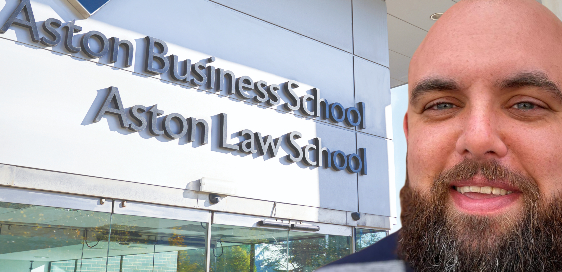
Aston University credit rating expert wins prestigious Fulbright scholarship
Aston Law School’s Dr Daniel Cash is the first member of the University to be awarded a Fulbright scholarship since Donald Biggs in 1974. The Fulbright Program is one of the largest and most prestigious educational exchange programs ever developed It has awarded over 8000 fellowships to students and scholars since its creation in 1946 by Senator J. William Fulbright An Aston University credit rating expert has been awarded a prestigious 12-month scholarship as part of the Fulbright Program in the United States of America. Dr Daniel Cash is the first member of Aston Law School to win one and is the first University staff member to enrol since Donald Biggs in 1974. He will start at New York University’s Stern Business School in April. Whilst there, he will be developing a sector-leading edited collection, bringing together the leading figures in credit rating research. He will also be creating articles on developments within the credit rating sector, and particularly the effect of credit rating agencies on the sovereign debt of the world’s poorest countries. Dr Cash said: “This is the accumulation of more than a decade’s worth of dreaming. I first visited New York in 2007 to try to gain some inspiration after a tough time in my life and ever since then have focused solely on moving over there. “I contacted a professor at NYU during my Masters in 2011 and have kept in touch with him since, even having Visiting Fellowships under him since being at Aston University. This Scholarship is the prize for all of that.” The Fulbright Program is one of the largest and most prestigious educational exchange programs ever developed. It has awarded over 8000 fellowships to students and scholars. Amongst its alumni counts are 39 Heads of State, 60 Nobel Prize Laureates, 75 MacArthur Foundation Fellows and 88 Pulitzer Prize Recipients. Professor George Feiger, executive dean of the College of Business and Social Sciences, who was himself a Fulbright Scholar at Harvard University, said: “The Fulbright Program is highly selective and exclusive and being awarded a scholarship through it is a phenomenal accomplishment for Daniel. It is a flagship initiative that is highly regarded globally and is a just reward for all of his hard work here at Aston University.”

At the age of 88, American political giant and two-time former Secretary of Defense Donald Rumsfeld is dead. Donald Rumsfeld, the two-time defense secretary and one-time presidential candidate whose reputation as a skilled bureaucrat and visionary of a modern U.S. military was unraveled by the long and costly Iraq war, died Tuesday. He was 88. In a statement Wednesday, Rumsfeld’s family said he “was surrounded by family in his beloved Taos, New Mexico.” President George W. Bush, under whom Rumsfeld served as Pentagon chief, hailed his “steady service as a wartime secretary of defense — a duty he carried out with strength, skill, and honor.” Regarded by former colleagues as equally smart and combative, patriotic and politically cunning, Rumsfeld had a storied career in government under four presidents and nearly a quarter century in corporate America. June 30 - Associated Press If you're a journalist looking to know more about Rumsfeld's legacy and impact on American foreign policy, then let our expert help. Professor of Political Science and International Affairs Jason Davidson is an expert in American foreign and security policy, and international security. His study, The Costs of War to United States Allies Since 9/11, recently received an onslaught of media attention, landing in Forbes, The Guardian and Daily Mail. If you’re looking to arrange an interview with Dr. Davidson, simply click on his icon now to arrange an interview today.