
Experts Matter. Find Yours.
Connect for media, speaking, professional opportunities & more.

An innovative Baylor University study has shed light on the often-overlooked experiences of women doing “daughtering” in families, particularly during the COVID-19 pandemic, which created immense challenges in their relationships with parents and other family members. “Daughtering” refers to the ways adult daughters contribute to flourishing family relationships, according to Allison M. Alford, Ph.D., clinical associate professor in the Department of Information Systems and Business Analytics in Baylor’s Hankamer School of Business. Alford’s latest research, Daughterwork in Times of Social Upheaval, published in Qualitative Research Reports in Communication, explores how societal changes caused by the pandemic required women to reconfigure their relationships with their parents and emphasizes the critical role adult daughters play in maintaining family connections, particularly in times of crisis. "This study highlights how social upheavals like the COVID-19 pandemic can both challenge and reinforce the essential work that daughters do in their families," Alford said. “Past research has shown that women often bear the brunt of responsibility when crises occur at home, work or in the extended family. Particularly for professional women – those who are balancing changing workplace demands alongside immediate and extended family concerns as well as societal shifts – increased care needs or the perception of such for parents can increase stress and negatively impact well-being, yet women still persist in providing upstream support for a variety of reasons.” Using in-depth, semi-structured interviews of women who identified change to their daughtering, professional and family lives, Alford discovered four themes about how a crisis can provide opportunities for flexible daughtering, meaningful connection and reflection on one’s most important relationships. Daughtering is adaptive action The pandemic forced many daughters to rapidly adjust their caregiving practices with their parents. When normal forms of communication were not an option, many daughters turned to technology to bridge the gap. This included increased use of video calls, social media, and other digital communication tools to maintain contact and promote family connection. Alford’s research found that daughters also took on new, often physically demanding tasks to ensure their parents’ well-being – delivering groceries, managing household repairs and organizing virtual family gatherings. “These actions were not only about adapting to the context of social upheaval but also about intensifying their caring efforts to meet the evolving needs of their parents,” Alford said. Daughtering is adaptive timing The study revealed that daughters had to maintain a heightened state of vigilance, constantly prepared to address unexpected crises, Alford said. Unlike the more predictable daughtering routines of the past, the pandemic introduced a level of uncertainty that required daughters to be in a near-constant state of readiness. One study participant described her experience as being in "constant problem-solving mode," which added significant stress to her daily life. “This ‘adaptive timing’ meant that daughters often found themselves juggling sudden care demands with their own professional and personal obligations,” Alford said. “This theme underscores the mental and emotional toll on daughters who had to manage the unpredictable nature of daughtering during the pandemic.” Daughtering is a priority Despite the challenges, Alford said, many daughters reported that they continued to prioritize their daughtering responsibilities, driven by a deep sense of familial duty and personal values. “For these women, daughtering was not just another task but a core part of their identity, often taking precedence over their professional responsibilities,” Alford said. “This commitment was evident in the time and resources they dedicated to maintaining their relationships with their parents, even when it meant sacrificing their own well-being or career advancement.” One participant noted, “I value family, so I still made it a priority,” reflecting a sentiment shared by many women in the study. This theme, Alford noted, highlights the internal conflict that many daughters faced, balancing their dedication to family with the competing demands of their own lives. Daughtering involves reflecting Challenges prompt many daughters to reflect deeply on their roles and relationships, and the COVID-19 pandemic was no different, Alford said. “This period of social upheaval generated a moment of introspection, leading daughters to reassess their priorities, boundaries and the nature of their relationships with their parents,” she said. “For some, this reflection led to a greater appreciation for the importance of family, while for others, it was a time to set new boundaries and redefine their roles within the family structure.” One participant observed, “COVID was a catalyst for emotional support,” while another reflected on the need to “carve out time mentally” to fulfill her roles as both a daughter and a professional. This theme illustrates how the pandemic not only challenged daughters but also provided an opportunity for personal growth and redefinition of their familial roles, Alford said. Key strategies to recognizing daughters’ “invisible” labor The research underscores the critical need for greater recognition and support for the invisible labor performed by adult daughters, suggesting that both families and society at large have a role to play in alleviating the burden on these women. “It’s crucial that we not only acknowledge the burden placed on these women, “Alford said, “but also seek ways to support them, whether through family empathy, shared responsibilities or societal recognition.” Alford emphasizes the importance of three key strategies: Awareness and acknowledgment Families should recognize the labor involved in daughtering and ensure it is acknowledged and appreciated. This can help prevent the exploitation of this labor and ensure that daughters feel valued for their contributions. Outsourcing and support Where possible, families should consider outsourcing some care tasks or providing additional support to relieve the burden on daughters. This might include hiring help for household chores or seeking external emotional support through counseling. Expressing gratitude Expressing gratitude and acknowledging the efforts of daughters can significantly enhance their sense of well-being and fulfillment. This recognition is vital in helping them feel that their contributions are meaningful and valued. National Daughter’s Day National Daughter’s Day is Sept. 25, and while this holiday has been around since 1932 to honor the daughters in our lives, it can often quietly pass us by. Alford recommends parents using this day to officially acknowledge all the ways in which daughters support their families.


Head trauma and long-term impacts
Last week, NFL great Brett Favre revealed publicly that he has Parkinson's disease. It was an announcement that has also put the devastating affliction back in the media spotlight, and has experts and the public wondering if there's a link between high-impact sports like football and Parkinson's. It's why researchers like Christopher Watts from TCU are getting contacted by national media looking for answers. Head trauma alone is not the sole risk factor for Parkinson’s. Experts say the disease has also been linked to environmental factors, like exposure to certain pesticides or chemicals, and genetic mutations. “If all the ingredients in the recipe come together, you may develop Parkinson’s disease,” said Christopher Watts, Texas Christian University's Dean of the Harris College of Nursing & Health Sciences, who researches the disease. “The reason why we know is because not every boxer develops Parkinson's disease… it has to be other things that are acting along with that exposure to head trauma.” The median age for a Parkinson’s diagnosis is about 65, Watts said. At 54, Favre is on the younger end of that spectrum. Parkinsonism – an umbrella term for brain conditions that cause slow movement, rigidity and tremors – has been well studied in boxers, Watts said. One of history’s most legendary boxers, Muhammad Ali, was diagnosed with the disease. However, the research among football players isn't as robust. A 2023 study published in JAMA found participants with a history of playing organized football had higher odds of Parkinsonism or Parkinson's disease compared with those involved in other organized sports. But other studies have reported mixed findings, Watts said. He said researchers must determine if there is a link. “Football is such a big part of American society,” he said. “We need to know the answers to this.” September 25 - USA Today With the NFL season in full swing - this will be a subject that will be receiving ongoing coverage throughout the season. And if you're a journalist looking to know - then let us help with your stories, questions and coverage. Chris Watts is the Marilyn & Morgan Davies Dean of Harris College of Nursing & Health Sciences at Texas Christian University and is an expert in the areas of neurological disorders. Chris is available to speak with media about this important topic - simply click on his icon now to arrange an interview today.


How Will Rate Cuts Affect the Election?
On September 18, the Federal Reserve established the first interest rate cut since the Covid pandemic in 2020. The Fed lowered the federal funds rate by half a percentage point – a much larger change than the typical quarter percentage point cut. Dr. Jeff Haymond, dean of the Robert W. Plaster School of Business at Cedarville University, shared insight about the motivations behind this rate cut in a recent interview. Here are some key points: The United States' national debt has been described as a "ticking time bomb." What impact will this and future interest rate cuts have on the national debt? In light of this recent move, current presidential candidate Donald Trump has articulated his economic plan to put a cap on credit card interest rates. Would this bring down the cost of living in the United States, or will it lead to less options for the consumer? This slashing of the interest rate comes only a short time before the presidential election, with many claiming that this cut was, in fact, a political move. Will it affect the decisions of voters as the election draws near? If you are covering the recent interest rate cut or potential for future cuts and need to know more, let us help with your questions and stories. Dr. Jeff Haymond is an expert on this subject and is available to speak to media regarding the action of the Federal Reserve and what this means for families in the United States – simply click on his icon or email mweinstein@cedarville.edu to arrange an interview.


Hurricane Helene: Addressing health and safety concerns as communities rebuild
With Hurricane Helene bearing down on the Gulf region, millions of people are deciding whether or not to evacuate from their homes or ride the storm out. How to best protect their families, concerns over feeding their infants and what to do with beloved pets will all factor into their decisions. Understanding the reasons why individuals choose one course of action over the other is a complex issue that researchers in the University of Delaware's Disaster Research Center have been studying for years. The following experts in the DRC, the oldest such center in the United States, can comment on the following topics: Tricia Wachtendorf: Evacuation decision-making, disaster response and coordination, disaster relief (donations) and logistics, volunteer and emergent efforts, social vulnerability. James Kendra: Disaster response, nursing homes and hospitals, volunteers, response coordination. A.R. Siders: Expert on sea level rise and managed retreat – the concept of planned community movement away from coastlines and flood-prone areas. Specifically, Siders can talk about how building more homes and infrastructure in flood-prone areas in Florida makes the consequences of hurricanes like Helene more severe. (How the 'expanding bullseye' is contributing to the rising disaster costs in the U.S.). She authored two papers slated for release on floodplain development (noting the more than 400,000 homes that were built in regulated floodplains 2001-2019). Jennifer Horney: Environmental impacts of disasters and potential public health impacts for chronic and infectious diseases. Sarah DeYoung: Pets in emergencies, infant feeding in disasters and decision-making in evacuation. Specifically, DeYoung can speak to reports that mothers in Florida social media groups are concerned about storage of breastmilk if/when the power goes out. Jennifer Trivedi: Can talk about preparedness steps and recovery, including recovery planning, particularly in non-coastal areas; as well as challenges for people with disabilities during disaster, cultural issues and long-term recovery. Victor Perez: Focuses on environmental racism and health disparities in historically marginalized communities. Shanjia Dong: Research looks at smart and resilient urban systems; infrastructure systems, critical infrastructure protection, effective disaster preparedness and response, and equitable resilience planning and climate change adaptation. Joe Trainor: Post-storm housing decisions and insurance.





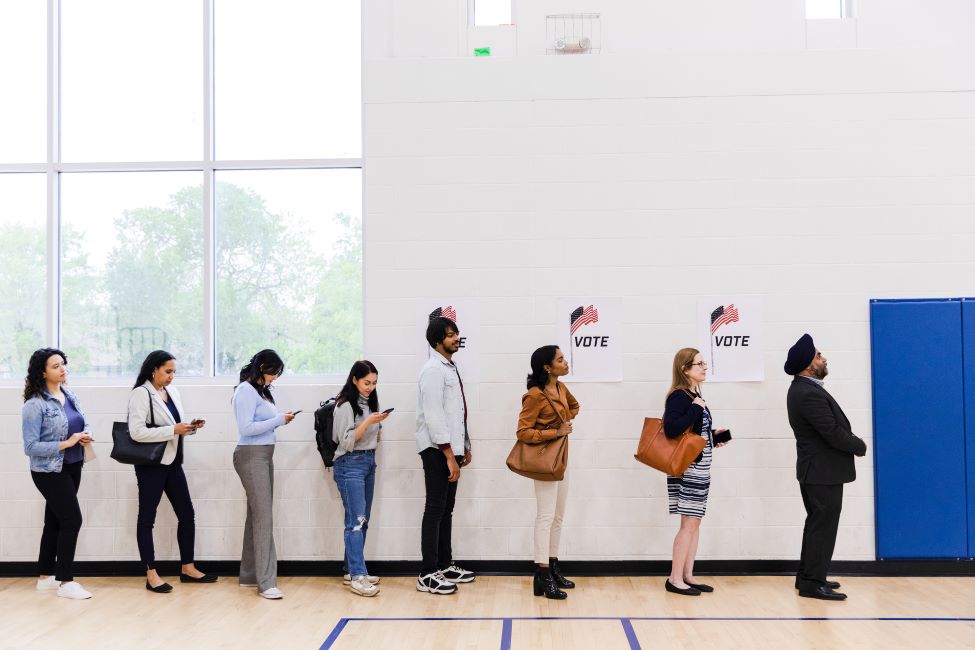
It's neck and neck and our expert is here to help with your election coverage
The tight race for the White House is approaching the home stretch as U.S. Vice President Kamila Harris and former U.S. President Donald Trump appeal to voters across the country. With assassination attempts and U.S. President Joe Biden dropping out of the race, this election has already proven to be a unique historical event in American politics. If you’re covering the race, how do you make sense of the twists and turns? How do you know what issues are driving voters in this tight race? What is going on with the “down ticket” races? Can polls help you predict what’s coming? We have an expert who can help. Kevin Wagner, Ph.D., is Florida Atlantic University’s renowned political science expert and co-executive director of Florida Atlantic University Political Communication and Public Opinion Research Lab (PolCom Lab)—the university’s extensive and nationally covered polling operation. View some of Kevin Wagner's recent media here: Newsweek: "Kevin Wagner, a political science professor at Florida Atlantic University, told Newsweek via email on September 2: "Both Harris and Trump have some potential to attract independents or voters from the opposing party, though this cross-party appeal is likely to be limited given the high levels of partisan polarization in recent elections." Forbes: “If they’re going to hit that 60%, the supporters of the amendment are probably going to have to reach a few more Republicans or have a particularly Democratic-leaning electorate, which sees a challenge in a presidential election year,” said Kevin Wagner, a Florida Atlantic University political scientist, according to a report from the South Florida SunSentinal." New York Post: "On the whole, there does appear to be a solid base of support for Harris in the Democratic Party,” said Kevin Wagner co-director of FAU’s PolCom Lab and professor of political science. “But there is still substantial uncertainty. Some Democratic voters are still looking for another candidate. Harris has time to unify the party before the convention, but she needs to move quickly, or this could potentially spin out of control for the Democrats.” Looking to connect? He is here to answer all your questions and is available for interviews. Simply click on his icon now to arrange an interview today.


The role of digital media in children's literacy
From tablets and smartphones to computers and smart TVs, kids have more access to digital content than ever before. But what does this mean for their literacy skills? One University of Delaware professor is embracing the use of digital media to improve children's literacy. Roberta Michnick Golinkoff, chair and professor in the School of Education UD, created Stories with Clever Hedgehog last year to offer books to children, specifically those who have been displaced or impacted by the Russo-Ukrainian War. This website allows families all over the world to engage in shared reading with their children, facilitate early literacy development and promote children’s well-being. Much research in early childhood education has underscored the importance of reading early and often with children, beginning during a child’s infancy and continuing throughout the elementary years. Reading during this critical point in children’s development fosters language acquisition, early literacy skills, socioemotional growth and comprehension of the world around them. Golinkoff's research partners and many others have demonstrated that shared book reading — when a child reads with a caregiver — encourages children to ask questions and draw connections to their own experiences, promotes story comprehension, increases children’s vocabulary and provides opportunities for emotional bonding. She is available to discuss even more benefits of reading, especially in this digital format. To connect, click her profile. She has been featured

Another Assassination Attempt. What Now?
In a shocking turn of events, another attempt was made on former president Donald Trump’s life on Sunday, September 15. He was playing golf in West Palm, Florida, when there was a suspect found with a gun, intending to assassinate Trump. Though the suspect has been apprehended and the former president is unharmed, this situation stirs up many questions about safety amid election season and how that could affect voters. Political expert, Dr. Mark Caleb Smith, has offered useful insight on the effect that this unsure election season has on voters. Here are three key takeaways from his recent interview: The multiple assassination attempts and overall tense election season has created a sense of heightened emotions for many Americans. How will the second attempt on Trump’s life affect the decisions and actions of voters? It seems as though Americans are growing more fearful and divided in the midst of this election season. In the wake of Sunday's events, is there hope for unity among Americans? Many voters are now looking for answers. What action is being taken to ensure that both presidential candidates are safe as the election approaches and tensions only seem to rise? If you are a journalist covering the recent assassination attempt or the upcoming election – our experts are here to help. Mark Caleb Smith is the Director of the Center for Political Studies at Cedarville University. Mark is available to speak with the media regarding the recent assassination attempt, election emotions and the upcoming election. Simply click on his icon to arrange an interview.


EU-UK Trade Deal continues to stifle trade with 27% drop in exports since 2021
New report shows persistent stifling effects of the impact of the Trade and Cooperation Agreement on UK-EU trade relations Monthly data show a 27% drop in UK exports and a 32% reduction in imports to and from the EU between 2021 and 2023 Recommendations for policy interventions include to negotiate sector-specific deals, engage with individual EU countries, and work on reducing non-tariff barriers A comprehensive analysis by researchers at the Centre for Business Prosperity at Aston University reveals that negative impacts of the UK-EU Trade and Cooperation Agreement (TCA) have intensified over time. The new report, Unbound: UK Trade Post Brexit, also shows a 33% reduction in the variety of goods exported, with the agricultural, textiles, clothing and materials sectors most affected. To assess the impact of the UK-EU TCA, the authors analysed monthly import and export between the UK and the EU, from January 2017 to December 2023 and separated into pre- and post-January 2021 when the agreement came into force. The monthly data shows a 27% drop in UK exports and a 32% decline in imports from the EU. Lead author, Professor Jun Du of Aston University says: “The Trade and Cooperation Agreement introduced substantial barriers and there are ongoing and marked declines in the value and variety of UK exports and imports. Without urgent policy interventions, the UK’s economic position and place in the global market will continue to weaken.” The UK-EU TCA redefined trade and investment rules and market access between the UK and the EU. Since it came into force, the UK government has negotiated several trade agreements, but the EU remains the UK’s largest trade partner. Exports for most sectors have decreased since January 2021, although the impact is varied. Agrifood, textile and clothing and material-based manufacturing have been among the hardest hit, with substantial declines in both export value and the variety of products exported. At the same time, some sectors such as tobacco, railway and aircraft manufacturing have seen modest increases in varieties of products exported. On the import side, most sectors have shrunk in both value and variety, particularly agrifood products, optical, textile and material-based manufacturing. A few sectors, for example, ships and furniture, have demonstrated noticeable increases in import product variety. The large variations across different goods categories and EU trade partners underscore the uneven effects of Brexit and the TCA on UK-EU trade dynamics, highlighting the need to understand the nuances and come up with tailored strategies that address the unique challenges of each sector within the new regulatory environment. The researchers make recommendations, outlining how sector-specific negotiations, streamlining customs procedures with digital technologies and reducing regulatory divergence could mitigate some of the impacts. Dr Oleksandr Shepotylo, the report’s co-author says: “Our findings indicate a decoupling of the UK from key EU final goods markets, accompanied by a shift in UK supply chains toward geographically closer EU trading partners for exports and smaller countries for imports. “This shift raises concerns and underscores the urgent need for a strategic reconfiguration of UK supply chains to maintain competitiveness.” Professor Du continues: “The TCA has introduced considerable barriers to UK-EU trade, particularly through increased Non-tariff measures (NTMs). “Addressing these issues through targeted improvements to the TCA is crucial to ensuring that UK businesses remain competitive in the European market. A structured, multi-faceted approach is necessary.” To find out more about these findings, click here.


VR Simulation to Demonstrate the Danger of Snow Squalls
Since 2017, Dr. Jase Bernhardt, Hofstra associate professor of geology, environment, and sustainability, has been using virtual reality technology to teach the public about the dangers of rip currents, hurricanes, and flash flooding. His most recent award, a $100,000 Road to Zero Community Traffic Safety Grant from the National Safety Council, is enabling him to tackle another seasonal weather worry: driving in snow squalls. The National Safety Council received funding for this grant from the National Highway Traffic Safety Administration. Bernhardt’s project aims to share information about the onset of snow squalls, the importance of heeding emergency weather advisories, and what drivers should do if they are on the road when a snow squall occurs. Although squalls are infrequent, they are extreme and frightening winter weather events that can result in a rapid onset of heavy snow, low visibility, icy roadways, and frigid temperatures. “Snow squalls are a very specific type of weather phenomenon. They often occur on a clear, calm day, with no warning of precipitation,” Bernhardt said. “Seemingly out of nowhere, you’ll see clouds, followed by a quick burst of very heavy snow. For a short time, perhaps only 10, 15 minutes, there are whiteout conditions where drivers can barely see the road ahead of them.” According to the U.S. Department of Transportation website, 24% of weather-related vehicle crashes occur on snowy, slushy, or icy pavement, and 15% happen during snowfall or sleet. More than 1,300 people are killed and nearly 117,000 people are injured in vehicle crashes on snowy, slushy, or icy pavement annually. Because winters in the New York metropolitan area have been mild for the last few years, Bernhardt worries that people have been lulled into a false sense of security about driving during winter storms or squalls. “We’re not used to being in that kind of severe weather anymore,” he said. “Snow squalls can be deadly in terms of massive collisions and multi-vehicle chain collisions. The key thing to remember is that they come in rapidly, catching people by surprise.” Bernhardt is collaborating on the software for the snow squall VR simulation with Frank Martin ’22, ’23, who earned both a BS and an MS in Computer Science from Hofstra University. Users will wear a headset and hold a device – like a video game controller – in each hand to replicate the movements of a steering wheel. In this way, users will experience what it is like to drive from clear, pleasant conditions into a brutal wall of snow. Bernhardt said that if a warning for a snow squall is issued via emergency broadcast, he hopes people who have used the simulation will understand the urgency of getting off the road or pulling onto the shoulder and remaining in their vehicle. “We want people to have an experience that is as close to reality as possible. The idea is to simulate how sudden and terrifying snow squalls can be and give people an opportunity to learn what they should and should not do if they are caught in one,” Bernhardt said. In conjunction with the VR simulation, Bernhardt is developing a survey to determine people’s reactions to emergency messaging and how effective it is. He will work with the National Weather Service to have the simulation and surveys available by fall 2025 for use at training and outreach events throughout the Northeast. Like Bernhardt’s rip current project, there are plans to have a version of the snow squall simulation and corresponding literature available in Spanish. Dr. Sasha Pesci, Hofstra assistant professor of geology, environment, and sustainability, is co-principal investigator on the grant and is helping with the translation of materials. “More and more, the National Weather Service, state and federal governments, and other agencies recognize the importance of having this information available in other languages,” Bernhardt said. “There are a lot of drivers whose primary language is Spanish, and they include cab and Uber drivers, and truckers.” Jase Bernhardt is available to speak with media about this topic - simply click on his icon now to arrange an interview today.


Putting a price tag on environmental projects
Unlike a grocery store, the goods and services in the environment — think clean water, tree cover, or flood control — don’t come with a price tag. Researchers in the University of Delaware Department of Applied Economics and Statistics have received a $1.5 million grant to assess the value of what is gained or lost from environmental projects. The three-year grant from the U.S. Army Engineer Research and Development Center, the chief research and development center for the federal environmental engineering agency U.S. Army Corps of Engineers, will pave the way for UD environmental economists to develop a web-based platform to help the Corps. The research team is led by Maik Kecinski, associate professor in the Department of Applied Economics and Statistics and also includes department colleagues Kent Messer and Martin Heintzelman, as well as three graduate researchers. The team will create an online platform to help the Corps estimate the monetary value of the ecosystem impacts through its ongoing and proposed projects across the U.S. Kecinski said many of the Corps’ projects involve natural resources, such as building dams or restoring rivers. Those projects require labor hours and equipment, each with a market value. “But the big piece the Corps doesn’t have is what is the environmental value that’s created or lost through these projects?” Kecinski said. The project came about after ERDC representatives visited UD in 2023. Kent Messer, Professor of Applied Economics, presented research about behavioral aspects around water quality and conservation and learned about ERDC’s research needs. Messer said that the big takeaway from those discussions was that ERDC was interested in having a platform to show the ecosystem services value of its projects. “So that was an exciting opportunity to connect and partner with them on the development of a tool that could help them in this regard,” Messer said. Messer said the opportunity to work with the Corps to assess its projects nationwide is “huge” for the University and for UD’s College of Agriculture and Natural Resources. “It speaks enormously to our college’s prominence in environmental economics issues,” Messer said. Martin Heintzelman, chair of UD's Department of Applied Economics and Statistics, said the project will help raise the profile of the department. “This is really in our wheelhouse in terms of the kind of research we do,” Heintzelman said. “It’s a great opportunity for us to be applying research to policymakers, people who are going to use this work to make better decisions as they’re going about their work constructing, managing, and sometimes de-constructing water and related projects.” The researchers hope the web-based platform will play a role in policy and decision-making, helping the Corps make more informed decisions on environmental projects in the future. “One thing I hope is going to come from this is the choices we make today are going to create a better tomorrow. That’s what it is all about” Kecinski said.
