
Experts Matter. Find Yours.
Connect for media, speaking, professional opportunities & more.

A path to fair minerals trade: Researcher champions global trust model
As the world races to build cleaner energy systems and powerful AI technologies, the demand for critical minerals—like lithium, cobalt, and rare earths—is soaring. But with this demand comes rising global tension over who controls these resources. University of Delaware Professor Saleem Ali, an international expert in environmental policy and chair of UD's Department of Geography and Spatial Sciences, is suggesting a new way forward. In a new article published in Science, along with a United Nations policy brief, Ali and his coauthors propose the creation of a Global Minerals Trust. The article notes how the international plan would help countries work together to manage and share critical minerals fairly and sustainably—avoiding political fights, price shocks and environmental damage. “Without a shared framework, we risk deepening global inequalities, triggering unnecessary resource conflicts and undermining our ability to deliver on climate goals,” says Ali, who also leads the Critical Minerals and Inclusive Energy Transition program at the United Nations University Institute for Water, Environment and Health. The proposed Trust would use independent checks—similar to those used in nuclear safety—to make sure countries are meeting environmental and social standards. Each nation would keep control of its own resources but agree to prioritize sales of those minerals at market prices so that they can be used for clean energy infrastructure. The article builds on a TED Talk that Ali gave last year as part of the Rockefeller Foundation's "Big Bets" initiative. Ali is available for interviews on the topic and can be reached by clicking on his profile.


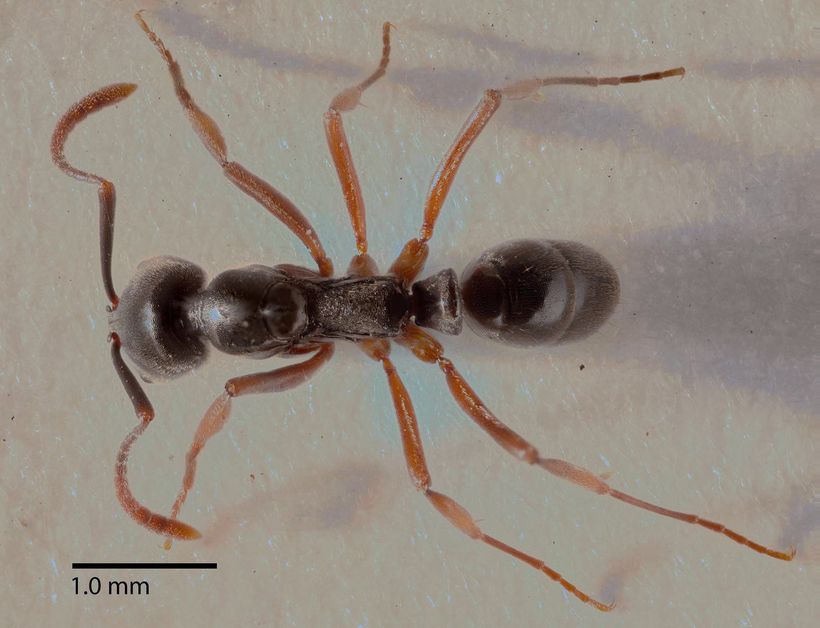
The Asian Needle Ant (Brachyponera chinensis) Found in Southern Louisiana
In Louisiana, there are several ant species that are capable of stinging besides the red imported fire ant (Solenopsis invicta), such as the elongate twig ant (Pseudomyrmex gracilis), Comanche harvester ant (Pogonomyrmex comanche) and several species in the subfamily Ponerinae. The Asian needle ant (ANA) (Brachyponera chinensis) joins the list and has been confirmed in the state. Recent reports on the Asian needle ant by Mississippi State University extension entomologist, Santos J. Portugal and other urban entomologists in the region spurred the authors at Louisiana State University to investigate the presence of ANA in their state. By happenstance, two citizen scientists had reported sightings of the ant on iNaturalist at two Louisiana parks in August 2024 and June 2025. Therefore, on June 17, 2025, an LSU entomologist visited one of the parks to ground-truth the citing by collecting the ant, as he had prior experience with it. The Asian needle ant is a termite specialist, preferentially feeding on them, often living in close proximity with termite colonies and inside damp wood. To collect the ants, water-soaked wood was located in a forested area, broken open, revealing ANA, and they did not react aggressively to the disturbance. The ants immediately grabbed immature larva and retreated into crevices, not bothering the collectors at all. Upon retrieval, an LSU entomologist used a microscope at 40x to 60x magnification and the dichotomous key authored by MacGown (2003) to confirm that the collected specimens were ANA. It is important to verify the identity of invasive species submitted on citizen scientist projects as the images may not be of sufficient quality to get a positive identification. The ANA was discovered in the U.S. in 1934 while individuals were researching Argentine ants (Linepithema humile). Since the introduction of the ANA, it has spread to many states within the U.S., ranging from Wisconsin to Texas to the east coast. ANAs are medium sized (about 5 mm long) and slender. The species originated from Asia. Queens are slightly larger (6.5 mm) and look similar in appearance to workers. ANAs are black to dark brown in coloration, with light brown legs, mandibles and antennae. To distinguish the ant from other look-alikes, ANA has a large single petiole node that extends above the thorax or alitrunk, and a shiny mesopluron on the side of the thorax. ANA colonies are typically small in numbers, up to a few thousand individuals in large colonies. They are polygynous, meaning they have multiple queens. ANAs use a unique foraging behavior, where the worker carries another worker to a food resource, then drops off the worker to assist in food transport. ANAs do not form mounds, but instead nest in damp, high humidity areas, such as rotting logs, void spaces, under rocks and in leaf litter. They are typically found in forested areas. They also form multiple colonies within an area, which is called polydomy. ANAs swarm during the spring and early summer, although this time range may vary for Louisiana. People typically encounter the ants when they are working with wet wood or digging in moist soil. This is when someone may potentially be stung, although they are not aggressive. The sting is reported similar to that of a honeybee. Individuals who are allergic to stings may have a life-threatening anaphylactic response if stung by the ant, which requires medical attention. Wearing gloves is adequate protection from ANA stings while working with rotten wood or soil in infested areas. People who are sensitive to other insect stings should be aware of the potential for ANA stings and carry an approved rescue device for severe allergenic responses. In addition to feeding on termites, the Asian needle ant will feed upon beetles, craneflies, springtails and native ants found in their preferred habitats. Because of their ability to prey upon native ants, they can impact native species that deposit seeds in the soil, thus reducing floral diversity. Therefore, ANA is capable of reducing both native animal and plant diversity in infested areas. Article originally posted here.

What's That Smell? Something is Rotten and Florida Atlantic's Seaweed Expert has the Answers
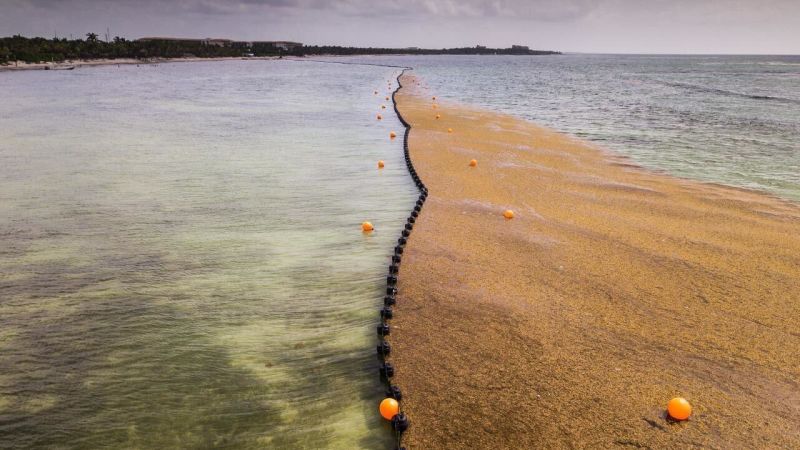
It’s back…and bigger than before. This summer, Floridians can expect a record amount of it! Sargassum, it smells like rotting eggs and a 'mega bloom' of the algae is expected to wash up on beaches soon. Sargassum is essentially a brown seaweed and also a type of algae. When out at sea, it's an essential item that helps feed fish, turtles, crabs and an array of ocean life. But once it hits land, it begins to rot and can be at the very least annoying and even potentially dangerous to humans by emitting harmful gases. The topic is getting a lot of media coverage - with reporters connecting with experts like Florida Atlantic's Brian LaPointe to get the answers and explanations they need. The Atlantic Ocean has a toxic seaweed problem. Floating in brown islands of algae, this year’s sargassum bloom has already broken its own size record by millions of tons — and the growing season isn’t done yet. Now stretching across some 5,500 miles of ocean, the annual bloom is more than just an eyesore: Sargassum hurts ecosystems and economies wherever its overgrown arms reach. And they are spreading into Florida’s waterways, coating marinas and beaches in the Miami area. “Sargassum goes from being a very beneficial resource of the North Atlantic to becoming what we refer to as … a harmful algal bloom, when it comes ashore in excessive biomass,” said Brian LaPointe, a research professor at Florida Atlantic University’s Harbor Branch Oceanographic Institute. For more than a decade, Atlantic coastal communities have been inundated by more and more sargassum. Images of white sand beaches stretching into azure waters have been altered by the toxic and putrid invasion. In the water, it’s home to larvae and other organisms that can irritate the skin of any passing swimmers. As it rots on shore, it emits harmful gases— an infamous stench. It’s a blight on beaches that repels tourists during the high-travel season, ultimately hurting towns that rely on tourism to fuel their economy. Rising ocean temperatures due to human-caused climate change have spurred this sargassum surplus, supercharging the seaweed. In April, the University of South Florida estimated this year’s bloom is already at 31 million tons — “40% more” than the previous record from June 2022, according to LaPointe. May 15 - CNN Looking to know more? We can help. Brian LaPointe is available to speak with media about seaweed, sargassum and what beachgoers can expect this summer in Florida. Simply click on his icon now to arrange an interview today.


UD researchers launch open-source tool to boost global food security and water sustainability
Efficient water usage in agriculture is crucial for sustaining a growing human population. A better understanding of the systems that support agriculture, farmers and farmlands allows for food production to become more efficient and prosperous. That's what makes the Monthly Irrigated and Rainfed Cropped Areas Open Source (MIRCA-OS) dataset so important. MIRCA-OS offers high-resolution data on 23 crop classes — including maize, rice and wheat — and helps researchers, students and farmers examine irrigation, rainfall and croplands and how they interact with global water systems. Co-authored by Endalkachew (Endi) Kebede, a doctoral student in University of Delaware’s Department of Geography and Spatial Sciences, a recent paper focused on MIRCA-OS was published in Nature Scientific Data. Kyle Davis, assistant professor in the Department of Geography and Spatial Sciences and the Department of Plant and Soil Sciences, served as a co-author on the paper and coordinated the study. “We first developed a comprehensive data library of crop-specific irrigated and rainfed harvested areas for all countries,” Kebede said. “This involved two years of gathering data from a wide range of international, national and regional sources. Through this process, we produced a tabulated crop calendar, annual harvested area grids and monthly harvested area grids for all irrigated and rainfed crops.” “The amount of effort that Endi put in to gather, process and harmonize all of this data is truly incredible,” Davis said. “His effort is a very important contribution to the scientific and development communities.” Doctoral student Endalkachew Kebede (left) and Assistant Professor Kyle Davis. (Photo credit: University of Delaware) Cropland accounts for 13% of Earth's total habitable land, and the preservation of cropland is important in feeding the growing global population. “Crop production has been a widespread human activity for a few thousand years, and it has a huge role in global food security,” Kebede said. “But it also has unintended impacts on the environment, such as overutilization of water resources, pollution through rivers or the effects on soil and the environment.” MIRCA-OS can play a crucial role in helping to better understand croplands and agriculture, allowing the global population to be successfully fed while minimizing the agricultural effects on the environment. In addition to the data included on cropland and water resources, MIRCA-OS allows researchers to view social aspects like poverty and unemployment through an agricultural lens, creating a better understanding of the interconnectivity of agriculture and social issues. MIRCA-OS is an updated version of the earlier MIRCA2000 dataset. Kebede said the MIRCA2000 was released nearly two decades ago, so renewing the data gives users more accurate and timely information. Both datasets specialized in examining irrigation and rainfall, but the MIRCA-OS added two new complexities to their data. First, MIRCA-OS is open source, meaning it is publicly available for anyone to use, download, or modify. Kebede said the added accessibility allows the technology to contribute to anyone's work, whether it be a student, a researcher or a farmer. “Anybody can use, update it, or upscale it to the special skill they’re interested in,” Kebede said. “Some might use it for research, some might use it to create policies and some might use it to practice agriculture.” To arrange an interview with Davis, visit his profile and click on the contact button.


Springtime swarms: What you need to know about termite alates
As temperatures warm up across Louisiana, so does termite activity. Homeowners may soon begin to notice large swarms of winged insects in and around their homes. These are termite alates, also known as swarming termites. “Swarming is how termites establish new colonies,” said LSU AgCenter entomologist Aaron Ashbrook. “Seeing swarms around your home doesn’t necessarily mean you have an infestation, but it does mean termites are nearby.” Alates are the reproductive members of a future termite colony if they can successfully establish. Each spring, usually following a warm rain, these termites leave their established colonies to find new places to nest. Many alates are produced because a low percentage of them are able to establish a colony. After swarming, they shed their wings and pair off to begin new colonies, which is how they end up in homes. Louisiana’s warm, humid climate makes it an ideal environment for termites, especially the Formosan subterranean termite, one of the most destructive species in the United States. Termites can silently cause thousands of dollars in damage before homeowners know they’re there. Tips for homeowners: Don’t panic, but don’t ignore it. Seeing swarms outside is common, but if they're inside your home, call a licensed pest control professional. Look for signs. Discarded wings, mud tubes, water stains, moisture buildup, and soft or hollow-sounding wood can all indicate a problem. Reduce moisture. Termites thrive in damp environments and require moist wood to attack structures. Fix leaks and ensure proper drainage around your home. Schedule regular inspections. Annual termite inspections are recommended, especially in high-risk areas like Louisiana. “Termites can cause extensive structural damage to your home that may go unnoticed,” said Carol Friedland, director of LaHouse Research and Education Center. “Early detection and prevention can save homeowners a lot of stress and money.” The LSU AgCenter’s Department of Entomology and LaHouse Research and Education Center provide research-based guidance to help Louisiana residents protect their homes from termites and other structural pests. Learn more by searching for “termites” at www.LSUAgCenter.com. Article by Shelly Kleinpeter, originally posted here.

The roots of scuba diving lie in exploration. But in an age when advanced instruments can drive research, too, why not stay dry on land? Researchers have used scuba diving as a tool for decades, but as technology evolves, remotely operated vehicles (ROVs) can aid, and sometimes replace, divers in the research process. Still, argues Stephen Wood, no existing tools have the full capability of a human. The professor of ocean engineering says the ability to grab items or quickly turn one’s head is difficult to replicate in an ROV. He also argues that although robots can collect and send data, the ability to assess and interpret an environment through a human lens is essential. “The human cannot leave” the research, Wood says. The American Academy of Underwater Sciences (AAUS) defines scientific diving as “diving performed solely as a necessary part of a scientific, research, or educational activity by employees whose sole purpose for diving is to perform scientific research tasks.” With more than 140 organizational members, AAUS supports diving as a research tool and protects scientific divers’ health and safety. Researchers and students must obtain an AAUS certification, which Florida Tech offers, before undertaking a scientific dive. At Florida Tech, any diver who plans to use compressed air or air blends for activity involving teaching or research must comply with AAUS. Robert van Woesik, professor of marine sciences, studies the dynamics of coral reefs worldwide. He and his students scuba dive to examine and photograph coral assemblages, then return with information they can use to predict the impact of local and global disturbances, recovery from disturbances and future growth. The ability to personally identify different species underwater is crucial to understanding coral reef dynamics. He says that without scuba, the necessary training to develop that skill falls away. “I think it’s still worthwhile knowing the species composition of a reef underwater instead of just saying, ‘Okay, we don’t need scuba divers anymore. We just need photographs and ROVs,’” van Woesik says. He learns the most when he can descend to a reef and see the seascape himself. “I think there’s something to be said to just go in the water and ask some questions,” van Woesik says. “That’s the valuable part of being able to scuba dive, getting amongst it to experience the reef, in tandem with analyzing photographs from around the world on the computer.” Assistant professor of marine sciences Austin Fox says in his research in the Indian River Lagoon, diving is essential for operating—and sometimes finding—instruments. “We spend a lot of time trying to figure out ways to do this stuff without diving…but there’s just no replacement for it.” Austin fox, Assistant professor of marine sciences Scientific diving has taken Florida Tech researchers across the globe, from the murky floor of the Indian River Lagoon to the depths of Antarctica’s McMurdo Sound. Rich Aronson, department head and professor of ocean engineering and marine sciences, studies coral reefs in the tropics and subtidal communities in Antarctica. In 1997, he had the opportunity to visit the McMurdo Station to study invertebrate ecology—specifically, who eats what and whether they leave traces of their predatory activity on the shells of their prey. There, he completed 27 dives of up to 130 feet deep. Some were done through ice-cracks in remote areas, he recalls, whereas others were from holes drilled through 10 feet of sea-ice. He noted that the time to prepare for these dives was extensive—two 30-minute dives took eight hours—and they weren’t without risk. “That was the first and only time I’ve dived under the ice. It’s dangerous because there’s a ceiling above you,” Aronson says. “You jump in the hole and try not to screw it up because if you screw it up, you’re dead.” Though risky, Aronson says scuba diving was crucial to the research. He argues that neither ROVs nor oceanographic sensors could have collected or sampled organisms at fine scales, run transects and made behavioral observations like a human could. Additionally, he says his observations at depth, such as the “sting of subzero water” on his face and “the slowness of reaction of the animals living down there,” are what later inspired a project of his combining deep-sea oceanography and paleontology to project the future of Antarctic seafloor communities in a rapidly warming world. “Science is a lot more subjective than you might think, and feeling the environment helps you understand it.” Richard Aronson, department head and professor of marine sciences The risky nature of scuba diving is why programs like AAUS exist: to standardize safe and responsible diving practices for conducting scientific research. Divers are at risk for a number of pressure-related injuries, such as decompression sickness: a condition in which residual nitrogen can create bubbles in the blood and body tissue upon ascent if the diver rises to the surface too fast. To reduce their risk, divers must plan and track how deep they are going, the time at which they are that depth (and subsequent depths) and how long they need to wait before changing depth. Technology has also evolved since the beginning of scuba to support divers’ safety further. Digital dive computers, developed in the 1980s, help divers estimate how long they can stay at their current depth while underwater (among other things). Additionally, Enriched Air Nitrox (Nitrox) is a gas mixture that contains a higher percentage of oxygen than standard air. Divers who use Nitrox can extend their time at depth and reduce their risk of decompression sickness because of its reduced nitrogen pressure. Van Woesik predicts that dive technology will keep evolving. He imagines there could soon be a system that allows divers to upload data at depth, and a system that aids in species identification without having to decipher an image at the surface. He also believes that innovators will keep working to reduce hazards and prioritize safety, because despite the risks, divers will always get in the water. “Hopefully that technology will get better so we can go deeper, safer, and so we can stay down a bit longer to explore and further understand the natural wonders of the oceans,” van Woesik says. If you're interested in connecting with Stephen Wood, Austin Fox, Richard Aronson or Robert van Woesik - simply contact Adam Lowenstein, Director of Media Communications at Florida Institute of Technology at adam@fit.edu to arrange an interview today.


Chemical and Life Science Engineering Professor Michael “Pete” Peters, Ph.D., is investigating more efficient ways to manufacture biologic pharmaceuticals using a radial flow bioreactor he developed. With applications in vaccines and other personalized therapeutic treatments, biologics are versatile. Their genetic base can be manipulated to create a variety of effects from fighting infections by stimulating an immune response to weight loss by producing a specific hormone in the body. Ozempic, Wegovy and Victoza are some of the brand names for Glucagon-Like Peptide-1 (GLP-1) receptor agonists used to treat diabetes. These drugs mimic the GLP-1 peptide, a hormone naturally produced in the body that regulates appetite, hunger and blood sugar. “I have a lot of experience with helical peptides like GLP-1 from my work with COVID therapeutics,” says Peters. “When it was discovered that these biologic pharmaceuticals can help with weight loss, demand spiked. These drug types were designed for people with type-2 diabetes and those diabetic patients couldn’t get their GLP-1 treatments. We wanted to find a way for manufacturers to scale up production to meet demand, especially now that further study of GLP-1 has revealed other applications for the drug, like smoking cessation.” Continuous Manufacturing of Biologic Pharmaceuticals Pharmaceuticals come in two basic forms: small-molecule and biologic. Small-molecule medicines are synthetically produced via chemical reactions while biologics are produced from microorganisms. Both types of medications are traditionally produced in a batch process, where base materials are fed into a staged system that produces “batches” of the small-molecule or biologic medication. This process is similar to a chef baking a single cake. Once these materials are exhausted, the batch is complete and the entire system needs to be reset before the next batch begins. “ The batch process can be cumbersome,” says Peters. “Shutting the whole process down and starting it up costs time and money. And if you want a second batch, you have to go through the entire process again after sterilization. Scaling the manufacturing process up is another problem because doubling the system size doesn’t equate to doubling the product. In engineering, that’s called nonlinear phenomena.” Continuous manufacturing improves efficiency and scalability by creating a system where production is ongoing over time rather than staged. These manufacturing techniques can lead to “end-to-end” continuous manufacturing, which is ideal for producing high-demand biologic pharmaceuticals like Ozempic, Wegovy and Victoza. Virginia Commonwealth University’s Medicines for All Institute is also focused on these production innovations. Peters’ continuous manufacturing system for biologics is called a radial flow bioreactor. A disk containing the microorganisms used for production sits on a fixture with a tube coming up through the center of the disk. As the transport fluid comes up the tube, the laminar flow created by its exiting the tube spreads it evenly and continuously over the disk. The interaction between the transport medium coming up the tube and the microorganisms on the disk creates the biological pharmaceutical, which is then taken away by the flow of the transport medium for continuous collection. Flowing the transport medium liquid over a disc coated with biologic-producing microorganisms allows the radial flow bioreactor to continuously produce biologic pharmaceuticals. “There are many advantages to a radial flow bioreactor,” says Peters. “It takes minutes to switch out the disk with the biologic-producing microorganisms. While continuously producing your biologic pharmaceutical, a manufacturer could have another disk in an incubator. Once the microorganisms in the incubator have grown to completely cover the disk, flow of the transport medium liquid to the radial flow bioreactor is shut off. The disk is replaced and then the transport medium flow resumes. That’s minutes for a production changeover instead of the many hours it takes to reset a system in the batch flow process.” The Building Blocks of Biologic Pharmaceuticals Biologic pharmaceuticals are natural molecules created by genetically manipulating microorganisms, like bacteria or mammalian cells. The technology involves designing and inserting a DNA plasmid that carries genetic instructions to the cells. This genetic code is a nucleotide sequence used by the cell to create proteins capable of performing a diverse range of functions within the body. Like musical notes, each nucleotide represents specific genetic information. The arrangement of these sequences, like notes in a song, changes what the cell is instructed to do. In the same way notes can be arranged to create different musical compositions, nucleotide sequences can completely alter a cell’s behavior. Microorganisms transcribe the inserted DNA into a much smaller, mRNA coded molecule. Then the mRNA molecule has its nucleotide code translated into a chain of amino acids, forming a polypeptide that eventually folds into a protein that can act within the body. “One of the disadvantages of biologic design is the wide range of molecular conformations biological molecules can adopt,” says Peters. “Small-molecule medications, on the other hand, are typically more rigid, but difficult to design via first-principle engineering methods. A lot of my focus has been on helical peptides, like GLP-1, that are a programmable biologic pharmaceutical designed from first principles and have the stability of a small-molecule.” The stability Peters describes comes from the helical peptide’s structure, an alpha helix where the amino acid chain coils into a spiral that twists clockwise. Hydrogen bonds that occur between the peptide’s backbone creates a repeating pattern that pulls the helix tightly together to resist conformational changes. “It’s why we used it in our COVID therapeutic and makes it an excellent candidate for GLP-1 continuous production because of its relative stability,” says Peters. Programming The Cell Chemical and Life Science Engineering Assistant Professor Leah Spangler, Ph.D., is an expert at instructing cells to make specific things. Her material science background employs proteins to build or manipulate products not found in nature, like purifying rare-earth elements for use in electronics. “My lab’s function is to make proteins every day,” says Spangler. “The kind of proteins we make depends entirely on the project they are for. More specifically I use proteins to make things that don’t occur in nature. The reason proteins don’t build things like solar cells or the quantum dots used in LCD TVs is because nature is not going to evolve a solar cell or a display surface. Nature doesn’t know what either of those things are. However, proteins can be instructed to build these items, if we code them to.” Spangler is collaborating with Peters in the development of his radial flow bioreactor, specifically to engineer a microorganismal bacteria cell capable of continuously producing biologic pharmaceuticals. “We build proteins by leveraging bacteria to make them for us,” says Spangler. “It’s a well known technology. For this project, we’re hypothesizing that Escherichia coli (E. coli) can be modified to make GLP-1. Personally, I like working with E. coli because it’s a simple bacteria that has been thoroughly studied, so there’s lots of tools available for working with it compared to other cell types.” Development of the process and technique to use E. coli with the radial flow bioreactor is ongoing. “Working with Dr. Spangler has been a game changer for me,” says Peters. “She came to the College of Engineering with a background in protein engineering and an expertise with bacteria. Most of my work was in mammalian cells, so it’s been a great collaboration. We’ve been able to work together and develop this bioreactor to produce GLP-1.” Other Radial Flow Bioreactor Applications Similar to how the GLP-1 peptide has found applications beyond diabetes treatment, the radial flow bioreactor can also be used in different roles. Peters is currently exploring the reactor’s viability for harnessing solar energy. “One of the things we’ve done with the internal disc is to use it as a solar panel,” says Peters. “The disk can be a black body that absorbs light and gets warm. If you run water through the system, water also absorbs the radiation’s energy. The radial flow pattern automatically optimizes energy driving forces with fluid residence time. That makes for a very effective solar heating system. This heating system is a simple proof of concept. Our next step is to determine a method that harnesses solar radiation to create electricity in a continuous manner.” The radial flow bioreactor can also be implemented for environmental cleanup. With a disk tailored for water filtration, desalination or bioremediation, untreated water can be pushed through the system until it reaches a satisfactory level of purification. “The continuous bioreactor design is based on first principles of engineering that our students are learning through their undergraduate education,” says Peters. “The nonlinear scaling laws and performance predictions are fundamentally based. In this day of continued emphasis on empirical AI algorithms, the diminishing understanding of fundamental physics, chemistry, biology and mathematics that underlie engineering principles is a challenge. It’s important we not let first-principles and fundamental understanding be degraded from our educational mission, and projects like the radial flow bioreactor help students see these important fundamentals in action.”


Executive Order - Energy and Power Perspective
The tariffs imposed by the Executive Order (EO) are expected to significantly impact the energy and infrastructure sectors. New build energy projects in the United States heavily depend on importing components such as inverters, transformers, cabling, solar panels, mounting racks, and batteries from regions such as Southeast Asia, China, and the European Union. These tariffs are likely to affect all energy and infrastructure projects. We are seeing large capital projects across the United States impose caveats within their EPC contracts; allowing for steep and continual price adjustments upward. This is impacting billions of dollars of critical material and contractual obligated componentry. This also includes all materials with high volatility (steel, copper, aluminum). Not only are projects costs on the rise but so are supply chain disruptions, potentially causing delays in project timelines and/or project cancellations. The United States continues to grow in energy demand requirements, provided the vast deployment of data centers. Because of this grid reliability, modernization and new build implementation is critical in the coming decade. The tariffs are likely to have a large impact on these projects as well, given their requirement for componentry from all the regions impacted. As this situation continues to develop, the full implications and responses for the energy and infrastructure industry will become more apparent. Jeremy Erndt is a seasoned power development, engineering, and operations professional, with experience in power generation, infrastructure, and the sector with J.S. Held. He has led utility-scale power, transmission, port, and water projects from early development and conceptual design through NTP and eventual operation. He is an international development expert and supports a variety of programs for capital project development. Jeremy is a subject matter expert in project due diligence, engineering, and constructability for large-scale projects. Jeremy has been involved in various project-related and company mergers and acquisitions, thus providing a comprehensive track record and perspective of financial transactions at all stages. He has nearly two decades of experience in the development, engineering, construction, and operations of energy and infrastructure projects, spanning more than 30 GW within energy projects and over $60B of capital expenditures within infrastructure. Looking to know more or connect with Jeremy Erndt? Simply click on the expert's icon now to arrange an interview today. For any other media inquiries - contact : Kristi L. Stathis, J.S. Held +1 786 833 4864 Kristi.Stathis@JSHeld.com


Weird and complex life emerged on Earth as the planet's magnetic field gave way
The Earth’s magnetic field plays a key role in making the planet habitable. It shields lifeforms from harmful solar and cosmic radiation. It helps limit erosion of the atmosphere and keeps water from escaping into space. But new data show a prolonged near collapse of Earth’s magnetic field that took place some 575-565 million years ago coincided with the blossoming of macroscopic complex animal life. We now face the possibility of a new, unexpected twist in how life might relate to the magnetic field, says John A. Tarduno, the William R. Kenan Professor of Geophysics and the dean of research at the School of Arts and Sciences and the Hajim School of Engineering and Applied Sciences at the University of Rochester. “That twist could reach deep into Earth’s inner core,” says Tarduno, who recently wrote about the findings for Physics Today magazine. Tarduno is frequently cited by news outlets, like CNN, The Washington Post, and Smithsonian magazine, on matters related to the Earth’s inner core, or dynamo, and magnetic field. He can be reached at john.tarduno@rochester.edu.


Florida Tech Welcomes Visiting Australian Scholar to Aid in Antifouling Research
Florida Tech’s Center for Corrosion and Biofouling Control is welcoming a new teammate for the semester. Tamar Jamieson, a postdoctoral researcher hailing from Australia’s Flinders University, is in Melbourne, Fla. to collaborate on biofouling research with assistant professor of marine sciences Kelli Hunsucker and professor of oceanography and ocean engineering Geoffrey Swain. Biofouling is the growth of a bacterial film or larger marine life, such as barnacles, after an object’s surface is submerged in water. It can inhibit a ship’s functionality by creating drag and slowing it down, which forces the vessel to use more fuel and emit more greenhouse gases. Over the course of the semester, Jamieson will help Hunsucker’s team develop a collaborative experiment to test antifouling techniques, combining Jamieson’s expertise with that of the lab. “I’m excited to have someone here who has this kind of wealth of knowledge in her field,” Hunsucker said. “She’ll be able to use her knowledge to help move our research forward and then kind of in return, use our knowledge to help move hers forward.” The Center for Corrosion and Biofouling Control aims to understand and improve corrosion and biofouling control systems. Part of Hunsucker’s research involves evaluating materials that can protect surfaces, such as a ship’s hull, from unwanted growth. She is currently working with the U.S. Navy to see how antifouling techniques perform under different conditions. Jamieson’s research through Flinders’s ARC Training Centre for Biofilm Research & Innovation focuses on the small-scale microorganisms that make up biofilm. She also studies the genetic makeup of microbial communities, which Hunsucker wants to add to her own research. Jamieson is especially interested in learning how antifouling materials interact with local waters. Florida’s seascape is warmer than Australia’s, so fouling grows quicker here than it does there. She also wants to see how American antifouling materials vary from those used in Australia and collaborate on a versatile solution that can withstand a variety of conditions. “Materials that work well here will probably not work in other environments,” Jamieson said. “Seeing how to develop materials for all three environments will be an interesting pathway forward.” Hunsucker hopes this exchange will lead to even more collaboration with Flinders University. “The program that she’s involved with opens the door for collaborative efforts for us to maybe go to Australia in the future,” Hunsucker said. “Her colleagues can also similarly come back and work with us.” Jamieson’s scholarship is funded by the American Australian Association, a New York-based non-profit organization dedicated to deepening and strengthening ties between the United States and Australia. The South Australia Defense, Space and Cyber Scholarship funds scholars from the U.S. and South Australia undertaking Ph.D. or post-doctoral research in those fields. Kelli Hunsucker and Geoffrey Swain are available to speak with media. Contact Adam Lowenstein, Director of Media Communications at Florida Institute of Technology at adam@fit.edu to arrange an interview today.
