
Experts Matter. Find Yours.
Connect for media, speaking, professional opportunities & more.

Tackling Tik Tok - Our expert explains what the problem is and what's next for the Chinese owned app
TikTok is one of the most popular social media sites in the world. In the United States, more than 170 million people and businesses use the app on a regular basis. Now, the federal government has taken the first step in banning the China-based app unless the ownership group, ByteDance, sells TikTok. The House of Representatives passed a bipartisan bill in support of the ban, and now it awaits Congress to act. President Joe Biden has indicated he would sign the bill banning TikTok unless it’s sold, but whether it reaches his desk remains to be seen. This stems from the fear that China uses user information to their advantage. According to Lance Hunter, PhD, associate professor of political science in Pamplin College of Arts, Humanities and Social Sciences, the concern is well deserved. “Even if it’s a privately-owned enterprise, China can still control it, they can still manipulate it to some degree as if it was a state -owned enterprise,” said Hunter. Hunter’s research focuses on how informational warfare attacks influence politics worldwide. He said the algorithm TikTok uses can play a major role in informational warfare on two fronts. “One, it’s the data gathering, and that can be used for micro targeting because basically what TikTok can do is collect the data and provide information as to what certain individuals respond to an this is exactly how you can persuade them.” “Also, there is empirical evidence that China has used TikTok before to try to influence elections to some degree. One example in the 2022 midterm elections in which some candidates from both parties were targeted by TikTok accounts that were controlled by a propaganda agency operating within the Chinese government.” Hunter added the TikTok algorithm is more advanced than some other social media platforms and more effective in knowing what people like and why they like it. With so many AI-generated posts, it can be difficult for the consumer to decipher what is legitimate, and what isn’t. There are some red flags for people to be on the lookout for. “One thing the average person can do is be very wary of what you’re seeing and ask yourself does this seem legitimate?” he added. “If everyone is saying the exact same thing, that’s a tell sometimes. Also, where does this information originate from, and what are the timestamps on the posts? Something else is to look at the individual who made the post. Who are these people and who’s following them? You may be able to see if they are legitimate accounts.” While China, and Russia for that matter, are trying to influence people in several ways, Hunter said they are also trying to cause division among the American people. “They do want to influence elections at times, absolutely. But one of their other goals, and sometimes even more predominant goals for them, is to increase division, increase polarization, and that’s a great way to do that,” Hunter said. “Even if you have a temporary reaction, you’ve increased that division which could have longer term effects.” Are you covering this important and ongoing story? Then let us help with your stories and questions. Lance Hunter is an assistant professor of political science with a background in international relations. His research focuses on how terrorist attacks influence politics in democratic countries and how political decisions within countries affect conflicts worldwide. He is available to speak with media about this important topic - simply click on his icon to arrange an interview today.


The U.S. House today passed a federal bill to ban TikTok and it now moves to the Senate. President Biden said he would sign a potential bill that bans the social media platform. Goizueta Business School Professor David Schweidel has done extensive research on the impact of social media. He says: The security and privacy issues around TikTok are only one part of the equation. User safety is another concern that all social media companies are now facing. He notes that the algorithms prioritize engagement, which could be showing people content that is harmful to them (mentally and/or physically). Background: TikTok is owned by ByteDance, a private Chinese company that claims all information gathered through the app is secure. Lawmakers do not agree and have plans to remove TikTok from the U.S. by September 30th unless ByteDance sells TikTok. The proposed bill would also put into place allowance for the executive branch to prohibit access to an app owned by a foreign adversary that could impact national security. Expert Source: David A. Schweidel, Professor of Marketing, Goizueta Business School at Emory University Bio - https://goizueta.emory.edu/faculty/profiles/david-schweidel To connect with David to arrange an interview - simply click his icon now.


UC Irvine expert on metacognition: Megan Peters
How do our brains take in complex information from the world around us to help us make decisions? And what happens when there’s a mismatch between how well your brain thinks it’s performing this function and how well it’s actually doing? UC Irvine cognitive scientist Megan Peters takes a deep dive into metacognition - our ability to monitor our own cognitive processing. To reach Prof. Peters, contact Heather Ashbach at hashbach@uci.edu or 949-284-1577. “Our brains are fantastically powerful information processing systems. They take in information from the world around us through our eyes, ears, and other senses, and they process or transform that sensory information into rich internal representations — representations that we can then use to make useful decisions, to navigate effectively without running into things, and ultimately, to stay alive. And interestingly, our brains also can tell us when they’re doing a good job with all this processing, through a process called metacognition, or our ability to monitor our own cognitive processing. My name is Megan Peters, and I’m an associate professor in the department of Cognitive Sciences at UC Irvine. I’m also a Fellow in the Canadian Institute for Advanced Research Brain, Mind, & Consciousness program and I am president and chair of the board at Neuromatch. My research seeks to understand metacognition — how it works in the brain, and how it works at a computational or algorithm level — and it also seeks to understand what this metacognitive processing might have to do with the conscious experiences we have of our environments, of each other, and of ourselves. So in our research group, we use a combination of behavioral experiments with humans, brain imaging (like MRI scans), and computational approaches like mathematical modeling and machine learning or Artificial Intelligence, to try to unravel these mysteries. I think my favorite overall line of research right now has to do with cases where our brains’ self-monitoring sometimes seems to go wrong. So what I mean is, sometimes your brain “metacognitively” computes how well it thinks you’re doing at this “sensory information processing” task, but this ends up being completely different from how well you’re actually doing. Imagine it this way: you’re driving down a foggy road, at night in the dark. You probably can’t see very well, and you’d hope that your brain would also be able to tell you, “I can’t see super well right now, I should probably slow down.” And most of the time, your brain does this self-monitoring correctly, and you do slow down. But sometimes, under some kinds of conditions or visual information, your brain miscalculates, and it erroneously tells you, “Actually you can see just fine right now!” So this is a sort of “metacognitive illusion”: your brain is telling you “you’re doing great, you can see very clearly!” when in reality, the quality of the information that it’s receiving, and the processing it’s doing, is really poor, really bad — in essence, that means that you can feel totally confident in your abilities to accurately process the world around you, when in fact you’re interpreting the world totally incorrectly. Now normally, in everyday life, this doesn’t happen of course. But we can create conditions in the lab where this happens very robustly, which helps us understand when and how it might happen in the real world, too, and what the consequences might be. So this is fascinating both because it is a powerful tool for studying how your brain constructs that metacognitive feeling of confidence, and also because — in theory — it means that your subjective, conscious feeling of confidence might be doing something really different than just automatically or directly reading out how reliably you brain is processing information. And that could eventually provide a better way to investigate how our so-called phenomenological or conscious experiences can arise from activity patterns in your brain at all.” To reach Prof. Peters, contact Heather Ashbach at hashbach@uci.edu or 949-284-1577.


A Free App Can Help School and College Administrators Contain COVID-19
With COVID-19 infection rates rising across the country as students return to school for the spring semester, how will schools and colleges control the spread? COVID Back-to-School can help. It’s a free online tool that predicts the outcome of taking specific measures to curtail the spread of the virus. The algorithm powering the app was developed by Rensselaer Polytechnic Institute computer science professor Malik Magdon-Ismail and builds upon the success of COVID War Room, an algorithm that can predict the spread of COVID-19 in smaller cities and counties across the United States and select international locations. Administrators at Rensselaer consulted COVID Back-to-School when devising a COVID-19 management plan that successfully kept the infection rate on campus well below 0.5% during the fall 2020 semester, even with most students attending in-person classes. Magdon-Ismail, an expert in machine learning, designed the algorithm to allow administrators at schools of all levels, as well as ordinary citizens, to quantitatively analyze various strategies for containing the virus. Users can enter details about their institution — like the zip codes students come from, the size of the school, how often students are tested, the number of expected interactions during a class or meal — and COVID Back-to-School will project outcomes like the proportion of students likely to arrive infected, the proportion of students likely to be infected over time, and the number of likely new infections every 14 days. “This is a publicly available tool that we’re hoping schools can use to quantitatively analyze re-opening strategies,” Magdon-Ismail said. “Schools can use it, at least, to evaluate how their current strategy will play out assuming an infection on campus. Better still, COVID Back-to-School allows schools to try out various strategies before actually implementing them, to see what works and what doesn’t.” Magdon-Ismail is available to discuss how the algorithm works and the utility it may provide to colleges and universities across the country in the spring semester.


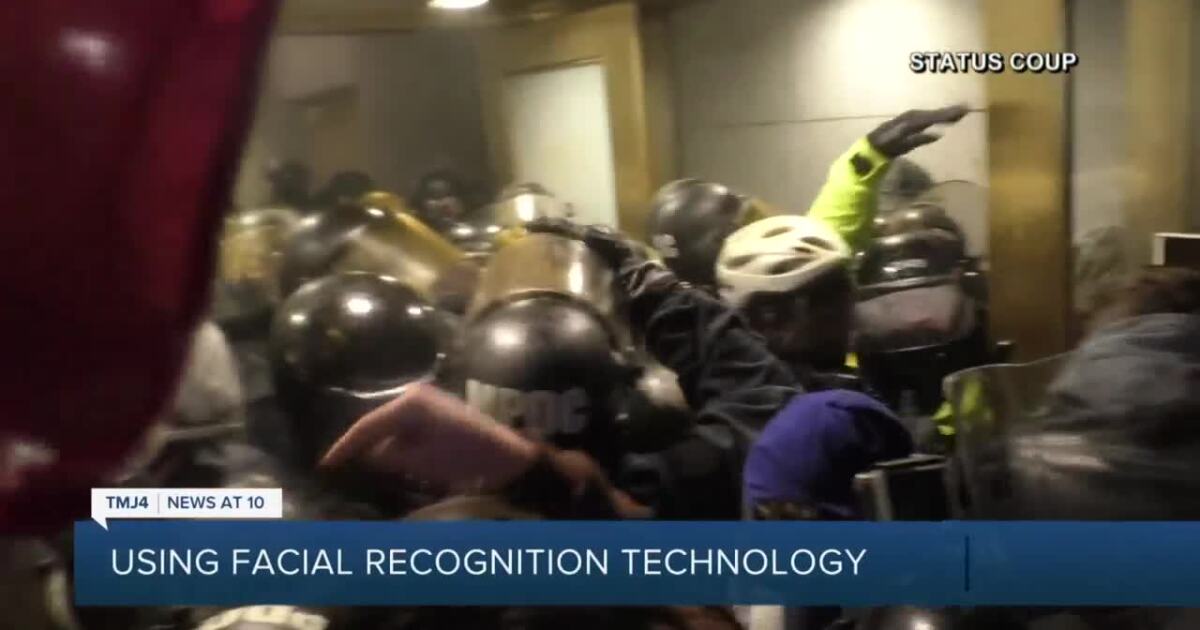
On January 06, America watched with shock as a mob of protesters stormed the gates in Washington, D.C. and invaded the Capitol buildings. For hours, the rioters looted and occupied America’s halls of power and though some were apprehended, many found a way to get out and get back home avoiding arrest. However, media coverage was substantial and some of the protesters were even bold enough to be caught posing for social media. Slowly, authorities are tracking them down, and Dr. Derek Riley, an expert at Milwaukee School of Engineering (MSOE) in the areas of computer science and deep learning, has been explaining how artificial intelligence (AI) technology that’s taught at MSOE is capable of enabling law enforcement's efforts to identify individuals from pictures. "With these AI systems, we’ll show it example photos and we’ll say, 'OK, this is a nose, this is an ear, this is Billy, this is Susie,'" Riley said. "And over lots and lots of examples and a kind of understanding if they guess right or wrong, the algorithm actually tunes itself to get better and better at recognizing certain things." Dr. Riley says this takes huge amounts of data and often needs a supercomputer—like MSOE's "Rosie"— to process it. To get a computer or software to recognize a specific person takes more fine-tuning, Riley says. He says your smartphone may already do this. "If you have a fingerprint scan or facial recognition to open up your phone, that’s exactly what’s happening," Riley said. "So, they’ve already trained a really large model to do all the basic recognition, and then you provide a device with a fingerprint scanning or pictures of your face at the end to be able to fine-tune that model to recognize exactly who you are." Riley says this technology isn't foolproof—he says human intelligence is needed at every step. He added we might be contributing to the data sources some of the technology needs by posting our pictures to social media. "Folks are uploading their own images constantly and that often is the source of the data that is used to train these really, really large systems," Riley said. January 14 – WTMJ, Ch. 4, NBC News The concept of facial recognition and the use of this technology in law enforcement (and several other applications) is an emerging topic – and if you are a reporter looking to cover this topic or speak with an expert, then let us help. Dr. Derek Riley is an expert in big data, artificial intelligence, computer modeling and simulation, and mobile computing/programming. He’s available to speak with media about facial recognition technology and its many uses. Simply click on his icon now to arrange an interview today.


Optimizing the delivery speed promise can boost sales
After the coronavirus pandemic forced most of the country into lockdown, online shopping soared. According to CCInsights.org, by the end of April 2020 there was a 146% year-over-year increase in U.S. and Canadian online retail orders. Amazon was so overwhelmed by the combination of increased demand, logistical nightmares, and warehouse worker safety issues that the company announced significant delays in its Amazon Prime shipping speeds. When the company announced it would prioritize the shipping of essential items, the online retailer’s third-party sellers were left to manage their own shipping — something Amazon usually did for them. Shoppers who placed orders for non-essential products at the end of March sometimes received estimated delivery dates of more than a month away. While consumers often received their orders sooner than the 30-day estimate, for Prime shoppers used to getting their items delivered for free the next day, the change in delivery speed was a shock. Amazon shoppers turned to alternative outlets that promised much quicker delivery speeds. Companies with strong e-commerce positions and supply chains, such as Walmart, took advantage of Amazon’s situation. “People are very sensitive to delivery and how fast they can get products,” said Ruomeng Cui, assistant professor in information systems & operations management. “Maybe, just maybe, Amazon would be able to deliver faster than one month, but they chose to promise customers one month — that was their choice.” Unfortunately for Amazon, by setting conservative delivery speed promises, they exacerbated an already bad situation. According to Cui’s paper “Sooner or Later? Promising Delivery Speed in Online Retail” (Ruomeng Cui, Tianshu Sun, Zhikun Lu and Joseph M. Golden), optimizing delivery speed promise can have a substantial effect on a company’s sales. How substantial? Without changing the actual delivery speed itself — only the delivery speed promise — Cui’s research showed that when the retailer promised customers one day faster shipping, sales increased, profits increased, and customers spent more on each order. “It’s a very critical decision for retailers to try to determine how to manage delivery and how to manage the information aspect of delivery,” added Cui. The study is attached and found two key findings: The value of communicating delivery times From a customer satisfaction standpoint, the conservative disclosure lowered customer satisfaction while the aggressive disclosure didn’t affect the company’s satisfaction score, although it did increase product returns when shipping speed was overly aggressive and products were delivered late. “These results indicate that in our research context, promising customers a faster delivery speed can boost sales and profitability but at the cost of a higher product return rate,” the researchers wrote. They go on to caution retailers that promising a conservative shipping speed can be costly. “It’s a careful balance that companies need to think about — how to manage customers’ expectations properly,” explained Cui. Crafting the delivery promise Given online retailers’ adoption of machine learning, Cui believes companies could tweak their algorithms to explore what products and which types of customers are more tolerant to over-promising as it relates to the delivery speed promise. “Companies can then use the analysis to customize and differentiate the types of products that adopt different types of information strategies,” Cui said. “Just change your algorithm, learn and incorporate some of the data-driven decisions and methods.” Going forward, Cui hopes to customize algorithms for companies in an effort to help them dynamically optimize how to promise the correct delivery speed to customers. While many companies, like Collage.com, don’t own their own delivery function and can’t change the actual delivery speed by changing infrastructure, these companies can “manage the information,” said Cui. “It’s easy, and I think it should be the retailer’s responsibility and job to optimize.” “I want to advocate for all retailers to think strategically in their information aspect,” said Cui. “Don’t let such an easily fixed lever just sit there at almost zero cost.” If you are a journalist looking to cover this study or speak with Professor Ciu about subjects like online shopping and operations management, simply click on her icon now to arrange an interview today.


Meet Your Newest Job Recruiter, the Algorithm – let our experts explain
Equal employment opportunities may not be part of a computer’s calculations, but one engineer from is trying to change that. When you apply for a job, chances are your resume has been through numerous automated screening processes powered by hiring algorithms before it lands in a recruiter’s hands. These algorithms look at things like work history, job title progression and education to weed out resumes. There are pros and cons to this – employers are eager to harness the artificial intelligence (AI) and big data captured by the algorithms to speed up the hiring process. But depending on the data used, automated hiring decisions can be very biased. “Algorithms learn based on data sets, but the data is generated by humans who often exhibit implicit bias,” explains Swati Gupta, an industrial engineering researcher at Georgia Tech who’s work focuses on algorithmic fairness. “Our hope is that we can use machine learning with rigorous mathematical analysis to fix the bias in areas like hiring, lending and school admissions.” But as algorithms harness speed and efficiency – how can they be adjusted to include and consider race, gender and other human factors? It’s an area Dr. Gupta has been researching and refining. If you are a reporter or journalist looking to cover this topic – that’s where our experts can help. Dr. Swati Gupta is an Assistant Professor in the H. Milton Stewart School of Industrial and Systems Engineering at Georgia Tech. Dr. Gupta is an expert in the areas of optimization, machine learning, and bias and fairness within the AI sphere. She is available to speak with media regarding this topic - simply click on her icon to arrange an interview.



Big Brother is watching (literally)…let our experts explain the new social credit system
There’s a new way of life coming to China, and for most observers it feels a lot like the book 1984. As officially explained, China’s new ‘Social Credit System’ – it is designed to enforce accountability, keep the public safe and as the Chinese government put it – to create a “culture of sincerity” that will “restore social trust.” What it will do is shame, embarrass, hamstring and potentially ruin the social and economic opportunities for anyone who falls out of line with strict government regulations and rules. It sounds frightening to us, but according to Chinese officials, it’s just a concept Westerners are to ‘unsophisticated’ to comprehend. Here’s a snapshot from the article attached below outlining some of the social shaming and consequences: “And the punishments are shocking. The government algorithm will go as far as to install an “embarrassing” ring tone on the phones of laolai, shaming them every time they get a call in public. But an embarrassing ring tone, flight bans and slow trains are just the beginning of the dystopian nightmare that is now daily life in China for tens of millions of people. A low social credit score will exclude you from well-paid jobs, make it impossible for you to get a house or a car loan or even book a hotel room. The government will slow down your internet connection, ban your children from attending private schools and even post your profile on a public blacklist for all to see. According to Australia’s ABC News, the government has produced a “Deadbeat Map” via an app on WeChat, which shows a radar-style graphic identifying every laolai in the vicinity of the user. “Tapping on a person marked on the map reveals their personal information, including their full name, court-case number and the reason they have been labeled untrustworthy. Identity-card numbers and home addresses are also partially shown,” ABC reported.” New York Post It’s as astounding as it is almost Orwellian. And it is happening. Are you covering and do you need to know more? That’s where our experts can help. Dr. Glen Duerr's research interests include nationalism and secessionism, comparative politics, and international relations theory. Glen is available to speak to media regarding the rise of extremism – simply click on his icon to arrange an interview.


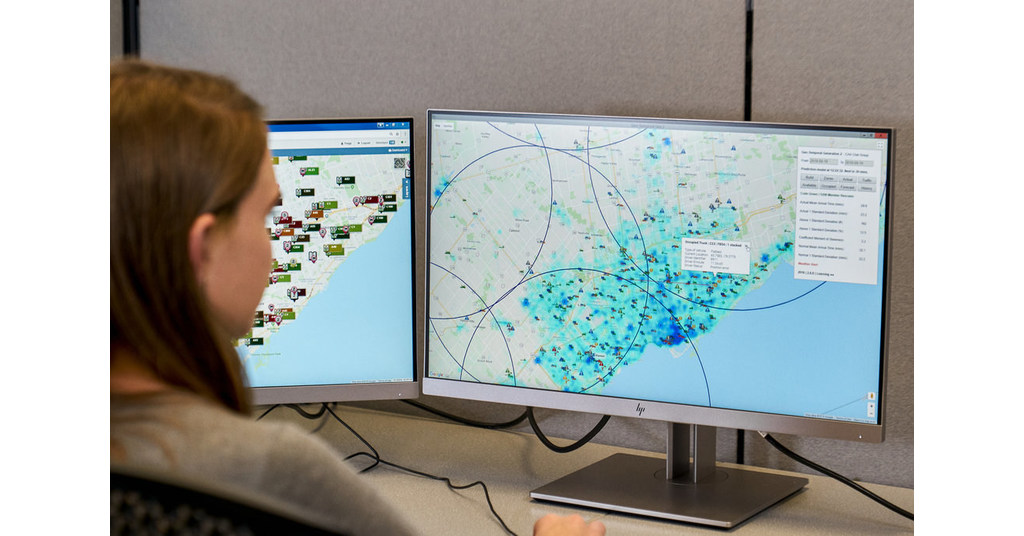
MEDIA RELEASE: CAA rolling out new predictive technology
New predictive technology, created in-house at CAA South Central Ontario (CAA SCO) can now predict the likelihood of a roadside event occurring in a specific geographic area, and send a truck to that area before a breakdown occurs. CAA's new Gen 2 predictive technology gets the right truck, to the right place, at the right time. Gen 2 is a proprietary machine-learning algorithm that leverages data from 115 years of roadside assistance service. It layers on weather and humidity indicators, along with real-time traffic and GPS information to predict roadside needs. Gen 2 was developed in-house by CAA in late 2017 and piloted in the London area in January 2018. Initial results during the pilot period showed a promising reduction in the average time of arrival for roadside service vehicles. CAA SCO was able to rescue members an average of 11 minutes faster during the summer of 2018, when compared to the summer months of 2017. The service improvement is directly tied to the roll out of CAA's new predictive technology. The system learns over time, so CAA SCO expects average wait times will continue to improve. The technology has already garnered interest from roadside assistance clubs from around the world. CAA Gen 2 is currently being operationalized across CAA SCO's territory. Source:

