
Experts Matter. Find Yours.
Connect for media, speaking, professional opportunities & more.

Tips for traversing the time between jobs
The gap between jobs is a time of not only financial woes but also an associated mental toll that can be just as difficult to manage. University of Delaware career expert Jill Gugino Panté offers tips for navigating the rough waters of unemployment. Gugino Panté, director of the Lerner Career Services Center at UD, has years of experience in HR and helps folks from ages 18 to 80 find jobs and level up their careers. She provided the following advice that journalists can pull for stories about careers and the job market: It's normal to feel hopeless and helpless. These are the two common words I constantly hear from job seekers. Searching for a job, especially when you don’t have a job, can be a black hole of nothing and everything. "Nothing" because you don’t hear back from applications you’ve submitted and the silence can diminish your confidence. And "everything" because of the range of emotions you feel on a daily basis. Stay busy. Staying busy is not just applying to jobs, but it’s keeping your brain, body and mental health positively active. You can only apply to so many jobs on your computer. After that, most people sit and wait. NEVER SIT AND WAIT in a job search! Even the smallest thing will provide a sense of accomplishment. Send out emails to arrange connection phone calls. Attend local networking events, volunteer and give back. Clean out your closet and donate clothes. Organize your search in a spreadsheet, add reminders to your calendar. Keep yourself moving and check off one thing on your list a day. Find support among peers. There are millions of groups out there on social media. Find a job seeking support group in your industry where you can get advice and even a pep talk if you need one. Friends and family are fine, but not everyone has this and sometimes friends and families don’t understand what you’re going through. Having multiple support groups can provide consistency. Put your job search on blast. I have so many stories of people finding a job because they posted on social media or struck up a conversation with a stranger in a store. Unless you have a specific reason for keeping your job search a secret, shout it out to the world! Data shows that it’s the people on the periphery of your network (meaning 2nd and 3rd connections) who have the most effect on your professional development. So reaching out on LinkedIn, talking to a stranger, attending a networking event you wouldn’t otherwise go to can have a significant impact on your job search. Members of the media interested in speaking with Gugino Panté can reach her directly – visit her profile and click the "contact button." Or, feel free to reach out to our media relations department.



ChristianaCare’s Center for Rehabilitation at Wilmington Hospital has been named to Newsweek’s 2023 list of America’s Best Physical Rehabilitation Centers. The award is presented by Newsweek and Statista Inc., the world’s leading statistics portal and industry ranking provider. The award recognized 280 leading inpatient rehabilitation facilities in 25 states and four regions. The Center for Rehabilitation at Wilmington Hospital ranked in the top 5 for the South region. Patient care at the Center for Rehabilitation at Wilmington Hospital. “We are incredibly honored to receive this recognition for the state-of-the-art and patient-centered care our inpatient rehabilitation team provides to our patients,” said Jennifer Thomas, vice president of Rehabilitation Services at ChristianaCare. “We work together with our patients to reach outstanding outcomes and meet their goals for recovery from conditions such as brain injury, spinal cord injury, strokes, trauma and joint replacement. We are so proud of the incredible work of our team and our patients as we face those challenges together and get them back to living their fullest lives.” To determine the best rehab centers, Newsweek examined three data sources: National online survey of experts with knowledge of physical rehabilitation centers (physicians, physiotherapists, doctors, clinic managers and other health care professionals). Quality metrics data published by the U.S. Centers for Medicare & Medicaid Services (CMS) Accreditation data on physical rehabilitation centers provided by the Commission on Accreditation of Rehabilitation Facilities (CARF). For over 30 years, ChristianaCare’s 40-bed rehabilitation facility has provided the highest quality rehabilitation services in the state and among the best in the region. This innovative facility includes state-of-the-art equipment, the latest therapeutic technology and techniques and real-life skill simulation environments. The Center for Rehabilitation has received CARF accreditation since 1993, ensuring it meets rigorous service, safety and quality standards. CARF-accredited specialty program area designations were first achieved and are ongoing for stroke (2007), limb loss (2010) and brain injury (2011).


Since 2022, the U.S. Food and Drug Administration has been actively urging consumers to avoid purchasing or consuming tianeptine -- a synthetic drug commonly called "gas station heroin" that can mimic the actions of opioids like fentanyl. Now, the FDA is upping the urgency of it's warnings as vendors continue to market the drug as a so-called "dietary supplement." UConn's C. Michael White, a Distinguished Professor of Pharmacy Practice, spoke with The Conversation about the problem with tianeptine in a must-read Q-and-A: What is tianeptine and why is it risky? Tianeptine stimulates the same receptors as well-known opioids such as fentanyl, heroin and morphine. When these drugs make their way from the blood to the brain, they bind to the “mu” type opioid receptor that triggers the sought-after pain relief and euphoria of those drugs as well as the dangerous effects like slowed or stopped breathing. High doses of tianeptine can bring euphoric effects similar to heroin and can also bring about the dissociative effect – the perception of your mind being disconnected from your surroundings and body – that is reminiscent of ketamine, an anesthetic that has a role in treating post-traumatic stress disorder and depression but has also commonly been abused as a street drug. Products containing tianeptine are often called “legal high drugs” – sometimes dubbed “gas station drugs” – a term used for all non-FDA-approved synthetic drugs that are sold casually in gas stations, online and elsewhere. What are the major adverse effects that people can experience? Data from clinical trials, case reports and poison control centers shows that tianeptine commonly induces agitation. This is typically accompanied by a fast heart rate and high blood pressure, confusion, nightmares, drowsiness, dry mouth and nausea, among other conditions. The most serious adverse events are slowed or stopped breathing, coma, heart arrhythmia and death. When long-term users try to stop tianeptine use, they often experience withdrawal symptoms reminiscent of opioid withdrawal. Consumers need to be aware that products containing tianeptine may not adhere to good manufacturing practices. This means they could contain lead or have other heavy metal contamination or be contaminated by microorganisms such as salmonella or mold. They could also contain other drug ingredients that are not disclosed. Knowingly or unknowingly combining active ingredients can increase the risk of adverse events. Additionally, the amount of the active ingredient contained in the product can vary widely, even with the same manufacturer. So past use does not guarantee that using the same amount will provide the same effect. How are these drugs sold in the US if they are not FDA-approved? If a drug product is not FDA-approved for prescription or over-the-counter-use, it is the Drug Enforcement Agency that is responsible for controlling market access. Before the DEA can ban an active ingredient in a drug product, it must be designated Schedule I, meaning the drug has no legitimate medical purpose and has high abuse potential. Manufacturers do not have to alert the DEA before selling their products to U.S. citizens. This means the DEA must detect an issue, identify the products causing the issue, identify the active ingredients in the product in question and do a full scientific review before designating it as Schedule I. Tianeptine came to market masquerading as a dietary supplement in gas stations and smoke shops, even though it is a synthetic compound. Tianeptine is also sold online allegedly for research purposes and not for human consumption. Tianeptine is undergoing clinical trials for the treatment of pain and depression, but sellers do nothing to make this type of labeling clear to consumers or to restrict purchases to researchers. What can people do to protect themselves and their families? Non-FDA-approved products containing synthetic drugs are very risky to use and should be avoided. FDA-approved drugs are available by a prescription from a health professional or over the counter with active ingredients on an approved list. If someone in a gas station, smoke shop or over the internet touts the benefits of a non-FDA-approved drug product – for pain or anxiety relief, to increase energy or for a buzz – be aware. It could be dangerous the first time you use it, but using it successfully once also doesn’t mean the experience will be the same the next time, and continued use can cause addiction. If a product is being sold “not for human consumption” or “for research purposes only,” you are at a high risk if you take it. Before you take any dietary supplement, make sure you check the active ingredient to be sure that it is, in fact, a natural product and not a synthetic chemical. If someone you know has bags with unmarked powder, a product labeled for research use or not for human consumption, or tablets or capsules not in standard drug bottles, that is a sign of a potentially dangerous situation. Standard drug tests sold over the counter are not designed to pick up tianeptine. One of the main reasons that people use these alternative substances of abuse over regular opioids, cannabis or amphetamines is that they are much harder to detect through work- or at-home drug screens by parents, schools, employers, probation officers and so on. If the DEA is not responding to emerging threats quickly enough, individual states can also act to ban sales of dangerous active ingredients in products. As of January 2024, at least 12 states have banned the sale of tianeptine, according to the FDA, although people in those states can still illegally procure it from the internet. So contacting your state legislators could be a place to start exercising your power to help prevent the harms from these products. This is an important piece, and if you are looking to know about tianeptine and the threat it poses to consumers in America, then let us help. Dr. C. Michael White is an expert in the areas of comparative effectiveness and preventing adverse events from drugs, devices, dietary supplements, and illicit substances. Dr. White is available to speak with media -- click on his icon now to arrange an interview today.


Image shows how tiny water channels control how water enters and exits cells through their membranes The Aston Institute for Membrane Excellence (AIME) will be set up with a £10m grant from Research England AIME will be led by Professor Roslyn Bill from Biosciences and Professor Paul Topham from Chemical Engineering and Applied Chemistry The globally unique institute will use biomimetic polymer membranes for applications such as water purification and drug development Aston University will establish the Aston Institute for Membrane Excellence (AIME), a globally unique, cross-disciplinary institute to develop novel biomimetic membranes, after receiving a major grant of £10m from Research England. AIME will be led by Professor Roslyn Bill, from the School of Biosciences, with co-lead Professor Paul Topham from the department of Chemical Engineering and Applied Chemistry (CEAC). Membranes, both biological and synthetic, are hugely important in many sectors. For example, the world’s top ten selling human medicines all target proteins in biological membranes, while synthetic polymer membranes are used in the US$100bn/year water purification industry. The team behind AIME believes that the full potential of membranes will only be realised by an interdisciplinary group spanning biology, physics and chemistry that can investigate membranes holistically. Professor Bill, a European Research Council (ERC) Advanced grantee leads Aston Membrane Proteins and Lipids (AMPL) research centre of excellence that studies the structure and function of membrane proteins and associated lipids. Professor Topham leads Aston Polymer Research Group (APRG), which investigates the nanoscale behaviour of block copolymers (a type of polymer with a structure made of more than one type of polymer molecule) and polymer technologies for membranes. AMPL and APRG have already begun collaborative research and AIME will bring together the complementary expertise of both research clusters into one institute. AIME will initially comprise the eight researchers from AMPL and APRG. Alongside the co-leads Professor Bill and Professor Topham, will be Dr Alan Goddard, Professor Andrew Devitt, Professor Corinne Spickett, Dr Alice Rothnie, Dr Matt Derry and Dr Alfred Fernandez. It plans to recruit three further academics, six tenure-track research fellows, three postdoctoral research assistants (PDRAs), six PhD students, a research technician and a business development manager. Importantly, AIME will work with many existing Aston University colleagues to build a comprehensive research community focused on all aspects of membrane science. The new AIME team will focus on the development of bioinspired, highly selective polymer structures for applications in water purification and waste remediation, nanoparticles loaded with therapeutic molecules to treat disorders ranging from chronic wounds to neurological injuries, and the purification of individual membrane proteins with polymers to study them as drug targets. The vision is for AIME to become a ‘one-stop shop’ for interdisciplinary, translational membrane research through its facilities access and expertise, ideally located in the heart of the country. Professor Bill said: “The creation of AIME is ground-breaking. Together with Aston’s investment, E3 funding will deliver a step-change in scale and the rate at which we can grow capacity. We will address intractable scientific challenges in health, disease, and biotechnology, combining our world-class expertise in polymer chemistry and membrane biology to study membranes holistically. The excellence of our science, alongside recent growth in collaborative successes means we have a unique opportunity to deliver AIME’s ambitious and inclusive vision.” Professor Topham said: “We are really excited by this fantastic opportunity to work more closely with our expert colleagues in Biosciences to create advanced technology to address real world problems. From our side, we are interested in molecular engineering, where we control the molecular structure of new materials to manipulate their properties to do the things that we want! Moreover, we are passionate about a fully sustainable future for our planet, and this investment will enable us to develop technological solutions in a sustainable or ‘green’ way.” Professor Aleks Subic, Vice-Chancellor and Chief Executive of Aston University, says: “Our new Aston Institute for Membrane Excellence (AIME) will be a regional, national, and international research leader in membrane science, driving game-changing research and innovation that will produce a pipeline of high-quality research outcomes leading to socioeconomic impact, develop future global research leaders, create advanced tech spinout companies and high value-added jobs for Birmingham and the West Midlands region. Its establishment aligns perfectly with our 2030 strategy that positions Aston University as a leading university of science, technology and enterprise.” Steven Heales, Policy Manager (Innovation) at the West Midlands Combined Authority, said: “WMCA is delighted to see Research England back the Aston Institute for Membrane Excellence. This will enable Aston University’s excellent academics and research community to work closely with businesses to make advances in membrane technology and applications. “In 2023 the West Midlands Combined Authority agreed a Deeper Devolution Trailblazer Deal with Government, which included a new strategic innovation partnership with Government. Projects like AIME are exactly the kind of impact we expect this new partnership to generate, so watch this space.” Lisa Smith, chief executive of Midlands Mindforge, the patient capital investment company formed by eight Midlands research-intensive universities including Aston University, said: “This grant is an important vote of confidence in the Midlands scientific R&D ecosystem. AIME will play an important role in the future research of pioneering breakthroughs in membrane science and enable the world-leading research team at Aston University to develop solutions to real world problems. We look forward to closely working with the Institute and nurturing best-in-field research being undertaken at Aston out of the lab and into the wider society so it can make a positive impact”. Rob Valentine, regional director of Bruntwood SciTech, the UK’s leading developer of city-wide innovation ecosystems and specialist environments and a strategic partner in Birmingham Innovation Quarter, said: "As a proud supporter of the Aston Institute for Membrane Excellence (AIME), I am thrilled at the launch of this groundbreaking initiative. AIME exemplifies Aston University's commitment to advancing cutting-edge interdisciplinary research and further raises the profile of the region’s exemplary research capabilities and sector specialisms. AIME's vision of becoming a 'one-stop shop' for translational membrane research, strategically located at the heart of the country, aligns perfectly with our strategy at Bruntwood SciTech. We are committed to working with partners, including Aston University, to develop a globally significant innovation district at the heart of the UK where the brightest minds and most inspiring spaces will foster tomorrow’s innovation.” Membrane research at Aston University has also recently received two other grants. In November 2023, Professor Bill received £196,648 from the Biotechnology and Biological Sciences Research Council’s Pioneer Awards Scheme to understand how tiny membrane water channels in brain cells keep brains healthy. In December 2023, a team led by AIME team-member Dr Derry received £165,999 from the Engineering and Physical Sciences Research Council to develop biomimetic membranes for water purification. For more information about AIME, visit the webpage.



When it comes to New Year's resolutions, think small
By now, those of us who made New Year's resolutions are either off and running or off the rails. According to Philip Gable, professor in the Department of Psychological and Brain Sciences, a lack of commitment and setting the bar too high are among the reasons many people fail to stick with their resolutions and achieve their goals. “It's just this time of year when people feel like they should make a resolution, as opposed to other times in the year when it's less common but maybe more meaningful, like if you get a doctor's report and realize you need to change that aspect of your life," he said. When people set goals, they tend to feel very motivated for a few days and falsely assume they’re committed to their goal. But as soon as that motivation wears off, they give up. In order to be part of the 10% of people who keep their New Year’s resolutions, Gable said to break down big goals into small, achievable steps. “I think a lot of times with goals, people will commit to a very big goal and not realize the smaller steps they need to take to achieve that goal,” Gable said. “If we have too big of a goal, we get emotionally distressed when we can't do it, or we fail because we set too big of a goal. Or maybe we couldn't think through all of the elements required to meet that really big goal. So starting small gives us something achievable, and then that gives you a platform to go to the next thing.” To set up an interview with Gable, visit his profile and click on the contact button.


Unveiling the Emotional and Psychological Rewards of Gift-Giving
During the holiday season, the spirit of giving resonates with joy and warmth, extending beyond mere material exchange. Philip Gable, a professor of psychological and brain sciences at the University of Delaware, asserts that there's a science behind gift-giving, encompassing emotional nuances applicable to charitable work. Gable emphasizes that the significance of a gift contributes to the happiness derived from giving, taking various forms, from a personal investment of time to a budget-conscious monetary contribution. It transcends mere obligation, aiming to create a resonant impact. The professor has expertise in emotion and motivational science and can discuss this nuance, especially as we enter the winter holiday season. He can be reached by clicking his "View Profile" button.

UC Irvine expert on metacognition: Megan Peters
How do our brains take in complex information from the world around us to help us make decisions? And what happens when there’s a mismatch between how well your brain thinks it’s performing this function and how well it’s actually doing? UC Irvine cognitive scientist Megan Peters takes a deep dive into metacognition - our ability to monitor our own cognitive processing. To reach Prof. Peters, contact Heather Ashbach at hashbach@uci.edu or 949-284-1577. “Our brains are fantastically powerful information processing systems. They take in information from the world around us through our eyes, ears, and other senses, and they process or transform that sensory information into rich internal representations — representations that we can then use to make useful decisions, to navigate effectively without running into things, and ultimately, to stay alive. And interestingly, our brains also can tell us when they’re doing a good job with all this processing, through a process called metacognition, or our ability to monitor our own cognitive processing. My name is Megan Peters, and I’m an associate professor in the department of Cognitive Sciences at UC Irvine. I’m also a Fellow in the Canadian Institute for Advanced Research Brain, Mind, & Consciousness program and I am president and chair of the board at Neuromatch. My research seeks to understand metacognition — how it works in the brain, and how it works at a computational or algorithm level — and it also seeks to understand what this metacognitive processing might have to do with the conscious experiences we have of our environments, of each other, and of ourselves. So in our research group, we use a combination of behavioral experiments with humans, brain imaging (like MRI scans), and computational approaches like mathematical modeling and machine learning or Artificial Intelligence, to try to unravel these mysteries. I think my favorite overall line of research right now has to do with cases where our brains’ self-monitoring sometimes seems to go wrong. So what I mean is, sometimes your brain “metacognitively” computes how well it thinks you’re doing at this “sensory information processing” task, but this ends up being completely different from how well you’re actually doing. Imagine it this way: you’re driving down a foggy road, at night in the dark. You probably can’t see very well, and you’d hope that your brain would also be able to tell you, “I can’t see super well right now, I should probably slow down.” And most of the time, your brain does this self-monitoring correctly, and you do slow down. But sometimes, under some kinds of conditions or visual information, your brain miscalculates, and it erroneously tells you, “Actually you can see just fine right now!” So this is a sort of “metacognitive illusion”: your brain is telling you “you’re doing great, you can see very clearly!” when in reality, the quality of the information that it’s receiving, and the processing it’s doing, is really poor, really bad — in essence, that means that you can feel totally confident in your abilities to accurately process the world around you, when in fact you’re interpreting the world totally incorrectly. Now normally, in everyday life, this doesn’t happen of course. But we can create conditions in the lab where this happens very robustly, which helps us understand when and how it might happen in the real world, too, and what the consequences might be. So this is fascinating both because it is a powerful tool for studying how your brain constructs that metacognitive feeling of confidence, and also because — in theory — it means that your subjective, conscious feeling of confidence might be doing something really different than just automatically or directly reading out how reliably you brain is processing information. And that could eventually provide a better way to investigate how our so-called phenomenological or conscious experiences can arise from activity patterns in your brain at all.” To reach Prof. Peters, contact Heather Ashbach at hashbach@uci.edu or 949-284-1577.


Study reveals how stereotypes undermine diversity efforts in the workplace
Although they were released well before the "Barbie" movie crushed it at the box office, recent findings by a group of University of Delaware researchers could have been used as fodder for a scene in the film. Kyle Emich, a professor of management at the Alfred Lerner College of Business and Economics, along with former UD colleagues Rachel Amey and Chad Forbes, wanted to know why women’s knowledge often gets ignored in the workplace, and how to improve that situation. Drawing on both a problem-solving group exercise and measurements of brain activity, their findings, published by the journal Small Group Research, illustrate ways stereotypes and attitudes can stifle the benefits of diversity efforts. At the same time, the study also offers hope for solutions. Key takeaways: While women are often urged to fight for status, the onus should actually be placed on high-status men to respect and accept women’s expertise. - Teams in the group exercise made up of two men and one woman were less effective. Women often struggled to speak up when they were in the minority. Also, the more minority women on these teams shared key information, the less respect they got from their team. The findings, Emich and his team said, confirm the idea that a lack of respect for minorities undermines the benefit of diversity. They also argue that while the burden is often put on women to make sure they have a voice, men in power should also bear this responsibility. Emich, who studies group dynamics and performance in work settings and examines how emotions influence cognitive processing, is available for interviews. Click on his profile below to set one up.

#Expert Research: Biodegradable ultrasound implant could improve brain tumour treatments
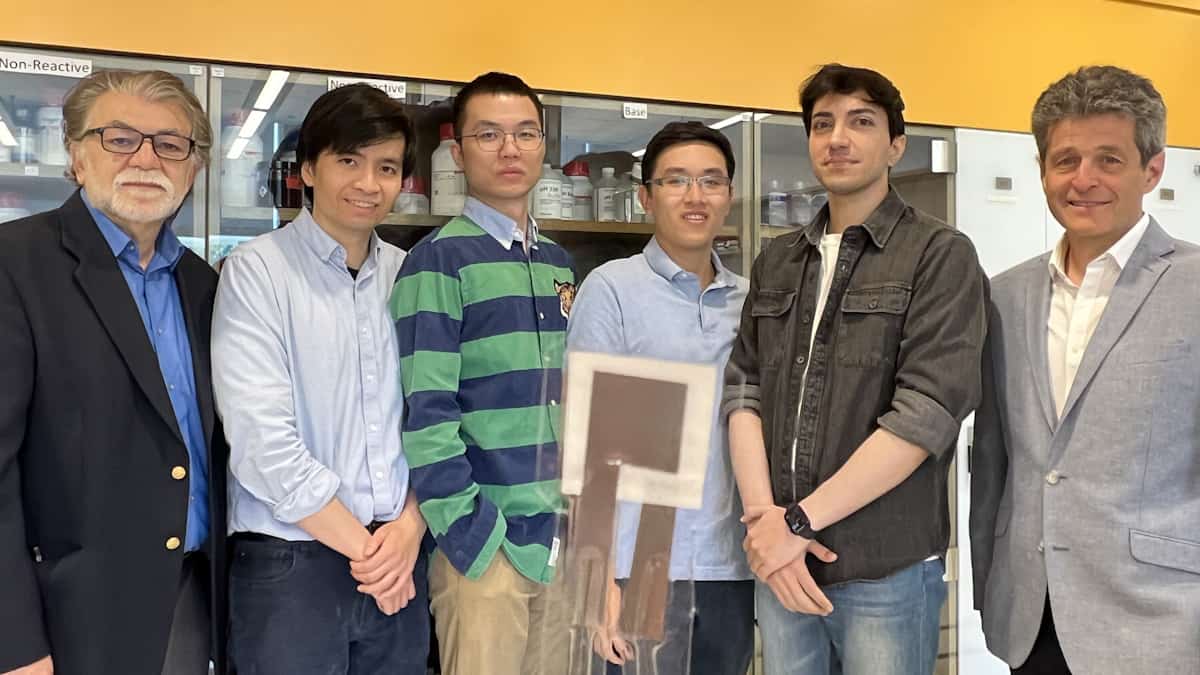
One of the challenges in treating certain types of brain cancer is the way that the blood-brain barrier prevents chemotherapy drugs from reaching the tumors they're meant to target. UConn's Thanh Nguyen, a biomedical and mechanical engineer, is developing new technology that could improve how we are able to treat brain tumors. He recently spoke with Physics World about this groundbreaking research: A new type of biodegradable ultrasound implant based on piezoelectric nanofibres could improve outcomes for patients with brain cancer. Researchers led by Thanh Nguyen from the the University of Connecticut’s department of mechanical engineering fabricated the devices from crystals of glycine, an amino acid found in the human body. Glycine is not only non-toxic and biodegradable, it is also highly piezoelectric, enabling the creation of a powerful ultrasound transducer that could help treat brain tumours. Brain tumours are particularly difficult to treat because the chemotherapy drugs that would be effective in tackling them are blocked from entering the brain by the blood–brain barrier (BBB). This barrier is a very tight junction of cells lining the blood vessel walls that prevents particles and large molecules from making their way through and damaging the brain. However, ultrasound can be safely used to temporarily alter the shape of the barrier cells such that chemotherapy drugs circulating in the bloodstream can pass through to the brain tissues. Currently, to achieve such BBB opening requires the use of multiple ultrasound transducers located outside the body, together with very high intensity ultrasound to enable penetration through the thick human skull bone. “That strong ultrasound can easily damage brain tissues and is not practical for multiple-time applications which are required to repeatedly deliver chemotherapeutics,” Nguyen tells Physics World. By contrast, the team’s new device would be implanted during the tumour removal surgery, and “can generate a powerful acoustic wave deep inside the brain tissues under a small supplied voltage to open the BBB”. The ultrasound would be triggered repeatedly as required to deliver the chemotherapy that kills off the residual cancer cells at tumour sites. After a set period of time following treatment the implant biodegrades, thereby eliminating the need for surgery to remove it. The research, reported in Science Advances, demonstrated that the team’s device used in conjunction with the chemotherapy drug paclitaxel significantly extended the lifetime of mice with glioblastomas (the most aggressive form of brain tumour) compared with mice receiving the drugs but no ultrasound treatment. This is fascinating research and if you are interesting in covering this topic, then let us help. Professor Nguyen focuses on biointegrated materials and devices at nano- and micro-scales for applications in biomedicine, and he's available to speak to media about his research. Simply click on his icon now to arrange an interview today.


New research sheds light on how human vision perceives scale
Researchers from Aston University and the University of York have discovered new insights into how the human brain makes perceptual judgements of the external world. The study, published on 8 May in the journal PLOS One, explored the computational mechanisms used by the human brain to perceive the size of objects in the world around us. The research, led by Professor Tim Meese, in the School of Optometry at Aston University and Dr Daniel Baker in the Department of Psychology at University of York, tells us more about how our visual system can exploit ‘defocus blur’ to infer perceptual scale, but that it does so crudely. It is well known that to derive object size from retinal image size, our visual system needs to estimate the distance to the object. The retinal image contains many pictorial cues, such as linear perspective, which help the system derive the relative size of objects. However, to derive absolute size, the system needs to know about spatial scale. By taking account of defocus blur, like the blurry parts of an image outside the depth of focus of a camera, the visual system can achieve this. The maths behind this has been well worked out by others, but the study asked the question: does human vision exploit this maths? The research team presented participants with photographic pairs of full-scale railway scenes subject to various artificial blur treatments and small-scale models of railway scenes taken with a long exposure and small aperture to diminish defocus blur. The task was to detect which photograph in each pair was the real full-scale scene. When the artificial blur was appropriately oriented with the ground plane (the horizontal plane representing the ground on which the viewer is standing) in the full-scale scenes, participants were fooled and believed the small models to be the full-scale scenes. Remarkably, this did not require the application of realistic gradients of blur. Simple uniform bands of blur at the top and bottom of the photographs achieved almost equivalent miniaturisation effects. Tim Meese, professor of vision science at Aston University, said: "Our results indicate that human vision can exploit defocus blur to infer perceptual scale but that it does this crudely – more a heuristic than a metrical analysis. Overall, our findings provide new insights into the computational mechanisms used by the human brain in perceptual judgments about the relation between ourselves and the external world." Daniel Baker, senior lecturer in psychology at the University of York, said: "These findings demonstrate that our perception of size is not perfect and can be influenced by other properties of a scene. It also highlights the remarkable adaptability of the visual system. This might have relevance for understanding the computational principles underlying our perception of the world. For example, when judging the size and distance of hazards when driving.”