Experts Matter. Find Yours.
Connect for media, speaking, professional opportunities & more.

Generative AI may help turn consumers into active collaborators and creators, study finds
In the advertising world, generative AI is transforming the way brands connect with consumers, turning audiences from passive viewers into active creators who can shape and personalize campaign content. A recent study in the International Journal of Advertising, conducted by researchers at the University of Florida’s College of Journalism and Communications, determined that by letting people use AI tools to create images that fit a brand’s style, companies can invite customers to take part in their campaigns. This hands-on approach makes consumers feel more empowered, which can lead to more positive feelings about the brand and a higher likelihood of buying its products. “I came across the Coca-Cola and Heinz campaigns and was amazed by how AI can be used to transform and empower consumers,” said Yang Feng, Ph.D., an associate professor in artificial intelligence in the UF Department of Advertising, who co-conducted the study with assistant professor Yuan Sun, Ph.D. “This inspired me to reach out to Yuan to explore a potential collaboration.” The project began in 2023 following the success of Coca-Cola’s “Create Real Magic” campaign and Heinz’s “AI Ketchup” campaign, both of which allowed customers to engage directly with the brands using generative AI. To test the effectiveness of these types of campaigns, Feng and Sun set up two surveys. The first was given to participants to evaluate their familiarity with generative AI tools and the ways participants used them. This survey illuminated three areas that users felt were enhanced by generative AI: collaboration, creation and communication, which Feng and Sun refer to as the 3C framework. For the second survey, Feng and Sun mocked up a website for Harbor Haven Coffee, a fictional coffee brand committed to sustainability and ethical coffee bean sourcing. “We wanted a company that resonated with as many people as possible,” Sun said. “One of the other goals of the first survey was to find what participants cared about most, which is how we came up with the brand’s eco-friendly mission.” Along with the company’s description and mission statement, a generative AI tool was added to the homepage, encouraging participants to utilize it to produce images using prompts that fell within the brand’s guidelines. While participants were free to put whatever they wanted into the prompt box, each participant got back the same pre-generated image in order to reduce confounding factors. Participants were then asked a final round of questions to get a sense of how participating in this campaign made them feel. Findings from the surveys showed that incorporating generative AI into advertising campaigns increased the chances of turning potential customers into empowered consumers, or individuals who actively participate in brand development rather than passively receive ad content. Feng and Sun found that the reasons behind this empowerment were tied to their 3C framework. First, the collaborative nature of these campaigns fosters a sense of agency in the advertising process. Second, the reciprocal nature of human-generative AI communications boosts consumer confidence by making people feel more in control. Finally, directly engaging consumers and facilitating their creativity through AI builds stronger consumer relationships and reinforces positive brand associations. “This sense of empowerment can be further strengthened with a user interface that facilitates seamless human-generative AI interaction, which is my specialty,” Sun said. “It should prioritize user-friendly features, clear instructions for prompting GenAI and intuitive navigation to enhance the user experience.” However, among the benefits, the researchers also found a potential downside that could limit the success of these kinds of campaigns in the future. “Once AI’s creation capacity surpasses a certain point, consumers may start to feel overwhelmed and no longer view the output as their own creation but rather as the work of the AI, which ultimately diminishes their sense of empowerment,” Feng said. To this end, Feng intends to continue researching the 3C framework. Generative AI could play a big role in advertising going forward, and she hopes to explore its interpretive power in new contexts.



Aston University’s approach to a global challenge Across industries, companies face mounting pressure to cut carbon, improve resource efficiency, and contribute to the UN Sustainable Development Goals (SDGs). Yet many firms still struggle to move from vision statements to measurable action. At Aston Business School, Dr Breno Nunes, reader in sustainable operations management, is developing practical frameworks that help organisations embed sustainability at their core. His concept of 'sustainability fitness' captures how firms can build the capabilities they need to adapt, compete, and thrive in the transition to a net zero economy. “Many organisations want to be sustainable but struggle to operationalise what that means. My work is about bridging that gap — helping businesses translate strategies into practice.” — Dr Breno Nunes The sustainability fitness concept involves both meeting human needs and respecting environmental limits. While it can also be applied at the societal and individual level, Dr Nunes focuses on organisations, where capability building delivers the fastest, measurable change. Corporate sustainability fitness examines how a firm is able to survive and meet its own needs, while aligning itself to wider essential needs of society and operating within limits imposed by its surrounding natural environment. From research to real-world action Dr Nunes’ research examines how organisations design, implement, and monitor sustainability strategies across operations, supply chains, facilities, and product development. He is the main author of the book Sustainable Operations Management: Key practices and cases, which applies the issues of sustainability to all strategic decisions of operations. His work is already making a tangible difference, including international partnerships in Brazil, Canada, and the US, bringing cross-cultural insights into organisational transformation, as well as for various companies and organisations. In an Innovate UK Knowledge Transfer Partnership (KTP) with automotive supplier Metal Assemblies, Dr Nunes and Professor Alexeis Garcia Perez, professor of digital business and society at Aston University, are working to calculate and report the carbon cost of metal components used in car production, tackling one of the industry’s biggest sustainability challenges. The digitalisation of processes will allow Metal Assemblies to meet customers' requirements and position itself as a trusted and transparent supplier of low-carbon components. In another KTP with Brockhouse Group, a forging manufacturer in the West Midlands, Dr Nunes worked with Aston colleague Dr Muhammad Imran, reader in mechanical, biomedical and design engineering. Together they developed a sustainable manufacturing strategy centred on carbon reduction and process improvement. The work involved the development of an energy dashboard, allowing analysis of data on gas and electricity consumption. The project also included analysis of alternatives for energy recovery systems, and development of routines and procedures to improve the manufacturing process. As a result, Brockhouse group is more competitive to supply in non-captive markets. Dr Nunes has also been involved with a collaboration with Birmingham Botanical Gardens to integrate sustainability into policy and practice, expanding the use of business sustainability theories to nonprofit sectors. Sustainability can be embedded across different areas of organisations while seeking financial stability. As an environmental education charity, it is important to for Birmingham Botanical Gardens to 'practise what it preaches'. It was recently awarded almost £20m from various grants (including Heritage Lottery) in a capital project, thanks to having sustainability at the core of renovation plans. These projects highlight Aston University’s role in bridging academia, industry, and policy — ensuring research findings reach the boardroom as well as the factory floor. Key insights from the research Dr Nunes’ studies highlight several critical factors for turning sustainability from intention into measurable results: • Organisational capabilities are central to embedding sustainability. These include empowering sustainability “champions” (institutional entrepreneurs), supportive structures, superior technologies, and the ability to learn and balance economic, environmental, and social performance. • The tensions in implementing sustainability vary not just by function (supply chains, governance, innovation) but also by an organisation’s maturity level. • Start with the low-hanging fruit: tools like self-assessments, capability diagnostics, and learning games allow firms to act at lower cost before committing to full environmental impact assessments or formal reporting. • Collaboration between academia, industry, and policymakers accelerates real-world impact. Why this matters The stakes are high. Businesses worldwide are expected to reduce carbon emissions, demonstrate social responsibility, and remain competitive in a rapidly changing global economy. Aston University’s research shows that strengthening sustainability capabilities not only improves environmental outcomes but also boosts resilience and cost savings. In pilot projects, teams working with Dr Nunes have achieved up to 30% reductions in both cost and carbon emissions — proof that sustainability can drive operational performance as well as compliance. Looking ahead: expanding the Sustainable Growth Hub The next phase of Dr Nunes’ work centres on Aston’s Sustainable Growth Hub, which is being developed as a reference point for SMEs seeking sustainability solutions. In 2025, the Hub will: • Launch its first industry club cohort and expand its team. • Roll out new self-assessment tools to size sustainability needs and decarbonisation goals. • Introduce new learning formats and follow-up courses to Aston’s Green Advantage programme, alongside sessions to play a new corporate sustainability game. • Host events to bring together businesses, policymakers, and the wider sustainability management community. • Attract new research grants and publish results to share knowledge across both academic and practitioner circles. These initiatives aim to equip organisations not only to meet today’s challenges, but to anticipate tomorrow’s. Get involved Follow Dr Nunes via his profile below, and soon through the Sustainability Fitness website. Businesses can also attend Aston Business School events to explore workshops, tools, and courses first-hand. About Dr Breno Nunes Dr Breno Nunes is reader in sustainable operations management at Aston Business School and president of the International Association for Management of Technology (IAMOT). He serves as associate editor of the IEEE Engineering Management Review and has published widely on sustainability strategy execution and innovation. Aston University’s work in sustainable operations — shaped by researchers like Dr Nunes — is helping organisations worldwide move from ambition to action, building the 'sustainability fitness' needed for a net zero future.



Lighting the Fires of Memory: The History, Meaning and Modern Significance of Memorial Observances
In the United States, United Kingdom and Canada, special annual days of remembrance bring into focus a simple yet profound truth: societies mark the sacrifice of those who died in military service so that past and future generations will not forget. These observances are layered with history, symbolism and evolving practice. Origins & Historical Development United States – Memorial Day Memorial Day began in the aftermath of the American Civil War. One of the earliest national observances took place on May 30, 1868, when John A. Logan, Commander-in-Chief of the Grand Army of the Republic, proclaimed “Decoration Day” to honour the Union dead by decorating their graves. The date was chosen because spring flowers would be in bloom across much of the country. Over time, as the United States engaged in further conflicts, Decoration Day evolved into a broader day of honouring all U.S. military personnel who died in service. In 1971, Congress made Memorial Day a federal holiday observed on the last Monday of May. United Kingdom and the Commonwealth – Remembrance Day Remembrance Day, also known as Armistice Day, originated from the end of the First World War and is observed on November 11. It commemorates the armistice signed at the 11th hour of the 11th day of the 11th month in 1918. In Britain and the Commonwealth, the red poppy became the enduring symbol of remembrance, inspired by the poppies of Flanders fields and popularized in the years following the war. Canada – Remembrance Day Canada also observes Remembrance Day on November 11. The observance dates back to post-WWI traditions and was officially adopted by Parliament in 1931. It honours the more than 118,000 Canadians who have made the ultimate sacrifice among the 2.3 million who have served in uniform. Meaning and Symbolism At their core, Memorial Day and Remembrance Day are about memory, sacrifice, duty, and gratitude. They serve as communal rituals: visiting cemeteries and memorials, placing flowers or wreaths, holding moments of silence, and wearing symbols like the poppy. In the United States, the act of decorating graves carried not only personal remembrance but also civic pride—honouring those who laid down their lives for their country. In the United Kingdom and Canada, the poppy remains a powerful visual reminder of both the human cost of war and the enduring hope for peace. Modern Significance These observances offer societies a chance to pause, reflect, and connect past sacrifice with present freedoms and responsibilities. In the United States, Memorial Day has also come to mark the unofficial start of summer. Still, national initiatives such as the National Moment of Remembrance invite Americans to refocus on solemn reflection. In Canada and the United Kingdom, Remembrance Day remains deeply ceremonial, marked by two-minute silences, wreath-layings, and public education about the sacrifices of war. For all three nations, these days foster inter-generational understanding—educating younger people about service, sacrifice, and the peace that followed—while reminding governments and citizens alike of ongoing obligations to veterans. Why It Matters to U.S., British, and Canadian Peoples For Americans, Memorial Day symbolizes how unity, freedom, and democracy have been defended and preserved at great cost. For Britons and Canadians, Remembrance Day binds their shared histories of service in global conflicts, linking national identity with sacrifice and resilience. In Canada especially, the day has evolved into a moment not just of military remembrance, but of reflection on what it means to serve a country and commit to peace. Across all three nations, these observances allow public acknowledgment of loss and courage, while anchoring civic values of duty, freedom, and gratitude. Key Themes and Story Angles Continuity and Change: From Decoration Day to Memorial Day, from Armistice Day to Remembrance Day—how the meaning endures through time. Symbols and Rituals: Poppies, wreaths, silences, and ceremonies as expressions of collective memory. Commercialization vs. Solemnity: Balancing commemoration with modern traditions such as travel and leisure. Generational Awareness: Passing remembrance to younger audiences through schools, media, and veterans’ stories. Veterans and Contemporary Service: Linking remembrance with ongoing commitments to those who serve. Community Connection: How towns and cities mark remembrance through local parades, services, and shared stories. Memorial Day and Remembrance Day are more than calendar observances—they are living rituals of collective gratitude. They invite reflection on what has been given and what must be preserved. For the United States, the United Kingdom, and Canada, these days stand as enduring reminders of courage, unity, and the price of peace. Connect with our experts about the history, meaning and modern significance of memorial observances: Check out our experts here : www.expertfile.com

American Nuclear Society names Lane Carasik, Ph.D., as one of its “40 Under 40”
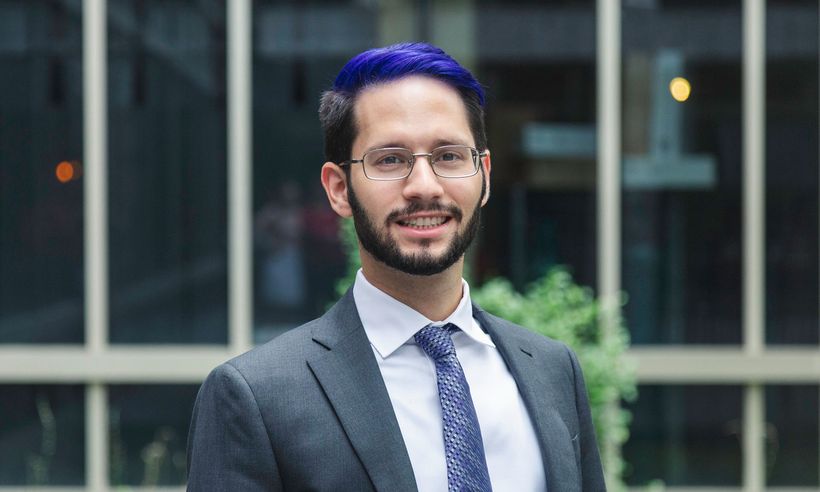
Recognized as an emerging leader in the nuclear science and engineering field, Lane Carasik, Ph.D., assistant professor in the Department of Mechanical and Nuclear Engineering, was recently acknowledged by the American Nuclear Society as one of its top “40 Under 40.” “It is a huge honor to receive this acknowledgement from my professional community,” said Carasik. “I feel it is a reflection of the amazing nuclear engineering activities I’ve gotten the opportunity to pursue before and during my time at the VCU College of Engineering.” The list, featured in the most recent issue of Nuclear News magazine, celebrates young professionals who are driving innovation and shaping the future of nuclear science and technology. Created to spotlight a new generation of nuclear professionals, the “40 Under 40” program highlights those who are advancing technical fields, from advanced reactor deployment to AI applications and national security, while actively engaging the public, mentoring peers and advocating for nuclear’s role to achieve energy independence and security. “Dr. Carasik’s research efforts, together with his support for students and their own research goals, exemplifies the best qualities of the VCU College of Engineering,” said Arvind Agarwal, Ph.D., chair of the Department of Mechanical and Nuclear Engineering, “integrating research and teaching at the core of everything he does, from classroom and lab work to community outreach.” Carasik was selected for the “40 Under 40” from hundreds of candidates across the United States. Mentoring his first three Ph.D. graduates, Arturo Cabral, Connor Donlan and James Vulcanoff, is one of Carasik’s proudest achievements. He was also honored by the American Society of Mechanical Engineers (ASME) as a rising star in mechanical engineering in 2024 This builds off Carasik receiving the highly competitive and prestigious Department of Energy (DOE) Early Career Research Award ($875k split over five years) in 2023 to support his work on molten salt based fusion energy systems similar to Commonwealth Fusion Systems’ ARC technology. Carasik’s Fluids in Advanced Systems and Technology (FAST) research group, is a computational and experimental thermal hydraulics group focused on enabling the development of advanced energy systems and critical isotope production methods. Legendary physicist Enrico Fermi was an early inspiration to Carasik during his undergraduate studies. Fermi’s expertise mirrored Carasik’s interests, and the physicist’s impact on the field of nuclear engineering was motivating. As an established nuclear engineering faculty member, Carasik seeks to make a lasting impact on the field and the people in it. His ’s long-term goal is earning membership in the National Academies of Sciences, Engineering and Medicine.



The Hidden Risks of Sports Betting
In a recent release from Cedarville University, Dr. Jared A. Pincin, Associate Professor of Economics, emerges as a prominent voice warning students about the hidden risks of sports betting. Pincin underscores that modern betting apps are intentionally designed to mimic mobile video games—fast, rewarding, and highly addictive—which makes them especially appealing to young adults and students. He emphasizes that while the appeal of quick wins is strong, the reality is that these platforms can erode both personal finances and educational opportunities. “The dark reality is that gambling is very addictive and can bankrupt people, strain marriages and destroy futures,” Dr. Pincin explains when describing the slippery slope that many young gamblers face. Grounded in his economic research and Christian ethics framework, Pincin adds another layer of concern: from a faith perspective, gambling exploits the desire for instant gain and distracts individuals from a more grounded trust in provision and purpose. He argues that with legalization expanding and betting apps readily available on smartphones, college students—not just athletes—are increasingly vulnerable to behaviors that can derail their academic trajectory and long-term goals. “Gambling preys on our desire for quick gain and distracts us from trusting God’s provision,” Dr. Pincin notes, bringing into focus the moral as well as the practical implications of sports gambling in a university setting. Dr. Jared Pincin's research interests explore the intersection of public choice economics with foreign aid as well as issues in sports economics. Pincin has published in popular publications such as The Hill, Real Clear Markets, Foxnews.com, and USA Today and scholarly journals such as Oxford Development Studies, Applied Economic Letters, and the Journal of Sport and Social Issues. View his profile here The release garnered a lot of attention - and substantial media coverage from outlets like ABC News and others. Gambling is emerging as a serious issue across America - and if you're a reporter looking to know more about this topic - then let us help. Cedarville's Jared Pincin is available to speak with media - simply click on his icon now to arrange an interview today.



Heart valve developed at UC Irvine shines in early-stage preclinical testing
UC Irvine researchers designed and developed a minimally invasive replacement pulmonary heart valve. Created for pediatric patients, the device can be expanded as children grow, eliminating the need for multiple surgeries. The team successfully conducted laboratory and early-stage animal feasibility testing of the implant, crucial steps toward approval for human use. Irvine, Calif., June 23, 2025 — Researchers at the University of California, Irvine have successfully performed preclinical laboratory testing of a replacement heart valve intended for toddlers and young children with congenital cardiac defects, a key step toward obtaining approval for human use. The results of their study were published recently in the Journal of the American Heart Association. The management of patients with congenital heart disease who require surgical pulmonary valve replacement typically occurs between the ages of 2 and 10. To be eligible for a minimally invasive transcatheter pulmonary valve procedure, patients currently must weigh at least 45 pounds. For children to receive minimally invasive treatment, they must be large enough so that their veins can accommodate the size of a crimped replacement valve. The Iris Valve designed and developed by the UC Irvine team can be implanted in children weighing as little as 17 to 22 pounds and gradually expanded to an adult diameter as they grow. Research and development of the Iris Valve has been supported by the Eunice Kennedy Shriver National Institute of Child Health and Human Development; the National Heart, Lung, and Blood Institute; and the National Science Foundation. This funding has enabled benchtop fracture testing, which demonstrated the valve’s ability to be crimped down to a 3-millimeter diameter for transcatheter delivery and subsequently enlarged to 20 millimeters without damage, as well as six-month animal studies that confirmed successful device integration within the pulmonary valve annulus, showing valve integrity and a favorable tissue response. “We are pleased to see the Iris Valve performing as we expected in laboratory bench tests and as implants in Yucatan mini pigs, a crucial measure of the device’s feasibility,” said lead author Arash Kheradvar, UC Irvine professor of biomedical engineering. “This work represents the result of longstanding collaboration between our team at UC Irvine and Dr. Michael Recto at Children’s Hospital of Orange County built over several years of joint research and development.” Congenital heart defects affect about 1 percent of children born in the United States and Europe, with over 1 million cases in the U.S. alone. These conditions often necessitate surgical interventions early in life, with additional procedures required to address a leaky pulmonary valve and prevent right ventricular failure as children grow. The Iris Valve can be implanted via a minimally invasive catheter through the patient’s femoral vein. The Kheradvar group employed origami folding techniques to compress the device into a 12-French transcatheter system, reducing its diameter to no more than 3 millimeters. Over time, the valve can be balloon-expanded up to its full 20-millimeter diameter. This implantation method, along with the ability to begin treatment earlier in very young patients, helps mitigate the risk of complications from delayed care and reduces the need for multiple surgeries in this vulnerable population. “Once the Iris Valve comes to fruition, it will save hundreds of children at least one operation – if not two – throughout the course of their lives,” said Recto, an interventional pediatric cardiologist at CHOC who’s also a clinical professor of pediatrics at UC Irvine. “It will save them from having to undergo surgical pulmonary valve placement, as the Iris Valve is delivered via a small catheter in the vein and can be serially dilated to an adult diameter and also facilitate the future placement of larger transcatheter pulmonary valves – with sizes greater than 20 millimeters, like the Melody, Harmony and Sapien devices – if needed.” Kheradvar said that the next phase of preclinical testing of the Iris Valve is funded by the Brett Boyer Foundation, which is committed to supporting research into treatments for congenital heart disease. “We are actively engaged with the U.S. Food and Drug Administration to define and carry out the required experiments and documentation for first-in-human authorization of the Iris Valve,” Kheradvar said. “Our team is urgently advancing the Iris Valve through preclinical studies to enable its clearance for first-in-human use. This is a critical step toward providing toddlers – who currently have no viable minimally invasive treatment until they reach the 45-pound threshold – with a much-needed option.” First co-author Nnaoma Agwu, a biomedical engineering Ph.D. candidate at UC Irvine, said: “The development of the Iris Valve required a strong and knowledgeable team that understood the clinical and mechanical design requirements. This accomplishment would not have been possible without the collaboration of talented clinicians, veterinarians and engineers. With this milestone reached, we are rigorously advancing the Iris Valve’s development, setting our sights on human clinical trials.” Joining Kheradvar, Recto and Agwu as co-authors of the article in Journal of the American Heart Association were Daryl Chau, a recent UC Irvine master’s graduate; Gregory Kelley and Tanya Burney, both research specialists at UC Irvine, with Burney also affiliated with the Beckman Laser Institute; Ekaterina Perminov, a clinical veterinarian with UC Irvine’s University Laboratory Animal Resources; and Christopher Alcantara, a radiology technician at CHOC. About UC Irvine’s Brilliant Future campaign: Publicly launched on Oct. 4, 2019, the Brilliant Future campaign aims to raise awareness and support for the university. By engaging 75,000 alumni and garnering $2 billion in philanthropic investment, UC Irvine seeks to reach new heights of excellence in student success, health and wellness, research and more. The Samueli School of Engineering plays a vital role in the success of the campaign. Learn more by visiting https://brilliantfuture.UC Irvine.edu/the-henry-samueli-school-of-engineering About the University of California, Irvine: Founded in 1965, UC Irvine is a member of the prestigious Association of American Universities and is ranked among the nation’s top 10 public universities by U.S. News & World Report. The campus has produced five Nobel laureates and is known for its academic achievement, premier research, innovation and anteater mascot. Led by Chancellor Howard Gillman, UC Irvine has more than 36,000 students and offers 224 degree programs. It’s located in one of the world’s safest and most economically vibrant communities and is Orange County’s second-largest employer, contributing $7 billion annually to the local economy and $8 billion statewide. For more on UC Irvine, visit www.uci.edu. Media access: Radio programs/stations may, for a fee, use an on-campus studio with a Comrex IP audio codec to interview UC Irvine faculty and experts, subject to availability and university approval. For more UC Irvine news, visit news.uci.edu. Additional resources for journalists may be found at https://news.uci.edu/media-resources.


From classrooms to communities: Rethinking civic engagement in K–12 education
When national headlines focus on school board battles and political polarization, James Bridgeforth, assistant professor of educational leadership at the University of Delaware, is focused on what’s possible instead: building a more inclusive, participatory model of democracy through public education. His research in UD's College of Education and Human Development explores how community voice, equity and local leadership intersect to shape education policy – and how school boards can serve as vital engines for rebuilding public trust in government. "Despite the often sensationalized stories of chaotic school board meetings and the influence of more national "culture war" issues, I still believe that it's possible for people from different backgrounds, experiences, and points of view to come together to figure out how to best serve the needs of all of our children." – Bridgeforth Bridgeforth’s work centers on education governance, policy and leadership, with particular attention to how racism and anti-Blackness manifest in schools and policymaking spaces. His scholarship highlights the importance of inclusive decision-making, arguing that effective education policy must be representative of the diverse communities it serves. He recently published the report "Navigating Democracy in Divided Times" with co-authors on this topic. As part of his work with the Getting Down to Facts III project at Stanford University, Bridgeforth collaborates with researchers studying how to improve California’s TK–12 system and inform the next governor’s education policy agenda. His work documents the complex realities faced by local school board members – often minimally paid community leaders navigating contentious public discourse, social media pressure and limited resources. He notes that this research can be applied to school boards around the country. The next frontier: Youth civic engagement Over the next several years, Bridgeforth aims to deepen understanding of how schools can nurture young people’s civic skills and leadership capacity through participation in governance. One proposed project – "Strengthening Opportunities for Youth Civic Engagement and Student Voice in Educational Governance" – uses participatory action research to explore how student board member policies and engagement practices foster civic agency and democratic mindsets. This collaborative work brings together youth-led community organizations and education researchers to study how these experiences shape long-term civic behavior – from voting to public service. Why it matters Bridgeforth’s research arrives at a pivotal time for American democracy. As trust in public institutions erodes, local school boards remain one of the spaces where citizens can directly shape policy. His work points to a hopeful truth: democracy’s renewal may begin in classrooms, communities and the local school board meetings shaping them. For journalists covering education, race or civic engagement, Bridgeforth offers data-driven insight, lived experience and policy expertise – helping make sense of one of the most pressing questions of our time: How can we build systems that truly serve all students and communities? This work collectively demonstrates a number of promising opportunities to foster more inclusive, community-connected forms of governance, particularly in a time of eroding trust in government institutions." – Bridgeforth ABOUT JAMES BRIDGEFORTH Assistant Professor, College of Education and Human Development James Bridgeforth is an educator, researcher and policy advocate whose work focuses on community voice in education policy and the politics of educational leadership. His scholarship has appeared in top journals including Journal of School Leadership, Education Policy Analysis Archives, Educational Evaluation and Policy Analysis and Educational Administration Quarterly, and he has contributed to Education Week and The Washington Post. A recipient of the National Academy of Education/Spencer Foundation Dissertation Fellowship, Bridgeforth holds a Ph.D. in Urban Education Policy from the University of Southern California, an M.Ed. in Educational Administration and Policy from the University of Georgia, and a B.A. in Political Science and Sociology from Georgia College & State University. Expert available for: Interviews on K–12 school governance, education policy and democracy Commentary on community voice and equity in education decision-making Analysis of youth civic engagement and participatory leadership To contact Bridgeforth, email mediarelations@udel.edu.


In the news: Chronicle features University of Delaware's Career Center
At the University of Delaware, career-development officials believe in teaching students how networking exists all around them, in both curricular and co-curricular realms, by taking career readiness outside the Career Center and infusing networking principles and practices into academic courses, social activities and alumni events. UD's Career Center was highlighted in a recent Chronicle of Higher Education article for innovative and exemplary networking practices and teachings. “If we get students to not think about networking as this static skill I have to build, and it’s more of a natural part of who I am, and it’s in my toolbox, it becomes less arduous, less scary, and easier to do," Rachel Coppola, UD’s Director of Life Design and Career Integration, said in the featured video. Reporters wishing to speak to career experts can reach out to mediarelations@udel.edu.

Humanities play integral role in the UF Astraeus Space Institute
The ability to imagine has given the human species the power to create, problem solve, empathize, and theorize. In fact, creative imagination can be found at the origin of every modern development throughout time. From medical advancements and the formation of governments to the establishment of the internet and the creation of Beethoven’s Symphony No. 3 — all at first were simply imagined. So, it is not a leap to think that in establishing a space institute at the University of Florida, collaborators would continue to anchor the institution in the human element of imagination. That’s where space exploration began. Ancient Greek philosopher Thales, later known as the father of Greek science and mathematics, questioned the true origins of the universe. Introducing deductive reasoning, Thales sought answers beyond the stories of gods and heroes. Three hundred years later, Aristotle theorized the geocentric layout of the universe with Earth at its stationery core and celestial bodies revolving around it. In the early 14th century, the Italian poet Dante told the story of a vertical journey through the universe, reaching the stars in what he described as paradise. And in the fall of 1609, Galileo began observing the heavens with instruments he created to magnify his view up to 20 times beyond what the natural eye could see. Through his telescope, Galileo observed mountains on the moon, rings around Saturn, and the moons of Jupiter, all evidence that the universe did not revolve around the Earth, but the sun. Inspired by words written in 1865 by Jules Verne in his novel, “De la Terre à la Lune” (From the Earth to the Moon), a 10-year-old Russian boy questioned, could travel be possible beyond the Earth’s atmosphere? Could Verne’s 900-foot-long space gun propel humans — or anything for that matter — through the bonds of gravity and into outer space? Read more here: Looking to know more about the UF Astraeus Space Institute or connect with Rob Ferl, Amy J. Williams or Stephen Elardo? Simply click on either expert's icon now to arrange an interview today.




UF builds community resilience in Jacksonville’s Historic Eastside neighborhood
As the University of Florida continues to expand its presence in Jacksonville, Gators are undertaking sustainability projects to improve the city’s neighborhoods. Faculty and students in the College of Design, Construction and Planning’s Florida Institute for Built Environment Resilience (FIBER) have spent the past four years focusing on the role of housing design in community health resilience in Jacksonville’s Historic Eastside neighborhood, interviewing resident stakeholders and collaborating with citywide organizations that are helping to restore older homes. Findings from the UF research will be instrumental in informing future community planning and housing design decisions, potentially leading to more health-centered, sustainable neighborhoods. “Our research in Jacksonville focuses on how we can inform the development of community infrastructure that holistically supports human well-being across mental, emotional, and physical dimensions,” said Lisa Sundahl Platt, Ph.D., a FIBER research faculty member and an assistant professor of interior design at UF, who added that this holistic, health-centered approach is known as salutogenic design. “We are also actively collaborating with community organizations in Jacksonville and researchers from UF to explore improved strategies for designing and constructing community infrastructure that effectively responds to potential hazards.” A community-wide collaboration UF has conducted a pilot study over the past year on the Jacksonville-based Restore, Repair, and Resilience (R3) initiative that is underway in Historic Eastside – surveying residents about how the design quality of their housing and surrounding environments affects their overall well-being. This interdisciplinary project has brought together FIBER and members of the R3 Group – a coalition of organizations that includes the JEA utility company, LIFT JAX (committed to eradicating generational poverty), the Historic Eastside Community Development Corporation, the United Way of Northeast Florida, and Local Initiatives Support Corporation Jacksonville. FIBER-led research has received ongoing support from the Florida Resilient Cities grant, which is funded by the Jessie Ball duPont Fund. The scope of the R3 project is being scaled up through a U.S. Department of Energy grant awarded through JEA, which will allow for an expansion of home revitalization efforts in Eastside Jacksonville. FIBER’s ongoing housing and health community action research on these efforts will be supported through a grant from the LS3P Foundation. “Many residences we evaluated need help with improvements to housing energy efficiency, building ventilation, building shell structural integrity, and materiality,” Platt said. “For example, underperforming flooring material can create potential trip hazards for older adults. Deterioration in interior materials, caused by degrading components of the building envelope, can also lead to mold and mildew growth in interior environments, which can contribute to poor interior environmental quality issues and acute and chronic health conditions.” Respiratory health issues are often caused by material and ventilation design failures, which can affect people of all ages, especially vulnerable populations such as children and older adults. Oftentimes, interior designers see that the environmental risks that compromise human well-being are coming from both the outside and inside of the buildings. “As we continue to address priorities, our focus extends beyond energy and building efficiency to encompass comprehensive factors of built environment resilience that impact overall community health and well-being,” Platt said. “There's still significant progress to be made in the design of sustainable housing that supports community salutogenic health." Keeping residents safe and healthy UF research has continued to prove that interior resilience for living environments plays a vital role in people’s mental and physical health. “People spend roughly 90% of their time indoors, so it is important to understand the types of design conditions and materials that we’re putting into spaces and how they can affect the occupants of those living in said spaces,” said UF student Milena Rodriguez Mendez, who is one of Platt’s graduate research assistants. Students like Mendez are using qualitative and quantitative research methods to engage in collaborative community-led research that includes academics, for-profit organizations, nonprofits, citizen scientists, and neighborhood stakeholders. “I aim to center my work on social justice and equity, and I believe this initiative represents a meaningful step in that direction,” Mendez said. “Our focus is on the residents of this vibrant yet at-risk community.” FIBER researcher Jason von Meding added, “We want to know how future housing policies can address some future health concerns. We have a lot of youth in the community that are participating, which I think is important.” The FIBER housing and health team is actively pursuing additional funding to expand this research, in collaboration with UF Health Jacksonville’s Department of Community Engagement. “Our goal is to develop an open-source online platform that disseminates lessons learned and proof-of-concept findings on the impact of regenerative housing design on human and ecological health,” Platt said. “This resource will be valuable for other cities and neighborhoods facing similar challenges in housing quality, affordability, and accessibility.” Looking to know more about this project or connect with Lisa Platt? Simply click on her icon now to arrange an interview today.