
Experts Matter. Find Yours.
Connect for media, speaking, professional opportunities & more.

The election is over, and Republicans have swept the White House and Congress
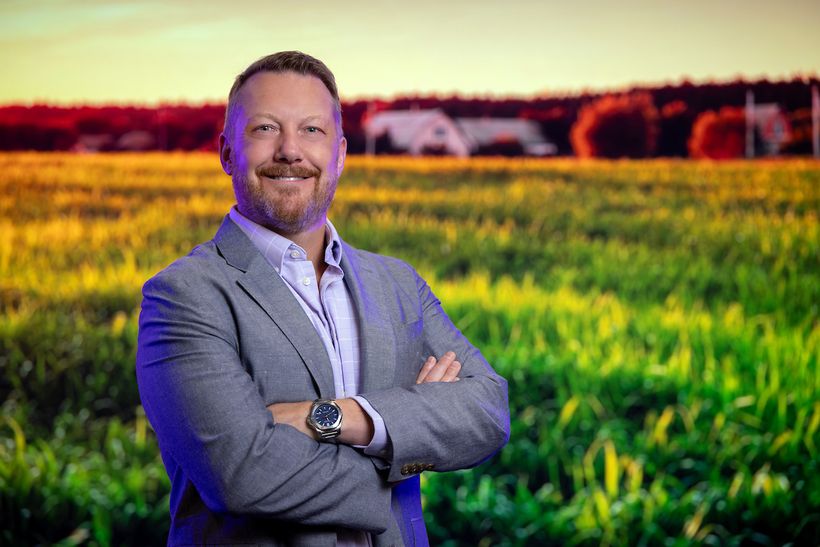
The race for the White House is over, and the Republicans have been swept into power with historic gains in Congress and control of the executive branch. What will their policy priorities be and how will the new political landscape mold the direction of the new Trump administration? What will the Democrats, now a minority opposition party, do? Can they adapt to a winning strategy in time for the midterms in two years? If you are covering American politics, how do you make sense of all the changes? How do you know what issues are going to drive decisions in Washington, D.C.? What can polling tell us about what happened? Where did the polls fall short? What will pollsters be looking at moving forward? We have an expert who can help. Kevin Wagner, Ph.D., is Florida Atlantic University’s renowned political science expert and co- executive director of Florida Atlantic University Political Communication and Public Opinion Research Lab (PolCom Lab) —the university’s extensive and nationally covered polling operation. View profile View some of Kevin Wagner's recent media here: ABC News Florida Atlantic University professor of political science Kevin Wagner says Florida’s shift started several years ago and it’s due to a variety of factors. "Certainly, there was some pretty good evidence that we had people moving from states like California and New York looking for a more conservative environment, and they brought their politics with them when they came to Florida," Wagner said. "That influx of more conservative voters certainly mattered. It's not the only thing that mattered." WINK Some voters believe the 60% mark is too high to make constitutional changes. For the threshold to change, it has to be put on the ballot for voters to decide and would need at least 60% of the vote. “Getting 60% of the voters to agree on anything is really hard and when it’s something that’s highly contested. It makes it even harder,” Florida Atlantic University Political Science Professor Kevin Wagner said. THE PINNACLE GAZETTE Political analysts point to various factors contributing to Florida’s Republican shift. Kathryn DePalo-Gould, a political scientist from Florida International University, aptly stated, “It’s now so solidly Republican it is crimson.” This sentiment was echoed by Kevin Wagner from Florida Atlantic University, highlighting how previously competitive races have now become predictable Republican wins. Indeed, Trump’s haul of 61 out of 67 counties stands as a testifier to this changing political tide. Looking to connect? He is here to answer all your questions and is available for interviews. Simply click on his icon now to arrange an interview today.



LI Communities Take Measures to Stem Flooding Issues
Dr. Jase Bernhardt, Hofstra associate professor of geology, environment, and sustainability, was interviewed by WCBS-TV, about measures being taken in West Islip, Long Island, to mitigate flooding issues. He also talked to MoneyGeek.com about the ways in which climate change impacts homeowners. “Climate change should certainly be taken into account if you are a prospective home buyer,” he said. “It is always worth reading up on the normal climate conditions for the location where you are purchasing a home, to see if anything jumps out at you, such as a heightened risk of hurricanes or tornadoes.”


Jase Bernhardt, associate professor of geology, environment, and sustainability, spoke to Newsday* about the Town of Islip’s spending to improve flood-zones. “For those that are near the coastline and are vulnerable to coastline flooding, it’s only going to get worse. Our landscape is our best defense.”

Enhancing environmental governance in the Caribbean
The University of Delaware's Island Policy Lab has launched a first-of-its kind initiative to ensure that future development projects in the Caribbean are equipped to adapt to climate risks effectively. When completed, this work will set a new benchmark for sustainable development across the region. The research initiative is led by Professor Kalim Shah, Director of the UD Island Policy Lab, with colleagues at the University of the West Indies. The collaborative effort, which kicked off this month in Barbados, will integrate climate services into Environmental Impact Assessments (EIA) and bring together key stakeholders from public agencies, academic institutions and private organizations. Funded by NOAA and the U.S. Department of State, the project aims to strengthen environmental governance by embedding scientific climate data into regulatory frameworks. The work will cover multiple Caribbean islands chosen for their contrasting regulatory frameworks, with the aim of addressing critical gaps in how climate risks are incorporated into EIA processes, which often lack consistent and actionable climate data. On this first Barbados leg, the project has drawn support from the Barbados Meteorological Services, the Ministry of Environment and National Beautification, the Coastal Zone Management Unit and international financial institutions such as the Caribbean Development Bank and the Inter-American Development Bank. Private sector project developers are working alongside regulatory bodies and academic institutions to ensure the success of the initiative. Minister of Planning and Development William Duguid emphasized the importance of the project during the launch event, held at the Savannah Beach Club in Christ Church. “Our very survival as a nation depends on building climate resilience,” Duguid said, highlighting the vulnerability of Barbados’ key infrastructure — such as airports, seaports, and hospitals — located along the coast. He stressed the significance of using climate data in EIA processes to mitigate risks such as sea-level rise and storm surges, which threaten the island’s long-term sustainability. The initiative follows a phased approach, beginning with assessments of the existing institutional frameworks in Barbados, Dominica, Trinidad and Tobago, with other countries following in the future. The research team will evaluate how well current climate services align with the needs of both public agencies and private developers. In subsequent phases, stakeholders will participate in co-designing tailored climate tools to enhance EIA processes, leading to the development of Climate Services Implementation Plans. These plans will provide a roadmap for integrating climate services sustainably across sectors and jurisdictions. “This project is about more than just collecting data – it’s about turning scientific insights into practical tools for decision-makers,” Shah explained. The co-design process, which involves collaboration with local stakeholders and international partners, aims to reduce conflicts between regulators and developers by embedding climate considerations early in the project approval process. This alignment will ensure that new developments are both environmentally sound and climate-resilient. The research is expected to deliver several key outcomes, including enhanced coordination among regulatory bodies, improved access to climate data, and greater institutional capacity to manage environmental risks. Dr. Sylvia Donhert, Chief of the Inter-American Development Bank’s Compete Caribbean program, endorsed the project saying that it reflects the growing urgency for climate action across the region. “Embedding climate science into development planning is essential not just for policy but for the economic well-being of the region."


LSU expert in social and economic issues: Rural America’s unique struggles affect how it votes
An expert in social and economic issues, Professor Slack explains the unique struggles facing rural communities—like changes in jobs, health concerns, and population shifts. In this Q&A, he clears up common misunderstandings about rural life, discusses the problems rural voters face, and explores how these issues may affect their votes in this important election. What is your area of expertise? I am a professor of sociology at LSU. My research coalesces around the areas of social stratification and social demography with an emphasis on geographic space and the rural-urban continuum as axes of difference. With my colleague Shannon Monnat (Syracuse University), I recently authored the book Rural and Small-Town America: Context, Composition, and Complexities, published by the University of California Press. What are the key socio-economic challenges facing rural voters in this election? Wow. Where to start? There are so many myths and misunderstandings about rural America. One is that “rural” is synonymous with farming. To be sure, agriculture is a vital industry in terms of sustenance and national security. But technological advances and farm consolidation—the shift from many smaller farms to fewer larger farms—means most rural Americans don’t have direct economic ties to agriculture anymore. The two largest sectors of employment in rural America today are services and manufacturing, respectively. A concern regarding the service sector is that it produces jobs that vary greatly in quality depending on people’s educational level; good professional jobs for the more educated and lower quality jobs—low wages, low hours, and few to any fringe benefits—for less educated folks. Those good professional jobs tend to be concentrated in urban areas (the emergence of remote work may reshape this in the future). Manufacturing employment, which has historically been the “good jobs” sector for less educated people, has been in steady decline in terms of its share of jobs for the past 50 years. While people sometimes think of plant and factory work as urban, it has provided a larger share of jobs and earnings in rural America for decades. Deindustrialization is causing real pain in rural America: it is one thing for a plant to shut down in a large and diversified metropolis, but quite another when it is the lone “good jobs” employer in town. Other big issues are the challenges posed by population aging and youth out-migration in rural America, as well as increasing racial and ethnic diversity. Another is the factors underlying the “rural mortality penalty”—that rural America has higher death rates and lower life expectancy than urban America. These are all pressing issues. What role will rural voters play in this close presidential race, and what may sway their vote? Rural voters will play a key role in this election, assuming the margins end up being as close as they have been in the last two presidential cycles. A persuasive working-class message and a sense that rural people and places are seen—that they aren’t just “flyover country”—will help. Given that the two leading candidates hail from New York City and San Francisco, both picked running mates with a rural and small-town backstory as a nod to that constituency. All of that said, the power of the rural vote should not be overstated. The contemporary U.S. is mainly an urban society, so the winning candidate will ultimately pull most of their votes from cities and suburbs. Can you discuss any recent research on how rural voting patterns have evolved over the last few election cycles? The short answer is that the rural vote has been steadily trending Republican for decades. The last presidential election in which voters in metropolitan and nonmetropolitan counties were essentially equal regarding party preferences was in 1976 when Jimmy Carter was elected. Since that time, the percentage of nonmetro votes for the Republican candidate has trended steadily upward. In 2020, roughly two-thirds of the nonmetro vote went to Donald Trump, more than 20 points higher than in metro counties. That said, rural voters are not a monolith. The flip side of the 2020 numbers above is that roughly 1 in 3 voters in nonmetro counties cast their ballot in the other direction. And rural places with majority Black, Latino, and Indigenous populations often vote in the Democratic column. Moreover, you have political legacies particular to certain places that matter—like the left-leaning Farmer-Labor Party in Minnesota (today the Democratic-Farmer-Labor Party or DFL) or the rural state of Vermont electing a socialist to the U.S. Senate (Bernie Sanders). So, there are notable deviations from the aggregate trend. “ The problems and prospects facing rural America in the 21st century matter for this nation. Personally, I would love to see a less ideological and more pragmatic politics emerge that puts that in focus. ” How do political campaigns target rural voters, and how effective do you think these strategies are? This is a bit outside my area of expertise, and I want to stay in my lane. But I will raise two issues. One is what the political scientist Katherine Cramer has called “rural consciousness”: a belief that rural areas are ignored by policymakers, that rural areas do not get their fair share of resources, and that rural folks have distinct values and lifestyles that are misunderstood and disrespected by city folks. The message from some quarters that rural people vote “against their own self-interest” or vote “the wrong way,” essentially that they are rubes, feeds into this. The other issue is that much of rural America is a local “news desert.” That is, there simply are no sources of comprehensive and credible local news. So, people rely on cable TV news or—if they have access to broadband—the internet. The result is that all news becomes national, even when those issues may have little bearing on local life. It used to be said that “all politics is local,” but in today’s media environment, that is increasingly untrue. Is there anything else you want to add? I would just emphasize that common myths and misunderstandings about rural America run deep. Rural America is not a paragon of stability, social and economic change abounds. And rural America is not a monolith, it is socially and regionally diverse. The problems and prospects facing rural America in the 21st century matter for this nation. Personally, I would love to see a less ideological and more pragmatic politics emerge that puts that in focus. Link to original article here.



Digital Contracting Is Broken. A Little "Friction" Could Go a Long Way in Fixing It
In mid-October, the Federal Trade Commission (FTC) announced a final “click-to-cancel” rule, which, after its provisions go into effect, will make it easier for consumers to cancel recurring memberships and subscriptions. The rule is an undoubtable victory for consumers who have run into roadblocks attempting to protect their wallets amid the flurry of oversubscription in today’s world, but it also begets an important question: Why is oversubscription occurring in the first place? “One important reason for that problem is that getting into contracts is frictionless, it’s too easy,” said Brett Frischmann, JD, the Charles Widger Endowed Professor in Law, Business and Economics in Villanova University’s Charles Widger School of Law. “The FTC is addressing a real concern in making it easier for people to exit agreements of this sort. But while making it as easy to unsubscribe as to subscribe sounds great – we all like even playing fields and symmetry – it might be better to also make subscribing a little more burdensome, so people understand what they are getting themselves into in the first place.” This idea is the focus of Frischmann’s recent paper, titled "Better Digital Contracts with Prosocial Friction-in-Design," the publication of which coincides with public dissatisfaction over digital contracting processes. In August, Disney attempted to have a wrongful death lawsuit blocked, citing print in terms and conditions from a one-month Disney+ free trial the plaintiff signed up for in 2019. Since then, other companies have succeeded in recently blocking the commencement of similar lawsuits. In the research, Frischmann and his co-author, Rice University computer scientist Moshe Vardi, describe these contracts as “dehumanizing” and that they “undermine human autonomy and sociality, by design,” citing how they elicit behavior in a pre-determined manner (such as clicking on cue) and often include side agreements with other entities, unbeknownst to the users. “One-click” contracts rely on legal fictions, such as presuming that clicking an “I have read the terms and conditions” button actually means that they have. They are structured this way intentionally. “The idea behind digital contracting is ‘Let’s make the contract as quick as possible before people leave or change their mind,” Frischmann said. “They only want to do the minimum that the law requires, and all the law requires is notice of terms and action that says, ‘I agree.’” For these reasons, he argues, modern digital contracting contradicts the purpose of contract law in the first place; enabling people to reach genuine agreements and cooperate. “It’s antithetical to the underlying values of a contract,” Frischmann said. “Autonomy is undermined because people are not able to exercise autonomy in a meaningful way when they are not actually capable of deliberating about the terms to which they are agreeing. As for being cooperative, there is no relationship. Digital contracts are completely one-sided.” So what can be done to combat this? “Speedbumps,” Frischmann says, referring to measures that can cause friction in the contracting process to better protect the user. Physical road speedbumps represent a useful analogy, because while they make things slightly more inconvenient for the user, they are deployed strategically where other values are at stake, like the safety of children playing outside. “People tolerate speedbumps,” Frischmann says, “because they serve a social purpose. Friction in digital contracts is similar.” With respect to improving digital contracting, there are multiple measures that can be taken that inherently have such friction, but not all of them are always appropriate. Completely Automated Public Turing Test to Tell Computers and Humans Apart (CAPTCHAs), for example, are a type of friction-in-design that serve a useful social purpose (security) and have become normalized and tolerated, but some CAPTCHAs are ableist and others may generate proprietary data. Where he sees the most beneficial friction existing is in comprehension, which in software form could be completing a task or passing a test to prove an individual understands the agreement. Comprehension is the basis for one of Frischmann’s proposed alterations to contract law. Currently, the oft-criticized concept of informed consent is utilized. He argues it should be replaced with demonstrably informed consent, in essence requiring entities to further show that people truly comprehend what they are agreeing to. “Right now, individuals assent to contracts, going along with terms someone else insisted upon,” he said. “But assenting to terms is very different than being informed and consenting. To demand demonstrably informed consent shifts the burden on the provider to generate evidence showing in fact a person understood and agreed.” In the recent Disney case, for example, demonstrably informed consent would have required not just clicking an agreement when signing up for Disney+, but that Disney somehow explained to an individual that if they sign up for a free trial, they cannot take the company to court, and further generating reliable evidence that the individual understood that. If that were the case, perhaps the individual would not have signed up. “Or, they may not have ever gone to the Disney park if they had [signed up],” Frischmann said. This proposed change in contract law, along with the various potential methods of engineered friction in digital contracts all circle back to the same goal: slowing down contracting where it affects people in ways they do not understand. “You can’t have digital contracting built like a highway, where it’s all as fast as possible all the time,” Frischmann said. “For our digitally networked environment, it needs to be built like a neighborhood.”


New light technique could revolutionise non-invasive medical diagnostics Orbital Angular Momentum could be harnessed to improve imaging and data transmission through biological tissues Could eventually have potential to make procedures such as surgery or biopsies unnecessary. An Aston University researcher has developed a new technique using light which could revolutionise non-invasive medical diagnostics and optical communication. The research showcases how a type of light called the Orbital Angular Momentum (OAM) can be harnessed to improve imaging and data transmission through skin and other biological tissues. A team led by Professor Igor Meglinski found that OAM light has unmatched sensitivity and accuracy that could result in making procedures such as surgery or biopsies unnecessary. In addition it could enable doctors to track the progression of diseases and plan appropriate treatment options. OAM is defined as a type of structured light beams, which are light fields which have a tailored spatial structure. Often referred to as vortex beams, they have previously been applied to a number of developments in different applications including astronomy, microscopy, imaging, metrology, sensing, and optical communications. Professor Meglinski in collaboration with researchers from the University of Oulu, Finland conducted the research which is detailed in the paper “Phase preservation of orbital angular momentum of light in multiple scattering environment” which is published in the Nature journal Light Science & Application. The paper has since been named as one of the year’s most exciting pieces of research by international optics and photonics membership organisation, Optica. The study reveals that OAM retains its phase characteristics even when passing through highly scattering media, unlike regular light signals. This means it can detect extremely small changes with an accuracy of up to 0.000001 on the refractive index, far surpassing the capabilities of many current diagnostic technologies. Professor Meglinski who is based at Aston Institute of Photonic Technologies said: “By showing that OAM light can travel through turbid or cloudy and scattering media, the study opens up new possibilities for advanced biomedical applications. “For example, this technology could lead to more accurate and non-invasive ways to monitor blood glucose levels, providing an easier and less painful method for people with diabetes.” The research team conducted a series of controlled experiments, transmitting OAM beams through media with varying levels of turbidity and refractive indices. They used advanced detection techniques, including interferometry and digital holography, to capture and analyse the light's behaviour. They found that the consistency between experimental results and theoretical models highlighted the ability of the OAM-based approach. The researchers believe that their study’s findings pave the way for a range of transformative applications. By adjusting the initial phase of OAM light, they believe that revolutionary advancements in fields such as secure optical communication systems and advanced biomedical imaging will be possible in the future. Professor Meglinski added: "The potential for precise, non-invasive transcutaneous glucose monitoring represents a significant leap forward in medical diagnostics. “My team’s methodological framework and experimental validations provide a comprehensive understanding of how OAM light interacts with complex scattering environments, reinforcing its potential as a versatile technology for future optical sensing and imaging challenges.” ENDS https://www.nature.com/articles/s41377-024-01562-7 Light: Science & Applications volume 13, Article number: 214 (2024) August 2024 https://doi.org/10.1038/s41377-024-01562-7 Authors: Igor Meglinski, Ivan Lopushenko, Anton Sdobnov & Alexander Bykov About Aston University For over a century, Aston University’s enduring purpose has been to make our world a better place through education, research and innovation, by enabling our students to succeed in work and life, and by supporting our communities to thrive economically, socially and culturally. Aston University’s history has been intertwined with the history of Birmingham, a remarkable city that once was the heartland of the Industrial Revolution and the manufacturing powerhouse of the world. Born out of the First Industrial Revolution, Aston University has a proud and distinct heritage dating back to our formation as the School of Metallurgy in 1875, the first UK College of Technology in 1951, gaining university status by Royal Charter in 1966, and becoming The Guardian University of the Year in 2020. Building on our outstanding past, we are now defining our place and role in the Fourth Industrial Revolution (and beyond) within a rapidly changing world. For media inquiries in relation to this release, contact Nicola Jones, Press and Communications Manager, on (+44) 7825 342091 or email: n.jones6@aston.ac.uk


ChristianaCare and Partners Launch Delaware’s First Nurse Anesthesiology Program
Wilmington University, in collaboration with ChristianaCare and the support of Anesthesia Services, P.A. (ASPA), announces the Delaware Nurse Anesthesiology Program at ChristianaCare and Wilmington University, Delaware’s first nurse anesthesiology program. This innovative, full-time, 36-month offering leads to a Doctor of Nursing Practice (DNP) degree, preparing graduates to sit for the National Certification Exam and become certified registered nurse anesthetists (CRNAs). A CRNA (or nurse anesthetist) is an advanced practice registered nurse who administers anesthesia and provides related care before, during, and after surgical, therapeutic, diagnostic, and obstetrical procedures. The program will offer students over 2,000 hours of hands-on clinical experience in high-acuity environments across various surgical specialties, supported by partnerships with ChristianaCare, ASPA—the largest anesthesia group in Delaware—as well as other health care organizations. Students will refine their clinical skills and decision-making in state-of-the-art simulation labs while engaging in diverse clinical settings. Led by experienced practitioners and educators, the curriculum integrates anesthesiology-specific coursework with advanced nursing practice, ensuring graduates are well-prepared to meet the evolving demands of clinical practice and systemic health care challenges. “We are proud to partner with ChristianaCare and ASPA to launch this transformative program,” says Wilmington University President Dr. LaVerne Harmon. “At Wilmington University, our caring, student-centered approach prioritizes academic excellence and personal well-being. While this initiative addresses Delaware’s critical need for anesthesiology professionals, we will focus equally on fostering an environment where students can excel and grow into compassionate, skilled leaders in the evolving health care field.” “ChristianaCare is excited to partner with Wilmington University and our colleagues at ASPA in this much needed program to help address Delaware’s growing need for highly qualified CRNAs,” says Janice E. Nevin, M.D., MPH, president and CEO of ChristianaCare. “By providing advanced training and education in anesthesiology services, we are helping to develop the next generation of health care experts who will serve our community with high-quality, safe care.” The U.S. Bureau of Labor Statistics projects a 38% growth in nurse anesthetist employment from 2022 to 2032, driven by increased demand for health care services like elective surgeries. Delaware’s health care system faces similar challenges due to a shortage of anesthesiologists and CRNAs, with many nearing retirements. With 15 programs in neighboring Pennsylvania unable to accommodate all qualified applicants, the Delaware Nurse Anesthesiology Program at ChristianaCare and Wilmington University aims to bridge this gap, providing essential local training to meet the growing demand in the workforce. “With an emphasis on evidence-based practice and patient-centered care, our graduates will be exceptionally equipped to provide high-quality anesthesiology services in diverse health care environments,” says Wilmington University Vice President of Academic Affairs Dr. Denise Wells. “This collaboration aims to cultivate a local pipeline of skilled registered nurses who will advance their careers as CRNAs, contributing to Delaware’s workforce and the surrounding region.” “Anesthesia Services, P.A. has been leading and innovating anesthesia care delivery in Delaware for the past 37 years,” says ASPA Board Chair Li Maceda, M.D., MBA. “This joint partnership with ChristianaCare and Wilmington University allows us to combine our expertise and resources to train the next generation of anesthesia providers for the communities that we serve and exemplifies our commitment to invest in the future advancement of perioperative care.” Dr. Jacqueline Mainwaring was recently named inaugural director of the Delaware Nurse Anesthesiology Program at ChristianaCare and Wilmington University. “I am excited to be part of this groundbreaking initiative that will provide critical care nurses in our state with the opportunity to advance their careers and become leaders in anesthesiology care,” says Dr. Mainwaring, also an associate professor. “We are committed to creating a high-quality program that prepares our graduates to excel in today’s complex health care landscape. This program will not only address the shortage of anesthesiology professionals in Delaware and the region but will foster a learning environment that emphasizes student well-being, clinical excellence, and interprofessional collaboration.” Leaders of the Delaware Nurse Anesthesiology Program at ChristianaCare and Wilmington University, currently in Capability Review, are pursuing initial accreditation from the Council on Accreditation of Nurse Anesthesia Educational Programs (COA). Please note, no students can be enrolled until initial accreditation has been awarded. Below is contact information for the COA: Council on Accreditation of Nurse Anesthesia Educational Programs (COA) 10275 W. Higgins, Suite 906 Rosemont, IL 60018 Phone: 224-275-9130 Email: accreditation@coacrna.org www.coacrna.org


With the college admissions application season in full swing, Robert Alexander, University Dean of Enrollment Management at Rochester, offers some perspective for all high school seniors as they begin to navigate the process and ultimately make a decision that is a match made, not a prize to be won. "When considering academic fit, don’t spend a ton time, energy and money trying to reverse engineer a way to game the system to find your way in. You don’t want to end up somewhere and find that you’re struggling just to keep your head above water, or that you’re swimming with sharks in a cutthroat and competitive environment. Once you identify a few characteristics that are important to your fit, then you can broaden your aperture to a range of schools that meet some of those parameters—the right size, campus type, focus, selectivity, and academic programs offered. "When it’s time to start filling out college applications, discern how you’ll tell YOUR story: in your essay or short answer responses; in how you determine which teachers you’ll ask to write recommendation letters; and in topics you raise in an interview. Remember, colleges aren’t looking for a single perfect archetype student, but rather a diverse array of students who are interesting in different ways. In fact, more important than someone who might be the “perfect applicant” is someone who acknowledges they’re not flawless, but wants to strive to become better. Find ways to convey what’s authentically you, emphasizing your strengths, but including some areas where you want to grow and change, and maybe some vulnerabilities, too. "As far as financial fit, don’t eliminate any college that seems like a great fit for you just because of the published sticker price. Colleges are required to have a net price calculator on their website. But the only way to know your exact cost is to apply for admission, academic merit scholarships, and federal and state grants."



Multi-sector partnership leads to first practical pilot of vehicle-to-grid power
A multi-pronged effort led by corporations, industry associations and an academic research institution has launched the first practical pilot project of “vehicle-to-grid” power (V2G) set up so that industrial participants can scale it at low cost. Invented by the University of Delaware, V2G uses batteries in parked EVs to support the electric grid or to provide backup during power failures. This pilot is the first targeted toward large scale expansion, because it follows standards (by SAE and UL), uses production EVs (with UD modifications), complies with utility requirements, and qualifies for wholesale power markets. The pilot has been implemented by Delmarva Power (an Exelon Company), working with UD. The project has set up an electric utility fleet of EVs to begin providing power to balance the electric grid, using Ford Mach-E EVs in the Delmarva Power fleet, and following new rules of the Federal Energy Regulatory Commission (FERC) for distributed energy resources. These Delmarva Power fleet vehicles are driving for utility operations during normal work schedule and provide wholesale grid services for PJM Interconnection when parked. The cooperative effort was organized by Prof. Willett Kempton, originator of the V2G concept. Kempton said the resulting demonstration is significant because it shows a cost-effective pathway for standards based, regulatory-compliant, mass-manufactured V2G. “Our close collaboration with Ford Motor, based on our joint Memorandum of Understanding, was very productive. Ford engineers’ advice helped us fully integrate the car’s CAN communications with LIN-CP,” Kempton said. “Ford already markets a production EV with home backup power, and they have a sophisticated understanding of potential EV synergies with the electric power grid. We hope that collaborations like this will also help OEMs like Ford to see a path to incorporation of these new standards and technologies into production EVs.” The new standard for V2G signal definitions were finalized and approved just this year thanks to UD Research Professor Rodney McGee, Task Force Chair of the SAE standards development for J3400 (NACS) and J3068. (SAE was formerly called Society of Automotive Engineers.) “These standards define the signaling to standardize low-cost AC charging, with all the functionality needed for safe operation of V2G and backup power from an EV. Both these standards implement a signaling method that is new to EV charging, called LIN-CP, yet is built from easy-to-implement automotive technologies,” McGee said. UD’s MOU with Ford Motor Company allowed the two parties to cooperate on implementing sophisticated signaling for low-cost, high-functionality V2G. UD designed a retrofit package for proof of concept. The design was led by UD Postdoc Garrett Ejzak and used a bidirectional on-board charger and the new LIN-CP commands to make the Mach-E capable of sophisticated V2G. After testing at UD, the design was installed in four Delmarva Power fleet Mach-Es, to test these systems in a real-world fleet operating environment. In addition to proving these new SAE standards, this project also shows that EVs can be high-value grid services providers to the electric system under the new FERC Order 2222 regulations. This new Federal rule enables small resources to collectively participate in electric markets to make the electric grid more reliable and more capable of incorporating fluctuating renewable power sources. PJM Interconnection, which manages the electric grid over 13 states, is participating under a Pilot Project agreement with the Delmarva Power demonstration, as an early proof of PJM’s new rules to meet FERC Order 2222 compliance. “The use of virtual power plants, such as aggregations of electric vehicles, is an emerging resource type that can contribute to managing the energy transition by providing flexibility and other services needed to reliably operate the power grid,” said Scott Baker, Sr. Business Solution Analyst – Applied Innovation for PJM. “We look forward to working with Delmarva Power and the project team to test the technical capabilities of V2G electric vehicles and understand how this use case integrates with PJM’s new market construct for virtual power plants and DER Aggregators.” Delmarva Power’s parent company, Exelon Corporation, is also a partner providing support for the project. Project partner Nuvve Holding Corporation (Nuvve) updated their charging stations for full LIN-CP and V2G capabilities. Then project partner Delmarva Power installed four Nuvve charging stations at their facility in Newark, Delaware. The four individual Mach-Es are virtually combined into one V2G “power plant” by aggregation software from Nuvve Holdings. Nuvve CEO Gregory Poilasne described this: “Our Nuvve charging stations now talk LIN-CP and implement the new SAE standards. This enables our GIVe aggregator software to tap high functionality V2G EVs,” Poilasne said. “By combining EVs as a single power resource, our technology is already serving as a “Distributed Energy Resource Aggregator” as specified by FERC Order 2222.” The EVs’ performance and provision of grid services will be monitored over the next year by UD and Nuvve to provide documentation on their use both as fleet vehicles and as grid resources.
