
Experts Matter. Find Yours.
Connect for media, speaking, professional opportunities & more.

New National UMass Amherst Poll Finds President Trump’s Job Approval Gap Slides 6 Points Since April
Topline results and crosstabs for the poll can be found at www.umass.edu/poll Public approval of Donald Trump’s presidency has dropped by 6 percentage points since April and his approval rating is now 20 points underwater, 38-58, according to a new national University of Massachusetts Amherst Poll of 1,000 respondents conducted July 25-30. “Six months into his second term as president, Donald Trump looks to be on the ropes with the American public,” says Tatishe Nteta, provost professor of political science at UMass Amherst and director of the poll. “Trump’s approval ratings, already historically low for a newly elected president, continue to sink with close to 6-in-10 Americans (58%) expressing disapproval of the job that Trump is doing in office. While Trump remains a popular figure among Republicans and conservatives, Trump’s time in office is viewed more negatively across genders, generations, classes and races, with majorities of each of these groups disapproving of Trump’s performance. With over three years left in the Trump administration, there is still time for him to right the ship and fulfil the promises that catapulted him to the presidency, but the president is not off to the start he or his supporters envisioned.” In the previous UMass Poll, conducted as Trump approached the three-month anniversary of his return to the White House, Trump held a 44-51 approval rating, buoyed by a positive overall approval on his handling of immigration. The new poll, however, has found a significant shift in views on this issue. “Immigration has been central Trump’s political campaigns and his strongest issue in his first few months in office, but the percentage of people who say he is handling it well has dropped substantially from 50% four months ago to just 41% today, a 9-point drop,” explains Raymond La Raja, professor of political science at UMass Amherst and co-director of the poll. “Trump came into the presidency promising change, and he’s made significant alterations in many areas of federal policy,” says Jesse Rhodes, professor of political science at UMass Amherst and co-director of the poll. “He came into office believing that he had limited time to make the changes he promised his most ardent supporters, and moved with unparalleled speed to enact these changes, including sometimes by legally questionable means. Now, it seems, he’s reaping the consequences as a large majority of Americans don’t like these changes. Clear majorities say that Trump has handled his key issues – immigration (54%), inflation (63%), jobs (55%) and tariffs (63%) – not very well or not well at all. With so many Americans grading his handling of public policy poorly, it’s no wonder they disapprove of his presidency.” Rhodes also notes that the president is seeing an erosion in support from one of his most reliable groups of supporters: men. “Trump has cultivated a ‘masculine’ reputation and sought to build support among American men but, strikingly, we find that support for Trump has deteriorated most substantially among members of this group,” says Rhodes. “In April, Trump enjoyed approval from 48% of men, compared with 39% of women. Now, only 39% of men express approval of Trump, compared with 35% of women. “In addition to losing support among men, Trump has seen approval for his presidency crumble among political independents, a critical swing constituency,” Rhodes adds. “While 31% of independents approved of his presidency in April, that number is now down 10 percentage points to 21%. This is really bad news for Trump, and for Republicans who depend on support from independents in close elections.” “Polarization has changed the interpretation of presidential approval ratings,” says Alexander Theodoridis, associate professor of political science at UMass Amherst and co-director of the poll. “Partisans just aren’t willing to evaluate presidents from the other side positively and are reluctant to say negative things about presidents from their own party. So, approval numbers fluctuate within a narrower range. Gone are the days when George H. W. Bush and George W. Bush both achieved approval numbers over 90%. This is certainly true for Trump, who is likely the most polarizing figure in modern American politics. Even in this polarized environment, though, Trump’s approval ratings are low by any standard – he is very close to the practical floor. Especially noteworthy is that nearly half of Americans say they strongly disapprove of Trump and the percentage of Americans who say they strongly approve of Trump has decreased substantially. Even among Republican respondents, only half strongly approve of the president. The GOP should be concerned about these numbers heading into the odd-year elections in 2025 and, especially, the midterm elections in 2026. It is very difficult for a party to win when its leader is this unpopular.” Americans’ views on Epstein and Trump Of all issues surveyed in the latest University of Massachusetts Amherst Poll, one appears to be the greatest drag on Trump’s presidency: Jeffrey Epstein and Trump’s handling of the evidence gathered in the federal investigation of the accused sex-trafficker and his long-time friend. “The Epstein scandal remains a serious vulnerability – indeed, quite possibly, the most serious vulnerability – for Trump right now,” Rhodes says. “Fully 70% of Americans believe he has handled this issue ‘not too well’ or ‘not well at all,’ and nearly two-thirds (63%) believe his administration is hiding information about Epstein. The Epstein scandal is also likely undermining public confidence in Trump more broadly. Indeed, we find that nearly two-thirds of Americans believe that Trump is corrupt and nearly 70% believe he is dishonest. Critically, these numbers mean that many Republicans and conservatives are disappointed with Trump’s handling of the Epstein situation. Republican frustration with Trump’s handling of the Epstein case could erode enthusiasm for his presidency and for Republicans in 2026.” “If Trump and those around him have been wishing the Jeffrey Epstein story would disappear, their wishes have not been granted,” Theodoridis says. “Most Americans (77%) tell us they have heard a lot or some about the Epstein case. In addition to believing that the Trump administration is hiding important Epstein case information, the vast majority of respondents say that a special prosecutor should be appointed to investigate the Trump DOJ’s handling of the Epstein case (59%), that Donald Trump was good friends with Epstein (67%), and that a list of Epstein’s clients exists (70%). Even substantial numbers of Trump voters believe these things. And, when it comes to an Epstein ‘cover-up,’ it seems the buck stops with Trump himself. While a lot of Americans blame Attorney General Pam Bondi (59%), FBI Director Kash Patel (49%), and House Speaker Mike Johnson (47%) for hiding information about the Epstein case, a whopping 81% blame President Trump.” “The controversy over the handling of the Epstein files by the Trump administration has – interestingly – brought Americans together,” Nteta adds. “While on most issues, we see clear and persistent generational, class and racial divisions; on Epstein, Americans across these divides speak with one voice. This controversy has even resulted in agreement across partisan lines as majorities of Democrats and Republicans support a special prosecutor and believe a list of clients exists, and disapproval of Trump’s handling of the whole matter is surprisingly seen among members of Trump’s base, as 43% of Republicans and conservatives indicate that Trump has not handled this issue well.” “Where Trump faces his poorest rating in our poll is on perceived corruption and dishonesty,” adds La Raja. “A clear plurality (49%) sees Trump as ‘very dishonest,’ with an additional 20% saying that he is ‘somewhat dishonest.’ And 45% see him as ‘very corrupt,’ with an additional 20% as ‘somewhat corrupt.’ Only about one-third reject those labels entirely. Trump also gets low ratings on transparency – a majority (52%) say Trump is not at all transparent, his weakest score after dishonesty. Only 23% believe that he’s very transparent. For a candidate who brands himself as a truth-teller and disruptor, this appears to be a credibility gap.” “Strength is Trump’s strongest attribute,” La Raja explains. “Fifty-eight percent see him as very or somewhat strong, indicating appeal among his base and possibly swing voters who value ‘toughness.’ However, views on his competence are split evenly, with 52% saying he’s competent to some degree, while 48% say not at all.” Voter Regret? “Since President Trump took office, a number of reports of regretful Trump voters have been covered in the nation’s leading media outlets,” Nteta says. “From voters upset with Trump’s immigration policies to supporters who take issue with the president’s unwillingness to release the files associated with the Epstein case, there seemed to be a wellspring of regret among Trump’s once loyal base. Our results suggest that while there are, in fact, areas where the president is weak, most notably on his handling of the economy and the Epstein controversy. When asked directly, close to 9-in-10 (86%) would vote for Trump again if given the opportunity to revisit their 2024 presidential vote choice. These results indicate that the number of regretful voters covered in the mainstream press may be overblown, as the overwhelming majority of Trump voters remain in the president’s camp.” “Only 1% of Trump voters say they regret their vote and would choose differently, 2% say they ‘might’ choose differently and 3% say they wish they hadn’t voted at all,” Theodoridis says. “When we simply ask voters how they would vote if they could go back and recast their ballot, 6% of Trump voters tell us they would vote for Harris, while only 2% of Harris voters say they would switch to Trump. There is clearly more erosion in support among Trump voters than among Harris voters and, in what is likely small consolation to Harris and her campaign team, significantly more 2024 non-voters who say they wish they had voted indicate they would now cast a vote for the former vice president. In a relatively close election, shifts of these magnitudes might have been decisive, but there are no ‘take-backs’ in electoral politics, so these numbers are best used to inform choices going forward.” “Our results are not wholly positive for President Trump, and there exist areas of concern for his team moving forward,” Nteta warns. “Since April, the number of Trump voters expressing strong confidence in their vote for Trump has declined by 5 percentage points. Additionally, we find small increases in the number of Trump supporters who have mixed feelings about their vote and who indicate that they would ‘rather not have voted.’ Finally, 14% of Trump voters indicate that they would not vote for Trump if given the chance to revisit, while only 8% of Harris voters express a similar sentiment. Time will tell whether the growing number of disaffected Trump voters are the canaries in the coal mine, indicating a larger problem among the Trump coalition and the MAGA movement more generally.” “We do find a meaningful percentage – 31% – of Trump voters unwilling to say they feel very confident they made the right choice,” Theodoridis adds. “Nineteen percent of Trump voters tell us they are still confident but have concerns, and 6% tell us they have mixed feelings about their vote. Given what we know about the psychological predispositions against admitting to having been wrong, these numbers suggest some softening in support for Trump among the very voters who returned him to the White House last November. This should certainly be alarming for Republican politicians. However, for Democrats or journalists looking for a mass mea culpa from Trump voters, our numbers are, perhaps, sobering.” Methodology This University of Massachusetts Amherst Poll of 1,000 respondents nationally was conducted by YouGov July 25-30. YouGov interviewed 1,057 total respondents who were then matched down to a sample of 1,000 to produce the final dataset. The frame was constructed by stratified sampling from the full 2023 American Community Survey (ACS) one-year sample with selection within strata by weighted sampling with replacements (using the person weights on the public use file). The matched cases were weighted to the sampling frame using propensity scores. The matched cases and the frame were combined, and a logistic regression was estimated for inclusion in the frame. The propensity score function included age, gender, race/ethnicity, years of education, region, and home ownership. The propensity scores were grouped into deciles of the estimated propensity score in the frame and post-stratified according to these deciles. The weights were then post-stratified on 2020 and 2024 presidential vote choice as ranked on gender, age (4-categories), race (4-categories) and education (4-categories), to produce the final weight. The demographic marginals and their interlockings were based on the sample frame. The marginal distribution of 2020 presidential vote choice and its demographic interlockings were based on a politically representative “modeled frame” of US adults, using the 2019 American Community Survey (ACS) public use microdata file, public voter file records, the 2020 Current Population Survey (CPS) Voting and Registration supplements, the 2020 National Election Pool (NEP) exit poll, and the 2020 CES surveys, including demographics and 2020 presidential vote. The marginal distribution of 2024 vote choice was based on official ballot counts compiled by the University of Florida Election Labs and CNN. Demographic interlockings for 2024 vote choice were based on CNN’s 2024 Exit Polls. The margin of error of this poll is 3.5%. Topline results and crosstabs for the poll can be found at www.umass.edu/poll






Breaking: Justin Timberlake Reveals He Has Lyme Disease
When a major celebrity opens up about a personal health struggle, public attention often follows. That’s certainly the case after Justin Timberlake recently revealed that he is battling Lyme disease—a condition that affects nearly half a million Americans each year but remains widely misunderstood. Timberlake’s announcement is bringing renewed focus to the causes, risks, and complexities of Lyme disease, including how it spreads, where it’s most prevalent, and what individuals can do to protect themselves. With tick season still active in many regions, this moment offers an opportunity to better inform the public—and we’ve identified a group of leading experts who can help do just that. From microbiologists and epidemiologists to entomologists and disease ecologists, the following researchers bring a wide range of expertise on Lyme disease, tick biology, and environmental risk factors. Whether you're a journalist looking for credible sources, a public health communicator, or simply someone trying to make sense of this rising threat, these experts are available to provide clarity and context in the wake of this headline-making health disclosure. Featured Experts A highly media‑quoted microbiologist specializing in Lyme and other tick‑borne diseases. He runs TickReport, a service that tests ticks and interprets exposure risks. Insights on... How celebrities like Timberlake amplifying Lyme awareness may shift public perception and testing demand. The relevance of tick season timing and geographic risk zones. How tick testing works and what patients should know post‑exposure. Over two decades studying Borrelia burgdorferi and blacklegged ticks, with strong expertise in disease ecology and conservation medicine. Insights on... The biology of transmission and the tick’s life cycle—what leads to infection risk. How habitat and ecological shifts may affect Lyme exposure risks. Wildlife‑human disease interface in increasingly peri‑urban settings. Focuses on landscape ecology and patterns of vector‑borne disease emergence including Lyme disease. Insights on... How environmental changes (e.g. urban sprawl, climate trends) are altering Lyme disease risk maps. Predictive models: where Lyme is emerging next. Implications for public health messaging given high-profile cases like Timberlake’s. Specializes in tick taxonomy and vector species genetics—ideal for deeper background on tick diversity and distribution. Insights on... Which tick species carry Lyme and how misidentification can confuse diagnosis. Emerging tick species or genetic strains and what they mean for prevention. Geographic spread and species shift over time. His research examines geographic patterns of Lyme disease, including why incidence varies regionally in the U.S. Insights on... Why Lyme is more prevalent in certain states—even those outside Timberlake’s or his fans’ travel zones. Human behavioral and habitat factors (e.g. suburban greenspace vs. deep woods). What seasonal changes in tick behavior tell us about infection risk. Story Angles to Explore Celebrity spotlight on Lyme disease: How high‑profile cases can impact media attention, funding, public awareness, and testing demand. Diagnosis and prevention: From exposure to testing (e.g., TickReport), early symptoms, treatment windows, and what experts recommend post‑bite. Ecology and environment: Why Lyme is expanding geographically, and how climate and land‑use change influence risk. Tick evolution and identification: Educating the public on which ticks transmit Lyme, emerging strains, and challenges in correct tick identification. Regional variation in risk: Breakdowns of why some states or regions are Lyme hotspots and how that aligns with the celebrity’s likely exposure zones or fan geography. Looking for more Experts? Visit www.expertfile.com or download ExpertFile for your phone.

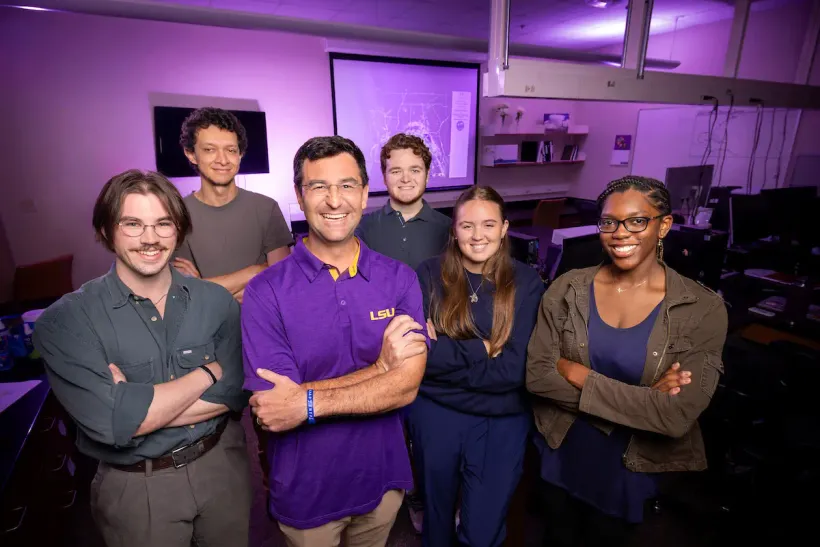
LSU Lab Helps Louisiana Prepare for Hurricanes, Drought, even Saharan Dust
Any hurricane that forms in the Gulf of America is a direct threat to Louisiana and its neighboring states. But most seasonal forecasts focus on the entire North Atlantic Basin, including areas where storms may never come close to any land, much less the U.S. Gulf Coast. A Gulf-specific forecast developed at LSU’s Coastal Meteorology (COMET) Lab addresses that issue by providing storm information specifically geared toward the Gulf region. The lab is run by Paul Miller, an associate professor at LSU who founded it in 2019. “We decided that a Gulf-specific forecast could help state officials and Gulf-area residents better understand how active the upcoming season might be in their part of the Atlantic,” said Miller, who teaches in the Department of Oceanography & Coastal Sciences in the College of the Coast & Environment. Miller said the LSU-Velocity Risk Gulf Hurricane Outlook is one example of how the COMET Lab delivers real benefits to Louisiana. “A lot of forecasts tend to align with each other each year. But ours works a lot differently than some of the other forecasts that are geared towards larger areas of the ocean,” he said. “We’re not the world’s leading hurricane research lab—and we don’t try to be. Instead, we prioritize meeting the largest research gaps relevant to Louisiana residents, spanning a wide variety of weather hazards. “We want to make sure Louisianans experience a clear return-on-investment from our lab’s activities.” Ways the lab supports the state also include: Helping forecast storm surge in real time and informing the decision on when to close flood barriers before a tropical system hits land. Developing rainfall models to support flood prevention efforts. Studying weather patterns that cause drought and low coastal water levels that can lead to marsh loss during dry spells on the Gulf Coast. Saharan Dust Research One area of study that incorporates both air quality and tropical weather is the lab’s research on Saharan dust clouds, which are blown across the Atlantic in an air mass called the Saharan Air Layer, or SAL. “So, this sort of far-off distant concept of Saharan dust is actually something that is kind of important to folks here in Louisiana,” Miller said. This dust can shut down thunderstorm activity in the U.S. Caribbean territories, a key area of research in the COMET Lab, and cause respiratory problems when it reaches the Southeast U.S. The SAL can also suppress hurricane activity in the Atlantic. “Our lab just launched a new project with the Office of Naval Research to determine how dust-dimmed sunlight can affect ocean temperatures in the Atlantic’s most active hurricane breeding grounds,” Miller said. Read the full story here.



Georgia Southern researchers survey flood-stricken area of Bangladesh
Cox’s Bazar is a bustling tourist destination located on the southeastern coast of Bangladesh. It’s home to more than 3 million people living along the longest naturally occurring sea beach in the world, extending into the Bay of Bengal. But during the monsoon season, the area is prone to flooding and frequent landslides due to its geographical location and low altitude. More than 7,000 people living in the region were displaced in 2024 after a particularly severe season that destroyed thousands of shelters, leaving three dead. Georgia Southern University Assistant Professor Munshi Rahman, Ph.D., knows the dangers and devastation monsoon season can bring to this area. As a native of Bangladesh, he has witnessed firsthand how environmental changes, urbanization and deforestation contribute to the devastation. This is why he is actively working to help his home country identify the most disaster-prone areas through the use of geographic information systems and surveys. In January, Rahman and junior geoscience major Emma Robinson traveled to Cox’s Bazar to survey and identify the areas most prone to landslides and flooding with a goal of providing data to local government and nongovernmental organizations that could help address disaster risks. Robinson says she was thrilled to gain experience in field research and engage in work she’s passionate about. “Dr. Rahman’s project really inspired me because I’ve always had a drive to help the environment,” she said. “I thought this would be a great first step into research, especially since geology and geography are so closely related.” The two used geographic information systems, GPS and community input to pinpoint vulnerable spots near residential areas and population centers. Specifically, they found that many homes and refugee camps were built on slopes. Aside from being geographically vulnerable, they observed that many of these dwellings, built from bamboo poles, tarps, and corrugated metal, lacked the infrastructure to withstand flooding. “The key findings reveal a serious environmental degradation on local landscapes exacerbating the frequency and severity of landslides and flooding events in the region,” Rahman said. He added that these insights highlight the urgency for sustainable ecosystem management and the adoption of inclusive disaster management to reduce social and environmental vulnerabilities Rahman and Robinson suggest that their findings, combined with additional socioeconomic research, could provide a more comprehensive understanding of the situation on the ground. This would enhance disaster preparedness while promoting sustainable land use. “Not too many undergrads have opportunities like this,” she said. “I know this will help me get a jump-start on my senior thesis and give me a whole new perspective for future research projects. It’s made me more confident overall as a student and researcher.” Rahman is similarly grateful for the opportunity to give his students experience in the field. “As a professor, I’ve always wanted to give my students as much real-world experience as possible,” he said. “I also give Emma full credit. Prior to this trip, she had never traveled outside the U.S. She showed incredible courage and a real talent for research.”


Expert Insights: Navigating Tariffs in a Time of Global Disruption
As global headlines swirl with shifting tariff regulations, U.S. businesses are navigating uncertain waters. With new trade actions impacting industries from automotive to renewable energy, the ripple effects are being felt across supply chains, labor markets, and even insurance models. In this conversation, J.S. Held experts Peter Davis, Timothy Gillihan, Andrea Korney, and Robert Strahle unpack how tariffs are shaping decision-making across industries and where organizations can spot opportunities amid the volatility. Highlights: • Industries most likely to experience tariff impacts • Potential disruptions in manufacturing processes • Supply chain and quality concerns • Expected changes coming in the insurance, reinsurance, and construction markets • The importance of strategic tariff engineering • Guidance for dealing with uncertainty and a rapidly changing business environment Looking to connect with Peter Davis and Andrea Korney? Click on their profile cards to arrange an interview or get deeper insights. For any other media inquiries - contact : Kristi L. Stathis, J.S. Held +1 786 833 4864 Kristi.Stathis@JSHeld.com


Taming "The Bear": Villanova Professor Examines Workplace Toxicity in FX's Acclaimed Series
In the latest season of FX’s award-winning series “The Bear,” lead character and chef Carmen “Carmy” Berzatto finds himself at a crossroads. A culinary genius, Carmy has successfully overseen the reinvention of his family’s Italian beef shop as a high-end restaurant—shepherding a dedicated, if unpolished, crew of sandwich makers into a world of haute cuisine, fine wine and elevated service. However, over the course of this transition, his exacting standards have contributed to a culture of anxiety, dysfunction and resentment in the workplace. Despite staff members’ professional and personal growth, tempers still flare like burners on a range, with Carmy’s obsessive attention to detail and single-minded pursuit of perfection spurring conflict. By season’s end, grappling with the fallout from a mixed review seemingly influenced by the back-of-house “chaos,” the chef is forced to confront a complicated and thorny question: Am I getting in the way of my own restaurant’s success? Carmy’s dilemma, while fictional, reflects the very real challenges many modern businesses face when excellence is prioritized at the expense of psychological safety and workplace harmony. Per Manuela Priesemuth, PhD, who researches toxic work climates, aggression on the job and organizational fairness, the warning signs are all too frequently overlooked in high-pressure environments like restaurants. “Some high-stakes industries have a characteristic of having toxic behavior more accepted,” says Dr. Priesemuth. “When it’s more accepted or normed, it’s a real problem.” As she explains, workers in the food service industry, much like medical professionals in an operating room or military personnel in a combat zone, have a tendency to view measured communication and thoughtful interaction as a luxury or even, in some cases, a hindrance. Essentially, there’s a common misconception that working with an edge—yelling orders, avoiding dialogue and berating “underperformers”—gets the job done. “In all of these high-stakes environments where it’s thought there’s leeway to talk negatively or disparagingly, people are mistaken in the productivity result,” Dr. Priesemuth says. “It actually changes for the better in positive climates, because people who are treated with dignity and respect are better performers than those who are mistreated.” To Dr. Priesemuth’s point, research increasingly shows that workplace culture, not just talent or technical ability, is an essential driver of organizational success. In an environment like Carmy’s kitchen, where pride and passion often give way to personal attacks and shouting matches, the on-the-job dynamic can effectively undermine productivity. What may begin as an intended push for excellence can instead result in burnout, high turnover and weakened trust—outcomes that are especially problematic in collaborative, fast-paced industries like hospitality. “There’s even evidence that abusive behavior in restaurant settings can lead to food loss,” shares Dr. Priesemuth. “So, there is a sort of retaliation from the employees who are going through this experience, whether it’s measured [in profit margins] or impact on the customer.” In order to prevent these less-than-ideal outcomes, businesses should take steps proactively, says Dr. Priesemuth. More specifically, they should clearly articulate their values and expectations, considerately engage with their staff’s opinions and concerns and consistently invest in their employees’ growth and development. In the world of “The Bear,” a few of Carmy’s managerial decisions in the second season could be seen as moves in the right direction. At that juncture, he was leveraging his industry connections to provide his restaurant’s staff with the tools and training necessary to thrive in Chicago’s fine dining scene, building skills, confidence and goodwill. “If you give people voice—such as input on the menu, for example, or more autonomy in completing a certain task—it boosts morale,” says Dr. Priesemuth. “It helps people feel that they have input and that they are valued members of the team; it’s this sort of collaborative, positive relationship that increases commitment and performance.” Establishing this type of work culture, grounded in open communication, mutual respect and a shared sense of mission, takes concerted effort and constant maintenance. In situations in which toxicity has already become an issue, as it has in Carmy’s kitchen, the task becomes decidedly more difficult. Typically, it demands a long-term commitment to organizational change at the business’ highest levels. “Adjusting the tone at the top really matters,” says Dr. Priesemuth. “So, if the owner were to treat their chefs and waiters with the dignity and respect that they deserve as workers, that also trickles down to, for example, the customer.” A leader’s influence on workplace morale, she contends, is nuanced and far-reaching. When those in charge model a lack of empathy or emotional distance, for instance, a sort of toxicity can take root. Likewise, when they repeatedly show anger, animosity or frustration, those same feelings and attitudes can have an ingrained effect—regardless of a staff’s talent or ability. Given the outsized role owners, supervisors and managers play in shaping organizational culture, Dr. Priesemuth further notes, “Leaders must also feel that they’re being supported. You can’t have someone who’s exhausted, works 80 hours a week and has relationship and money issues and expect them to say, ‘What are your problems? What do you need?’” In many ways, her insights speak directly to the struggles Carmy faces and prompts throughout “The Bear’s” run. At every turn, he’s dogged by family and relationship troubles, mounting financial pressures and unresolved trauma from a past role. Ultimately, as would happen in real life, his difficulty in healthily processing and addressing these issues doesn’t just harm him; it affects his staff, manifesting itself as a need for control and a crusade for perfection. “There are spillover effects from your own personal life into your job role. In the management field, that has become increasingly clear,” says Dr. Priesemuth. “Whatever you’re going through, whether it’s from an old job or something personal, it will automatically spill over into your current work life and your interactions. And, vice versa, what’s happening to you at work will [impact you off the clock].” In dramatic fashion, the fourth season of “The Bear” concludes with Carmy acknowledging as much. Determining that there are other aspects of his life desperately in need of attention, he surrenders the reins of his business to chef de cuisine Sydney “Syd” Adamu and maître d’hôtel Richard “Richie” Jerimovich, appointing them part-owners. While the soundness of this decision remains a subject for the show’s next season, Carmy justifies the move with a blunt admission: “It’s the best thing for the restaurant. We have to put the restaurant first… I don’t have anything to pull from.” In the end, in both “The Bear” and management studies, there’s an understanding that building healthy and productive work environments requires active engagement and positive reinforcement on the part of leadership. In a sense, creating a strong work culture is shown to be a lot like preparing a phenomenal meal; it’s a matter of attentiveness, patience and care. Without those ingredients, the result could very well be a recipe for disaster.


ChristianaCare and Children’s Hospital of Philadelphia (CHOP) today announce a new strategic affiliation to expand access to world-class pediatric care in Delaware and surrounding communities. The collaboration, which is expected to begin in spring 2026, will enhance access to specialized pediatric care by bringing CHOP’s renowned expertise closer to home for families in the communities ChristianaCare serves in Delaware, Maryland, Pennsylvania and New Jersey. By integrating CHOP’s services with ChristianaCare’s established network, the collaboration will improve care delivery, making advanced pediatric treatments more accessible and reducing the need for families to travel long distances for care. A Bold Step Forward in Pediatric Care “This collaboration brings together two amazing organizations that are already nationally recognized for clinical excellence—and we’re going to be even better together,” said Janice E. Nevin, M.D., MPH, president and CEO of ChristianaCare. “Our affiliation with CHOP marks a bold step forward in our mission to provide the highest quality care to children and families across the communities we serve. These are uncertain times for many parents with young children in need of routine or complex medical care. ChristianaCare and CHOP are joining forces to provide world-class care, close to home, at a time when it’s needed most.” “Bringing seamless, family-centered care to our patients is a priority at Children’s Hospital of Philadelphia,” said Madeline Bell, CEO at Children’s Hospital of Philadelphia. “As one of the region’s most dynamic health systems, ChristianaCare has earned a national reputation for its bold approaches to both clinical care and innovation. Our new affiliation is driven by a shared vision: redefining what is possible in health care and ensuring that every patient — at every stage of life — receives the highest standards of care, from infancy through adulthood.” “Our team at ChristianaCare is excited to work closely with Children’s Hospital of Philadelphia to bring even more specialized care to our community,” said Megan Mickley, M.D., chair of Pediatrics at ChristianaCare. “CHOP’s leadership in pediatric medicine will complement the outstanding care already provided at ChristianaCare, ensuring that our youngest patients receive the most advanced treatments in a compassionate and supportive environment.” Initial Focus and Future Growth This affiliation between ChristianaCare and CHOP represents a significant increase in access to world-class pediatric care for communities in Delaware, Maryland, southeast Pennsylvania and southern New Jersey. CHOP, a global leader in pediatric care and research for over 165 years, is consistently ranked among the top children’s hospitals in the country, known for pioneering breakthroughs across a breadth of pediatric care areas. The affiliation will include all ChristianaCare hospitals and locations where pediatric emergency and inpatients are cared for. The collaboration will initially focus on pediatric and neonatal services. Patients at ChristianaCare will have access to CHOP’s expertise in rare and complex diseases and a wide range of newborn and pediatric services, including surgery, cardiology, neurology, radiology, ophthalmology and genetics, as well as educational and research opportunities. As the collaboration grows, it will explore further opportunities to expand pediatric care and improve health care delivery in the region.



Dr Katie Edwards studied the feeding practices of parents of children with ‘avid’ eating traits, which can lead to obesity Focusing on health or deciding when it is time for a meal or snack helps parents to use supportive feeding practices. Supportive feeding practices could include involving children in decisions about food, or sitting together for mealtimes New research from Aston University has shone a light on the best ways for parents to encourage healthy eating in their children. The team of academics from Aston University’s School of Psychology, led by Professor Jacqueline Blissett, with Dr Katie Edwards as the lead researcher, looked at the meal- and snack-time practices of parents of children with ‘avid’ eating behaviours. ‘Avid’ eaters, who make up around 20% of children, particularly love food, are often hungry and will eat in response to food cues in the environment and their emotions, not just when they are hungry. They are the most susceptible to obesity and therefore encouraging a healthy, balanced diet is vital. Feeding children with avid eating behaviours can be challenging and the researchers wanted to understand how factors in everyday life, such as parent mood or eating situations, influence the feeding practices that parents use. Understanding this can help to create better support for families around meal and snack times and reduce the risk of children developing obesity. Dr Edwards says that the research shows that when parents prioritise children’s health or decide when it is time for a meal or snack, parents are more likely to use supportive feeding practices which create structure around meal or snack times or encourage children to be independent with their food choices. For example, parents could sit and eat with their children, choose what food is available for their children, or involve children in decisions about what food to eat. She adds that there are three main things that parents can do to help encourage healthy eating behaviour. The first is to focus on health, by providing nutritious and balanced meals. The second is to ensure a calm and positive atmosphere during eating occasions. The final recommendation is that parents should take the lead on setting meal- and snack-times, with a good structure being three meals and two snacks a day. These recommendations are linked to parents’ use of supportive feeding practices which are known to encourage children’s healthy eating. To carry out the research, the team recruited parents of children aged 3-5 with avid eating behaviour and asked them to download an app to their smartphones. The app sent four semi-random reminders per day for a 10-day period, asking them to complete a survey with information about mood and stress levels. Every time a child had a meal or a snack, or asked for food, parents completed another survey to give information about feeding practices (including those which give children structure, or independence, around food), mealtime goals (such as prioritising healthy eating), and information about the mealtime setting (such as the atmosphere). Previous research from this team at Aston University identified four main eating traits in children. As well as ‘avid’, the other traits, not studied here, are ‘typical’ eaters, who have no extreme behaviours, ‘avoidant’ eaters, who are extremely fussy, and ‘emotional’ eaters, who eat in response to emotions but do not necessarily enjoy food in the way that avid eaters do. Dr Edwards was also involved in the team’s research at Aston University that showed that parents’ eating behaviour influences that of their children. Dr Edwards said: “Given the challenges that parents may face and the risk of childhood obesity, we will use these findings to develop feeding support for families. Encouraging parents to use feeding practices which provide structure around meal and snack times, or promote children’s independence with food, could be helpful for supporting children’s healthy eating. Read the full paper in the International Journal of Behavioral Nutrition and Physical Activity at https://doi.org/10.1186/s12966-025-01768-x.


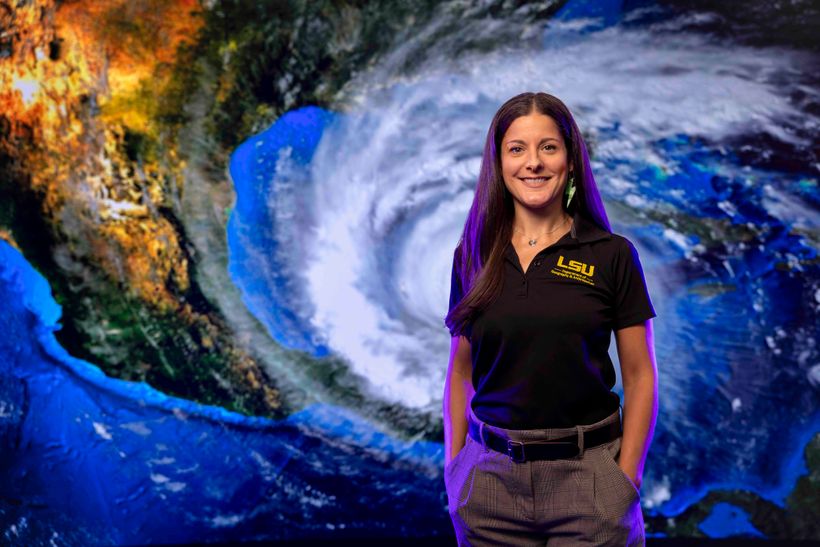
LSU’s Jill Trepanier Educating K-12 Louisiana Students About the Environment
What began in 2018 as a single rooftop weather station on LSU’s campus as a tool to help freshmen connect to the science happening around them, has grown into an educational network in the southern part of the state, connecting K-12 students with the sky through real-time data, interactive technology, and hands-on learning. Trepanier, a professor and department chair in LSU’s Department of Geography & Anthropology, leads a project that now includes 10 weather stations installed at or near K–12 schools from Lake Charles to Grand Isle. “The environment is harsh in Louisiana. Beautiful, but harsh,” Trepanier said. “The more students know about it, the better they can protect themselves and their families. For me, that’s what it is all about.” The project all started to help college students in Trepanier’s meteorology and physical geography classes connect more deeply with the material by using weather data collected from the air around them. “These were 400 freshmen every semester who were not geography majors, so they didn't really love the science of the atmosphere. But they were able to connect with the information because they could see the data on an app on their phone as they were living in it.” Installed across South Louisiana, each weather station is solar-powered and connected to a console that uploads data to an online web platform and displays it on a dashboard. Then an app shows the local students the current conditions and records for the day. “When we look at data from the community, it might be many miles from where you are. And most people live within a few miles or less of their schools. It allows them a close-up view of what is happening, instead of relying on something miles away,” she said. Teachers can use the data with certain lessons or during a passing storm. But the available data also educates them on things like solar radiation, “It also helps aid things like seasonality and our relationship with the sun. It extends well beyond just rain.” The material is also aligned with the Louisiana Student Science Standards for environmental and Earth sciences. “By allowing students to compare real data across space and time, it helps them to understand how systems are connected. And most of these science standards have them focusing on system theory, in one way or another,” Trepanier said. Read the full story here.

FAST nanotechnology unveiled at Rome Global Congress by AU scientist
Stephen Hsu, PhD, a professor at the Dental College of Georgia at Augusta University, unveiled his groundbreaking nanotechnology, known as FAST, during a keynote address at the 8th World Congress on Infectious Diseases in Rome, Italy. FAST, or Facilitated Self-Assembling Technology, offers a revolutionary way to convert compounds that are difficult to dissolve in water into stable nanoparticles. This innovation could transform drug development, viral infection prevention, hospital hygiene and more. “FAST takes a completely different approach from traditional nanotechnology,” Hsu explained. “Unlike methods that rely on polymers, metals, surfactants, fat-based carriers or complex engineering processes, FAST allows compounds to self-assemble into nanoparticles with minimal effort. This makes drugs that were once nearly impossible to formulate in water stable, effective and practical for medical and consumer use.” At the heart of this innovation is EC16, or EGCG-palmitate, a lipid-soluble compound derived from green tea. Known for its antioxidant, anticancer, anti-inflammatory and antimicrobial properties, green tea has long been studied but is challenging to use in clinical settings due to stability issues. FAST overcomes these limitations, transforming EC16 and other hydrophobic compounds into water-friendly nanoparticles. “You can’t even tell the particles are there,” said Hsu. “They look just like water. I made several different formulations in one afternoon in my lab. It’s that fast and simple.” A natural solution to global challenges Hsu’s work is the culmination of decades of research and a deeply personal journey. He credits green tea with helping him survive illness during his youth in a labor camp in China. Now, he’s turning its natural properties into cutting-edge therapies with the hope of helping more people. “I’ve been drinking green tea my entire life,” Hsu said. “Now, we’re turning its benefits into medical-grade treatments.” Supported by over $600,000 in NIH grants, Hsu’s team is developing applications like alcohol-free disinfectants and nasal sprays to prevent respiratory virus infections. One promising product is an EC16-based disinfectant that is natural, non-toxic and highly effective against tough pathogens, like norovirus and C. difficile, a bacterium that can cause severe diarrhea. “That’s a big deal for schools, hospitals and places like cruise ships, where these infections spread easily,” he said. Tackling long COVID and beyond Among FAST’s most promising applications is a nasal spray developed to prevent or treat long COVID and other respiratory illnesses. The spray, currently undergoing preclinical testing, targets viral entry points in the nasal mucosa, where infections often begin. “Our goal is to help immunocompromised patients and those with lingering symptoms like brain fog and loss of smell,” Hsu said. “We’ve already seen strong in vitro results against human coronavirus and norovirus.” In addition to nasal and topical treatments, Hsu’s team has developed oral formulations of EC16 that remain stable through the stomach’s acidic environment, critical for treating gastrointestinal viruses and potentially inflammatory bowel diseases like Crohn’s. “We found that even without direct contact with the virus, the EC16 nanoparticles taken by mouth can reduce infection,” Hsu explained. “That’s a major step forward in treatment of digestive tract viral infections.” A platform for the future of medicine FAST isn’t limited to green tea compounds. Hsu’s method can transform a wide range of hydrophobic compounds like cannabidiol, ivermectin, quercetin, procyanidin and retinoic acid, as well as hundreds of existing drugs, into nanoparticle suspensions that are stable and water-friendly. This has huge implications,” said Hsu. “Up to 90% of new drug candidates have poor water solubility and low bioavailability, which limits their effectiveness. With FAST, we can change that.” His lab is already exploring applications in Alzheimer’s research, cancer therapy, oral health and even anti-biofilm coatings to prevent hospital infections. These products, along with the nasal spray, are expected to hit the market this fall. Hsu is currently finalizing publications and preparing patent filings to protect and expand the reach of FAST. While optimistic, he remains cautious. “The results so far are phenomenal. FAST could be a new chapter in how we fight disease and deliver medicine,” Hsu said. Looking to know more about FAST nanotechnology and the research happening at Augusta University? To connect with Dr. Stephen Hsu - simply contact AU's External Communications Team mediarelations@augusta.edu to arrange an interview today.
