
Experts Matter. Find Yours.
Connect for media, speaking, professional opportunities & more.

What are IDC's Tech Insights on the Impact of COVID-19 on the Canadian Market?
Dear Member of the IDC Canada Community, As we all adapt to this ever changing environment, our Canadian team has been working behind the scenes analyzing the COVID-19 impact on the Canadian ICT market. This email provides you with tech insights, including updates on market outlook and further resources to help you make critical business decisions in the weeks and months ahead. Canadian Total IT Spending Growth for 2020 Revised Down from 2.4% to -5.0% in the Most Probable IDC Canada Research Scenario The coronavirus outbreak across the world and the necessary containment measures put in place by governments will substantially affect the Canadian IT markets, severely accelerating the impact already felt from the supply-driven effects from Asia. In this extremely fluid scenario, International Data Corporation (IDC) now expects to see a significant slowdown in technology spending in 2020 across Canadian organizations, with IT spending expected to decline by -5.0%. As recently as December 2019, we were projecting a positive 2.4% growth rate for 2020. However, with new stringent containment and lockdown measures in place across Canada, resulting in a rapidly deteriorating economic outlook, GDP forecasts have recently been revised down sharply for Q2 and Q3. "Technology vendors and buyers are rapidly adapting to the disruption and the extremely fast-moving market conditions," said Nigel Wallis , Research VP, IoT & Industries at IDC Canada. "In such a rapidly changing environment, it is still too early to assess the overall impact on the Canadian IT market fully. However, given the sharp economic contraction, IDC recommends that all technology leaders recalibrate their strategies." IDC Canada has developed three scenarios to help technology providers and buyers with their short-term business and technology investment planning. "The probable scenario assumes the coronavirus is broadly contained by June. The optimistic scenario assumes the virus is more rapidly contained, and business and investments recover quickly and accelerate in Q3. Finally, a pessimistic scenario that considers a less controlled, longer-lasting, virus 'rebound' effect through Q3 and Q4," said Tony Olvet , GVP Research, at IDC Canada. A Probable Scenario Depicting a Decline In the most probable scenario, IDC projects Canadian IT spending to decline by -5.0% in constant currency terms this year, down from the 2.4% forecast published at the end of 2019. "When taking a broad historical view of Canadian IT spending across the past decade, the impact of the COVID-19 crisis is expected to exceed the levels of the 2008–2009 financial crisis. As such, it does represent the most significant deceleration in IT spending growth Canada has experienced in modern time," said Lars Goransson, Managing Director at IDC Canada. As restrictions of movement bite, supply-chain disruption becomes commonplace, and demand drops, Canadian IT spending will drop rapidly in Q2. Particularly manufacturing, personal and consumer services, transportation, and hospitality will be sharply curbed, as these industries are the most exposed to the COVID-19 crisis impact in the short-, mid-, and long-term view. At the same time, other sectors, such as healthcare and government, will be forced to accelerate investments significantly. IDC expects this will drive additional IT investments for the public sector, pushing hard on infrastructure and collaboration tools deployments, but not before the second half of 2020." In the most pessimistic scenario, IDC expects ICT spending to drop and record a –8.2% decline in 2020, with all technology domains showing negative trends for the remaining part of the year. A series of domino effects, including oil price changes, currency depreciation, the inability of governments to make timely payments, delays in the supply chains and significant lay-offs would lead to a much more dramatic impact on the overall ICT market and an exponential increase in the downside risk in IDC's market forecast assumptions. The new outlook is shaped primarily by lower expectations in the hardware and services markets: Hardware markets will suffer due to restriction measures hampering supply and overall reduced demand. Client Devices are particularly hit hard, initially because of supply constraints and in later quarters as reduced demand further erode growth. The most significant impact on the IT services industry will be a result of businesses postponing decisions on pending projects and slowing the execution of projects in the delivery phase. Spending reductions on the software and telecoms markets are less pronounced, and some positive factors are expected to moderate the natural downturn somewhat. While the decrease in hardware spending will also negatively impact the overall software market to a degree, difficulties prompted by COVID-19 across industries will impact total telecommunication spending (this will be examined in forthcoming IDC Canada research). At the same time, the increasing need for remote collaboration will push telecom services demand and drive new opportunities in the collaborative applications and platforms areas, as well as an increase in security technologies that enable them. The pre-existing digital maturity of industries will also be a factor impacting on their capacity to invest in technologies, regardless of their budget capabilities. Limited face-to-face business relationships between vendors and end-users will inevitably also reduce investment in significant digital transformation projects in less mature industries, and especially for projects involving more advanced technologies. Social distancing and provincial lock downs (the duration is hard to predict) will also have significant consequences on the purchasing options for many consumers. Additional factors weighing on investment will range from a decrease in customer demand to supply chains breaking up," said Meng Cong , Manager, Market Insights & Analytics at IDC Canada. "Nevertheless, there are areas in which spending will grow. In use cases such as patient care as well as customer, citizen, student or employee experience and proximity, we expect to see accelerated adoption of digital solutions. Specific solutions such as videoconferencing, intelligent supply, chatbots, and e-learning platforms, among others, highlight how technology can help businesses and societies address these new challenges." Register for our Complimentary Webcast Now On-Demand IDC's Canadian team is closely monitoring the evolution of the ICT market and its reaction to the coronavirus crisis through multiple research initiatives: this includes monthly surveys to poll Canadian digital leaders on their organizations' digital investment plans in light of COVID-19 scenarios. If you are interested in knowing more about this, please register for the IDC Canada Complimentary Webcast COVID-19 Impact in the Canadian Technology Market. To learn more about what to expect in the months ahead and what organizations should do in response to this market turmoil, please visit www.idc.com/ca and IDC’s Global COVID-19 resources microsite at: https://www.idc.com/misc/covid19. Contact Information: If you'd like to learn more about how IDC Canada can help you, please feel free to contact us at askidc@idccanada.com or your IDC representative directly with any questions.


Public health crises such as COVID-19 — in which people may feel powerless and receive conflicting information — can lead to a flare-up of unsafe religious sentiments, says Baylor University epidemiologist Jeff Levin, Ph.D., who cites past persecution of religious and ethnic minorities who were blamed unfairly for spreading disease. While some possibly unreliable projections about COVID-19 are being spread, containment — and common sense — are key, Levin says. In addition, research shows that maintaining one’s spiritual life can help people remain strong in the face of health challenges and encourage them to reach out to help others. Levin is University Professor of Epidemiology and Population Health, director of the Program on Religion and Population Health in Baylor University’s Institute for Studies of Religion and adjunct professor of psychiatry and behavioral sciences at Duke University School of Medicine. He recently lectured at Duke about the COVID-19 outbreak, on infectious disease pandemics in general and on religious dimensions of the present crisis. In this Q&A, he speaks about these issues. Q. What do you feel is the most important message that needs to get out about the coronavirus outbreak? LEVIN: There are still folks out there saying, “Ah, this is nothing” or “It's all hype.” I'm not that guy. This is very serious. Still, I believe that some misinformation is getting out there that's scaring people, and that's not a helpful thing. I have some concerns about how the facts and nuances of this outbreak have been communicated to the public. In the past few weeks, the news and internet and social media have been inundated with some very alarming projections, some of which in my opinion may be off perhaps by an order of magnitude. This is due in part to mistaken calculations being made by people, including M.D.s who don't understand the parameters of disease transmission or the concepts that epidemiologists use to track outbreaks. This also includes some government officials who are miscommunicating issues regarding risk, pathogenesis and prognosis, and this information is then being picked up by the media and projected out to the general public. Suddenly, even laypeople people are throwing around very technical epidemiologic jargon — exposure, infectivity, case fatality, herd immunity, transmission, incubation period, flattening the curve — without knowing exactly what these words mean or how they’re used, and some faulty messages are getting out. There’s a pressing need for responsible public voices who can help separate the signal from the noise, but those voices seem to be scarce. But regardless, whatever the projections are — good, bad, or ugly — so much hinges on containment. If we manage that properly, such as through all the good advice we’ve been given about social distancing, washing our hands, disinfecting surfaces and so on, we'll get through this with minimal — a relative term — casualties. If we ignore this advice, things can go south in a hurry. It only takes one clinical case getting loose in the community to create a secondary outbreak. Noncompliance can easily create an army of “Typhoid Marys” in communities across the country. In any outbreak due to any pathogenic agent, such as the SARS-CoV-2 virus, there are things we can do, one, to break the chain of transmission and, two, to minimize the damage to ourselves. There’s a public health response and a personal response. The public health effort is focused on how to limit exposure and transmission, which is exactly what needs to happen. There are policies that we should follow as far as our own behavior and social interactions and as far as the environment we live in where the virus is circulating. We’ve all become familiar with what these things are. But there’s the other side of the coin. In epidemiologic terms, exposure does not imply infectivity. Not everyone who is exposed to the virus will become infected. Infectivity in turn does not imply pathogenicity. Not everyone who is infected, who receives a positive test, will become a clinical case, will become sick. And finally, not everyone who comes down with COVID-19 and manifests signs and symptoms of disease will have a virulent enough case that will require intensive medical care or hospitalization, and only a minority of those will lose their life. Most, we believe, will recover just fine. So the folks who are at risk of a very serious outcome are a subset of a subset of a subset of folks who are exposed to the virus. The problem right now is that we don’t have a definitive grasp on these percentages. So we all need to do everything that we can not just to limit exposure and transmission but to strengthen ourselves to withstand the natural course of infection and disease. Epidemiologists call this “host resistance.” Q. What can we do to strengthen our resistance to the infection and the disease? How does faith figure into this? LEVIN: We know from decades of research that so many things that we can do in our daily lives can help us to withstand and recover from illness. We can eat right — avoid junk food and overeating and consuming toxins. We should avoid smoking and abusing alcohol, we need to get enough sleep and manage our stress, we need to get some exercise and fresh air. We all know all of this, but in difficult times it’s easy to fall into inaction and depression, which itself can depress the immune system and impair our ability to stay healthy or to recover. One of the important things that we can do, and decades of research support this, is to maintain continuity in our spiritual life. Studies show that people with a strong ongoing faith commitment can marshal an ability to remain resilient and deal with stress and even have better medical outcomes. There is a longstanding research literature on the physical and mental health benefits of hope and optimism and positive attitudes, including in the context of one’s spiritual life, and including due to the tangible and emotional support that faith and being a part of faith communities give us. Faith matters. But this isn’t a magic bullet, and I want to be careful about overstating things. Folks who expect that by being a diligent Christian or Jew, believing in God, going to religious services — in person or online — showing strong faith, studying Scriptures regularly, that by doing all this somehow a pathogenic agent won’t enter their body or won’t cause signs or symptoms of disease — I think they’re laboring under some false expectations. They’re asking belief or faith to do things that are very difficult for me to envision. Maybe that’s just the scientist in me talking, although I too am a person of faith. On the other hand, our faith can indeed be part of keeping us strong and helping us to recover. But we ought to combine expressions of faith with careful efforts to limit our exposure and contain the outbreak, and to wisely seek medical care if we start to not feel well. The Bible encourages us with verses like “put on the full armor of God,” but at the same time if you stand out in the pouring rain you can’t sanely expect not to get rained on. Q. Will this outbreak lead to a resurgence of religious belief? Are there examples of this from history? LEVIN: Yes, there are, but not necessarily in a positive way. Times of crisis like this, especially when people feel powerless and are receiving conflicting information, can lead to a dangerous flare-up of unwholesome religious sentiments, including scapegoating. Look at the Black Plague of the 14th century. From a third to over one half of Europe perished, and the one constant in every country affected by the epidemic, besides the millions of bodies piling up, was a consistent and organized effort to massacre Jews, who were blamed for the disease. Lest we think those days are behind us, look at how we responded to the brief Ebola crisis in the U.S. in 2014, which ramped up hatred toward Mexican immigrants. Or consider the present outbreak, and the terrible animosity directed at Asian Americans. We aren’t immune to this kind of behavior, especially when we feel a sense of dread or hopelessness or a sense that our prayers to God have failed and that we are receiving a divine chastisement or punishment. It’s easy then to lash out and try to identify a “demonic” source for our travail and try to seek vengeance. There is also precedent for waves of apocalypticism, fear that the end of the world is nigh. We saw this during the 1918 influenza pandemic, and it gave rise to much of the end-times thinking that persists to the present day. So faith can sustain us, even benefit us physiologically, but it can also embitter us and make us do evil or drive us to become obsessed or crazy. Q. Are there other more positive ways that faith or spirituality come into play here? LEVIN: Sure, I can think of a few. There’s a bioethical dimension. Our faith traditions remind us of our obligations to others, especially those in grave need who lack the requisite material or social resources to care for themselves. This outbreak is a social-justice teaching moment for us as a society, and along with the medical and public health dimensions there are profound lessons in moral theology to learn and act on. Will we slip into a xenophobic fear-based response, self-absorbed with our own personal needs, or will we use this time, this enforced vacation for so many of us, to reach out to those in need? I have strong opinions about this. We have been given an opportunity to be selfless and act lovingly toward others, to represent the best of what faith has to offer. Or we can choose to reinforce the most selfish and hateful and ungodly aspects of what humans are capable of. This is a choice facing every one of us. There’s also a pastoral dimension here. Each of us, not just clergy or healthcare chaplains or pastoral counselors, has a role to play in offering consolation and reassurance to our fellow brothers and sisters. And also real, tangible assistance. Our family is Jewish, and we’re reminded in Exodus that we’ve been called to be “a nation of priests.” I think the same can be said for all of us, in our respective communities. We can also be thought of as a nation, or a community, of pastors. And in that role there is much for us to do. We can be a source of accurate information to counter the insidious memes circulating on social media. We can organize our neighbors and fellow congregants to provide help to people and families who need it. We can become leaders in our faith communities to help maintain study, prayer and worship activities while we are unable to attend church or synagogue. We can love and support those who are suffering and remind them of God’s love for us. These messages matter. Maybe it’s not realistic to expect them to cause a virus to not take hold or to become less virulent, but they can strengthen our ability to recover from this outbreak, both individually and as a community of people. ABOUT BAYLOR UNIVERSITY Baylor University is a private Christian University and a nationally ranked research institution. The University provides a vibrant campus community for more than 17,000 students by blending interdisciplinary research with an international reputation for educational excellence and a faculty commitment to teaching and scholarship. Chartered in 1845 by the Republic of Texas through efforts of Baptist pioneers, Baylor is the oldest continually operating University in Texas. Located in Waco, Baylor welcomes students from all 50 states and more than 90 countries to study a broad range of degrees among its 12 nationally recognized academic divisions.


Replacing in-person events in the wake of COVID-19
As the world deals with the COVID-19 outbreak and normal activities are curtailed with social distancing and self-isolation, businesses and marketers are having to adapt quickly. Last week, IDC Canada hosted a webinar around "Digital Transformation and the Evolving Tech Buyer's Journey: What Canadian Marketers Need to Know". The question that was top of mind - "In the wake of Covid-19, what are some of the alternative ways of generating leads when live events are not possible?" Our experts suggested four key points during the webinar: 1. Explore virtual platforms - The experience can’t fully replace in-person events but virtual platforms can help you engage with your prospects and customers. 2. Alternatives to in-person events - Webcasts and audio podcasts designed to educate buyers and bring in customer and 3rd party perspective help you stay top of mind. 3. Interactive content – Buyers are demanding interactive and visually appealing content. Interactive tools and microsites that have been wrapped with analytics provide marketers with the performance insights needed to optimize impact. 4. Cut through the noise - Targeted industry or role specific messages will have more impact in uncertain times. Watch now the webcast on-demand If you are interested in learning more about these techniques - then let us help. Julie Tiley is the Vice President, Custom Solutions for IDC Canada. She is an expert in the areas of developing and delivering programs designed around on specific business goals, especially in a rapidly changing environment like the one we are facing today. Julie is available to speak with media or anyone interested in knowing more. Simply click on either expert’s icon to arrange an interview or email askidc@idccanada.com.

Knowing How to Help — And How Not to Help — After a Disaster Makes a Difference
The images coming out of Nashville as it begins to recover from a deadly tornado that tore through the city on March 3 are heartbreaking. As people in other parts of the country are moved to do something, it is important that they know which ways of helping are effective — and which are not. José Holguín-Veras, the director of the Center for Infrastructure, Transportation, and the Environment at Rensselaer, can address this based on the research he's done in the area of humanitarian logistics. He has found that some well-intentioned attempts at assistance can even be counterproductive. Holguín-Veras' work was recently cited in an article written for The Conversation on this very topic. Julia Brooks, a Furman Public Policy Scholar at New York University, wrote: "One study led by José Holguín-Veras, a Rensselaer Polytechnic Institute expert on humanitarian logistics, found that 50% to 70% of the goods that arrive during these emergencies should never have been sent and interfere with recovery efforts. After the 2011 Joplin, Missouri, tornado and the Tōhoku, Japan, earthquake, for example, excessive donations of clothing and blankets tied up relief personnel." If you'd like to speak with Holguín-Veras about humanitarian logistics following this natural disaster, please click on his ExpertFile profile.


With South Carolina in the rear-view mirror, for most candidates seeking to represent the DNC this November – Tuesday is bottom of the 9th with the bases loaded. A home run means it is game over and the champion is crowned. A hit likely means you’ve survived to play another day. But for those who swing and miss … it’s a long walk to hang up the cleat and hit the political showers. There is a lot riding on Super Tuesday and odds are there will be a lot of people pontificating, pondering, and trying to predict what’s next for those left standing. And if you are a journalist covering the lead up and the aftermath to this high-stakes and heated race to lead the Democratic Party against President Donald Trump – let us help with your stories. Dr. Stephen Farnsworth is a sought-after political commentator on subjects ranging from presidential politics to the local Virginia congressional races. He has been widely featured in national media, including The Washington Post, Reuters, The Chicago Tribune and MSNBC. He is author or co-author of six books on presidential communication. His latest work, "Presidential Communication and Character: White House News Management from Clinton and Cable to Twitter and Trump," examines how the last four U.S. presidents sell themselves and their policies in an ever-expanding and sometimes precarious media environment. Dr. Farnsworth is available to speak with media and help with your coverage – simply click on his icon to arrange an interview today.



Proposed Fracking Ban Sent to U.S. Congress
If passed, bills introduced to the United States Congress could prevent federal agencies from issuing permits for expanded and new fracking in the country. Fracking is the use of a high-pressure fluid, being forced into a well to fracture or pulverize the rock next to a wellbore, to provide a pathway for oil and natural gas to flow and collect. "It's important for people to understand what fracking is and what it is not, and having an informed public is paramount in a democratic society," says the College of Engineering’s Scott Jackson, PhD, visiting assistant professor of chemical engineering. "There is a way to assure that oil and gas wells can be safely drilled and fracked with minimal impact on the environment." Fracking—a step in completing the installation of a gas or oil well—was first done in the 1940s as part of well stimulation in "tight" rock formations. Initially, it was done only in sandstone, not the shale that most people have heard about. "It has been used for more than 70 years prior to the shale revolution without controversy," Dr. Jackson says. Fracking and directional drilling are key technologies that have made the shale revolution possible; the ability to economically extract it has only come to fruition because of fracking and directional drilling. "The U.S. is now the world's largest producer of oil and natural gas. The shale revolution has driven the switch of electricity production from coal to a more environmentally friendly natural gas," says Dr. Jackson. Fracking has been controversial, and contentions concerning cariogenic chemicals being injected into "our fresh water" have been voiced by environmentalists, activists and the general public. Dr. Jackson says there is some basis for these statements, such as that water used in fracking has mostly undisclosed chemicals in it and that some of those chemicals may be carcinogenic. Because of this, Dr. Jackson says relaxing government oversight cannot be allowed. "Enforcing existing regulations and implementing and enforcing new regulations can only assure that oil and gas wells can be drilled and fracked safely with minimal impact on the environment."


Can America’s Infrastructure Withstand The Digital Economy?
When a city like New York is facing a continuous delivery stream of more than 1.5 million packages a day, something has to give. The growing number of sales by Amazon and other online retailers, combined with rapid delivery options, is choking streets within major metropolitan cities. This issue was recently featured in The New York Times — and when the journalists needed an expert perspective, they contacted Rensselaer Polytechnic Institute. Here's an excerpt: The average number of daily deliveries to households in New York City tripled to more than 1.1 million shipments from 2009 to 2017, the latest year for which data was available, according to the Rensselaer Polytechnic Institute Center of Excellence for Sustainable Urban Freight Systems. “It is impossible to triple the amount,” said José Holguín-Veras, the center’s director and an engineering professor at Rensselaer, “without paying consequences.” Households now receive more shipments than businesses, pushing trucks into neighborhoods where they had rarely ventured. And it could be just the beginning. Just 10 percent of all retail transactions in the United States during the first quarter of 2019 were made online, up from 4 percent a decade ago, according to the Census Bureau. — The New York Times, October 28, 2019 If you are a reporter covering this or a similar topic, let our experts help! Professor José Holguín-Veras is the Director of the Center for Infrastructure, Transportation, and the Environment (CITE) at Rensselaer. He is a leading authority in freight transportation and humanitarian logistics. Professor Holguín-Veras is available to speak with media regarding the ongoing difficulties cities are facing as shopping moves online and to the streets. Simply click on his icon to arrange an interview.

There’s no Tour de France for women; it’s time to address the inequity in professional cycling
Since the Passing of Title IX, there have been many improvements in accessibility for girls and women in sports. This trend has not been as strong for some sports, like competitive cycling. “We know that when we look at numbers for licensed riders in the U.S., 15% are women, and that means 85% of competitive cyclists are men,” said Erin Ayala, Ph.D. “Because races are generally run by private organizations, they don’t fall under the Title IX umbrella. It looks very different. They can say that because only 15% of women are in the field, they think they don’t need to add more races so women can participate. This then creates concerns regarding skill development and safety while racing.” As a cyclist who races nationally, Dr. Ayala can attest that women cyclists are treated very differently than men. “I did a large national investigation on the experiences to find out what the factors are that affect participation for women in competitive cycling. A lot of women spoke of importance of creating an encouraging and supportive atmosphere. They'd say, 'If I have people on sidelines cheering me on, that means the world to me.' “Another piece was that race promoters and directors sometimes combine women with master’s men, 50-60-year-old men, to help with field sizes, but that can create a toxic environment because women are racing with older men who may not want them to be there. Women are also paired with younger junior cyclists, which can feel condescending and patronizing because it results in shorter or easier races. “In a lot of races women race shorter distances or durations than the men, which can feel insulting. There’s no Tour de France for Women. It’s a tough atmosphere. Then there are the podium girls, women in high heels and makeup whose job it is to stand next to the male racers to give them their prizes and a kiss on the cheek. The underlying assumption is those women are there to accessorize the male racers. It speaks to the gender dynamics in those sports. “Things that decrease participation are unsupportive environments where women feel they do not belong, inequitable fields, and unequal prize pools; sometimes men are paid more money to win the same race as women. We have good hard data to talk about it. We need to do better, and one of biggest themes that came out of it was ‘Build it and we will come. Invest in us, and we will start to show up more often.’ We are hoping to create some change in communities and nationally to make more room for women in a sport that does not have many women. Are you a journalist covering this topic and looking to book an interview? That’s where we can help. Dr. Erin Ayala is a licensed psychologist and core faculty member in the counseling psychology doctoral program at Saint Mary’s University of Minnesota. She is also an expert in the areas of women’s health and sports psychology. To book an interview with Dr. Ayala – simply click on her icon to arrange a time. Read more on Dr. Ayala's research: https://doi.org/10.18666/JOREL-2020-V12-I1-9912.


Ask our experts - Self-care a necessity for graduate students; what are programs doing to help?
Life doesn’t stop when you’re in a doctoral program. Erin Ayala, Ph.D., has done extensive research into self-care, stress, and quality of life of students, particularly those in human service doctoral programs (like medical students and those in nurse anesthesiology, psychology, and counseling). She knows the recipe for stress and burnout: • These stressful programs tend to attract high achievers. It’s already in their nature to balance several commitments and responsibilities. • These programs and professions have a high level of responsibility. • Students in these programs are frequently at an age where they are also going through significant developmental milestones (marriage, children, purchasing homes). “When you bring all of that together, it can be really difficult to prioritize time for self-care,” she said. “Prevention and health promotion are really important, and it’s not just about mental health. It’s not just about being reactive and addressing distress or burnout when it hits. The question is what can we do on the front end to help prevent negative consequences down the road.” What is self-care? Often, Dr. Ayala said, media romanticizes and glamorizes self-care with advertisements for fizzy bath bombs and manicures. “What we have found is that it is completely personalized,” Dr. Ayala said. “For women, social support is really important. Ultimately, there needs to be time to disconnect, whether it’s doing nothing, or just taking a break from your dissertation. You’ve got to give yourself permission to do that. “Nutrition, exercise, hydration, spiritual life, different people have a different recipe for what their self-care looks like. It ebbs and flows just like any exercise or meditation or spiritual practice. Some weeks we’re doing great and other times we’re not, and that’s part of the process.” Dr. Ayala’s most recent research involves analyzing qualitative data, coming from over 200 students throughout the U.S. in clinical counseling and school psychology, all high achievers in the middle of doctoral programs. She’s investigating what faculty are doing to model or not model the importance of physical and psychological wellness. “Students might know that self-care is important, but it can be hard to act on it if they're in an environment that doesn’t support it,” she said. “The biggest supportive theme that came up was faculty simply encouraging them to do it, asking their students, ‘What did you do this weekend for self-care?’ They take the time to check in with their students and give them permission to take time for themselves. That takes zero effort.” “What can we do to make sure faculty are also able to model self-care for their students? The behaviors students are picking up now pave the foundation for the rest of their career. If faculty are working themselves to the bone, it sets an expectation for their students that they are supposed to do the same. If faculty model self-care and talk about its importance, students may be more likely to do it themselves.” Dr. Ayala said when her team asked students what programs can do to support self-care, answers ranged from formal programming and talking about it in the classroom, to referrals for therapists, discounts for gym memberships, or places to meditate on campus — ways to make self-care easier to access. When students are asked what the biggest barrier to self-care is, the answer wasn’t surprising. The majority of students responded that time was an issue. “That’s a tough one because there’s only so much programs can do to minimize the amount of work required,” Dr. Ayala said. “Students have to balance all these professional responsibilities and don’t know what to give up.” Are you looking to know more about self-care and other similar topics when it comes to high education? Or, are you a journalist covering this topic and looking to book an interview? That’s where we can help. Dr. Erin Ayala is a licensed psychologist and core faculty member in the counseling psychology doctoral program at Saint Mary’s University of Minnesota. To book an interview with Dr. Ayala – simply click on her icon to arrange a time.
A President is Impeached – Now What?
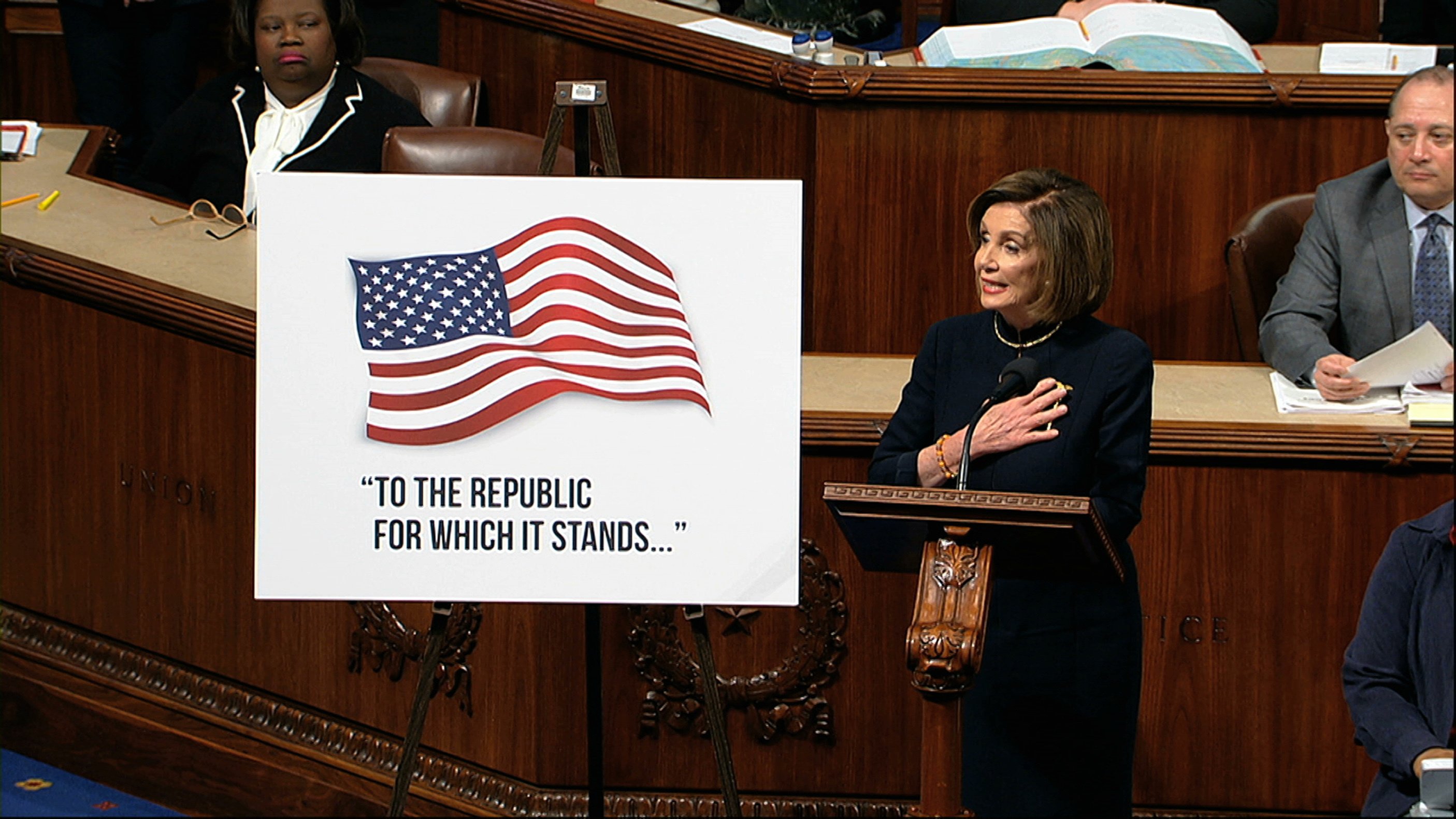
The numbers are in and for the third time in history – a sitting United States President has been impeached. But now what? There will be rhetoric, threats and predictions – but what is the process and what are the actual potential outcomes? This is a serious issue, and not just for either political party, but for the government and country as well. So, if you are covering – let one of the leading political experts in the country help with your stories. Dr. Stephen Farnsworth is a sought-after political commentator on subjects ranging from presidential politics to the local Virginia congressional races. He has been widely featured in national media, including The Washington Post, Reuters, The Chicago Tribune and MSNBC. He is author or co-author of six books on presidential communication. His latest work, "Presidential Communication and Character: White House News Management from Clinton and Cable to Twitter and Trump," examines how the last four U.S. presidents sell themselves and their policies in an ever-expanding and sometimes precarious media environment. Dr. Farnsworth is available to speak with media – simply click on his icon to arrange an interview today.