
Experts Matter. Find Yours.
Connect for media, speaking, professional opportunities & more.

Professor Jun Du and Dr Oleksandr Shepotylo from Aston University analysed the effects of the end of the Brexit transition period on UK exports This equals to a nearly 16% of UK total exports in the first half of 2019 and 70% of the documented total reduction in the EU exports in the same period The research suggests non-tariff measures (NTMs) are responsible for the fall in trade between the UK and EU. New research by experts at Aston University for the Enterprise Research Centre (ERC) has found that UK exports experienced a large, negative, statistically significant decline in 2021 at the end of transition after the EU-UK Trade and Cooperation Agreement (TCA) was put in force. The TCA is a free trade agreement signed on 30 December 2020 between the European Union (EU), the European Atomic Energy Community (Euratom) and the United Kingdom (UK). Professor Jun Du and Dr Oleksandr Shepotylo used a Synthetic Difference in Differences (SDID) estimator to construct a counterfactual of the UK had it not exited the EU and entered the TCA, to compare its trading performance. This was done by comparing the actual performance of the UK with the modelled performance in 2021 with the same periods of 2018-2020. They also examined the extent to which the overall TCA effect has been due to the increased frictions due to non-tariff measures (NTMs). They estimate that this amounts to a 22 per cent reduction in exports to the EU and a 26 per cent reduction in imports from the EU over the first half of 2021, relative to the counterfactual scenario of the UK remaining in the EU. The research confirmed that NTMs are responsible for the adverse TCA effect on UK trade with the EU and that the magnitude of loss was significant. It was equivalent to a reduction of £12.4 billion in UK exports over the first six months period of 2021, notably in food and drink, wood and chemicals sectors. This equals to 15.6% of UK total exports in the first half of 2019, and 70% of the documented total reduction in the EU exports in the same period. Jun Du, professor of economics at Aston University, lead on internationalisation research at the ERC and director of the Centre for Business Prosperity (CBP), said: “These results underscore the heavy costs of erecting trade barriers on the UK’s side with its largest trade partner. “Trade frictions, due to sanitary and phytosanitary (SPS) measures (measures to protect humans, animals, and plants from diseases, pests, or contaminants), are acute problems due to the EU exit. “Reducing some of the NTMs between the EU-UK, by exploring mechanisms such as equivalence in SPS measures or other ways to reduce businesses’ burden to the minimum level possible. “More complicated and challenging are the technical barriers to trade, but they could potentially cause significant damage to the UK economy. Maintaining and broadening the established arrangements of the current TCA provision, despite being limited, through some form of mutual recognition of specific practices or international regulations for selected sectors, should be the ambition of UK government to ease the TBT (technical barriers to trade). “Future EU-UK co-operation is critical and mutually beneficial but requires political will and strong leadership.” Dr Oleksandr Shepotylo, a senior lecturer in Economics, Finance and Entrepreneurship Department at Aston Business School, co-wrote the working paper and said: “Continued alignment with the EU regulations was a demand from many businesses throughout the Brexit process, and it is expected to be still important post Brexit. This must be conveyed to policy makers. “In the short term, preparedness and adaptability have rewarded and will continue to reward businesses facing challenges and disruptions. The need for learning and training remains paramount. “In the medium and longer term, businesses will have to stay competitive to retain access to the global market, to perform better in it, and to gain more benefit from it. This is the case for all firms even if the ways to achieve it may differ. In addition, businesses need to consider adopting new business models through which they can balance the need for lean production with resilience, as well as weighing up economic, social, and environmental gains. Despite the many considerable challenges, there are boundless avenues where opportunities for breaking through are present.” You can read the full report on the ERC website here.


The research looked into the means for achieving higher sustainability performance through circular economy adoption The project was led by Professor Prasanta Dey and Professor Pawan Budhwar from Aston Business School Data was gathered from around 100 SMEs from Greece, France, Spain and the UK. New findings from an Aston University-led study have found Small and Medium Sized Enterprises (SMEs) are likely to achieve higher environmental performance through circular economy (CE) adoption. CE is a systemic approach to economic development designed to benefit businesses, society, and the environment. In contrast to the 'take-make-waste' linear model, a circular economy is regenerative by design and aims to gradually decouple growth from the consumption of finite resources. The project was led by Professor Prasanta Dey and Professor Pawan Budhwar from Aston Business School along with Soumyadeb Chowdhury (Toulouse Business School), Krishnendu Saha (Birmingham City University), Debashree De (University of Essex) and Chrysovalantis Malesios (Agricultural University of Athens). Data was gathered from around 100 SMEs from each of the four selected countries – Greece, France, Spain and the UK using a survey to study the current state of CE adoption, and subsequently, focus groups were organised which involved SMEs owners and managers, policymakers, SMEs' customers and suppliers, in each country to derive means for improving sustainability performance. The study reveals that SMEs in all the participating countries are likely to achieve higher environmental performance through CE adoption. SMEs in France were likely to achieve higher overall sustainability performance than other participating countries. It also found products, processes and facilities design is likely to help SMEs most in all the participating countries to adopt CE, while their waste management all needed improvement. Professor Budhwar, head of Aston Business School, said: “Although from prior research there is evidence of SMEs achieving superior environmental performance by adopting CE, economic and social performances are not assured. This motivated us to undertake empirical research to reveal the means for achieving higher sustainability performance (economic, environmental, and social) through CE adoption”. “The findings of this research enable us to continue CE adoption not only in other European countries but also in India, Thailand, Vietnam and Kenya”. Professor Dey, a professor in operations and information management at Aston Business School, said: “SMEs in the EU countries are likely to have sustainable design practices aligned with the CE philosophy. On the contrary, SMEs in the participating countries are likely to have worst recover function. “This implies that customers' pressure works for SMEs to adopt CE principles as design function in most of the SMEs' businesses is governed by SMEs' customers. Whereas effective recover function depends on SMEs' self-motivation and policymakers’ pressure.” “CE adoption needs a structured approach of analysing current state of CE through analysing correlation of organisational value functions with sustainability performance, identifying issues and challenges, and suggesting means for improvement across value functions.” You can read the full report here.


Melatonin’s role in protecting the heart – the evidence so far
Many people know of melatonin as the sleep hormone – and, indeed, that’s what most of the research on melatonin has focused on. However, melatonin is also an antioxidant, protecting cells from harmful “free radicals” that can damage DNA – and this includes protecting cells in the heart and blood vessels. Given that heart disease is the leading cause of death in the world, killing around 17.9 million people each year, this action is of particular interest to researchers. Research shows that people with cardiovascular disease have lower levels of melatonin in their blood compared with healthy people. And there is a strong inverse relationship between melatonin levels and cardiovascular disease. In other words, the lower a person’s melatonin level, the higher their risk of cardiovascular disease. Melatonin supplements (2.5mg taken one hour before sleep) have been shown to reduce blood pressure. And, of course, high blood pressure (hypertension) is a known risk factor for cardiovascular disease. Also, so-called cardiovascular events, including heart attacks and sudden cardiac death (unexpected death caused by a change in heart rhythm), occur at a higher rate in the early morning when melatonin is at its lowest. These studies strongly suggest that melatonin protects the heart and blood vessels. Importantly, patients who have had a heart attack have reduced nighttime melatonin levels. This observation has led to the theory that melatonin may be able to improve recovery from a heart attack and form part of the standard treatment given immediately after a heart attack occurs. Laboratory studies of heart attack (using rats’ hearts kept alive outside of their bodies) have shown that melatonin does indeed protect the heart from damage after a heart attack. Similar studies have shown that when rats’ hearts are deprived of oxygen, as occurs in a heart attack, providing the heart with melatonin had a protective effect. Evidence less certain in people In humans, the evidence is less clear. A large trial where melatonin was injected into patients’ hearts after a heart attack showed no beneficial effects. A later analysis of the same data suggested that melatonin reduced the size of damage caused to the heart by being starved of oxygen during a heart attack. And a similar clinical trial suggested no beneficial effects of giving melatonin to people who had suffered a heart attack. So the evidence is contradictory and no clear picture of melatonin’s role in helping to prevent damage to the heart during a heart attack has emerged so far. It has been suggested that giving melatonin orally after a heart attack, rather than directly to the heart, could explain the contradictory findings in clinical trials. Trials looking at the effect of melatonin on heart attack are still in the relatively early stages, and it is clear further studies are needed to look at how and when melatonin could be administered after a heart attack. However, it is clear that melatonin levels decline as we get older, and this may lead to an increased risk of heart disease. As melatonin pills are only available on prescription in the UK, EU and Australia, melatonin levels can’t be topped up with a supplement – as can be done with other hormones, such as vitamin D. Ultimately, eating a diet that contains foods rich in melatonin, such as milk, eggs, grapes, walnuts and grains, may help protect you from cardiovascular disease. Melatonin is also found in wine, and some suggest that this may explain red wine’s heart-protective effects.
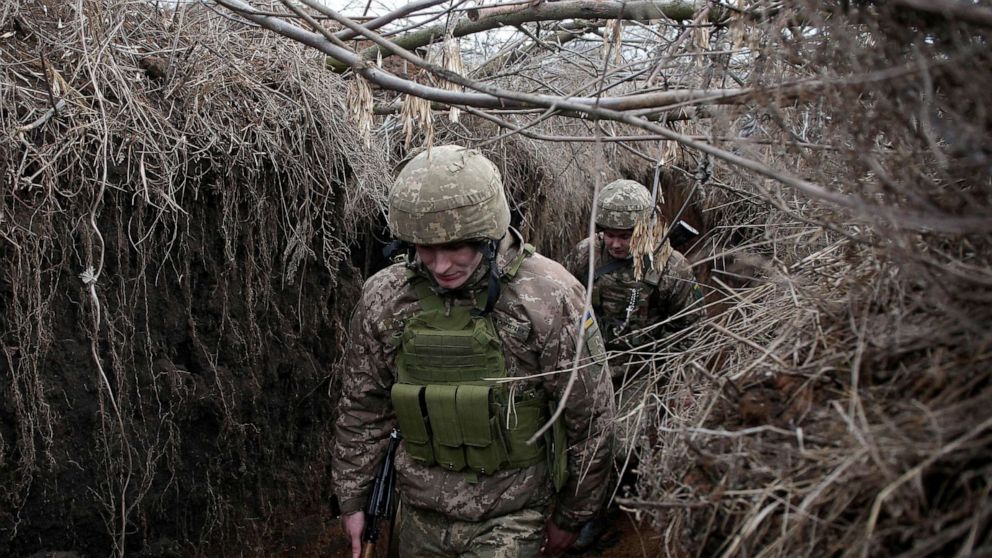
As the war rages in Ukraine, what's next? Augusta University expert answers key questions
For a month now, the world has watched the invasion of Ukraine by Russian forces. The war has dominated news coverage since before the invasion, with journalists asking why Russia would invade a sovereign country and whether this could expand to an all-out war in Europe for the first time since World War II? There are still many questions to be asked, which is why we’ve enlisted Dr. Craig Albert, from Augusta University. Albert has been speaking extensively with the media answering key questions about the invasion. Q: How has Russia ramped up their war efforts and are the latest attacks a signal that they are going "all in" in taking over Ukraine? “Right now, Russia is still not fighting the war they are prepared for. In other words, they have a massive war-machine but are still only using small parts of it in this war. There are several reasons for this: they may not want to expose their hands to great powers; they may want to bring Ukraine back to the fold, so annihilating them, vis-à-vis, Grozny, might not be the best play. As it is, Russia is still poised to take Kyiv within a few months unless Ukraine has alliance boots on the ground, which is not likely since it will raise the specter of WWIII." Q: What do you expect we will see next? "I think we will most likely see the rise in dirty war tactics and techniques, with more mercenaries, more artillery bombardment, and more foreign fighters joining on both sides, especially former NATO special operations forces moving into the Ukraine International Legion, and well-paid Syrians on the side of Russia. With this increase in contract soldiers, we can expect more human rights atrocities and atrocities committed against soldiers as well as a relaxation of Geneva rules for armed conflict amongst combatants." Q. Do you expect to see Russia direct more cyber warfare the U.S. way? "I expect a steady, prolonged consistent cyber-conflict campaign waged by Russia against Ukraine and its allies, including the US. I don’t expect an escalation on this front at least at it applies to NATO forces. Russia is saving its most savvy cyberweapons for a possible larger-scaled conflict against a major power." If you’re a journalist looking to know more about what lies ahead as the war between Ukraine and Russia continues and how it may impact the United States, then let us help with your questions and coverage. Dr. Craig Albert is director of the Master of Arts in Intelligence and Security Studies at Augusta University. He is a leading expert on war, terrorism, and American politics. This is an important national and international issue. Albert is available to speak with media – simply click on his name to arrange an interview today.


Podcast: Russia expert discusses fears of Putin's 'madness' over Ukraine
Speculation that isolation caused by Covid-19 pandemic could have affected his state of mind Closest advisers said to fear for their lives if they speak out against him Potential scenarios considered include a ‘heart attack-style’ assassination of dictator by senior military and secret services. Two years spent isolating during the coronavirus pandemic have led to a debate that Russian President Vladimir Putin has gone ‘bonkers’, resulting in the invasion of Ukraine. There is now even speculation that only a “heart attack-style” assassination of the dictator by his senior military and secret services could prevent Putin from seeking to expand his borders even further. These themes were discussed by Dr Elisabeth Schimpfössl, a senior lecturer in sociology and policy at Aston University, and author of the award-winning book Rich Russians: From Oligarchs to Bourgeoisie. Dr Schimpfössl, speaking about the ongoing Russian invasion of Ukraine as part of the 'Society matters' podcast series, presented by journalist Steve Dyson, explained there were two reasons why Putin had decided to invade its neighbour. She considered two potential reasons behind the invasion: “The first is he has always had ambitions to incorporate eastern Ukraine and, particularly, keep NATO at bay and not have it anywhere so close to Russia’s own borders. The second thought is whether Putin might have simply lost it, in a clinical sense.” Dr Schimpfössl said Putin had been “extremely isolated” during the pandemic, with very few people allowed to see him in his “bunker”. She added: “It might well be, as bizarre as it sounds and unimaginable as it might be, that he is losing it and courting advice from people who have such fear of him that they would say what he wanted to hear.” While such madness is currently pure speculation, Dr Schimpfössl explained how people close to him would potentially “fear for their lives” if they contradicted him or alerted him to what a “crazy idea” war was. She said Russian Foreign Minister Sergey Lavrov, whose daughter lives in New York, had wanted to retire “years ago” but Putin would not let him. And she mentioned claims that the former head of Russia’s foreign secret service died from an apparent heart attack after he “pretty much messed up” the poisoning of double agent Sergei Skripal in Salisbury in 2018. She said: “It’s pretty obvious that similar fears were deep in the bones of all the closest entourage of Putin. They all know pretty well how the system works.” Dr Schimpfössl described reports on how opposition activists and investigative journalists “suddenly, suspiciously, jump off their balcony to their death. And they threaten people that if they don’t jump then their family will suffer”. She suggested that Russia’s billionaire oligarchs could have taken measures if they had seen what was coming. However, the European Union had now added oligarchs onto the sanctions list for the first time after being deeming them “Putin’s cronies” instead of business leaders. Dr Schimpfössl said: “Until Friday, Putin’s plan was to succeed within maybe a week and sanctions would have become effective in weeks, or months from now. Now things have changed and the EU sanctions have gone a big step further on.” She said it will be a “catastrophe” for Russia’s oligarchs now they are subject to sanctions. The only thing that could “save their skin”, she added, is if they create an image of being “anti-war, anti-Putin”. But would this help stop Putin? “Not if he’s completely gone bonkers, then nothing will stop him,” Dr Schimpfössl again speculated. “It makes him extremely dangerous in terms of his announcement of using nuclear weapons. It would be the maddest possible thing to do, but there is no guarantee anymore.” The only thing that could stop him, she hypothesised, was if Putin suffered the similar fate of a “sudden heart attack” following a “silent coup” by Russia’s top military and secret services, although it is pure conjecture that any such actions are being planned. Opinion polls in Russia suggest that only 40 per cent of the population support the action against Ukraine, compared to 80 per cent over the annexation of Crimea in 2014. Dr Schimpfössl said she hoped negotiations between Russia and Ukraine would lead to an agreement, but added: “We know from history when an aggressor sees itself being on the losing end, or things not go according to plan, they often lash out at the very last moment. Any escalation of the conflict could easily and very quickly get very cruel and barbaric.” Episode 1 in series 3 of the ‘Society matters’ podcast and all previous episodes can be found HERE.


Podcast: Germany’s caution over Russian aggression ‘disappointing’ NATO
Russia’s threat to Ukraine has highlighted differences between east and west Germans over handling of Russia, and the country’s cautious foreign policy Aston University academic explains why German soldiers shooting at Russian counterparts would be seen as a “tremendous failure” New Chancellor Olaf Scholz faces massive challenges including how to handle Covid-19, “crumbling” infrastructure, and climate change targets. Germany without its stalwart former leader Angela Merkel faces a number of huge challenges – not least the threat of Russia invading Ukraine. While Germany wants to provide leadership within the European Union, its diplomatic stance over Russia is at odds with many other countries within NATO. Those are the views of Dr Ed Turner, a reader in politics at Aston University, who was interviewed in the latest episode of the 'Society matters' podcast series, presented by journalist Steve Dyson. The episode, subtitled 'What Germany's new government means for the UK, Europe and Russia', follows a political shift following the departure of Chancellor Angela Merkel last year after 16 years in charge, after the defeat of her Christian Democratic Party. Dr Turner said the immediate priority for new Social Democrat Chancellor Olaf Scholz was “undoubtedly the crisis in Ukraine and the positioning of large numbers of Russian troops on Ukraine’s border, and the real worry that Russia will invade”. He said Germany wants the issue addressed, “but is doing so in a way that is really very cautious and is disappointing to many of Germany’s allies”. Dr Turner, who is also co-director of the Aston Centre for Europe, said Germany’s “very different approach” was reflective of its history with Russia. He explained: “There is a strong sense that Germany owes a significant debt, has a particular responsibility towards Russia for the losses incurred in World War One and, particularly, in World War Two. “The perception is that German troops once again firing at Russian soldiers would be a tremendous failure. Germany also places a strong emphasis on diplomacy as a way of engaging in foreign relations rather than hard military interventions.” There were also “economic angles”, he added, with Germany needing Russian energy at a time when it was committed to phasing out coal and nuclear power. Dr Turner, whose fascination with Germany began when he cycled through the country as a teenager, said a “carrot and stick” balance was dividing the country, with 68 per cent of west Germans but only 34 per cent of east Germans last year supporting EU sanctions against Russia. This reflected “really big disparities” more than 30 years after German reunification, with 60 per cent of east Germans feeling they are treated as second class citizens. Dr Turner said post-Merkel Germany faced big challenges including handling Covid-19, large parts of German infrastructure “really crumbling” with a big backlog of investment needed, and a pledge to move faster towards net zero emissions. But he added that UK-German relations in the wake of Brexit were not on the list of big things. “Good relations between the UK and Germany will depend on the nature of the UK’s relations with the European Union,” he said. “If the UK is at loggerheads with the European Union, in particular if there was a worsening of the situation in relation to the Northern Ireland protocol, then relations with Germany would get worse.” But Dr Turner said there was “huge affection” for the UK in Germany. “Germans are willing to disentangle the UK from Brexit and to say ‘we want to move on and don’t think badly of you’. I really want to see bridge-building between the two countries over the coming years.” Dr Turner said Germany remained “nervous” of the advance of the far right, especially if numbers of refugees coming to Germany were to grow. He said Angela Merkel would be remembered for Germany’s “humane response” to the 2015 refugee crisis, but others were “much more critical” over her policy. This, he added, led to German society becoming divided and the far right gaining ground. But Dr Turner acknowledged Mrs Merkel as a “remarkable leader who really broke the mould” as the first woman Chancellor and first from the east. In contrast, her successor is seen as a “steady hand on the tiller” as he heads a “traffic light coalition” of Social Democrats, Greens and Liberals. Episode 6 in series 2 of the ‘Society matters’ podcast and all previous episodes can be found HERE.

Senior lecturer at Aston University appointed as a Champion of the Microbiology Society
Dr Jonathan Cox, a senior lecturer in microbiology at Aston University, has been made a Champion of the Microbiology Society for the Midlands area, U.K. Microbiology Society Champions are members who help to raise the Society’s profile in their local area by initiating activities and events of their own or participating in Society-led events. They are appointed because of their passion for their subject matter and an enthusiasm to communicate it widely. Jonathan’s research interests surround the discovery of new antibiotics. He leads the Mycobacterial Research Group at Aston University, a multidisciplinary team spanning microbiology, biochemistry, molecular genetics, structural biology and drug discovery. The team’s main focus is to study the physiology of various pathogenic mycobacteria and to discover new ways to treat infections. He also teaches at Aston University and currently leads the teaching for first year microbiology on courses in biomedical science, biology and biochemistry, Jonathan also regularly engages with the press to comment on news stories and issues related to microbiology, infectious diseases and antibiotic resistance. He has been a full member of the Microbiology Society for 10 years and has already contributed in many ways, including hosting the Microbiology Society Roadshow at Aston University in 2021. He has also been featured in Microbiology Today discussing his research. Speaking of his appointment, Jonathan said: “Anti-microbial resistance (AMR) accounts for around 700,000 deaths per annum globally and that number is predicted to rise to 10 million by 2050. The current economic burden of AMR is estimated to be at least €1.5 billion per year in the EU. New antibiotics and an improved understanding of how to use them will help to slow the progression of AMR, saving countless lives in the future. “I am delighted to have been appointed as a Microbiology Society Champion and to use this opportunity to raise the profile of the Society and, in particular, the importance of research into AMR.”


Aston University and Alpharmaxim unite to revolutionise healthcare communications campaigns
Aston University has teamed up with Alpharmaxim Healthcare Communications to apply the latest behavioural psychology research to develop a unique prescribing behaviour tool for healthcare professionals. At present there is a growing recognition in the healthcare sector that measuring belief change and/or intent to change behaviour can determine the effectiveness of marketing campaigns. The Healthcare Belief-Barrier Identification Tool (H-BIT)will identify beliefs and barriers in prescribing behaviour of EU healthcare professionals in specific disease areas, enabling targeted communication strategies that maximise the reach of treatments. Alpharmaxim is a long-established specialist marketing communications agency in the healthcare sector that helps pharmaceutical companies create effective communication plans for their products or services. A Knowledge Transfer Partnership (KTP) is a three-way collaboration between a business, an academic partner and a highly qualified graduate, known as a KTP associate. The UK-wide programme helps businesses to improve their competitiveness and productivity through the better use of knowledge, technology and skills. Aston University is the leading KTP provider within the Midlands. This KTP will combine Alpharmaxim’s rich history of harnessing behavioural psychology through their Belief Continuum® (BC) model with Aston University’s expertise in Nominal Group Technique (NGT), a structured method for group brainstorming that encourages contributions from everyone and facilitates quick agreement on the relative importance of issues, problems, or solutions. Applying NGT to objectively evaluate beliefs and behaviours that underpin behavioural change in a defined disease area will be unique in this field. The academic team from Aston University will be led by Dr Carl Senior, reader in psychology at Aston University. Dr Senior is a behavioural scientist with 20 years’ experience working at the interface between social psychology and organisational behaviour and was one of the first to develop a framework for applying NGT to understanding effective behaviour change. Commenting on the project, Dr Senior said: “We are delighted to have this opportunity to work with Alpharmaxim in this strategic relationship to lead change that is both focused and relevant to modern day health care.” Dr Senior will be joined by Dr Jason Thomas, senior lecturer in psychology at Aston University. Dr Thomas has spent the last ten years investigating novel approaches to encourage behavioural change, working with companies such as Direct Line and Starbucks to encourage their employees and customers to eat more healthily. William Hind, founder, controlling director and agency principal at Alpharmaxim, said: “We are delighted to be involved with this innovative KTP and hope the partnership will change the face of healthcare communications, ultimately improving the lives of patients with hard-to-treat diseases.”


Aston University encourages SMEs to sign up to Innovation Workshops to support business growth
SMEs with a registered or trading address in Birmingham, Solihull, Redditch, Bromsgrove or the Wyre Forest are invited to attend The full series consists of three workshops hosted by academics from Aston Business School and Birmingham City Business School The workshops are part of the Innovation Vouchers scheme to help drive innovation and business growth SMEs with a registered or trading address in Birmingham, Solihull, Redditch, Bromsgrove, or the Wyre Forest have been invited to attend Aston Business School’s Innovation Workshops. The free1 workshops are part of the Innovation Vouchers project, which is part funded by the European Regional Development Fund. The full series consists of three workshops hosted by academics from Aston Business School and Birmingham City Business School on 2, 9 and 23 February 2022 running from 9.30 am to 5.00 pm at The Eastside Rooms in central Birmingham. The academics include Innovation Vouchers project director Professor Nick Theodorakopoulos and head of Aston Business School Professor Pawan Budhwar. The workshops are on three key areas: 2 February 2022: Envisioning Growth through Innovation 9 February 2022: Leadership & Strategy for Innovation 23 February 2022: Marketing for Innovation Attendees who attend all workshop sessions will receive a ‘Managing Innovation in Business’ certificate from Aston Business School. Nick Theodorakopoulos, professor of entrepreneurship development and Innovation Vouchers project director at Aston Business School, said: “The Innovation Workshops support small-and-medium sized businesses to build their capacity to innovate and grow. “Independent evaluations from the previous project phases have showed that workshops have a positive impact on attendees, resulting in substantial increases in gross value added and new job creation. “The staff who deliver the workshops are experts in their field with excellent industry experience. I would encourage businesses owners to attend the Innovation Workshops and grow their business.” Tickets for the Innovation Workshops are available HERE. Notes to Editors 1The workshops are free for eligible businesses. However, de minimis rules apply. The support we plan to provide through the workshops will comply with the State Aid rules using the de minimis exemption (in accordance with Commission Regulation (EU) No 1407/2013, OJ L 352/1). Under this exemption a single undertaking may receive up to the limit of €200,000 of De Minimis aid from the Member State within which it does business and which provides the aid over any period of three fiscal years. To attend the workshops, you will be asked to complete a Statement of Previous Aid received under the De Minimis exemption and arrange for a director of your business to sign it. Using this information we will assess your eligibility to receive assistance. About Innovation Vouchers European Regional Development Fund The project is receiving up to £803,273 of funding from the England European Regional Development Fund as part of the European Structural and Investment Funds Growth Programme 2014-2020. The Ministry of Housing, Communities and Local Government (and in London the intermediate body Greater London Authority) is the Managing Authority for European Regional Development Fund. Established by the European Union, the European Regional Development Fund helps local areas stimulate their economic development by investing in projects which will support innovation, businesses, create jobs and local community regenerations. For more information visit https://www.gov.uk/european-growth-funding Workshop Times and Dates All Innovation Workshops start at 9.30am and end at 5pm.

Brexit caused a large negative effect on UK trade pre-pandemic - new Aston University research
Professor Jun Du and Dr Oleksandr Shepotylo analysed the causal effect of Brexit on the UK’s services trade between 2016 and 2019 They found the UK experienced an average shortfall of £18.5 billion worth of services exports for each of those years Transport, Travel, Insurance and Telecom sectors experienced significant decline post-2016 No significant decline was found in other services including intellectual property, construction and financial. New research from economics experts at Aston University has found Brexit has caused a largely negative effect on UK services trade since the EU referendum. Professor Jun Du and Dr Oleksandr Shepotylo, from Aston Business School, analysed the causal effect of the Brexit referendum on UK’s services trade over the period between 2016 and 2019, in comparison to other major services exporters. They found the uncertainty associated with the UK-EU trade negotiations following the referendum caused harms to the UK services economy as a whole, reducing firms’ exports of services. This damages the competitiveness of services sectors which make up a lion’s share of the UK economy in terms of gross output, value-added and jobs. Professor Du and Dr Shepotylo used a Synthetic Difference in Differences (SDID) estimator to construct a counterfactual of the UK, had it not voted leave in 2016, to compare its services exports performance. This was done by comparing the actual performance of the UK with the modelled performance of a country that looks much like the UK, but did not vote to leave the European Union. They found Brexit resulted in the UK experiencing an average shortfall of £18.5 billion worth of services exports every year between 2016 and 2019 relative to what it would have been, had the UK remained in the EU. The impact varied considerably between different types of services. The UK’s exports in the category of transport, travel, insurance and telecom services saw a statistically significant decline following the referendum. No significant decline was found in business, intellectual property, construction, financial or personal, cultural and recreational services. In addition, Professor Du and Dr Shepotylo did not find evidence to suggest that UK businesses have redirected exports in services from the EU markets to those outside the EU, which is in contrast to exports in goods. The research suggested that Ireland has benefited significantly during this period, with growth in post-Brexit services exports up by £24 billion annually over 2016 to 2019 in the country compared to the counterfactual scenario if Brexit did not occur. This translates to 14.75% of Ireland’s 2019 total services exports, with growth clustered largely in the telecoms, business, intellectual property, and insurance sectors. Jun Du, professor of economics at Aston Business School, said: “Brexit marked a rupture in the highly integrated UK-EU services markets that had been developed during the UK’s membership of the single market. However, the UK’s strength in services was not reflected in the government’s ambitions for the sector in the EU-UK trade negotiations that followed the referendum. “There are other winners besides Ireland in some post-Brexit services areas. The Netherlands have increased considerably in ‘Business’ and ‘Intellectual Property’ exports. “Spain has seen growth in ‘Travel and transport’ services exports. Germany has gained in ‘Transport’, ‘Insurance’, ‘Telecom’ and ‘Intellectual Property’ services exports. While Ireland seems to have done exceptionally well in relation to the export of ‘Telecom’ services, a sharp contrast emerges to the lost exports not just from the UK, but also from the Netherlands, Switzerland and France.” Dr Oleksandr Shepotylo, a senior lecturer in economics, finance and entrepreneurship at Aston University, co-wrote the working paper and said: “UK services exports are 5.7% lower than they would be without Brexit. It reflects an overall decline of the UK as a place for doing business. “What economists tend to agree on is that the UK’s exit from the EU’s custom union and single market may have more significant impacts on services than goods, and more severe impact on post-Brexit regulated services than unregulated services. “It will take some time for the full impact of Brexit on UK services to emerge. Freedom of movement and data flow in some areas between the UK and EU could remain restricted. Stability, transparency and regulatory consistency in financial markets could be challenged. But new opportunities might surface. “Continued trade negotiations and dialogues regarding trade liberalisation are essential with the EU and large, fast-growing markets beyond Europe. Crucial to understanding these impacts will be reliable data and rigorous analysis. Our modelling of marked losers and winners in post-Brexit services trade provides new evidence for an open discussion of the post-Brexit trade in services.” You can read the full working paper HERE