
Experts Matter. Find Yours.
Connect for media, speaking, professional opportunities & more.
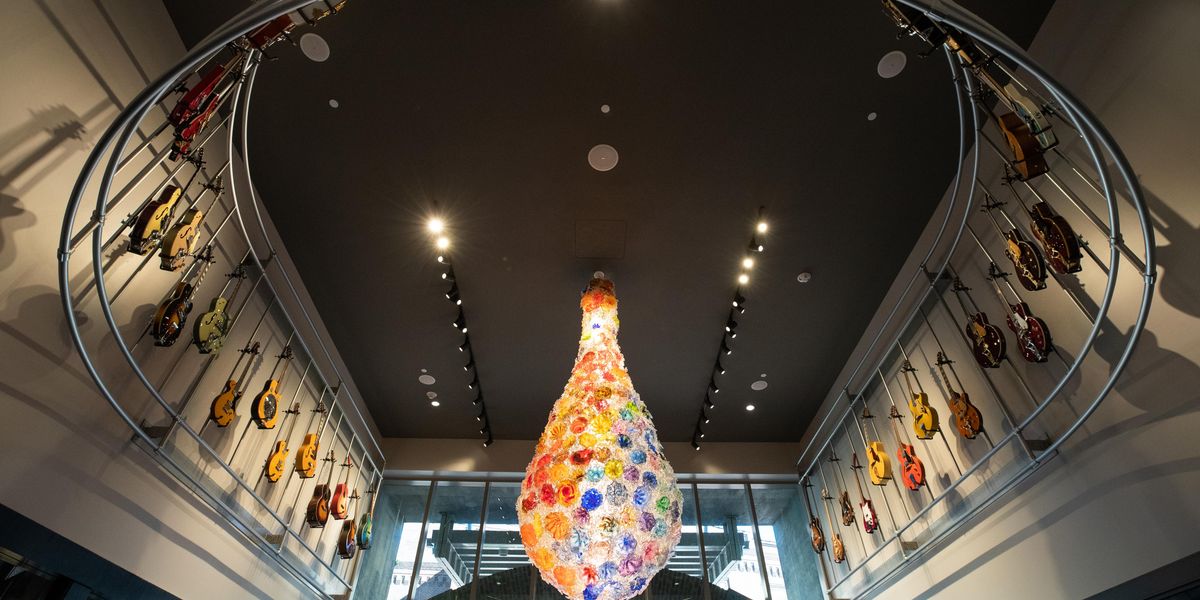
Striking a chord! New Savannah museum tells the storied history of Gretsch instruments
Drums, guitars, history, business and education have come together in a spectacular new interactive museum and exhibit in downtown Savannah that will pique the interest of any music lover. That Great Gretsch Sound! museum is a new destination where Georgia Southern University helps tell the story of a family-owned company that is still regarded as one of the music industry’s most influential and innovative instrument manufacturers. The permanent display of music memorabilia, highlighting more than 135 years of Gretsch instruments, is featured in District Live’s new lobby and performance space on the banks of the Savannah River. The museum is the latest addition to the Plant Riverside District. The museum’s opening was recently featured in Premium Guitar : The exhibit space highlights some of the most popular and unique pieces of Gretsch's historic catalog. The museum lobby features some of the most iconic instruments the company has produced, including the White Falcon™, the Chet Atkins® Country Gentleman®, a Brian Setzer Signature G6120, and a vintage 1963 Jet™ Firebird popularized by AC/DC's Malcolm Young. In the District Live performance hall, visitors will be treated to a visual timeline that will allow them to explore the evolution of Gretsch instruments dating back to the 1920s. Approximately 100 guitars are on display in the exhibit, 48 of which were recently on display in Nashville's Country Music Hall of Fame. The museum was developed through a special partnership between the Fred and Dinah Gretsch School of Music at Georgia Southern University and The Kessler Collection. In addition to the instruments that line the performance hall and upper section of the lobby, the museum features three sound dome displays with original videos that highlight Gretsch history, instrument production, the worldwide community of past and present Gretsch artists from Chet Atkins and George Harrison to Phil Collins, and the family's storied commitment to music education. Several other display cases take guests on a visual journey from Gretsch's beginnings as a local manufacturer of calf-skin drums, banjos, and accordions to one of the most popular and sought-after producers of guitars and drums during the height of the Rock & Roll era. Downtown Savannah is now helping tell that Gretsch story. The Gretsch museum includes Gretsch instruments and storyboards with QR code links to detailed narratives. "We hope this new museum will preserve the long history and legacy of the Gretsch Family and the Gretsch Brand," Dinah Gretsch said. "It is wonderful to share our history with the city of Savannah, the loyal Gretsch fans and all the tourists that will visit the museum." The museum's artifacts were curated and installed by Aaron Phillips, Georgia Southern's project curator for the Fred and Dinah Gretsch Artifacts Collection. Through his research to prepare the museum, he is confident that the Gretsch Museum will provide a unique musical experience. "My goal was to create a space that is expressive, inspirational, and true to the roots of the Gretsch family and community," Phillips said. "I am in awe of how this turned out!" To learn more – the full media release from Georgia Southern is attached below: If you’re a journalist looking to cover That Great Gretsch Sound! – then let us help. Aaron Phillips, Georgia Southern's project curator for the Fred and Dinah Gretsch Artifacts Collection is available, simply reach out to Georgia Southern Director of Communications Jennifer Wise at jwise@georgiasouthern.edu to arrange an interview today.


Recently, the expertise of Georgia Southern University’s researchers was featured in an in-depth piece by Business Insider Magazine. U.S. oncology company OncoTEX has made a significant leap in the future of cancer treatment. A part of the bioscience development portfolio The iQ Group Global, OncoTEX has licensed a gold compound platform technology, AuraTEX, that helps destroy cancer cells by using the body’s immune system. The gold-based compounds enter cancer cells and attack them from the inside. Through this process, the tumours are disrupted, and cancer cells are made visible, causing the human body’s immune response to kick in. With the immune system and gold compounds working together, killer T-cells and the drug destroy the remaining cancer. The futuristic technology was developed in collaboration with the University of Texas at Austin, Georgia Southern University, and Wright State University, before being licensed to OncoTEX. In the coming months, OncoTEX and the University of Texas at Austin will test the gold compounds in rigorous studies to learn more about the treatment and its potential in fighting various forms of cancer. December 16 - Business Insider The full article is attached. And, If you’re a journalist looking to cover this new research that Georgia Southern is a major part of - – then let us help. We have experts available to answer your questions - simply reach out to Georgia Southern Director of Communications Jennifer Wise at jwise@georgiasouthern.edu to arrange an interview today.
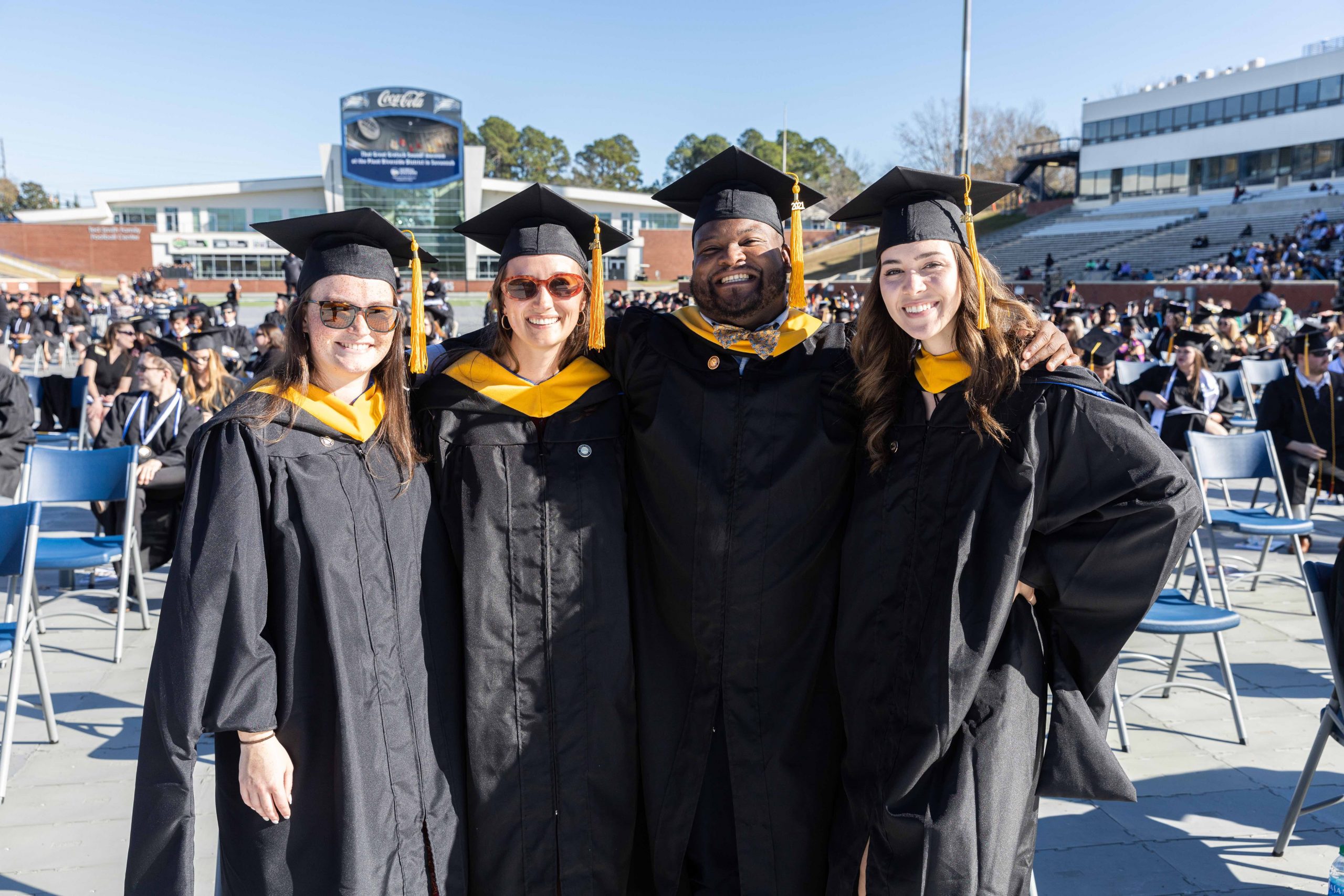
Hats off to the 2,100 graduates at Georgia Southern
Last week, approximately 2,100 undergraduate and graduate students from Georgia Southern University’s Statesboro, Armstrong and Liberty campuses received associate, baccalaureate, master’s, specialist and doctoral degrees in three Fall 2021 Commencement ceremonies. Georgia Southern President Kyle Marrero welcomed the graduates and their families to the University’s Fall Commencement ceremonies, held at the Savannah Convention Center in Savannah on Dec. 11, and the Allen E. Paulson Stadium in Statesboro on Dec. 13 and 14. He commended the graduates on their achievements and tenacity. “Graduates, I don’t need to tell you about your unique college journey, which has been challenging for all of us,” said Marrero. “I am very proud of how, together, we have persevered allowing us to have a successful semester and today, our commencement ceremony. You, our graduates, deserve great recognition.” During the Savannah ceremony, Georgia’s 2022 Teacher of the Year Cherie Dennis (Armstrong ‘10), who teaches English to Speakers of Other Languages at Hesse K-8 School in Savannah-Chatham County Public Schools, addressed the packed house with a call for kindness. “My hope for you is that you go out into the world with your eyes and your hearts wide open,” she said. “That you go out into the world and make something beautiful out of its cracks and imperfections. A world that is bound together by the irrefutable strength and integrity of kindness. Be the repairers of the world; the menders of the world; the bridge builders; the constructive, contributive citizens who nurture communities large and small. And that may sound daunting, but really it all starts with something so very simple, something so very possible and within your reach. Something you knew how to do even as a child. Just being kind.” Sachin Shailendra, chair of the University System of Georgia Board of Regents and president of SG Contracting, Inc. in Atlanta, spoke at the first ceremony in Statesboro. “Georgia Southern – which in a few minutes will be your alma mater – is one of the shining stars among our 26 institutions,” he said. “It ranks as one of Georgia’s best comprehensive universities, with a growing reputation for research that impacts not only vital industries but the environment and our communities. The degree you earned lets everyone know you learned from outstanding faculty, top staff and talented fellow students. “The opportunities ahead of you are many. I know this because of my own experience. I was born in Georgia, but my father was not. I am only a generation away from the farmers my family were in India. Education has been a game changer for both me and my family, and I know it’s a major accomplishment for many of you. I hope your degree will inspire you to take the next steps in building your future. So go out into the world and create a worthy future, not only for yourselves, but one that will represent Georgia Southern, our entire university system, and this state as well…Your education has already changed you. It also has the power to change your community, and move our state forward in exciting ways.” To read the full release please see the attachment below. This is a great moment for Georgia Southern University and if you are looking to learn more about this year's graduating class or the school - then let us help. Simply reach out to Georgia Southern Director of Communications Jennifer Wise at jwise@georgiasouthern.edu with your questions or to arrange an interview today.

With mask wearing and social distancing on the decline and the cold and flu season upon us, researchers have developed a viral panel that enables the simultaneous testing for SARS-CoV-2 along with numerous common respiratory viruses, that tells us whether other viruses also are at play in patients hard hit by COVID. This new genetic epidemiology tool that provides detailed genetic information about the viruses present when packaged with a molecular immunology model called Nextstrain also enables researchers to assess the novel viral variants that are circulating in a state or nation and patterns for their spread with the goal of helping predict and mitigate future outbreaks, says Dr. Ravindra Kolhe, director of the Georgia Esoteric and Molecular Laboratory, or GEM Lab, at the Medical College of Georgia at Augusta University. Deficits in SARS-CoV-2 monitoring and keeping tabs on other co-circulating respiratory viruses have been public health challenges during the pandemic, Kolhe and his colleagues report in the journal Viruses. Coinfection is a reality, Kolhe says with these respiratory viruses that we unwittingly transmit through the air when we cough, sneeze, even talk, particularly when we are in close quarters for long periods like hospitals, nursing homes, schools and potentially even our workplace. Another reality is that coinfections can have the compounding effect of worsening symptoms and outcomes, much as we have all heard that co-morbid conditions like diabetes and hypertension can do, he says. Particularly when patients are not doing well, looking for other respiratory viruses with the new panel could help provide insight on why and possibly new directions on how to help, he says. The more expansive panel is more expensive than straight COVID testing, which will remain the frontline test in this pandemic, Kolhe predicts. While the cold and flu season were essentially a wash last year because of COVID precautions like mask wearing — in fact the coinfection rate in the group they studied was under 1% — he and others are concerned the cold and flu season now upon us will be very different even with vaccination initiatives for both COVID and the flu. We’ve attached the full article – and it is well worth reading given the timing of flu season and another potential wave of COVID emerging globally. This is a fascinating topic and if you are a journalist covering the latest advancements in the effort to contain and eradicate COVID-19 – then let our leading experts help with your coverage and questions. Ravindra Kolhe is a Molecular and Genetic Pathologist, involved in identifying and validating cutting-edge platforms for diagnostic medicine. He’s also the Director of the Georgia Esoteric & Molecular Laboratory at Augusta University. If you are looking to arrange an interview with Dr. Kolhe – simply click on his icon now to find a time to talk today.


/cloudfront-us-east-1.images.arcpublishing.com/gray/EQ34NHJNIVCAVDO6SOO4FDJHRE.jpg)
As America continues down the long road of adapting, adjusting, and advancing safety efforts in order to overtake COVID 19 – vaccinations have now been approved for children five and older. It’s welcome news for health care experts and epidemiologists – but there’s no doubt this most recent development has parents concerned about the safety and potential consequences children could face if they roll up their sleeves to get immunized. Since this next step was announced, it’s gotten the attention of media and parents from across the country. Augusta University experts have been front and center to help with the messaging. The vaccine rollout for kids ages 5 to 11 starts now. Right now, local hospitals and pediatric offices are working to get doses to the river region. For the past nine months, we’ve seen different rollouts for different age groups come through Augusta University Health’s mass vaccination site. AU Health says it’s still up in the air right now whether this will be the main site you’ll bring your kids to get vaccinated. But what we do know is that 1,200 doses are on the way. “Every single individual has been paramount in this response,” said Dr. Joshua Wyche, AU vaccine coordinator. AU Health officials say they aren’t even close to accomplishing their mission to get everyone vaccinated. “We’re very fortunate to have caregivers that care so much about their community that want to make this impact and continue to push through during this pandemic,” Wyche said. November 03 - WRDW/WAGT Augusta An update from the CDC: kids can start rolling up their sleeves to get their COVID-19 vaccine. This means nearly 30 million American children ages five to 11 are now eligible for the vaccine. That's a little under 1 million in Georgia and 450,000 in South Carolina. But some parents still have concerns about the vaccine's safety. “For the vast majority of people and for parents as they’re looking for how they can protect they’re children best from COVID-19, having access to the vaccine now gives them another tool to protect their child,” says Augusta University Strategic Planning & Pharmacy VP Dr. Joshua Wyche. November 03 – Fox News Child vaccinations are an important topic – and it is essential that accurate details and information are shared with media and parents across the country, and that’s where Augusta’s experts can help. Dr. Joshua Wyche is accomplished pharmacist with an extensive background in business management. He is an expert in strategic planning and pharmacy services. Dr. Wyche is available to speak with media regarding this important topic – simply click on his icon now to arrange an interview today.

Prices are going up, shipments are being delayed and there are shortages of good and essential parts and pieces hindering almost every aspect of industry and manufacturing across America. The topic is getting attention from media outlets across the country as retailers and shoppers adapt to the problem. Hasbro Inc (HAS.O) said on Tuesday global supply chain disruptions cost it about $100 million in lost toy orders in the third quarter, and the company warned of a further hit to sales during the crucial holiday shopping season. While demand has surged over the last year, factory shutdowns, a lack of container ships and long port delays have fueled fears of a shortage of toys to put under Christmas trees during the holiday season. October 26 - Reuters Amazon on Monday reassured shoppers and industry watchers that it’s well-prepared to avoid supply-chain challenges during the holiday season. In a blog post, Amazon said a combination of planes, trucks, ships and delivery vans, along with staffed-up warehouses, has put it in a good position to “get customers what they want, when they want it, wherever they are this holiday season.” Retailers are entering what’s poised to be a particularly challenging holiday shopping period, due to existing supply-chain woes, inflationary pressures and labor shortages. Several factors are behind the issues, including skyrocketing shipping container costs and container shortages, Covid-19 outbreaks at shipping ports, as well as a shortage of workers needed to unload containers and handle goods at warehouses. October 25 - CNBC The United States is facing a supply chain crisis that it has never seen before. Some are blaming COVID, trade deals and shipping. The issue is causing serious trouble for America’s already fragile economy. If you’re a journalist covering this important topic let our experts help with your questions and stories. Georgia Southern University's Jerry Burke, Ph.D., is a professor in the Department of Logistics and Supply Chain Management. Burke researches manufacturing and service operations. He is available to speak with media regarding this important issue - simply click on his icon now to arrange an interview.

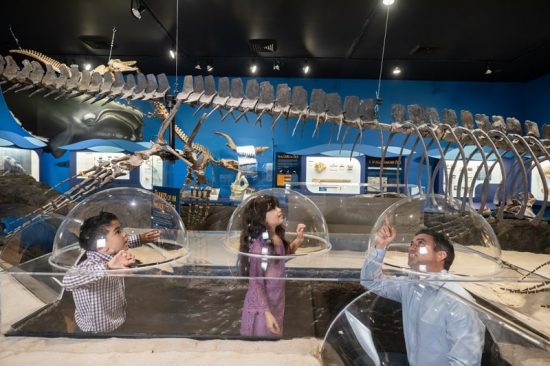
Georgia Southern University Museum reopens just in time to celebrate Earth Sciences Week
After nearly three years and following extensive architectural renovations, the Georgia Southern Museum, one of the longest-standing educational centers on the University's Statesboro Campus, has reopened. "It has been a long project, but well worth the journey," said Georgia Southern Museum Director Brent Tharp, Ph.D. "The upgraded facility and newly designed galleries represent a new era for the museum. Visitors will still find old friends, like the mosasaur, but exhibited in new more exciting ways, and will make new discoveries with never before exhibited artifacts in expanded permanent exhibits preserving the area's culture. We are really excited to be back open to the public." The Georgia Southern Museum serves as the premier institution interpreting the natural and cultural history of Georgia's coastal plain. The museum displays permanent exhibits and changing exhibits curated by the University's faculty and students, and provides a place where researchers can explore its collections and students of all ages can learn. As part of its reopening celebration, the Museum will recognize Earth Sciences Week with events featuring social media videos and interactive displays by Georgia Southern students, faculty and alumni. Highlighted events for Earth Sciences Week include: Oct. 12 - Earth Observation Day Oct. 13 - National Fossil Day Oct, 14 - Geoscience for Everyone Day Oct. 15 - Geologic Map Day Oct. 16 - International Archaeology Day Admission to the museum is $4 per person; however, for a limited time the museum also will accept donations for admission. Children 3 years of age and younger, museum members, and Georgia Southern students receive free admission. If you’re a journalist looking to cover Earth Sciences Week or talk to any of the many experts at the museum – then let us help. The researchers behind this study are available, simply reach out to Georgia Southern Director of Communications Jennifer Wise at jwise@georgiasouthern.edu to arrange an interview today.

It’s a topic that gets a lot of attention, people getting out of prison and returning to normal life. It’s a hard story to tell as there are so many challenges, obstacles to overcome and stigmas to break as those who have served their time and are looking to fit back into the life they used to know. Recently, Georgia Southern’s Maxine Bryant, Ph.D., was interviewed by the Savannah Morning News for "When is the debt paid? Formerly incarcerated individuals face challenges with re-entry." Here’s an excerpt: According to Rehabilitation Enables Dreams, or RED, a nonprofit restorative justice program based in Atlanta, Georgia, two out of three people released from prison in Georgia are rearrested within three years. Landing employment is only one of the issues formerly incarcerated people face in efforts to reintegrate into society. Finding shelter and earning an education are, in many cases, equally difficult, said Maxine Bryant, Ph.D., assistant professor in Georgia Southern University's Department of Criminal Justice and Criminology. “What I think is missing is addressing the trauma that many people find themselves behind bars have been subject to before going to prison,” Bryant said." October 04 - Savannah Morning News If you are a journalist and would like to learn more about this program or this topic – then let our experts help. Maxine Bryant’s research interests focus on factors contributing to the successful community reintegration of released prisons. Specifically, she has written and presented on transitional jobs for newly released prisoners, the role of the Black church in successful offender reintegration, the impact of unaddressed childhood trauma and barriers to successful offender reintegration. She is available to speak with media any time – simply click on her icon to arrange an interview today.

It is in the news daily the awareness campaigns are everywhere – but for Spanish-speaking Americans, a lot of the information on COVID-19 and vaccination efforts against the disease weren’t reaching home. That was leaving a large swath of the population unprotected against the virus. Pastor Angel Maestre takes to the airwaves for his radio show, 97 Oasis, each week, speaking about faith to his Spanish-speaking audience. When COVID-19 vaccines rolled out, he began including teachings about health and science. “It was my duty as a leader,” Maestre says. Vaccination rates among the Hispanic population were extremely low at the time. In Richmond County, less than 10 percent of this community was vaccinated. Maestre partnered with Dr. Jose Vaszquez, an infectious diseases physician at Augusta University Health. Vazquez began appearing on Maestre’s radio show. He also spoke and answered questions at Maestre’s church, Centro Cristiano Oasis de Bendicion. “The Hispanic community has been one of the toughest communities to get vaccinated,” Vasquez says. “They’re not anti-vaxxers. But, most of the education put out there is in English. A lot of it is not in Spanish. So, they didn’t understand.” According to Vazquez, the top three concerns among the Hispanic community were that the COVID-19 vaccine contained fetal tissue, caused infertility and could result in undocumented immigrants encountering problems with immigration authorities. “They thought if we took their name and number, that ICE or immigration would come and take them, which is not true.” Vazquez eased concerns, and vaccination rates increased quickly. “I’m proud to say because of our outreach programs with some of our partners, specifically going through the churches, that it has actually increased to 30 to 35 percent.” Are you a journalist looking to know more about how COVID-19 is impacting Hispanic communities and what else can be done to ensure every person in America has access to vaccines? That’s where Augusta University can help. Dr. Jose Vazquez, division chief and professor of medicine in the Medical College of Georgia, is an expert in the realm of infectious diseases. He studies and treats infectious diseases, including antibiotic-resistant superbugs and fungal infections. He has been a reliable source for local, statewide and national media regarding the coronavirus outbreak. Dr. Vazquez is available to speak with media regarding this topic – simply click on his icon to arrange an interview.

Who knew that all those posts about what’s cooking and what’s for dinner could lead to a burgeoning belly? It’s a surprising finding that researchers at Georgia Southern University have discovered – and it’s getting attention from American and international media. Researchers at Georgia Southern University in the U.S. recruited 145 students and split them into two groups. Both were given plates of cheese crackers to nibble but half were told to stop and take a picture first. Immediately after eating them, volunteers were asked to rate how much they liked them and whether they wanted more. The results, published in the journal Appetite, showed those taking snaps of the crackers scored higher in terms of enjoyment and wanting seconds. Picture-taking, researchers said, seems to change the way the brain perceives food and increases the craving for more calories. They wrote: ‘Memories of food and the act of recording consumption can affect how much we eat. "Our results indicate picture-taking leads to greater wanting of the food following consumption. "The effects were most noticeable in volunteers given smaller portions – six crackers instead of 12. Researchers warned: "Those seeking to eat smaller portions, especially of tempting foods that they want to cut back on, should avoid taking pictures of what they are eating." October 03, Daily Mail If you’re a journalist looking to cover this research or learn more for a story – then let our experts help. The researchers behind this study are available, simply reach out to Georgia Southern Director of Communications Jennifer Wise at jwise@georgiasouthern.edu to arrange an interview today.