
Experts Matter. Find Yours.
Connect for media, speaking, professional opportunities & more.
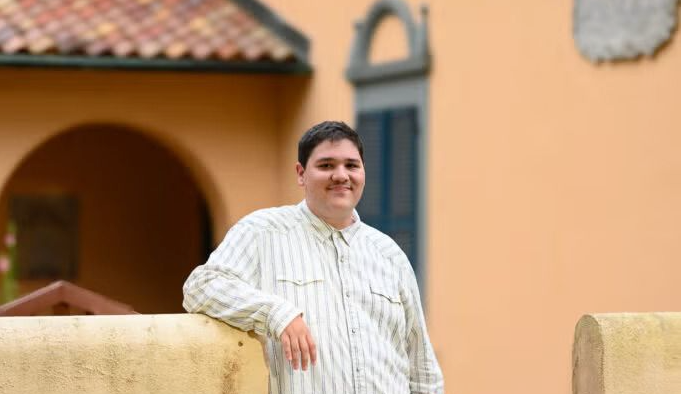
A future in pharmacy, made possible by support and mentorship
A freshman chemistry major from Hinesville, Georgia, Geovanii Pacheco already has his sights set on a career in pharmacy. His ambition is rooted not just in a love for science, but in personal experience. Growing up, his family spent countless hours navigating prescriptions and insurance coverage for his older brother, Devin, who has autism. During those moments, one pharmacist consistently stood out. This was someone who advocated for his family, helped them through paperwork and made sure Devin got the medication he needed. “It really resonated with me,” Pacheco said. “As a pharmacist, I’d like to embody what she did for us, for others as well.” That goal brought Pacheco to Georgia Southern University where he is now supported by the National Science Foundation’s S-STEM Scholarship Program Award. This is a nearly $2 million grant designed to support Pell-eligible students pursuing degrees in biochemistry, biology, chemistry, geosciences, mathematics, physics or sustainability science. For Pacheco, the program has been nothing short of life-changing. “I can say that I’m not going to college with any financial stress,” he said. “I have no money coming out-of-pocket.” Administered through Georgia Southern’s College of Science and Mathematics, the federally funded program provides last-dollar scholarships that cover remaining costs after Pell Grants and other aid are applied. In addition to financial support, the program pairs students with dedicated faculty mentors and offers structured programming aimed at retention, professional development and long-term success. Sara Gremillion, Ph.D., professor of biology and principal investigator on the grant, said the goal is to ensure that students don’t just enroll in college, but that they also thrive once they arrive. “They may not have a strong expectation about what to expect in college,” said Gremillion. “This program not only removes financial barriers, but it also surrounds students with the support they need to navigate college and plan for their future.” Pacheco has felt that impact from day one. Thanks to the program, he moved into his residence hall a week early to attend a one-week Basebamp program to jump start his college experience. There, he met fellow scholarship recipients and connected with his faculty mentor before classes even began. His mentor, Shainaz Landge, Ph.D., associate professor of chemistry, has helped connect Pacheco with opportunities from joining the Student Affiliates of the American Chemical Society to learning about upcoming pre-pharmacy organizations and undergraduate research. “Students such as Geovanii serve as prime examples of the fulfillment derived from mentorship and teaching,” said Landge. “Their growth and engagement highlight the critical role that effective mentorship plays in fostering both academic development.” That blend of mentorship and financial support is exactly what the grant was designed to provide. Over five years, the program will serve dozens of students in eligible majors such as chemistry, biology, biomedical science, biochemistry, physics, mathematics, sustainability science and geoscience. Each student receives individualized scholarship support, up to $15,000 per year, based on need, along with a faculty mentor who stays with them throughout their undergraduate journey. For Pacheco and his family, the scholarship brought immediate relief. He vividly remembers opening the acceptance email with his mother and scrolling down to see the financial aid details. “She was tickled, let me tell you,” he said. “It lifted so much stress off her shoulders. It was life-changing.” Applications to be part of the next cohort of COSM S-STEM Scholars are open until Feb. 1, 2026. Eligibility requirements, necessary documentation and other information can be found at this webpage. Looking to know more about Georgia Southern University or the National Science Foundation’s S-STEM Scholarship Program Award? Simply contact Georgia Southern's Director of Communications Jennifer Wise at jwise@georgiasouthern.edu to arrange an interview today.

Two rising cancer researchers from ChristianaCare’s Cawley Center for Translational Cancer Research were recognized for outstanding scientific contributions at the University of Delaware’s Annual Biology Research Day Conference on January 30, 2026. The awards highlight the strength and impact of colorectal cancer research underway at the Cawley Center. Anh Nguyen, a third year Ph.D. student, received the conference’s first place poster award for his project, “FGF19/FGFR4 Axis: A Key Driver in Tumor Growth and Treatment Resistance in Colorectal Cancer.” His research explores a signaling pathway that may lead to new strategies for targeting treatment resistant disease. Molly Lausten, a fifth year Ph.D. student, earned third place for her presentation, “Investigating the role of miR 27a 3p in the WNT signaling pathway and chemoresistance in colorectal cancer stem cells.” Her work examines a key microRNA that may influence resistance to therapy, a major challenge in treating aggressive tumors. “These awards reflect far more than individual excellence,” said Bruce M. Boman, M.D., Ph.D., MSPH, FACP, senior scientist and director of Cancer Genetics at the Cawley Center. “They show the power of rigorous, curiosity driven science to move the field forward. Molly and Anh are tackling some of the hardest questions in colorectal cancer, and their success speaks to the innovative environment we are building at ChristianaCare. I could not be more proud of their achievement and their commitment to improving outcomes for patients.”

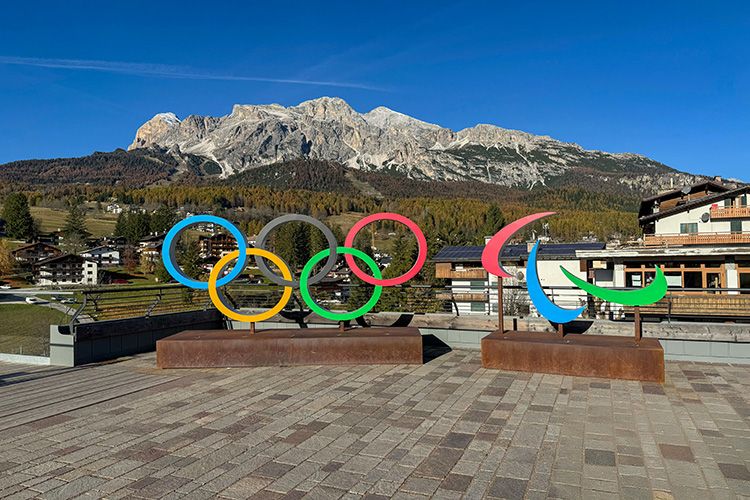
Long proclaimed Italy’s “moral capital,” Milan is renowned worldwide for its significant contributions to fashion, design and the arts. Soon, another point of pride will be added to the city’s storied history, when the regional hub—and partnering town Cortina d’Ampezzo—plays host to the 2026 Winter Olympics in February. Luca Cottini, PhD, is a professor of Italian Studies and an expert on the evolution of Italian culture, particularly through the 19th and 20th centuries. Recently, he shared some thoughts concerning Milan and Cortina’s successful joint bid for the Olympics, the themes and iconography expected to define this year’s opening ceremony and the symbolic significance of Italy’s selection as a host nation. Question: What was the role of past major events in Milan and Cortina—like the 2015 World’s Fair and the 1956 Winter Olympics—in helping to elevate their appeal for these games? Luca Cottini: I’ll start by saying that although people notice world’s fairs less than the Olympics, they are more impactful to a city and country because they generate more revenue, business, political relationships and positive reputation. They are events in which all the world comes together and each country exposes its excellence, while the host nation brings a visibility that it would not carry otherwise. In 2015, Milan hosted the world’s fair, which generated a completely new fairgrounds area and a visibility of politics, industry, technology and modernity in a way that brings the city to a global stage. I would say that is when the ascent of Milan really started, especially as a desirable destination. With Cortina, after the 2015 World’s Fair—and especially after the COVID-19 pandemic—the Dolomites became really a popular region for travelers to visit. Cortina is also symbolic to Olympic history, because it's the site of the first Olympics that took place in Italy, in 1956 during the reconstruction era. That was the Dolce Vita period, in the middle of the 1950s economic boom, and those games were followed by Rome’s Summer Olympics in 1960. They both represented a way in which Italy, coming out of the war destroyed, was reaffirming its rebirth. Over the years, fewer cities have wanted to host the Olympics because they tend to carry a lot of economic burden, financial debt and little return on investment. In this sense, Milan and Cortina, helped by increased popularity after the world’s fair, sold themselves as a sustainable Olympics. Ninety percent of the buildings were refurbished from older buildings, and they will serve purposes after the Olympics. It’s difficult to tell whether it’s economically sound or not, but it is a way to promote two cities that are in big moments of growth. Q: These Olympic Games will be celebrating Milan’s contributions to fashion. What is the city’s significance to the fashion world? LC: Milan is certainly the capital of fashion in Italy, and is one of the capitals of fashion in the world, along with Paris, New York and London. The fashion heritage that the city carries now in iconic brands like Armani, Versace, Moschino and Dolce & Gabbana is the outcome of a process that took shape in the late 1970s. Until then, fashion in Italy was mainly related to Rome, through cinema, and Florence, as that city represented a new Renaissance in the postwar years. But in the 1970s, much of this fashion world moved from those cities to Milan, because there was a conglomeration of labor, skills, capital and creativity that generated a complex productive and cultural system, or the so-called “Sistema Moda.” This is a particular approach to the industry in Italy that coordinates management and creativity around the figures of a big creative director and a big manager who work together in creating not just nice styles, but also sustainable outlets and markets in and outside Italy. In turn, with its reputation, Milan gives the Olympics that seal of grandeur and coolness. The connection with fashion and promotion of uniqueness is part of the national rhetoric that surrounds what we call “Made in Italy,” this idea of luxury, styling, beauty, order and measure that is endowed in the Italian DNA. Q: Andrea Bocelli—who also appeared in Torino’s 2006 closing ceremony—is supposed to sing once again in this year’s opening ceremony. Aside from his popularity, what is the symbolic significance of his selection as a performer? LC: Bocelli is an interesting case. He is a prototypical Italian success story, which is born in the peninsula but is then ratified outside of Italy. As Bocelli became a global sensation in the U.S., he then came back to his roots in Italy, where his voice has become a symbol of national unity, as epitomized in his solo concerto of Milan, during the pandemic, when he sang in front of the empty Piazza del Duomo, facing the city’s cathedral. In his Catholic faith and secular operatic repertoire, he symbolizes Italian culture as a similar piazza or open space where different voices can converge in a temperate balance. When you put together Bocelli, Mariah Carey and whoever else will be part of the ceremony, that same Italian identity will give rise to a new synthesis, as the encounter of tradition and novelty, grounded-ness and openness. Q: The Olympic flames are supposed to be lit in two cauldrons—one in Milan and one in Cortina—each with a design inspired by Leonardo da Vinci. What was da Vinci’s importance to Milan, specifically? LC: Da Vinci is part of the fabric of Milan. He spent 20 years in the city, painting “The Last Supper” and working at Castello Sforzesco, as well as many other places. His footprint is all over Milan, in its design, walls, canal system and more. He is an archetype of the Italian mind in as much as it represents the combination of engineering and beauty. The word Ingenium in Latin, meaning “genius,” overflows in English into the word “engineering” and also “ingenuity,” which reflects the creative mind. Da Vinci represents the synthesis of Italian Ingenium as a combination of aesthetics and problem solving, which you still see in the city today.


Six University of Delaware online graduate degree programs are ranked among the best in the nation by U.S. News & World Report in its 2026 U.S. News Best Online Programs, released Jan. 27, 2026. Both UD’s online master’s in education and online MBA ranked among the top 10% of their respective programs, at No. 25 and 26, respectively. Announced on Jan. 6, the online MBA program recently rose nine spots to No. 32 in the Poets&Quants 2026 Online MBA rankings. UD’s online master’s in nursing program ranked No. 35 out of 209 programs, rising 99 places over the past year. New for UD, the online master’s in educational/instructional media design program was recognized by peers at No. 11 in this education specialty ranking. UD’s online master’s in computer information technology program and online master’s in engineering ranked No. 64 in their respective areas. “These latest rankings recognize the expertise and dedication of our faculty and staff in delivering UD’s outstanding online graduate programs,” Interim Provost Bill Farquhar said. “We are committed to continually enhancing these programs and all the transformative opportunities that enable our students to meet their educational and career goals throughout their lives.” U.S. News selects several factors, known as ranking indicators, to assess each program in the categories outlined above. A program's score for each ranking indicator is calculated using data that the program reported to U.S. News in a statistical survey and from data collected in a separate peer assessment survey. This year’s edition evaluates more than 1,850 online bachelor’s and master’s degree programs using metrics specific to online learning. The rankings include only degree-granting programs offered primarily online by institutions with accreditation from recognized commissions. While the overall rankings methodology remains largely unchanged, U.S. News reported increased participation in this year’s data collection cycle, with more programs submitting statistical data and completing peer assessment surveys. According to U.S. News, this broader participation may reflect continued growth in online education nationwide. The University of Delaware offers over 35 online credit and non-degree professional programs. An online program from UD offers the same quality and rigor as an on-campus program and provides the flexibility to accommodate your busy schedule. UD is accredited by the Middle States Commission on Higher Education, and its online and on-campus degree programs have rigorous curricula delivered by experts, offer affordable program options, and provide students access to student support services, career fairs, recruiting opportunities and graduation ceremonies to celebrate student success. “UD's high-level rankings are in large part due to the positive outcomes that our students experience as a result of taking one of our online degrees or programs,” said Associate Provost for Online Learning and Innovation George Irvine. “Students tell us how much they enjoy learning from our accessible faculty and doing so in engaging and interactive online courses.” For more information about UD’s online degree programs, visit online.udel.edu. A complete listing of UD’s high-profile rankings is available on UD’s Institutional Research and Effectiveness Rankings webpage. Please note that the programs and specialties used in rankings may differ slightly from the names of UD’s degree programs.


Streaks of white that coat roads and cars. Powdery footprints smudged into floors. It’s the time of year when much of the United States relies on road salt to keep ice at bay and accepts the nuisances that come with it. But beyond the inconvenience, all that salt has potentially serious, long-term effects on the environment, human health and infrastructure. Steven Goldsmith, PhD, an associate professor of Geography and the Environment at Villanova University, researches topics in watershed biogeochemistry and environmental health. A focus of his lab is the study of de-icing practices on water quality. Recently, Dr. Goldsmith shared insights from his work, exploring the widespread consequences of road salt and potential solutions to reduce its harm. Question: You have led or participated in research focused on the environmental impacts of road salt application, often locally, but with much broader implications. What have some of those studies found? Steven Goldsmith: In 2022, we published a paper showing that salt—sodium in particular—is seeping into Philadelphia's water supply, and it's timed with snow melts. We found that if you drank a glass of tap water during the peak period in the winter of 2018-19, your sodium intake would be six times what the Environmental Protection Agency (EPA) recommends within a glass of water for someone on a low-sodium diet. We are susceptible in this region because most of our water supply comes from rivers, and the rivers receive that salt runoff. Some of our findings indicate this is a chronic issue and not limited to winter months. All that contaminated shallow groundwater causes the concentration to rise year-round, even in the summer. In a recent paper, we discuss the issue of salt that lands on the side of the road. When it does, it infiltrates into soil, and then it goes into shallow groundwater before entering our streams. Oftentimes when salt is applied to the road and you receive that initial precipitation, you are left with runoff with salinity near the concentration of sea water, which is very bad for freshwater organisms. Q: Have those studies found other impacts beyond those created directly by sodium? SG: It’s certainly not just a sodium issue—it's also a chloride issue. Chloride does have a negative impact on aquatic organisms, but it can also corrode drinking water infrastructure. If you have lead pipes in that infrastructure, that can lead to a range of human health issues. Even just to prevent those problems, applying chemicals to protect from the corrosion of pipes increases costs. Perhaps the worst part is when road salt infiltrates shallow soil and groundwater, the sodium is left behind preferentially in soils because it's displacing other positively charged elements, which could then go into groundwater. The elements it replaces are metals. If we have more salt runoff on the side of the roads, chances are, if we look in those streams, we are going to see higher concentrations of heavy metals like copper, zinc and even lead. Q: You have mentioned the efficacy of brine. What is brine and why is it more effective than traditional road salt? SG: If you’ve ever driven behind a rock salt truck, you probably noticed it pelts your windshield and shoots salt everywhere. A lot of that rock salt ends up following the natural trajectory of the road, which is designed to drain towards the sides to keep water from pooling. As soon as a snowstorm happens, it's going to melt and flow into the storm drain. That, of course, is bad for the environment, but also doesn’t help remove ice from the road. With brine, the application is a diluted road salt with water mixture that is usually about 23 percent sodium chloride by volume, and it’s referred to as an “anti-icing” measure. The saltwater infiltrates the top layer of pavement and embeds in the roadway itself, which keeps ice from crystallizing when snow or water hits the surface. To use an analogy, let’s say you have a large rock that you placed on top of the pavement, but you also have a quarter of that rock’s volume in sand. If you put that sand onto the pavement, it will permeate into nooks and crannies. That's the same idea here: use less material and in a way that makes it stick better to the surface and reduces the need to reapply as often during and after storms. Q: What are potential positive impacts if municipalities switch from road salt to brine? SG: There are limited studies on this, but it's been shown that if done properly, brining can reduce salt runoff into streams by anywhere from 23 to 40 percent. If it's 40 percent, you have almost cut the problem in half, and that lower peak salt concentration and runoff would have a profound positive impact on aquatic organisms that are downstream. From a cost standpoint—and I say this theoretically because there are other up-front costs associated with brining at the municipal level—if you reduce salt concentrations by up to 40 percent it means you apply a lot less and therefore spend a lot less. Q: What can individuals do to decrease road salt runoff, and how much of an impact does individual use have? SG: We can start by addressing the household salt application problem. Another one of our recent papers suggests that other impervious surfaces, like driveways, sidewalks and parking lots, are probably contributing even more than the roadway application. The best estimate is that individual or private contractor use could be over 10 times what you see on roads. For researchers, part of addressing this is trying to understand why people apply so much salt on their personal properties: are they afraid of lawsuits? Keeping with the Joneses? Are they not aware of ordinances that say you have to shovel within a certain number of hours, which would negate the need for salt anyway? For homeowners and other individuals, one proposed solution is to use a coffee mug’s worth of salt for every 10 sidewalk squares. Think of it as a “low-sodium diet” to make sure you’re not overapplying. It’s a way we can limit our use of salt and do so in a way that doesn't jeopardize safety. These individuals can also sweep up salt applied before a storm that never materialized to use before the next one. This will prevent the possibility of rain needlessly dissolving the salt. Q: Are there effective alternatives to road salt that individuals can use? SG: The only truly effective alternative, unfortunately, is simply using less road salt. While some people apply sand, it also washes into local streams, causing environmental harm. Another option that has gained attention is beet juice—what I like to call the “Dwight Schrute” solution. Beet juice actually works better than road salt because its organic acids prevent ice from crystallizing at temperatures much lower than those at which rock salt is effective. However, from an environmental standpoint, beet juice contains high levels of nutrients, which can contribute to algae growth if it enters waterways. Additionally, recent studies suggest it may also be toxic to aquatic organisms. The growing consensus is that while some road salt is necessary, we need to use less of it.

Gene Editing Breakthrough Offers New Hope for Head and Neck Cancer Patients
Researchers at the ChristianaCare Gene Editing Institute have made an important advance in treating head and neck cancers. By using CRISPR gene editing, the team found a way to restore how well chemotherapy works in tumors that have stopped responding to treatment. Their results, now published in Molecular Therapy Oncology, could change how doctors treat these aggressive cancers and give new hope to many patients who face limited options. Head and neck cancer is the seventh most common cancer worldwide, and cases are expected to rise by 30 percent every year by 2030. Even with progress in surgery, chemotherapy and immunotherapy, many patients still reach a point where treatment no longer works. The ChristianaCare team aimed to solve this challenge at its source. Targeting the Heart of Drug Resistance The researchers focused on a gene called NRF2. This gene acts like a master switch that helps cancer cells survive stress and resist chemotherapy. Because NRF2 plays such a central role in tumor growth, the team chose to develop a genetic therapy that disables the gene itself rather than targeting a single protein, which is common in traditional drug development. Since NRF2 is a transcription factor, shutting it down in a lasting way is more likely to succeed through CRISPR gene editing. Their major advance was showing that CRISPR can successfully disrupt NRF2 in head and neck cancer cells and in esophageal cancer cells. This work builds on earlier studies in lung cancer, where blocking NRF2 made tumors more sensitive to chemotherapy and improved survival in animal models. “Our goal was to break through the wall of drug resistance that so many patients face,” said Natalia Rivera Torres, Ph.D., the study’s lead author. “By precisely editing the NRF2 gene, we can make cancer cells vulnerable again to standard treatments. This could improve outcomes and quality of life.” Precision Matters: The Power of Target Choice The study also showed that the location of the CRISPR cut within the NRF2 gene makes a big difference. The strongest results came from targeting exon 4, a part of the gene that controls a key section of the NRF2 protein. Editing this region reduced NRF2 levels by 90 percent and made cancer cells much more sensitive to chemotherapy. In comparison, editing exon 2 was less effective even though it still caused high levels of gene disruption. The team also found that a process called exon skipping, where sections of genetic code are rearranged, can affect the outcome of gene editing. This discovery highlights how important careful design and testing are when building gene editing therapies. A Platform for Broader Impact ChristianaCare researchers saw the same results in both head and neck cancer cells and esophageal cancer cells. This suggests the strategy could help treat many solid tumors that have high levels of NRF2 and are known for strong drug resistance. “This is more than just a single experiment,” said Eric Kmiec, Ph.D., director of the Gene Editing Institute and senior author of the study. “We are building a platform that can be adapted to different cancers. Our earlier work in lung cancer showed the promise of this approach, and now we see it working in other hard to treat tumors. It is an exciting step toward making gene editing a meaningful part of cancer treatment.” Looking Ahead: Toward Clinical Application With these strong results, the team is now focused on finding the safest and most effective way to deliver the gene editing tools directly to tumors. Their goal is to reduce how much standard treatment a patient needs in order to get the best result with fewer side effects. “Drug resistance is one of the biggest challenges in cancer care,” Rivera Torres said. “If we can overcome it with gene editing, we could give patients more time, better quality of life and a renewed sense of hope.” Kmiec added, “We are committed to moving this technology forward quickly while always keeping the patient in mind. The future of cancer treatment is personal, precise and, we believe, within reach.”

One year ago, after a campaign that toppled Bashar al-Assad's repressive dictatorship, Ahmed al-Sharaa assumed the Syrian presidency. Since then, the former rebel commander has worked to establish his credentials as a statesman, winning the support of regional powers like Türkiye, Saudi Arabia and Qatar—as well as recognition from the White House. Yet al-Sharaa and his transitional government have not been immune from criticism, particularly over their handling of domestic affairs. Samer Abboud, PhD, director of the Center for Arab and Islamic Studies at Villanova University, is an expert on modern Syria and the wider Middle East. A year into al-Sharaa's presidency, he believes the provisional government has made incredible strides in some areas, like international diplomacy, while struggling to find its footing in others. "There's no doubt that Syria's external image is becoming more positive. We see this kind of charm offensive, with President al-Sharaa taking to the world stage," says Dr. Abboud. "Also, most of the regional actors are very fond of al-Sharaa and were very happy for the Assad regime to have fallen. So, there's this external presentation of a transition government that is legitimate and has support, and I think that's largely true. "The problem in Syria right now, of course, is what's happening internally. To begin, across the country, you have completely collapsed infrastructure—limited electricity, restricted access to running water and unreliable internet." Much has been made of economic sanctions' role in contributing to these internal issues, with Western governments having historically limited the amount of aid and investment that could enter Syria. However, while Dr. Abboud sees these measures' elimination as crucial to the nation's progress, he also contends that ending restrictions alone is not enough to ensure the country's long-term stability and prosperity. Of particular concern, according to the professor, is the al-Sharaa administration's persistent claim "that 'free markets' could and would be a cure-all." As he explains, "The problem is that there's literally no evidence to demonstrate that private enterprise is interested in social betterment in reconstruction cases. You can't rebuild a state and a society on the profit logic. When you look at Lebanon, after all the wars Lebanon endured, what did free markets—without a strong public sector—do for that country? Roughly 80 percent of Lebanese people live in poverty." Beyond the troubles surrounding economic growth and infrastructural development, there also exist a series of fractures along ethnic and ideological lines. Wide swaths of Syria are currently controlled by militias with agendas at odds with that of the provisional government, and despite making inroads with one significant bloc of dissent (the Kurdish-led Syrian Democratic Forces), tensions are exceedingly high. Furthermore, a number of groups remain suspicious of the president and his intentions due to his past affiliation with Hayat Tahrir al-Sham, a Sunni Islamist group that traces its roots to al-Qaeda. Navigating this delicate situation with poise and precision is something that al-Sharaa needs to master, contends Dr. Abboud. And, over the course of the past several months, it seems Syria's new leader has started to refine the skill. "To illustrate, last year, at least 25 people were killed in a bombing at the Mar Elias Church in Damascus, and President al-Sharaa did not go to the site. In addressing the incident, he also didn't use the language of martyrdom, which is what you would typically do for any person—Christian or Muslim—who died in this context," says Dr. Abboud. "In June, however, they arrested the culprits, and he went and met the patriarch and went inside the church, and they publicized it. "The first time, he was too worried about these internal influences—of being perceived by his base as having moderated his views. Right now, he very much finds himself caught in a balancing act, working to temper the forces that are compelling him to possibly do something that could worsen an unstable situation. But I do think that the two contrasts [represented in the Mar Elias Church episode] suggest that the president is learning and gradually figuring out how to do politics a bit differently." In this vein, Dr. Abboud feels the next phase in al-Sharaa's evolution should center on reckoning with the history of the country's late civil war and encouraging a dialogue between those who supported the Assad regime and those who sought to overthrow it. In the professor's estimation, this step is essential to achieving a lasting peace in Syria. "Currently, there are some memory projects and knowledge projects that are happening, but those are not led or facilitated by the state. And that's troublesome, given what we've seen in other conflict contexts," he says. "In Lebanon, for instance, the state has amnesia. The civil war is not in the textbooks, officials don't talk about it, and it's not commemorated nationally. But then, in many ways, the narrative of how it happened—who are the victims, who are the perpetrators—can totally shape people's lives." Still, while much economic, social and humanitarian work remains to be done, Syria today finds itself in a position unlike any it's occupied in decades' time: one marked by possibility. "In general, I envision an extended period of grace for the government and an extended period of hope," concludes Dr. Abboud. "Syria did not have a future under the Assad regime. Or it had a future, but one characterized by generations of isolation. Today, people, both inside and outside Syria, have an entirely different outlook."
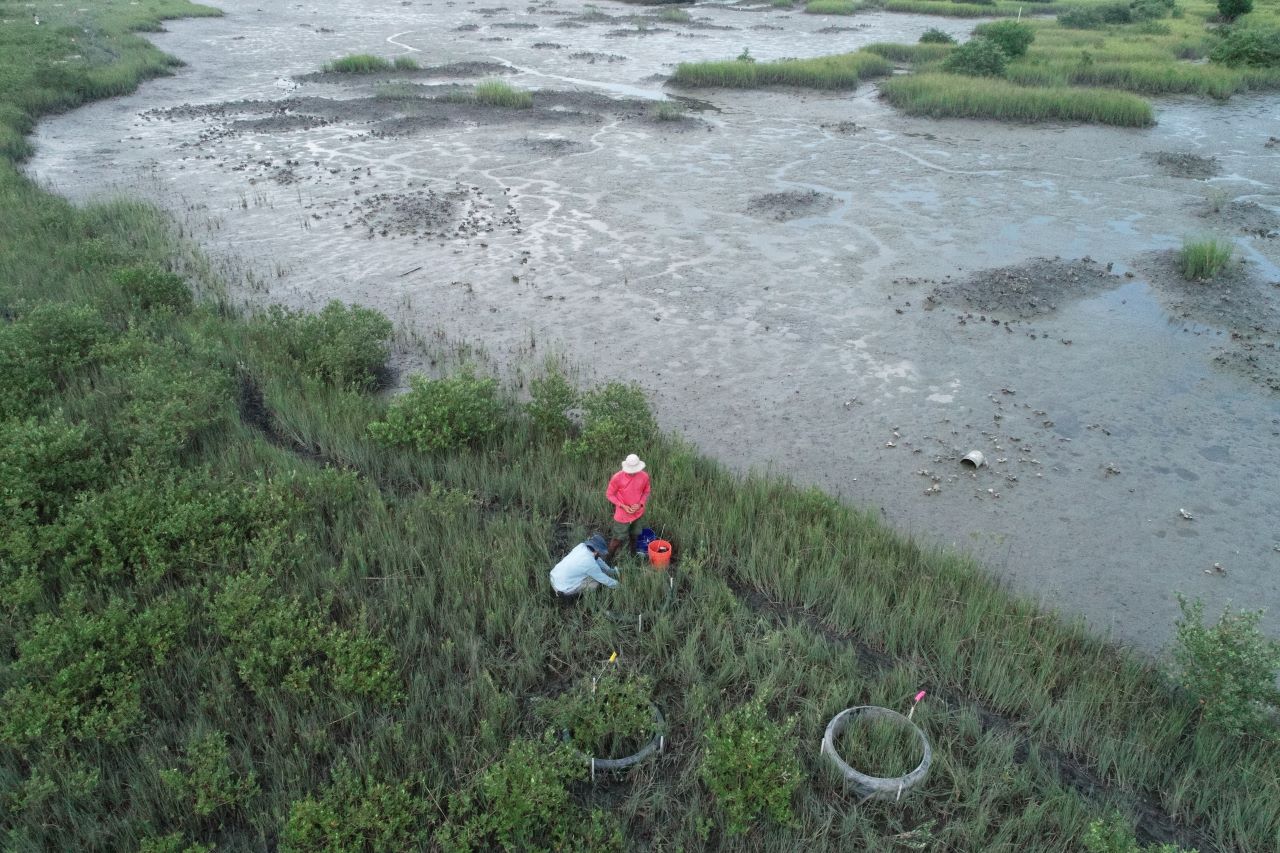
Natural defenses: UF researchers use living infrastructure to protect Florida’s shores
Armed with a $7 million grant from the Army Corp of Engineers, University of Florida researchers are working to bolster shoreline resilience and restore troubled wetlands in St. Augustine through nature-based solutions. “The idea of nature-based solutions is to build what we sometimes refer to as green infrastructure, to use living, natural components as the building blocks,” said Andrew Altieri, Ph.D., an assistant professor with the Engineering School of Sustainable Infrastructure & Environment and interim director of the Center for Coastal Solutions, also known as CCS. Instead of building man-made structures to protect wetlands, for example, restoration crews can move dredged natural sediment otherwise destined for costly disposal to increase wetlands’ size and elevation, restoring their ability to protect shorelines from storm surge, keep pace with sea-level change, filter toxins, store carbon and provide habitats for wildlife. The project is in concert with the Army Corps of Engineers’ goal to naturally reuse and repurpose at least 70% of dredged sediment into other natural areas to benefit habitats and restoration by 2030. “It is critical to understand, test and model how natural processes can be harnessed and strategically implemented to sustainably meet the challenge of rapidly intensifying coastal hazards while also providing environmental, economic and social benefits,” Altieri wrote in the project’s technical summary. Overall, the multi-disciplinary project closely examines patterns and processes of change in coastal landscapes. That includes wetlands — marshes and mangroves — and beach/dune systems. The project comes as these coastal areas are facing threats both natural and human. These areas are essential to wildlife, air quality, native vegetation, storm protection and the overall health of the ecosystem. A 2008 study by the U.S. Fish and Wildlife Service reported a net loss of about 361,000 acres of wetlands in the coastal watersheds of the eastern United States between 1998 and 2004 — an average net decrease of 59,000 acres each year, with experts citing sea-level rise as one of the primary factors. “We're trying to understand the patterns of that loss and what's leading to it,” Altieri said. “These systems are essentially the first and sometimes last line of defense against coastal hazards, risks that include storm surges and coastal flooding. They are forming a buffer, this kind of protective layer on our coast. But they're changing, generally for the worse and are in danger of being lost.” With this project, the CCS-led research team plans to advance the science, technology and engineering principles of nature-based solutions. With marshes, the primary concern is elevation loss, which can drown the vegetation critical to the ecosystem. They are sinking, eroding and succumbing to sea-level changes, Altieri said. “The plants are really important for trapping sediment and holding sediment,” he said. “You lose some of the plants, then you get more erosional loss and a lack of the accumulation of sediment.” Sediment is natural muck on the bottom of water bodies. “If we can add sufficient sediment to increase the elevation to a level where the plants thrive, then they will retain that sediment that's been added to hopefully trap more sediment and accumulate more biomass through their growth,” Altieri said. “It’s something that may need to be done periodically. You may stop that decline, but you may even reverse the process of loss and change the trajectory.” As a bonus, this process saves the cost of disposing of dredged sediment, which is usually piped offshore or to a materials-management area. This project is the next step for CCS-led coastal resilience efforts in St. Augustine. In 2024, CCS and WSP Environment & Infrastructure Inc. launched a coastal wetlands-restoration project to keep pace with sea level change and erosion. The 2025 work is a standalone project with separate funding, Altieri said. The current project also has more research disciplines and project partners, including UF researchers from Landscape Architecture, Geological Sciences and the School of Forest, Fisheries and Geomatic Sciences. “Storm surges, wave energy, coastal flooding – all of that can be slowed or reduced because of wetlands,” Altieri said. “They are basically like shock absorbers. These wetlands, beaches and dunes can be lost or eroded to some degree, but the upland area behind them is essentially protected.” Researching the resilience of dunes comes with a different set of dynamics. Here, they are looking at the plants that support the dunes – sea oats and panic grass, for example. That vegetation also provides a habitat for animals such as beach mice, turtles and birds. On the beach, the team also is looking at water energy and how grain size affects the stability of dunes. “It’s understanding water movement, water energy. How is that interacting with depositing sediment, moving sediment around, sorting sediment? With water, you tend to carry finer particles further than coarser materials,” he said. What does success look like after the award’s five years end? “We'll have an understanding of what's changing on our coasts and why,” Altieri said. “We'll have an understanding of how we can work within this system to modify the natural components and utilize the natural processes. And we will hopefully be working with partners through additional funding mechanisms to actually apply that towards implementation of solutions to increase coastal resilience.” The team also includes Peter Adams, Department of Geological Sciences; Julie Bruck, Department of Landscape Architecture, School of Landscape Architecture and Planning; Maitane Olabarrieta, ESSIE; Alex Sheremet, ESSIE; Nina Stark, ESSIE; Ben Wilkinson, Geomatics Program, School of Forest, Fisheries, and Geomatics Sciences; and Xiao Yu, ESSIE.


When Betting Goes Mobile: The Hidden Cost to Young Adults’ Finances
As online gambling and sports betting surge across the United States, concerns are mounting about the financial and social consequences—particularly for young people. Dr. Jared Pincin, Associate Professor of Economics at Cedarville University, offers journalists a data-driven economic lens on how the rapid expansion of digital gambling is reshaping personal finances and increasing financial risk among younger Americans. What's Happening Mobile betting apps have transformed gambling into an always-available activity, accessible anywhere and at any time. With aggressive marketing tied to professional and collegiate sports, online gambling has become normalized—especially among young adults. As participation rises, so do reports of debt, financial instability, and problem gambling, raising questions about consumer protection, regulation, and long-term economic impact. Dr. Jared Pincin primary research interests explore the intersection of public choice economics with foreign aid as well as issues in sports economics. Pincin has published in popular publications such as The Hill, Real Clear Markets, Foxnews.com, and USA Today and scholarly journals such as Oxford Development Studies, Applied Economic Letters, and the Journal of Sport and Social Issues. View his profile here Key Insights Online Gambling Is Built for Continuous Spending Modern gambling platforms are designed to encourage repeated engagement. Gamified interfaces, instant wagers, and constant prompts make it easy for users to lose track of spending, increasing the likelihood of financial loss over time. Young Adults Face Elevated Risk Young people, particularly college-age students and adults in their twenties, are among the fastest-growing users of online betting platforms. Limited financial experience, combined with easy credit access and social pressure, makes this group especially vulnerable to poor financial outcomes. Personal Finances Are Directly Impacted Gambling losses often come at the expense of savings, rent, tuition, and long-term financial planning. Dr. Pincin emphasizes that gambling platforms generate profit only when users lose, making sustained participation a negative-sum financial activity for individuals. Economic Incentives Drive Expansion From an economic standpoint, gambling growth is fueled by state revenue incentives and private profit motives. Dr. Pincin helps explain how these incentives can conflict with consumer well-being, particularly when regulatory safeguards lag behind technological innovation. About Jared Pincin Dr. Jared Pincin is an Associate Professor of Economics at Cedarville University. He holds a Ph.D. in economics and specializes in public choice, behavioral economics, and sports economics. His work examines how incentives shape individual decision-making and how policy choices affect financial outcomes at both the personal and societal levels. Let Us Help with Your Coverage Jared Pincin can assist reporters by: Explaining why online gambling participation has risen so quickly among young people Breaking down the economic mechanics of betting platforms and personal financial risk Providing context on the long-term financial consequences of habitual gambling Contributing expert insight to stories on regulation, advertising, and consumer protection Why This Matters As gambling becomes increasingly embedded in American culture, its financial consequences are no longer limited to isolated cases. Understanding how online gambling affects young people’s financial stability is essential for informed public reporting. Dr. Pincin offers clear, accessible analysis that helps audiences understand the economic realities behind the headlines.


A team of researchers from ChristianaCare and the University of Delaware has uncovered a key early step in how colorectal cancer begins. Their new study shows that a common genetic mutation in colorectal cancer disrupts the colon’s normal tissue renewal process, causing immature cells to build up, tissue structure to break down and early tumors to form. Their findings were published in the journal Cancers. “This finding changes how we think about the very first steps of colon cancer,” said Bruce Boman, M.D., Ph.D., senior author of the study and a senior researcher at the Cawley Center for Translational Cancer Research at ChristianaCare’s Helen F. Graham Cancer Center & Research Institute. “Instead of cancer starting because cells grow too fast, we found that it may start because the normal tissue renewal process slows down, creating a backup of cells that should have moved on. That backup sets the stage for tumors to grow.” The study was led by a multidisciplinary team of engineers, mathematicians, pathologists and tumor biologists from four research institutions. Colorectal cancer is one of the most common and deadly cancers worldwide. According to the World Health Organization, more than 1.9 million people are diagnosed each year, and about 930,000 people die from the disease annually. How healthy colon tissue renews itself The lining of the colon is constantly renewing itself. Every day, billions of cells are shed and replaced to keep the tissue healthy and working properly. This process depends on a steady cycle. New cells form at the base of tiny pockets called crypts, mature as they move upward, and are eventually shed. The new study shows how this natural process breaks down when a mutation occurs in a gene called APC, which is altered in about 90 percent of colorectal cancers. Rather than speeding up cell growth, the APC mutation creates a slowdown, or bottleneck, in the colon tissue’s renewal cycle. According to Boman, this slowdown causes dividing cells to pile up instead of moving through the system as they should. The result is a kind of tumor cell “traffic jam” that leads to distorted tissue and the formation of adenomas, early growths that can become cancerous. What APC-mutant tissue looks like To see these changes up close, the team compared healthy colon tissue with tissue from patients who have familial adenomatous polyposis, or FAP, an inherited condition caused by APC mutations. The differences were clear: APC-mutant crypts contained more immature, rapidly dividing cells. Fewer cells matured into specialized cells needed for healthy tissue. The zone where cells divide extended higher than normal. The overall renewal cycle took longer. “These findings are significant because they show how cancer-driving mutations change tissues that normally renew themselves nonstop,” Boman said. Pairing patient tissue with computer modeling To see how these changes happen over time, the researchers studied patient tissue and used a computer model that shows how colon cells normally grow and renew. When they slowed this renewal process in the model, it matched what they saw in tissue with the APC mutation. Cells became crowded, the structures lost their normal shape, and early tumor-like growths, known as adenomas, began to form. This confirmed that delayed renewal alone can trigger the earliest changes linked to colon cancer, even before cells appear abnormal under a microscope. “Our findings show that APC mutation does more than turn on growth signals,” Boman said. “It changes the timing of renewal. Once that timing is off, the tissue becomes vulnerable to structural damage and early tumor growth.” Building on earlier research This study builds on earlier work by the same team that mapped how healthy colon tissue renews itself. In prior studies, the researchers identified five basic biological rules that guide how colon cells grow, move and replace one another in a steady, organized way. The new findings show what happens when that system breaks down. A common mutation called APC slows the normal renewal process. Young, stem-like cells begin to build up before they can mature. Over time, that imbalance creates the conditions for early tumor growth. To pinpoint how these changes unfold, researchers Gilberto Schleiniger, Ph.D., and Christopher Raymond, Ph.D., from the University of Delaware’s Department of Mathematical Sciences paired mathematical models with real patient tissue data. Their work shows that even small delays in cell renewal can push healthy tissue toward cancer. “This gives us a clearer picture of how cancer can start long before a tumor is visible,” said Schleiniger. “By understanding the rules that keep healthy tissue in balance, we can see where and how things begin to go off track.” A possible path toward future treatments The findings also point toward a potential new approach to treatment. The researchers found evidence that the disrupted renewal process may trigger a chain reaction that allows pre-cancerous cells to keep copying themselves and fueling tumor growth. By targeting this process, it may be possible to restore normal renewal timing and healthier tissue structure before cancer becomes established. “This study shows that cancer isn’t just about rogue cells, but about a system that’s fallen out of rhythm,” said Bruce Boman, M.D., Ph.D. “If we can reset that renewal process, we may be able to prevent or slow early tumor growth before it gains momentum.”