
Experts Matter. Find Yours.
Connect for media, speaking, professional opportunities & more.

Highlighting the Impacts of Insufficient WIC Funding on Low-Income Families
Since the beginning of the COVID-19 pandemic, the cost of food has risen 25%, and many are struggling to provide enough nutritious food to their families. Federal safety net programs – like the Special Supplemental Nutrition Program for Women, Infants, and Children (WIC) for example – are intended to provide needed support for healthy foods during hard times, serving millions each year. The WIC program, however, is not guaranteed to all that might need it. Instead it relies on budget appropriations, which for the first time in the history of the program may not be enough to cover those in need. There is a chance that as many as 600,000 young children, pregnant and new mothers who qualify for WIC will not be able to receive benefits in the upcoming year. Allison Karpyn is Co-Director of the Center for Research in Education and Social Policy (CRESP) and Professor in the Department of the Human Development and Family Sciences at the University of Delaware. She is able to speak holistically about WIC and other federal food programs and what this funding can accomplish. "Federal Nutrition and related programs also need to address issues of stigma," Karpyn says. Recent frameworks developed by Dr. Karpyn and colleague suggest that more needs to be done to adequately understand and support families to use the benefits intended for them. Research is clear that food and nutrition security are closely tied to our health, she notes. Karpyn is able to speak about this and more. If you would like to speak to her, click her "View Profile" link.



• Rice straw could be a fuel of the future in rural Philippines • Across Asia 300 million tonnes of rice straw go up in smoke every year • New proposals includes scaling up harvesting system with straw removal, biogas-powered rice drying and storage and efficient milling. An Aston University bioenergy researcher has been explaining how rice straw could be a fuel of the future in rural Philippines. Dr Mirjam Roeder who is based at the University’s Energy & Bioproducts Research Institute (EBRI) is collaborating with the UK company Straw Innovations Ltd, Southeast Asian Regional Center for Graduate Study and Research in Agriculture (SEARCA) and Koolmill Systems Ltd to showcase their research. The Food and Agriculture Organisation (FAO) states that rice is the number one food crop globally and 91% of it is produced and consumed in Asia. As a crop it is responsible for 48% of global crop emissions and for every kilogram of rice, a kilo of straw is produced. Across Asia 300 million tonnes of rice straw go up in smoke every year when burnt after harvest, releasing emissions and air pollutants that triple risks of increased respiratory diseases and accelerate climate change. To raise awareness of sustainable uses for rice straw Dr Roeder has travelled to the sixth International Rice Congress in Manila, Philippines to explain the potential of the emerging technology. Rice straw is an underdeveloped feedstock and can be collected and digested to produce biogas, unlocking sustainable straw management options and renewable energy for farmers using anaerobic digestion (AD) from rice straw. Dr Roeder has been working with Straw Innovations on their UK Innovate project demonstration facility in the Philippines, the Rice Straw Biogas Hub, which is scaling up a complete harvesting system with straw removal, biogas-powered rice drying and storage, together with efficient milling. Craig Jamieson, Straw Innovations said: “The International Rice Congress is only held every four years and is a key event for coordinating and tracking progress in rice research. “Our partnership with Aston University and SEARCA adds independent, scientific rigour to the work we do and amplifies our message to government policy makers. We are grateful to Innovate UK for their ongoing support through the Energy Catalyst Programme, which is accelerating our development.” At the conference Dr Roeder has been explaining how independent environmental and social research can increase farmer incomes, equality of opportunity, food security and decarbonisation benefits. She said: “Engaging with stakeholders and working in partnership across organisations is vital to the successful adoption of new technologies. I am delighted to have had the opportunity to host an event with our project partners at this prestigious conference, bringing the cutting-edge research of using rice straw for clean energy to the forefront of the rice research community and supporting the pathway to net zero.” Dr Glenn B Gregorio, Center Director of SEARCA, added: "We are gaining insights into the environmental impact of rice straw utilisation and implementing policies to unleash its potential to empower us to make informed decisions that are instrumental to climate change mitigation and decarbonisation," Professor Rex Demafelis, University of the Philippines, is also working with SEARCA and is leading the project on life cycle analyses and measurements of rice straw greenhouse gas emissions. He said: “Rice straw is a valuable resource, and we are grateful to be part of this team which seeks to harness its full potential and promote circularity, which would ultimately contribute to our goal of reducing our greenhouse gas emissions.” ENDS The Supergen Bioenergy Hub works with academia, industry, government and societal stakeholders to develop sustainable bioenergy systems that support the UK’s transition to an affordable, resilient, low-carbon energy future. The Hub is funded jointly by the Engineering and Physical Sciences Research Council (EPSRC) and the Biotechnology and Biological Sciences Research Council (BBSRC) and is part of the wider Supergen Programme. For further information contact Rebecca Fothergill and Catriona Heaton supergen-bioenergy@aston.ac.uk Follow us on Twitter @SuperBioHub Visit our website at supergen-bioenergy.net Visit our YouTube Channel to watch the video on Carbon Balance FAO: RICE PRODUCTION IN THE ASIA-PACIFIC REGION: ISSUES AND PERSPECTIVES - M.K. Papademetriou* (fao.org) https://www.fao.org/3/x6905e/x6905e04.htm About Aston University For over a century, Aston University’s enduring purpose has been to make our world a better place through education, research and innovation, by enabling our students to succeed in work and life, and by supporting our communities to thrive economically, socially and culturally. Aston University’s history has been intertwined with the history of Birmingham, a remarkable city that once was the heartland of the Industrial Revolution and the manufacturing powerhouse of the world. Born out of the First Industrial Revolution, Aston University has a proud and distinct heritage dating back to our formation as the School of Metallurgy in 1875, the first UK College of Technology in 1951, gaining university status by Royal Charter in 1966, and becoming The Guardian University of the Year in 2020. Building on our outstanding past, we are now defining our place and role in the Fourth Industrial Revolution (and beyond) within a rapidly changing world. For media inquiries in relation to this release, contact Nicola Jones, Press and Communications Manager, on (+44) 7825 342091 or email: n.jones6@aston.ac.uk


Wilmington Hospital Emergency Department Earns Lantern Award for World-Class Excellence
ChristianaCare’s Wilmington Hospital Emergency Department is one of 53 emergency departments around the world to receive the Emergency Nurses Association (ENA) Lantern Award for 2023, recognizing the excellence of its caregivers in incorporating evidence-based practice and innovation. The ENA Lantern Award celebrates emergency departments that demonstrate exceptional leadership, practice, education, advocacy and research performance. It honors the late Florence Nightingale, who is credited as the founder of modern nursing and is referred to as the “Lady With the Lamp” for her round-the-clock care given to wounded soldiers during the Crimean War. “Every day, our caregivers bring to life the ChristianaCare values of love and excellence through the ways they care for our neighbors who come to the Wilmington Hospital Emergency Department,” said Danielle Weber, MSN, MSM, RN-BC, NEA-BC, chief nurse executive and chief nursing officer of Wilmington Hospital. “By putting the patient first and rethinking outdated models of care, we have created a better experience for patients at a time when they are often most in need. This recognition signifies the transformative effect of our commitment to being exceptional today and even better tomorrow.” Rooted in history, focused on the future Wilmington Hospital has served the community for nearly 125 years, meeting diverse medical needs and providing a safety net for people in underrepresented communities. The Wilmington Hospital Emergency Department is the second-busiest ED in the state, with 58,744 visits in fiscal year 2023. Combined, ChristianaCare’s emergency departments are ranked 12th in the United States and 7th on the East Coast in number of patient visits, according to the American Hospital Association. A highly engaged staff supports the high volume of work in the department, where nurses serve in collaborative decision-making, shared governance and nurse autonomy, “practicing in an environment of empowerment,” said ED nurse Christina Hoddinott, MSN, RN, FNP-BC, CEN, CPE, who helped work on the Lantern application for Wilmington ED. “The staff who perform the work participate in decision-making that directly affects their practice,” Hoddinott said. “When our patients walk through our emergency department doors in their unexpected and stressful moments of need, we do everything we can to see that they receive the highest level of care.” Doreen Nord, MSN, RN, CEN, NPD-BC, nurse manager for Wilmington Hospital ED, said the Lantern award reflects the greatness seen every day among its nursing caregivers. “Their commitment and compassion shine, and there is never a doubt about who is most important — our patients,” Nord said. “We are honored by this recognition, the highest available in emergency nursing.” A collaborative effort Wilmington Hospital ED and the other Lantern recipients were recognized in the Hall of Honor at Emergency Nursing 2023, ENA’s annual conference, Sept. 21-23, in San Diego, California. See the list of other award recipients here. “Each and every emergency department on this list has worked extremely hard implementing innovations to better their emergency department for staff and patients alike,” said ENA President Terry Foster, MSN, RN, CEN, CPEN, CCRN, TCRN, FAEN. “Hearing the excitement these EDs had when notified that they were a recipient was so heart-warming and reminded me of the commitment that ED nurses have to continuous improvement.” In Wilmington, the spirit of collaboration and support among caregivers creates an environment that ensures patients receive the highest level of care. Hoddinott likens her fellow caregivers to puzzle pieces — each one is dynamic and unique. “When the pieces come together, we have one big complete puzzle. We are a team that supports each other during stressful moments, happy occasions and all the in between,” she said. “Our team does not take for granted the ‘specialness’ we have here, and our patients can truly feel that when they come through our doors.”


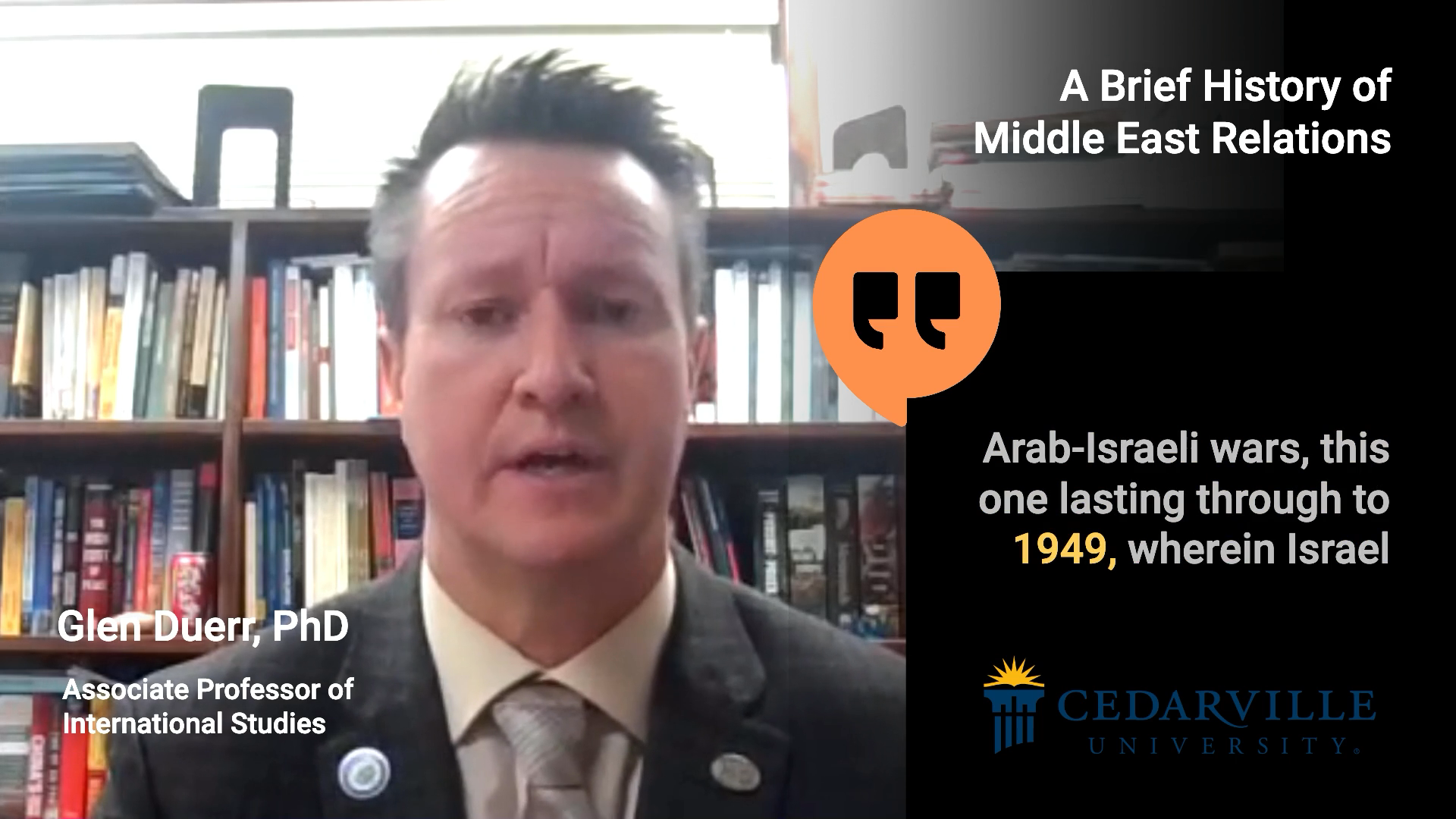
There's nothing new about tensions, clashed and all out war in the Middle East. For thousands of years, it has been an area that has seen bloodshed, war and very few moments of peace. With all of the world watching the war in Gaza between Israel and Hamas, a quick lesson in the history of the region might help everyone understand this very complex region a little easier. It's why we sat down with Glen Duerr, Ph.D. a Professor of International Studies at Cedarville and a renowned expert in the areas of international relations and comparative politics. If you're covering this ongoing war and need to know more - then let us help with your questions and stories. Glen is an expert on this subject and is available to speak to media regarding this topic– simply click on his icon to arrange an interview.


The Role of Artificial Intelligence in Customer Experience
Gaurav Jain, assistant professor of marketing at the Rensselaer Lally School of Management, examines how individuals make judgments, estimates, and decisions in the absence of complete information. Previously, Jain served as the chief marketing advisor at multiple firms. Below are his thoughts on the impact of artificial intelligence (AI) on customer experience. Voice of the Customer In today's hyper-connected world, the voice of the customer (VoC) is louder and clearer than ever. But how do we sift through this cacophony to understand what our customers are really saying? Enter AI. It's revolutionizing the way customer experience teams handle VoC programs, and as a marketing leader, I find this incredibly exciting. Take direct customer feedback, for example. We're no longer just collecting survey responses and storing them in a database for quarterly review. AI algorithms, particularly those using natural language processing, are helping us instantly categorize and prioritize this feedback. Imagine an e-commerce platform that can immediately flag a customer's mention of "late delivery" in a post-purchase survey. That's not just efficient; it's customer-centric. But what about the things customers are saying when they're not directly talking to us? That's where AI-driven sentiment analysis comes in. These tools can scan social media, forums, and review sites to gauge the sentiment behind a customer's words. I've seen hotel chains use this technology to monitor travel forums and review sites. If a guest mentions "noisy rooms," even without lodging a direct complaint, the brand can proactively look into soundproofing solutions. Then there's inferred feedback, the kind you get by reading between the lines. AI can analyze customer behavior, like frequent page visits without conversion or cart abandonment, to suggest what might be going wrong. For instance, an online fashion retailer could use AI to figure out why a particular dress gets a lot of views but few purchases. Maybe it's the sizing, maybe it's the price, but the point is, you get to know without having to ask. And it doesn't stop at gathering feedback. AI is helping us turn this raw data into actionable insights. We can predict future behavior, like churn rates, based on past feedback. This allows us to be proactive rather than reactive, which is a game-changer in customer experience management. Finally, let's talk about what happens after we've gathered all this feedback. AI is ensuring that every customer who takes the time to share their thoughts receives an immediate and appropriate response. Chatbots can handle common queries or concerns, making the customer feel heard and valued right away. So, from the perspective of a marketing leader, it's not just about the efficiency that AI brings to VoC programs. It's about the opportunity to deepen our connection with customers. By truly understanding their words, their sentiments, and even their behaviors, we can craft experiences that resonate on a human level. And in a world that's increasingly digital, that human touch is what sets a brand apart. Customer Service It's truly intriguing to observe how AI is weaving its way into the customers’ experience. Online, chatbots are making waves. Chatbots are not just digital tools; they're our first point of contact, bridging the gap between brands and consumers. However, there was always the question of accuracy versus efficiency while managing these chatbots – AI has answered that question. AI chatbots provide real-time yet accurate assistance, making the digital shopping journey feel more interactive. Companies can reduce customer dropout while avoiding the expense of managing a large human customer service team. AI is revolutionizing phone-based customer service as well. Voice recognition allows natural language processing for easier navigation, while predictive analysis anticipates caller needs based on their history. Enhanced personalization means customers no longer repetitively provide account details, and emotion detection aids in gauging caller mood. The result? Reduced wait times, more efficient interactions, and a significantly improved telephonic customer experience. In essence, AI is bridging the gap between technology and human touch in the retail world, making our interactions with brands more meaningful and personalized. Again, companies can do this in a cost-effective manner. Jain is available to speak with media - - simply click on his icon now to arrange an interview today.


It's only been since January, but the cannabis industry in Connecticut is already a hit among consumers. There was initial worry that the quick expansion of stores and dispensaries could potentially blunt the long-term success of the retail aspect of the product in the state, but according to UConn's Fred Carstensen concerns about the oversupply seen in neighboring states is not a worry. “It’ll take three to four years to see how the market develops,” said Carstensen, a professor at University of Connecticut and the director of the Connecticut Center for Economic Analysis. In an article that goes into great detail, Carsten told the Stamford Advocate about the many factors and influences that can impact what has been a volatile market in some states since legalization became the trend. And as the state government checks the expansion of Connecticut’s adult-use cannabis market, Carstensen said local governments do the same. He said it wouldn’t matter if Connecticut’s retail cannabis scene was over-licensed, under-licensed, or just right. “Every municipality has the right to say yea or nay (to retailers),” Carstensen said. But he said an estimated 69 cannabis retailers in the Nutmeg State’s pipeline will make the bigger picture clearer. “(Then) it's pretty much available to everybody on a relatively short-travel basis,” Carstensen said. “Then we'll actually know what the market is.” Regulation and observation will be key to measure the success or failure of the market. Carstensen said that as the Nutmeg State’s market matures, retailers will “pull that business back into Connecticut when we become more competitively priced.” Peake agreed that “as (more Connecticut retailers) open up, we can probably expect the vast majority of those folks to be buying cannabis in Connecticut.” And Carstensen said that as much as interstate cannabis purchases skew understanding Connecticut’s market, it also serves as a check on oversaturating the Nutmeg State’s cannabis economy... And, Carstensen said, if there were too many cannabis dispensaries, "the market will tell us." "They’ll close,” the economics professor said. If you're a journalist looking to know more about this emerging industry in Connecticut and beyond, let us help. Fred Carstensen is a University of Connecticut professor and director of the Connecticut Center for Economic Analysis. He is a renowned an expert in the areas of public policy, economic history, and economics. Simply click on his icon now to arrange a time to talk today.



Too Cool for School? Our #experts can help with a history lesson in hipness
Who decides what’s “cool?” What have been the criteria over the years for rising to the ranks of “hot,” “phat” or “lit?” Colin Rafferty teaches a course that delves into the elusive but ever-so-attractive notion of being deemed “cool.” The syllabus examines this coveted quality and the entities described by it in historical and contemporary contexts, from its roots in the post-WWI jazz-age to rappers and TikTok. “The Idea of Cool” uses books, music and movies to explore what and who rises to the top of popular opinion and why. “I am decidedly not cool,” said Rafferty, who describes himself as a middle-aged man who owns a book of crossword puzzles. “But I find cool to be a fascinating thing.” Colin is available to speak with media about “The Idea of Cool” and his very cool work . Simply click on his icon to arrange an interview.



Concerns Persist Over the State of Ecuadorian Democracy
On August 9, 2023, Ecuadorian presidential candidate Fernando Villavicencio was ambushed and killed following a campaign rally in Quito. The Alausí-born journalist-turned-assemblyman had long been a proponent of social and governmental reform, framing his election bid as a crusade against the drug traffickers, corrupt corporate interests and “political mafia” besetting his country. His assassination has, in turn, sparked concerns and discussion over the current state of democracy in Ecuador. Lowell Gustafson, PhD, is an expert on Latin American affairs and a professor of political science in Villanova University’s College of Liberal Arts and Sciences. From his perspective, Villavicencio’s murder stands as the latest chapter in a saga of malfeasance, intimidation and violence in the region. “This is not new in Latin American political history,” said Dr. Gustafson. “The role of private armies funded by economic sectors beyond state control has been an issue often for the national period. It has taken a stark turn with the riches pouring in from illegal drugs.” In Ecuador, “narco-capitalism” has emerged as a particularly corrosive force. According to Dr. Gustafson, Albanian, Mexican and South American criminal outfits established themselves within the nation by the early 2010s, drawn by the country’s vast network of ports and its proximity to coca-rich Colombia and Peru. “That became a problem for stability in 2016, when the government of Colombia signed a peace agreement with the Revolutionary Armed Forces of Colombia [or FARC],” he stated. “FARC had long controlled cocaine trafficking routes from southern Colombia to Ecuador’s ports on the Pacific Ocean. With their dominance gone, other cartels began to compete for control.” Since the opening of this power vacuum, the situation in Ecuador has grown increasingly volatile, with the governmental response ham-fisted at best and faciliatory at worst. Under the presidential administrations of Rafael Correa, Lenín Moreno and Guillermo Lasso, the cartels succeeded in infiltrating the country’s privatized ports and airports, seizing control of the nation’s prison system and contributing to an ever-growing wave of crime. “Violence against public officials and by vigilante groups have steadily increased since 2018,” Dr. Gustafson said. “With the familiar choice between bribes and cooperation or violence, it is no wonder that cartel influence throughout the Ecuadorian state and military is widely discussed.” While Dr. Gustafson acknowledges the Ecuadorian government’s culpability for this disastrous situation and its escalation, he also cites another factor: the United States’ “war on drugs.” According to the professor, the longstanding U.S. policy has only served to prop up criminal enterprises south of the border, fueling a market for illicit substances. “After a half-century of the war and over a trillion dollars spent on it, coca cultivation in Colombia in 2020 was at an all-time high,” he shared. “The war on drugs has led to the continued power of illegal drug cartels in many countries, now including Ecuador.” In Dr. Gustafson’s estimation, the recent murder of Villavicencio only brings greater attention to this unfortunate state of affairs—a state of affairs common throughout Latin America. “With his consistent and outspoken critique of the cartels’ influence in Ecuador, Villavicencio courageously knew he faced the threat of violence,” he concluded. “The assassination of a presidential candidate brings all of this to a higher level within Ecuador, but the likely reason for [his murder] plagues Mexico, El Salvador and other Latin American nations.”


Georgia Southern sets fundraising record for third year in a row
Total cash, pledges and in-kind gifts to Georgia Southern University amounted to $23,831,604 during Fiscal Year 2023, which ended on June 30, 2023. That surpasses the total from the previous year, which was also a record at $22.3 million. For the third straight year, Georgia Southern supporters have propelled the University to a record-breaking year of private fundraising. Total cash, pledges and in-kind gifts to Georgia Southern University amounted to $23,831,604 during Fiscal Year 2023, which ended on June 30, 2023. That surpasses the total from the previous year, which was also a record at $22.3 million. The record total was buoyed by another record-breaking fundraising year for the Georgia Southern Athletic Foundation, Inc., which raised a record $11.06 million in new pledges and outright gifts. “As we soar into a very bright future for this University, record-breaking fundraising is a sign that Georgia Southern is not only strong now, but poised for even greater heights,” said Georgia Southern President Kyle Marrero. “We are endlessly thankful for the supporters, friends, alumni and donors who endorse our path forward and are stepping up to ensure our success.” Donors helped with various projects and programs this past year, including: $1 million from Betty Foy Sanders for the Betty Foy Sanders School of Art with scholarships, travel and programmatic needs $750,000 deferred gift for the Department of Biology to be used for student scholarships 23 newly created endowments Anthony P. Tippins Family Training Facility for athletics “Through unwavering dedication and the overwhelming generosity of our community, we have demonstrated the boundless potential of Eagle Nation in support of our students’ dreams and the University’s future,” said Georgia Southern Foundation Chair Mike Sanders. Last year’s Athletic Foundation Chair Leonard Bevill added, “The impact of this achievement will ripple through generations, leaving an indelible mark on the trajectory of higher education and Georgia Southern. I am humbled and inspired by the collective spirit that has made this three-year milestone possible.” The Erk Russell Fund, the Athletic Foundation’s annual fund, continues to grow and saw donations of $3.2 million this fiscal year. Additionally, the Athletic Foundation received 58 major gift commitments this year, which are gift commitments of $25,000 or greater to support Eagle Athletics. Over the past three fiscal years, the Athletic Foundation has raised more than $27 million in support of Georgia Southern Athletics. This total is the largest three-year fundraising window in department history. “It’s clear that Georgia Southern University’s power to transform lives and communities is making a positive impression with our private supporters,” said Trip Addison, Vice President of Advancement, noting that more than 3,600 alumni were among the supporters this past year. “I am grateful for the welcome reception we are receiving when we ask people to join in our effort to help support our students and the work they and our faculty are doing.” Interested in knowing more about fundraising or to speak with Georgia Southern Foundation Chair Mike Sanders? To arrange an interview simply connect with Georgia Southern's Director of Communications Jennifer Wise at jwise@georgiasouthern.edu to arrange an interview today.


Record Water Temperatures Testing Resilient Coral Reefs
Coral reefs are some of the most diverse and beautiful ecosystems on the planet. Roughly 25% of the ocean’s fish and over half a billion people depend on these underwater habitats, according to the National Oceanic and Atmospheric Administration (NOAA). But, like most other ecosystems, coral reefs are being threatened by the impacts of global climate change. This summer, record water temperatures stemming from a strong El Niño weather pattern are causing coral bleaching and death events in reefs throughout the world. Lisa Rodrigues, PhD, professor of environmental science, is an expert in coral reef ecosystems and ocean environments. She has been following the reports of coral bleaching when they began surfacing in July. “Coral bleaching often coincides with El Niño years,” she said. “Since water takes much longer to heat than air, July is very early in the year for water temperature to be so high and that is one of the main causes for concern.” Coral bleaching is a stress reaction emanating from high water temperatures, among other causes. When stressed, corals expel the microscopic algae inside of their tissues. The absence of these algae reveals corals’ white skeletons. “In a healthy coral system there is a symbiotic relationship between the coral host (an animal) and the endosymbiotic algae (a plant),” Dr. Rodrigues said. “Corals prefer to live in a fairly narrow range of temperature, which is typically when the symbiotic relationship can be successful. During bleaching, the symbiotic relationship is broken down and the two partners no longer live together.” If corals’ energy stores are low, or if the relationship is compromised for an extended period, corals can die. “This can have long-lasting and negative impacts on ecosystems, as a healthy structure provides a habitat for fish and other organisms,” she said. “For humans that live near the coast, loss of reefs means lost coastal protection, lost economic revenue from fishing and tourism and a lost piece of their natural history.” Reports of coral bleaching and death have stretched across the Americas, and the NOAA is issuing bleaching warnings in southeast Asia. Water temperatures off the coast of Florida this summer have been measured at over 100 degrees in some areas, and temperatures could continue to rise into September. Despite dismal conditions, especially in the Gulf and Caribbean waters, there is still hope for these reefs. “Death doesn’t always happen following bleaching and we also know that recovery from bleaching can occur,” Dr. Rodrigues said. “We have learned a lot from past bleaching events. Over the longer term, following a bleaching event, corals and coral reefs can recover, but the process is slow and dependent on the stressor(s) that caused the event in the first place.” Dr. Rodrigues notes there is a species of coral in Hawai’i that is able to sustain itself during bleaching events and can even reproduce, proving these underwater marvels won’t go down without a fight. “It’s unknown how many species are able to do this, but there is evidence that corals have a wide array of susceptibility and resilience to bleaching associated with high temperatures.”
