
Experts Matter. Find Yours.
Connect for media, speaking, professional opportunities & more.

ExpertSpotlight: American Steel Tariffs – A Brief History
The history of steel trade and tariffs in the United States is deeply intertwined with the nation’s industrial rise, global economic strategy, and political maneuvering. From the late 19th century through the 21st, steel has symbolized both national strength and international tension. Trade protections—such as tariffs—have been used to shield American steel producers from foreign competition, often sparking international disputes and shaping the direction of U.S. economic policy. This topic matters to the public because it affects manufacturing jobs, infrastructure costs, international relations, and the price of goods in everyday life. Understanding steel tariffs offers a lens into larger debates about globalization, economic nationalism, and trade fairness. Key story angles that may interest a broad audience include: The origins of U.S. steel tariffs: Tracing the first protective tariffs in the late 1800s and their role in America’s industrial expansion. The role of steel in national security and economic independence: Investigating why steel has been labeled a “strategic industry” across administrations. Tariff flashpoints: Highlighting major tariff battles—such as the 2002 and 2018 steel tariffs—and their economic and diplomatic consequences. Impact on American manufacturing and jobs: Examining whether tariffs have protected or hindered employment in steel-producing regions. Global trade tensions: Exploring how tariffs have affected relationships with allies such as Canada, the EU, and China. Future of steel trade policy: Discussing evolving views on protectionism, globalization, and climate-linked trade strategies. Connect with our experts about the history of tariffs and steel in America: Check out our experts here : www.expertfile.com


Masoud Davari, Ph.D., associate professor of Electrical and Computer Engineering in the Allen E. Paulson College of Engineering & Computing, was recognized for his achievements in the field of power electronics control and testing with the IEEE Region 3 Outstanding Engineer Award. He was also granted membership into Eta Kappa Nu (HKN), IEEE’s international honor society. IEEE, the Institute of Electrical and Electronics Engineers, is the world’s largest professional organization for electrical engineers, with its membership numbering over 486,000 in more than 190 countries. Davari has been a member of IEEE since 2008 and a senior member of IEEE’s Region 3 since 2019. The organization’s Region 3 encompasses the southeastern United States and has over 24,000 members. The Outstanding Engineer Award, given annually to one member per region, recognizes those who have advanced knowledge and improved humanity through any of the technical subjects covered by the IEEE societies, councils, and affinity groups. Davari was praised for “outstanding, technical, and professional contributions to synthesizing reinforcement learning optimal controls for power electronic converters, creating robust integration of power electronics considering the impact of cyberattacks on modern grids, and advancing IEEE standards for hardware-in-the-loop testing and education through impactful research and service.” This impactful research and service includes eight years of teaching at Georgia Southern. He currently teaches introductory courses on circuit analysis and power systems fundamentals. He has also served as a chapter lead of the IEEE Working Group (WG) P2004 for testing based on hardware-in-the-loop simulations in the IEEE Standards Association (IEEE SA) and that of the IEEE Power and Energy Society Task Force on innovative teaching methods for modern power and energy systems (TR 120). In addition to being an engaged educator, Davari is also a prolific researcher. He was selected as the finalist for the 2024 Curtis W. McGraw Research Award by the Awards Committee of the American Society for Engineering Education (ASEE); has also been awarded a research fellowship by Gulfstream Aerospace Corporation in 2024; was included in Stanford/Elsevier’s Top 2% Scientist Rankings list; and has received $1.17 million in grants from the National Science Foundation Davari’s work ethic and commitment to bridging the gap between industry and research led Rami Haddad, Ph.D., interim dean of the College of Engineering & Computing, to nominate him. “Dr. Davari’s recognition as the IEEE Region 3 Outstanding Engineer and his induction into IEEE-Eta Kappa Nu (HKN) are truly remarkable honors that reflect his outstanding contributions to electrical and computer engineering,” Haddad said. “Being recognized among more than 24,000 IEEE members across the Southeast is a testament to the impact and excellence of his work. We are proud to have Dr. Davari as a valued member of our college, and we celebrate his achievements as a shining example of the innovation and leadership that define our faculty.” This award marks the first time a Georgia Southern faculty member has received it in its 55-year history. It is a career milestone for Davari, who has published research on advanced technology integration into modern power and energy systems in high-impact-factor IEEE Transactions/Journal venues and has extensively researched the era of grid-edge technologies. “I’m deeply honored by this prestigious award,” Davari said. “Not only does it reaffirm my dedication to my research field, but it also fuels my passion for creating a technologically advanced future. Receiving this IEEE award on behalf of my outstanding team is a privilege. Their relentless commitment and hard work since 2015 have truly made this achievement possible.” Davari’s induction into HKN places him among the best in his field. The membership, which is received through invitation only from HKN’s Board of Governors and is based on the candidate’s record of contributions to the field, demonstrated leadership, and community service. “With a legacy that stretches over a century, IEEE-HKN represents the pinnacle of prestige and tradition in our profession, indicating academic achievements and dedication to research, potential leadership, exemplary character, and a positive attitude. Notably, many of our industry’s most influential leaders initiated their journeys through induction into IEEE-HKN as professional members, so receiving this honor is a privilege.” Davari received his award and was inducted into Eta Kappa Nu (HKN) in March at IEEE Region 3’s SoutheastCon 2025 in Charlotte, North Carolina. If you're interested in learning more and want to book time to talk or interview with Masoud Davari then let us help - simply contact Georgia Southern's Director of Communications Jennifer Wise at jwise@georgiasouthern.edu to arrange an interview today.


MEDIA RELEASE: Provincial Trunk Highway 34 Named the Worst Road in Manitoba
Manitobans have spoken – and the results are in. The 2025 CAA Worst Road is Provincial Trunk Highway 34 (PTH 34) in Central Plains/Pembina Valley, Manitoba. Frustrations with potholes, poor road maintenance, poor road signage and unpaved roads pushed PTH 34 to the number one spot. This marks this road’s sixth appearance on the CAA Worst Roads Top 10 list; however, this is the first time it has taken the top spot. This year also marks a historic first for the CAA Worst Roads campaign – for the first time in its 14-year history, nine out of ten roads on the top 10 list are from rural Manitoba communities. Saskatchewan Avenue, the only Winnipeg road on the list in 2025, has appeared on the CAA Worst Roads list for the last seven consecutive years. "The CAA Worst Roads campaign provides a powerful snapshot to governments on where to prioritize budgets and move up road repairs by giving Manitobans an opportunity to have their say on the difficulties they are experiencing in getting around," says Ewald Friesen, manager of government and community relations for CAA Manitoba, "We saw the proof of this when last year's winner, 18th Street in Brandon, received a swift and coordinated response from governments on the same day the results were released, with shovels in the ground by Fall.” This year’s campaign saw an almost 50 per cent increase in roads nominated, with 723 different roads across 86 municipalities. CAA research shows that 39 per cent of respondents expressed dissatisfaction with road work projects, stating that the roads don’t last long before they must be repaired again. However, 88 per cent are willing to put up with the inconvenience of construction in exchange for long-term improvements. "Manitobans take to this campaign because they are hopeful for change,” says Friesen. “CAA’s annual campaign plays a critical role in highlighting the roads that need urgent attention, providing governments with a better understanding of where Manitobans want these investments made." Half of the roads on the top 10 list are new this year. These include Provincial Road 234 in Interlake, Provincial Road 349 in Westman, Provincial Road 239 in Interlake, 26th Street in Brandon, and Provincial Trunk Highway 12 in Eastman. Manitoba's Top 10 Worst Roads for 2025 1. Provincial Trunk Highway 34, Central Plains/Pembina Valley 2. Provincial Road 234, Interlake 3. Provincial Road 307, Whiteshell 4. Provincial Road 239, Interlake 5. Provincial Road 349, Westman 6. 26th Street, Brandon 7. Provincial Trunk Highway 12, Eastman 8. Provincial Trunk Highway 26, Central Plains 9. Richmond Avenue, Brandon 10. Saskatchewan Avenue, Winnipeg "CAA Manitoba urges all levels of government to prioritize road safety through predictable, year-over-year investment and timely repairs," adds Friesen. “CAA Manitoba will continue to advocate for Manitobans to drive positive change in communities across the province." For more information and historical results, please visit: https://www.caamanitoba.com/advocacy/government-relations/worst-roads



Why Paying Cash Can Hurt Your Credit
Earlier this week, Rosa Marchitelli from CBC’s Marketplace recently profiled a Calgary man whose credit score shockingly dropped to zero—not because he was reckless with debt, but because he paid cash for everything. No missed payments. No defaults. Just a lifetime of financial caution that, ironically, made him invisible in the eyes of Canada’s credit system. It’s the kind of story that stops you in your tracks—because it turns everything we’ve been told about “good financial behaviour” on its head. In this post, we’ll break down the surprising logic behind Canadian credit scores, why living debt-free can actually hurt your financial profile, and how to play the credit game without compromising your values. If you’ve ever thought, “I don’t need credit because I’m responsible,” this might just change your mind. Back when I taught the Mortgage Agents Licensing Course, offered by Mortgage Professionals Canada, I always looked forward to my session on credit. Why? Because most people don’t really understand how credit scores work—or how to protect and build a healthy one. So, you’ve always paid cash, avoided debt like the plague, and proudly told your kids you don’t even own a credit card. Congratulations! You’re a responsible citizen… but your credit score is probably dreadful. Wait—what? Yes, the wonderful world of Canadian credit scoring is one of life’s mysteries. It rewards behaviour that may seem risky to the debt-averse but is actually just good financial practice in disguise. So, let’s lift the curtain and decode the quirky logic behind your credit score. Credit Scores 101: It’s Not About Your Morals. It’s About Your Habits In Canada, credit scores range from 300 to 900—the higher, the better. Your score reflects your ability to manage borrowed money based on your past use of credit products such as credit cards, lines of credit, and loans. Here’s the twist: not using credit at all doesn’t make you look smart; it makes you look suspicious. Credit bureaus assume that if you don’t have credit, it’s because you can’t get it—not because you’re a thrifty minimalist growing kale and paying cash. Meet the Scorekeepers: Equifax vs. TransUnion Canada has two major credit bureaus: • Equifax – Favoured by banks and mortgage lenders. • TransUnion – Commonly used by credit card and auto lenders. Each bureau calculates your score slightly differently, so the numbers may vary, like having two referees at the same game. Expect some disagreement on the calls. Pro tip: check both reports annually (for free) to spot any errors early. The Government of Canada has more information for you here. Credit Score Bands Score Range 800–900 - Excellent Access to the best rates and financial products. 740–799 - Very Good Qualifies for most products with favourable terms. 670–739 - Good Solid score; ~35% of Canadians are here. 580–669 - Fair May qualify but at higher rates. 300–579 - Poor High risk. Harder to get approved. Minimum Scores for Common Credit Products Credit Cards: 600+ Premium cards usually require 700+ Auto Loans: 620+ Higher rates if below 700 Consumer Loans: 640+ Lower scores = shorter terms/higher rates Mortgages: 680+ CMHC-insured loans often require a 680+ Pro Tip: Paying cash may make Grandma proud, but lenders can’t assess you without credit activity. No credit = no score = no loan Decoding Credit Codes: The ABCs and 1- 9s of Credit Credit accounts are coded using a letter for the type of credit and a number for how well you manage it. Letter Codes: R – Revolving (e.g., credit cards) I – Instalment (e.g., auto loans) M – Mortgage O – Open (e.g., lines of credit) Number Ratings: 1 – Paid on time 2–5 – Late by 30 to 120+ days 6 – Not used 7 – Making regular payments via credit counseling 8 – Repossession 9 – Sent to collections or bankruptcy A trade line is a record of your credit account. Each shows the credit type, lender, balance, and payment history. Think of it as a financial resume—each tradeline is like a job entry listing your past and present “performance” with a particular creditor. How Long Does Negative Info Last: Bankruptcy (R9); Equifax (7 Years) TransUnion (6 years) Late Payments: Equifax (6 Years) TransUnion (6 years) Collections: Equifax (6 Years) TransUnion (6 years) Consumer Proposal: Equifax (3 years post-payment) TransUnion (3 years post-payment) Credit Counselling (R7): Equifax (7 years after the final payment) TransUnion (6 years after the final payment) Pro Tip: Keep in mind that after falling off your credit report, bankruptcies may still appear in public records. Here's How Your Score Is Calculated Factor Weight and Why It Matters Payment History 35% Late payments are like bad breath—unforgettable. Credit Utilization 30% Use less than 30% of your limit. Length of Credit 15% Longer credit history is more trustworthy. Credit Mix 10% Variety of products = balanced borrower. New Credit Inquiries 10% Too many apps = desperation sniffed by lenders. Source: TransUnion Canada - Credit Score Factors Utilization: More Credit, Used Sparingly = Better Score Yes, it’s weird—but true: someone with five credit cards and a $50,000 limit who uses only $2,000 will likely have a better score than someone with a single $2,000 credit card which is nearly maxed out. Why? Utilization is calculated as a percentage. The more room you leave untouched, the more responsible you appear. Ghosts & Abstainers: No Credit is a Red Flag So, back to the Marketplace story we mentioned earlier. As we consider all the factors involved in credit scoring, is it surprising that this man in Calgary, who paid cash for everything, had his score drop to zero after a long period of inactivity? Not really. Credit bureaus don’t reward abstinence—they penalize it. If you haven’t borrowed in a while, you may be “credit invisible.” It’s like trying to get hired without a resume. No record? No offers. Building (or Rebuilding) Credit What if you need to fix a low score due to missed payments, bankruptcy, or simply a lack of credit history? Getting your credit score up is entirely possible—with patience, consistency, and the right strategy. Here’s a practical framework I use. 1. Get Credit – A secured card works just fine. 2. Use It – Buy groceries, gas, Netflix—whatever you usually pay for. 3. Pay on Time – Even the minimum. Set a reminder …or three. 4. Stay below 30% – Don’t max it out. Do this, and your score should rise like a perfectly baked soufflé. When Credit Counselling is the Better Option Struggling with debt? Credit counseling might be your best path forward. These services consolidate all unsecured debts into one monthly payment and negotiate with creditors to reduce or eliminate interest. It’s a couple-of-year commitment that avoids bankruptcy, and you pay something back. However, your credit will reflect an R7 status for 3 years after your final payment or 6 years after you sign the contract, whichever comes first. Pro Tip: Credit counseling is the more noble route, but remember that it still significantly affects your score. (Source: Credit Counselling Canada) What If There’s an Error—or You’ve Been Hacked? If you spot a mistake on your report—or worse, see signs of identity theft—don’t panic. Here’s what to do: 1. Request a copy of your report from Equifax and TransUnion. 2. Highlight the error and contact the bureau to initiate a dispute. 3. Provide supporting documents. 4. Follow up regularly—bureaus must investigate within 30 days. If you’re a victim of identity theft: • Contact your bank and credit card issuers immediately. • File a police report. • Consider placing a fraud alert or credit freeze on your credit file. Here are important links with more details on how to work with both <Equifax> and <TransUnion> The final statement (get it?) Your credit score doesn’t care if you’re a good person. It only cares if you’re a predictable borrower. So don’t take it personally—play the game smartly. Because in the wild world of credit, it’s not about morals. It’s about whether you paid your $9.99 Netflix bill on time. Now go forward and charge responsibly. Don’t Retire … Re-Wire! Sue


ExpertSpotlight: Queen Victoria and Why Canada Celebrates Her Legacy Today
Victoria Day, celebrated annually on the Monday preceding May 25, marks the birthday of Queen Victoria and serves as the unofficial start of summer in Canada. While often recognized as a festive long weekend, the holiday has deep historical roots tied to Canada’s identity as a constitutional monarchy and its colonial legacy. As Canadians reflect on this tradition, it also opens the door to critical conversations about the British Crown’s historical role in shaping the nation—including its enduring impact on Indigenous Peoples. This observance remains a timely opportunity to explore how history, colonialism, and reconciliation intersect in modern Canada. Key story angles include: The Origins of Victoria Day: Tracing the establishment of the holiday in 1845 and Queen Victoria’s significance to Canadian nationhood and imperial identity. Queen Victoria’s Reign and the British Empire: Examining how the expansion of the empire under her rule affected the development of Canada and its governance structures. Impact on First Nations Peoples: Analyzing the Crown’s role in treaty-making, land dispossession, and the assimilation policies that Indigenous communities continue to confront. Victoria Day in Contemporary Canada: Exploring how the holiday is celebrated today, including regional variations and the growing conversation around its relevance. The Crown’s Evolving Role in Reconciliation: Investigating how the monarchy’s historical ties to colonization are being reexamined in light of Canada’s commitment to truth and reconciliation. Monuments, Memory, and Public Debate: Highlighting recent movements to reassess statues, place names, and celebrations linked to colonial figures like Queen Victoria. As Canada navigates its evolving relationship with the monarchy and Indigenous communities, Victoria Day offers a meaningful occasion to revisit the country’s past and consider how its historical narratives are remembered and reshaped. Check out our experts here : www.expertfile.com

Expert Perspective: Mitigating Bias in AI: Sharing the Burden of Bias When it Counts Most
Whether getting directions from Google Maps, personalized job recommendations from LinkedIn, or nudges from a bank for new products based on our data-rich profiles, we have grown accustomed to having artificial intelligence (AI) systems in our lives. But are AI systems fair? The answer to this question, in short—not completely. Further complicating the matter is the fact that today’s AI systems are far from transparent. Think about it: The uncomfortable truth is that generative AI tools like ChatGPT—based on sophisticated architectures such as deep learning or large language models—are fed vast amounts of training data which then interact in unpredictable ways. And while the principles of how these methods operate are well-understood (at least by those who created them), ChatGPT’s decisions are likened to an airplane’s black box: They are not easy to penetrate. So, how can we determine if “black box AI” is fair? Some dedicated data scientists are working around the clock to tackle this big issue. One of those data scientists is Gareth James, who also serves as the Dean of Goizueta Business School as his day job. In a recent paper titled “A Burden Shared is a Burden Halved: A Fairness-Adjusted Approach to Classification” Dean James—along with coauthors Bradley Rava, Wenguang Sun, and Xin Tong—have proposed a new framework to help ensure AI decision-making is as fair as possible in high-stakes decisions where certain individuals—for example, racial minority groups and other protected groups—may be more prone to AI bias, even without our realizing it. In other words, their new approach to fairness makes adjustments that work out better when some are getting the short shrift of AI. Gareth James became the John H. Harland Dean of Goizueta Business School in July 2022. Renowned for his visionary leadership, statistical mastery, and commitment to the future of business education, James brings vast and versatile experience to the role. His collaborative nature and data-driven scholarship offer fresh energy and focus aimed at furthering Goizueta’s mission: to prepare principled leaders to have a positive influence on business and society. Unpacking Bias in High-Stakes Scenarios Dean James and his coauthors set their sights on high-stakes decisions in their work. What counts as high stakes? Examples include hospitals’ medical diagnoses, banks’ credit-worthiness assessments, and state justice systems’ bail and sentencing decisions. On the one hand, these areas are ripe for AI-interventions, with ample data available. On the other hand, biased decision-making here has the potential to negatively impact a person’s life in a significant way. In the case of justice systems, in the United States, there’s a data-driven, decision-support tool known as COMPAS (which stands for Correctional Offender Management Profiling for Alternative Sanctions) in active use. The idea behind COMPAS is to crunch available data (including age, sex, and criminal history) to help determine a criminal-court defendant’s likelihood of committing a crime as they await trial. Supporters of COMPAS note that statistical predictions are helping courts make better decisions about bail than humans did on their own. At the same time, detractors have argued that COMPAS is better at predicting recidivism for some racial groups than for others. And since we can’t control which group we belong to, that bias needs to be corrected. It’s high time for guardrails. A Step Toward Fairer AI Decisions Enter Dean James and colleagues’ algorithm. Designed to make the outputs of AI decisions fairer, even without having to know the AI model’s inner workings, they call it “fairness-adjusted selective inference” (FASI). It works to flag specific decisions that would be better handled by a human being in order to avoid systemic bias. That is to say, if the AI cannot yield an acceptably clear (1/0 or binary) answer, a human review is recommended. To test the results for their “fairness-adjusted selective inference,” the researchers turn to both simulated and real data. For the real data, the COMPAS dataset enabled a look at predicted and actual recidivism rates for two minority groups, as seen in the chart below. In the figures above, the researchers set an “acceptable level of mistakes” – seen as the dotted line – at 0.25 (25%). They then compared “minority group 1” and “minority group 2” results before and after applying their FASI framework. Especially if you were born into “minority group 2,” which graph seems fairer to you? Professional ethicists will note there is a slight dip to overall accuracy, as seen in the green “all groups” category. And yet the treatment between the two groups is fairer. That is why the researchers titled their paper “a burden shared is a burdened halved.” Practical Applications for the Greater Social Good “To be honest, I was surprised by how well our framework worked without sacrificing much overall accuracy,” Dean James notes. By selecting cases where human beings should review a criminal history – or credit history or medical charts – AI discrimination that would have significant quality-of-life consequences can be reduced. Reducing protected groups’ burden of bias is also a matter of following the laws. For example, in the financial industry, the United States’ Equal Credit Opportunity Act (ECOA) makes it “illegal for a company to use a biased algorithm that results in credit discrimination on the basis of race, color, religion, national origin, sex, marital status, age, or because a person receives public assistance,” as the Federal Trade Commission explains on its website. If AI-powered programs fail to correct for AI bias, the company utilizing it can run into trouble with the law. In these cases, human reviews are well worth the extra effort for all stakeholders. The paper grew from Dean James’ ongoing work as a data scientist when time allows. “Many of us data scientists are worried about bias in AI and we’re trying to improve the output,” he notes. And as new versions of ChatGPT continue to roll out, “new guardrails are being added – some better than others.” “I’m optimistic about AI,” Dean James says. “And one thing that makes me optimistic is the fact that AI will learn and learn – there’s no going back. In education, we think a lot about formal training and lifelong learning. But then that learning journey has to end,” Dean James notes. “With AI, it never ends.” Gareth James is the John H. Harland Dean of Goizueta Business School. If you're looking to connect with him - simply click on his icon now to arrange an interview today.


Expert Q& A: ‘The Pope is also a monarch’
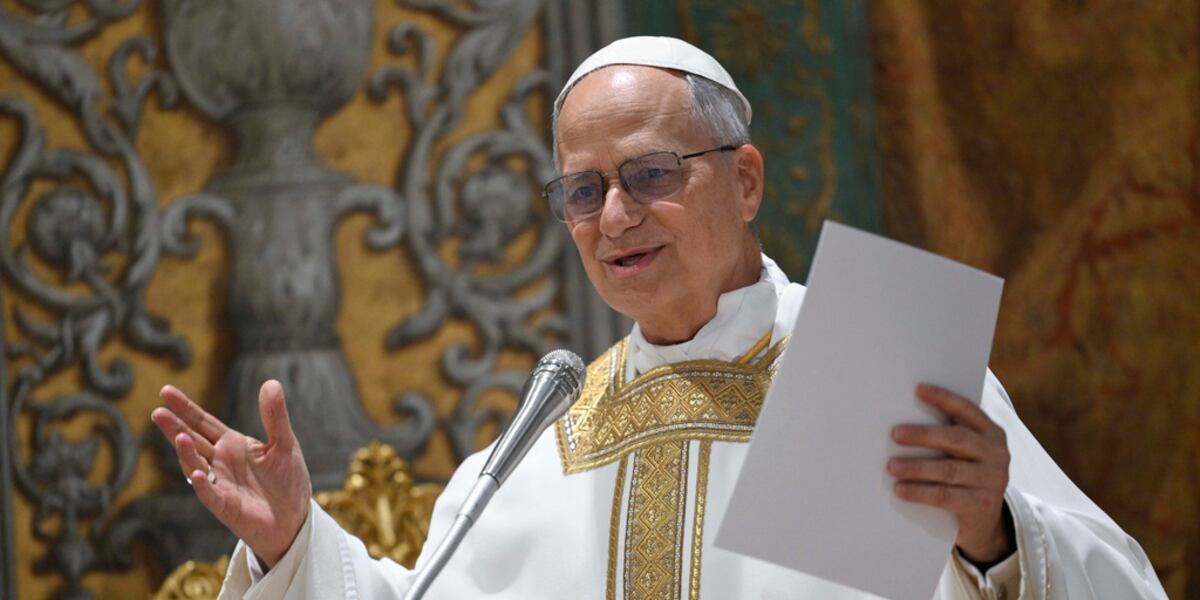
Kathleen Comerford, Ph.D., professor of history at Georgia Southern University, specializes in Catholic history in the 16th and 17th centuries. She is also an associate editor for the Journal of Jesuit Studies, which focuses on the work of the Society of Jesus (Jesuits), a religious order within the Catholic Church. Pope Francis was the church’s first Jesuit pope. With the global significance and rarity of the conclave, Comerford answered frequently asked questions about how the conclave works, how the conclave process has evolved over time, and what the passing of a pope means for the Catholic Church and the world. Question: What does the passing of a pope mean for the world? Comerford: Multiple things! First of all, there are 1.4 billion Catholics in the world scattered in many different countries. The pope is a unifying figure for all of the Catholics. He represents something immediate in the sense that he’s the head of the church and is a recognizable figure. The pope is also a monarch. I was just talking with my classes about this. He is the head of the government of the Vatican City State, which is the smallest independent state in the world. It has a very long history itself. Pretty much everybody who lives in Vatican City works for the Vatican. The pope is one of the few elected monarchs in history. He is responsible for financial and political decisions, and he has ambassadors around the world as a result of his role in global policy. Question: How is a new pope selected? Comerford: The College of Cardinals will meet for an election called a conclave, and they actually stay in a dormitory-like place in Vatican City for it. They are sequestered from the public, and they take some time to meet, pray and vote. The cardinals aren’t supposed to be sitting around talking about who would be a really good pope, but we don’t know whether they do because they’re sequestered and nobody is supposed to talk about it. They will likely take a vote on the first day, but that’s not required. Every subsequent day, they can take a maximum of four votes; two in the morning and two in the afternoon until a candidate gets a two-thirds majority. Question: What does the voting look like? Comerford: There are ballots, and the cardinals write their preferred candidate on the ballot, and then they put their vote in a chalice. To count the votes, there’s a group of three people who are in charge of counting and then announcing the results to the fellow cardinals. There are 252 cardinals, but only 135 of them are eligible to vote because anyone over the age of 80 is ineligible. The procedure where only cardinals can elect the pope dates from 1059. The secret ballot and the two-thirds majority requirement is from 1621. The sequestration for the process dates from 1271 because they argued about who the new pope would be for two years and nine months; a total of 33 months. And so, they decided that the only way to make sure that this didn’t happen again would be to create this scenario with the cardinals locked in a room with a key. Question: When one of the candidates receives a two-thirds majority and becomes the next pope, how will it be announced? Comerford: Well, this is kind of fun, because they have four votes every day until one of the candidates receives a two-thirds majority. After they take the votes, the papers used to vote are burned. How the news is shared to the crowds outside is based on the color of smoke. If the smoke is black, that means no one received the majority and there’s no new pope yet. If there’s white smoke, it means there’s a new pope. This practice really only dates to the early 19th century. At first, it was just if there was smoke, there was no pope; if there was no smoke, then there was a pope. In 1914, they changed this aspect of the election so that black smoke means “no pope” and white smoke means “new pope.” Question: It’s expected that the next pope will be one of the cardinals in the room when they vote, yes? Comerford: Yes, but it doesn’t have to be. There have been a lot of popes, but in the last 200-300 years, there hasn’t been somebody who wasn’t in the conclave that was elected. Theoretically, they could nominate somebody who’s not a cardinal and the whole room could say, “yes, that’s the person we want as pope.” However, they don’t vote by acclamation anymore. They stopped doing that in the 19th century. Question: Pope Francis appointed 108 of the cardinals, so that’s a total of 80% of those eligible to vote for the next pope. How likely is it that we see a pope similar to the late Francis, considering he provided the electorate for his successor? Comerford: First of all, he deliberately went out and created cardinals in places where there had never been cardinals before. And he didn’t do that by saying, “I’m going to find somebody who’s like-minded to me.” He just said, “There are a lot of Catholics in Myanmar and they’ve never had a cardinal. So I’m going to make sure that there’s a cardinal now.” Most of these new cardinals are in places like Rwanda, Cape Verde, Tonga, Myanmar, Mongolia and so on. So these are non-European cardinals. Now, less than 40% of the voting cardinals are European. So to speculate on how similar they are to Francis, you have to break down what Francis was. There has been his entire pontificate about how he’s the first American pope, but his parents were born in Italy. He didn’t grow up speaking Italian, but it was a dialect of Italian as well as Spanish, because he grew up in Argentina. He was the most European you can get and still be an American. Another part of the question is, will the new pope be somebody who is of a similar mind to Francis in terms of his governance, which was very devolved. He introduced this idea of “synodality,” which is about fairly consistent communication with groups of people. Pope Francis was not particularly monarchical or hierarchical. There is also the aspect of his thinking that leans more to the left than the right on a number of social issues like immigration, women’s rights, the rights of minorities and immigration. He opened a lot of conversations, which the very right leaning portions of the church have been very uncomfortable with. If you're interested in learning more about this topic and want to book time to talk or interview with Kathleen Comerford then let us help - simply contact Georgia Southern's Director of Communications Jennifer Wise at jwise@georgiasouthern.edu to arrange an interview today.

Aston University researcher to help uncover hidden impact of painkiller overuse among older people
The HOPE-AO project led by the University of Plymouth will look at the potential harms of overprescribed pain medication in older people in the UK Aston University’s Professor Ian Maidment will bring his expertise in pharmacy and work with patient groups on medicine optimisation The project has been funded by the National Institute for Health and Care Research (NIHR) A new study led by the University of Plymouth will explore chronic pain prescribing in older adults across the UK, with the aim of understanding whether current treatments and processes meet their needs. The HOPE-AO: Helping to Optimise Pain control in the Elderly experiencing Analgesic Overprescribing project is being supported by the National Institute for Health and Care Research (NIHR) and includes Aston University’s Professor Ian Maidment. It will investigate whether certain groups of the older population are more likely to have analgesic (pain relief) medication overprescribed to them, and any side effects or other harms these medications can pose if taken for long periods. It aims to identify alternative treatment solutions to reduce the use of unnecessary pain medicines, working with patients to develop a list of acceptable strategies that could be tested and implemented across the UK. Around 4m older people across the UK live with varying degrees of chronic pain as a result of conditions including arthritis, diabetes or frailty. While some people benefit from pain relief medicines, many end up receiving long-term repeated prescriptions – for medications ranging from paracetamol and ibuprofen to opioids and antidepressants – for weeks, months or years at a time. The project is being led by researchers from the University of Plymouth, working with colleagues at the University of Exeter, Aston University, University of Aberdeen and the North East London Foundation NHS Trust. It is funded by through a Programme Development Grant from the National Institute for Health and Care Research (NIHR). The project team comprises experts in the care of older people – including healthcare researchers, nurses, consultants, GPs, pharmacists and psychiatrists working across the UK – as well as medical statisticians and health economists. It also involves an advisory group of patients with lived experience of receiving repeat prescriptions for pain medication. During the project, the team will speak to patients aged 65 and over with a history of chronic pain for which they are taking, or have taken, medication and families who cared for and supported relatives with chronic pain. They will also speak to healthcare professionals who are either prescribing or supporting older adults taking medication for chronic pain management. Alongside this work, the team will analyse anonymised healthcare data to understand more about older adults who are prescribed medication for chronic pain. This includes patterns in prescribing, health and demographic factors associated with pain medication use, and potential health outcomes, and will help identify those likely to benefit most from support. Professor Maidment, from Aston Pharmacy School, will bring his expertise in pharmacy, medication use in day-to-day clinical practice and working with diverse groups of patients to support medication optimisation. He said: “From my experience in community pharmacy, the use of pain medicines is very common in older people. We need to work with older people to understand how we can help older people to use other potentially safer approaches.” Patricia Schofield, professor of clinical nursing at the University of Plymouth and one of the study’s chief investigators, said: “Very often, older people are told by a doctor that the most effective means of treating a health condition is through some form of pain relief. But they often don’t get any form of follow-up appointment and, as a generation, are less likely to seek one as they either feel pain is part of the ageing process or they don’t wish to be seen as a burden. The result is that they end up getting repeat prescriptions, potentially for pain medications they no longer need and also at significant cost to the NHS. “This study will give us a clearer understanding of the scale of the issue which we can use to develop ways of benefitting patients and their families, and the healthcare professionals working to treat and support them.” Victoria Abbott-Fleming MBE, founder of the charity Burning Nights CRPS Support, is the chair of the Patient and Public Involvement and Engagement group for the HOPE-AO study. It will be made up of several adults over the age of 65 who live with chronic pain and have received repeat prescriptions for pain medication. Victoria has herself lived for more than 20 years with a chronic pain condition, Complex Regional Pain Syndrome (CRPS), and set up Burning Nights to support those affected by it on a day-to-day basis and their families. She is also chair of the Expert Patient and Carer Committee at the British Pain Society. She said: “I’m excited to support this study that places the voices of older adults and their carers at the heart of pain management. All too often, those living with chronic pain – especially older adults – are prescribed medication without regular review or consideration of alternative approaches. This study is a vital step towards more informed and balanced care, helping ensure that older people living with chronic pain are not just treated, but truly heard and supported.”


A New Pope Has Been Chosen - Connect with Our Experts if You're Covering
White smoke has risen above the Sistine Chapel, the signal that cardinals have chosen a new pope on the second day of the conclave. Who is Leo XIV and what is is history as a Catholic leader? What will his mission be for a flock of close to 1.5 billion Catholics? And what issues will he inherit in his new role to navigate. There are a lot of angles to cover - so connect with our experts today for your questions, coverage and ongoing stories: Check out our other experts here : www.expertfile.com

Covering the Conclave? Our Expert Can Help.
The world is watching the Vatican as cardinals from across the globe gather for the papal conclave. The monumental event, which involves cardinals closing themselves off in the Sistine Chapel to elect a new pope, is steeped in history, mystery, and speculation. The new pontiff will be expected to make difficult decisions about the future direction of the Catholic church, which has almost 1.4 billion followers worldwide, and address the Vatican's strained finances and its sexual abuse scandals. If you're a reporter looking for an expert who can provide valuable insight, perspective and opinion on any angle of the events unfolding in Vatican City, consider reaching out to Jack Downey, the John Henry Newman Professor of Roman Catholic Studies at the University of Rochester. Downey and his scholarship have been featured in media outlets such as The Washington Post, National Public Radio, and Time Magazine. Simply click on his icon now to arrange an interview today.

