
Experts Matter. Find Yours.
Connect for media, speaking, professional opportunities & more.

LSU Expert Carol Friedland on Katrina’s Legacy: What’s Changed, What Still Needs to Be Done
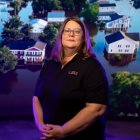
After Hurricanes Katrina and Rita devastated Louisiana and brought billions of dollars of damage to the state, lawmakers worked with researchers, engineers and others to create and implement new codes and laws in an attempt to prevent such serious damage happening again. On Aug. 29, LSU and the LSU AgCenter hosted an event at the Energy, Coast and Environment Building in honor of the 20th anniversary of Hurricane Katrina, which made landfall in Louisiana on the same date in 2005. The daylong conference featured leading voices from LSU and government officials, who spoke about the impacts that hurricanes Katrina and Rita had on Louisiana and how policies and research have changed since those storms. As a part of the program, Carol Friedland, the director of the AgCenter LaHouse Research and Education Center, spoke alongside Brad Hassert, executive director of the Louisiana State Licensing Board for Contractors, for a seminar called “Innovating Resilience: Solutions Inspired by Katrina.” The two discussed recent developments in building materials and building codes that showed the changes, or lack thereof, since the two devastating hurricanes. At the time of the storms, building codes were not uniform in the state, and some parishes had almost no building codes at all. After Katrina and Rita, however, officials pushed for a unified code that better protected Louisiana residents from dangerous storms and weather events. “After Hurricane Katrina, we actually enacted very strong legislation to adopt the model code,” Friedland said. “Also, at the same time, the FEMA mitigation assessment team went out and documented a lot of the failures from Katrina. This program really helps us learn around the country what are the practices that are working and what are the practices that are not working and then getting those integrated into the code process.” Friedland went on to talk about some developments for houses that she has been working on, like “fortified roofs,” which are new roofs that will protect residents more efficiently than the codes required in Louisiana. Friedland also talked about the process of implementing new codes. Researchers must find agreement with governmental entities and other parties, like insurance adjusters and contractors, to succeed, she said. Hassert spoke about the importance for homeowners to find a licensed contractor after a weather event causes damage to their house. This is mostly to ensure that the house will be repaired to code and so the homeowners will not be scammed or stolen from. Hassert, who was recently appointed executive director of the Louisiana State Uniform Construction Code Council, urged researchers and other stakeholders to come together and participate in council meetings so they can make the most informed and beneficial decisions that they can. Both Hassert and Friedland believe there is work to do to improve the codes and building standards in Louisiana houses, but with communication and more involved research, enhancements can be made. “One of the ways I like to frame this is to think about are we happy with the level of losses that we have?” Friedland said. “Do we think that we’re doing well? Who is happy with the level of loss that we see? I think we can still do better.” Original article posted by the LSU AgCenter here.

Shark Week: Ocean predators go from villains to heroes, helping to predict hurricanes
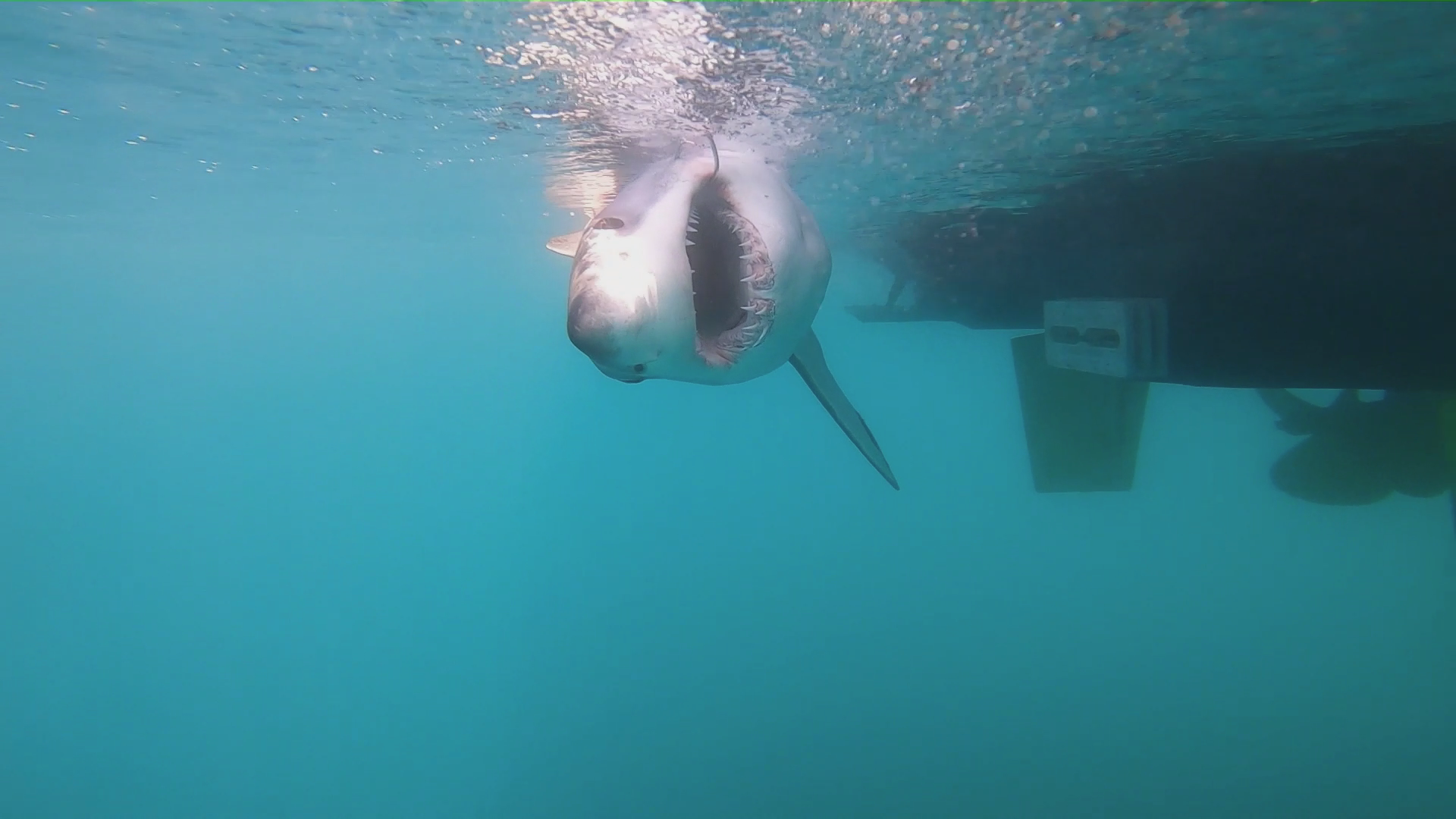
Just in time for Shark Week, the ocean's most famous predators are experiencing a redemption arc. Marine ecologists at the University of Delaware have fitted sharks with sensors and sent them out into the Atlantic Ocean to gather data that could help predict hurricanes. The research is led by UD professors Aaron Carlisle and Matt Oliver and PhD student Caroline Wiernicki. Enlisting sharks as amateur meteorologists comes at a critical time. The National Oceanic and Atmospheric Administration's capacity to forecast hurricanes has been hampered by federal cuts to staff and funding. Sharks also help speed things up. NOAA has partnered with UD and other Mid-Atlantic universities, which deploy gliders to the continental shelf to collect data that tell researchers what the water column looks like as hurricane season approaches. The gliders are effective but also slow moving and expensive to deploy and maintain. The researchers have successfully deployed three tags: two conductivity, temperature and depth (CTD) tags on two mako sharks (for oceanographic data collection); and a satellite tag on one white shark (to help evaluate if that species would be a good candidate for CTD tagging down the road). As of July 21, the white shark has been pinging the research team ever since he was tagged in May. He was recently tracked off Martha's Vineyard and has been surfacing every day – showing up in areas like Cape Cod and Long Island. The mako sharks were tagged off of the Delaware coast and swam south, bopping up and down between the Delmarva Peninsula and just north of Cape Hatteras. Carlisle, Oliver and Wiernicki are available for interviews. To reach Carlisle directly, visit his ExpertFile profile and click on the contact button. Interested journalists can also send an email to MediaRelations@udel.edu.


LSU Lab Helps Louisiana Prepare for Hurricanes, Drought, even Saharan Dust
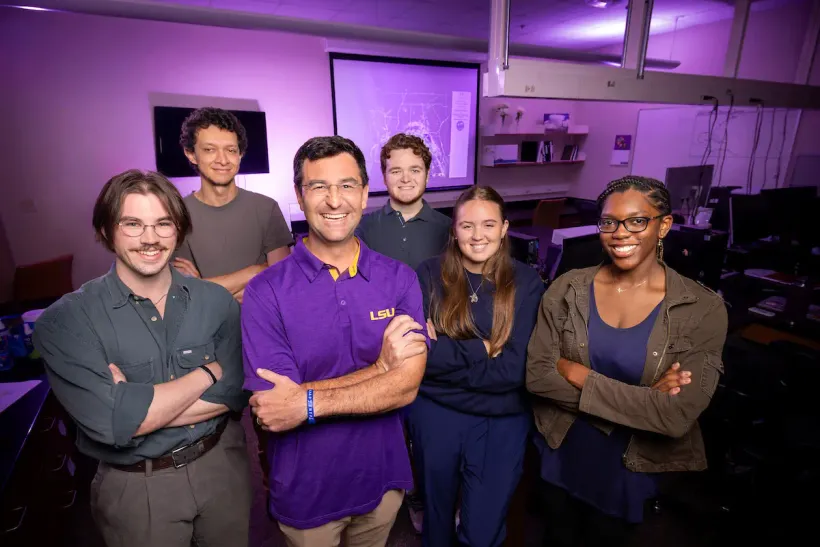
Any hurricane that forms in the Gulf of America is a direct threat to Louisiana and its neighboring states. But most seasonal forecasts focus on the entire North Atlantic Basin, including areas where storms may never come close to any land, much less the U.S. Gulf Coast. A Gulf-specific forecast developed at LSU’s Coastal Meteorology (COMET) Lab addresses that issue by providing storm information specifically geared toward the Gulf region. The lab is run by Paul Miller, an associate professor at LSU who founded it in 2019. “We decided that a Gulf-specific forecast could help state officials and Gulf-area residents better understand how active the upcoming season might be in their part of the Atlantic,” said Miller, who teaches in the Department of Oceanography & Coastal Sciences in the College of the Coast & Environment. Miller said the LSU-Velocity Risk Gulf Hurricane Outlook is one example of how the COMET Lab delivers real benefits to Louisiana. “A lot of forecasts tend to align with each other each year. But ours works a lot differently than some of the other forecasts that are geared towards larger areas of the ocean,” he said. “We’re not the world’s leading hurricane research lab—and we don’t try to be. Instead, we prioritize meeting the largest research gaps relevant to Louisiana residents, spanning a wide variety of weather hazards. “We want to make sure Louisianans experience a clear return-on-investment from our lab’s activities.” Ways the lab supports the state also include: Helping forecast storm surge in real time and informing the decision on when to close flood barriers before a tropical system hits land. Developing rainfall models to support flood prevention efforts. Studying weather patterns that cause drought and low coastal water levels that can lead to marsh loss during dry spells on the Gulf Coast. Saharan Dust Research One area of study that incorporates both air quality and tropical weather is the lab’s research on Saharan dust clouds, which are blown across the Atlantic in an air mass called the Saharan Air Layer, or SAL. “So, this sort of far-off distant concept of Saharan dust is actually something that is kind of important to folks here in Louisiana,” Miller said. This dust can shut down thunderstorm activity in the U.S. Caribbean territories, a key area of research in the COMET Lab, and cause respiratory problems when it reaches the Southeast U.S. The SAL can also suppress hurricane activity in the Atlantic. “Our lab just launched a new project with the Office of Naval Research to determine how dust-dimmed sunlight can affect ocean temperatures in the Atlantic’s most active hurricane breeding grounds,” Miller said. Read the full story here.

Villanova Professor Investigates Impacts of Hurricanes on Florida Coast
In October 2024, during the height of hurricane season, Hurricanes Milton and Helene swept across the southeastern United States. Their impact on Florida was severe, with damages totaling tens of billions of dollars. While communities in affected states continue to rebuild, a team of researchers mobilized to assess the damage caused in the hopes of better understanding the impacts of hurricane activity in the future. Jonathan Hubler, PhD, assistant professor of civil and environmental engineering at Villanova University, along with Villanova civil engineering graduate student Sarah Burghardt, traveled to Florida with a joint team from the Nearshore Extreme Events Reconnaissance (NEER) Association and the Geotechnical Extreme Events Reconnaissance (GEER) Association to investigate the immediate aftereffects of Hurricanes Milton and Helene. The National Science Foundation-sponsored trip gathered natural hazards research experts and practitioners from across the country, who quickly jumped at the opportunity to examine the impacts of two tropical storms that occurred in quick succession of each other. A few main areas of study were identified by the team so they could hit the ground running once they touched down in Florida. The researchers wanted to focus primarily on the effects of storm surge, waves, sediment erosion and deposition, and debris transport and accumulation from both hurricanes through pre-storm, during-storm, and post-storm data collection. Over 750 miles were covered across just a few days as data was surveyed and collected from Cedar Key, Horseshoe Beach, Venice, Port Charlotte, Port St. Lucie, Vero Beach and other coastal towns. “This was a unique opportunity for our team of scientists because our team collected data before the storms so we will be able to analyze the direct impacts of the storms utilizing the post-storm data that we collected,” said Dr. Hubler. “Although the destruction was difficult to witness firsthand, we are hopeful that our findings will help to mitigate the impact of these major storms in the future.” The data set collected from these storm sites is expected to improve the understanding, prediction, and mitigation of erosion as well as assess the performance of different shoreline protection systems during severe tropical storm events. Findings from the trip will be shared publicly through the NSF’s Natural Hazards Engineering Research Infrastructure (NHERI) DesignSafe-CI, a nationwide network tailored for data sharing among the natural hazards engineering research community. Local Florida communities will also be notified of relevant findings to increase awareness and understanding of risk assessments when preparing for tropical storm events. “It was a productive few days spent in Florida as we collected a significant amount of data and covered a lot of ground in a short span of time. I’m grateful to have been included on this research team and that I had the chance to bring one of my students along. This real-world experience in the field will help further her learning as she completes her studies,” said Dr. Hubler. Dr. Hubler traveled with the NEER and GEER team again in November for another data collection effort. Although the 2024 hurricane season has come to a close, researchers like Dr. Hubler continue to study their impact year-round to discover new mitigation strategies for next year’s season.

LI Communities Take Measures to Stem Flooding Issues
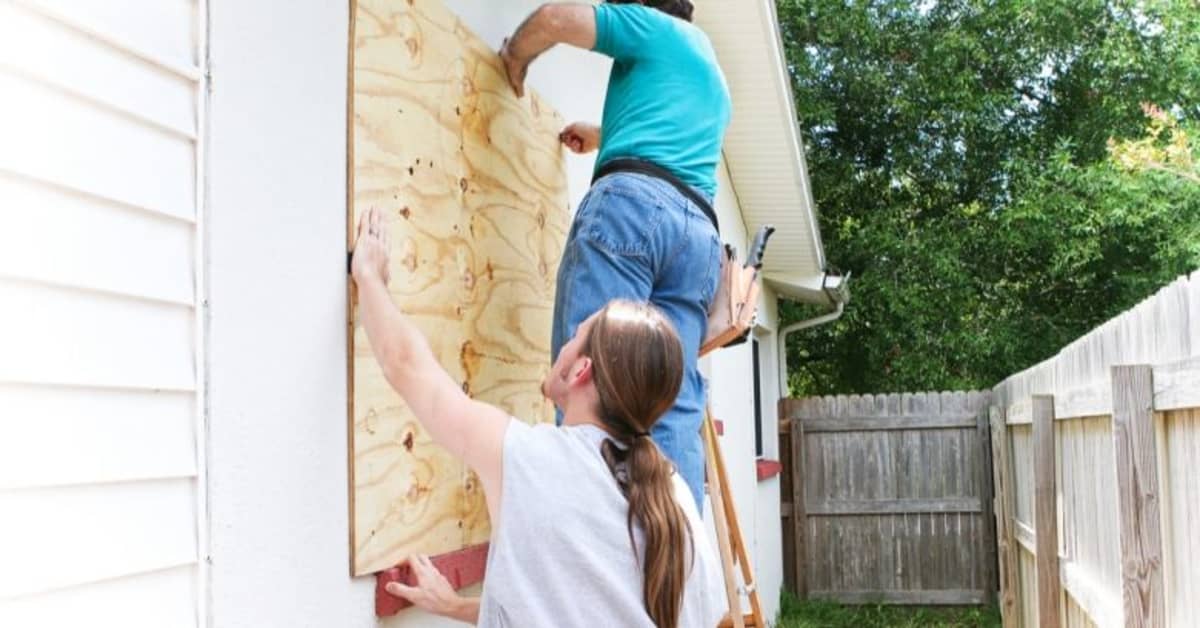
Dr. Jase Bernhardt, Hofstra associate professor of geology, environment, and sustainability, was interviewed by WCBS-TV, about measures being taken in West Islip, Long Island, to mitigate flooding issues. He also talked to MoneyGeek.com about the ways in which climate change impacts homeowners. “Climate change should certainly be taken into account if you are a prospective home buyer,” he said. “It is always worth reading up on the normal climate conditions for the location where you are purchasing a home, to see if anything jumps out at you, such as a heightened risk of hurricanes or tornadoes.”



An Underwhelming October: The Latest Jobs Report
October brought disappointing news in the most recent U.S. jobs report. In the last jobs report before the U.S. presidential election, only 12,000 jobs were added. This is significantly lower than the expected number of 100,000, marking the slowest hiring month in years. This jobs report is reflective of the multiple hurricanes that ravaged the country this month and the ongoing Boeing strike. Dr. Jared Pincin, economic expert and associate professor at Cedarville University, has provided insight into the current economy of the U.S. and how announcements like this could affect the future. Here are three key takeaways from Pincin's recent interview: The October jobs report may have been skewed by the two major hurricanes and the Boeing strike that have hindered Americans from working temporarily. How will the Federal Reserve view this report as they consider future rate cuts? The stock market can have strong reactions to announcements such as this. What will the market do with these numbers that are unexpected but potentially untrustworthy? This jobs report is the last key piece of economic data to come out before the presidential election on November 5. Is there any chance that voters change their minds based on this news? If you are covering the recent jobs report or the U.S. economy and need to know more, let us help with your questions and stories. Dr. Jared Pincin is an expert on economics and is available to speak to media regarding the job market, inflation, and what this means for families in the United States – simply click on his icon or email mweinstein@cedarville.edu to arrange an interview.


Hurricane Milton: Second major storm in two weeks could multiply danger on Florida's Gulf Coast
Now a Category 5 hurricane, Milton is making a beeline toward Tampa Bay and other parts of Florida's western coast. But it will also hit some of the same areas that Hurricane Helene decimated less than two weeks ago, amplifying the danger and need for an on-point disaster response. Experts in the University of Delaware's Disaster Research Center can talk about several facets of this developing situation: Jennifer Horney: The mental and physical impacts of multiple disasters; environmental impacts of disasters and potential public health impacts for chronic and infectious diseases. She can talk about both Milton and Helene – Horney is a native of North Carolina and has done fieldwork in the state. Victor Perez: Can talk about known environmental justice issues in the Gulf Coast region that interact with climate change impacts, like hurricanes. Sarah DeYoung: Conspiracy theories and misinformation during disasters; pets in emergencies, infant feeding in disasters, decision-making in evacuation and community cohesion. DeYoung is from western North Carolina and can draw parallels from Milton to Helene. Jennifer Trivedi: Can talk about long-term recovery after large scale events – including compounding events – as well as challenges during disasters for people with disabilities, vulnerable communities and decision making. Tricia Wachtendorf: Evacuation decision-making, disaster response and coordination, disaster relief (donations) and logistics, volunteer and emergent efforts, social vulnerability. James Kendra: Disaster response activities, volunteers, and emergency coordination. A.R. Siders: Expert on sea level rise and managed retreat – the concept of planned community movement away from coastlines and flood-prone areas and the "expanding bullseye" that is contributing to the rising disaster costs in the U.S. Shanjia Dong: Research looks at smart and resilient urban systems; infrastructure systems, critical infrastructure protection, effective disaster preparedness and response, and equitable resilience planning and climate change adaptation. Joe Trainor: Post-storm housing decisions and insurance.


Hurricane Helene: Addressing health and safety concerns as communities rebuild
With Hurricane Helene bearing down on the Gulf region, millions of people are deciding whether or not to evacuate from their homes or ride the storm out. How to best protect their families, concerns over feeding their infants and what to do with beloved pets will all factor into their decisions. Understanding the reasons why individuals choose one course of action over the other is a complex issue that researchers in the University of Delaware's Disaster Research Center have been studying for years. The following experts in the DRC, the oldest such center in the United States, can comment on the following topics: Tricia Wachtendorf: Evacuation decision-making, disaster response and coordination, disaster relief (donations) and logistics, volunteer and emergent efforts, social vulnerability. James Kendra: Disaster response, nursing homes and hospitals, volunteers, response coordination. A.R. Siders: Expert on sea level rise and managed retreat – the concept of planned community movement away from coastlines and flood-prone areas. Specifically, Siders can talk about how building more homes and infrastructure in flood-prone areas in Florida makes the consequences of hurricanes like Helene more severe. (How the 'expanding bullseye' is contributing to the rising disaster costs in the U.S.). She authored two papers slated for release on floodplain development (noting the more than 400,000 homes that were built in regulated floodplains 2001-2019). Jennifer Horney: Environmental impacts of disasters and potential public health impacts for chronic and infectious diseases. Sarah DeYoung: Pets in emergencies, infant feeding in disasters and decision-making in evacuation. Specifically, DeYoung can speak to reports that mothers in Florida social media groups are concerned about storage of breastmilk if/when the power goes out. Jennifer Trivedi: Can talk about preparedness steps and recovery, including recovery planning, particularly in non-coastal areas; as well as challenges for people with disabilities during disaster, cultural issues and long-term recovery. Victor Perez: Focuses on environmental racism and health disparities in historically marginalized communities. Shanjia Dong: Research looks at smart and resilient urban systems; infrastructure systems, critical infrastructure protection, effective disaster preparedness and response, and equitable resilience planning and climate change adaptation. Joe Trainor: Post-storm housing decisions and insurance.


ExpertSpotlight: The History of Haiti
Haiti is prominent in the news cycle - let our experts give you some perspective on the island's history and background Haiti's rich history and its ongoing refugee crisis remain critical topics in global conversations about human rights, migration, and international aid. As the first independent Black republic, Haiti's historical significance is profound, but the nation continues to face complex political, economic, and environmental challenges that have contributed to the displacement of its citizens. For journalists, understanding Haiti's past and present is essential for shedding light on issues such as migration policies, international support, and the lived experiences of Haitian refugees. Here are several story angles that offer deeper insights into Haiti's enduring struggles and global connections: Haiti’s fight for independence and its global impact: Explore how Haiti's revolution shaped the political landscape of the Western Hemisphere and its lasting influence on anti-colonial movements worldwide. The root causes of Haiti's refugee crisis: Investigate the political instability, natural disasters, and economic challenges driving the exodus of Haitian citizens and the broader migration dynamics in the region. International responses to Haitian refugees: Examine the policies of neighboring countries, including the U.S., and international organizations in addressing the influx of Haitian migrants and their treatment in host nations. Diaspora communities and cultural resilience: Highlight the Haitian diaspora’s contributions to culture, economy, and politics in countries where they have resettled, as well as their role in supporting those still in Haiti. Humanitarian aid and development in Haiti: Assess the effectiveness of international aid programs in addressing the country's crises, and explore innovative approaches to sustainable development in the region. Environmental degradation and its link to migration: Analyze how deforestation, climate change, and natural disasters such as earthquakes and hurricanes are exacerbating Haiti’s humanitarian challenges and forcing people to flee. Connect with an expert about the the History of Haiti: To search our full list of experts visit www.expertfile.com


VR Simulation to Demonstrate the Danger of Snow Squalls
Since 2017, Dr. Jase Bernhardt, Hofstra associate professor of geology, environment, and sustainability, has been using virtual reality technology to teach the public about the dangers of rip currents, hurricanes, and flash flooding. His most recent award, a $100,000 Road to Zero Community Traffic Safety Grant from the National Safety Council, is enabling him to tackle another seasonal weather worry: driving in snow squalls. The National Safety Council received funding for this grant from the National Highway Traffic Safety Administration. Bernhardt’s project aims to share information about the onset of snow squalls, the importance of heeding emergency weather advisories, and what drivers should do if they are on the road when a snow squall occurs. Although squalls are infrequent, they are extreme and frightening winter weather events that can result in a rapid onset of heavy snow, low visibility, icy roadways, and frigid temperatures. “Snow squalls are a very specific type of weather phenomenon. They often occur on a clear, calm day, with no warning of precipitation,” Bernhardt said. “Seemingly out of nowhere, you’ll see clouds, followed by a quick burst of very heavy snow. For a short time, perhaps only 10, 15 minutes, there are whiteout conditions where drivers can barely see the road ahead of them.” According to the U.S. Department of Transportation website, 24% of weather-related vehicle crashes occur on snowy, slushy, or icy pavement, and 15% happen during snowfall or sleet. More than 1,300 people are killed and nearly 117,000 people are injured in vehicle crashes on snowy, slushy, or icy pavement annually. Because winters in the New York metropolitan area have been mild for the last few years, Bernhardt worries that people have been lulled into a false sense of security about driving during winter storms or squalls. “We’re not used to being in that kind of severe weather anymore,” he said. “Snow squalls can be deadly in terms of massive collisions and multi-vehicle chain collisions. The key thing to remember is that they come in rapidly, catching people by surprise.” Bernhardt is collaborating on the software for the snow squall VR simulation with Frank Martin ’22, ’23, who earned both a BS and an MS in Computer Science from Hofstra University. Users will wear a headset and hold a device – like a video game controller – in each hand to replicate the movements of a steering wheel. In this way, users will experience what it is like to drive from clear, pleasant conditions into a brutal wall of snow. Bernhardt said that if a warning for a snow squall is issued via emergency broadcast, he hopes people who have used the simulation will understand the urgency of getting off the road or pulling onto the shoulder and remaining in their vehicle. “We want people to have an experience that is as close to reality as possible. The idea is to simulate how sudden and terrifying snow squalls can be and give people an opportunity to learn what they should and should not do if they are caught in one,” Bernhardt said. In conjunction with the VR simulation, Bernhardt is developing a survey to determine people’s reactions to emergency messaging and how effective it is. He will work with the National Weather Service to have the simulation and surveys available by fall 2025 for use at training and outreach events throughout the Northeast. Like Bernhardt’s rip current project, there are plans to have a version of the snow squall simulation and corresponding literature available in Spanish. Dr. Sasha Pesci, Hofstra assistant professor of geology, environment, and sustainability, is co-principal investigator on the grant and is helping with the translation of materials. “More and more, the National Weather Service, state and federal governments, and other agencies recognize the importance of having this information available in other languages,” Bernhardt said. “There are a lot of drivers whose primary language is Spanish, and they include cab and Uber drivers, and truckers.” Jase Bernhardt is available to speak with media about this topic - simply click on his icon now to arrange an interview today.