
Experts Matter. Find Yours.
Connect for media, speaking, professional opportunities & more.

MEDIA RELEASE: Hamilton's Barton Street East voted Ontario's Worst Road
The votes are in and the CAA Worst Road for 2022 is Barton Street East in Hamilton. After making its debut on the provincial top 10 list in 2019, Barton Street East has ranked fifth place (2019), third place (2021) and climbed to first place this year due to potholes and severe alligator cracking in the pavement. It has also taken the top spot as Hamilton’s worst road for the third year in a row. Taking the second and third place spots are Eglinton Avenue West in Toronto and Barker Street in Prince Edward County. “We know the campaign works. People vote in the annual CAA Worst Roads Campaign because it gives Ontarians a platform to continue putting pressure on various levels of government to understand what roads they believe are in urgent need of repair,” says Teresa Di Felice, assistant vice president, government and community relations, CAA SCO. “The campaign has been able to demonstrate that decision-makers are paying attention to the results, which has prompted municipal officials to move up infrastructure projects in their communities.” This year, four out of 10 of the province’s Worst Roads are in Toronto. They are, Eglinton Avenue West, Eglinton Avenue East, Lake Shore Boulevard East and Finch Avenue West. This is double the number of roads in Toronto that appeared on provincial list compared to last year. In 2021, Victoria Road in Prince Edward County made its debut on the provincial top 10 list and this year, it has completely dropped off the list. Other roads that have come off the provincial top 10 list include: Hunt Club Road and Innes Road in Ottawa and Algonquin Boulevard West in Timmins. "These campaign success stories are because governments are prioritizing infrastructure through multi-year capital investments," added Di Felice. “The results this year show us that Ontarians are relentless in using the campaign to advocate for roads they believe are in urgent need of repair, which is why we have seen Barton Street bubble up to the top spot and roads like Eglinton Avenue continue to garner attention." In Ontario, 182 municipalities had roads in their communities nominated. Drivers accounted for the majority of the votes being cast, with cyclists and pedestrians accounting for about a quarter of the votes. Voters shared their primary reasons for selecting a road, with 80 per cent citing potholes, followed by poor road maintenance (71 per cent) and no or poor cycling infrastructure (29 per cent). Ontario's top 10 list is verified by the Ontario Road Builders' Association (ORBA). “This year’s Worst Roads campaign once again solidified the fact that although much work has been done across the province to maintain and repair Ontario’s roads, greater investment is needed to tackle the staggering municipal infrastructure deficit in Ontario,” says Bryan Hocking, CEO, ORBA. “Building and maintaining infrastructure is a critical part of Ontario’s long-term economic plan, and even more important to our economic recovery from the COVID-19 pandemic. We must begin to build the necessary infrastructure today so we can be ready to meet the challenges of tomorrow.” Ontario's Top 10 Worst Roads for 2022 1. Barton Street East, Hamilton 2. Eglinton Avenue West, Toronto 3. Barker Street, Prince Edward County 4. County Road 49, Prince Edward County 5. Carling Avenue, Ottawa 6. Eglinton Avenue East, Toronto 7. Lake Shore Boulevard East, Toronto 8. Finch Avenue West, Toronto 9. Bronson Avenue, Ottawa 10. Queen Street, Kingston Worst Roads by Region • Central— Laclie Street, Orillia • Eastern— Barker Street, Prince Edward County • Halton-Peel-York-Durham— Hurontario Street, Mississauga • Niagara— Ontario Street, St. Catharines • North— Algonquin Boulevard East, Timmins • Southwest— Plank Road, Sarnia • Western— Speedvale Avenue West, Guelph • Ottawa— Carling Avenue, Ottawa The CAA Worst Roads campaign is a platform for Ontarians to make roads safer by helping municipal and provincial governments understand what roadway improvements are important to citizens and where they need to be made. Votes submitted to the CAA Worst Roads campaign are compiled and released as an annual provincial top 10 list along with a series on regional lists, all designed to spark a dialogue with governments and to help pave the way for safer roads across Ontario. For the full list of the 2022 Worst Roads, please visit www.caasco.com/worstroads



Metaverse...have you met AcceleRoute?
The Internet is a testament to the power of evolution. But there's a bigger picture looming. A discontinuity. Driven by a new breed of application environments including the Metaverse, multi-player gaming, VR and more. Will this drive the need for a "new Internet"? Many believe, as a minimum, networking will need a serious upgrade. Moore's Law can cover us for throughput for awhile, but latency is a different story. The speed of light creates the limit. No getting around that. There is only one solution. Park the services closer to the users. And that ushers in a new architectural paradigm in the form of Edge Data Centers. Those facilities will operate in global federations, serving tight geographies while hot-syncing with each other. A tidy solution. Job done, right? Not so fast. If people only cared about what and who is geographically close to them, we might be ok. Remember we need to park the services AND THE DATA close to the users. We're not talking about old slow data like websites, but the fast stuff like fast-twitch gaming, or VR, or avatar movements in the Metaverse. How can a byte in Tokyo stay in "white-hot" sync with a byte in London? Predictive caching, that's how. The new frontier. The geography-buster. Let's say you’re VR-interacting with someone across the planet, there will be a lag. It won't feel real. But what if the application servers use laws of physics to predict far-end movement for local render, with algorithms to reconcile laggy incoming real-position data. Done right, that might feel real. Take that example and scale it in all directions. That's the future. Can incrementally-evolved networks handle that? Its anybody's guess what the future of networking will look like but let's try anyway. Some believe this brave new application world will be the catalyst for significant infrastructure change. Not the " N+1" kind, but the "all-new" kind. The kind we thought we'd never need because incremental upgrades were getting it done. But that was before the Metaverse discontinuity. AcceleRoute is a forward-thinking next-generation network architecture designed for this category of challenge. All-new thinking. Designed from the ground up around a bufferless core architecture, AcceleRoute achieves network throughput and latency on a scale not seen before. Bufferless means no hops. Essentially an endless supply of instantly provisioned virtual direct links, each with as much dynamic bandwidth as needed at any point in time. Incorporating novel paradigms like network fusion and expansion by constellations, AcceleRoute can scale to new orders of magnitude, all while embracing absolute simplicity for network control and management. An infinitely-expandable network, based on new principles, that can glue CPUs/DPUs/GPUs to globalized data with one seamless fabric. Perhaps a full AcceleRoute solution won't be required, but it’s likely the pursuit of network optimizations will be relentless. AcceleRoute represents 2 decades of invention embodied by 36 patents with over 700 claims and more on the way. That's a massive starting position for anyone playing the long game.

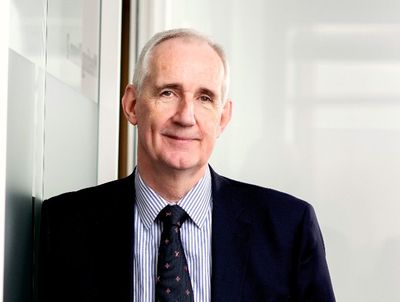
Leo Quinn says transport, defence and energy projects are set to benefit from potential government-funded boom The UK Government has committed £4.8bn for infrastructure investment in towns across the country Balfour Beatty is working on a number of projects including Hinkley Point C and HS2. A decade of UK ‘infrastructure growth’ has been predicted by Balfour Beatty CEO and Aston University visiting professor, Leo Quinn, as the construction industry gets ready for a potential boom following financial commitments from the Government. £4.8bn has been promised for infrastructure investment in towns across the country and £26bn for public capital investment to hit emissions targets as part of the Government’s ‘levelling up’ agenda to raise living standards in regions outside of London. Leo Quinn said: “If you start to look at infrastructure and you look at either HS2, you look at nuclear - in terms of defence nuclear or civil nuclear - you look at the green agenda . . . we are entering into an era of 10 years of infrastructure growth. “I think the future looks very optimistic.” Balfour Beatty, the UK’s largest construction group, is working on a number of projects, including Hinkley Point C, the first new nuclear power station built in the UK in more than 20 years, and HS2, the high-speed rail link between London and the north of England. Overall, the UK group and French construction company Vinci have secured about £6bn in HS2 projects as part of a joint venture. This includes a £5bn civil engineering contract for the stretch of HS2 between Warwickshire and Staffordshire and a £1bn construction management deal for Old Oak Common station in north London, alongside engineering group Systra. The group was also awarded a £52m contract to deliver ‘environmental works’ across the HS2 route from the West Midlands to Crewe, creating new habitats along this 64km section of track.


The Metaverse will change everything!
It will change how we interact. How we consume information. How we have fun. What devices we use. And underlying all of that is networking. And that will change too. "IT infrastructure that powers the Internet will need major upgrades to bring the Metaverse from theory to practice, according to Raja Koduri, SVP and GM of Accelerated Computing Systems and Graphics at Intel. “(The metaverse will) need several orders of magnitude more powerful computing capability, accessible at much lower latencies across a multitude of device form factors. To enable these capabilities at scale, the entire plumbing of the internet will need major upgrades.” Metaverse quality of experience will be intimately tied to networking performance, and latency will be key. Delivering an "instantaneous" Metaverse experience will require a next generation physical network that is designed to deliver highly predictable end-to-end bandwidth with ultra-low latency. "Zero-hop" network designs such as AcceleRoute can achieve this through a bufferless architecture that delivers latency approaching that of direct links while eliminating congestion in the network core. For more information visit the AcceleRoute webpage at www.InventionShare.com

MEDIA RELEASE: Less than a week left to vote for Ontario's Worst Roads
With just six days left for Ontarians to vote in the annual CAA Worst Roads campaign, CAA South Central Ontario (SCO) continues to call on motorists, cyclists and pedestrians to nominate their worst road. “CAA research indicates that 41 per cent of Ontarians have had their vehicles damaged from poor road conditions, however most (82 per cent), did not take action by either filing a claim with their insurance company or a damage claim as part of their municipality/province. CAA Worst Roads campaign gives Ontarians an easy way to let their politicians know what roads are important to fix,” says Teresa Di Felice, assistant vice-president, government and community relations for CAA SCO. “Our research also shows us that despite the frustration associated with construction delays, most Ontarians (88 per cent) are willing to incur some inconvenience to have better roads.” Contenders for the provincial top 10 list reflect a number of communities across Ontario, including Hamilton, Toronto, Prince Edward County, and Mississauga. Some of the biggest complaints from voters so far are potholes, poor road maintenance, poor cycling infrastructure, unpaved roads. Once voting closes, CAA will compile a list of the top 10 Worst Roads in Ontario, along with a series of regional top five lists across the province. Collectively, the campaign results will help to shine a light on the state of roads in communities across Ontario. Nominations for CAA's Worst Roads can be cast at caaworstroads.com until April 19th, results will be announced in June.

MEDIA RELEASE: Voting for the CAA Worst Roads campaign is now open to all Ontarians
Tired of swerving around potholes? Worried about your safety as a cyclist or pedestrian? Voting is now open for the annual CAA Worst Roads campaign and CAA South Central Ontario (CAA SCO) is giving Ontarians the opportunity to voice their concerns about the bad roads in their community. “We know that through CAA’s research, almost three quarters (72 per cent) of Ontarians are venting about the state of our roads to either their spouses, friends or co-workers and not always to local government officials,” says Teresa Di Felice, AVP government and community relations, CAA SCO. “As we kick off another year of the CAA Worst Roads campaign, we are calling on all Ontarians to vote for their Worst Roads today and join the community of drivers, cyclists, transit riders and pedestrians committed to improving Ontario’s roads.” The campaign informs decision-makers across various levels of government which roadway improvements are top of mind for road users, and where improvements could be prioritized. Ontarians can vote on issues ranging from congestion, potholes, poor road signs and the timing of traffic lights to pedestrian and cycling safety. “The key to economic recovery is the investment in roads and supporting infrastructure because when we invest in our roads, we also create jobs,” says Di Felice. “Throughout the pandemic, our roads have been the arteries used every day to keep essential workers, goods and services flowing. Now more than ever, funding for roadway improvements and proper infrastructure needs to be consistent to ensure that quality and safety is maintained for everyone.” According to the 2019 Canadian Infrastructure Report Card, a concerning amount of municipal infrastructure is in poor or very poor condition. The report card also highlights spending $1 on pavement preservation may eliminate or delay spending $6-$10 on costly repairs later. CAA’s research also shows that more than 80 per cent of Ontarians say poor road conditions such as cracks in pavement (89 per cent) and potholes (82 per cent) are still the most common issues in their neighbourhoods. The damage to a vehicle caused by a pothole can range from $300, with some fixes topping $6,000 depending on the make and model of the car. “As the inventory of vehicles continues to remain scarce due to the global semiconductor chip shortage, more people are now trying to hold on to their cars for longer. Not only can poor roads cause damage to vehicles but they also contribute heavily to the wear and tear of tires and increased fuel consumption which is why the maintenance and quality of our roadways is so important.” added Di Felice. Kinga Surma, Ontario’s Minister of Infrastructure echos the importance of investing in quality roadways and infrastructure. “Our government has made a historic investment of an additional $1 billion over the next five years through the Ontario Community Infrastructure Fund (OCIF) that will provide stability and predictability to 424 small, rural and northern communities. This funding will allow them to repair, upgrade, and modernize their critical infrastructure so that they are safer, healthier and more reliable for all. Our government acknowledges the important role that road infrastructure plays in our province, and we recognize the work that the CAA does to engage with our communities to further strengthen Ontario’s critical infrastructure and contribute to the province’s economic growth.” Nominations for CAA’s Worst Roads can be cast at caaworstroads.com until April 19. Once voting is closed, CAA will partner with Ontario Road Builders’ Association (ORBA) to verify and compile a list of the top 10 Worst Roads in Ontario, along with the top five Worst Roads in regions across the province. The regional lists will help shine further light on the state of local roads in municipalities across Ontario. “The goal of the CAA Worst Roads campaign is to get roads repaired in a timely manner by working in partnership with government to invest in road maintenance, repair and replacement,” says Bryan Hocking, CEO, ORBA.” “The Ontario Road Builders’ Association’s role in this campaign is a technical one. We will assess each road on the list, offer a life cycle analysis, and analyze how long the road can last in its current condition and offer an explanation for its deterioration,” added Hocking. CAA will present the list of 2022 Worst Roads to local and provincial officials to help inform future funding and planning decisions.
UCI expert sources for the Russia/Ukraine Conflict
On Friday, Feb. 25, 2022, UCI’s School of Social Sciences hosted a webinar titled, “Understanding the Russia-Ukraine Crisis.” Several of the experts below offered perspective on key issues surrounding the escalating conflict between Russia and Ukraine. You can watch or listen to the webinar here: https://www.socsci.uci.edu/newsevents/news/2022/2022-02-25-understanding-the-russia-ukraine-crisis.php UCI faculty members available to comment, and their areas of expertise, are found below. Matthew Beckmann, Associate Professor, Political Science. Professor Beckman studies the organizational structures and operational strategies presidents can use to pick their team, invest their time, focus their attention, channel their effort, discipline their thinking, coordinate their subordinates, and, most importantly, make decisions. Contact: beckmann@uci.edu Jeffrey Kopstein, Professor, Political Science. In his research, Professor Kopstein focuses on interethnic violence, voting patterns of minority groups, and anti-liberal tendencies in civil society, paying special attention to cases within European and Russian Jewish history. As pertains to the Russia/Ukraine conflict, he can speak to politics in Russia and Ukraine, Authoritarianism, NATO and the transatlantic alliance, and European Union policy. Contact: kopstein@uci.edu Erin Lockwood, Assistant Professor, Political Science. Professor Lockwood’s research areas include international political economy and global financial politics. She can speak to questions related to economic sanctions, financial sanctions/financial infrastructure and payments systems more generally (for example, the prospect of cutting off Russian access to the SWIFT financial communications system.) Contact: eklockwo@uci.edu David Meyer, Professor, Sociology, Political Science and Planning, Policy & Design. Professor Meyer’s research examines the relationships between social movements and the political contexts in which they emerge. Topics surrounding the Russia/Ukraine conflict that align with his expertise include sanction strategy; the resistance strategy that might emerge in Ukraine in the face of occupation; the history of the Cold War and its influence today; and the possibility of a powerful peace/isolationist movement emerging in the U.S. Contact: dmeyer@uci.edu Gustavo Oliveira, Assistant Professor, Global & International Studies. Professor Oliveira is a specialist in global political economy and critical geopolitics, focusing on the BRICS countries (Brazil, Russia, India, China, and South Africa) and international commodity markets, especially agricultural trade and natural resource governance. He can speak to the basis of the Russia/Ukraine conflict on natural resources, and the repercussions of the conflict for international commodity markets, inflation, and disruptions to global food supply chains. He can also speak about the anti-war movements in Russia, Europe, the United States, and broader political repercussions of the conflict in Brazil, Latin America, and the U.S. Contact: gustavo.oliveira@uci.edu Stergios Skaperdas, Professor, Economics and Director of the Center for Global Peace and Conflict Studies. His general area of research is political economy, the interaction of economics and politics. Among other issues, he has studied conflict and wars, the role of the modern state in economic development, and the interaction of globalization and geopolitics. Contact: sskaperd@uci.edu Etel Solingen, Distinguished Professor, Political Science and Thomas T. and Elizabeth C. Tierney Chair in Peace and Conflict Studies. Solingen studies the reciprocal influence between international political economy and international security, globalization and its discontents. She can discuss the crisis in terms of historical precedents (of international crises), the utility of sanctions, bargaining in crisis, Russia’s economic decline and how it bears on the current crisis. Contact: etel.solingen@uci.edu Media Contacts: • Tom Vasich, Communications Officer, UCI | 949-285-6455 | tmvasich@uci.edu • Heather Ashbach, Executive Director of Marketing and Communications, School of Social Sciences | 719-651-3224 | hashbach@uci.edu


Podcast: Germany’s caution over Russian aggression ‘disappointing’ NATO
Russia’s threat to Ukraine has highlighted differences between east and west Germans over handling of Russia, and the country’s cautious foreign policy Aston University academic explains why German soldiers shooting at Russian counterparts would be seen as a “tremendous failure” New Chancellor Olaf Scholz faces massive challenges including how to handle Covid-19, “crumbling” infrastructure, and climate change targets. Germany without its stalwart former leader Angela Merkel faces a number of huge challenges – not least the threat of Russia invading Ukraine. While Germany wants to provide leadership within the European Union, its diplomatic stance over Russia is at odds with many other countries within NATO. Those are the views of Dr Ed Turner, a reader in politics at Aston University, who was interviewed in the latest episode of the 'Society matters' podcast series, presented by journalist Steve Dyson. The episode, subtitled 'What Germany's new government means for the UK, Europe and Russia', follows a political shift following the departure of Chancellor Angela Merkel last year after 16 years in charge, after the defeat of her Christian Democratic Party. Dr Turner said the immediate priority for new Social Democrat Chancellor Olaf Scholz was “undoubtedly the crisis in Ukraine and the positioning of large numbers of Russian troops on Ukraine’s border, and the real worry that Russia will invade”. He said Germany wants the issue addressed, “but is doing so in a way that is really very cautious and is disappointing to many of Germany’s allies”. Dr Turner, who is also co-director of the Aston Centre for Europe, said Germany’s “very different approach” was reflective of its history with Russia. He explained: “There is a strong sense that Germany owes a significant debt, has a particular responsibility towards Russia for the losses incurred in World War One and, particularly, in World War Two. “The perception is that German troops once again firing at Russian soldiers would be a tremendous failure. Germany also places a strong emphasis on diplomacy as a way of engaging in foreign relations rather than hard military interventions.” There were also “economic angles”, he added, with Germany needing Russian energy at a time when it was committed to phasing out coal and nuclear power. Dr Turner, whose fascination with Germany began when he cycled through the country as a teenager, said a “carrot and stick” balance was dividing the country, with 68 per cent of west Germans but only 34 per cent of east Germans last year supporting EU sanctions against Russia. This reflected “really big disparities” more than 30 years after German reunification, with 60 per cent of east Germans feeling they are treated as second class citizens. Dr Turner said post-Merkel Germany faced big challenges including handling Covid-19, large parts of German infrastructure “really crumbling” with a big backlog of investment needed, and a pledge to move faster towards net zero emissions. But he added that UK-German relations in the wake of Brexit were not on the list of big things. “Good relations between the UK and Germany will depend on the nature of the UK’s relations with the European Union,” he said. “If the UK is at loggerheads with the European Union, in particular if there was a worsening of the situation in relation to the Northern Ireland protocol, then relations with Germany would get worse.” But Dr Turner said there was “huge affection” for the UK in Germany. “Germans are willing to disentangle the UK from Brexit and to say ‘we want to move on and don’t think badly of you’. I really want to see bridge-building between the two countries over the coming years.” Dr Turner said Germany remained “nervous” of the advance of the far right, especially if numbers of refugees coming to Germany were to grow. He said Angela Merkel would be remembered for Germany’s “humane response” to the 2015 refugee crisis, but others were “much more critical” over her policy. This, he added, led to German society becoming divided and the far right gaining ground. But Dr Turner acknowledged Mrs Merkel as a “remarkable leader who really broke the mould” as the first woman Chancellor and first from the east. In contrast, her successor is seen as a “steady hand on the tiller” as he heads a “traffic light coalition” of Social Democrats, Greens and Liberals. Episode 6 in series 2 of the ‘Society matters’ podcast and all previous episodes can be found HERE.

What it will take to overcome supply chain disruptions
The supply chain disruptions sparked by the pandemic highlight the need for behavioral shifts by both consumers and companies. Asoo Vakharia, McClatchy Professor and director of the Supply Chain Center at UF’s Warrington College of Business, says supply chain disruptions are — and will continue to be — a way of life. But the degree of the turmoil experienced recently demonstrates the need for some change. “Demand dropped so quickly and at such a high volume that it created a problem for us,” Vakharia said in an episode of the From Florida podcast. Approximately 20% of imports to the United States come from Asia with the biggest share off-loaded in Los Angeles, followed by Long Beach, California. Those ports, along with other large centers, can accommodate the Ultra Large Vessels often used for trans-Pacific shipping. But they’ve been severely impacted by inflow/outflow imbalances caused by a range of factors including truck driver shortages and poor infrastructure. In response, companies such as Amazon, have purchased smaller vessels that can access a larger number of smaller ports, including those that may require passage through the Panama Canal. The move will enable the commerce giant to side-step some of the bottlenecks slowing down larger ports, but it will also add to expense. This is where Professor Vakharia says companies, and consumers, will need to make choices. He cautions companies to play the long game. “Consumers have long memories and they will reward people who have a little bit of recognition of our conditions,” he said. And he says buyers should always be on the lookout for deals. “There is lots of opportunity out there,” Vakharia said. “Maybe you won’t get the brand you want, but you will get a good brand. Let’s moderate our wants a little bit. Let’s think logically.” Professor Vakharia also sees opportunity for Florida ports, with the caveat that the complexity of the issue will require significant planning — and investment. “We need to have an infrastructure, which is rail or trucks, which are going to visit these ports and take the goods away from them because otherwise we’re going to do the same thing as Long Beach.” The added expense of smaller ships will also need to be managed. To hear more about the supply chain issues currently at play, and possible solutions for the future, listen to the episode on From Florida at this link. Read the recent article that Professor Vakharia has been quoted in: Listen to other episodes in the "From Florida" series from the link below.


Georgia Southern University has established a new research and outreach center, the Institute for Water and Health, to investigate the complex interactions between water and human activities, and protect and restore public health in a changing environment. As part of the University’s focus on public impact research, the center will foster collaboration among scientists, government agencies, industry, nonprofit organizations and communities. Coastal Georgia is the perfect location for such an institute to conduct interdisciplinary research because it lies at the intersection of many social, economic and ecological issues. The center supports the region through research, workforce training for students, and actively involving communities in water resource management decision-making process, said Asli Aslan, Ph.D., associate professor in Georgia Southern’s Jiann-Ping Hsu College of Public Health Department of Biostatistics, Epidemiology and Environmental Health Sciences. Now also director of the Institute for Water and Health, Aslan is a water microbiologist, and her research program bridges ecosystem and human health. She has ongoing funded projects on tracking sources of water pollution and assessing health risks associated with exposure to chemical and microbial contaminants. She works with local communities and nonprofit organizations to encourage water stewardship behaviors. Aslan has served in various federal and state agencies and organizations as an adviser, reviewer, scientific committee member and affiliated faculty. She is also the founder and currently the co-chair of the Water and Health Committee of the American Public Health Association. “We want to create a nationally recognized institution that provides meaningful solutions for community needs,” said Aslan. “Our immediate plan is to develop a coalition with all stakeholders in the region to address issues related to increased water demand, impact of sea-level rise on water resources, and potential emerging contaminants in our urban and rural water infrastructure. We are in the process of establishing a community advisory group consisting of scientists from academic institutions, representatives from local and state governments, community leaders, non-profit organizations and businesses to identify and prioritize community needs in water research and education.” For example, she said, although one in every six households in Georgia has a private well, few residents realize any water testing, treatment or well maintenance is the sole responsibility of the property owner as per the Safe Drinking Water Act. Aslan said the Institute for Water and Health will work with the homeowners to help them recognize potential risks and provide solutions that will keep families safe in the long term. “We also look at sources of contaminants using state-of-the-art-methods. And if you know where the pollution is coming from precisely, it’s easier to go fix that problem once and for all, which has a direct impact on the decision-making process to protect water resources.” she said. These new techniques allow researchers with the institute to provide test results within a few hours, which helps end-users to be informed the same day instead of days where most water testing methods currently take about 48 hours. The implications of these methods are broad, as they can be used to identify pathogens in storm water or in household drinking water pipes; assess how new sustainable water treatment technologies efficiently remove contaminants, or provide same-day results for recreational beach monitoring. “We can do all this fancy research in the lab, but it will be very important for us to go out into the community and talk to people, ask them what their immediate needs – our goal is to involve communities from the very beginning of our research so that we co-develop meaningful solutions that will improve the quality of their everyday lives,” Aslan said. “Our group at Georgia Southern consists of established researchers from multiple disciplines such as environmental education, public health, social and behavioral sciences, environmental and computational engineering, coastal ecology, and we are growing everyday”. Carl L. Reiber, Ph.D., Georgia Southern’s provost and vice president for academic affairs, said the center will pull together faculty from across the University, many of whom have already established themselves as water experts within their own discipline. He expects the center to take a very visible role for the University and is renovating space in Savannah near the Armstrong campus to house the center and its labs. “The Institute for Water and Health will bring to southeast Georgia an awareness of the importance of water quality, water management and how tightly these areas are aligned with our health,” Reiber said. “The public impact of this institute is immeasurable and will ultimately increase the quality of life in our community.” If you're a journalist looking to know more about this topic or are looking to cover - then let us help. Asli Aslan, Ph.D., is a water microbiologist, and her research program bridges ecosystem and human health. She has ongoing funded projects on microbial source tracking, health risk assessment of water resources, and the ecology of pathogens in the aquatic environment. She is available to speak with reporters – simply click her icon now to arrange an interview today.

