
Experts Matter. Find Yours.
Connect for media, speaking, professional opportunities & more.
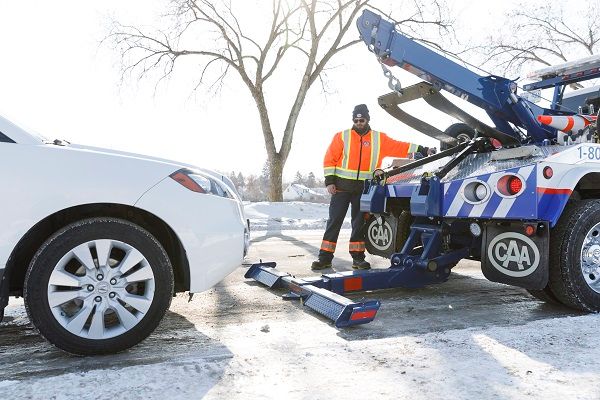
MEDIA RELEASE: Reforming the towing industry: CAA supports today’s provincial announcement
Provincial oversight of the towing industry would enhance protection for all Ontarians CAA South Central Ontario (CAA SCO) supports today’s government announcement for provincial oversight, reform and licensing of the towing industry. “Today’s announcement is an important step towards addressing the needs and challenges experienced by both consumers and the tow industry. Ontario’s motorists need to know that their tow operators are provincially licensed and qualified to perform towing services safely,” says Teresa Di Felice, assistant vice-president of government and community relations for CAA SCO. The government’s comments highlight the need for better education for the motoring public, including an introduction of a consumer bill of rights. In 2018 CAA created the Towing Bill of Rights, a glove box reference card, to help avoid any confusion when it comes to the rights of motorists when they need towing services. A CAA SCO study commissioned in 2020 revealed that only 1 out of 5 Ontario drivers feel “very protected” under the current system. The survey also identified that more than 90 per cent of Ontarians agree with tow truck licensing, certification and provincial regulation. “For over a decade CAA has been advocating for towing industry reforms and has been working towards greater consumer protection. We are pleased to see the province moving in the right direction. Consumers should have the confidence that they will be protected, regardless of where in the province they are and what kind of towing services they may require.” More information on CAA’s proposed framework for a provincial towing regulatory system can be found at www.moresafetows.ca and in our August 2020 Provincial Towing Oversight Town Hall Webinar.


Online ratings systems shouldn’t just be a numbers game
When you’re browsing the internet for something to buy, watch, listen, or rent, chances are that you will scan online recommendations before you make your purchase. It makes sense. With an overabundance of options in front of you, it can be difficult to know exactly which movie or garment or holiday gift is the best fit. Personalized recommendation systems help users navigate the often-confusing labyrinth of online content. They take a lot of the legwork out of decision-making. And they are an increasingly commonplace function of our online behavior. All of which is in your best interest as a consumer, right? Yes and no, says Jesse Bockstedt, associate professor of information systems and operations management at Emory’s Goizueta Business School. Bockstedt has produced a body of research in recent years that reveals a number of issues with recommendation systems that should be on the radar of organizations and users alike. While user ratings, often shown as stars on a five- or ten-point scale, can help you decide whether or not to go ahead and make a selection, online recommendations can also create a bias towards a product or experience that might have little or nothing to do with your actual preferences, Bockstedt says. Simply put, you’re more likely to watch, listen to, or buy something because it’s been recommended. And, when it comes to recommending the thing you’ve just watched, listened to, or bought yourself, your own rating might also be heavily influenced by the way it was recommended to you in the first place. “Our research has shown that when a consumer is presented with a product recommendation that has a predicted preference rating—for example, we think you’ll like this movie or it has four and a half out of five stars—this information creates a bias in their preferences,” Bockstedt says. “The user will report liking the item more after they consume it if the system’s initial recommendation was high, and they say they like it less post-consumption, if the system’s recommendation was low. This holds even if the system recommendations are completely made up and random. So the information presented to the user in the recommendation creates a bias in how they perceive the item even after they’ve actually consumed or used it.” This in turn creates a feedback loop which can reflect authentic preference, but this preference is very likely to be contaminated by bias. And that’s a problem, Bockstedt says. “Once you have error baked into your recommendation system via this biased feedback loop, it’s going to reproduce and reproduce so that as an organization you’re pushing your customers towards certain types of products or content and not others—albeit unintentionally,” Bockstedt explains. “And for users or consumers, it’s also problematic in the sense that you’re taking the recommendations at face value, trusting them to be accurate while in fact they may not be. So there’s a trust issue right there.” Online recommendation systems can also potentially open the door to less than scrupulous behaviors, Bockstedt adds. Because ratings can anchor user preferences and choices to one product over another, who’s to say organizations might not actually leverage the effect to promote more expensive options to their users? In other words, systems have the potential to be manipulated such that customers pay more—and pay more for something that they may not in fact have chosen in the first place. Addressing recommendation system-induced bias is imperative, Bockstedt says, because these systems are essentially here to stay. So how do you go about attenuating the effect? His latest paper sheds new and critical light on this. Together with Gediminas Adomavicius and Shawn P. Curley of the University of Minnesota and Indiana University’s Jingjing Zhang, Bockstedt ran a series of lab experiments to determine whether user bias could be eliminated or mitigated by showing users different types of recommendations or rating systems. Specifically they wanted to see if different formats or interface displays could diminish the bias effect on users. And what they found is highly significant. Emory has published a full article on this topic – and its available for reading here: If you are a journalist looking to cover this topic or if you are simply interested in learning more, then let us help. Jesse Bockstedt, associate professor of information systems and operations management at Emory’s Goizueta Business School. He is available to speak with media, simply click on his icon now – to book an interview today.



Comfort Women – UConn expert weighs in as a dark piece of history returns to light
A recent article in an academic journal claiming that Korean comfort women -- imprisoned, raped, and subjected to brutal atrocities during World War II -- were "prostitutes" who had willingly entered indentured contracts set off a firestorm of controversy and a chorus from historians and academics calling for the paper's retraction. It's a topic garnering international attention as survivors continue to seek resolution, compensation, and acknowledgement of the past. UConn's Alexis Dudden is a professor of history specializing in Japan and Korea who has heard stories from survivors first-hand and is among those scholars calling out the erroneous claims: A recent academic journal article by the professor — in which he described as “prostitutes” the Korean and other women forced to serve Japan’s troops — prompted an outcry in South Korea and among scholars in the United States. It also offered a chance, on the Zoom call last week, for the aging survivor of the Japanese Imperial Army’s brothels to tell her story to a group of Harvard students, including her case for why Japan should issue a full apology and face international prosecution. “The recent remarks by the professor at Harvard are something that you should all ignore,” Lee Yong-soo, a 92-year-old in South Korea and one of just a handful of so-called comfort women still living, told the students. But the remarks were a “blessing in disguise” because they created a huge controversy, added Ms. Lee, who was kidnapped by Japanese soldiers during World War II and raped repeatedly. “So this is kind of a wake up call.” The dispute over the academic paper has echoes of the early 1990s, a time when the world was first beginning to hear the voices of survivors of Japan’s wartime sexual slavery in Asia — traumas that the region’s conservative patriarchal cultures had long downplayed. Now, survivors’ testimony drives much of the academic narrative on the topic. Yet many scholars say that conservative forces are once again trying to marginalize the survivors. “This is so startling, 30 years later, to be dragged back, because in the meantime survivors from a wide range of countries found a voice,” Alexis Dudden, a historian of Japan and Korea at the University of Connecticut who has interviewed the women. In dual articles from The New Yorker and The New York Times, Dr. Dudden weighed in on the controversial journal article and offered her findings on the atrocities committed against the women: Alexis Dudden, the historian of Japan and Korea, was one of the scholars invited to publish a reply to Ramseyer in the journal. In her comment, she observes that a reason for studying past atrocities is to try to prevent similar occurrences in the future, “not to abuse history by weaponizing it for present purposes.” She told me of meeting Korean comfort women in Tokyo, in 2000, at the Women’s International War Crimes Tribunal on Japan’s Military Sexual Slavery. “One of them had her tongue cut out,” she said. “Another woman literally lifted up her hanbok to show me where one of her breasts had been lopped off.” Dudden said that the tribunal was “a big watershed in terms of understanding how oral testimony really was necessary, to shift the legal approach but also in terms of doing historical evidence gathering” in the study of crimes against humanity. In some sense, such testimony of atrocities is seemingly irrefutable. But historians such as Dudden continually seek to verify it, producing knowledge of unspeakable horrors, through cycles of historical denial, political conflict, and diplomatic irresolution. If you are a journalist covering this topic, Dr. Dudden is available to speak with media about how history is playing a role in the current controversy. Click on her icon to arrange an interview today.


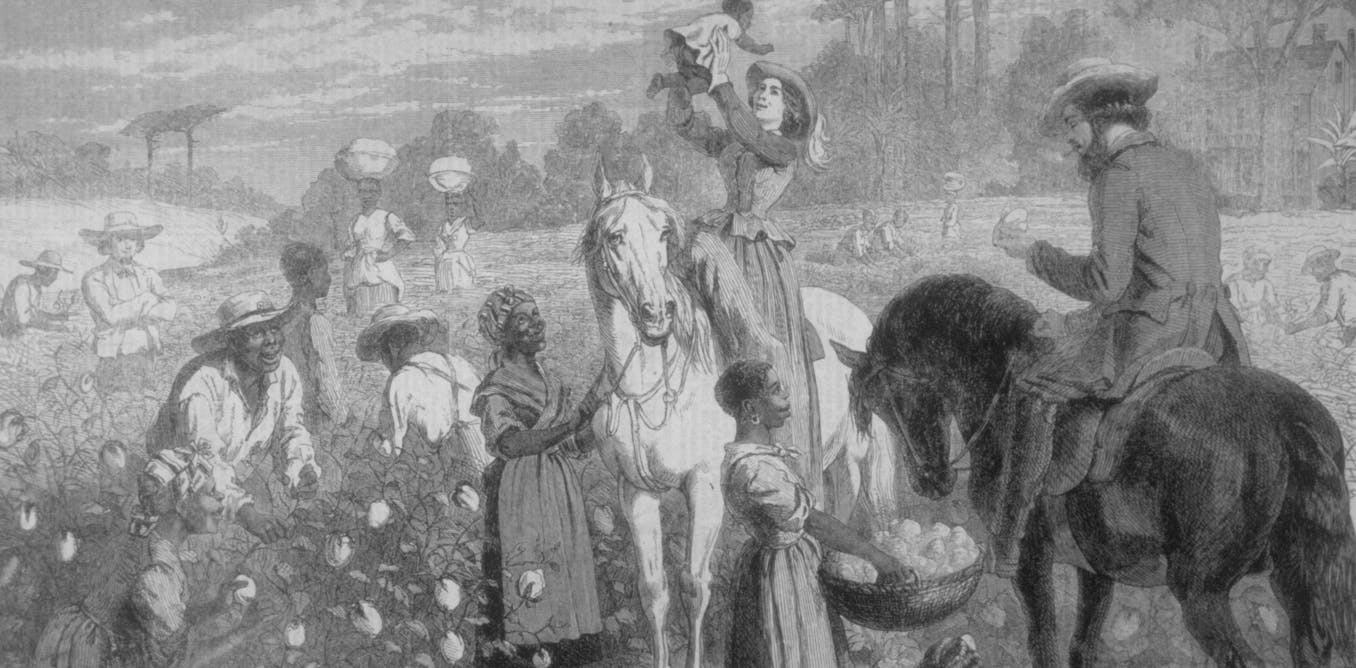
With the topic of reparations under discussion and debate, Thomas Craemer -- an expert from the University of Connecticut -- had this to offer in a new essay for The Conversation: The cost of slavery and its legacy of systemic racism to generations of Black Americans has been clear over the past year – seen in both the racial disparities of the pandemic and widespread protests over police brutality. Yet whenever calls for reparations are made – as they are again now – opponents counter that it would be unfair to saddle a debt on those not personally responsible. In the words of then-Senate Majority Leader Mitch McConnell, speaking on Juneteenth – the day Black Americans celebrate as marking emancipation – in 2019, “I don’t think reparations for something that happened 150 years ago for whom none of us currently living are responsible is a good idea.” As a professor of public policy who has studied reparations, I acknowledge that the figures involved are large – I conservatively estimate the losses from unpaid wages and lost inheritances to Black descendants of the enslaved at around US$20 trillion in 2021 dollars. But what often gets forgotten by those who oppose reparations is that payouts for slavery have been made before – numerous times, in fact. And few at the time complained that it was unfair to saddle generations of people with a debt for which they were not personally responsible. There is an important caveat in these cases of reparations though: The payments went to former slave owners and their descendants, not the enslaved or their legal heirs. Dr. Craemer discusses such aspects as the “Haitian Independence Debt,” British ‘reparations,’ and paying for freedom. Dr. Craemer is an expert on slavery reparations, racial bias, and the psychology of racism, and he is available to speak with media – simply click on his icon now to arrange an interview today.


The Power of Poetry in a Pandemic and Time of Social Injustice
Amanda Gorman captured hearts and imaginations across the nation when she performed her poem “The Hill We Climb” at the inauguration of President Joe Biden. While Jennifer Lopez’s stirring rendition of “This Land Is Our Land” and Garth Brooks’ “Amazing Grace” were performed to great acclaim, there was something special about the Inaugural Youth Poet Laureate’s recitation. Villanova University professor of Creative Writing and Luckow Family Chair in English, Lisa Sewell, PhD., talks about the cultural impact of poetry in times of turmoil, like the political and social uncertainty brought on by an attack on the US Capitol combined with a global pandemic. “Poetry is something people turn to in times of crisis -- and the pandemic and the ways it has made all of us face the grave inequities of our society has been an extended, seemingly endless crisis” said Dr. Sewell. “Amanda Gorman’s poem was powerful because she put a name to what so many people were feeling about the insurrection that occurred on January 6.” According to Dr. Sewell, poets like Alice Quinn, the former poetry editor of The New Yorker, have already edited a collection of “pandemic” poetry, demonstrating how artists take inspiration from and create art in reaction to what’s going on in their lives—to connect to others who may be experiencing the same complicated emotions. “In my poetry writing class, I talk to my students about how poets often try to say the impossible and write about experiences and ideas that are difficult to understand and difficult to put into words,” says Sewell. “What makes poetry powerful is the gesture, the effort to find the language that is adequate to the uncertainty and ambiguity of experience—and this seems true especially now.” The task of putting experiences into words that connect with a wide audience is not an easy one, especially with so much content competing for attention in 2021. So what it is about poetry in particular that makes it appropriate for this moment? Dr. Sewell suggests that the metaphorical language of poetry, as opposed to the certainty of prose or dialogue, hits home right now. She adds, “when the future is uncertain and the ‘before’ time seems hazier and hazier, poems are somehow both clear and direct with every word deliberately chosen, and also ambiguous and strange enough to speak to our sense of peril and uncertainty. Poems can both express our fears and also gesture towards the ways language is inadequate.” To speak with Dr. Lisa Sewell, email mediaexperts@villanova.edu

Survival analysis: Forecasting lifespans of patients and products
How long will you live? Should you spring for that AppleCare+ warranty for your iPhone? When will your buddy pay you back for that lunch? For centuries, soothsayers have striven to understand the lifespan of things – be they patient longevity, product lifecycles, or even time to loan default. Nowadays, scientists have turned away from reading tea leaves and toward survival analysis – a complex data science method for predicting not only whether an event will happen (the death of a patient, the failure of a product or machine, default on a payment, and so on) but when this event is likely to occur. But it’s problematic. Until now, the tools of survival analysis have only been applicable in certain settings. This is due to the inherent heterogeneity of what is being analyzed: differences in patient lifestyles, demographics, product usage patterns, and so on. New research by Goizueta Business School’s Donald Lee, associate professor of information systems and operations management and of biostatistics and bioinformatics, has yielded a new tool that greatly extends survival analysis to broader use cases. “Historically, scientists have used classic survival analysis tools to predict the lifespan of different things in different fields, from products to patients,” Lee said. “Since the 1950s, the Kaplan-Meier estimator has been the benchmark for analyzing lifetime data, particularly in clinical trials. The next breakthrough came in the 1970s when the Cox proportional hazards model was introduced, which allows researchers to incorporate variables that can affect the predictability of things like patient mortality.” The problem with the existing survival analysis tools, Lee said, is that they make certain assumptions that can skew the predictions if the assumptions are not met. “There are very few existing tools that can incorporate variables without imposing assumptions on how they affect survival, let alone when there are a lot of variables that can also change over time. For example, two iPhones will have different lifespans depending on the temperature at which they are stored, amongst many other factors. But it’s unlikely that storing your phone at 30 degrees will halve its lifespan compared to storing it at 60 degrees. This sort of linear relationship is commonly assumed by existing tools.” Lee’s team developed a new survival methodology based on something called gradient boosting: a machine learning technique that combines decision trees to yield predictions. The method, Lee said, is totally assumption-free (or nonparametric in technical parlance) and can deal with a large number of variables that can change continuously over time, making it significantly more general than existing methods. Nothing like it has been seen until now, he noted. “Calculating the survival rate of anything is super complex because of the variables. Say you want to create an app for a smart watch that monitors the wearer’s vitals and use this information to create a real-time warning indicator for stroke. Doing this accurately is difficult for two reasons,” Lee explained. “First, a large number of variables may be relevant to stroke risk, and the variables can interact in ways that break the assumptions central to existing survival analysis methods. And second, variables like blood pressure vary over time, and it is the recent measurements that are most informative. This introduces an additional time dimension that further complicates things.” The software implementation of Lee’s method, BoXHED, overcomes both issues and allows scientists to develop real-time predictive models for conditions like stroke. The trained model can then be ported to a watch app to tell its wearer if and when they’re likely to have a stroke, a process known as inferencing in machine learning lingo. The implications, Lee said, are huge. “BoXHED now opens the door for modern applications of survival analysis. In previous research, I have looked at the design of early warning mortality indicators for patients with advanced cancer and also for patients in the ICU. These use other methods to make predictions at fixed points in time, but now they can be transformed into real-time warning indicators using BoXHED.” He cited the case of end-stage cancer patients who are often better served by hospice care than by aggressive therapy. “Accurate predictions of survival are absolutely critical for care planning. In previous analyses, we have seen that using existing predictive models to inform end-of-life care planning can potentially avert $1.9 million in medical costs and 1,600 days of unnecessary inpatient care per 1,000 patient visits in the United States. BoXHED is likely to lead to even better results.” Lee’s research paper is forthcoming in the Annals of Statistics. He has also created an open-source software implementation of BoXHED, which can radically improve the accuracy of survival analysis across a breadth of applications. The paper describing BoXHED was published in the International Conference on Machine Learning, and the latest version of the BoXHED software can be found online. If you are a journalist or looking to speak with Donald Lee – simply click on his icon now to arrange an interview or appointment today.


Covering Eating Disorders Week? Let our experts explain how COVID-19 can affect eating disorders
COVID-19 is presenting many different issues across all spectrums of society and life. The experts at Michigan State University took questions and provided answers in order to assist those looking to know more about how COVID-19 can affect eating disorders. Eating disorders can often stem from trauma or stress. Kelly L. Klump, professor in the Department of Psychology and fellow in the Academy for Eating Disorders, answers questions on eating disorders and how the pandemic may trigger or exacerbate this disorder. Q: Is there any evidence that the pandemic triggers eating disorder behaviors among teenagers? We have emerging data on risk for eating disorders during COVID-19. Although data are in the early stage, we are seeing increased weight-shape concerns, increased binge eating and, potentially, increased dietary restriction during COVID-19. These symptoms seem to be increasing in the general population, but results are more consistent in showing exacerbation of these symptoms in individuals with anorexia nervosa (increased restriction and potentially exercise) and bulimia nervosa (increased binge eating and purging). Reasons for these increases aren’t entirely clear, but theories focus on increased stress, increased isolation and, for individuals in recovery, decreased access to care during the pandemic. There are also fears of weight gain due to less activity overall that may fuel concerns about weight/shape and later, eating disorder symptoms. Limitations in access to food during the pandemic also seem to be related to these symptoms. Although, how they are related may vary across eating disorder symptoms. Q: What are some signs parents should be aware of that might indicate eating disorder behaviors or warning signs? These signs would be similar to those that we watch for during non-pandemic times. Decreased food intake, increased exercise and increased discussion of weight concerns are early signs. In addition, if food that was present (particularly high fat/high sugar foods) comes up missing frequently, this could be a sign of binge eating. Because eating disorders are highly comorbid with depression and anxiety, increased signs of these conditions (e.g., sad mood, withdrawal, increased anxiety about a range of concerns) could be early signs, particularly if in combination with the weight/shape/binge eating early signs mentioned above. Q: What should a parent who is concerned their child is exhibiting eating disorder behaviors do to address the issue? The first step is to talk with your teen and listen. Check in on how they are doing generally, but then also let them know about the signs you are seeing and your concerns. Empathic listening is key in these conversations and letting them know that you would like to do whatever is needed to help. They may not be willing to talk the first time they are approached. It might take multiple conversations for them to open up and/or admit that they need help. Q: What resources are available to parents looking to get help for their kids right now? There are some websites that can help parents identify eating disorder specialists in their area, including: • Academy for Eating Disorders. Find an Expert page • National Eating Disorders Association Q: Are families facing obstacles in getting preteens and teenagers help for eating disorder behaviors because of COVID-19 measures? A potential decrease in treatment resources appears to be present for eating disorders and other psychiatric illnesses. Treatment that is available may be in the form of telehealth, which some individuals may find very helpful, while others may feel is not enough. We are still collecting data on treatment availability during COVID-19, so we don’t have great data on availability. But early theories are that treatment access may be decreased. Q: What advice do you have for parents who feel like they are seeing their teenagers’ past eating disorders either reappear or become more severe in light of COVID-19? Seek help and do so early. Catching an increase or exacerbation of symptoms early in the process will increase the chances that you can catch the symptoms before they become more severe. Your teen may need “booster” sessions with treaters that can help them get back on track and help them cope with current stressors. If you are a journalist looking to know more or interview Dr. Klump, then let us help - simply click on her icon now to arrange an interview today.


How safe is your baby food? A UConn expert explains.
A new congressional report has raised concerns from regulators and outcry from parents about the level of heavy metals - including things like lead, arsenic, and mercury - that are found in commercial baby foods. Dr. C. Michael White, chair of Department of Pharmacy Practice at the University of Connecticut and an expert in the safety of drugs and dietary supplements, has weighed into the baby food debate with a recent piece for The Conversation. In his article, Dr. White examines such topics as: How do heavy metals get into baby food? How much heavy metal is too much? What can parents do to reduce a child’s exposure? Is anyone doing anything about it? Dr. White says that, while there are steps for parents to take now, baby food manufacturers will ultimately have to alter certain practices to reduce the presence of heavy metals in their products. The U.S. has made important inroads in reducing heavy metals in air and water since the 1980s, dramatically lowering exposure. With additional focus, it can further reduce heavy metal exposure in baby food, too. Dr. White is available to speak with media regarding this topic. Simply click on his icon now, to arrange an interview today.


Evaluating the Impact of Facebook's Ban on Vaccine Misinformation
A new Facebook policy has banned misinformation about all vaccines on its platform. Villanova University professor Jie Xu, PhD, who specializes in science and health communication, examined this decision. "On one hand, there clearly is a lot of mis/disinformation on social media regarding vaccines; some of them are simply uninformed and, of course, harmful to public health," said Dr. Xu. "On the other hand, many details relating to the COVID-19 vaccine, in my view, are still open to scientific debate." So, what determines what is labelled misinformation? Dr. Xu believes this is a complicated determination. "Science itself is evolving with falsification and revision to previous claims when new evidence comes in," Dr. Xu noted. "Who is to say that some claims deemed true at this moment won't be overturned in the future? What are the standards to be used in defining what is true information or misinformation? And perhaps more importantly, who are the 'fact-checkers' that are considered trustworthy to the majority of Americans?" However, there are some benefits to Facebook's decision. "On a more positive note, there is some preliminary evidence indicating that labeling misinformation on social media may help to alleviate the negative influence of vaccine misinformation claims," Dr. Xu said. "The challenge is that the people that are most susceptible to misinformation, and those that health professionals really want to reach out to, are the ones that have the least level of trust on this type of intervention. In some corners, this will likely to be viewed as violation to free speech and perhaps backfire." How does Facebook's banning align with free speech? "My understanding of free speech is that it's not that we don't pay a price for it—unless it's inciting violence, most information has been allowed to flow relatively freely—but it's that the alternative could be much worse," said Dr. Xu. "At the end of the day, we need to create an environment in which honest, open and critical conversations are welcomed, and we do need each other to find the truth."

Villanova Expert Reflects on Historic Number of Golden Globe-Nominated Female Directors
For the first time in the Golden Globes Awards’ history, three women were nominated for best director. "We went from barely getting one in a category to a majority," said Teresa Boyer, EdD, founding director of Villanova University's Anne Welsh McNulty Institute for Women's Leadership. But why are we seeing this change in narrative in 2021? "One wonders if this is in response to the pushback from so many past years, a growth in dogged pursuit of success of the women in the field or a change in both how we may have viewed movies and television in the past year," said Dr. Boyer. "While likely all of the above, one would think that the way we viewed our screen-based entertainment, with the majority being streaming activities, might have allowed audiences to explore films they would not have been as likely to pursue in the traditional 'group-goes-to-a-theater' method." Not only is there more to watch using streaming services, but online platforms could also allow for more diversity in options. "When we have the opportunity to choose anything we like, without being beholden to others in our social groups, we may find that the directors’ lenses are a better match to those of their audience." Increased options could also help more people see themselves represented on screen. "There is a reason why we say, 'representation matters.' For young women and people of color with an interest in the field, being able to see people who look like them lauded in the most highly prized mainstream award ceremonies sends the message that they too are welcome... and their leadership potential is not limited. It may also open the eyes of their peers and others in the field who previously discounted the value of their work and potential based solely on their perceptions of who should be making films."
