
Experts Matter. Find Yours.
Connect for media, speaking, professional opportunities & more.

Optimizing the delivery speed promise can boost sales
After the coronavirus pandemic forced most of the country into lockdown, online shopping soared. According to CCInsights.org, by the end of April 2020 there was a 146% year-over-year increase in U.S. and Canadian online retail orders. Amazon was so overwhelmed by the combination of increased demand, logistical nightmares, and warehouse worker safety issues that the company announced significant delays in its Amazon Prime shipping speeds. When the company announced it would prioritize the shipping of essential items, the online retailer’s third-party sellers were left to manage their own shipping — something Amazon usually did for them. Shoppers who placed orders for non-essential products at the end of March sometimes received estimated delivery dates of more than a month away. While consumers often received their orders sooner than the 30-day estimate, for Prime shoppers used to getting their items delivered for free the next day, the change in delivery speed was a shock. Amazon shoppers turned to alternative outlets that promised much quicker delivery speeds. Companies with strong e-commerce positions and supply chains, such as Walmart, took advantage of Amazon’s situation. “People are very sensitive to delivery and how fast they can get products,” said Ruomeng Cui, assistant professor in information systems & operations management. “Maybe, just maybe, Amazon would be able to deliver faster than one month, but they chose to promise customers one month — that was their choice.” Unfortunately for Amazon, by setting conservative delivery speed promises, they exacerbated an already bad situation. According to Cui’s paper “Sooner or Later? Promising Delivery Speed in Online Retail” (Ruomeng Cui, Tianshu Sun, Zhikun Lu and Joseph M. Golden), optimizing delivery speed promise can have a substantial effect on a company’s sales. How substantial? Without changing the actual delivery speed itself — only the delivery speed promise — Cui’s research showed that when the retailer promised customers one day faster shipping, sales increased, profits increased, and customers spent more on each order. “It’s a very critical decision for retailers to try to determine how to manage delivery and how to manage the information aspect of delivery,” added Cui. The study is attached and found two key findings: The value of communicating delivery times From a customer satisfaction standpoint, the conservative disclosure lowered customer satisfaction while the aggressive disclosure didn’t affect the company’s satisfaction score, although it did increase product returns when shipping speed was overly aggressive and products were delivered late. “These results indicate that in our research context, promising customers a faster delivery speed can boost sales and profitability but at the cost of a higher product return rate,” the researchers wrote. They go on to caution retailers that promising a conservative shipping speed can be costly. “It’s a careful balance that companies need to think about — how to manage customers’ expectations properly,” explained Cui. Crafting the delivery promise Given online retailers’ adoption of machine learning, Cui believes companies could tweak their algorithms to explore what products and which types of customers are more tolerant to over-promising as it relates to the delivery speed promise. “Companies can then use the analysis to customize and differentiate the types of products that adopt different types of information strategies,” Cui said. “Just change your algorithm, learn and incorporate some of the data-driven decisions and methods.” Going forward, Cui hopes to customize algorithms for companies in an effort to help them dynamically optimize how to promise the correct delivery speed to customers. While many companies, like Collage.com, don’t own their own delivery function and can’t change the actual delivery speed by changing infrastructure, these companies can “manage the information,” said Cui. “It’s easy, and I think it should be the retailer’s responsibility and job to optimize.” “I want to advocate for all retailers to think strategically in their information aspect,” said Cui. “Don’t let such an easily fixed lever just sit there at almost zero cost.” If you are a journalist looking to cover this study or speak with Professor Ciu about subjects like online shopping and operations management, simply click on her icon now to arrange an interview today.



Kamala Harris Is First Woman, and Woman of Color, Elected Vice President
History was made on Saturday, November 7, when Kamala Harris was elected vice president of the United States, 100 years after women first won the right to vote. "Although our new president will look like almost all the others we have had in our history, the fact that we will have a woman of color in the second highest position in our executive branch for the first time ever has an importance that cannot be understated," says Teresa Boyer, EdD, director of the Anne Welsh McNulty Institute for Women's Leadership at Villanova University. "When it comes to our highest office, Americans have been famously resistant and behind other countries in selecting a woman for the role. Perhaps having a woman in the vice presidency could shift that barrier that we haven't seemed to get past." Dr. Boyer adds, "We will also have a record number of women in this congressional delegation. Although Democrats have historically sent the most women to Congress, this year, the Republicans are the ones who set a record, with at least 32 women in the House and Senate—two more than their previous record of 20 in 2006. Democrats still have the greater representation of women, though, with at least 102." "Themes of gender and race have been threaded throughout this election, as they underlie many of the crises we are currently facing as a nation. The tight races mixed with progress on women's representation indicate a national culture on the cusp of change—one exploring openness to diverse identities in the role of public leader. Not so much a wave as a slow inching forward—but forward nonetheless." "Many have said Biden will be a transitional president—due to his age, and his role as a party elder—but perhaps he would be better noted as a potentially transformational president, or a conduit to the diverse America reflected in our leadership."


On the morning of Saturday, November 7, Joe Biden was announced by numerous media outlets as the projected winner of the 2020 U.S. presidential election. President-elect Biden will be only the second Roman Catholic to occupy the nation's highest office. Massimo Faggioli, PhD, is a professor of historical theology at Villanova University. He recently discussed the significance of Biden being only the second Catholic elected president and the work he has in front of him. "Biden is a 'Pope Francis Catholic'—much more aligned to the political culture of the pontificate than John Kerry was as a 'Pope John Paul II Catholic' in 2004, or Kennedy, a good Catholic in 1960. When Kennedy, the first Catholic president, was elected in 1960, U.S. Catholicism was much less divided and in much better relations with the Vatican compared to today," Dr. Faggioli said. "It's the first time we have a Catholic president since the return of religion in the public square." "Anti-Francis Catholicism in the U.S. goes much deeper than Trump Catholics and includes a number of U.S. bishops. It will be difficult for Biden to navigate the triangular relations between Vatican-White House-U.S. bishops," continued Dr. Faggioli. "The U.S. Conference of Catholic Bishops is paralyzed and—especially on social issues—it is difficult to take distance from a rhetoric that is very similar to the GOP, and this will show in dealing with a Biden presidency. Biden as a Catholic will have against him a powerful Catholic media system in the U.S. that makes no mystery of its fierce opposition against Biden's and Francis' Catholicism."
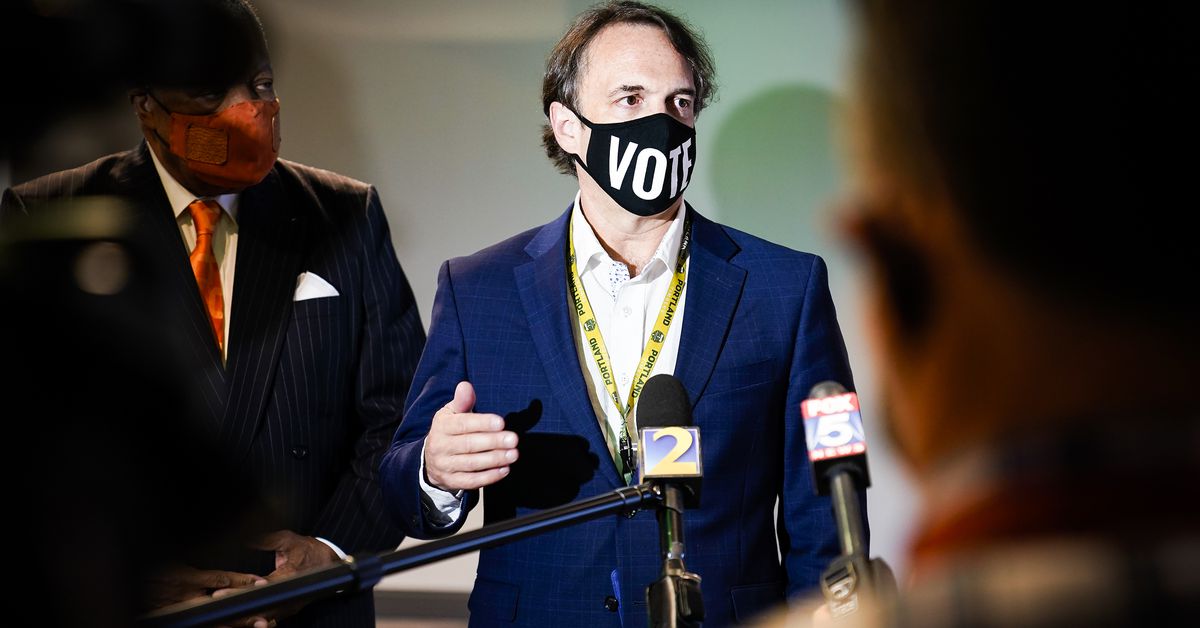
Is it time to stop taking Georgia for granted? The state voted blue – let our experts explain why
As the final few votes still remain to be counted, the state of Georgia has taken a political turn it has not seen in more than two decades. After a long stretch as a presumptively Republican stronghold, in 2020, voters in Georgia made their voices heard and likely shifted the balance of power in Washington. What has changed? Are more voters engaged and showing up to vote? Have demographics shifted? Has the population changed? Have Peach State citizens changed their outlook on issues and politics? Moving forward, few will take the state’s 16 electoral college votes for granted. Is Georgia now one of the battleground states that will shape presidential elections in the future? If you are covering this topic, then let our experts help with your story. Dr. Gregg R. Murray, professor of political science at Augusta University, is available to talk about the presidential race and election results. Murray’s research focuses on political behavior and psychology with specific interests in voter mobilization and turnout. He is also executive director of the Association for Politics and the Life Sciences. Simply click on Murray's icon now to arrange an interview today.


Rob Campbell on why it pays to shake things up
Rob is a mischief-maker and passionately believes in culture, creativity and chaos. He’s worked with names like NIKE, Virgin and Metallica at agencies including Cynic, Wieden+Kennedy and R/GA and has proudly been called an “asshole” by Lars Ulrich, Richard Branson and Dan Wieden. I ask Rob what’s he’s done in his life that has perhaps raised some eyebrows, but that he’s most proud of. He tells us his COVID story, and shares positive insights. We hear how three African American women fundamentally changed his view on the world, and how being exposed to completely different cultures have shaped his life.



The tug between protecting privacy and building brand loyalty
The coronavirus pandemic has put much of normal life on hold, but it hasn’t stopped hackers. According to Securityboulevard.com, in the first quarter of 2020, more than 8.4 billion records from healthcare institutions, technology, software, social media, and meal delivery companies were exposed — a 273 percent increase from Q1 2019. While data breaches are costly to companies — a recent Ponemon Institute data breach report found that data breaches cost organizations an average of $7 million in the U.S. — their frequency is enough to cause some consumers to wonder if their private information is safe with their favorite brands. The increase in data breaches is concerning, noted Jesse Bockstedt, associate professor of information systems & operations management, but several studies have found that the out-of-pocket expense to consumers due to identity theft is less than $1,000. “Which isn’t zero, but it’s not like a few years ago when [identity theft] ruined your life and destroyed your credit,” Bockstedt said. As for the companies, he added, “It’s not a brand killer anymore.” Yet despite consumers’ growing unease, Goizueta faculty say the relationship between privacy and brand loyalty is a bit more intricate. While a data breach can nick a firm’s reputation, it’s the data that is purposely collected beyond the name and vital statistics that worry consumers more. Our experts found the following key points were necessary when it comes to finding the safe ground between privacy and brand loyalty. In fact, we have an expert from Goizueta who can explain each one: Building digital trust “Companies are increasingly worried that people will buy less from their brand if they’re perceived to be fast and loose with customer data,” said Daniel McCarthy, assistant professor of marketing. For instance, after political data-analytics firm Cambridge Analytica secretly collected data on roughly 87 million Facebook users, back-lash followed. In an effort to regain users’ trust, Facebook founder and CEO Mark Zuckerberg laid out a “privacy-focused vision” for Facebook, but those efforts were widely criticized as not going far enough. Advertising boycotts followed. Trust: the key to customer loyalty Minus regulatory guardrails, the differentiating factor is trust, explained Jagdish Sheth, the Charles H. Kellstadt Chair in Marketing. “Trust is built over time by doing what you promise to do and by company behavior that is considered appropriate or right,” Sheth said. Loyalty programs such as those with airlines, hospitality companies and grocery stores are founded on a relationship between a consumer and a brand. “Loyalty programs mean relationships, and in all relationships, trust and commitment are key,” he added. Let’s make a deal “Brands that are able to deliver a personalized experience in a privacy-friendly manner will have a competitive advantage,” explained David Schweidel, professor of marketing, in a recent “Goizueta Effect” podcast. “Putting a premium on privacy means forgoing the benefits that come from allowing organizations to collect data they use to deliver a better experience. From a commercial standpoint, the onus is on the marketers to make the case that the benefits outweigh privacy concerns.” We’ve attached a full article with even more advice and helpful information from our experts – but if you are looking to learn more or cover this topic, we can help. All of our faculty are available to speak with media, simply click on either expert’s icon now – to book an interview today.


When will we know the outcome of the 2020 White House race?
Dr Trevor McCrisken comments: "Election Day is upon us. With an unprecedented 90 million Americans already having cast their votes early, the final push is all about getting as many supporters as possible to turnout to vote. "Early indications are that Biden and the Democrats are doing very well but they'll be trying to convince their remaining supporters not to be complacent and to get to the polling stations; for Trump and the Republicans turnout is also crucial as they hope for a late surge of support to secure four more years in the White House and to retain control of the Senate in the US Congress. "One big question is how long it will take to know the results. Different states have different rules about when they can count postal votes and the millions of in-person votes cast early. Others will accept postal votes that are postmarked up to and including Election Day itself. Many states will be declared overnight on Tuesday into Wednesday as per usual, but several crucial states may take much longer to be decided if no clear winner emerges and the vote counts and recounts go on for days or even weeks. "If one candidate or other emerges with a strong lead across 25 to 30 states then we're likely to know the winner of the presidential race on Wednesday. But if the margins are as close as they have been in recent elections in crucial swing states then it could take much longer for the results to become clear. Legal challenges to swing state results are very likely, especially if Biden or Trump has only won those states by relatively small numbers. We may not know the winner for several days - if not weeks or even a couple of months! "The last disputed presidential election in 2000 was not decided until the US Supreme Court intervened in mid-December to stop recounts in Florida, meaning that George W. Bush defeated Al Gore. The courts could again be crucial in settling the contests this year, not only in Florida but in other swing states if the voting margins are very close. With Trump and Senate Republicans having successfully tipped the balance to conservatives on the Supreme Court, newly appointed Justice Amy Coney Barrett could prove a significant character in this year's election battle." 3 November 2020

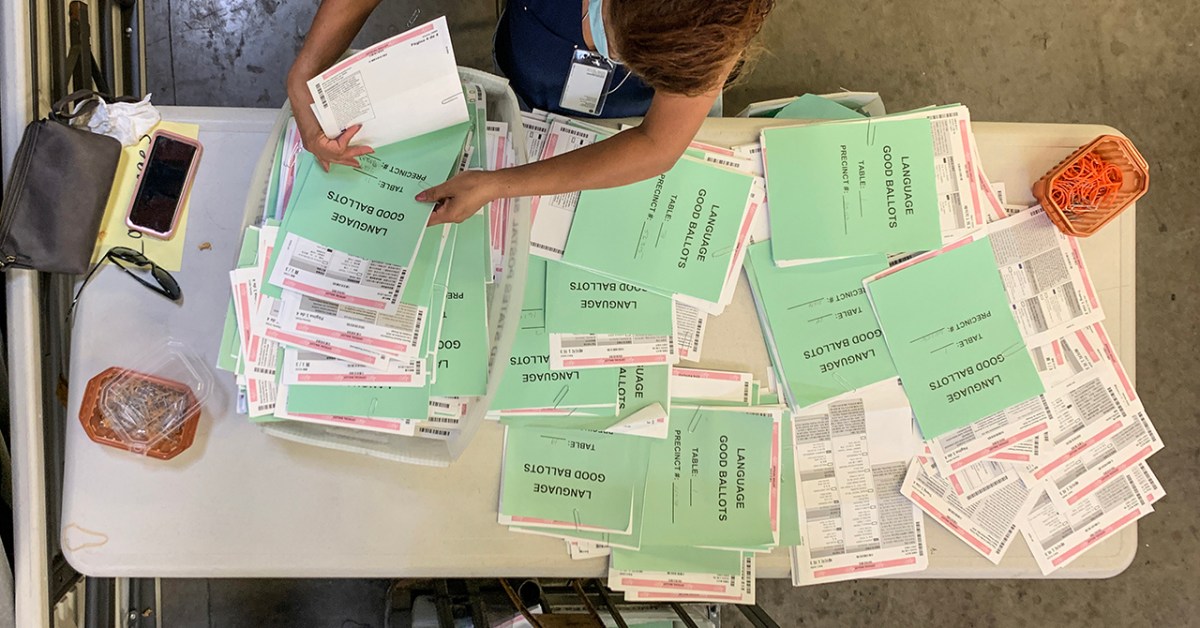
Will it be a long wait for the results on Tuesday?
The election is finally here. And in a year like few others in modern history, the 2020 election may go down like no other as well. Americans are engaged, there is no doubting that. In fact, CNN reported that with one week before the election 75.8 million ballots had been cast representing about 56% of the more than 136.5 million total ballots cast for president in 2016. And there was still time left for more votes to pour in. On Election Day, a massive turnout is expected. But with social distancing in play and other COVID-19 precautions enacted, the day that is already wrought with long lines and delays in the best of years could see for an even longer night for election officials in most states. Americans are making themselves heard – but the results they want to see might not be on election night. A recent article by Pew Research explains why: "Mail ballots pose a challenge to election workers, because they must be manually removed from their envelopes and verified as valid before they can be fed into the tabulating machines. Although election workers in at least 33 states can start processing ballots (but not, in most cases, counting them) a week or more before Election Day, these counts may not be finished by election night depending on how many come in. In a half-dozen states, including the battlegrounds of Pennsylvania and Wisconsin, processing can’t start until Election Day itself. Also, in 22 states (plus D.C.), mail ballots postmarked by Election Day (or in a few cases the day before) can still be counted even if they arrive days later – further lengthening the counting process. Bottom line: Any vote totals reported on election night will be even more unofficial than they typically are." There is going to be a lot to cover leading up to and after Nov. 03 about the final results of what is poised to be a very close and hard-fought election. And if you’re covering, that’s where our experts can help. Dr. Gregg R. Murray, professor of political science at Augusta University, is available to talk about the current race to lead the DNC. Murray’s research focuses on political behavior and psychology with specific interests in voter mobilization and turnout. He is also executive director of the Association for Politics and the Life Sciences.
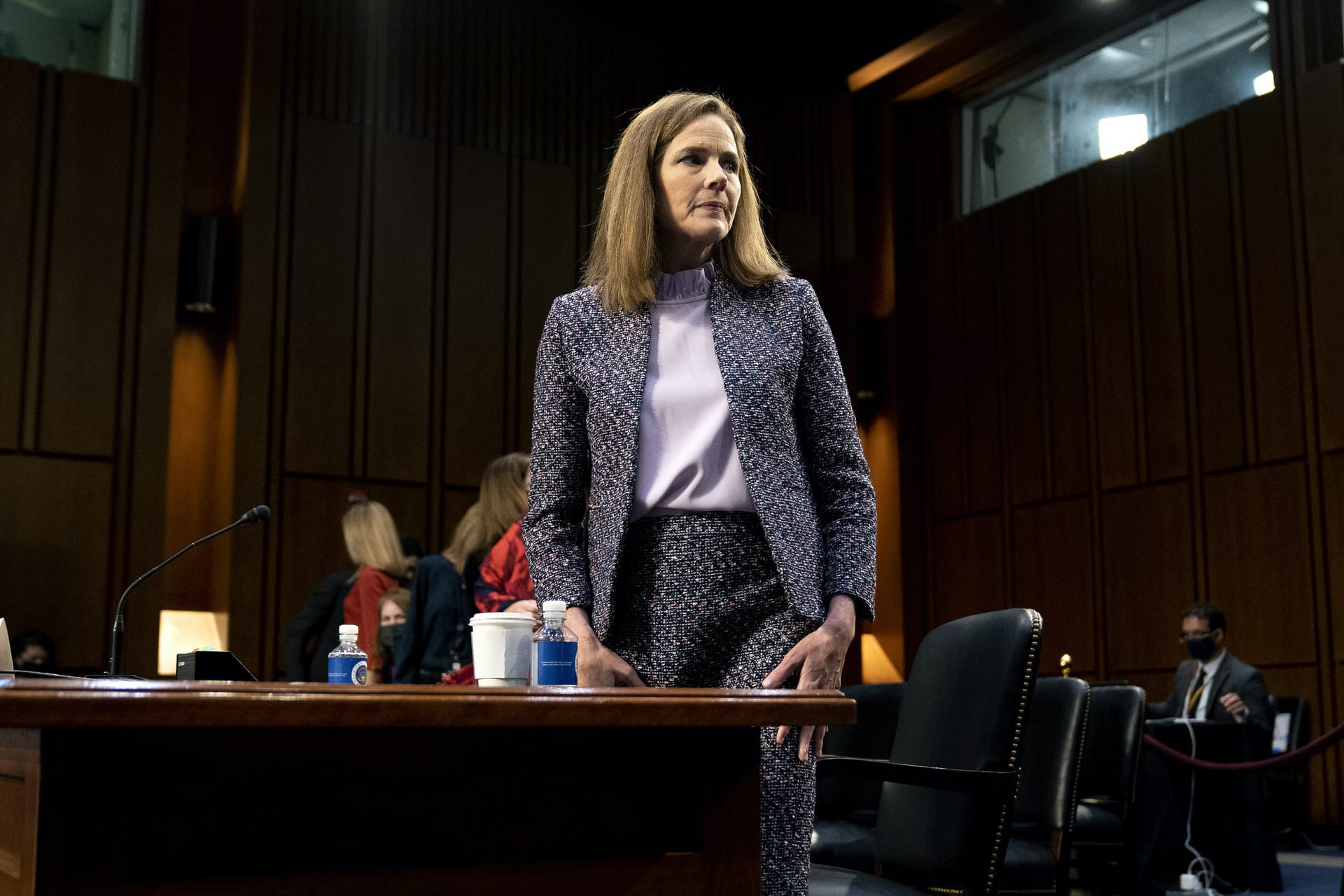
How will the newest pick to the Supreme Court impact America for decades to come?
It was quick, controversial and the outcome was all but obvious once set into motion, but this week Amy Coney Barret t became the youngest female sworn in as a Supreme Court Justice. A sitting judge, a former professor at Notre Dame Law School and mother of seven became President Donald Trump’s third appointee to America’s highest court during his term. The confirmation has left Democrats concerned that the now conservative make-up may sway some very important upcoming decisions. Barrett's confirmation has left Democrats concerned about the fate of the nation's health care law, the Affordable Care Act, and Roe v. Wade, the landmark decision allowing women to have access to abortions. The court will be hearing a case on the constitutionality of the ACA's individual mandate in November. Barrett could also end up weighing in on a general election-related case involving the man who nominated her, should the results of the race between President Trump and Joe Biden come before the Supreme Court. October 26 - CBS News In an election that may see several lawsuits about voting, mail-in ballots and other key elements that could decide the fate of a state or even the presidential election – the Supreme Court where Donald Trump may have a say indecisions and outcomes. If you are a journalist covering this ongoing story, that’s where our experts on this topic can help. Dr. Martha Ginn, professor of political science at Augusta University, is an expert on the judicial process, constitutional law and the U.S. Supreme Court. Dr. Ginn is available to speak with media about this topic – simply click on her icon now to arrange an interview today.
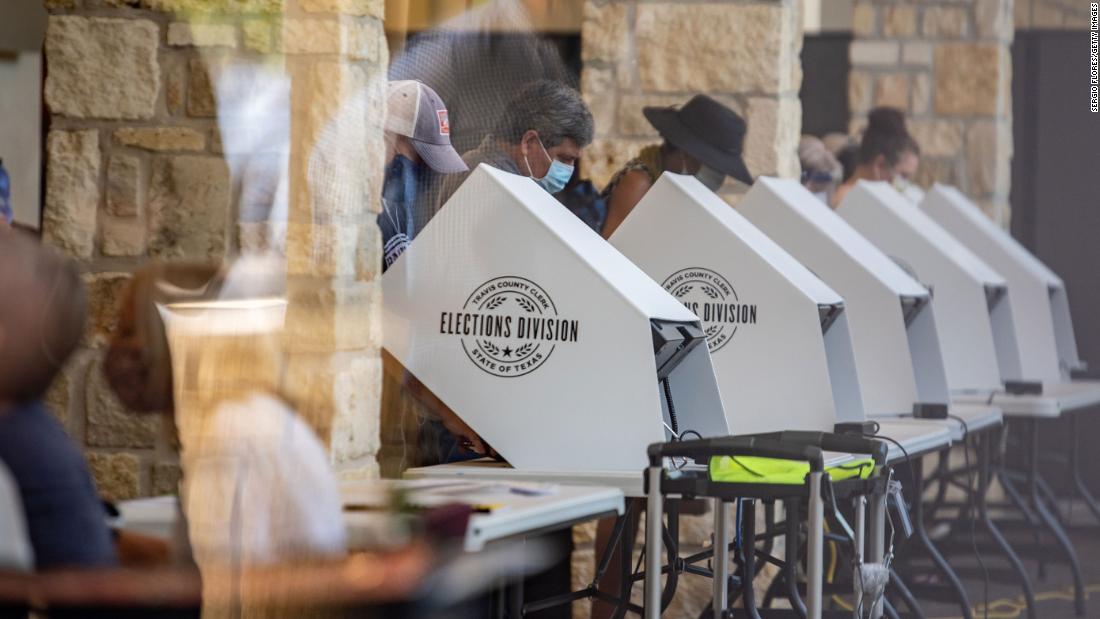
It’s finally here. The campaigns are on their final push and as of Tuesday night – the results will start rolling in. This has been one of the most unique elections in modern history. A divisive and bitter campaign fought during a global health crisis. Texas, which has 38 electoral college votes, second only to California in number – may be in play. Though Texas has not swung blue since 1976, Tuesday night a lot of eyes will be watching Texas to see what role it takes in deciding the outcome of the election. If you are a reporter covering the election in Texas, the key issues in the state and what motivates it to vote for either candidate – then let our experts help. Jim Riddlesperger is professor of Political Science at TCU and focuses on American politics, with emphasis in the presidency, Congress, and Texas politics. Professor Adam Schiffer writes and speaks on media bias, presidential nomination contests, political news, elections, and public opinion. Both are available to speak with media – simply click on either expert’s icon to book an interview today.

