
Experts Matter. Find Yours.
Connect for media, speaking, professional opportunities & more.

How Blockchain Can Help Medical Facilities Control the Spread of Coronavirus
In the United States at least 12,000 people have tested positive for COVID-19, and 194 people have died as of Friday, March 20. Villanova College of Engineering professor Hasshi Sudler explains there are two critical areas where blockchain can help control the spread of coronavirus. "As individuals travel across borders, medical facilities need immutable, trustworthy medical data quickly and electronically. A critical requirement to contain coronavirus is to track any individual having tested positive and to track the health of anyone who has come in contact with that individual, even if those encounters were across borders," says Prof. Sudler, an expert on electrical and computer engineering. "The blockchain can be a common source of data that allows medical facilities to share immutable information internationally." Sudler cautions that, with the potential for people to provide false information about symptoms and travel history, medical facilities need a method to share trustworthy data with one another in real-time about individuals tested, their test results and test kits used (as some kits have proven faulty). Another requirement for controlling the spread of the virus is to validate quality medical advice while also identifying misinformation that could be circulating in society. "In the event of a pandemic, misinformation can be extremely dangerous. The public needs a way to confirm official statements made by reputable sources," says Prof. Sudler. While social media may be a popular source of information, it can also be a means of spreading myths, conspiracies and opinions often presented as facts. "The blockchain can serve as a means to verify quality advice the public should follow versus false claims the public should disregard," says Prof. Sudler.


Baylor Expert Shares Tips to Help Kids Maintain, Improve Fitness During Time Out of School
Millions of children and teens throughout the United States are relegated to their homes in attempt to help “flatten the curve” and spread of COVID-19. As parents struggle to carve out a new normal for themselves and their children, a Baylor University professor says physical fitness should still be a priority. Paul Gordon, Ph.D., professor and chair of Baylor University’s department of health, human performance and recreation, is recognized nationally as a top expert in muscular fitness and health outcomes. His areas of expertise include physical activity and lifestyle-based research related to obesity. “Beyond improving your health, physical activity will also improve your mental state,” Gordon said. “A sense of accomplishment and satisfaction is often felt after exercise. Consequently, when you need a mood lift either from ‘cabin fever’ as a result of being shut in or the stress of our current health crisis, take an exercise break. It will help you keep your spirits up.” In the following Q&A, Gordon shares tips to help parents and children stay fit during the coronavirus pandemic. Q: With millions of kids now out of school due to coronavirus – and without the benefits of a gym class – what advice would you give parents and guardians about helping those kids maintain or improve fitness? A: With the onset of school closures and recommendations to limit groups, parents do find themselves challenged to figure out a new routine that encourages healthy living such as opportunities for exercise. Given the current challenges we are facing to prevent the spread of this dangerous disease, parents need to step up and actively oversee their children’s activities. The following points are important considerations: Engage in Active Parenting. Many children/adolescents will be engaging in remote learning formats through much, if not all, of the remaining school year. Consequently, parents will need to assist their kids, particularly the younger children, with access and supervise their work. We cannot expect teachers to have the same control as when they are in class. Similarly, opportunities for engaging in physical activity need to be planned and encouraged and where possible supervised. Some exercise is better than none. This concept is true for adults and kids alike. Don’t give up on getting exercise completely if you can’t plan a full workout. A little is good, and more is better. Remember, exercise is helpful for more than weight control. It improves cardiovascular and skeletal health as well. It can even bolster your immunity response. Q: Are there exercises that kids from kindergarten on up can do? What would you recommend in terms of time and style of exercise? A: Younger children are more likely to engage in activity if they have someone to play with. Parents should engage in active games with their children. If the parent is working from home, take short breaks and play with your child. Active games that involve running, skipping, jumping and climbing are perfect types of activities. Take them for walks in the park or neighborhood. Once children hit adolescence, they are more inclined to perform limited stationary exercises such as on a stationary bicycle or cross trainer. Throwing the ball and playing controlled games (tag, kickball, etc.) can be effective. Playing with your child is an excellent way to spend time and build memories that last a lifetime. Older children can also engage in regular calisthenics such as push-ups, jumping jacks, wall sits, etc. Make it a game or contest and you’ll likely get their involvement. Q: Do you recommend any online plans or resources for parents to follow? A: There are a number of online resources available. A few examples are listed below: GoNoodle KidsHealth.org BeActiveKids.org Q: What are the negatives associated with being sedentary – whether it’s in front of a television or sitting and spending too much time in front of a screen? A: A sedentary lifestyle has numerous untoward effects on health. In fact, even individuals who are meeting basic activity levels can be at increased risk for diseases if they are overly sedentary. Increased risk for cancer, cardiovascular disease and metabolic abnormalities (i.e., diabetes) occur from sedentary living. Obesity has reached epidemic levels in our society, and a primary factor is sedentariness. It’s important to take breaks from sitting and get up and walk around. ABOUT BAYLOR UNIVERSITY Baylor University is a private Christian University and a nationally ranked research institution. The University provides a vibrant campus community for more than 18,000 students by blending interdisciplinary research with an international reputation for educational excellence and a faculty commitment to teaching and scholarship. Chartered in 1845 by the Republic of Texas through the efforts of Baptist pioneers, Baylor is the oldest continually operating University in Texas. Located in Waco, Baylor welcomes students from all 50 states and more than 90 countries to study a broad range of degrees among its 12 nationally recognized academic divisions. ABOUT ROBBINS COLLEGE OF HEALTH AND HUMAN SCIENCES AT BAYLOR UNIVERSITY The Robbins College of Health and Human Sciences at Baylor University was established in 2014, a result of identified priorities for strengthening the health sciences through Baylor’s strategic vision, Pro Futuris, and the University’s Illuminate strategic plan. The anchor academic units that form Robbins College – Communication Sciences and Disorders; Family and Consumer Sciences; Health, Human Performance and Recreation; Public Health; and Division of Health Professions – share a common purpose: improving health and quality of life. The College’s curricula promotes a team-based approach to transformational education and research that has established interdisciplinary research collaborations to advance solutions for improving quality of life for individuals, families and communities. For more information, visit www.baylor.edu/chhs.


What fate awaits Florida’s tourism industry?
As the ripples from the COVID-19 pandemic stretch across all of America – popular attractions like Disney are closed, airlines are restricting travel and borders are being shut. All of this could amount to economic freefall for a state like Florida that relies on the more than 126 million tourists that visit the state each year injecting more than $40 billion annually into the economy. The coronavirus is hitting the economy in Central Florida hard, with several counties missing out on millions due to conventions and events being canceled. Orange County officials said the county has lost more than $280 million due to conventions being canceled amid fears of the coronavirus, and it could lose even more. Several Central Florida cities and counties have declared states of emergency. President Donald Trump declared a national emergency. Channel 9 spoke with financial advisers on the impacts the coronavirus could have on Central Florida. “Because we are highly reliant on tourism and leisure, we could see a potential financial slowdown in Central Florida. The scope and magnitude will be dependent on how long it takes to peak and level out. We are already seeing the effects with the closure of theme parks, cruises, flights, professional sports,” said Dale Crossley, a financial adviser. March 13 – ABC News At the moment, it seems there is no end in sight and for the hotels, theme parks and countless other destinations and small business that rely on tourists to stay afloat, there’s concern about who will be left standing once life returns to normal, or at least a new normal. There are a lot of questions that remain: How long can the marquee destinations like Disney and Universal Resorts remain closed? Are there any substantial bailouts or government assistance to be expected? Once travel resumes, what will it take to assure visitors of their safety? And, can we expect incentives from industry or the government to lure people, and their wallets back to the Sunshine State and what will they look like? If you are a journalist looking to cover this angle of the COVID-19 pandemic – then let us help. Peter Ricci is a clinical associate professor and director of the Department of Marketing and Hospitality Management in FAU’s College of Business. He is a hospitality industry veteran with more than 20 years of managerial experience in segments including food service, lodging, incentive travel, and destination marketing. Peter is available to speak with media about this topic – simply click on his icon to arrange an interview.



Here’s practical advice for teaching online, from an expert at the IU Kelley School of Business
The Kelley Direct online MBA program at the Indiana University Kelley School of Business consistently is ranked No. 1 by U.S. News and other news organizations. Sarah Smith-Robbins, director of learning technologies at Kelley, can discuss the transition that many colleges and universities are having to make, from in-person to online instruction. She offers these tips: Don’t try to recreate your classroom: “Learning online is different, just as holding a virtual meeting is different from an in-person meeting. Both residential class meetings and virtual class meetings have their drawbacks and their benefits. Take advantage of those benefits. For example, in an online meeting, more than one student can ask a question at a time in the chat. They can even answer one another’s questions there without interrupting the instructor. It’s also far easier for students to get together as teams and collaborate when they’re all online. Encourage them to do so.” Let your hair down just a little: “Virtual class meetings allow you and your students to see one another in a different setting than in a classroom. Personalize the space that students see behind you when you’re on camera. Let them know a little bit about who you are that you wouldn’t typically be able to share. Login to live sessions a bit early to chat casually with students who are there. That informal communication matters.” Consider the wide range of student circumstances: “Some students may have gone home to a fast internet connection and a great computer. Others may have to park their car in a parking lot to access free WIFI on a borrowed laptop. In either circumstance, your students want to learn. Do what you can to meet them where they are. For example, if you’re posting a pre-recorded lecture to your course, record it in a few short videos rather than one long one. The file sizes will be smaller and students will still see the whole lecture. If you’re planning to host live class meetings, understand that not all students will have the bandwidth to attend or might lose their connection in the middle of class. Post a recording of the session afterwards so everyone can participate. If you can cut the recording into several small videos, even better.” Learn from other instructors: “It’s not often that faculty sit in on one another’s residential classes. In a typical semester, you may have little reason in to compare notes on teaching methods with other faculty. However, you now have a perfect reason to compare what you’re doing to ensure that your students continue to learn. Why not practice holding online meetings by meeting with fellow faculty to share ideas about converting your courses to online delivery? Make use of your department’s mailing list to ask questions and learn from one another. If you’ve taught online before, offer yourself as a resource to faculty in your department who haven’t.” Think of it as an adventure: “Though the situation that brought us to this point of teaching online at short notice is dire, we’re all in it together. No one expects your online course to be perfect. Consider it an adventure that you and your students are on together. They’ll forgive your mistakes and make a few of their own. Connecting with one another, even online with a few hiccups, will go a long way to ensuring that students still feel connected, considered, and cared for.” Smith-Robbins can be reached at 812-855-9310 (w), 317-985-7200 (m) or sabsmith@indiana.edu. She requests that people email her first to schedule an interview, due to her efforts assisting faculty.


Expert available to discuss how economic impact of COVID-19 may vary across the country
Retailers such as Macy’s, Nordstrom and Urban Outfitters have announced they will temporarily shutter stores and car maker Honda will close six U.S. plants for a week. Earlier, in-person service at restaurants and bars was ceased. R. Andrew Butters, assistant professor of business economics and public policy at the Indiana University Kelley School of Business, cautions against making general assessments about COVID-19’s economic impact across the country. “Assessing the economic impacts of this pandemic -- and the range of policy responses enacted -- or being considered; however, might be harder to predict and have the potential to be even more uneven. For instance, take the most recent response of closing in-person dining at bars, and restaurants after the first confirmed death in Indiana was announced on Monday. Citing the of example restaurants, “According to the most recent economic census data, on the dimension of annual sales per capita coming from restaurants and other eating establishments, the state of Indiana is less dependent on this sector of the economy than other neighboring states Illinois and Ohio, that have enacted similar responses. On this particular dimension, one could view the economy of Indiana being somewhat insulated relative to its Midwest neighbors. “In sectors like airline travel and hotels, net bookings are down across the board -- and at unprecedented levels. How long travelers stay at home will have a lasting impact on the distribution of foregone revenues experienced at restaurants, bars, and hotels across the country. “An empty seat, or hotel room, contributes zero to GDP. This is especially true in a country like the US, as the demands for air travel and lodging vary across different parts of the country. Some areas of the country with peaks in demand over the spring months (e.g. Arizona and Florida) are likely to be especially vulnerable. Other areas with peaks in travel and recreational demand later in the year, (e.g., some areas of New York and Minnesota) might be less impacted, if the health concerns of travel are mitigated over the next couple of months. “There are many factors one can point to as contributors to a sharp rebound in economic activity, after the impact of the health concerns of the virus are subdued. These factors include the current personal savings and unemployment rates. As more varied -- and reflective -- economic and financial data comes in from areas affected by the global supply chain/consumption disruptions created by this virus (see, e.g., Brave-Butters-Kelley Business Cycle Indices and National Financial Conditions Index), it will be imperative that public policy makers work in concert with the most recent assessments of the depth and duration of this crisis to ensure the stabilization of local and national economies.” Butters can be reached at 812-855-5768 (o), 630-699-4868 and rabutter@indiana.edu.

The global pandemic of COVID-19 is no longer just daily news, it is pretty much the only news happening right now across America and most of the globe. Reporters and journalists are working hard to cover this story that is changing and progressing almost exponentially by the day. There are multiple angles to consider, and each storyline is just as important as the other when it comes to informing the public and ensuring that the correct and proper facts are relayed to an audience that is concerned, curious and waiting for answers. If you are a journalist covering COVID-19 – then let our team of experts help. Our experts can assist with and answer your questions about transmission, vulnerable populations and age groups, prevention and how the medical system is handling this outbreak. Emi Minejima is an Assistant Professor of Clinical Pharmacy at USC School of Pharmacy and an expert in infectious diseases pharmacotherapy and antimicrobial stewardship. She is an infectious diseases specialist at LAC+USC Medical Center. Irving Steinberg is the Associate Dean for Faculty Affairs & Associate Professor of Clinical Pharmacy and Pediatrics at USC School of Pharmacy and Keck School of Medicine. He is a pediatric pharmacist at LAC+USC Medical Center and an expert in the areas of predictive performance of pharmacokinetic models for dosing in children. Annie Wong-Beringer is the Associate Dean for Research and Graduate Education & Professor of Clinical Pharmacy at USC School of Pharmacy and an expert in bacterial resistance and virulence, host microbial interactions and host immune response. All three experts are available and ready to speak with reporters – simply click on an individual's icon to make contact and arrange an interview.


A Letter to our Valued Customers
As I write this letter, I can’t help but think of how much the world we live in has changed over the course of a few short weeks. Like you, IDC Canada is carefully evaluating the ever-changing situation related to COVID-19. It is truly an unprecedented situation. The market is extremely fluid, and each day we are carefully balancing our commitment to providing the tools our customers need to Plan, Market and Sell, all the while mobilizing our entire Canadian workforce remotely. As a valued partner of IDC, we want you to know that we are here and we are ready to engage with your teams. Together we can navigate the “what’s next” in the Canadian ICT marketplace using our dedicated team of Canadian Analysts. The underpinning of IDC’s business has always been our data, our forecasts and our in-depth knowledge of the ICT markets. Be assured that our teams are working overtime to assess the impact on the Canadian ICT market, and more importantly, what the implications are to you, our valued partners. Many customers have also reached out to ask how to adjust their customer interactions and continue to drive their business forward. Marketers are under fire to find new ways to stay in touch with customers and target new prospects remotely. The good news is that IDC Canada has been providing effective virtual event services like webcasts, audio podcasts and other compelling assets for many years now. We offer a wide range of digital assets that will keep you in touch with your customers and help you generate leads. As we continue to learn more through monitoring the COVID-19 outbreak, we understand that “customer experience” in extraordinary times means working with our customers and partners in new ways. Now more than ever, we will navigate this situation together. If there are things you need from us or additional ways we can support you, please let us know. We remain committed to helping Canadian Businesses through this challenging time. Please look for more detailed insights on the effects of the COVID 19 virus on the Canadian ICT market in the form of IDC research documents and webcasts next week. Feel free to reach out directly to your IDC relationship manager or through our inquiry desk at askidc@idccanada.com at any time. Kind Regards and Stay Safe, Lars Goransson Managing Director, IDC Canada idc.com/ca


Knowing How to Help — And How Not to Help — After a Disaster Makes a Difference
The images coming out of Nashville as it begins to recover from a deadly tornado that tore through the city on March 3 are heartbreaking. As people in other parts of the country are moved to do something, it is important that they know which ways of helping are effective — and which are not. José Holguín-Veras, the director of the Center for Infrastructure, Transportation, and the Environment at Rensselaer, can address this based on the research he's done in the area of humanitarian logistics. He has found that some well-intentioned attempts at assistance can even be counterproductive. Holguín-Veras' work was recently cited in an article written for The Conversation on this very topic. Julia Brooks, a Furman Public Policy Scholar at New York University, wrote: "One study led by José Holguín-Veras, a Rensselaer Polytechnic Institute expert on humanitarian logistics, found that 50% to 70% of the goods that arrive during these emergencies should never have been sent and interfere with recovery efforts. After the 2011 Joplin, Missouri, tornado and the Tōhoku, Japan, earthquake, for example, excessive donations of clothing and blankets tied up relief personnel." If you'd like to speak with Holguín-Veras about humanitarian logistics following this natural disaster, please click on his ExpertFile profile.


Baylor Gerontology Expert Shares Tips to Care for Aging Population During Coronavirus Pandemic
“This is not a vacation from caring; it is a time when caring is needed most of all,” social work professor says The Center for Disease Control and Prevention (CDC) has announced that older adults and people who have serious chronic medical conditions such as heart disease, diabetes and lung disease are at a high risk for the coronavirus. The virus hit hard in late January at a nursing facility in the state of Washington, where a number of residents died. As a result, the CDC has recommended strong restrictions on visitors to long-term care facilities, and the health organization continues to preach limited physical contact and “social distancing” – creating intentional space of six feet or more between each person – to stem the spread of the virus. James Ellor, Ph.D., The Dorothy Barfield Kronzer Endowed Professor in Baylor University’s Diana R. Garland School of Social Work, is an expert on working with older adults as well as disaster behavioral health. He said it’s important in this time of uncertainty to continue to support and minister to those older adults who are self-isolating in their homes and those in long-term care facilities. “Remember, no one stops caring about others just because germs are in the way,” Ellor said. “Express your caring in appropriate ways. This is not a vacation from caring; it is a time when caring is needed most of all. We also know that prayer is very important. Hold the person in prayer and let them know you are doing so.” In the following Q&A, Ellor shares tips on how to care for this population during this time. Q: What are some ways we can check on older relatives and neighbors without using physical touch and interaction? A: There is a fine line in this unknown time between caution and paranoia. Respect for each other’s boundaries is the critical value. It seems very awkward to want to affirm someone, yet not shake their hand. However, we need to use our words and ask what the other person is comfortable with, and by the same measure, let them know what you are comfortable with. At this point, the most obvious ways to check on people is through social media or paper and pencil. Drop them a note, call them on a phone, use other social media devices as appropriate. I would suggest that if you normally visit them, say on Fridays, be sure to continue to do that, albeit by phone or even just drop them a card. Q: If people have chosen to self-isolate or if they’re scared to venture out due to this health crisis, what are some ways people can help? A: Be consistent. If you have a pattern, continue the pattern. Remember the principles above. If the person is feeling out of control, talk quietly with them and offer them a card or other gesture of caring. Q: Can you explain the importance of personal interaction for people who are shut in? A: People with human contact simply live longer than those completely cut off from the world, with few exceptions. While about 15 percent of older adults are “shut in,” only about 5 percent are bed bound. That means that persons who are dependent on oxygen, for example, will be in their house, but not in bed. They depend on all of their outside contacts. Keep your normal visiting pattern, albeit with a card in the mail or phone call. If you are a member of a church, have the youth group use some of their extra “stay at home” time to make greeting cards intended to cheer up a person in your church or group that is home bound. Older adults like tactile things, particularly if they are sensory-impaired. If you make a card, put a feather in it, or some other feel-good item. If you are purchasing a card, there are some that have things in them that you can feel, or even hear. Some cards will allow you to record a short message. Q: Since so many long-term care facilities now have strict rules about visitors, are there any ways that people can interact or show support to residents in a safe manner? A: Most facilities are cutting off all contact from the outside. Only their own staff, physicians and hospice nurses are being allowed in. Even social workers, chaplains and other clergy are being kept out. In the Waco area, physicians are being screened for a fever or cough and could be turned away. As such, phone calls, cards and letters are all important. Several facilities in this area have begun to put room numbers on the windows of their facility, so that family can come by and wave through the window. Persons in long-term care facilities, even those with dementia, will pick up on the anxiety of the staff and especially the TV, which is often on all the time. A person with dementia may not be able to understand the anxiety but will be anxious when others are anxious. This makes the job of staff that much harder. Q: Anything else you’d like to share? A: The workers at these homes have a much harder job now. Don’t hesitate to send them a card or a treat if it can be obtained safely. Staff, even the people at the door telling you that you can’t come in to see your loved one, have a tough job now and need extra support from everyone. ABOUT JAMES ELLOR, PH.D. James Ellor, Ph.D., serves as professor and The Dorothy Barfield Kronzer Endowed Professor in Family Studies in Baylor University’s Diana R. Garland School of Social Work. works with older adults around issues of mental and spiritual health. He has served on the executive committee of the Midwestern Geriatric Education Center and provided education, counseling, and planning for individuals and groups who work with seniors. His research includes work in entrostomal therapy, hunger, the church as service provider, spiritual assessment, and intervention techniques with cognitively impaired older adults. ABOUT BAYLOR UNIVERSITY Baylor University is a private Christian University and a nationally ranked research institution. The University provides a vibrant campus community for more than 18,000 students by blending interdisciplinary research with an international reputation for educational excellence and a faculty commitment to teaching and scholarship. Chartered in 1845 by the Republic of Texas through the efforts of Baptist pioneers, Baylor is the oldest continually operating University in Texas. Located in Waco, Baylor welcomes students from all 50 states and more than 90 countries to study a broad range of degrees among its 12 nationally recognized academic divisions. ABOUT THE DIANA R. GARLAND SCHOOL OF SOCIAL WORK AT BAYLOR UNIVERSITY Baylor University’s Diana R. Garland School of Social Work is home to one of the leading graduate social work programs in the nation with a research agenda focused on the integration of faith and practice. Upholding its mission of preparing social workers in a Christian context for worldwide service and leadership, the School offers a baccalaureate degree (B.S.W.); a Master of Social Work (M.S.W.) degree available on the Waco or Houston campuses or online; three joint-degree options, M.S.W./M.B.A., M.S.W./M.Div. and M.S.W./M.T.S., through a partnership with Baylor’s Hankamer School of Business and George W. Truett Theological Seminary; and an online Ph.D. program. Visit www.baylor.edu/social_work to learn more.
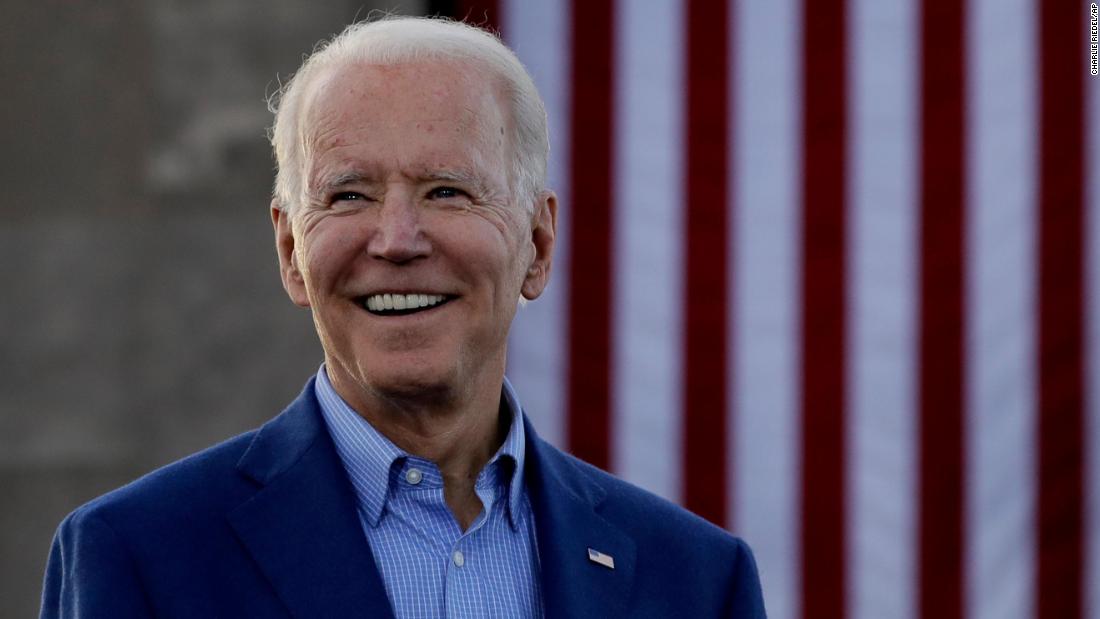
Who will Biden’s running mate be?
It seemed a bit of the cuff and unplanned, but the most recent DNC Primary debate, Joe Biden let it be known that’s he’s already set aside some very specific criteria for his would be V.P. should he win the Democratic nomination. "If I'm elected president, my Cabinet, my administration will look like the country, and I commit that I will, in fact, appoint a, pick a woman to be vice president," Biden said at the CNN-Univision debate in Washington, DC. Biden continued, "There are a number of women who are qualified to be president tomorrow. I would pick a woman to be my vice president." The comments come as Biden is seeing a surge in the presidential race over Vermont Sen. Bernie Sanders and seeks to broaden his appeal and unify the Democratic Party. March 15 - CNN There’s a long list of extremely qualified females for the job – but his comments have pundits and political junkies speculating on just who it could be? Kamala Harris is a solid candidate but being from Democratic friendly California and the scathing comments she levelled his way during the early primary may take her out of contention. Elizabeth Warren and Amy Klobuchar are also political heavy weights, both with very different perspectives on what America needs. What about the outliers like Tulsi Gabbard? The list goes on and on. And there’s always a dreamer’s chance Michelle Obama could make the ticket? It may be crazy, but not entirely impossible. Photo courtesy: Los Angeles Times Either way, there’s a lot of speculation out there, and if you are a journalist looking to rank the contenders or help figure out who has a chance – then let our experts help. Mark Caleb Smith is the Director of the Center for Political Studies at Cedarville University. Mark is available to speak with media regarding the DNC Primary, running mates and the upcoming election. Simply click on his icon to arrange an interview.

