Experts Matter. Find Yours.
Connect for media, speaking, professional opportunities & more.
LI Communities Take Measures to Stem Flooding Issues
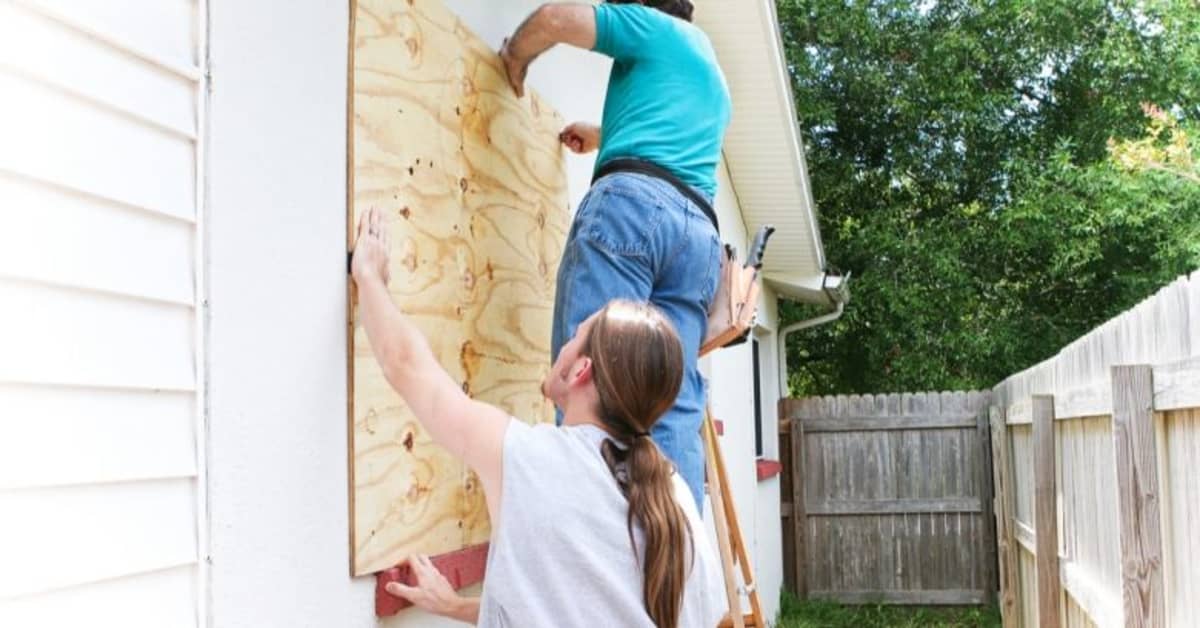
Dr. Jase Bernhardt, Hofstra associate professor of geology, environment, and sustainability, was interviewed by WCBS-TV, about measures being taken in West Islip, Long Island, to mitigate flooding issues. He also talked to MoneyGeek.com about the ways in which climate change impacts homeowners. “Climate change should certainly be taken into account if you are a prospective home buyer,” he said. “It is always worth reading up on the normal climate conditions for the location where you are purchasing a home, to see if anything jumps out at you, such as a heightened risk of hurricanes or tornadoes.”


Moths in the Mojave, with UConn's David Wagner
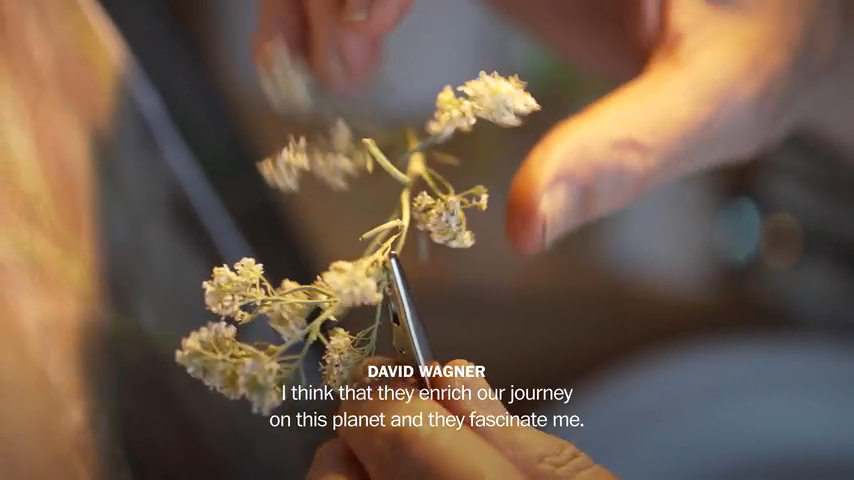
Did you know that there are approximately 180,000 moth and butterfly species living in California’s Mojave Desert? Moths, the winged insects famous for eating sweaters and flocking to lights at night, are a mysterious and captivating species for entomologists like UConn's David Wagner. He was part of a research study that was documented recently in The Washington Post. Each night in the desert, vast clouds of sphinx moths, some spanning the palm of your hand, speed between night-blooming flowers, sipping nectar. Ethmia, tiny black moths with spots shaped like musical notes, emerge from the dark like fairies. Thousands of geometrid moths, no bigger than your fingernail, slip by cloaked in desert hues from rusty reds to pale green. To witness them, I traveled deep into the Mojave Desert this spring with a team from the California Academy of Sciences working to ensure the survival of lepidoptera. For two days, we beat bushes, placed traps and collected thousands of moths to see what lives there — and what can be saved. Moths have inhabited our planet for at least 200 million years. But the conservation status of about 99 percent of moth species remains unknown. Some, like sphinx moths, remain abundant. Many others are probably being pushed to the brink by development, land-use changes, pesticides and pollution, and rising temperatures. “It’s not this unseen force,” says David Wagner, an entomologist at the University of Connecticut. “It’s humans.” Over two nights in the desert, I discovered just how easy it is to fall in love with an unloved insect. And why “mothing” may be the best way to discover the miracle of biodiversity in your own backyard. On the arid western edge of the Mojave, where the desert floor rises to meet the San Bernardino Mountains, sits the 306-acre Burns Piñon Ridge Reserve. We venture out in the morning with beating sticks. Hitting the branches of small oaks and rabbitbrush deposits a treasure trove of insect life into collectors made out of fabric: Crane flies, green lacewings, spiders, walking sticks and caterpillars that will one day grow into moths. Wagner and Chris Grinter, an entomologist and collection manager at the California Academy of Sciences, will catalogue the most interesting ones. The academy houses a collection of 18 million insects, 700,000 of which are butterflies and moth specimens. Many are still waiting for scientists to identify and name them. The plight of moths and caterpillars has fascinated Wagner since childhood. After 20 years, he is no less enthusiastic — or worried. Wagner traveled to Burns Piñon to help finish his magnum opus, the successor to his 500-page guide to eastern North America’s caterpillars. The guide for the west will probably run more than 1,500 pages, a testament to the region’s remarkable biodiversity. As the sun sets, the mood is anticipatory. We head out into the desert to set our traps and see what moths we’ll discover. “The nice thing,” says Grinter, “is moths will come to you.” The article is an amazing read - and the link is above. And if you are interested in knowing more about moths, insects, or the fascinating field of entomology, then let us help. Dr. David Wagner is an expert in caterpillars, butterflies, moths, and insect conservation, and he's commented extensively on the current decline of insects worldwide. Click his icon to arrange an interview today.


Expert Q&A - Craig Albert, PhD, talks election interference
Going into the final days of the 2024 election cycle there is a very real concern about election interference from both foreign and domestic actors, and it's something that will continue to be monitored even after the final votes are tallied. Craig Albert, PhD, graduate director of the PhD in Intelligence, Defense, and Cybersecurity Policy and Master of Arts in Intelligence and Security Studies programs at Augusta University, is a leading expert on propaganda, information warfare and national security studies. Albert has answered key questions about who is trying to interfere in the U.S. elections and why it matters. Q: How and when should someone vote and does it protect you more to avoid interference? The access to instantaneous news or events could affect people and their understanding of whom they want to vote for all the way up until the day they vote. Because of this ease of access, this election cycle has especially shown us how cautious we need to be in regards to scams. It's also why I know there has been a big push for early voting and mail-in voting, and it's necessary in some cases, but I prefer to vote on Election Day because you never know what type of news might come out about one of the candidates or parties. If something comes out that proves to be true, it could affect how someone might vote, but if you voted before Election Day, it's too late. At the same time, a very serious deepfake could be released that could manipulate how people choose to vote and it could mislead people, as well. Q: What are the consequences of the optics of an 'unfair' election? What the U.S. needs to be cautious about is preserving and maintaining the legitimacy of the election cycle. After the election, no matter who wins, narratives of interference and how it impacted the election are going to be shared and that's just irresponsible. Unless there's damning information and very clear evidence, you shouldn't mess around with the idea that the election was interfered with, because that could threaten the very structure of the United States. Q: What's the potential for post-election meddling? We have domestic bad actors as well as foreign maligned actors that are going to say the election was delegitimized no matter who wins. They have social media campaigns ready to post no matter which side wins, they're going to circulate false videos of ballot boxes burning or news that not all the the votes were counted and things of that nature. They're going to do all kinds of things because anybody can fake a ballot box being burned or mail in votes not being counted properly on video or something like that. The problem is if it goes out there or becomes viral, so many people will believe it and that sows discord. So, that creates distrust in the public system on a pretty big swath of the American population. Q: Who benefits from post-election doubts and chaos? You have foreign actors that really build on the type of anger that the political candidates and their parties already use through their propaganda and rhetoric. We have already seen Russia amplifying the message that somebody cheated or elections were hacked, and you have China, Iran, Venezuela, ISIS and Al Qaeda doing that, as well. You also have regular cyber criminals that just want to sew discord and distress so they can manipulate people later on and get into our banking systems and things of that nature. You have potentially hundreds, if not thousands of attack vectors coming at the United States between election night and January 20 when the new President will be sworn in. And then afterwards, they will all still be trying to create chaos, rebellion, civil unrest, or in the case of Iran, China and Russia, open civil war in the United States. Looking to know more and covering the election, Augusta University can help. Albert is available to speak with media – simply click on his name to arrange an interview today.


In stunning news, NATO just confirmed that North Korea has deployed about 12,000 troops to Russia. The troops have already been deployed to the Kursk border region of Russia. According to NATO Secretary-General Mark Rutte, this move represents “a significant escalation” in North Korea’s support of Russia and could lead to a dangerous expansion of the war. International relations expert, Dr. Glen Duerr, gave his thoughts about the impact of this strategic move in a recent interview. Here are three key points: North Korea has already been supporting Russia amid their war with Ukraine. But North Korean troops in Russia signifies an escalation. Is this move bringing to light Russia's weakness? Initially, it was reported that 3,000 North Korean troops were deployed. But it turns out there were actually 12,000 troops deployed to Russia from North Korea. How will these numbers impact not only the weary troops of Ukraine but also the tensions of the Korean Peninsula and the wider Indo-Pacific region? North Korea has one of the largest militaries in the world, in relation to their country's population. How will their support of Russia impact the future of the war? If you are a journalist covering the conflict between Russia and Ukraine, look no further than our experts for valuable insight and expert knowledge. Dr. Glen Duerr is an expert on this subject and is available to speak to media regarding the ongoing Russia-Ukraine war. Simply click on his icon to arrange an interview or contact Mark Weinstein at mweinstein@cedarville.edu.


Civil discourse will be crucial to healing after the election
As we inch toward Election Day and brace for the aftermath, learning to disagree will be as important as ever. Civil discourse – actively engaging while aiming to understand, not persuade – is the key to navigating the upcoming political minefield, says Tim Shaffer, the Stavros Niarchos Foundation Chair of Civil Discourse at the University of Delaware. Shaffer, who is also director of the Stavros Niarchos Foundation Ithaca Initiative in UD's Biden School of Public Policy and Administration, can discuss the concept of civil discourse and how it can be used to navigate a society so divided politically that it has torn friendships and families apart. Some main points: • Civil discourse emphasizes listening to understand others’ perspectives, focusing on shared values – such as family – rather than conflicting positions. • Disagreement is actually important. Society needs friction for growth and progress. • Advice for healthy discourse: Practice intellectual humility, acknowledging the complexity of issues beyond right and wrong and recognizing the importance of gray areas in life. • Staying safe and sane on social media: "People need to feel safe and included, and we need to ensure we hear differing viewpoints, so how do we balance those competing values? There’s no secret answer, but we have to figure it out collectively." • Open discussions can be a valuable tool. "I believe in the power of education—church basements, community spaces, classrooms—to make a difference," Shaffer says. Reporters can connect with Shaffer directly by visiting his profile and clicking on the contact button.


From collecting candy to carving pumpkins, Halloween is defined by its traditions, and few are as time-honored as the telling of ghost stories. Whether recounted by crackling campfires, read from well-worn books or streamed on big-screen TVs, supernatural tales seem to take on a special resonance in the lead-up to October 31. And, on the whole, we seem more than comfortable enduring chills and braving thrills to enjoy them. But what draws our attention, season after season, to things that go bump in the night? And what makes the paranormal such a powerful, and persistent, storytelling device? Mary Mullen, PhD, is an associate professor of English at Villanova University and the instructor of the course "Ghostly Matters," which delves into haunting's role in culture, history and society. From her perspective, our longstanding fascination with spirits, specters and phantoms speaks as much to our concern for the world around us as to our interest in the hereafter. "At their core, ghost stories unsettle us," says Dr. Mullen. "They raise questions about what we consider normal, what we view as 'everyday life,' what we value as 'modern' and whether the past is still with us or not." As Dr. Mullen explains, when we're presented with something that's "haunted," we're essentially being asked to consider the reasons why. The very existence of spirits, emerging from beyond the grave, compels us to reflect on their presence's meaning—and to think about what developments might draw the ire, intrigue or intervention of the dead. (When watching Steven Spielberg's "Poltergeist," for instance, a viewer might feel the movie's ghosts are completely justified in terrorizing the profit-hungry real estate firm that disturbed their eternal slumbers.) Spirits, in turn, consistently set our focus on items left unsaid, unconsidered or overlooked. Departed yet still present, drifting somewhere between this plane and the next, they often challenge the living's notions of progress, propriety and success—and signal a last-ditch effort at preserving something that has all but faded from recollection. In effect, they bring the past into dialogue with the present for the sake of the future. "Ghost stories are really useful for contemplating transition and change and what's lost in the process," says Dr. Mullen. "They give a name to things that are liminal… For example, Luke Gibbons [a professor at Maynooth University] says that ghost stories, in modern Irish writing, are frequently connected to memories that haven't yet become public history. So, they speak to facets of social life that exist, or have existed, but are not present in monuments or official accounts." From Virginia Woolf's "A Haunted House" to Toni Morrison's "Beloved," tales of the supernatural provide us with what Dr. Mullen terms "glimmers of possibilities." They serve to mirror and embody our complicated feelings on transformative happenings, whether personal, communal or generational, and they afford us the language and vocabulary to express sadness over what is done and hope for what is yet to come. "There are certainly ghost stories, like Elizabeth Bowen's 'The Demon Lover,' that end in absolute terror with no seeming resolution," says Dr. Mullen. "But I think that, in a lot of these tales, haunting leads to reconciliation, or different kinds of healing or important acknowledgements—of things that need to be acknowledged." As Dr. Mullen proceeds to explain, it's no coincidence that the roots of the contemporary ghost story can be traced to the 19th century, a period of great social upheaval, cultural displacement and scientific and technological advancement. The product and reflection of a tumultuous "new age," the genre, as we know it, took hold as a means of reckoning with that which was lost, actively transpiring and still to occur. Perhaps it's no surprise then that, as the leaves begin changing and autumn starts giving way to winter, we have an affinity for tales that center on visits from the afterlife, bridging the past, present and future. "I think that we tell ghost stories when we're open to moving beyond our sense of 'the everyday,'" says Dr. Mullen. "And there are certain points of the year, like the holidays and gatherings with family and friends, that are so rich with emotion and memory that the boundary between this world and the 'otherworld' seems maybe—just maybe—capable of being crossed."


SEO: Why Expertise Ranks Higher
When the internet took off in the mid-90s, finding content wasn’t for the faint of heart. There were no directories or search engines and if you didn’t know where you wanted to go, you weren’t going very far. In the wild west of URLs, it became abundantly clear that we needed a better way to search. Yahoo brought us our first directory but in a list of websites, everyone’s content looked equal. That’s when Google stepped up to the plate. Right from the early days of search algorithms, they understood that people valued expert content and we needed a way to rank the credibility and integrity of a webpage. Drawing on his academic background, Larry Page introduced the concept that links could act like citations in a research paper. The original idea operated like a voting system; the more links, the higher the rank. While Google still places tremendous value on expertise, their algorithm for search engine optimization (SEO) has become significantly more complex. We know that it’s combination of on-page and off-page factors but at the end of the day, it boils down to delivering the quality content people are searching for. Source: Search Engine Land Give the People What They Want Today’s audiences want to build more meaningful connections with the institutions and businesses they engage, and that requires information. It’s not enough to put out an unimaginative website or tri-fold brochure. While these tactics may have worked a short time ago, traditional marketing often fails to deliver the level of detail audiences need to make purchasing decisions. From transparency to accountability, they have high expectations for organizations and the content they provide. They want to know how a product or service will uniquely work for them and how your organization aligns with their vision and values. Most of all, they need expert perspectives and proof you can deliver results. If you want to remain competitive, it’s essential to keep up with these rising demands for easy-to-find, high-quality content and secure you a key spot on Google’s SERP. Climbing the Ranks with Expertise Organizations, particularly those in knowledge-based industries (academia, consulting, professional services, medicine etc.), need to pay special attention to how Google is tuning its search algorithm to index information that is attributed to experts. Factors like quality, keyword research and freshness are all on-page tactics that help webpages improve their rank. With this in mind, here are just a few ways your experts and their content are contributing to your rank on Google: Meta-Tagging: Meta tags are snippets of text or rich media that help audiences understand what’s on your webpage from the Google SERP. To ensure they deliver the most relevant search results, both Google and YouTube have been updating their meta tagging and schema options to allow expert content to be indexed more descriptively. This includes everything from author attribution to expert answers the prestigious Rank Zero which highlights the best possible result to users at the very top of the page. Freshness: The freshness of content is correlated with content relevance, and it’s something Google highly values when ranking search. Not only will outdated employee biographies and profiles on your site negatively impact your ranking on search engines, but failing to deliver timely, relevant content on trending topics will also hold you back. By regularly updating your website with expert content, you’re showing that you’re an active contributor to that topic – building trust your audiences and increasing your rank on Google. Keywords: Google collects and indexes searches from users every day, so the richness of your keywords is critical to your search ranking. In many cases, you’ll find that expert content has a holistic way of providing information about high-searched topics in your industry. When an expert creates content, they not only include the targeted keywords, but they naturally incorporate latent semantic indexing as well which accounts for related terms. This all feeds into Google’s desire to surface the most relevant content and who better to do that than your experts. All of these factors are important considerations for improving your organic search rank. As a key driver in inbound traffic, improving your organic rank will not only increase brand awareness, but it also delivers higher-quality leads. And by sharing expert content on your digital channels, you’re showing your audiences and Google exactly what makes you an industry authority and why they should engage your business. Download The Complete Guide to Expertise Marketing For a comprehensive look at how expertise marketing benefits the entire organization and drives measurable return on investment, follow the link below to download a copy of ExpertFile’s Complete Guide to Expertise Marketing for Corporate & Professional Services, Higher Education Institutions, Healthcare Institutions or Association & Not-for-Profits.



Enhancing environmental governance in the Caribbean
The University of Delaware's Island Policy Lab has launched a first-of-its kind initiative to ensure that future development projects in the Caribbean are equipped to adapt to climate risks effectively. When completed, this work will set a new benchmark for sustainable development across the region. The research initiative is led by Professor Kalim Shah, Director of the UD Island Policy Lab, with colleagues at the University of the West Indies. The collaborative effort, which kicked off this month in Barbados, will integrate climate services into Environmental Impact Assessments (EIA) and bring together key stakeholders from public agencies, academic institutions and private organizations. Funded by NOAA and the U.S. Department of State, the project aims to strengthen environmental governance by embedding scientific climate data into regulatory frameworks. The work will cover multiple Caribbean islands chosen for their contrasting regulatory frameworks, with the aim of addressing critical gaps in how climate risks are incorporated into EIA processes, which often lack consistent and actionable climate data. On this first Barbados leg, the project has drawn support from the Barbados Meteorological Services, the Ministry of Environment and National Beautification, the Coastal Zone Management Unit and international financial institutions such as the Caribbean Development Bank and the Inter-American Development Bank. Private sector project developers are working alongside regulatory bodies and academic institutions to ensure the success of the initiative. Minister of Planning and Development William Duguid emphasized the importance of the project during the launch event, held at the Savannah Beach Club in Christ Church. “Our very survival as a nation depends on building climate resilience,” Duguid said, highlighting the vulnerability of Barbados’ key infrastructure — such as airports, seaports, and hospitals — located along the coast. He stressed the significance of using climate data in EIA processes to mitigate risks such as sea-level rise and storm surges, which threaten the island’s long-term sustainability. The initiative follows a phased approach, beginning with assessments of the existing institutional frameworks in Barbados, Dominica, Trinidad and Tobago, with other countries following in the future. The research team will evaluate how well current climate services align with the needs of both public agencies and private developers. In subsequent phases, stakeholders will participate in co-designing tailored climate tools to enhance EIA processes, leading to the development of Climate Services Implementation Plans. These plans will provide a roadmap for integrating climate services sustainably across sectors and jurisdictions. “This project is about more than just collecting data – it’s about turning scientific insights into practical tools for decision-makers,” Shah explained. The co-design process, which involves collaboration with local stakeholders and international partners, aims to reduce conflicts between regulators and developers by embedding climate considerations early in the project approval process. This alignment will ensure that new developments are both environmentally sound and climate-resilient. The research is expected to deliver several key outcomes, including enhanced coordination among regulatory bodies, improved access to climate data, and greater institutional capacity to manage environmental risks. Dr. Sylvia Donhert, Chief of the Inter-American Development Bank’s Compete Caribbean program, endorsed the project saying that it reflects the growing urgency for climate action across the region. “Embedding climate science into development planning is essential not just for policy but for the economic well-being of the region."

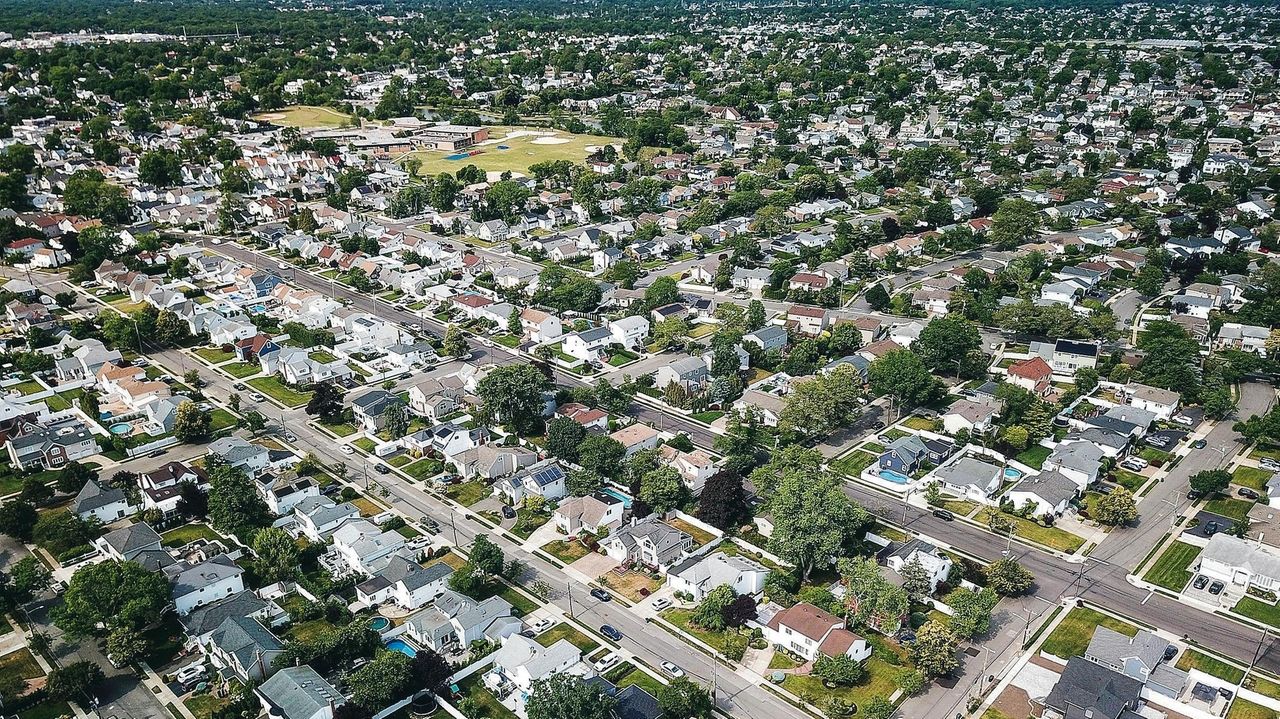
Lawrence Levy, executive dean of the National Center for Suburban Studies, broke down all the key New York races. He appeared on The Point with Marcia Kramer on WCBS-TV 10/20; News 12 on both 10/16 and 10/17, and WCBS-FM on 10/20. He also spoke with Fox 5, which syndicated to several outlets including Yahoo!news. Levy also contributed to a Newsday article about property tax relief. “There is no chance that it [STAR credit] would be anything but increased because it has now become something that people count on,” he said.

LSU expert in social and economic issues: Rural America’s unique struggles affect how it votes
An expert in social and economic issues, Professor Slack explains the unique struggles facing rural communities—like changes in jobs, health concerns, and population shifts. In this Q&A, he clears up common misunderstandings about rural life, discusses the problems rural voters face, and explores how these issues may affect their votes in this important election. What is your area of expertise? I am a professor of sociology at LSU. My research coalesces around the areas of social stratification and social demography with an emphasis on geographic space and the rural-urban continuum as axes of difference. With my colleague Shannon Monnat (Syracuse University), I recently authored the book Rural and Small-Town America: Context, Composition, and Complexities, published by the University of California Press. What are the key socio-economic challenges facing rural voters in this election? Wow. Where to start? There are so many myths and misunderstandings about rural America. One is that “rural” is synonymous with farming. To be sure, agriculture is a vital industry in terms of sustenance and national security. But technological advances and farm consolidation—the shift from many smaller farms to fewer larger farms—means most rural Americans don’t have direct economic ties to agriculture anymore. The two largest sectors of employment in rural America today are services and manufacturing, respectively. A concern regarding the service sector is that it produces jobs that vary greatly in quality depending on people’s educational level; good professional jobs for the more educated and lower quality jobs—low wages, low hours, and few to any fringe benefits—for less educated folks. Those good professional jobs tend to be concentrated in urban areas (the emergence of remote work may reshape this in the future). Manufacturing employment, which has historically been the “good jobs” sector for less educated people, has been in steady decline in terms of its share of jobs for the past 50 years. While people sometimes think of plant and factory work as urban, it has provided a larger share of jobs and earnings in rural America for decades. Deindustrialization is causing real pain in rural America: it is one thing for a plant to shut down in a large and diversified metropolis, but quite another when it is the lone “good jobs” employer in town. Other big issues are the challenges posed by population aging and youth out-migration in rural America, as well as increasing racial and ethnic diversity. Another is the factors underlying the “rural mortality penalty”—that rural America has higher death rates and lower life expectancy than urban America. These are all pressing issues. What role will rural voters play in this close presidential race, and what may sway their vote? Rural voters will play a key role in this election, assuming the margins end up being as close as they have been in the last two presidential cycles. A persuasive working-class message and a sense that rural people and places are seen—that they aren’t just “flyover country”—will help. Given that the two leading candidates hail from New York City and San Francisco, both picked running mates with a rural and small-town backstory as a nod to that constituency. All of that said, the power of the rural vote should not be overstated. The contemporary U.S. is mainly an urban society, so the winning candidate will ultimately pull most of their votes from cities and suburbs. Can you discuss any recent research on how rural voting patterns have evolved over the last few election cycles? The short answer is that the rural vote has been steadily trending Republican for decades. The last presidential election in which voters in metropolitan and nonmetropolitan counties were essentially equal regarding party preferences was in 1976 when Jimmy Carter was elected. Since that time, the percentage of nonmetro votes for the Republican candidate has trended steadily upward. In 2020, roughly two-thirds of the nonmetro vote went to Donald Trump, more than 20 points higher than in metro counties. That said, rural voters are not a monolith. The flip side of the 2020 numbers above is that roughly 1 in 3 voters in nonmetro counties cast their ballot in the other direction. And rural places with majority Black, Latino, and Indigenous populations often vote in the Democratic column. Moreover, you have political legacies particular to certain places that matter—like the left-leaning Farmer-Labor Party in Minnesota (today the Democratic-Farmer-Labor Party or DFL) or the rural state of Vermont electing a socialist to the U.S. Senate (Bernie Sanders). So, there are notable deviations from the aggregate trend. “ The problems and prospects facing rural America in the 21st century matter for this nation. Personally, I would love to see a less ideological and more pragmatic politics emerge that puts that in focus. ” How do political campaigns target rural voters, and how effective do you think these strategies are? This is a bit outside my area of expertise, and I want to stay in my lane. But I will raise two issues. One is what the political scientist Katherine Cramer has called “rural consciousness”: a belief that rural areas are ignored by policymakers, that rural areas do not get their fair share of resources, and that rural folks have distinct values and lifestyles that are misunderstood and disrespected by city folks. The message from some quarters that rural people vote “against their own self-interest” or vote “the wrong way,” essentially that they are rubes, feeds into this. The other issue is that much of rural America is a local “news desert.” That is, there simply are no sources of comprehensive and credible local news. So, people rely on cable TV news or—if they have access to broadband—the internet. The result is that all news becomes national, even when those issues may have little bearing on local life. It used to be said that “all politics is local,” but in today’s media environment, that is increasingly untrue. Is there anything else you want to add? I would just emphasize that common myths and misunderstandings about rural America run deep. Rural America is not a paragon of stability, social and economic change abounds. And rural America is not a monolith, it is socially and regionally diverse. The problems and prospects facing rural America in the 21st century matter for this nation. Personally, I would love to see a less ideological and more pragmatic politics emerge that puts that in focus. Link to original article here.