
Experts Matter. Find Yours.
Connect for media, speaking, professional opportunities & more.

Municipalities around the world have invested significant resources to develop connected smart cities that use the Internet of Things (IoT) to improve sustainability, safety and efficiency. With this increased demand for IoT experience, the VCU College of Engineering formed the OpenCyberCity testbed in 2022. The 1:12 scale model city provides a realistic, small-scale cityscape where students and researchers can experiment with new and existing smart city technology. Sherif Abdelwahed, Ph.D., electrical and computer engineering professor, is director of OpenCyberCity. He recently answered some questions about new developments within the testbed. The OpenCyberCity is a smart city testbed, but are there any real-life cities that one could call a smart city? Several real-life locales are considered smart cities due to their extensive use of technology and data-driven initiatives to optimize infrastructure and services. Dubai is one of the most notable. They have implemented smart transportation systems, buildings and artificial intelligence to transform the city’s operations and make them more efficient. Other reputable smart cities include Singapore and Seoul, which utilize smart energy management, smart transportation and comprehensive data analytics for improved urban planning and services. Seoul, in particular, has an initiative with smart grids and connected street lights, which VCU Engineering’s own OpenCyberCity test bed is working to implement. How does the OpenCyberCity address privacy? With so much technology related to monitoring, how are individual citizens protected from these technologies? Privacy is a major concern for smart cities and it is one of the main research directions for VCU Engineering’s OpenCyberCity. We are developing several techniques to prevent unwanted surveillance of personal information. Sensitive data is protected by solid protocols and access restrictions that only allow authorized users to view the data. Our aim is to find a reasonable middle ground between technological progress and privacy rights, staying within legal and ethical bounds. Some techniques to address privacy concerns include: Data Anonymization: This makes it difficult to trace back information to individual identities. Within the testbed, we will evaluate how to protect individual privacy while maintaining data utility and assess the impact on data quality. Secure Data Storage and Transmission: Encrypt data to protect it from unauthorized access. In the smart city testbed, these access control mechanisms will be implemented within the testbed’s infrastructure. We will also test different data handling processes and access control models to determine their ability to safeguard sensitive data. Privacy Impact Assessments: Regularly evaluate potential privacy risks of new smart city projects in order to mitigate them and ensure the ethical handling of data by those with access. Policy and Regulation Development: Data and insights generated from OpenCyberCity experiments can inform the development of cybersecurity policies and regulations for smart cities. How is the College of Engineering’s OpenCyberCity test bed different from similar programs at other institutions? While other universities have similar smart-city-style programs, each has their own specialty. The VCU College of Engineering’s OpenCyberCity test bed focuses on real-world contexts, creating a physical space where new technologies, infrastructure, energy-efficient transportation and other smart city services can be tested in a controlled environment. Our lab monitors real-time data and develops smart buildings, smart hospitals and smart manufacturing buildings to enhance the city’s technologies. Recent additions to the OpenCyberCity allow for expanded research opportunities like: Advanced Manufacturing: Students can apply advanced manufacturing techniques in a controlled environment. They can also test new materials, processes and automation technologies to improve efficiency and product quality. Energy Efficiency Testing: Environmental engineers and sustainability experts can evaluate energy consumption patterns within the smart manufacturing unit to implement energy-saving measures and assess their impact on sustainability. Production Optimization: Manufacturers can use real-time data from the smart manufacturing unit to optimize production schedules, minimize downtime and reduce waste. Predictive maintenance algorithms also help prevent equipment breakdowns. Education and Training: Hands-on experience with state-of-the-art manufacturing technologies helps train the workforce of the future. Integration with Smart City Services: Data generated by the manufacturing unit can be integrated with smart city services. For example, production data can inform supply chain management and energy consumption data can contribute to overall city energy efficiency initiatives. How has the OpenCyberCity changed in the last year? Is the main focus still data security? What started with research examining, analyzing and evaluating the security of next-generation (NextG) applications, smart city operations and medical devices has expanded. Data security is now only one aspect of OpenCyberCity. Its scope has grown to encompass more expansive facets of cybersecurity like automation and data analytics in the domain of smart manufacturing systems. The implementation of a smart manufacturing system in 2023 is something students really enjoy. Thanks to the vendor we used, undergraduate students had the option to develop functionality for various features of the manufacturing plant. Graduate students were also able to research communications protocols and cybersecurity within the smart manufacturing system. What does the smart manufacturing system entail and what kind of work is occurring within that system? An automated system is there for students to work with. Robot arms, microcontrollers, conveyor belts, ramps, cameras and blocks to represent cargo form an environment that emulates a real manufacturing setting. We’re currently brainstorming an expansion of the smart manufacturing system in collaboration with the Commonwealth Cyber Initiative (CCI). We plan to set up two building models, one for manufacturing and one for distribution, linked by a sky bridge conveyor system that moves items between the locations. Students work to leverage convolutional neural networks that use images to facilitate machine learning. When paired with the advanced cameras, it forms a computer vision system that can accurately place blocks in a variety of lighting conditions, which can be a challenge for other systems. By having to optimize the communication protocols that command the smart manufacturing system’s robotic arms, students also get a sense for real-world constraints . The Raspberry Pi that functions as the controller for the system is limited in power, so finding efficiencies that also enable stability and precision with the arms is key. Is there an aspect of cybersecurity for these automated systems? Yes. Devices, sensors and communication networks integral to the IoT found in smart manufacturing systems and smart cities generate and share vast amounts of data. This makes them vulnerable to cybersecurity threats. Some of the issues we look to address include: Data Privacy: Smart systems collect and process vast amounts of data, including personal and sensitive information. Protecting this data from unauthorized access and breaches is a top priority. Device Vulnerabilities: Many IoT devices used in smart systems have limited computational resources and may not receive regular security updates, making them vulnerable to exploitation. Interconnectedness: The interconnected nature of smart city components increases the attack surface. A breach in one system can potentially compromise the entire network. Malware and Ransomware: Smart systems are susceptible to malware and ransomware attacks, which can disrupt services and extort organizations for financial gain. Insider Threats: Employees with malicious intent or negligence can pose significant risks to cybersecurity. Potential solutions to these problems include data encryption, frequent software updates, network segmentation with strict access controls, real-time intrusion detection (with automated responses to detected threats), strong user authentication methods, security training for users and the development of well-designed incident response plans.


Sleep Better, Live Better: Improving Sleep Quality Can Lead to Less Stress and Improved Cognition
Research has demonstrated that increased stress and all-night study sessions can lead to lower cognitive functioning and test scores, adding even more pressure on college students. Baylor sleep expert Michael K. Scullin, Ph.D., director of Baylor University’s Sleep Neuroscience and Cognition Laboratory and associate professor of psychology and neuroscience, studies how cognitive and behavioral processes are affected by sleep. “Sleep deprivation makes life worse. And it makes the person not getting enough sleep worse at life,” Scullin said. “However, if we focus on improving our sleep, life will get better, and we will get better at life.” Poor sleep is particularly common when students are studying for exams or working on major projects for classes. The combination of staying up late, cramming for tests, increased stress and bright light exposure late at night can lead to variable sleep durations and higher stress levels. “We know that as you accumulate sleep debt, whether it's from a single all-nighter or from weeks of variable sleep durations, it can exacerbate any pre-existing vulnerability a person may have to stress,” Scullin said. “For instance, if someone has a predisposition to panic attack disorder, sleep deprivation can increase panic attacks by about 40%. This applies to virtually any clinical or subclinical condition, whether it’s stress-related or not – sleep deprivation makes it worse.” Scullin added that even with a slight sleep deficit, any sort of negative event, such as a bad grade on a test, will feel much worse than it would for someone who is well-rested. “It becomes a cycle, and the individual begins to focus on what is worse instead of calming down at night and getting ready to fall asleep,” Scullin said. So how can a student – or any individual – break this cycle? It all starts with developing healthy sleep habits, which reduce stress and improve academic performance. Scullin suggests students try three Challenges to improve their sleep, mood and stress regulation. 1. Illuminate! Challenge One class activity that Scullin has used with students for years is called the Illuminate! Challenge, which focuses on students adding more natural sunlight to their lives in the morning hours. “About 90% of students do not know that we need natural sunlight daily in the morning to tell our internal biological clock when to start ticking. When our biological clock knows it's time to start ticking, it will make us feel more alert, which helps improve our mood,” Scullin said. Specifically, he suggests: Spending 20 minutes daily outdoors in natural daylight during the morning hours. Be intentional with this time as something aside from walking to class or other daily routines. Take the time when you would normally be inside studying or eating breakfast to go outside instead. “Almost every one of my students who has taken this challenge has said their mood and alertness improved,” Scullin said. 2. Deluminator Challenge The Deluminator Challenge eliminates light in your bedroom for a night of better sleep. Scullin said this challenge works by: Turning off all the lights and counting the number of artificial lights that exist in your environment. How many of your plugs have lights? How much light is coming in through your curtains? Cover up every light source (except fire alarms and other safety devices), including any light coming through windows. Blackout curtains are a good investment, or even using blankets to cover windows will help reduce light at night. It’s easy to adopt this challenge as it is sustainable once it is set. You will find that you can fall asleep easier and enjoy sleeping later in the morning because of the darker environment. “What normally happens is students see their devices are emitting unnatural light, and it is not nearly as dark as it should be,” Scullin said. “A lot of students in my classes report that this is their favorite challenge because it led to the biggest impact on sleep quality.” 3. Anti-Rumination Challenge Lying in bed thinking about everything you need to do the next day can increase stress levels and interrupt sleep. In a recent study, Scullin found that taking five minutes to write a “to-do” list at bedtime helped student participants fall asleep about 10 minutes faster than others who used that time to chronicle completed activities: Take five minutes to write down a to-do list of everything that needs to be done the next day. The to-do list offloads stress, gives you a good action plan for the next day and helps you feel accomplished as you check off the goals. When people get more sleep – even just one more hour of sleep per night – “they literally become happier,” Scullin said. That extra hour of sleep can improve social relationships, emotional reactions and cognitive functioning. With improved cognitive functioning comes improved academic performance. “Adding more sleep to your life makes life better, and it's going to make you better at life. It's going to resolve some of the stress, and you're going to better handle events that are inherently stressful. You're going to enjoy life while you're also taking classes. And you know what? Your grades are probably going to improve.”



Baylor Expert: Don't Lose Focus on Spiritual and Mental Well-being
Baylor Social Work professor shares tips and resources during stressful half-way mark of semester Holly Oxhandler, Ph.D., LMSW., associate dean for research and faculty development and associate professor in the Diana R. Garland School of Social Work. October marks the halfway point to the fall semester and can carry all the excitement, stress and anxiety of another academic term winding to a close. The month also typically marks one of the busiest times of the year for university counseling centers across the nation. With unique challenges in 2020 related to COVID-19, the University has acknowledged those hardships for all in the Baylor Family by taking the initiative to focus on mental health throughout October. Baylor University’s Holly Oxhandler, Ph.D., LMSW, associate dean for research and faculty development and associate professor in the Diana R. Garland School of Social Work, is an expert on mental health, primarily anxiety and depression, as well as religion and spirituality in clinical practice. In this Q&A, she shares tips and resources to students, faculty and staff who are facing all of the typical challenges of another mid-term while also navigating a global health crisis. Q: The 2020 fall semester provided challenges and obstacles never seen before in higher education. Why has COVID-19 been a uniquely stressful influence on the mental and spiritual well-being of students, faculty and staff? There are a number of reasons COVID-19 has been a uniquely stressful influence on the mental and spiritual well-being of those in higher education. First, there are the unanticipated layers and learning curves of new considerations and adjustments to course delivery, safety protocols, dining, campus activities and communication, to name a few, on top of the typical adjustments and emotions we all navigate at the beginning of each fall semester. Second, those in higher education entered fall 2020 without the “typical” summer that’s needed to reset, make adjustments and plan for the upcoming year’s activities. For example, many administrators, faculty and staff spent the summer not only planning for the usual upcoming academic year but also reconfiguring classes to be hybrid or online or simultaneously include both in-person and online students, in addition to modifying student activities and faculty research project timelines and plans. For degree programs that include internships, like social work, there have also been additional layers of consideration in order to comply with our professional accreditation standards. Third, we recognize that many students, their family members, as well as Baylor faculty and staff members’ loved ones, have been affected by the economic impact of COVID-19, adding a layer of financial stress. Fourth, many within the Baylor community – staff, faculty and students – have needed to juggle childcare and homeschooling their children as they continue to engage in their own work and/or educational expectations. Finally, the fear of contracting COVID-19, especially among the most vulnerable and high-risk populations, has been constantly present. Not only are we adjusting to this academic year with new ways of being and new protocols that keep us and one another safe, we’re also facing unexpected waves of fear and layers of grief for the missed events, opportunities and connections we had hoped to experience. As resilient as our community is, I think it’s important to remember we cannot “operate as usual” because things aren’t usual. Instead, we must allow ourselves and one another the time, margin, flexibility and grace needed to sit with and move through the rising emotions, grief, stress, loneliness, fear and uncertainty as they come. We cannot skip or bypass these emotions, but instead, must move through them, often with the support of loved ones and/or a trained mental health care provider. Q: Mental and spiritual health are challenging during even a typical semester experience. What are some of the effects and reactions you’ve witnessed to these circumstances among students, faculty and staff compared to a non-COVID-19 semester? As human beings navigating a global pandemic to the best of our ability, our mental and spiritual health have all been impacted to some degree this semester as we have individually and collectively faced a number of unexpected difficulties. I have also seen a beautiful response to the reality of this collective struggle in my interactions with Baylor faculty, staff and students that includes deep empathy for one another and an increase in valuing authenticity as we engage in the high-quality, meaningful work we each do. It has been a gift to witness Baylor community members holding space for colleagues’ and students’ vulnerability as we admit this is hard for various reasons and recognize that we cannot just push our way through this season. When we admit this isn’t easy and that we are all juggling so much to the best of our ability through thick layers of uncertainty, it gives those around us permission to admit their experiences, too. In fact, I think when we create space for that shared vulnerability and empathy in our interactions with others, we can better assess the current situation, remain present to one another and discern what steps are needed to move forward together, particularly because we’re not carrying an additional layer of effort pretending that everything is fine. That said, the Garland School of Social Work conducted a couple of well-being surveys since this summer to internally check in on how our faculty and staff are coping with this season and identify the biggest stressors they’re facing and sources of support. Our faculty and staff have also been continually checking in on our students through this season. Not only do we see many noting the same stressors that we’re all facing these days, normalizing how difficult this is for each of us, but the act of nonjudgmentally holding that space for ourselves and one another has been a tangible step of offering the care we know is uniquely woven into the Baylor experience. Q: How can individuals within the campus community tend to their spiritual health to close out the semester? I would invite readers to take a moment to pause and identify a few spiritual practices that uniquely support them well, even if that means thinking back to less stressful seasons. The key to note here is that these are practices which require regular engagement, similar to if we were to practice a new instrument or sport. Spiritual practices can vary based on our faith tradition and may include praying; meditating; centering prayer; reading our religious text; walking a labyrinth; journaling; practicing gratitude; listening to a sermon or faith-based podcast; praying over and contemplating scripture; engaging in creativity; practicing daily examen; or listening to spiritual music. Some practices may involve other individuals that can be done safely, including seeking spiritual direction, participating in a Bible or faith-based book study with others or engaging in worship (even virtually!). These practices can offer a sense of groundedness and a reminder that God is with us, including through this season. As we continue to navigate this season of uncertainty, it is critical that we intentionally weave in spiritual practices that offer rhythms, routines and a grounded faith that can support us well through the waves of difficulty. Especially on campus, I would encourage Baylor community members to follow along with Spiritual Life’s resources and events, or check out Better Together BU, a partnership supported by both Spiritual Life and Multicultural Affairs. Q: How can individuals within the campus community tend to their mental health to close out the semester? Tending to our mental health in this last stretch of the semester will be so important as we move into the stress of finals, the complex emotions tied to the holidays, grief with upcoming celebrations looking different this year (including how we celebrate holidays, who we celebrate with and the reality of many having lost loved ones to COVID-19) and the reality of seasonal affective disorder on the horizon. In fact, in a typical year, about 5% of U.S. adults have seasonal affective disorder (SAD), with another 10-20% having mild forms of it. In light of all of the added transition, uncertainty, complexity of caregiving and homeschooling while working/studying at home, layers of loneliness and grief, I do hope our Baylor students, staff and faculty will actively prioritize taking good care of their mental health and supporting others’ mental health care, too. One way I highlight this with my social work students is by recommending creating a self-care plan that pays attention to our physical health, mental health, social support and spiritual health. If we can identify some strategies to holistically care for ourselves well and be mindful of potential barriers to navigate, we may have more resilience and practices to draw from to cope with challenges and stressors that arise. Finally, although NAMI highlights that 1 in 5 of us are currently facing a mental health struggle, some studies have shown that over 80% of us will meet criteria for a mental illness by young adulthood or middle-age. Therefore, I highly recommend that anyone who is noticing any changes in their mood, diet, sleep habits, behaviors or overall well-being immediately reach out for help. Students are encouraged to reach out to Baylor’s Counseling Center, CARE team or the BARC. Faculty and staff also have resources available through Baylor’s employee assistance program. Other resources for finding a mental health provider include HelpPRO, Psychology Today, Low Cost Help or these additional resources. For those who are deeply struggling, please reach out to the Suicide Prevention Lifeline at 1-800-273-8255 or text ‘HOME’ to 741-741 for the Crisis Text Line. As part of my faith and my social work values, I believe that each of us are worth caring for ourselves, including caring for our mental health alongside our spiritual and physical health. Q: What successes or bright spots have you seen within your campus experience that offer encouragement to how the Baylor Family has handled the crisis throughout the semester? I am regularly amazed by the Baylor students, faculty and staff, the ways we have navigated the crisis together this semester, and I am especially grateful for President Livingstone’s and Provost Brickhouse’s leadership since March. This semester, some bright spots have included Dr. Deborah Birx’s reflections on Baylor’s efforts to keep everyone safe from COVID-19, the Fall Faculty meeting and Dr. Peter Hotez’s appreciation of how Baylor leaders have kept the Baylor and Waco community safe and following along when Baylor students take over Baylor’s Instagram account (like Brandon Nottingham’s takeover on World Mental Health Day!). As the Garland School of Social Work’s associate dean for research and faculty development, I have also loved learning about the ways so many Baylor faculty are offering their unique research expertise and wisdom to serve others through this difficult time, such as Dr. Emily Smith’s “Friendly Neighbor Epidemiologist” Facebook page to explain COVID-19 information. I’ve also been reminded of what a gift it is to be a part of the Garland School of Social Work (GSSW) and this community of faculty, staff and students. The resilience, creativity, love for serving others, dedication to the social work profession and care for our students is so apparent within the GSSW. I have especially seen how my faculty and staff colleagues have adapted courses and assignments, creatively considered students’ needs and juggled their research responsibilities while extending grace to themselves and one another as we navigate this season together as a school to the best of our ability. Similarly, seeing our students’ resilience, flexibility, support of one another, commitment to the profession and heart for the clients and communities they serve is truly inspiring. Finally, Dean Jon Singletary’s servant-leader heart for the GSSW and the ways he has supported our school through so much transition over the last five years has been a gift. One example of this includes the two hours of weekly well-being time he extends for all GSSW staff and faculty to use in support of our spiritual and mental health care. Q: What gives you hope for the spring semester and beyond as students continue through their academic endeavors? Truthfully, our students’ presence and their enthusiasm over the fields of study they are dedicating their lives to gives me hope. As a professor, there is nothing like watching a student become fully alive in the work they are passionate about and feel as though they were made to do. Our students’ willingness to fully participate in the transformational education that Baylor offers, especially in this difficult season of COVID-19, is an honor to witness as a professor and certainly gives me hope. Further, seeing the ways our students are empathically caring for their neighbor by following Baylor’s safety guidelines, growing in their faith, checking in on one another, understanding faculty and staff are doing their very best and continuing to demonstrate their determination to learn and grow is an inspiration. My hope and prayer for our students as well as our staff and faculty colleagues as we move through the remainder of the fall semester and into the spring is that they rest as they need to and prioritize taking good care of their mental and spiritual health. I also pray that we recognize as a community that by caring for our spiritual and mental health, by taking this season one day at a time, by trusting we are doing our best and by reaching out for help when needed, we give others permission to do the same.


Taylor Swift workshop helps fill a blank space for economics students
The University of Delaware's Kathyrn Bender developed a concept that professors could only conjure in their wildest dreams: A Taylor Swift-themed workshop that helps college students better understand data analytics through the music of the world's biggest pop star. Bender, assistant professor of economics in UD's Lerner College of Business and Economics, came up with the idea while teaching her Introduction to Microeconomics class in early October when the discussion turned to MetLife Stadium, home of the NFL’s New York Giants and Jets. “I noticed in that class there was a lot of excitement, and I had just about everybody’s attention in there, whether they were interested because of football or because of the Taylor Swift aspect. So I thought that was really cool,” Bender said. Using grant money, Bender quickly jumped on the idea and developed a Swift-themed data visualization workshop series entitled “Data Enchanted: Transforming Numbers into Knowledge.” She held three 90-minute workshops during the fall semester, which ran from late October through early December: “Ready for It,” an introduction to Stata; “You Belong with Me,” building and structuring data for analysis; and “I Knew You Were Trouble,” transforming and cleaning data for analysis. The workshops helped UD students learn to utilize Stata, a statistical software package used for data manipulation, visualization and automated reporting. They were an immediate success, as Bender received over 60 applicants, although she was limited to accepting just 32 due to space limitations. Though students don’t earn credit for completing the workshops, just a certificate, Bender said they help fill some gaps that aren’t covered in classes. “I think they’re kind of expected to learn about it, piecing it together from different classes,” Bender said. “This [workshop series] is a way for students to get introduced to thinking about data, how it’s set up, how you can create good visualizations with it … those basics before you get into the analysis.” Making the workshops Swift-themed helped students pick up concepts more easily in a fun environment. Before jumping into data sets, the students make friendship bracelets to the soundtrack of Swift's music. In one session, they pulled Spotify data and statistics to analyze the popularity of Swift’s songs. “We’ve stuck with Taylor Swift songs and albums so far,“ Bender said. “So all the data sets have been very easy for the students to understand as opposed to something that’s not as familiar for them to think about. They know what a song is, they know what the duration of a song is, those things are all very easy to understand. They’re able to practice these new data skills without having to worry about the content as much.” Due to the workshop’s immediate success, Bender is planning on expanding the program during the spring semester. She aims to hold eight workshops, the initial three and then five more, and hopes to make them available for all UD students (they were available only as an undergraduate program in the fall). Reporters who would like to write about the workshop and interview Bender can contact her directly by simply the contact button on her profile. Or, send an email to UD's media relations team.


It's going to be a busy week in America when it comes to politics. And if you're covering - we have experts who can help with any of your questions or stories. Tom Smith - Professor in the Practice of Finance - Professor Smith is an expert in labor economics, entertainment and healthcare economics, as well as real estate and urban economies. David Schweidel - Professor of Marketing - Professor Schweidel has been closely researching the impact of AI in society, especially elections. He can speak on the impact AI is expected to have in this year’s elections. Professor Schweidel also has extensive work in election marketing. He researched negative campaign advertising and if a negative tone has a positive impact on election results. Ramnath Chellappa - Professor of Information Systems & Operations Management - Professor Chellappa is available to discuss the economics of information security and privacy. He can also discuss the economics and impact of AI. Raymond Hill - Professor Emeritus Hill is available to discuss any issues on the economy related to energy. If you are looking to arrange an interview - simply click any of the listed expert's icons to set up a time today or email Kim Speece for assistance.

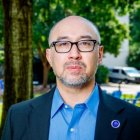



The arrival of a leap year brings with it myths, legends and superstitions about its origin. John Gizis, professor of physics and astronomy at the University of Delaware, takes part in a Q&A to share the truth and science behind this “extra” day added to the Gregorian calendar every four years. Why do we have leap day? Unfortunately, the amount of time the earth takes to go around the sun is not exactly 365 days. It’s off by about ¼ of a day each year. It would be hard to have a calendar for 365 ¼ days. When was the extra day added to the calendar? Julius Caesar introduced the Julian calendar in 46 B.C., which added one extra day every four years. Of course, the year is not exactly 365 ¼ days either, so after a while, that extra time built up. Pope Gregory XIII established the Gregorian calendar [the current calendar] in 1582 to correct the fact that the calendar had gotten off by about 12 days, enough that it was noticeable. How was it noticeable? The seasons were gradually shifting, so that what we think of as summertime in the northern hemisphere had gradually become more like autumn. The shortest day of the year is Dec. 21. Basically, the shortest day of the year drifted and eventually was in early December. How did they institute the reforms? First, they skipped a couple of weeks, so they returned to the original calendar lining up with the sun and stars as it’s supposed to. Then they instituted a couple of rules to keep this from happening again. Leap year happens in years divisible by four, but every 100 years, there is not a leap year. However, every 400 years, you do have a leap year. This happened in the year 2000. And the next time it will happen most of us won’t be around — 2100 will not be a leap year. What would happen if the extra day had not been introduced? If we didn’t have it at all, we would be off by ¼ of a day every year. The seasons would completely shift through the calendar and anything that ties to the seasons would be affected, like farming. It would create havoc with the time to plant and to harvest crops, for example. You also would lose the meaning behind sayings such as “April showers bring May flowers.” Multiply the 2,000 years since it was introduced by ¼ day per year, and that would be 500 days we would have shifted over history. In the northern hemisphere January would have become summer, then gone back to being winter, then shifted off again. Does adding the extra day make up the difference exactly and keep the astral year in sync with the calendar year? Yes, but this relates to a bigger issue. Astronomers want time to match up so that the positions of the stars match up year after year. Because the length of day changes slightly over time, astronomers sometimes would like to add an extra “leap second” to keep the stars in sync with our time system. But adding a second is an annoyance for computer and tech systems. Did you know that people born on leap day are sometimes called “leaplings?” According to Google, in 2020, there were about 5 million people with Feb. 29 birthdays. Do you think they have any advantages or disadvantages to being born on this day? No, I didn’t know that, and I know someone who refused to be induced on that day because she didn’t want confusion for her child, although I think it might be cool. After all, in this day and age, everyone always knows how old they are. To set up an interview with Gizis, visit his profile and click on the contact button.


Florida measles outbreak highlights the cost of vaccine hesitancy
A measles outbreak that started in a Florida elementary school has spread and is now up to ten cases. University of Delaware epidemiologist Jennifer Horney can comment on the outbreak as well as the risk to U.S. eradication status for measles and the role that vaccine hesitancy plays in the emergence and reemergence of vaccine preventable diseases. Vaccine hesitancy is relevant in the Florida case, as the state's top health official defied federal guidance to contain it. Horney has more than 20 years of experience conducting outbreak investigations and providing technical assistance during pandemics to public health groups domestically and internationally. To set up an interview, visit her profile and click the contact button; or, contact UD's media relations office.
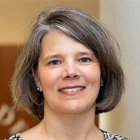

Leap year: Tips for using extra day on career and professional development
Having an extra day in a leap year provides you with a unique opportunity to invest time in your career and professional development. Jill Gugino Panté, director of the Lerner Career Services Center at the University of Delaware, offers six ideas to maximize the day. Dedicate time to enhance your skills. It is easy to find free courses, workshops and training videos on just about anything. Take five minutes to reflect on a skill you wish you had or were better, such as, say, Excel. YouTube, TikTok and LinkedIn Learning have hundreds of thousands of videos that can teach shortcuts, visual design, formulas and more. Use the day for networking. Reach out to professionals in your industry and schedule informational interviews. Reconnect with old classmates, former bosses or colleagues from another department and invite them to meet for coffee or lunch. Spend the day talking with someone about your career/professional development goals. Reflect on your career goals. Many of us do not take the time to articulate where we want to be this time next year or even four years from now. Start with three months, then move to six months, then a year. Do you want to learn a new skill? Meet with someone whose career you’ve admired? Change jobs? Ask for a raise? Career development can be thought of as a series of projects because thinking four years ahead can seem a little daunting. However, making goals for the next six months makes the process more manageable and tangible. Update your career documents. This means not only your resume but your LinkedIn profile and professional bio. If you don’t have access to a Career Coach, use Generative AI (like Chat GPT) to help you write better bullet points or update your “About” section on LinkedIn. Keep in mind that AI should be viewed as a supportive tool rather than a replacement for your active involvement in the process. Maintain a personal touch and let your unique personality shine through in your application materials and interviews. Focus on your well-being. How often do we get an extra day to focus on ourselves? And on this particular leap year, you may be feeling stressed and overwhelmed so focusing on career goals isn’t an option. Take the opportunity for self-care – go for a leisurely walk, engage in meditation or stretching exercises, or schedule an online session with a therapist or counselor. Investing time in personal wellness is important to address before you leap into professional development. Make deliberate choices that not only contribute to your career growth but also foster a sense of well-being. Here's a pro tip: mark a "professional/personal development boost" block on your calendar for each leap year, ensuring you fully capitalize on the extra day. This strategic scheduling will serve as a reminder to prioritize both your professional growth and personal wellness. To set up an interview with Gugino Panté, visit her profile and click on the contact button.
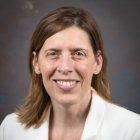

Year three: What fate awaits the fighting in Ukraine?
As we enter year three of the war between Ukraine and Russia, the death toll continues to rise, and there doesn’t appear to be any end in sight to the war. Craig Albert, PhD, professor of politics and director of the Master of Arts in Intelligence and Security Studies at Pamplin College of Arts, Humanities, and Social Sciences at Augusta University, said it appears victory does not seem likely for either side, and he expects it to form into a “frozen conflict.” “There are two ways out of this, however,” said Albert. “The first is that the West, mainly the United States, does not continue to arm Ukraine. If this becomes the new normal, then Ukraine will not be able to keep up against Russia and will eventually fall through a war of attrition being waged by Russia.” “The second, less likely but far more threatening scenario, is that Russia expands the war to other states in the area or inadvertently hits a NATO-member state with either kinetic or massive cyberattacks. It may draw NATO into the war directly. In this case, Ukraine takes the advantage, but the war expands to something not seen since World War II.” Albert added that the war is becoming a war of attrition, and, if one side maintains morale, weapons and supply-chain logistics and if one side can maintain air superiority, it’s likely to have an advantage. “If Ukraine manages to get F-16s in the fight sooner rather than later, and longer-ranged missiles are given to them as well, this could cause a stalemate and force Russia into negotiation,” Albert said. He noted Ukraine is making significant gains in the air and has managed to shoot down seven sophisticated aircraft recently, forcing Russian air units to be more cautious about their tactics and even move further away from the frontline. “If this continues, Ukraine can exploit this as Russian forces would likely be left without air cover in future battles.” With everything that has happened in the first two years of the war, it has not deterred Russian President Vladimir Putin from ramping up his resolve. “Putin has doubled-down,” Albert said. “He has increased his forces in the fight, made more aggressive postures to NATO member states and has unleashed his cyber and informational capabilities across the world to take advantage in those realms. Putin continues to pursue pure power politics and is unlikely to back down.” Craig Albert, PhD, is director of the Master of Arts in Intelligence and Security Studies at Augusta University. He is a leading expert on war, terrorism and American politics. This is an important international and national issue. Albert is available to speak with media – simply click on his name to arrange an interview today.


MEDIA RELEASE: CAA Manitoba Survey Reveals Troubling Lack of Travel Insurance Preparedness
A recent member survey conducted by CAA Manitoba has unveiled concerning statistics regarding the lack of travel insurance awareness and preparedness. Despite the financial risks associated with travelling unprotected, the survey found that 38 per cent of members in Manitoba who travel don’t always purchase emergency medical travel insurance, highlighting a potential vulnerability. "In a world of uncertainties, our survey highlights a critical gap in travel preparedness among Manitobans," says Susan Postma, regional manager, CAA Manitoba. "At CAA, we believe in empowering travellers with knowledge so they can explore confidently and securely." The survey also discovered that almost a quarter of respondents (24 per cent) ventured on their last trip outside the province without any form of travel insurance, exposing themselves to potential financial burdens in case of emergencies. CAA Manitoba is launching its inaugural CAA Travel Wise Week In response to these findings, CAA Manitoba is launching its inaugural CAA Travel Wise Week to emphasize the crucial importance of travel insurance education. The campaign aims to inform and educate Manitobans on the risks of inadequate coverage and provide valuable insights into securing appropriate protection for their travel adventures. According to claims data from Orion Travel Insurance, the average cost of a medical claim has increased by 14 per cent since 2019. “Costs associated with everything from an ear infection to the use of an air ambulance have risen over the last few years due to medical inflation, underscoring the continued importance of travel insurance for life’s unexpected complications,” says Postma. As part of the CAA Travel Wise Week, CAA Manitoba has curated a list of the top ten tips to help individuals stay protected against common travel concerns: Top 10 Tips for Travel Protection: Make sure all your documentation is in order before you book. It is recommended passport renewals be completed six months before your planned trip. Your passport should still be valid six months after your travel date, as this is required in several countries. Read up on Government of Canada travel advisories for your destination. Understand the risk level associated with travel to a particular destination by checking the Government of Canada Travel Advice and Advisories website. Individual travel advisories remain on a country-by-country basis. Speak with your physician to discuss your travel plans. Speak to your physician to ensure you are up to date with needed travel vaccines and have them prescribe enough medication for the length of your trip. Ensure all the medication you take is packed in your carry-on and in its original bottles with labels intact. Consider purchasing travel insurance at the time of booking your trip. To lock in the best protection, book your travel insurance at the same time you book your trip. Doing so will give you the peace of mind that both you and your investment are protected. Insurance must be in place before things go wrong for you to benefit from coverage. Know the cancellation policies for everything you booked. Make sure you understand any key dates related to cancellation and changes, this includes accommodation, flights, car rentals, tours, cruises. Get to the airport early. CAA recommends arriving at the airport at least two hours before domestic flight departures and at least three for international flights. Check limits or restrictions. Travel insurance is often touted as a perk for certain credit cards but can be drastically limited to both benefits and the sum insured. Check limits or age restrictions on credit cards, employee benefits, and pensions to determine if you need additional travel insurance coverage. Stay connected. It is important to have access to trusted, up-to-date information while travelling so you can monitor changing conditions and requirements and adapt accordingly. Bookmark the Global Affairs Canada website prior to departure and check it regularly while abroad. It is also a good idea to sign up for Registration of Canadians Abroad. Find these and more information at www.caamanitoba.com/travel Note emergency contact numbers. Provide your travel agent with contact details while travelling abroad and keep all important phone numbers handy; this includes how to call for help and your travel insurance assistance phone number. Protect your ID. Make sure you have a digital version and paper version of your travel insurance wallet card, tickets to various events and attractions and even your passport. You may also want to leave a copy of important paperwork with family members or friends. For more information, visit www.caamanitoba.com/travelwise The survey was an online quantitative survey done with the CAA Members Matter Panel in Manitoba between September 22 - 29, 2023. The margin of error for a sample of this size is plus or minus 4.0% at the 95% confidence level.

