
Experts Matter. Find Yours.
Connect for media, speaking, professional opportunities & more.

First scientific paper on 3I/ATLAS interstellar object
When the news started to spread on July 1, 2025, about a new object that was spotted from outside our solar system, only the third of its kind ever known, astronomers at Michigan State University — along with a team of international researchers — turned their telescopes to capture data on the new celestial sighting. The team rushed to write a scientific paper on what they know so far about the object, now called 3I/ATLAS, after NASA’s Asteroid Terrestrial-impact Last Alert System, or ATLAS. ATLAS consists of four telescopes — two in Hawaii, one in Chile and one in South Africa — which automatically scans the whole sky several times every night looking for moving objects. MSU’s Darryl Seligman, a member of the scientific team and an assistant professor in the College of Natural Science, took the lead on writing the paper. “I heard something about the object before I went to bed, but we didn’t have a lot of information yet,” Seligman said. “By the time I woke up around 1 a.m., my colleagues, Marco Micheli from the European Space Agency and Davide Farnocchia from NASA’s Jet Propulsion Laboratory, were emailing me that this was likely for real. I started sending messages telling everyone to turn their telescopes to look at this object and started writing the paper to document what we know to date. We have data coming in from across the globe about this object.” The discovery Larry Denneau, a member of the ATLAS team reviewed and submitted the observations from the European Southern Observatory's Very Large Telescope in Chile shortly after it was observed on the night of July 1. Denneau said that he was cautiously excited. “We have had false alarms in the past about interesting objects, so we know not to get too excited on the first day. But the incoming observations were all consistent, and late that night it looked like we had the real thing. “It is especially gratifying that we found it in the Milky Way in the direction of the galactic center, which is a very challenging place to survey for asteroids because of all the stars in the background,” Denneau said. “Most other surveys don't look there.” John Tonry, another member of ATLAS and professor at the University of Hawaii, was instrumental in design and construction of ATLAS, the survey that discovered 3I. Tonry said, “It's really gratifying every time our hard work surveying the sky discovers something new, and this comet that has been traveling for millions of years from another star system is particularly interesting.” Once 3I/ATLAS was confirmed, Seligman and Karen Meech, faculty chair for the Institute for Astronomy at the University of Hawaii, both managed the communications flow and worked on getting the data pulled together for submitting the paper. “Once 3I/ATLAS was identified as likely interstellar, we mobilized rapidly,” Meech said. “We activated observing time on major facilities like the Southern Astrophysical Research Telescope and the Gemini Observatory to capture early, high-quality data and build a foundation for detailed follow-up studies.” After confirmation of the interstellar object, institutions from around the world began sharing information about 3I/ATLAS with Seligman. What scientists know about 3I/ATLAS so far Though data is pouring in about the discovery, it’s still so far away from Earth, which leaves many unanswered questions. Here’s what the scientific team knows at this point: It is only the third interstellar (meaning from outside our solar system) object to be detected passing through our solar system. It’s potentially giving off gas like other comets do, but that needs to be confirmed. It’s moving really fast at 60 kilometers per second, or 134,000 miles per hour, relative to the sun. It’s on an orbital path that is shaped like a boomerang or hyperbola. It’s very bright. It’s on a path that will leave our solar system and not return, but scientists will be able to study it for several months before it leaves. The James Webb Space Telescope and the Hubble Space Telescope are expected to reveal more information about its size, composition, spin and how it reacts to being heated over the next few months. “We have these images of 3I/ATLAS where it’s not entirely clear and it looks fuzzier than the other stars in the same image,” said James Wray, a professor at Georgia Tech. “But the object is pretty far away and, so, we just don’t know.” Seligman and his team are specifically interested in 3I/ATLAS’s brightness because it informs us about the evolution of the coma, a cloud of dust and gas. They’ve been tracking it to see if it has been changing over time as the object moves and turns in space. They also want to monitor for sudden outburst events in which the object gets much brighter. “3I/ATLAS likely contains ices, especially below the surface, and those ices may start to activate as it nears the sun,” Seligman said. “But until we detect specific gas emissions, like H₂O, CO or CO₂, we can’t say for sure what kinds of ice or how much are there.” The discovery of 3I/ATLAS is just the beginning. For Tessa Frincke, who came to MSU in late June to begin her career as a doctoral student with Seligman, having the opportunity to analyze data from 3I/ATLAS to predict its future path could lead to her publishing a scientific paper of her own. “I’ve had to learn a lot quickly, and I was shocked at how many people were involved,” said Frincke. “Discoveries like this have a domino effect that inspires novel engineering and mission planning.” For Atsuhiro Yaginuma, a fourth-year undergraduate student on Seligman’s team, this discovery has inspired him to apply his current research to see if it is possible to launch a spacecraft from Earth to get it within hundreds of miles or kilometers to 3I/ATLAS to capture some images and learn more about the object. “The closest approach to Earth will be in December,” said Yaginuma. “It would require a lot of fuel and a lot of rapid mobilization from people here on Earth. But getting close to an interstellar object could be a once-in-a-lifetime opportunity.” “We can’t continue to do this research and experiment with new ideas from Frincke and Yaginuma without federal funding,” said Seligman, who also is a postdoctoral fellow of the National Science Foundation. Seligman and Aster Taylor, who is a former student of Seligman’s and now a doctoral candidate in astronomy and astrophysics and a 2023 Fannie and John Hertz Foundation Fellow, wrote the following: “At a critical moment, given the current congressional discussions on science funding, 3I/ATLAS also reminds us of the broader impact of astronomical research. An example like 3I is particularly important to astronomy — as a science, we are supported almost entirely by government and philanthropic funding. The fact that this science is not funded by commercial enterprise indicates that our field does not provide a financial return on investment, but instead responds to the public’s curiosity about the deep questions of the universe: Where did we come from? Are we alone? What else is out there? The curiosity of the public, as expressed by the will of the U.S. Congress and made manifest in the federal budget, is the reason that astronomy exists.” In addition to MSU, contributors to this research and paper include European Space Agency Near-Earth Objects Coordination Centre (Italy), NASA Jet Propulsion Laboratory/Caltech (USA), University of Hawaii (USA), Auburn University (USA), Universidad de Alicante (Spain), Universitat de Barcelona (Spain), European Southern Observatory (Germany), Villanova University (USA), Lowell Observatory (USA), University of Maryland (USA), Las Cumbres Observatory (USA), University of Belgrade (Serbia), Politecnico di Milano (Italy), University of Michigan (USA), University of Western Ontario (Canada), Georgia Institute of Technology (USA), Universidad Diego Portales, Santiago (Chile) and Boston University (USA).


LSU, FUEL, Syngenta Partner to Develop Low-cost Digital Twins for Chemical Processing Facilities
Derick Ostrenko and Jason Jamerson, faculty in the LSU College of Art & Design, along with engineering advisor David Ben Spry, are pioneering a new approach to industrial innovation using digital twins. The effort is supported by a $217,403 use-inspired research and development (UIRD) award from Future Use of Energy in Louisiana (FUEL). Digital twins are highly detailed, virtual replicas of physical assets. The technology is used in engineering to enhance efficiency, safety, and training; however, their creation often requires costly specialized hardware, proprietary software, and engineering-intensive workflows. “This initiative not only advances digital twin technology but also highlights the interdisciplinary power of design and engineering,” FUEL UIRD Director Ashwith Chilvery said. “By applying creative tools in an industrial setting, we’re demonstrating new ways to lower costs and expand access to advanced digital infrastructure.” The collaborative effort between LSU, FUEL, and Syngenta aims to reduce costs by applying techniques more commonly used in the entertainment industry, leveraging free and open-source software and consumer-grade hardware, such as gaming PCs and digital cameras. Most of the work will be conducted by digital art students skilled in 3D modeling and video game production, offering a cost-effective alternative to traditional engineering services. “3D artists and game developers bring both technical expertise and creative vision that can add significant value when paired with traditional engineering approaches,” Spry said. “We’re eager to demonstrate how this talent pool can help accelerate digital transformation in industry.” “Working with an innovative company like Syngenta to advance digital twins for chemical manufacturing is an outstanding opportunity for our researchers and students, and we’re proud of the techniques and talent we’ve developed at LSU. FUEL’s support of digital twin development for the energy and chemical sectors helps build this technology and unique artistry in Louisiana, for our industries, and for the rest of the nation.” - Greg Trahan, LSU Assistant Vice President of Strategic Research Partnerships In addition to producing a high-fidelity digital twin of a process unit within an active chemical manufacturing facility, the project will deliver a virtual reality application that allows immersive interaction with the 3D model. Future extensions may include augmented reality overlays of physical equipment or integration of live process data for real-time monitoring and troubleshooting. The ultimate outcome of the project is a validated workflow that reduces the cost of producing digital twins by a factor of at least five compared to conventional engineering methods. This breakthrough has the potential to redefine digital infrastructure for the chemical processing industry, making it more accessible, scalable, and adaptable to future needs. Learn more about LSU's digital twin work with Syngenta as well as NASA: About FUEL Future Use of Energy in Louisiana (FUEL) positions the state as a global energy innovation leader through high-impact technology development and innovation that supports the energy industry in lowering carbon emissions. FUEL brings together a growing team of universities, community and technical colleges, state agencies and industry and capital partners led by LSU. With the potential to receive up to $160 million in funding from the U.S. National Science Foundation through the NSF Regional Innovation Engines program and an additional $67.5 million from Louisiana Economic Development, FUEL will advance our nation’s capacity for energy innovation through use-inspired research and development, workforce development, and technology commercialization. For more information, visit fuelouisiana.org. About Syngenta Syngenta Crop Protection is a global leader in agricultural innovation. It is focused on empowering farmers to make the transformation required to feed the world’s population while protecting our planet. Its bold scientific discoveries deliver better benefits for farmers and society on a bigger scale than ever before. Syngenta CP offers a leading portfolio of crop protection technologies and solutions that support farmers to grow healthier plants with higher yields. Its 17,700 employees are helping to transform agriculture in more than 90 countries. Syngenta Crop Protection is headquartered in Basel, Switzerland, and is part of the Syngenta Group. Read our stories and follow us on LinkedIn, Instagram & X.



University of Delaware secures $13.1M grant to transform Alzheimer’s research and prevention
A new five-year $13.1 million grant will greatly expand the ability of University of Delaware researchers to pursue ways to prevent and treat Alzheimer's disease. The gift from the Delaware Community Foundation (DCF) is one of the largest in state history for Alzheimer’s research. UD's Christopher Martens called the grant "transformational," as it will support the expansion of a statewide prevention study, enable the purchase of a state-of-the-art MRI machine and drive discovery of new diagnostic tools and treatments. “It will also help grow the number of researchers in Delaware focused on Alzheimer’s disease, promoting an interdisciplinary approach." said Martens, director of UD's Delaware Center for Cognitive Aging Research (DECCAR) and professor of kinesiology and applied physiology in the College of Health Sciences. Bringing together researchers from multiple fields to collaborate on a critical challenge like Alzheimer’s disease is a key strength of the University of Delaware, said Interim President Laura Carlson. “Every one of us has a family member or friend who has been deeply affected by Alzheimer’s. I’m proud that UD is working better to understand this terrible disease and partnering with others throughout the state to work on its prevention, diagnosis and treatment,” Carlson said. “We are grateful to the Delaware Community Foundation for their support, which allows us to escalate our research and expand our community outreach.” “No one has to look very far afield to witness and understand the tragedy of Alzheimer’s, and the research supported by this grant will help UD researchers come ever-closer to uncovering life-improving and life-saving solutions,” said Stuart Comstock-Gay, President and CEO of the Delaware Community Foundation (DCF). “The grant was provided through the generosity of late Paul H. Boerger, who made a substantial legacy gift to the fund he had established at the DCF in his lifetime, and his foresight will help so many.” The gift is aimed at achieving the following goals: • Tracking Alzheimer’s risk over time – Expanding Delaware’s largest study of brain aging from 100 to 500 participants to uncover who develops dementia and why. • A simple blood test for early detection – Developing a first-of-its-kind test that could diagnose Alzheimer’s years earlier than current methods. • Cutting-edge brain imaging – Installing a $3.2 million MRI machine on UD’s STAR Campus to reveal hidden brain changes linked to memory loss. • Spotting the earliest warning signs – Exploring how subtle shifts in language and menopause-related hormone changes may predict Alzheimer’s risk. • Fueling prevention and cures – Creating powerful data and tools that will accelerate new treatments and bring researchers closer to stopping Alzheimer’s. To reach Martens for an interview, visit his profile and click on the "contact" button. Interviews with DCF officials can be arranged by emailing MediaRelations@udel.edu.

#Expert Research: Incentives Speed Up Operating Room Turnover Procedures
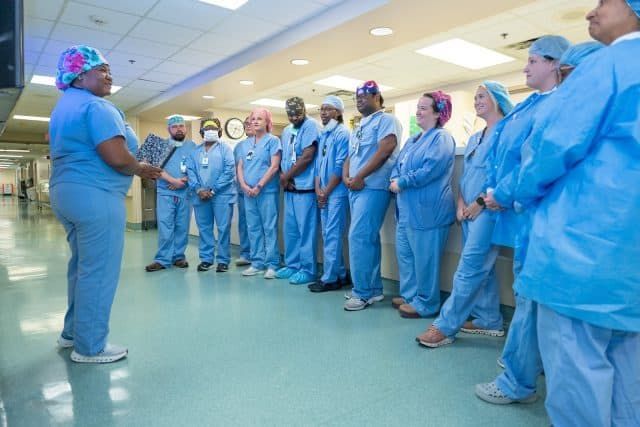
The operating room (OR) is the economic hub of most healthcare systems in the United States today, generating up to 70% of hospital revenue. Ensuring these financial powerhouses run efficiently is a major priority for healthcare providers. But there’s a challenge. Turnovers—cleaning, preparing, and setting up the OR between surgeries—are necessary and unavoidable processes. OR turnovers can incur significant costs in staff time and resources, but at the same time, do not generate revenue. For surgeons, the lag between wheels out and wheels in is idle time. For incoming patients, who may have spent hours fasting in preparation for a procedure, it is also a potential source of frustration and anxiety. Reducing OR turnover time is a priority for many US healthcare providers, but it’s far from simple. For one thing, cutting corners in pursuit of efficiency risks patient safety. Then there’s the makeup of OR teams themselves. As a rule, well-established or stable teams work fastest and best, their efficiency fueled by familiarity and well-oiled interpersonal dynamics. But in hospital settings, staff work in shifts and according to different schedules, which creates a certain fluidity in the way turnover teams amalgamate. These team members may not know each other or have any prior experience working together. For hospital administrators this represents a quandary. How do you cut OR turnover time without compromising patient care or hiring in more staff to build more stable teams? To put that another way: how do you motivate OR workers to maintain standards and drive efficiency—irrespective of the team they work with at any given time? One novel approach instituted by Georgia’s Phoebe Putney Health System is the focus of new research by Asa Griggs Candler Professor of Accounting, Karen Sedatole PhD. Under the stewardship of perioperative medical director and anesthesiologist, Jason Williams MD 02MR 20MBA, and with support from Sedatole and co-authors, Ewelina Forker 23PhD of the University of Wisconsin and Harvard Business School’s Susanna Gallini PhD, staff at Phoebe ran a field experiment incentivizing individual OR workers to ramp up their own performance in turnover processes. What they have found is a simple and cost-effective intervention that reduces the lag between procedures by an average of 6.4 percent. Homing in on the Individual Williams and his team at Phoebe kicked off efforts to reduce OR turnover times by first establishing a benchmark to calculate how long it should take to prepare for different types of procedure or surgery. This can vary significantly, says Williams: while a gallbladder removal should take less than 30 minutes, open-heart surgery might take an hour or longer to prepare. “There’s a lot of variation in predicting how long it should take to get things set up for different procedures. We got there by analyzing three years of data to create a baseline, and from there, having really homed in on that data, we were able to create a set of predictions and then compare those with what we were seeing in our operating rooms—and track discrepancies, over-, and underachievement.” Williams, a Goizueta MBA graduate who also completed his anesthesiology residency at Emory University’s School of Medicine, then enlisted the support of Sedatole and her colleagues to put together a data analysis system that would capture the impact of two distinct mechanisms, both designed to incentivize individual staff members to work faster during turnovers. The first was a set of electronic dashboards programmed to record and display the average OR turnover performance for teams on a weekly basis, and segment these into averages unique to individuals working in each of the core roles within any given OR turnover team. The dashboard displayed weekly scores and ranked them from best to worst on large TV monitors with interactive capabilities—users could filter the data for types of surgery and other dimensions. Broadcasting metrics this way afforded Williams and his team a means of identifying and then publicly recognizing top-performing staff, but that’s not all. The dashboards also provided a mechanism with which to filter out team dynamics, and home in on individual efforts. “If you are put in a room with one team, and they are slower than others, then you are going to be penalized. Your efforts will not shine. Now, say you are put in with a bigger or faster team, your day’s numbers are going to be much higher. So, we had to find a way to accommodate and allow for the team effect, to observe individual effort. The dashboards meant we could do this. Over the period of a week or a month, the effect of other people in the team is washed out. You begin to see the key individuals pop up again and again over time, and you can see those who are far above their peers versus those who, for whatever reason, are not so efficient.” Sharing “relative performance” information has been shown to be highly motivating in many settings. The hope was that it would here, too. Three core roles: Who’s who in the Operating Room turnover team? OR turnover teams consist of three roles: circulating nurse, scrub tech, and anesthetist. While other surgery staff might be present during a turnover, depending on the needs of consecutive procedures, these are the three core roles in the team, and they are not interchangeable in any way: each individual assumes the same responsibilities in every team they join. Typically, turnover tasks will include removing instruments and equipment from the previous surgery and setting up for the next: restocking supplies and restoring the sterile environment. Turnover tasks and activities will vary according to the type of procedure coming next, but these tasks are always performed by the same three roles: nurse, scrub tech, and anesthetist, working within their own area of expertise and specialty. OR turnover teams are assembled based on staff schedules and availability, making them highly fluid. Different nurses will work with different scrub techs and different anesthetists depending on who is free and available at any given time. With dashboards on display across the hospital’s surgery department, Williams decided to trial a second motivational mechanism; this time something more tangible. “We decided to offer a simple $40 Dollar Store gift card to each week’s top performing anesthetist, nurse, or scrub technician to see if it would incentivize people even more. And to keep things interesting, and sustain motivation, we made sure that anyone who’d won the contest two weeks in a row would be ineligible to win the gift card the following week,” says Williams. “It was a bit of a shot in the dark, and we didn’t know if it would work.” Altogether, the dashboards remained in situ over a period of about 33 months while the gift card promotion ran for 73 weeks. It was important to stress the foundational importance of safety and then allow individuals to come up with their own ways to tighten procedures. This was a bottom-up, grassroots experience where the people doing the work came up with their own ways to make their times better, without cutting corners, without cutting quality, and without cutting any safety measures. Jason Williams MD 02MR 20MBA Incentives: Make it Something Special and Unique Crunching all of this data, Sedatole and her colleagues could isolate the effect of each mechanism on performance and turnover times at Phoebe. While the dashboards had “negligible” effect on productivity, the addition of the store gift cards had immediate, significant, and sustained impact on individuals’ efforts. Differences in the effectiveness of the two incentives—the relative performance dashboard and the gift cards—are attributable to team fluidity, says Sedatole. “It’s all down to familiarity. Dashboards are effective if you care about your reputation and your standing with peers. And in fluid team settings, where people don’t really know each other, reputation seems to matter less because these individuals may never work together again. They simply care less about rankings because they are effectively strangers.” Tangible rewards, on the other hand, have what Sedatole calls a “hedonic” value: they can feel more special and unique to the recipient, even if they carry relatively little monetary value. Something like a $40 gift card to Target can be more motivating to individuals even than the same amount in cash. There’s something hedonic about a prize that differentiates it from cash—after all, you will just end up spending that $40 on the electricity bill. Asa Griggs Candler Professor of Accounting, Karen Sedatole “A tangible reward is something special because of its hedonic nature and the way that human beings do mental accounting,” says Sedatole. “It occupies a different place in the brain, so we treat it differently.” In fact, analyzing the results, Sedatole and her colleagues find that the introduction of gift cards at Phoebe equates to an average incremental improvement of 6.4% in OR turnover performance; a finding that does not vary over the 73-week timeframe, she adds. To get the same result by employing more staff to build more stable teams, Sedatole calculates that the hospital would have to increase peer familiarity to the 98th percentile: a very significant financial outlay and a lot of excess capacity if those additional team members are not working 100% of the time. These are key findings for healthcare systems and for administrators and decision-makers in any setting or sector where fluid teams are the norm, says Sedatole: from consultancy to software development to airline ground crews. Wherever diverse professionals come together briefly or sporadically to perform tasks and then disperse, individual motivation can be optimized by simple mechanisms—cost-effective tangible rewards—that give team members a fresh opportunity to earn the incentive in different settings on different occasions—a recurring chance to succeed that keeps the incentive systems engaging and effective over time. For healthcare in particular, this is a win-win-win, says Williams. “In the United States we are faced with lower reimbursements and higher costs, so we have to look for areas where we can gain efficiencies and minimize costs. In the healthcare value model, time and costs are denominators, and quality and service are numerators. Any way we can save on costs and improve efficiencies allows us to take care of more patients, and to be able to do that effectively. “We made some incredible improvements here. We went from just average to best in class, right to the frontier of operative efficiency. And there is so much more opportunity out there to pull more levers and reach new levels, which is truly encouraging.” Looking to know more or connect with Asa Griggs Candler Professor of Accounting, Karen Sedatole? Simply click on her icon now to arrange an interview or time to talk today.


Evaluating Vaccination Rates by State
Dr. Martine Hackett, associate professor and chair of Hofstra’s Department of Population Health was interviewed by WalletHub about the states with the highest vaccination rates. According to the report, Massachusetts, New Hampshire, Washington, Connecticut, and Rhode Island rank in the top five. “Confidence in vaccines matter because disease prevention matters,” said Dr. Hackett. “Protecting the health of the public cannot be done on an individual level; it requires entire populations to act together to benefit others.” In order to see where people are most responsible about getting vaccines, WalletHub examined the 50 states and the District of Columbia across 16 key metrics. Their data set ranges from the rates of children, teens and adults vaccinated against various diseases to the share of people without health insurance.


Expert Insight: Understanding the Pacific Ocean's Missing Cold Water Surge
There's a mystery brewing in the Pacific Ocean, and it's worrying marine researchers. Every winter, between January and April, a blast of cold water surges from the bottom to the top of the Gulf of Panama. The cold surge helps marine life survive heat waves. However, this year, there was no blast. Researchers are concerned about the disappearance and believe it could be a sign of a larger problem. The phenomenon has garnered the attention of reporters from outlets like the New York Times, as well as others from across the nation. They're looking for answers. To help find those answers, experts such as the Florida Institute of Technology's Richard Aronson are available to help explain what's happening deep beneath the surface. Each year between January and April, a blob of cold water rises from the depths of the Gulf of Panama to the surface, playing an essential role in supporting marine life in the region. But this year, it never arrived. “It came as a surprise,” said Ralf Schiebel, a paleoceanographer at the Max Planck Institute for Chemistry who studies the region. “We’ve never seen something like this before.” Richard Aronson, a professor of marine sciences at the Florida Institute of Technology, has studied this particular patch of ocean off the coast of Panama for decades. The cold blob gives those corals a better chance of surviving marine heat waves than other areas, he said. Heat stress has plunged the world’s coral reefs into ongoing mass bleaching that began in January 2023. About 85 percent of the world’s coral reef areas have been affected, according to the National Oceanic and Atmospheric Administration. “The climate is warming, that’s putting coral reefs at risk,” said Dr. Aronson, who was not involved with the paper. While corals can adapt to changes in temperature, the climate is changing too quickly for them to keep up in the long run, he said. Sea surface temperatures have risen by more than 1 degree Celsius since humans began burning fossil fuels during the Industrial Revolution, breaking records in 2024 and 2023. It’s too soon to tell if the blob will return in future years. But if it disappears repeatedly, then “it’s cause for grave concern,” Dr. Aronson said. If you’re covering this topic or looking to speak with an expert about climate change and its impact on our oceans, Richard Aronson is available for interviews. Simply click the icon below to connect with him today.


Georgia Southern biology professor named 2025-26 Fulbright U.S. Scholar to Vietnam
Stephen Greiman, Ph.D., associate professor of biology in Georgia Southern University’s College of Science and Mathematics, has been awarded a 2025-26 Fulbright U.S. Scholar award to Vietnam where he will lead a teaching and research project focused on parasite diversity in bats. “Dr. Greiman is further proof that Georgia Southern faculty are among the best in their fields,” said Avinandan (Avi) Mukherjee, Ph.D., provost and executive vice president for Academic Affairs. “We are incredibly proud of this achievement and all the hard work that goes into such a celebrated milestone paying off.” Greiman’s Fulbright work will build on more than a decade of collaboration with Vietnamese scientists. During graduate school, he began working with parasitologists in Vietnam and participated in field expeditions in 2013 and 2014. That early partnership has since blossomed into multiple co-authored publications and enduring collegial friendships. Vietnam, Greiman explained, is a natural fit for this project. “Its exceptional biodiversity and the significant burden of parasitic infections across humans, domestic animals and wildlife make it a particularly relevant and meaningful host country for my research,” he said. “Our shared goal is to advance awareness and understanding of parasite diversity among students and the public.” During his grant period, Greiman will teach a parasitology course at Hai Duong Medical Technical University. He will also conduct field and laboratory research in partnership with the Vietnam Academy of Science and Technology’s Institute of Ecology and Biological Resources and the Department of Parasitology. His research will involve sampling and analyzing the parasites and microbiomes of Vietnamese bats—a project designed to engage both undergraduate and graduate students in hands-on scientific inquiry. “International collaborations often yield more impactful research than national projects alone,” Greiman noted. “This award not only strengthens our scientific goals but offers my family a chance to immerse ourselves in a new culture. It’s an experience we’re incredibly grateful for.” Beyond fieldwork, Greiman hopes the Fulbright project will open doors for new exchange programs between Georgia Southern and Vietnamese institutions. He envisions Georgia Southern students spending semesters abroad and returning with global perspectives that enrich their academic and personal growth. “The data and experiences I bring back will directly inform my courses, including parasitology and biology of microorganisms,” Greiman said. “I’ll also use our findings to support undergraduate and graduate research projects, pursue new grant opportunities and publish in high-impact journals.” He credits the Fulbright program with not only enabling his research abroad but also cultivating cultural exchange, particularly by allowing families to travel with awardees. His wife, who has a background in the arts, is excited to explore Vietnam’s artistic traditions, while their two young children will experience a culture far different from their own. “Vietnam is rich in natural and cultural history,” he said. “We’re looking forward to embracing it fully, both in the field and in everyday life.” Greiman’s selection is both a professional milestone and a personal journey—one shaped by long-standing collaborations, a deep commitment to global science, and the mentorship of Georgia Southern Vice President for Research and Economic Development David Weindorf, Ph.D. “Although I was initially hesitant to apply due to the program’s competitiveness, I was inspired by Dr. Weindorf’s own transformative experiences as a Fulbright Scholar and Specialist,” Greiman said. “His guidance and support helped me see the incredible potential of this opportunity—not just for my research, but for my family and our students.” That encouragement reflects a strong professional relationship rooted in mutual respect and a shared commitment to international collaboration. “I am so proud of Dr. Greiman’s selection as a Fulbright Scholar,” said Weindorf. “The benefits of the exchange will truly be lifelong, with new friends, colleagues and connections formed and cultivated. We look forward to celebrating the lives Dr. Greiman touches, both through his teaching and research, as a meritorious ambassador of Georgia Southern University.” For Greiman, the Fulbright award marks just the beginning of a broader vision. “This experience will generate foundational data for future National Science Foundation and National Institutes of Health proposals and deepen our international partnerships,” he said. “Being selected as a Fulbright Scholar is an extraordinary honor and a chance to contribute meaningfully to a global legacy of scholarship, cultural exchange and scientific discovery.” He encourages fellow faculty members considering the program to apply. “Go for it,” he said. “Your chances are zero if you don’t try. The Fulbright is one of the few opportunities that blends extended research, cultural immersion and family inclusion. It’s life-changing—and absolutely worth it.” If you're interested in knowing more about Stephen Greiman's work or more about his Fullbright award - simply contact Georgia Southern's Director of Communications Jennifer Wise at jwise@georgiasouthern.edu to arrange an interview today.

The Sky’s the Limit: Researching surface impacts to improve the durability of aircraft
Associate professor Ibrahim Guven, Ph.D. from the Department of Mechanical and Nuclear Engineering is conducting a research project funded by the Department of Defense (DoD) that explores building aircraft for military purposes and civilian transportation that can travel more than five times the speed of sound. Guven’s role in this project is to consider the durability of aircraft surfaces against elements such as rain, ice, and debris. His research group is composed of Ph.D. students who assist with the study and has collaborated with other institutions, including the University of Minnesota, Stevens Institute of Technology and the University of Maryland. Why did you get involved with this research project? The intersection of need and our interests decides what we research. I’m interested in physics and have been working on methods to strengthen aircraft exteriors against the elements for 12 years. We started with looking at sand particle impact damage, and then we graduated from that to studying raindrop impact because that’s a more challenging problem. Sand impact is not as challenging in terms of physics. A liquid and a solid behave differently under impact conditions. The shape of the raindrop changes prior to the impact due to the shock layer ahead of the aircraft. Researching this impact requires simulating the raindrop-shock layer interaction that gives us the shape of the droplet at the time of contact with the aircraft surface. Unlike with sand, analyzing raindrop impact starts at that point, which requires accurate modeling of the pressure being applied. As the aerospace community achieves faster speeds, there’s a need to understand what will affect a flight’s safety and the aircraft’s structural integrity. That need is what I’m helping to fulfill. Were there any challenges you and your research group faced while working on this study? How did you overcome them? Finding data was hard. I’m a computational scientist, meaning I implement mathematical differential equations that govern physics to write computer code that predicts how something will behave. My experiments are virtual, so to ensure that my models work well, I need experimental data for validation. However, conducting experiments on this problem is extremely challenging. That’s the roadblock. Currently, we refer to data from the seventies and eighties. Beyond that, this kind of information is not available. We are working to generate data that my computational methods need for their validation. An example is the nylon bead impact experiment. Some researchers found that if you shoot a nylon bead at a target, it leads to damage similar to that from a raindrop of the same size. It is much easier and cheaper to shoot nylon beads compared to the experiments involving raindrops. However, this similarity vanishes as we go into higher velocities. How do you typically gather data for a project of this nature? We are working with a laboratory under the U.S. Navy. They can accelerate specimens to relevant speeds, meaning they can shoot them into the air at the desired velocity. A colleague at Stevens Institute of Technology also came up with a droplet levitator. He uses acoustic waves emitted by tiny speakers to play a certain sound at a certain frequency to create enough air pressure to suspend droplets midair. To an untrained eye, it looks like magic. They levitate droplets and use a railgun to shoot our samples at the droplets. Our samples hitting the droplets are stand-ins for the aircraft surface material. Once this is done successfully, they shoot a sample with high-speed cameras that can take ten million frames per second. As a result, we get a good, high-fidelity picture of this impact event. That is the type of data I’m seeking, and this is how I get it from my collaborators. What was your overall experience working with the students in your research group? I like to think it was positive. I try to be a nice advisor and give them space to explore, fail, and bring their own ideas. Even if I feel like we’re at a dead-end, I step back and let them figure it out. My role is to help them grow. Teach them, train them and help them along the way. That’s the experience. Did you notice any personal changes in your students during this project? Yeah, I have. When they’re just out of their undergraduate programs, confidence is lacking sometimes. You see them become more sure of themselves as they learn more and more. Often, regardless of whether English is their native language or not, writing is a big issue for every student. How one presents ideas in written form is a persistent problem in engineering. I see the most growth in that area. Again, an advisor has to be a guide and also have patience. Eventually, after working on multiple paper drafts, I can see tremendous improvement. You must allow them to see their shortcomings. It’s important to work with students to refine how they frame a problem, explain it to a wide audience in concise terms, and use neutral language without leading them to certain conclusions. Why do you think that this research is important? Somebody has to do it, right? I believe that I’m the right person because of my background. Personally, I think if this research makes for safer travel conditions, and if I have something to offer, then why not? If we can accurately simulate what happens in these conditions, we can use our methods to test out designs for damage mitigation. For example, we can perform simulations with different surface materials for the aircraft to see if using a different material or layered coating system leads to less damage. In a bigger picture, we’re working on a very narrow problem in our field, but we don’t know how useful that’s going to be in 10, 15 or 30 years from now. Whatever we study and put out there in terms of publications, it may help some other researcher in a different context many years later. This could be space research, modeling an atmosphere on a different planet, or something that is related to our bodies. There are parts of physics in this problem that do not necessarily only apply to high-speed flight. It could be many different things. One has to understand that what is studied may seem obscure today, but because the universe is more or less governed by the same physics, everything should be put in a theoretical framework, done right and shared with the community. People may learn things that could become relevant in the future. It’s not uncommon. What is another subject that you plan to study? The next natural step is coming up with strategies to mitigate damage in these scenarios. If avoiding a risk is not an option, can we actually come up with a solution? We have to determine how to modify an aircraft’s design to prevent a catastrophe. Another extension of my research would be to examine the landing of spacecraft on dusty planetary bodies. During landing on Earth, aircraft approach and reach the ground very smoothly. On the other hand, a spacecraft comes down slowly and needs a lot of reverse propulsion for a soft landing. As it does, it kicks up a large amount of dust, which blows back and hits the spacecraft. Taking into account the damage that occurs due to particle impact is a direct connection to my work. This again is an open area, and because we have ambitions to have a permanent presence on dusty places like the moon and Mars, we have to nail down the concept of landing safely. That is where my research could help.



This article is republished from The Conversation under a Creative Commons license. Read the original article here. The oil-rich states of Qatar, Saudi Arabia and the United Arab Emirates have a lot going for them: wealth, domestic stability and growing global influence. In recent months, these Gulf kingdoms also appear closer to something they have long sought: reliable U.S. support that has become stronger and more uncritical than ever, just as Iranian power in the region has significantly degraded. In Donald Trump, the nonelected Gulf Arab monarchs have an ally in Washington who has largely shed previous American concerns for democracy and human rights. That the American president made his first scheduled international trip of his second term to Saudi Arabia, Qatar and the UAE only underscores their international clout. Additionally, the popular overthrow of the Assad government in Syria and Israel’s war against Iran and its allies in Lebanon and Yemen have served to greatly weaken Tehran’s perceived threat to Gulf Arab interests. Yet, as an expert on Middle Eastern politics, I believe Gulf Arab countries must still navigate a regional political tightrope. And as the Israeli targeting of senior Hamas leaders in Qatar on Sept. 9, 2025, shows, events by other Middle Eastern actors have a nasty habit of derailing Gulf leaders’ plans. How these countries manage four particular uncertainties will have a significant effect on their hopes for stability and growth. 1. Managing a post-civil war Syria In Syria, years of civil war that had exacerbated splits among ethnic and religious groups finally ended in December 2024. Since then, Arab Gulf countries, which once opposed the Iranian-allied government of Bashar Assad, have been pivotal in supporting new Syrian President Ahmed al-Sharaa. They successfully lobbied the U.S. to drop sanctions. In addition to sharing mutual regional interests with Sharaa, the leaders of Gulf Arab states want a Syrian state that is free from internal war and can absorb the millions of refugees that fled the conflict to other countries in the Middle East. Gulf states can support postwar Syria diplomatically and financially. However, they can’t wish away the legacy of long war and sectarian strife. Israeli attacks on Syrian soil since Assad’s fall, as well as recent outbreaks of fighting in the Sweida region of southern Syria, underscore the ongoing fragility of the Syrian government and concerns over its ability to contain violence and migration outside of its borders. 2. The challenge of regional politics Syria illustrates a broader policy challenge for Gulf states. As their wealth, military strength and influence have grown, these countries have become dominant in the Arab world. As a result, Qatar, Saudi Arabia and the UAE have invested billions of dollars in efforts to influence governments and groups across the world. This includes the mostly authoritarian governments in the Middle East and North Africa, such as Egypt’s. But here, Gulf states are torn politically. If democratic systems form elsewhere in the Arab world, this could encourage Gulf citizens to push for elected government at home. Yet overly coercive Arab governments outside of the Gulf can be prone to popular unrest and even civil war. Propping up unpopular regional governments risks backfiring on Gulf Arab leaders in one of two ways. First, it can entice Gulf states into protracted and damaging wars, such as was the case with Saudi Arabia and the UAE’s failed military intervention in Yemen against the Houthis. Second, it can drive a wedge between Gulf states, as is seen with the current conflict in Sudan, in which the Saudis and Emiratis are backing rival factions. 3. Watching which way Iran will turn Always looming behind complicated Middle Eastern politics is Iran, the historically powerful, populous, non-Arab country whose governing Shiite Islam ideology has been the chief antagonist to the Sunni-led Gulf Arab states since the Iranian Revolution in 1979. Opposing Gulf Arab and American strategic interests, Iran has for years intervened aggressively in Middle Eastern politics by funding and encouraging militant Shiite groups in Iraq, Lebanon, Yemen and elsewhere. An assertive Iran has been especially a thorn in the side of Saudi Arabia, which strives to be the dominant Muslim majority power in the region. Dealing with Iran has required careful balancing from Qatar and the UAE, which are more directly exposed to Tehran geographically and have maintained relatively stronger relations. Given this, Gulf countries may silently welcome the decrease in Iran’s military power in the wake of Israel’s recent war against Iran and its allies, such as Hezbollah in Lebanon, while also fearing further Iranian-Israeli conflict. At the same time, a less powerful Iran runs two types of new potential dangers for Gulf states. Should Iran become more unstable, the resulting turmoil could be felt across the region. In addition, should Iran’s military, policy and economic turmoil lead to a new political system, it could disturb Gulf countries. Neither a Muslim majority democratic government nor a more hard-line nationalist variant in Iran would sit well with nearby Gulf monarchs. Conversely, concerns that the Israeli and U.S. bombing of Iran may actually lead to increased Iranian determination to pursue a nuclear program also worry Gulf leaders. 4. Living with Israel’s military assertiveness Israel, the unquestioned military power and sole nuclear weapons state in the region, has long posed particularly deep political dilemmas to Gulf Arab states. The current challenge is how to balance the immense global unpopularity of the Israeli government’s war in Gaza – including among Gulf Arab citizens – with common strategic interests the Gulf states hold with Israel. Gulf Arab leaders face domestic and regional pressure to show solidarity for Palestinians and their aspirations for statehood. Yet Gulf rulers also share strategic goals with Israel. Along with opposition to Iranian influence, Gulf states maintain strong military links to the U.S, like Israel. They also appreciate the economic and other security value of Israel’s high-tech products, including software used for espionage and cybersecurity. This helps explain the UAE’s 2019 decision to join the short list of Arab states with full diplomatic relations with Israel. Hamas attacked Israel in 2023 in part to stop Saudi Arabia from following suit – something that might have further sidelined Palestinians’ bargaining power. Indeed, moves toward open Saudi diplomatic recognition of Israel were stopped by Hamas’ attack and the global backlash that followed Israel’s ongoing devastation of Gaza. Gulf leaders may still believe that normalized ties with Israel would be good for the long-term economic prospects of the region. And Bahrain and the UAE – the two Gulf Arab states with diplomatic relations with Israel – have not backed away from their official relationship. Yet expanding open relations with Israel further, and taking in other Gulf states, is unlikely without a real reversal in Israel’s policy toward Palestinians in both Gaza and the West Bank. All this is more true in the immediate aftermath of Israel’s attack in Qatar – the first time Israel has launched a direct strike within a Gulf Arab state. That action, even if ostensibly directed at Hamas, is likely to exacerbate tensions not only with Qatar but place increasing stress on the calculus allied Gulf Arab countries make in their dealings with Israel. Tricky way forward for Gulf Arab states These challenges underscore an inescapable truth for Gulf leaders: They are hostage to events beyond their control. Insulating them from that reality takes regional unity. The Gulf Cooperation Council, nearly 45 years old, was established precisely for this purpose. While it remains the most successful regional organization in the Middle East, the GCC has not always prevented major rifts, such as in 2017 when a coalition of Arab states led by Saudi Arabia cut ties with and blockaded Qatar. The conflict was resolved in 2021. Since then, the six members of the GCC have worked together more closely. No doubt, rivalries and disagreements still exist. Yet Arab Gulf leaders have learned that cooperation is useful in the face of major challenges. This can be seen in the recent collaborative diplomatic approaches toward Syria and the U.S. A second lesson comes from the broader Middle East. Key issues are often interdependent, particularly the status of Palestinians. Hamas’ attack on Israel, and the resulting destruction of much of Gaza, resurfaced the deep popularity across the region of addressing Palestinian needs and rights. The monarchs of the Arab Gulf would like to maintain their unchallenged domestic political status while expanding their influence in the Middle East and beyond. However, even when Gulf leaders wish to be done with the region’s challenges, those challenges are not always done with them. Isabella Ishanyan, a UMass Amherst undergraduate, provided research assistance for this article.


Seniors Pay the Highest Price When Politicians Dismiss Healthcare Evidence
Disclaimer: This is an opinion piece. It reflects the author's perspective and should not be considered medical advice. Please consult with your physician or healthcare provider to discuss your individual health and vaccination needs. If you’re experiencing health issues, don’t rely on blogs (even snappy ones)—rely on a qualified medical professional. Fall is here. Kids are back in class, pumpkin spice is back in mugs, and—like clockwork—news headlines are back stirring fear and doubt. This season, RFK Jr. is making noise about vaccines, throwing science under the school bus, and leaving some older Canadians wondering: Who should I trust—politics or science? Spoiler: if you’re betting on politics to keep you healthy, you might as well ask your neighbour’s cat for medical advice. So, let’s get back to basics: what shots you really need, why the science is solid, why politics muddies the waters, and how you can be your own best health advocate. Oh, and because you know me—I’ll sprinkle in a few “if only” vaccines we all wish existed. Science vs. Politics: Who Wins? Science: Vaccines work. They reduce severe illness, save millions of lives, and prevent outbreaks of diseases we thought we’d left in history books. COVID-19 vaccines alone are credited with saving over 1.4 million lives in Europe since 2020. Vaccines aren’t some modern fad cooked up in a lab—they’ve been saving lives since 1796, when English doctor Edward Jenner made a discovery that led to the first smallpox vaccines, which at the time was one of the deadliest diseases on earth. Fast forward to today, and the results speak for themselves. Data from the CDC shows that vaccines have slashed major diseases in the U.S. and Canada to the point where polio and smallpox haven’t been seen in decades—down from tens of thousands of cases every year in the 20th century. Even measles, which has made a resurgence due to rising vaccine skepticism, is still nowhere near the half-million infections Americans used to see annually. Thanks to vaccines, measles, pertussis, mumps, and rubella are now more likely to show up in a history book—or on a pub trivia night—than in your family doctor’s office. Over a century of data shows that vaccines don’t just work—they’ve rewritten medical history. A landmark CDC study published in JAMA by researchers Sandra W. Roush (MT, MPH) and Trudy V. Murphy, MD, with Centers for Disease Control and Prevention, Atlanta, Georgia did a major study comparing disease rates before and after vaccines became widespread. The results were jaw-dropping: Cases of diphtheria, mumps, pertussis, and tetanus dropped by more than 92%, and deaths by more than 99%. Endemic polio, measles, and rubella have been eliminated in the U.S and Canada. Smallpox is gone from the globe. Even newer vaccines introduced since 1980—like those for hepatitis A, hepatitis B, Hib, and chickenpox—cut cases and deaths by 80% or more. The evidence found by the CDC study was so overwhelming that the authors called vaccines “among the greatest achievements of biomedical science and public health” (Source: JAMA, 2007) The number of cases of most vaccine-preventable diseases is at an all-time low; hospitalizations and deaths have also shown striking decreases. Think about it. When was the last time someone at your dinner table worried about catching smallpox? Enter RFK Jr., stage left. He has wasted no time since his appointment as US Secretary of Health & Human Services to undermine confidence in the public health system. His recent moves—firing the CDC director, cutting mRNA funding (even for cancer vaccines!), and gutting expert panels—are sowing doubt faster than a Toronto raccoon opening a green bin. Even Dr. Martin Makary, Commissioner of Food and Drugs for the U.S. Food and Drug Administration (FDA), recently chimed in with an opinion piece published last week in The Wall Street Journal. His take? Vaccines should mostly be reserved for high-risk groups, healthy people don’t really need them, and maybe we should start running more placebo trials “just to be sure.” That sounds reasonable until you realize it’s the same playbook RFK Jr. uses: shrink access, shift the burden of proof endlessly, and treat vaccines like optional extras. When Politics Drowns Out Science, Seniors Pay the Highest Price When politics drowns out science, we pay the highest price. Because the truth is: our immune systems age just like our knees do—creaky and slower to respond. Vaccines aren’t optional; they’re essential. Demanding new placebo trials for vaccines we already know work is like asking a baker to prove yeast makes bread rise every single year. And framing vaccines as “only for the sick” ignores the basic truth: when coverage falls, outbreaks rise. Period. Vaccines for Canadian Adults & Seniors (Source: Health Canada) Vaccines aren’t just for kids—they’re part of healthy aging, too. Health Canada has issued clear guidelines on which shots adults and seniors should have on their radar, from flu and pneumonia to shingles and RSV. Think of it as a maintenance schedule for your immune system. That said, every person’s health history is unique, so always check with your doctor or healthcare provider before rolling up your sleeve. Flu shot (Seasonal Influenza Vaccine) – Protects against flu strains that mutate yearly (PHAC – Influenza Vaccine). Everyone should receive it annually; seniors may be eligible for a high-dose version. Pneumococcal (Pneu-C-20) – Shields you from pneumonia, bloodstream infections, and meningitis (PHAC – Pneumococcal Vaccine). One dose at 65+. Shingles (Recombinant Zoster Vaccine – RZV) – Stops the chickenpox virus (that never left your body) from staging a painful comeback tour (PHAC – Shingles Vaccine Guidance)—two doses, starting at age 50. Tdap (Tetanus, Diphtheria, Pertussis Vaccine) – Protects against lockjaw, a throat infection, and whooping cough (PHAC – Tdap Vaccine). One-time booster, then Tdap every 10 years. Polio (Inactivated Poliovirus Vaccine – IPV) – Keeps polio from making a comeback (PHAC – Polio Vaccine). Needed if you missed doses or travel to outbreak zones. RSV (Respiratory Syncytial Virus Vaccine) – Prevents serious lung infections in older adults (Health Canada – RSV Vaccine Information). Recommended for ages 75+ or in long-term care. MMR (Measles, Mumps, Rubella Vaccine) – Blocks childhood triple threats (PHAC – MMR Vaccine). One dose if born after 1970 and not immune. Varicella (Chickenpox Vaccine) – For those who have never had chickenpox (PHAC – Varicella Vaccine). Two doses under age 50; For those over 50, the shingles vaccine is recommended. The Vaccines We Wish Existed Because let’s face it: medicine has cured smallpox, but not small talk. RV – Rectitious Vision Correction: For correcting poor attitudes and selective hearing in spouses. FOMOVAX: Stops the green-eyed monster when your friends are on a Caribbean cruise and you’re at Costco. TechTonic: For when Zoom won’t unmute and your iPad keeps asking for your “Apple ID you made in 2009.” EarPeace: Selective hearing—blocks whining, amplifies compliments. WineNot: The Thanksgiving booster that helps you tolerate in-laws, politics talk, and Uncle Bob’s gravy complaints. MemoryMap: Protects against the “where did I put my glasses?” epidemic. Spoiler: they’re on your head. If only. Until then, we’ll have to stick with flu and shingles shots. Screening Schedule: The Other Half of the Health Checklist Keeping your health on track sometimes feels like managing a full-time maintenance schedule. After all, the human body has more moving parts than a Canadian Tire catalogue—so of course things need regular tune-ups. If vaccines are like scheduled oil changes for your immune system, screenings are more like the regular safety inspections—checking the brakes, the lights, and making sure nothing rattles when it shouldn’t. Our bodies have a knack for keeping secrets until it’s too late, which is why Health Canada and national guidelines recommend routine checks for cancer, heart health, bone strength, and more. Here’s the recommended Health Canada guidelines—your doctor may adjust based on your risk.: Cervical (Pap test): Every 3 years, ages 25–69 (CTFPHC – Cervical Cancer Guideline). Breast (Mammogram): Every 2–3 years, ages 50–74 (CTFPHC – Breast Cancer Screening). Colorectal (Colonoscopy or FIT test): Every 2 years (FIT) or 10 years (colonoscopy), ages 50–74 (CTFPHC – Colorectal Cancer Screening). Prostate (PSA test): Discuss with your doctor around age 50 (CTFPHC – Prostate Cancer Guideline). Lung Cancer Screening: For current/former heavy smokers, typically ages 55–74 (Canadian Partnership Against Cancer – Lung Cancer Screening). Bone Density (DXA scan): At 65+ or earlier if at risk (Osteoporosis Canada – BMD Testing). Blood Pressure & Cholesterol: Annual or as needed (Hypertension Canada Guidelines). Diabetes (A1C test): Every 3 years starting at 40 (Diabetes Canada – Clinical Guidelines). Your Fall Holistic Health Checklist Still with me? Here's a checklist that I personally follow as a seasonal tune-up—part vaccines, part screenings, part lifestyle hacks. It’s not about chasing perfection; it’s about making sure you’ve got the energy to keep doing what you love (and maybe even outpace the grandkids). Whether you’re just easing into retirement, solidly in the groove, or rocking your seventies with style, these age-by-age tips will help you stay sharp, strong, and one step ahead of sneaky health surprises. Pre-Retirees (55–64) • Annual flu shot • Covid-19 shot • Start shingles series (50+) • Tdap booster if due • Immunization catch-up (MMR, polio, varicella) • Screenings: Pap, mammogram, colon, bloodwork • Exercise, hydrate, and learn to say no—yes, that’s preventive care too. Post-Retirees (65+) • Annual flu shot (high-dose if offered) • Covid-19 shot • Pneumococcal vaccine • RSV vaccine (75+ or communal living) • Shingles vaccine if not done • Screenings: colon, prostate, bone density, cholesterol, diabetes • Keep bones strong: vitamin D, weight training, and occasionally lifting grandkids count. Active Retirees (70+) • All of the above • Review meds and fall-prevention strategies • Stay social—book clubs, golf leagues, dance classes. Loneliness is a silent epidemic. • Advocate for friends, spouses, and grandkids—because being the family health quarterback matters. Your Best Shot: Be Your Own (and Your Community’s) Advocate Vaccines and screenings are only half the story—the other half is using your voice. Seniors have enormous influence, and when you speak up, policymakers listen. Here are a few ways to make sure your concerns don’t get lost in the shuffle: Start local. Write a short letter or email to your Member of Parliament, MPP, or Mayor. Personal stories are more powerful than statistics—tell them why vaccines, screenings, and health services matter to you and your community. Pick up the phone. Constituency offices actually log every call, so even a five-minute conversation with a staffer goes on record. Think of it as Yelp for public policy. Go public. A letter to the editor in your local paper or a well-placed comment at a town hall gets noticed by decision-makers. Be persistent (but polite). Politics moves slowly, but steady nudges add up. You don’t need to storm Parliament—just keep knocking on the door. You’ve spent a lifetime paying taxes, raising families, and building communities—you’ve earned the right to be heard. And let’s be real: nobody wants to mess with a senior who’s got a phone, an email list, and time to follow up. This fall, don’t let politics steal your peace of mind. Don’t let headlines plant seeds of doubt. Vaccines and screenings aren’t about fear—they’re about freedom: freedom to keep moving, keep laughing, keep living the “Hip, Fit & Financially Free” life you deserve. And until they invent the "WineNot" booster or the "MemoryMap" shot, your best defence is still the good old-fashioned flu, shingles, and pneumonia vaccines—plus the screening tests that catch sneaky stuff early. So roll up your sleeve. Book that screening. Be your own health advocate. And while you’re at it, sign your spouse up for the RV shot—because an attitude adjustment should absolutely be a household vaccine. Stay healthy. Don't Retire - Rewire! Sue Resources Want to dig deeper? Here are links to a few of my other health and wellness posts where I share practical tips, a little humour, and more ways to keep your retirement years strong, savvy, and stress-free. > The Retirement Games: From Sprint to Marathon, The New Retirement Reality > Life Hacks in Retirement: Strategies for Aging Well Also for each vaccine mentioned, here are some links to trusted sources of information. Please consult with your physician or healthcare provider before commencing with any treatment. COVID-19 Public Health Agency of Canada (PHAC) - COVID-19: Spread, prevention and risks - https://www.canada.ca/en/public-health/services/diseases/2019-novel-coronavirus-infection/prevention-risks.html Flu Shot (Seasonal Influenza) Public Health Agency of Canada (PHAC) – Canadian Immunization Guide, Influenza Chapter: https://www.canada.ca/en/public-health/services/publications/healthy-living/canadian-immunization-guide-part-4-active-vaccines/page-10-influenza-vaccine.html Pneumococcal (Pneu-C-20) PHAC – Canadian Immunization Guide, Pneumococcal Chapter: https://www.canada.ca/en/public-health/services/publications/healthy-living/canadian-immunization-guide-part-4-active-vaccines/page-16-pneumococcal-vaccine.html Shingles (Recombinant Zoster Vaccine – RZV) PHAC – Shingles Vaccine Guidance: https://www.canada.ca/en/public-health/services/publications/vaccines-immunization/shingles-vaccine.html Tdap (Tetanus, Diphtheria, Pertussis) PHAC – Tdap Vaccine - https://www.canada.ca/en/public-health/services/publications/healthy-living/canadian-immunization-guide-part-4-active-vaccines/page-21-tetanus-diphtheria-pertussis-vaccine.html Polio (IPV) PHAC – Polio Vaccine Guidance - https://www.canada.ca/en/public-health/services/publications/healthy-living/canadian-immunization-guide-part-4-active-vaccines/polio-vaccine.html RSV (Respiratory Syncytial Virus) - Health Canada – RSV Vaccine Information - https://www.canada.ca/en/health-canada/services/drugs-health-products/vaccines/respiratory-syncytial-virus.html MMR & Varicella - PHAC – Measles, Mumps, Rubella, Varicella Chapters: https://www.canada.ca/en/public-health/services/publications/healthy-living/canadian-immunization-guide-part-4-active-vaccines.html

