Experts Matter. Find Yours.
Connect for media, speaking, professional opportunities & more.

Are GCSEs delivering for students and society?
Ahead of the GCSEs results being released on Thursday 21 August Aston University work psychologist, Dr Paul Jones, discusses whether the exams are fit for purpose. He believes that our exam system narrows thinking, and GCSEs emphasise “right answers” and rote recall, creating risk-averse learners who are afraid to fail or think differently. Exams are harming wellbeing GCSEs were designed in the 1980s, when many left education at 16. Today, almost all young people continue to 18, yet they still face a stressful halfway checkpoint that often does more harm than good. Research shows GCSEs are linked to anxiety, sleeplessness and even self-harm. This isn’t about students being “less resilient”, t’s about a system that has prioritised bureaucracy, league tables, and exam statistics over wellbeing. GCSEs don’t prepare students for life Exams reward the ability to memorise and recall under pressure, but the world beyond school demands much more. Employers and universities want young people who can think critically, manage their own learning, collaborate, and adapt. By the time many reach university, students are burnt out from years of high-stakes testing. They often struggle with independence, risk-taking, and curiosity, the very qualities they need to succeed. Over-assessment stifles innovation Our exam system narrows thinking. GCSEs emphasise “right answers” and rote recall, creating risk-averse learners who are afraid to fail or think differently. Innovation, however, requires psychological safety: the freedom to explore, experiment, and make mistakes. In a world where AI can already handle routine tasks like recall and pattern analysis, the human edge lies in breaking moulds, challenging assumptions, and combining knowledge in new ways. Our current system suppresses exactly those skills. Moving GCSEs into the future We need fewer, smarter assessments and a curriculum that builds creativity, resilience, and innovation. Other countries use project-based learning, portfolios, and sampling tests to capture what young people can really do. Wales is already embedding wellbeing and digital skills into its new curriculum. England risks being left behind if it continues to cling to an exam-heavy model designed for a different era. The bottom line Our young people deserve an education that prepares them for life, not just for exams. We should be measuring what really matters: wellbeing, creativity, and the ability to thrive in a fast-changing, AI-driven world. To speak to Dr Jones or for any media inquiries in relation to this please contact Nicola Jones, Press and Communications Manager, Aston University on (+44) 7825 342091 or email: n.jones6@aston.ac.uk


Planned Changes to EPA Policy Likely to Impact Public Health and Safety
Dr. Jase Bernhardt, associate professor in Hofstra’s Department of Geology, Environment, and Sustainability, was interviewed by Newsday about the planned revocation of 2009’s endangerment finding, and how it may impact health and safety on Long Island. The endangerment finding was a scientific declaration that determined carbon dioxide and other greenhouse gases endanger public health. Dr. Bernhardt said the consequences from rescinding the endangerment finding will be damaging but suggests they are likely to be incremental and slower for the public to discern. “It’s going to be more gradual,” he said. “There’s not going to be that singular event where you can say ‘this definitely had an immediate effect right here.’ It’s a long term change.”


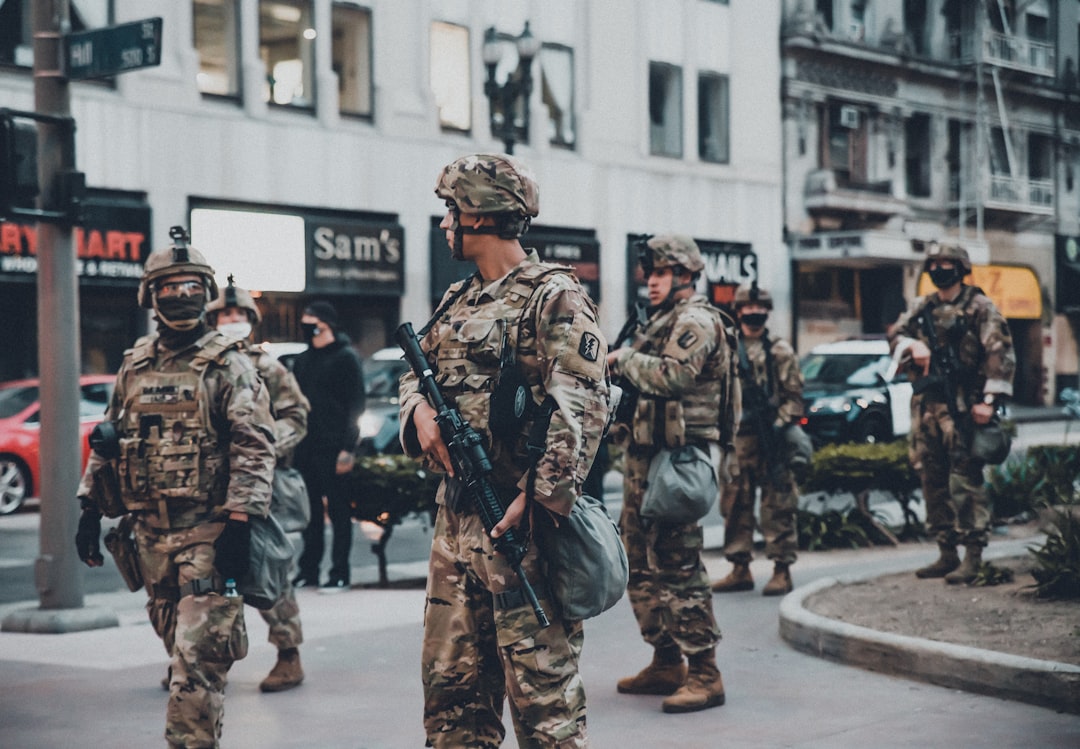
4 out of 5 US Troops Surveyed Understand the Duty to Disobey Illegal Orders
This article is republished from The Conversation under a Creative Commons license. Read the original article here. With his Aug. 11, 2025, announcement that he was sending the National Guard – along with federal law enforcement – into Washington, D.C. to fight crime, President Donald Trump edged U.S. troops closer to the kind of military-civilian confrontations that can cross ethical and legal lines. Indeed, since Trump returned to office, many of his actions have alarmed international human rights observers. His administration has deported immigrants without due process, held detainees in inhumane conditions, threatened the forcible removal of Palestinians from the Gaza Strip and deployed both the National Guard and federal military troops to Los Angeles to quell largely peaceful protests. When a sitting commander in chief authorizes acts like these, which many assert are clear violations of the law, men and women in uniform face an ethical dilemma: How should they respond to an order they believe is illegal? The question may already be affecting troop morale. “The moral injuries of this operation, I think, will be enduring,” a National Guard member who had been deployed to quell public unrest over immigration arrests in Los Angeles told The New York Times. “This is not what the military of our country was designed to do, at all.” Troops who are ordered to do something illegal are put in a bind – so much so that some argue that troops themselves are harmed when given such orders. They are not trained in legal nuances, and they are conditioned to obey. Yet if they obey “manifestly unlawful” orders, they can be prosecuted. Some analysts fear that U.S. troops are ill-equipped to recognize this threshold. We are scholars of international relations and international law. We conducted survey research at the University of Massachusetts Amherst’s Human Security Lab and discovered that many service members do understand the distinction between legal and illegal orders, the duty to disobey certain orders, and when they should do so. Compelled to disobey U.S. service members take an oath to uphold the Constitution. In addition, under Article 92 of the Uniform Code of Military Justice and the U.S. Manual for Courts-Martial, service members must obey lawful orders and disobey unlawful orders. Unlawful orders are those that clearly violate the U.S. Constitution, international human rights standards or the Geneva Conventions. Service members who follow an illegal order can be held liable and court-martialed or subject to prosecution by international tribunals. Following orders from a superior is no defense. Our poll, fielded between June 13 and June 30, 2025, shows that service members understand these rules. Of the 818 active-duty troops we surveyed, just 9% stated that they would “obey any order.” Only 9% “didn’t know,” and only 2% had “no comment.” When asked to describe unlawful orders in their own words, about 25% of respondents wrote about their duty to disobey orders that were “obviously wrong,” “obviously criminal” or “obviously unconstitutional.” Another 8% spoke of immoral orders. One respondent wrote that “orders that clearly break international law, such as targeting non-combatants, are not just illegal — they’re immoral. As military personnel, we have a duty to uphold the law and refuse commands that betray that duty.” Just over 40% of respondents listed specific examples of orders they would feel compelled to disobey. The most common unprompted response, cited by 26% of those surveyed, was “harming civilians,” while another 15% of respondents gave a variety of other examples of violations of duty and law, such as “torturing prisoners” and “harming U.S. troops.” One wrote that “an order would be obviously unlawful if it involved harming civilians, using torture, targeting people based on identity, or punishing others without legal process.” Soldiers, not lawyers But the open-ended answers pointed to another struggle troops face: Some no longer trust U.S. law as useful guidance. Writing in their own words about how they would know an illegal order when they saw it, more troops emphasized international law as a standard of illegality than emphasized U.S. law. Others implied that acts that are illegal under international law might become legal in the U.S. “Trump will issue illegal orders,” wrote one respondent. “The new laws will allow it,” wrote another. A third wrote, “We are not required to obey such laws.” Several emphasized the U.S. political situation directly in their remarks, stating they’d disobey “oppression or harming U.S. civilians that clearly goes against the Constitution” or an order for “use of the military to carry out deportations.” Still, the percentage of respondents who said they would disobey specific orders – such as torture – is lower than the percentage of respondents who recognized the responsibility to disobey in general. This is not surprising: Troops are trained to obey and face numerous social, psychological and institutional pressures to do so. By contrast, most troops receive relatively little training in the laws of war or human rights law. Political scientists have found, however, that having information on international law affects attitudes about the use of force among the general public. It can also affect decision-making by military personnel. This finding was also borne out in our survey. When we explicitly reminded troops that shooting civilians was a violation of international law, their willingness to disobey increased 8 percentage points. Drawing the line As my research with another scholar showed in 2020, even thinking about law and morality can make a difference in opposition to certain war crimes. The preliminary results from our survey led to a similar conclusion. Troops who answered questions on “manifestly unlawful orders” before they were asked questions on specific scenarios were much more likely to say they would refuse those specific illegal orders. When asked if they would follow an order to drop a nuclear bomb on a civilian city, for example, 69% of troops who received that question first said they would obey the order. But when the respondents were asked to think about and comment on the duty to disobey unlawful orders before being asked if they would follow the order to bomb, the percentage who would obey the order dropped 13 points to 56%. While many troops said they might obey questionable orders, the large number who would not is remarkable. Military culture makes disobedience difficult: Soldiers can be court-martialed for obeying an unlawful order, or for disobeying a lawful one. Yet between one-third to half of the U.S. troops we surveyed would be willing to disobey if ordered to shoot or starve civilians, torture prisoners or drop a nuclear bomb on a city. The service members described the methods they would use. Some would confront their superiors directly. Others imagined indirect methods: asking questions, creating diversions, going AWOL, “becoming violently ill.” Criminologist Eva Whitehead researched actual cases of troop disobedience of illegal orders and found that when some troops disobey – even indirectly – others can more easily find the courage to do the same. Whitehead’s research showed that those who refuse to follow illegal or immoral orders are most effective when they stand up for their actions openly. The initial results of our survey – coupled with a recent spike in calls to the GI Rights Hotline – suggest American men and women in uniform don’t want to obey unlawful orders. Some are standing up loudly. Many are thinking ahead to what they might do if confronted with unlawful orders. And those we surveyed are looking for guidance from the Constitution and international law to determine where they may have to draw that line. Zahra Marashi, an undergraduate research assistant at the University of Massachusetts Amherst, contributed to the research for this article.



MSU team develops scalable climate solutions for agricultural carbon markets
Why this matters: Builds trust in carbon markets. This science-based baseline system dramatically improves accuracy, helping ensure carbon credits are credible and truly reflect climate benefits. Enables real climate impact by accounting for both soil carbon and nitrous oxide emissions, the approach delivers a full, net climate assessment. Scales across millions of acres. Tested on 46 million hectares in 12 Midwest states, this approach is ready for large-scale adoption, helping farmers transition to regenerative practices with confidence and clarity. New research from Michigan State University, led by agricultural systems scientist Bruno Basso, addresses a major problem in agricultural carbon markets: how to set an accurate starting point, or “baseline,” for measuring climate benefits. Most current systems use fixed baselines that don’t account for the soil carbon changes and emissions that would occur if business-as-usual practices were maintained on fields. Such inaccuracies can distort carbon credit calculations and undermine market trust. “The choice of baseline can dramatically influence carbon credit generation; if the model is inaccurate, too many or too few credits may be issued, calling market legitimacy into question,” said Basso, a John A. Hannah Distinguished Professor in the Department of Earth and Environmental Sciences, the Department of Plant, Soil and Microbial Sciences and the W.K. Kellogg Biological Station at MSU. “Our dynamic baseline approach provides flexible scenarios that capture the comparative climate impacts of soil organic carbon, or SOC, sequestration and nitrous oxide emissions from business-as-usual practices and the new regenerative system.” The research, published in the journal Scientific Reports, covers 46 million hectares of cropland across the U.S. Midwest, provides carbon market stakeholders with a scalable, scientifically robust crediting framework. It offers both the investment-grade credibility and operational simplicity needed to expand regenerative agriculture. Regenerative agriculture and carbon markets Regenerative agriculture includes practices like cover cropping, reduced or no tillage, diversified rotations, adaptive grazing and agroforestry. These methods restore soil health, enhance biodiversity, increase system resilience and help mitigate climate change by building SOC and reducing greenhouse gas emissions. Carbon markets offer a promising financial mechanism to accelerate regenerative transitions. By compensating farmers for verified climate benefits, they can act as either offset markets (for external buyers) or inset markets (within agricultural supply chains). However, the integrity of these markets hinges on reliable, science-based measurement, reporting and verification systems that integrate modeling, field data and remote sensing. A breakthrough multi-model ensemble approach To overcome limitations in traditional modeling, the MSU scientists and colleagues from different institutions in the U.S. and Europe deployed a multi-model ensemble, or MME, framework, using eight validated crop and biogeochemical models across 40,000 locations in 934 counties spanning 12 Midwestern states. The MME avoids model selection bias, lowering uncertainty in soil carbon predictions from 99% (with single models) to just 36% (with the MME). “This is a game changer for carbon markets,” said Basso. “It delivers a level of accuracy and scalability — from individual fields to entire regions — that current systems lack.” The MME platform also enables the creation of precalculated, practice-based dynamic baselines, reducing the burden of data collection and easing participation for producers. Improved mitigation assessments Unlike many approaches that consider only SOC, the MSU lead team’s study evaluates both SOC sequestration and nitrous oxide emissions to determine net climate impact. “This comprehensive assessment ensures that carbon credits represent true climate mitigation,” said Tommaso Tadiello, postdoctoral fellow in MSU’s Department of Earth and Environmental Sciences and co-author of the study. “A practice that increases soil carbon may improve soil health,” added Basso, “but it may not deliver actual climate benefits if it simultaneously increases nitrous oxide emissions. Our method provides a full accounting of the net climate effect.” The research team found that the combination of no-till and cover cropping delivered an average net mitigation of 1.2 metric tons of carbon dioxide-equivalent per hectare annually, potentially abating 16.4 teragrams of carbon dioxide-equivalent across the study area. This research was supported by the Michigan Department of Agriculture and Rural Development, U.S. Department of Energy’s Great Lakes Bioenergy Research Center, National Science Foundation Long-Term Ecological Research, Builders Initiative, The Soil Inventory Project, Generation IM Foundation, Walton Family Foundation, Morgan Stanley Sustainable Solutions Collaborative and MSU AgBioResearch.


This article is republished from The Conversation under a Creative Commons license. Read the original article here. The last few weeks of summer, heading into Labor Day weekend, can sometimes mean vacations and driving more miles on the road for all people, including teens. Traffic crashes are the No. 1 cause of death for teens, and the crash rate for teen drivers is disproportionately higher than the share of licensed teen drivers. In addition to this grim statistic, summer is the riskiest time for teen drivers. The 100 deadliest days represent the period from Memorial Day to Labor Day when the number of fatal crashes involving teen drivers dramatically increases. A third of each year’s teen driver crashes occur during the summer. We are scholars who research transportation safety and teen driver behavior. Our expertise helps us understand that these 100 days are not just a statistical fluke – they reflect a dangerous intersection of factors such as inexperience and a propensity to take risks. What makes summer different? Regardless of the season, some teen drivers engage in risky behaviors that increase their likelihood of a fatal crash, such as getting distracted, driving with friends in the vehicle, driving under the influence, not wearing seat belts and a lack of hazard awareness. Teens also have more free time in the summer, since most aren’t in school. Combined with the longer days and better weather, teens drive more over the summer. More time on the road means more risk, especially for inexperienced drivers. Teens may also be more likely to drive after dark during the summer, in comparison to more experienced drivers. But nighttime driving is also when visibility is reduced and crash risks are higher, particularly for teens who haven’t fully developed the skills necessary for night driving. This increased exposure, in addition to teens’ general risky driving tendencies, contributes to the 100 deadliest days for teen drivers. The increased crash risk for teens over the summer isn’t equally distributed either. Crashes with teen drivers that lead to serious injuries are more likely to occur with male drivers, in rural areas, for those of lower socioeconomic status and for those with disorders, such as attention deficit and hyperactivity disorder. Teaching young drivers Driver’s education programs are the formal method to teach teen drivers the rules of the road. In driver’s education programs, teens receive information about driver and road safety though classroom and behind-the-wheel instruction in preparation for the licensing exam. Some states require teens to complete a driver’s education course if they want to receive a license under the age of 18. Of teens who have a license, nearly 80% of them have gone through some form of driver’s education. Though driver’s education programs can be helpful, their effects are not equally felt. In some states, teens and their guardians must pay out of pocket for driver’s education courses to obtain a license. This makes driver’s education and, as a consequence, obtaining a driver’s license inequitable. There are also driving school deserts – areas where the poverty rate is 20% or above and there are no behind-the-wheel driver education courses within a 10- to 15-minute drive. This makes driver education courses inaccessible. Many of these driving school deserts happen to be in areas with high populations of minorities. Over 20 years ago, graduated driver licensing was introduced to reduce teen crash rates. This is a phased licensing system wherein teen drivers are restricted in terms of when, where and with whom they can drive until they turn 18. Such a system allows teens to gradually learn and gain experience with driving over time. Graduated driver licensing has been implemented in all 50 states, and it has been shown to reduce teen driver crash rates. However, its effectiveness is limited to those who participate in the system. A large number of teens are unlicensed and are of low socioeconomic status. Many of these unlicensed teens forgo the entire process and remain unlicensed but still drive, well into their 20s when the graduated driver licensing restrictions are lifted. Making summer safer There are two things people can do to turn the 100 deadliest days into the 100 safest days. First, it is important that communities offer free supplementary training programs for teen drivers, because becoming a safe and responsible teen driver shouldn’t be limited to those with resources. As one example, in collaboration with industry partners, we have developed a program called Risk-ATTEND. It is a free, online, evidence-based program that teaches teen drivers how to anticipate risks while driving. Our research has shown that programs such as these can improve teen driving skills and may be especially effective for teen drivers in high-poverty areas. Second, our research has shown that parents and guardians still play an important role in influencing teen driver behavior. Studies show that teens mirror the behaviors they observe: If they see adults text and drive, they’re more likely to do the same. Once teenagers become old enough to drive, it is also important to establish rules and guidelines about expectations to establish clarity and accountability. Written agreements or checklists can address high-risk conditions such as nighttime driving, driving with other young passengers, phone use and adherence to speed limits. Systems to help monitor and enforce rules have been shown to be effective in improving teen driver behavior. One such program is Checkpoints, which is a Connecticut-based program in which families agree to limit teen driving during high-risk conditions. Teens face consequences for violating these limits, such as a temporary loss of driving privileges. However, the limits are gradually lifted as they gain driving experience. More than rules matter Ultimately, preventing crashes in the summer and beyond extends beyond mere adherence to regulations. Avoiding them fundamentally hinges on cultivating a robust safety culture that emphasizes a collective commitment to risk reduction and continuous improvement in driving practices. For teens, the summer months present unique challenges and opportunities. Drawing on best practices, such as training programs, teens can build essential skills in varied conditions before gaining full, unsupervised privileges.

FAFSA Applications Jump on LI and Throughout NYS
Dr. Alan Singer, professor of education, talked with Newsday about a jump this past academic year in the number of Long Island high school students applying for federal financial aid to attend college. The article says the increase is due to a mandate, imposed during the 2024-25 school year, that school districts ensure all 12th graders either fill out the FAFSA, apply for state aid or sign a waiver. New York State Governor Kathy Hochul included the mandate in the state budget. Requiring students to apply or opt out “is like having the DMV register people to vote — it’s just a good idea,” said Dr. Singer. “There are students from families that are just not aware of what’s required to go to college and get financial aid. By having it done in school … it facilitates the ability of all high school graduates to go on to college with financial aid.”


Life Hacks in Retirement: Strategies for Aging Well
If Jean Smart can star in Hacks at 72, clearly life hacking is age-appropriate. Hacks may be a TV comedy about a sharp-tongued, aging comic, but let’s face it: retirement needs a few hacks of its own. It turns out that aging well requires more than good genes—it demands good strategy. The goal isn’t perfection. It’s progress. Progress with fewer bruises, bigger laughs, and more money left at the end of the month than freezer-burnt chicken. So here are some tried-and-true hacks in three essential areas: Money, Muscle, and Mood. Let's get you hip, fit, and financially free. Ready, Set, Go! Money Hacks: Japan Might Have Found Something In Japan, there's a charming financial custom called Kuzukai, where men hand over all their income to their wives and receive a monthly allowance. No joke—it's a thing. And it works. Japan boasts: • One of the highest household savings rates at 23% (OECD, 2023) • Low household debt per capita (World Bank) • The lowest personal bankruptcy rate in the developed world (IMF Report) • And a whopping 74% of households follow this practice (Nikkei Asia, 2021) Maybe they’ve discovered the ultimate money hack: give the money to the person most likely to use spreadsheets recreationally. But you don’t need a spouse or a sushi habit to save big. Whether you're solo or shacked up, a homeowner or a renter, here are some effectively universal money-saving tips. Everyday Money-Saving Hacks: • Cut the Hidden Fees: Banking, streaming, delivery apps—if you’re not actively using them, cancel or deactivate. Your wallet will thank you. Read your bank and investment statements carefully, as if they were love letters from your money. That $3 “maintenance fee”? It might be costing you more than you realize. • Unsubscribe to Survive: Subscriptions are like house guests—pleasant at first but staying too long and costing too much. Establish a quarterly ritual—Subscription Audit Sunday. Review auto-renewals—Netflix, meditation apps, fancy sock clubs. If it doesn’t bring you joy or serve your needs weekly, cancel it. You might find enough loose change for a weekend escape. • Shop Daily, Eat Fresh: Instead of over-buying in bulk, buy just what you need for the day. It supports spontaneity and reduces waste. (Bonus: you can honour the “I feel like chicken wings” days guilt-free.). Power Tip: Shop daily, eat fresh. Channel your inner Parisian. Shop just for today—reducing waste, adding joy, and turning dinner into a choice rather than a guilt-ridden freezer excavation. • Use Senior Discounts Like a Boss: Shoppers Drug Mart (55+), Pet Valu (60+), movie theatres, golf, bowling… but only if you ask. Ask proudly: “I dare you, card me.” Mark senior days on your calendar like paydays, because they are. • Split with a Buddy: Share groceries with a friend. Half a BBQ chicken is more realistic (and less greasy) than the whole bird, and it reduces “fridge clutter”! • Ride Together: Share Ubers or Lyft. Or better yet, plan your errands with a friend and make a day of it; it will feel more like an adventure. • Scan for Free Fun: Check local listings for subsidized classes, outdoor concerts, and "pay what you can" events. Even dress rehearsals can be hidden gems at a discount. Money Traps to Avoid: 1. Subscription Creep – Set reminders to cancel trials. They add up faster than your grocery bill in the frozen aisle. 2. Silent Statement Siphons – Monitor your monthly expenses. Cut out what doesn’t bring joy or value. 3. Lifestyle Drift – Just because you can spend, doesn’t mean you should. You don’t need another air fryer. 4. Over-Gifting – Love isn’t measured in Amazon orders. The best gift is your time, or your famous banana bread. 5. Retail Therapy – If it’s cheaper than therapy, it’s probably just a distraction. But that doesn’t mean it’s helpful therapy. 6. Impulse Upgrades – Your current phone may be a few years old—but so are you, and you’re still fabulous. Your toaster doesn’t need Bluetooth, and neither do your socks. Physical Hacks: Train Like You Really Mean It The book ‘Younger Next Year’ (thank you, Bill P. and Steven H.) offers a wake-up call: Life is a test of endurance. Prepare yourself for it. In retirement, fitness isn’t just a hobby — it’s your new full-time job. And this job offers better hours, no toxic bosses, and a dress code that includes spandex. Fitness Hacks That Work 1. Schedule it: If it’s not on the calendar, it’s not happening. Even better, set a recurring date with a friend. Accountability is appealing. 2. Make it enjoyable: Not feeling spin class? Skip it. Try Zumba, power walking, or even disco gardening. Move as if no one’s watching (even if your neighbour is). 3. Start where you are: Don’t join Advanced Pickleball if your last workout was chasing a runaway dog in 2017. 4. Make It Social: Grab a friend or make new ones—bonus points for post-sweat smoothies and commiseration. 5. Keep Commitments (Especially to Yourself): Be a “serious person,” as Logan Roy would say. If you schedule a walk, show up—even if you’re in Crocs and a hoodie. 6. Track progress, not perfection: Count steps, not pounds. Celebrate consistency. Aim for “better than yesterday,” not “six-pack by September.” Fitness Traps to Avoid: 1. Choosing Something You Hate: If you dread it, you’ll ditch it. Guaranteed. 2. Overestimating Your Ability or Availability: Planning to run a marathon in 30 days after a decade on the couch? That’s... aspirational. 3. Overpaying for Motivation: Fancy gym + guilt ≠ results. Try a budget-friendly gym, or even YouTube workouts in your living room. 4. Ignoring Recovery: If you can’t walk after leg day, you’re doing it wrong—stretch, hydrate, nap. Repeat. 5. All-or-Nothing Thinking: Missing one workout doesn’t mean the week’s a write-off. Perfection is the enemy of progress. 6. Comparing Yourself to 30-Year-Olds on Instagram: Just… don’t. Unless you want to feel bad in high def. 7. Try "Fitness Snacking" Squats while the kettle boils. Do wall push-ups before brushing your teeth. Have a dance break during Jeopardy. Movement matters. 8. Stretch Before Bed Nightly stretches improve sleep and help you wake up feeling refreshed. It’s five minutes that pay dividends. Emotional Hacks: Mindset Is Your Muscle This is the part they don’t teach in school—or even in yoga class. Emotional health is what sustains you when the stock market tanks, your golf swing falters, or the kids “forget” to call. Emotional Hacks to Try 1. Upgrade Your Self-Talk: You hear your voice more than anyone else’s. Make it kind. Make it constructive. 2. Be Your Own Biggest Fan: Self-love isn’t arrogance. It’s survival. 3. Treat Yourself Like a Dear Friend: Would you tell your best friend she’s lazy, useless, and past her prime? No? Then stop saying it to yourself. 4. Forgiveness: Begin with yourself. Write that forgiveness letter, see a therapist, cry it out. Let go. No one leaves here flawless. 5. Basic Self-Care: Feed your body with wholesome food, ensure proper rest, and maintain regular grooming. Yes, plucking your chin counts. 6. Gratitude: morning and night. Focus on one thing you’re grateful for each day. It’s better than Botox. 7. Practice "Mental Hygiene" meditation, journaling, or a walk without your phone. It's like flossing for your nervous system. 8. Try Five-Minute Journaling: “What made me smile today?” “What felt hard?” “What do I want more of tomorrow?” Answer honestly—no grammar police. Emotional Traps to Avoid 1. Negative Self-Talk: There is zero upside. Science backs this up—positive self-talk improves performance and wellbeing. Try this: “Today wasn’t my best. I was tired and snappy. I’ll apologize and do better tomorrow.” or “I know I can do this. I need to practice and be patient with myself.” 2. Not Making Yourself a Priority: The oxygen mask rule is absolute. If you don’t take care of yourself, you can’t help anyone else. 3. Self-Medicating with Booze, Bingeing, or Buying: Feel the feelings. Don’t dodge them with Chardonnay or Amazon. 4. Righteousness Addiction: Would you rather be right or be happy? Being “right” is expensive—emotionally, physically, and energetically. 5. All-or-Nothing Perfectionism: Perfection is a myth—and frankly, a boring one. Flaws are where the fun and growth live. 6. Regret. Let’s face it, regrets are a part of life. The trick is not to dwell on them. Don’t store them in Samsonite to pull out whenever we want to beat ourselves up! Ever notice that the windshield on your car is much bigger than the rearview mirror? Read that again. The Social Capital Audit You are more than your RRSP and Fitbit stats. What do you bring to the table? Your kindness? Humour? Lived wisdom? A killer lemon loaf? Whatever it is—own it. Hone it. Make it your signature. Whether you’re the neighbourhood listener, laughter-bringer, or human glue-stick, your contribution matters. What Are You Proud Of… and Is It Still Serving You? Maybe once upon a time, you were known for your hair, your legs, your singing voice, or your abs of yesteryear. But here's the truth: gravity always wins. And that’s not failure—it’s biology. So if you’re still starting sentences with “Back in my day…”, you might be overdue for a mindset update. Choose something new to feel proud of now: your resilience, your sense of humour, your garden, or your ability to FaceTime your grandkid without accidentally hanging up. Adjust the metric. Celebrate the upgrade. Some Mantras for the Journey • “Done is better than perfect.” • “I am doing the best I can, and that’s enough.” • “Every day is a fresh start (even if my back cracks getting out of bed).” • “Progress, not perfection.” • “I am not too old, and it’s not too late.” • “If not now… when?” • “Stop acting my age.” The Final Hack: Don’t Just Celebrate – Throw Confetti Practice makes progress. And progress, my friends, is where the magic lives. Every step matters. Every stumble adds a twist. Perfection is overrated. Progress is the new gold standard. And as Mel Robbins reminds us: “There will be many people who won’t appreciate your value. Make sure you’re not one of them.” You’ve spent your life caring for others. Now it’s your turn to care for yourself—thoughtfully, warmly, and with plenty of good humour. Retirement isn’t the end. It’s the ultimate reboot. Be the Jean Smart of your own story. Jean, watch your back... and Kuzukai, watch our money. Star power meets allowance power. Don’t Retire…Re-Wire! Sue


LSU Veterinary Teams Recall Courage, Loss, and Lasting Change from Hurricane Katrina Animal Rescues
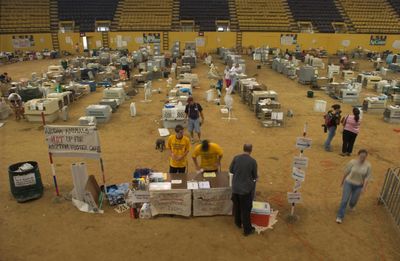
From that tragedy came transformative change, with new animal evacuation protocols and policies, including the creation of the federal Pet Evacuation and Transportation Standards (PETS) Act, which requires state and local disaster plans to include provisions for pets and service animals. LSU School of Veterinary Medicine played a pivotal role in this evolution. In the days and months after Katrina, LSU Vet Med faculty, staff, and students worked alongside state officials, military units, and volunteers from across the nation to rescue, treat, and shelter thousands of animals. Two decades later, Katrina’s scars remain, but so does the resilience of the people and animals who lived through it. Their stories serve as a reminder that in even the darkest moments, compassion can spark lasting change. Rescue in a War Zone Dr. Jenny Sones (then veterinary student): I had been working at LSU Vet Med for five years when Katrina hit. LSU Vet Med put out an ‘all hands on deck’ call to employees. All of our hospital wards were turned into an ER. We opened our homes to complete strangers who came to help. It was organized chaos. Many animals came to us looking like corpses with a heartbeat because they’d been in the flood waters so long. I worked all day at LSU Vet Med, where we saw the sickest, most injured patients, and worked at Lamar Dixon evenings and weekends. Twenty years later, the images are so vivid in my mind. I took a horse trailer on a rescue mission into New Orleans with two students and a state veterinarian escort one week after Katrina hit. The scene looked like a war zone, helicopters everywhere, buildings burning, gunshot sounds. Every area we saw was looted. The stench was awful. There were people on the overpasses who had been there for a week. We were there to rescue animals. Military, Louisiana National Guard, and police brought the animals to us where our trailer was parked on an overpass. We picked up a few strays on our way out. The animals we rescued were so scared. Some had been in the flood waters a long time and were soaking wet and foul smelling. Their skin was sloughing off and they were emaciated. Amazingly, none of the dogs, cats, or horses were aggressive—maybe because they were in shock or they were grateful. We treated them all at Lamar Dixon, washed them with Dawn dishwashing soap and applied betadine. Sick ones were transported by trailer to LSU Vet Med. They were very dark times and very good times too. We were able to get the New Orleans French Quarter mules out to Lamar Dixon. Their caretaker crew stayed with them. They hooked up the mules, still in good shape because they weren’t in the flood waters, and they gave workers short rides around the Lamar Dixon grounds. It was such rewarding work. We were exhausted but in the best way. It would have been easy to get caught up in the devastation if we didn’t focus on our purpose to help animals. You can’t fix everything, but you can fix what’s in front of you. If you can survive the devastation of Katrina, you can survive anything. From Classroom to Crisis Dr. Jenny Sones (then veterinary student): In August 2005, I was starting my second year of veterinary school at LSU. I had no idea that life was about to change so drastically. School was cancelled, and electricity was out most places except at the vet school. My colleagues set up temporary housing in our study rooms and other places throughout the vet school. We then began to learn of the effects of Katrina on our veterinary species—dogs, cats, horses, and more. These precious creatures were the reason why we studied, crammed, and signed up to endure the rigors of veterinary school. It was time to close the books and help! Although we were not licensed veterinarians yet, we were keen to provide aid in any way we could. I, along with lots of my classmates, volunteered at Parker Coliseum on the LSU campus, where displaced small animals were seeking refuge, and at Lamar Dixon, which became the shelter for large animals and small animals. We spend many hours doing anything we could, cleaning litter boxes, refilling water bowls, changing bedding, administering medications, and assisting the heroic volunteer veterinarians working tirelessly to treat the injured, sick, and rescued. Lots of important lessons were learned during Katrina. Many animals were not reunited with their owners. That's when I learned the value of microchipping to permanently identify animals, gained an appreciation for animal search and rescue, and the value of quick response. (Sones is now CSU Equine Reproduction Laboratory reproduction specialist.) Mapping Rescues by Hand Ashley Stokes (former faculty member): It was unlike anything I’ve ever experienced. I was researching and teaching at LSU Vet Med in 2005. LSU Vet Med stepped up in so many ways. We started receiving calls from citizens and local authorities at the vet school almost immediately after the storm. They needed help with resources—animal rescue, food, and water. They had to leave New Orleans quickly. I particularly remember a call from someone from south of Belle Chase, La., who had left horses, cattle, and two dogs in the house and needed help. It was surreal to see the devastation, houses floating, there in the Delta. We were making real-time decisions to help their animals. They’d lost so much, and for some, their animals were all they had left. We put a paper map of Louisiana on the wall and put pins in the locations that called for assistance. We covered all of New Orleans and surrounding areas, including the north shore and extending west to Baton Rouge. We took the callers’ information and sent teams of staff, students, and volunteers to different locations with donated trailers, hay, water, and other resources for rescue. We continued rescues for months after the storm. We were there for people for the long haul. The whole experience was transformational in my life. What I learned from Katrina became part of my own career and what I continue to do. There were beautiful moments, especially seeing how resilient and helpful people could be. I saw every day how the community came together and were absolute bright lights. Positive came from tragedy. (Stokes is now dean of UC Davis College of Agricultural & Environmental Sciences.) The Boxer on the Third Floor Dr. Neil Henderson (alumnus): When Katrina hit, the Louisiana Veterinary Medical Association sent out a request for help from veterinarians. I got to the Lamar Dixon Center on Day 5 after Katrina hit. St. Bernard Parish was where I spent most of my time helping. It was literally destroyed. One day, while we were making our rounds, a man came running up to me and said that he just remembered that while the storm was coming through—he was on the third story of a building looking out of the window—he noticed a dog swimming around frantically with nowhere to go. He opened a window for it with the hopes that it would swim inside the building to safety. Seven or eight days later, with the temperature well into the upper 90s, the man came up to me and asked me to go into the building to see if I could find the dog. I did not have much hope but went anyway. There, on the third floor of the building, I found the dog, a boxer, alive. She was in surprisingly good shape. The man was ecstatic to see the dog and could not believe that it made it inside the building to safety. I stayed for five days helping animals, and my late father (Dr. Robert Henderson, class of 1977) came after that for five more days. (Henderson is the owner of the Pine Ridge Veterinary Center in Stonewall, La.) Article originally posted here.


Five storms predicted in the Gulf this season, says CoMET Lab
A composite of 500-mb temperatures from the seasonal weather model simulations used to generate the forecast. (The green outline shows the area averaged across for the Gulf of America.) The "-4.85C" is the temperature over the Gulf that ultimately fed into the equation to yield the prediction of 5 named storms. This hurricane season, five named storms are predicted for the Gulf, according to LSU’s Coastal Meteorology, or CoMET Lab, which issues a Gulf of America-specific forecast. Five represents a slight uptick in storm activity, said Paul Miller, the head of the CoMET Lab. Miller is an associate professor in the Department of Oceanography & Coastal Sciences, or DOCS. The seasonal average for the area is 3.7 storms. This forecast in elevated hurricane activity is in alignment with predictions for the Atlantic Ocean as a whole – NOAA has called for between 13 and 19 storms in the basin between the beginning of June and the end of November. CoMET Lab’s forecast works a little differently than the Atlantic-based predictions. Those models generally focus on ocean temperatures, among other factors. CoMET’s forecast, which was initially developed with Geography and Anthropology Professor Jill Trepanier, instead focuses on average atmospheric temperatures around the Gulf, approximately six kilometers, or four miles, above the ground. Miller said he and Trepanier considered a range of potential predictive factors when they first developed the forecast in 2021, before settling on atmospheric temperature. “What our data shows is that the warmer the temperature is, the fewer storms there should be. The colder the temperature is, the more storms,” Miller said. This link to cooler temperatures at high atmospheric altitudes may appear counterintuitive, but, he said, “think of a hot air balloon. It only works if it’s hotter than the air around it… If you go four miles above the ground, that tells you if you have a reservoir of potential buoyancy. If the air can make it to that altitude, it’s got a better chance of continuing to rise and forming [a storm].” Normally CoMET’s forecast utilizes temperatures throughout the month of May, but due to recent changes in data available from NOAA, Miller noted that this year’s forecast is based on readings from the last two weeks of the month. Article originally posted here.

Dr. Sameer Hinduja is one of the world’s foremost experts on cyberbullying, adolescent mental health, and digital safety. A Professor at Florida Atlantic University’s School of Criminology and Criminal Justice and Co-Director of the Cyberbullying Research Center, he has advised the White House, testified before federal agencies, and worked with schools and tech companies worldwide to protect young people online. View Full Profile→ Amid the U.S. youth mental health crisis, his latest peer-reviewed study, published through FAU Newsdesk, reveals that hope not only boosts well-being and academic achievement but also acts as a powerful shield against bullying and cyberbullying in adolescents. Results, published in the journal Frontiers in Sociology, show that students with less hope were 56% more likely to cyberbully others than their peers over their lifetime, and 57% more likely over the last 30 days. Those with more hope were 36% less likely to cyberbully others over their lifetime and over the last 30 days when compared to their peers with lower levels of hope. The key takeaway? Hope matters. It buffers against the urge to aggress against others online and off. “Hope acts as a powerful protective factor against both school bullying and cyberbullying among youth,” said Sameer Hinduja, Ph.D., lead author, a professor in the School of Criminology and Criminal Justice within FAU’s College of Social Work and Criminal Justice, co-director of the Cyberbullying Research Center, and a faculty associate at the Berkman Klein Center at Harvard University. “When young people believe in their ability to set meaningful goals and stay motivated to reach them, they are far less likely to lash out or harm others. Hope gives them a sense of direction – and that can make all the difference.” Hinduja's previous research has been featured in The Washington Post, where he emphasized that cyberbullying is not just emotionally distressing—it can cause trauma responses in teens that mirror clinical Post-Traumatic Stress Disorder. “As our research clearly shows, cyberbullying in any form — whether it’s exclusion from a group chat or direct threats — can lead to significant trauma in youth,” Sameer Hinduja, a professor in Florida Atlantic University’s School of Criminology and Criminal Justice and the paper’s lead author, said in a news release. “We were surprised to find that no single type of cyberbullying caused more harm than others; all carried a similar risk of traumatic outcomes. This means we can’t afford to dismiss or trivialize certain behaviors as ‘less serious’ — being left out or targeted by rumors can be just as detrimental as more overt attacks.” Why This Matters Now As students return to school this fall, Hinduja’s research offers a clear reminder: digital harm is real harm. Emotional safety in online environments deserves the same urgency as physical safety in school buildings. His work calls for: • Preventive education over punitive responses • Trauma-informed approaches in schools • Support systems that validate and protect victims • Tech accountability and policy reform ⸻ Dr. Hinduja is available for media interviews on topics such as: Adolescent Mental Health • Cyberbullying • PTSD • Digital Safety • School Culture Click on the icon below to connect.