
Experts Matter. Find Yours.
Connect for media, speaking, professional opportunities & more.

First AI-powered Smart Care Home system to improve quality of residential care
Partnership between Lee Mount Healthcare and Aston University will develop and integrate a bespoke AI system into a care home setting to elevate the quality of care for residents By automating administrative tasks and monitoring health metrics in real time, the smart system will support decision making and empower care workers to focus more on people The project will position Lee Mount Healthcare as a pioneer of AI in the care sector and opening the door for more care homes to embrace technology. Aston University is partnering with dementia care provider Lee Mount Healthcare to create the first ‘Smart Care Home’ system incorporating artificial intelligence. The project will use machine learning to develop an intelligent system that can automate routine tasks and compliance reporting. It will also draw on multiple sources of resident data – including health metrics, care needs and personal preferences – to inform high-quality care decisions, create individualised care plans and provide easy access to updates for residents’ next of kin. There are nearly 17,000 care homes in the UK looking after just under half a million residents, and these numbers are expected to rise in the next two decades. Over half of social care providers still retain manual and paper-based approaches to care management, offering significant opportunity to harness the benefits of AI to enhance efficiency and care quality. The Smart Care Home system will allow for better care to be provided at lower cost, freeing up staff from administrative tasks so they can spend more time with residents. Manjinder Boo Dhiman, director of Lee Mount Healthcare, said: “As a company, we’ve always focused on innovation and breaking barriers, and this KTP builds on many years of progress towards digitisation. We hope by taking the next step into AI, we’ll also help to improve the image of the care sector and overcome stereotypes, to show that we are forward thinking and can attract the best talent.” Dr Roberto Alamino, lecturer in Applied AI & Robotics with the School of Computer Science and Digital Technologies at Aston University said: “The challenges of this KTP are both technical and human in nature. For practical applications of machine learning, it’s important to establish a common language between us as researchers and the users of the technology we are developing. We need to fully understand the problems they face so we can find feasible, practical solutions. For specialist AI expertise to develop the smart system, LMH is partnering with the Aston Centre for Artificial Intelligence Research and Application (ACAIRA) at Aston University, of which Dr Alamino is a member. ACAIRA is recognised internationally for high-quality research and teaching in computer science and artificial intelligence (AI) and is part of the College of Engineering and Physical Sciences. The Centre’s aim is to develop AI-based solutions to address critical social, health, and environmental challenges, delivering transformational change with industry partners at regional, national and international levels. The project is a Knowledge Transfer Partnership. (KTP). Funded by Innovate UK, KTPs are collaborations between a business, a university and a highly qualified research associate. The UK-wide programme helps businesses to improve their competitiveness and productivity through the better use of knowledge, technology and skills. Aston University is a sector leading KTP provider, ranked first for project quality, and joint first for the volume of active projects. For more information on the KTP visit the webpage.


New findings from CAA South Central Ontario (CAA SCO) show that Automated Speed Enforcement (ASE) is changing driver behaviour. According to the research, ASE cameras are influencing habit changes in drivers in two ways: drivers are either slowing down or avoiding ASE cameras altogether. “When drivers choose to slow down or change their routes because of photo radar, it means the technology is doing what it’s meant to, reminding us to be more mindful behind the wheel,” says Michael Stewart, community relations consultant for CAA SCO. The data states that nearly a quarter (23 per cent) of Ontario drivers have received a ticket from an ASE camera, compared to 17 per cent in 2024. Although ticketing has increased, positive behavioural shifts have occurred because of ASE use. According to the survey, a majority of Ontario drivers (73 per cent) slow down when nearing an ASE camera and over half (52 per cent) shared that they are unlikely to speed up after they pass through an ASE zone; up from 44 per cent in 2023, demonstrating that the presence of ASEs is positively shifting driver behaviour in these areas. It also found that nearly half of drivers (46 per cent) avoid driving on roads with ASE in use. “These insights show how useful a tool ASE cameras can be,” says Stewart. “This technology isn’t about ‘gotcha’ moments; it’s about preventing real harm and changing driver behaviour.” Drivers support the use of ASE cameras in school zones Despite the increased ticketing in Ontario this year, many drivers support the use of ASE cameras, especially in school zones or areas with vulnerable road users. Nearly three-quarters of Ontario drivers (73 per cent) support the use of ASE in target areas such as school zones or near community centres. In fact, 76 per cent of Ontarians believe that cameras deter speeding altogether. “Our research shows that ASE continues to have strong public support and can be effective in getting drivers to change their behaviour. While speed cameras may not solve every road safety issue overnight, they play an important role in nudging driver behaviour in a safer direction,” adds Stewart. Public support for ASE use is no surprise, as speeding remains one of Ontario's most reported dangerous driving behaviours, with 40 per cent of drivers admitting to it in the past year. While ASE cameras are widely supported in community safety zones, CAA SCO recommends that any future expansion into other areas must be thoughtfully considered. “These cameras should never be used as a revenue generator, but rather, as a method to help protect road users and encourage safer driving habits,” says Stewart. “CAA SCO will continue to advocate for standardized practices across municipalities regarding ASE cameras to ensure effectiveness across our communities.” For more information on speeding and dangerous driving, please visit: https://www.caasco.com/speeding The online survey was conducted by DIG Insights from March 7 to March 19, 2025, with 1,500 Ontario drivers aged 18 and older. Based on the sample size of n=1,500 and with a confidence level of 95 per cent, the margin of error for this research is +/- 2%.)


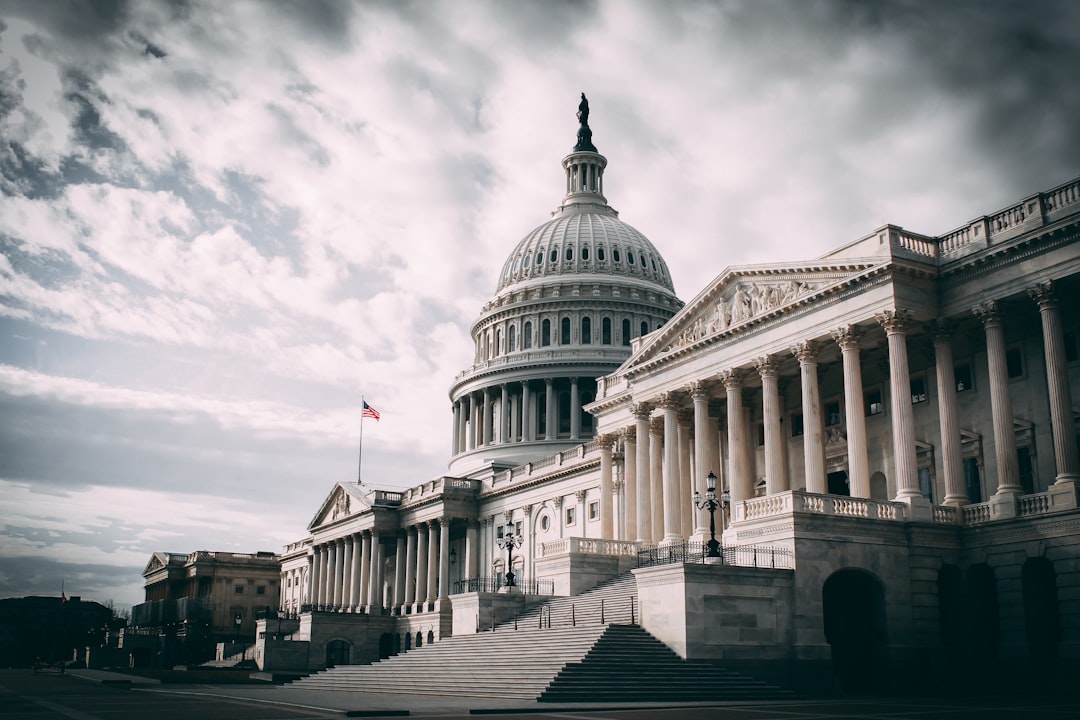
Emil Bove’s appeals court nomination echoes earlier controversies, but with a key difference
This article is republished from The Conversation under a Creative Commons license. Read the original article here. President Donald Trump’s nomination of his former criminal defense attorney, Emil Bove, to be a judge on the United States Court of Appeals for the 3rd Circuit, has been mired in controversy. On June 24, 2025, Erez Reuveni, a former Department of Justice attorney who worked with Bove, released an extensive, 27-page whistleblower report. Reuveni claimed that Bove, as the Trump administration’s acting deputy attorney general, said “that it might become necessary to tell a court ‘fuck you’” and ignore court orders related to the administration’s immigration policies. Bove’s acting role ended on March 6 when he resumed his current position of principal associate deputy attorney general. When asked about this statement at his June 25 Senate confirmation hearing, Bove said, “I don’t recall.” And on July 15, 80 former federal and state judges signed a letter opposing Bove’s nomination. The letter argued that “Mr. Bove’s egregious record of mistreating law enforcement officers, abusing power, and disregarding the law itself disqualifies him for this position.” A day later, more than 900 former Department of Justice attorneys submitted their own letter opposing Bove’s confirmation. The attorneys argued that “Few actions could undermine the rule of law more than a senior executive branch official flouting another branch’s authority. But that is exactly what Mr. Bove allegedly did through his involvement in DOJ’s defiance of court orders.” On July 17, Democrats walked out of the Senate Judiciary Committee vote, in protest of the refusal by Chairman Chuck Grassley, a Republican from Iowa, to allow further investigation and debate on the nomination. Republicans on the committee then unanimously voted to move the nomination forward for a full Senate vote. As a scholar of the courts, I know that most federal court appointments are not as controversial as Bove’s nomination. But highly contentious nominations do arise from time to time. Here’s how three controversial nominations turned out – and how Bove’s nomination is different in a crucial way. Robert Bork Bork is the only federal court nominee whose name became a verb. “Borking” is “to attack or defeat (a nominee or candidate for public office) unfairly through an organized campaign of harsh public criticism or vilification,” according to Merriam-Webster. This refers to Republican President Ronald Reagan’s 1987 appointment of Bork to the Supreme Court. Reagan called Bork “one of the finest judges in America’s history.” Democrats viewed Bork, a federal appeals court judge, as an ideologically extreme conservative, with their opposition based largely on his extensive scholarly work and opinions on the U.S. Court of Appeals for the District of Columbia Circuit. In opposing the Bork nomination, Sen. Ted Kennedy of Massachusetts took the Senate floor and gave a fiery speech: “Robert Bork’s America is a land in which women would be forced into back-alley abortions, blacks would sit at segregated lunch counters, rogue police could break down citizens’ doors in midnight raids, schoolchildren could not be taught about evolution, writers and artists could be censored at the whim of government, and the doors of the federal courts would be shut on the fingers of millions of citizens for whom the judiciary is often the only protector of the individual rights that are the heart of our democracy.” Ultimately, Bork’s nomination failed by a 58-42 vote in the Senate, with 52 Democrats and six Republicans rejecting the nomination. Ronnie White In 1997, Democratic President Bill Clinton nominated White to the United States District Court for the Eastern District of Missouri. White was the first Black judge on the Missouri Supreme Court. Republican Sen. John Ashcroft, from White’s home state of Missouri, led the fight against the nomination. Ashcroft alleged that White’s confirmation would “push the law in a pro-criminal direction.” Ashcroft based this claim on White’s comparatively liberal record in death penalty cases as a judge on the Missouri Supreme Court. However, there was limited evidence to support this assertion. This led some to believe that Ashcroft’s attack on the nomination was motivated by stereotypes that African Americans, like White, are soft on crime. Even Clinton implied that race may be a factor in the attacks on White: “By voting down the first African-American judge to serve on the Missouri Supreme Court, the Republicans have deprived both the judiciary and the people of Missouri of an excellent, fair, and impartial Federal judge.” White’s nomination was defeated in the Senate by a 54-45 party-line vote. In 2014, White was renominated to the same judgeship by President Barack Obama and confirmed by largely party-line 53-44 vote, garnering the support of a single Republican, Susan Collins of Maine. Miguel Estrada Republican President George W. Bush nominated Estrada to the Court of Appeals for the District of Columbia Circuit in 2001. Estrada, who had earned a unanimous “well-qualified” rating from the American Bar Association, faced deep opposition from Senate Democrats, who believed he was a conservative ideologue. They also worried that, if confirmed, he would later be appointed to the Supreme Court. However, unlike Bork – who had an extensive paper trail as an academic and judge – Estrada’s written record was very thin. Democrats sought to use his confirmation hearing to probe his beliefs. But they didn’t get very far, as Estrada dodged many of the senators’ questions, including ones about Supreme Court cases he disagreed with and judges he admired. Democrats were particularly troubled by allegations that Estrada, when he was screening candidates for Justice Anthony Kennedy, disqualified applicants for Supreme Court clerkships based on their ideology. According to one attorney: “Miguel told me his job was to prevent liberal clerks from being hired. He told me he was screening out liberals because a liberal clerk had influenced Justice Kennedy to side with the majority and write a pro-gay-rights decision in a case known as Romer v. Evans, which struck down a Colorado statute that discriminated against gays and lesbians.” When asked about this at his confirmation hearing, Estrada initially denied it but later backpedaled. Estrada said, “There is a set of circumstances in which I would consider ideology if I think that the person has some extreme view that he would not be willing to set aside in service to Justice Kennedy.” Unlike the Bork nomination, Democrats didn’t have the numbers to vote Estrada’s nomination down. Instead, they successfully filibustered the nomination, knowing that Republicans couldn’t muster the required 60 votes to end the filibuster. This marked the first time in Senate history that a court of appeals nomination was filibustered. Estrada would never serve as a judge. Bove stands out As the examples of Bork, Estrada and White make clear, contentious nominations to the federal courts often involve ideological concerns. This is also true for Bove, who is opposed in part because of the perception that he is a conservative ideologue. But the main concerns about Bove are related to a belief that he is a Trump loyalist who shows little respect for the rule of law or the judicial branch. This makes Bove stand out among contentious federal court nominations.


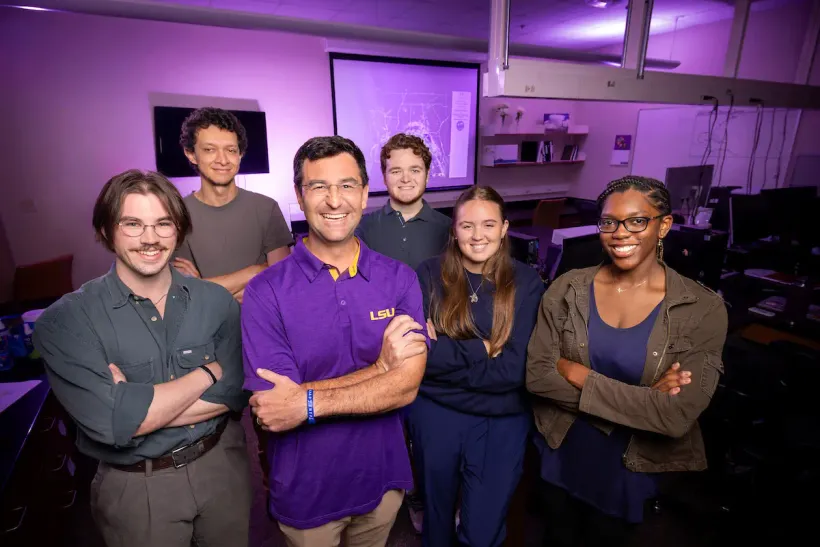
LSU Lab Helps Louisiana Prepare for Hurricanes, Drought, even Saharan Dust
Any hurricane that forms in the Gulf of America is a direct threat to Louisiana and its neighboring states. But most seasonal forecasts focus on the entire North Atlantic Basin, including areas where storms may never come close to any land, much less the U.S. Gulf Coast. A Gulf-specific forecast developed at LSU’s Coastal Meteorology (COMET) Lab addresses that issue by providing storm information specifically geared toward the Gulf region. The lab is run by Paul Miller, an associate professor at LSU who founded it in 2019. “We decided that a Gulf-specific forecast could help state officials and Gulf-area residents better understand how active the upcoming season might be in their part of the Atlantic,” said Miller, who teaches in the Department of Oceanography & Coastal Sciences in the College of the Coast & Environment. Miller said the LSU-Velocity Risk Gulf Hurricane Outlook is one example of how the COMET Lab delivers real benefits to Louisiana. “A lot of forecasts tend to align with each other each year. But ours works a lot differently than some of the other forecasts that are geared towards larger areas of the ocean,” he said. “We’re not the world’s leading hurricane research lab—and we don’t try to be. Instead, we prioritize meeting the largest research gaps relevant to Louisiana residents, spanning a wide variety of weather hazards. “We want to make sure Louisianans experience a clear return-on-investment from our lab’s activities.” Ways the lab supports the state also include: Helping forecast storm surge in real time and informing the decision on when to close flood barriers before a tropical system hits land. Developing rainfall models to support flood prevention efforts. Studying weather patterns that cause drought and low coastal water levels that can lead to marsh loss during dry spells on the Gulf Coast. Saharan Dust Research One area of study that incorporates both air quality and tropical weather is the lab’s research on Saharan dust clouds, which are blown across the Atlantic in an air mass called the Saharan Air Layer, or SAL. “So, this sort of far-off distant concept of Saharan dust is actually something that is kind of important to folks here in Louisiana,” Miller said. This dust can shut down thunderstorm activity in the U.S. Caribbean territories, a key area of research in the COMET Lab, and cause respiratory problems when it reaches the Southeast U.S. The SAL can also suppress hurricane activity in the Atlantic. “Our lab just launched a new project with the Office of Naval Research to determine how dust-dimmed sunlight can affect ocean temperatures in the Atlantic’s most active hurricane breeding grounds,” Miller said. Read the full story here.

Georgia Southern professor receives national faculty mentor award
The Council on Undergraduate Research (CUR) named Georgia Southern University English Professor Olivia Carr Edenfield, Ph.D., the winner of the 2025 Arts and Humanities Faculty Mentor Award. The award recognizes faculty who go above and beyond to nurture undergraduate research, scholarship and creative work. Edenfield’s record of taking student research to new heights set her apart from a nationwide field of candidates. After joining Eagle Nation as a professor in 1986, Edenfield has helped her students become published researchers and presenters at local and national conferences. She said seeing those hardworking students excel has been her real reward. “Receiving this award is deeply personal,” Edenfield wrote in her CUR nomination statement. “My greatest joy in teaching has come from my students’ successes.” During her time as associate dean for Student Affairs in the former College of Liberal Arts and Social Sciences (CLASS), she launched the college’s undergraduate research symposium, now known as CURIO. She also helped establish a Center for Undergraduate Research for CLASS and set up residential interest groups to encourage students to share their love of different subjects with each other. Edenfield has helped her students achieve access to opportunities on a national level. She has served as director of the American Literature Association (ALA) since 2019, where she started a unique program that places Georgia Southern English majors in high-level administrative roles for ALA conferences. Seven of Edenfield’s students have had their work published in The Richard Macksey Journal at Johns Hopkins University. Many of her students have also presented their research at national and international conferences. Georgia Southern student Maegan Bishop’s presentation at the 2023 American Literature Association Annual Conference, based on research from Edenfield’s undergraduate class, was so impressive that she was invited to present her work at a conference on the short story at the University of Mainz, which covered all of her expenses. “My own experiences with Dr. Edenfield are only a small example of the work she has done to mentor undergraduates at Georgia Southern,” said Bishop. “She is constantly doing everything in her power to assist her students with whatever they need, extending every opportunity to those who express interest in becoming more involved in literary scholarship and campus activities.” David Owen, Ph.D., dean of the College of Arts and Humanities, emphasized how much Edenfield cares for her students, noting that her passion to help them succeed is second to none. “Mentoring is not a side note to Edenfield’s career, it is the throughline,” said Owen. “Her students succeed not just because of her guidance, but because she teaches them how to believe in their own voices.” The Faculty Mentor Award is the latest in a distinguished line of recognition for Edenfield. In 2016, she was named both the CURIO Mentor of the Year and the Wells-Warren Professor of the Year at Georgia Southern. She is a three-time recipient of her college’s Award for Distinction in Teaching, winning in 2016, 2020 and 2024. Edenfield was also a member of the inaugural class of the Governor’s Teaching Fellows program in 1995. ___ If you're interested in learning more about Georgia Southern's College of Arts and Humanities and want to book time to talk or interview, let us help - simply contact Georgia Southern's Director of Communications Jennifer Wise at jwise@georgiasouthern.edu to arrange an interview today.


A Virginia Commonwealth University researcher has developed an alternative method of producing semiconductor materials that is environmentally friendly. Semiconductors are crucial to modern electronics and displays, but they are constructed from toxic solvents. They also are created at high temperatures and pressures, resulting in both environmental damage and high production costs. The new technique has been introduced by Leah Spangler, Ph.D., assistant professor in the VCU College of Engineering’s Department of Chemical and Life Science Engineering, and Michael Hecht, a professor of chemistry at Princeton University. It demonstrates an alternative method to produce semiconductor materials called quantum dots using proteins at room temperature in water, resulting in a more environmentally friendly synthesis method. “This research uses de novo proteins, which are not taken from natural organisms but instead made by design for specific purposes,” Spangler said. “Therefore, this work shows that protein design can be leveraged to control material properties, creating an exciting new direction to explore for future research.” This work builds on natural examples of proteins creating materials, known as biomineralization. But this is the first example that uses de novo proteins made by design to control the synthesis of quantum dots. The study, “De Novo Proteins Template the Formation of Semiconductor Quantum Dots,” was published in the journal ACS Central Science. The work is related to a recent Department of Defense grant to Spangler to test an eco-friendly approach for separating rare earth elements into a refined final product using de novo proteins.


Poll finds bipartisan agreement on a key issue: Regulating AI
This article is republished from The Conversation under a Creative Commons license. Read the original article here. In the run-up to the vote in the U.S. Senate on President Donald Trump’s spending and tax bill, Republicans scrambled to revise the bill to win support of wavering GOP senators. A provision included in the original bill was a 10-year moratorium on any state law that sought to regulate artificial intelligence. The provision denied access to US$500 million in federal funding for broadband internet and AI infrastructure projects for any state that passed any such law. The inclusion of the AI regulation moratorium was widely viewed as a win for AI firms that had expressed fears that states passing regulations on AI would hamper the development of the technology. However, many federal and state officials from both parties, including state attorneys general, state legislators and 17 Republican governors, publicly opposed the measure. In the last hours before the passage of the bill, the Senate struck down the provision by a resounding 99-1 vote. In an era defined by partisan divides on issues such as immigration, health care, social welfare, gender equality, race relations and gun control, why are so many Republican and Democratic political leaders on the same page on the issue of AI regulation? Whatever motivated lawmakers to permit AI regulation, our recent poll shows that they are aligned with the majority of Americans who view AI with trepidation, skepticism and fear, and who want the emerging technology regulated. Bipartisan sentiments We are political scientists who use polls to study partisan polarization in the United States, as well as the areas of agreement that bridge the divide that has come to define U.S. politics. In April 2025, we fielded a nationally representative poll that sought to capture what Americans think about AI, including what they think AI will mean for the economy and society going forward. The public is generally pessimistic. We found that 65% of Americans said they believe AI will increase the spread of false information. Fifty-six percent of Americans worry AI will threaten the future of humanity. Fewer than 3 in 10 Americans told us AI will make them more productive (29%), make people less lonely (21%) or improve the economy (22%). While Americans tend to be deeply divided along partisan lines on most issues, the apprehension regarding AI’s impact on the future appears to be relatively consistent across Republicans and Democrats. For example, only 19% of Republicans and 22% of Democrats said they believe that artificial intelligence will make people less lonely. Respondents across the parties are in lockstep when it comes to their views on whether AI will make them personally more productive, with only 29% − both Republicans and Democrats − agreeing. And 60% of Democrats and 53% Republicans said they believe AI will threaten the future of humanity. On the question of whether artificial intelligence should be strictly regulated by the government, we found that close to 6 in 10 Americans (58%) agree with this sentiment. Given the partisan differences in support for governmental regulation of business, we expected to find evidence of a partisan divide on this question. However, our data finds that Democrats and Republicans are of one mind on AI regulation, with majorities of both Democrats (66%) and Republicans (54%) supporting strict AI regulation. When we take into account demographic and political characteristics such as race, educational attainment, gender identity, income, ideology and age, we again find that partisan identity has no significant impact on opinion regarding the regulation of AI. State of anxiety In the years ahead, the debate over AI and the government’s role in regulating it is likely to intensify, on both the state and federal levels. As each day seems to bring new advances in AI’s capability and reach, the future is shaping up to be one in which human beings coexist – and hopefully flourish – alongside AI. This new reality has made the American public, both Democrats and Republicans, justifiably nervous, and our polling captures this widespread trepidation. Lawmakers and technology leaders alike could address this anxiety by better communicating the pitfalls and potential of AI, and take seriously the concerns of the public. After all, the public is not alone in its trepidation. Many experts in the field also have substantial worries about the future of AI. One of the fundamental political questions moving forward, then, will be to what degree regulators put guardrails on this emerging and transformative technology in order to protect Americans from AI’s negative consequences. Adam Eichen is a doctoral candidate in political science at UMass Amherst. Alexander Theodoridis is associate professor of political science and co-director of the UMass Amherst Poll at UMass Amherst. Sara M. Kirshbaum is a postdoctoral fellow and lecturer of political science at UMass Amherst. Tatishe Nteta is provost professor of political science and director of the UMass Amherst Poll at UMass Amherst.



From Johnny Carson to Campaign Debates – Farnsworth Brings Politics to the Public
Professor Stephen Farnsworth isn’t just analyzing politics, he’s shaping the conversation. Whether moderating congressional debates or exploring the political power of humor, he brings sharp insight and historical context to national audiences. As a professor of political science and director of the Center for Leadership and Media Studies at the University of Mary Washington, Farnsworth recently moderated two high-profile congressional debates in Virginia’s 7th and 10th districts — both aired on C-SPAN (2024 7th District Debate; 2022 10th District Forum). He’s also delivered public lectures for UMW’s Great Lives series, using figures like Johnny Carson and Charlie Chaplin to trace the role of humor in shaping American political identity. Watch the full talks: Johnny Carson and Political Humor, and Charlie Chaplin. These public-facing programs reflect his broader mission: helping voters, students, and media audiences understand how politics works — and why it matters. Click the icon below to connect with: Stephen Farnsworth, Professor of Political Science and International Affairs; Director, Center for Leadership and Media Studies. Expertise: Political communication, presidential humor, Virginia elections, public engagement.



If the first few frames are any indicator of a blockbuster movie, hold the 2035 Best Picture Oscar for the Vera C. Rubin Observatory and its ambitious new 10-year project. On June 23, 2025, scientists at the state-of-the-art facility in the mountains of north-central Chile gave the public its first glimpses into the capabilities of its 8.4-meter Simonyi Survey Telescope, equipped with the world’s largest digital camera—a 3.2 megapixel, 6,600-pound behemoth that can photograph the whole southern sky every few nights. Its task is a decade-long lapse record-called the Legacy Survey of Space and Time (LSST). The first shots on that journey have left both the general public and astronomical community in awe, revealing in rich detail a mind-boggling number of galaxies, stars, asteroids and other celestial bodies. “The amount of sky it covers, even in just one image, is unprecedented,” said David Chuss, PhD, chair of the Department of Physics, who viewed the first images with colleagues at an organized watch party. “It’s such high-precision, beautiful detail,” added Kelly Hambleton Prša, PhD, associate professor of Astrophysics and Planetary Sciences. “It’s just mind-blowing.” What Makes Rubin and LSST So Unique? Simply, this revolutionary instrument, embarking on an equally revolutionary initiative, will observe half the sky to a greater depth and clarity than any instrument ever has before. Consider this: "The Cosmic Treasure Chest" image released by Rubin contains 1,185 individual exposures, taken over seven nights. Each one of those individual exposures covers 10 square degrees of night sky, which is about the same as looking up at 45 full moons positioned around one another. It may seem like a small size, but click the image yourself, and zoom in and out. The amount of sky captured in that range—enough to show roughly 10 million galaxies—is astounding. Per the Observatory, “it is the only astronomical tool in existence that can assemble an image this wide and deep so quickly.” “At the end of 10 years, Rubin will have observed 20 billion galaxies, and each night in that time frame it will generate 20 terabytes of data,” Dr. Hambleton Prša said. “And, because Rubin has so many different filters, we get to see the same objects in so many different ways.” According to Dr. Hambleton Prša and Dr. Chuss, the power and precision of the Rubin LSST, combined with the shear area of the sky that will be observed, will allow for an incredibly in-depth study of myriad objects, processes and events in ways nobody has ever studied them before. “For example, in our galaxy, we expect to observe only two supernovae per century,” Dr. Hambleton Prša said. “But we're observing 20 billion galaxies. For someone studying this phenomenon, the number of supernovae that they’re going to observe will be off the charts. It is an exquisite survey.” It will also provide insight into the universe’s oldest and most puzzling enigmas. “Rubin is able to look back into our universe at times when it was much smaller during its expansion and really address some of these incredible mysteries out there, like dark energy,” Dr. Chuss said. “We know the universe is expanding and that this expansion is accelerating. Rubin will trace the history of that acceleration and, from that, provide insight into the physics of the mysterious dark energy that appears to be driving it.” To enhance the technological capabilities of its instrument, scientists were invited to contribute towards the selection of the observing strategy of the telescope. The Rubin team took into consideration continual input from the astrophysics community, separated into what they call “science collaborations.” To achieve this, the Rubin team generated proposed simulations for collecting observations, which the science collaborations then assessed for their specific science goals. “The Rubin team then iterated with the science collaborations, taking into account feedback, to ultimately obtain the best strategy for the largest number of science cases,” Dr. Hambleton Prša said. Dr. Hambleton Prša is the primary contact for the Pulsating Star Subgroup, which is part of the Transients and Variable Stars Science Collaboration, the science collaboration that focuses on objects in the sky that change with time. She was the lead author among 70 co-authors on the roadmap for this science collaboration, underscoring the significant scale of community participation for each of these areas. Joined Under One Sky Dr. Hambleton Prša, Dr. Chuss and other members of the Astrophysics and Planetary Sciences Department and Department of Physics at Villanova have a vested interest in Rubin and the LSST project. In April, the two departments joined forces to launch The Villanova One Sky Center for Astrophysics, co-directed by the two faculty members. With goals to elevate the University's longstanding record of research eminence in astronomy and astrophysics and create opportunities for more students to access the disciplines, the Center partnered with the Rubin Observatory to help realize the mission. Both Villanova and Rubin share a similar vision on expanding access to this broad field of study. Fortuitously, the launch of The Villanova One Sky Center coincided with the initial data released from Rubin. What will result, Dr. Chuss says, will be a “truly awesome impact on both our Center and institution.” Dr. Hambleton Prša will advance her own research of pulsating stars, and Andrej Prša, PhD, professor of Astrophysics and Planetary Science and the primary contact for the Binary Star Subgroup, will broaden his study of short-period binary stars. Joey Neilsen, PhD, associate professor of Physics, will expand his research in black hole astrophysics. Becka Phillipson, PhD, an assistant professor of Physics, who recently led a proposal for Villanova to join the Rubin LSST Discovery Alliance, aims to increase the scope of her study of chaotic variability of compact objects. Dr. Chuss, who generally works on infrared and microwave polarimetry, which is “outside the wavelength ranges of Rubin” is interested in its complementarity with other observations, such as those of the cosmic microwave background—the oldest light in the universe—and the evolution of the large-scale structure of the universe. Subjects, he says, which are “exactly in the wheelhouse for Rubin.” Other faculty members are interested in topics such as how Rubin’s observations may change the knowledge of both the history and structure of our solar system and the population of Milky Way satellite galaxies. That is not to mention, Dr. Hambleton Prša points out, the daily 20 terabytes of data that will become available for students and postdoctoral researchers under their tutelage, who will be heavily involved in its analysis for their own projects and ideas. “This partnership is going to greatly increase our opportunities and elevate our profile,” Dr. Chuss said. “It will make our program even more attractive for faculty, postdocs and students to come and to share their knowledge and expertise. “Together, we will all have access to an incredible movie of this epoch of our universe, and the knowledge and surprises that come with it along the way.”





Yes, Ringo Starr just turned 85. Let that sink in. I read this in the Washington Post and felt like a bag of Beatles vinyl had walloped me. How is this possible? How can the mop-top drummer be 85 when I was dancing to “Yellow Submarine” in bell-bottoms with a brush for a microphone? More urgently: how old does this make me?! Ringo isn’t slowing down. He’s still touring with two bands, making music, flashing that cheeky Liverpudlian smile, and preaching peace and love as if he’s got nowhere else to be. No plans to retire. No plans to fade away. Just a rockstar with a great attitude... and maybe a titanium hip (unconfirmed). This made me realize that, as the birthday candles on my cake now need a fire permit, “attitude” plays a huge role in how we age. Based on the feedback I received from my last post, “What’s Your Brand, Boomer?”, it’s clear that many people are genuinely interested in managing their personal brand as they age. This week, I want to go deeper—because whether you’re 45 or 85, you are Old People in Training. That’s right. Every one of us is aging in real-time, and understanding the stages ahead—either for ourselves or our aging loved ones—helps us walk this path with humour, grace, and fewer surprises. So, here they are: The 8 (Unofficial but Uncannily Accurate) Stages of Aging 1. The Stand-Up-and-Forget-Why Stage (Kicks in around mid-to-late 50s) You walk into a room with purpose, then wonder: was I here to fold laundry, pay a bill, or practice my slow blink? Bonus points if you’re already wearing the glasses you’re hunting for. How it helps: Eases forgetfulness. It’s not early dementia; it’s early distraction. Keep a notebook or use Voice Memos. Or do what I do: shrug, laugh, and keep walking until something jogs the memory (usually coffee). 2. The “Senior? Not Unless There’s a Discount” Stage (Hits in your early 60s) You bristle at the word “senior,” unless it saves you $2.50 at the movies or 15% at Shoppers. Suddenly, age becomes a tool, not a label. How it helps: Celebrate the advantages! You’ve earned them. And remember: owning your age is the new anti-aging remedy. Confidence looks good on everyone. Remember, you are still that age, whether you admit it or not. You might as well save some money! 3. The “Yes, I Really Am That Age” Reminder Stage (Kicks in around 65) You find yourself saying your age out loud like it’s a riddle. "I’m 65. Sixty-five! Isn’t that wild?" You’re still trying to catch up with the numbers, or maybe you’re worried you’ll forget your age. How it helps: Accept the number without letting it define you. It’s not a limit — it’s a launchpad. Bonus: Use it as an excuse to do something you’ve always put off. 4. The Replacement Parts Stage (Hits in the early to mid-70s) Welcome to orthopedic roulette: knees, hips, maybe a shoulder. You collect joint replacements like frequent-flyer miles. Fortunately, modern medicine allows for joint replacements to be performed more quickly than ordering takeout. Still waiting for Staples to offer 3D-printed hips. How it helps: Embrace science instead of fighting it. Biology always prevails! Mobility equals independence. And nothing embodies “active aging” like beating your grandkids at pickleball with a shiny new titanium knee. 5. The “I’ve Run Out of F*cks to Give” Stage (Kicked in the late 70s into the early 80’s) You’ve earned the right to speak your mind—and wear socks with sandals. You say what you want, mean what you say, and anyone who doesn’t like it can take a number. Opinions? Too many! Filters? Deleted. Freedom? Glorious. Friends? Running for cover! How it helps: This is peak freedom. Use it wisely. Advocate, participate, mentor, and model what unapologetic living looks like. You’re the elder statesperson now—be bold, not bitter. 6. The Cataract Conspiracy Stage (Kicks in mid-to-late 70s) Lights appear like halos, and reading menus becomes an Olympic event. But don’t worry—cataract surgery is so common it’s practically an oil change. And voilà: brighter colours, more precise lines, less squinting. Spoiler Alert: You will now be able to see how poor your housekeeping skills are! How it helps: Get your eyes checked. Don’t delay. Seeing clearly again can literally brighten your outlook—and maybe even your attitude. 7. The “Say What?” Stage – The Hard-of-Hearing Stage (Late 70’s+) This one sneaks up like a whisper… which is ironic, because you probably won’t hear it. At some point, for most of us, hearing begins to decline like old payphones and eight-track tapes. It might start with missing parts of conversations in noisy restaurants or asking people to repeat themselves (just once… or five times). Eventually, it’s full-blown “Say what?” territory. Many avoid wearing hearing aids because—let’s face it—they feel like a flashing neon sign that says, "I’m old!" But here’s the real issue: pretending to hear is much worse. It can lead to social withdrawal, isolation, and even strained relationships. And we’re not just making this up for dramatic effect—studies at John Hopkins School of Medicine show that untreated hearing loss is linked to a higher risk of dementia, depression, and cognitive decline. There’s also the loud TV effect—when your neighbours across the street can hear your Netflix queue, it’s time to see an audiologist, not to mention the safety concern: driving with impaired hearing is risky; sirens, honking horns, or even a warning from a passenger might go unnoticed. So, if your “What?” count is rising and your TV volume is climbing towards aircraft-engine decibels, take action. Getting your hearing tested doesn’t mean you’re old—it means you’re informed (and honestly, more enjoyable to be around). Because nothing celebrates “vibrant aging” more than staying connected to the world—and actually hearing it. Stage 8: The Long Goodbye – When Friends Start to Leave the Stage I’ve heard from seniors about Stage 8… and without exception, they say it’s one of the toughest parts of aging. This is the stage when the long goodbye starts—quietly at first, then with increasingly frequent moments. Your phone rings less often. The chairs at the coffee group gradually empty. One day, you realize you’re not just losing friends—you’re outliving them. It’s part of the circle of life, for sure—but no Lion King soundtrack can ease the heartbreak. This stage exposes some of our deepest fears: Will I be next? Who will mourn me? Does anyone even know I’m still here? It’s a time of grief, loneliness, and silent despair. And while you can’t fast-forward through it, you don’t have to walk it alone. If you’re an “Old Person in Training” (which, reminder: we all are), listen up. This stage isn’t just something that happens to others—it’s your future self, waving from down the road. Learning about it now prepares you to guide others through it with grace and to soften your own landing when the time arrives. And if someone you love is already there? This is your cue. Show up. Don’t wait to be invited—grief rarely sends formal RSVPs. Phrases or clichés like “they’re in a better place” won’t suffice here. These are nothing burgers—all bun, no meat—empty calories in a moment that needs nourishment. Show up. Stay steady. Be the evidence that they are still recognized, still cared for, still part of something meaningful. What they truly need is presence, not presents. Time, not timelines. They need to feel they are not alone. Sit with them. Walk with them. Watch Jeopardy in silence if that’s what the day calls for. But whatever you do, don’t disappear. Because one of the most profound gifts we can give in this stage isn’t a cure—it’s companionship. Science Confirms It: Attitude Is a Lifespan Strategy Tongue-in-cheek aside, these aging observations are backed by science: Positive beliefs about aging can extend life by 7–8.5 years. (Source: PubMed – Levy et al.) Optimism correlates with lower heart disease, stroke, and a 70% greater likelihood of reaching age 85. (Source: Harvard Health) Positive mindset boosts recovery, brain health, and resilience after illness. (Source: Harvard Health) So, what can we learn from Ringo? Keep creating – Music, art, businesses, bad poetry. It keeps the brain limber and the soul alight. Stay curious – Sign up for that course. Take the trip. Ask questions. Enrol in the MBA. (Looking at you, 69-year-old rockstars.) Lean into joy – Laugh like nobody’s judging. Dance like your knees aren’t watching. Surround yourself with good vibes – Optimism costs nothing and glows brighter than Botox. Remember, it’s not your age—it’s your outlook. So next time you stand up and forget why you did, just grin and say: ‘I’m aging like a Beatle. Still standing. Still grooving. Still fabulous.” And if you ever need a pep talk, ask yourself: “What would Ringo do?” Don’t’ Retire Re-wire Sue

