
Experts Matter. Find Yours.
Connect for media, speaking, professional opportunities & more.

Researchers in Georgia Southern University’s Tactical Athlete Readiness and Preparedness Program (TARP) have teamed up with the Georgia Public Safety Training Center (GPSTC) to ensure the readiness and resilience of Georgia’s public safety officials. Members of the TARP in the Waters College of Health Professions have worked to revise the fitness training standards for Georgia’s police cadets with a focus on functional fitness, mental resilience and injury prevention. In addition, the program has formed a partnership with the GPSTC, Georgia’s premier training facility for all state and local public safety related units to include police, fire and communication. Bridget Melton, Ed.D., professor of exercise science and lead faculty member of TARP, said that due to high stress and health concerns, some police and public safety officials are at high risk for cardiovascular disease or other fatal illnesses. “Our program provides state academies with fitness exercises that increase overall cadet fitness and focuses on injury prevention,” said Melton. “Our program focuses on occupational focused fitness to hopefully encourage a more positive view of exercise that will stick with cadets even after their academy training is done.” Richard Cleveland, Ed.D., associate professor of leadership, technology and human development, heads resilience and mental health for the TARP team, and has created a Mindfulness-Based Tactical Instruction curriculum for the state of Georgia. “Tactical athletes need training and support for resilience and mental health, but too often it’s only presented as a one-time workshop or seminar,” said Cleveland. “Our program dovetails into the state’s resilience curriculum for officers, but provides ‘bite-sized’ mindfulness practices within the fitness program. This gives cadets repeated practice at using mindfulness and embeds it within their context using police language, actions and behaviors.” The partnership was made possible due to a subgrant GPSTC was awarded from the Criminal Justice Coordinating Council to fund TARP at their facilities due to the program’s comprehensive view of officer wellness, which is aimed at improving de-escalation skills among recruits through mental and physical training. “We are pleased to form a partnership with the GPSTC and the Tactical Athlete Readiness and Preparedness Program,” stated Chris Wigginton, director of GPSTC. “This partnership will allow public safety professionals to be better prepared in their personal and professional lives. Some of the many benefits will be a reduction in injuries, being better prepared to use needed skills in rapidly evolving situations, and the resiliency and mental health component. As word has gotten out of the possibility of the GPSTC implementing this program we have already been contacted by several states regarding the initiative.” Additionally, graduate students in the Department of Health Sciences and Kinesiology participate in the program and gain firsthand and practical experience by performing training and assessment for state instructors. TARP is part of Georgia Southern’s Tactical Athlete Initiative, which aims to reduce the number of injuries and increase readiness and preparedness of tactical athletes. The interdisciplinary team consists of the following Georgia Southern faculty members: • Bridget Melton, Ed.D., Professor • Richard Cleveland, Ed.D., Associate Professor • Greg Grosicki, Ph.D., Assistant Professor • Haresh Rochani, DrPH, Associate Professor • Mary Beth Yarbrough, Lecturer • Sarah Davis, Lecturer TARP is just one example of the work coming from Georgia Southern University’s Tactical Athlete Initiative. The Tactical Athlete Initiative is a multi-discipline collaboration providing research, training and support for military, police, fire and EMS workers. The Tactical Athlete Initiative has partnered with multiple agencies including the Statesboro Police Department, Statesboro Fire Department, Bulloch County Sheriff’s Office, Forsyth County Sheriff’s Office, Waycross Fire Department, Georgia Public Safety Training Centers, Federal Law Enforcement Training Centers and the United States Army. If you're a reporter looking to know more about this partnership at Georgia Southern University - the let us help. Richard Cleveland, Ph.D., is an assistant professor in the Department of Leadership, Technology & Human Development at Georgia Southern - simply click on his icon to get in touch or contact Georgia Southern Director of Communications Jennifer Wise at jwise@georgiasouthern.edu to arrange an interview today.



UCI experts available to discuss Roe v. Wade ruling
With the Supreme Court set to rule on Roe v. Wade, UCI would like to provide experts you can reach out to for comment: • Michele Goodwin, Chancellor of Law at UCI’s School of Law, focuses on constitutional law, torts, health law, and feminist jurisprudence. An internationally renowned pioneer and pathbreaker, She has spoken often to media about reproductive rights issues and the Roe vs. Wade issue. Goodwin has helped to establish the field of health law and subspecialties in law and medicine, including biotechnology and biosciences and the law, as well as race and bioethics. Her scholarship has been cited by courts, congress, civil society organizations, and news media worldwide. If you are interested in speaking with Michele, you can reach her directly at (773) 543- 6160 or mgoodwin@law.uci.edu. • Aziza Ahmed, UCI professor of law, examines the intersection of law, politics, and science in the fields of constitutional law, criminal law, health law, and family law. Her work advances multiple scholarly conversations including those related to law and social movements, race and the law, and feminist legal theory. You can reach Aziza on her mobile at (510) 778-3031 or coordinate with our team for an interview. • Charles Anthony “Tony” Smith, UCI professor of political science and law, received his PhD from the University of California-San Diego and his JD from the University of Florida. His research is grounded in the American judiciary but encompasses work in both comparative and international frameworks using a variety of methodologies. The unifying theme of his research is how institutions, and the strategic interactions of political actors relate to the contestation over rights, law & courts, and democracy. He has published seven books and more than 30 articles on the history and politics of the Supreme Court. You can reach Tony via email casmith@uci.edu. • David Meyer, professor of sociology, political science, and planning, policy & design, can discuss the effect of the decision on political mobilization, especially the anti-abortion and abortion rights movements. He can also talk about those movements and the courts more generally. You can reach David via emaildmeyer@uci.edu.


Covering SCOTUS? Our experts are ready to help with your stories
It's looking like the next couple weeks could be busy and monumental for any reporter covering the Supreme Court. Important decisions are coming down regarding abortion, environmental protections, gun laws and more. It will be a busy news week; if you are a reporter the time is now to line up your expert sources and key contacts. If you are a journalist covering the Supreme Court and how these decisions are impacting American life and politics, that’s where Augusta University can help. Dr. Martha Ginn, professor of political science at Augusta University, is an expert on the judicial process, constitutional law and the U.S. Supreme Court. Dr. Ginn is available to speak with media about this topic — simply click on her icon to arrange an interview today.

ChristianaCare’s Future of Health Scholarship Program Honors 10 HBCU-Bound Students
Unique opportunity pairs $500,000 in support with paid summer internships To strengthen and diversify the health care workforce for years to come, ChristianaCare has provided $500,000 in scholarships to 10 students in Delaware who plan to pursue degrees in health care. The financial support, through ChristianaCare’s Future of Health scholarship program, provides $12,500 in support annually per student, plus a paid internship each summer, for students to attend historically Black colleges and universities (HBCUs). “Partnering with the HBCU Week Foundation this year was an exciting new adventure for ChristianaCare, and one we knew we needed to be a part of, given our commitment to the community and to building our health care workforce of the future – in and of the community,” said Bettina Tweardy Riveros, J.D., chief health equity officer and senior vice president of Government Affairs and Community Engagement at ChristianaCare. “It is important for us to remove barriers that are impacting Delaware residents from being able to pursue higher education at historically Black colleges and universities. Being able to offer scholarships, internships and support to these students is another way that we know we are opening up the door to diversify the health care profession.” The scholarships represent an ongoing approach by ChristianaCare to improve health equity, community health and inclusivity and diversity. In 2020, ChristianaCare made a public commitment to being an anti-racism organization. For its efforts, ChristianaCare has been ranked one of the Best Employers for Diversity by Forbes magazine, as well as the No. 2 health care employer in the nation for diversity and inclusion and the No. 40 employer nationally overall. “If you want to know more about an organization, see where they invest their dollars,” said Pamela Ridgeway, chief diversity officer for ChristianaCare. “An investment of $500,000 for Delaware residents who choose to go to HBCUs says a lot. The fact that it comes with summer internships for every year and the expectation of employment at the end shows that we are an organization with a commitment.” “The HBCU Week Foundation is proud to partner with ChristianaCare to help support these future health care professionals by giving them the academic and networking experiences needed to excel in their intended career choices,” said Ashley Christopher, Esq., founder and chief executive officer of HBCU Week Foundation, and an alumna of both Howard University and the University of the District of Columbia David A. Clarke School of Law. “The medical field should reflect the communities it serves, and this partnership is one way to help make that happen.” Here are the students who earned scholarships through ChristianaCare’s Future of Health scholarship program, and the HBCUs they elected to attend: Aniyah Barnett, Hampton University. Brooke Brothers, Delaware State University. Solomon Devard, Lincoln University. Mychele Gibson, Howard University. Aa’khai Hollis, Bowie State University. Kianna Kelley, Delaware State University. Delaney Leonard, Howard University. Madison Perry, Jackson State University. Tania Paden, Delaware State University. Cierra Holmes, Delaware State University.


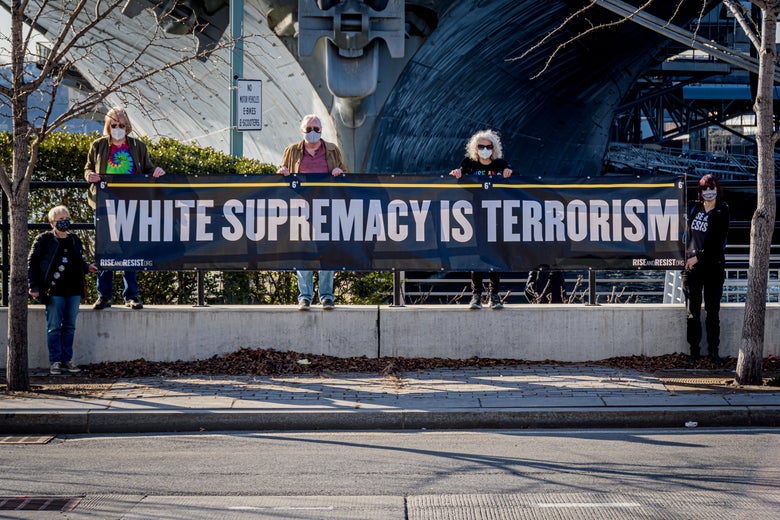
Expert Opinion: Understanding Whiteness to Understand White Supremacy
In the aftermath of last week's tragic shooting in Buffalo, many have described the violence as representative of a mental health crisis, growing extremism, hatred, and bigotry, likening manifestos left by shooters as the racist rhetoric of radicalized individuals. "But that conclusion is a pleasant fiction," writes Matthew Hughey -- a professor of sociology at UConn and a renowned scholar of racism and racial inequality in identity formation, organizations, media, politics, science, religion, and public advocacy -- in a powerful new essay for Slate. As part of his work as a researcher, Hughey examines the manifestos of white-supremacist shooters as well as their intersection with race, knowledge, media, power, religion, and science. To understand white supremacy and the violence it precipitates, Hughey explains, we need to first understand whiteness: The category of whiteness, like “race,” is a biological fiction with a social function. Whiteness emerged early in American history to rationalize exploitation. Early American colonists were slow to develop racial worldviews. But by the mid-1600s, philosophers and scientists like Bernard Varen, John Ray, and François Bernier began to publish ideas about African savagery and European civilization, which were progressively applied to resolve who should be the rulers versus the ruled. These ideas were codified into our legal system. In 1662, for instance, British statutory law conferred slavery with a biological status: Any child born to an enslaved woman would also be a slave. Over time, through a series of laws and social mores, a hierarchy that conferred legal privileges to “white” men, while stripping Black people and Native Americans of their humanity and standing in the legal and political arenas, was cemented. Put another way, whiteness is not an inherent identity so much as a consolidation of lofty biological, legal, and theological notions that serve to buttress the social and political power of people bearing lighter skin. As W.E.B. Du Bois points out in his 1920 essay “The Souls of White Folk,” whiteness is a modern concept: "The discovery of personal whiteness among the world’s peoples is a very modern thing. … The ancient world would have laughed at such a distinction. … This assumption that of all the hues of God whiteness alone is inherently and obviously better than brownness or tan leads to curious acts. … I am given to understand that whiteness is the ownership of the earth forever and ever, Amen! Now what is the effect on a man or a nation when it comes passionately to believe such an extraordinary dictum as this?" The effect is a Faustian bargain. And as a result, whiteness exists in a state of perpetual social anxiety. White people are taught that their biological, cultural, and/or God-given nature is to be “inherently and obviously better” than people of color and to have “ownership of the earth.” These ideals are, of course, so lofty that they are unachievable. Discontent is inevitable. Whiteness is a deal with the devil. Consequently, white people move neither into nor out of moments of racial anxiety, nor do they—despite the popularity of the cliché—experience flashes of “white fragility.” Whiteness does not wax or wane relative to racial pressures, cracking to expose either reactionary political movements or even the occasional mass shooting. Rather, whiteness is an omnipresent imbroglio; it cannot live up to the greatness it assumes it can naturally realize. Reconciling the peril that results from the inability to fully manifest white power necessitates a scapegoat. And so the crisis of whiteness is continually externalized onto racial “others.” This helps to explain why an increasing number of white people now believe they have been cheated out of their birthright—an inheritance of domination stolen by people of color. White nationalism and supremacy could not function under absolutist apartheid; it is an ideology and practice that requires the presence of people of color to justify its own shortcomings. White peril and white power go hand in hand. Professor Hughey is available for interviews -- click on his icon to contact him today.


Expert opinion: Why aren't mass shootings considered acts of terrorism?
With tragic news of a mass shooting in Buffalo this past weekend, and along with it evidence that the massacre was racially motivated, some leaders and citizens alike are calling to have this crime considered an act of terrorism. Though that may be the immediate reaction of some, Augusta University's Dr. Lance Hunter, associate professor of political science in the Katherine Reese Pamplin College of Arts, Humanities, and Social Sciences, explains why there's a lot to consider before rushing to brand an action as terrorism. “We argue that it’s very important to consider these acts of domestic terrorism if they fit the definition, because it’s easier for governments to monitor individuals that may possibly carry out these attacks,” said Hunter. “Looking at the incident in Buffalo, in my estimation and based on the evidence that I’ve seen, it fits all the criteria to be considered a form of domestic terrorism.” If that's the case, then why are people reluctant to consider mass shootings an act of terrorism? “I think individuals at times tend to have a preconception that terrorism tends to be something that’s carried out by ISIS or Al Qaeda, or a group of organizations such as that, and if it’s an individual outside of those organizations, it may not be considered terrorism. But when you look at the actions, they clearly fit the criteria for terrorism. Secondly, I think it’s the form of the attack type that does matter a lot, regarding people’s perceptions.” When it comes to domestic terrorism, what about privacy rights? What about an invasion of privacy? "We’re not arguing to create a policy saying we are constantly monitoring people for no reason at all," said Hunter. "What we’re arguing is someone who’s showing extremist tendencies and then also a tendency to possibly violently harm people, are there warning signs? In a lot of cases of mass murders, there are warning signs. If these individuals are monitored more closely, it’s not 100% guarantee these attacks will be prevented, but the likelihood will be much greater it could have possibly been prevented and we’ve seen this throughout a lot of cases and our research.” Dr. Lance Hunter is an assistant professor of political science with a background in international relations. His research focuses on how terrorist attacks influence politics in democratic countries and how political decisions within countries affect conflicts worldwide. Hunter is available to speak with media about this important topic - simply click on his icon to arrange an interview today.


Metaverse...have you met AcceleRoute?
The Internet is a testament to the power of evolution. But there's a bigger picture looming. A discontinuity. Driven by a new breed of application environments including the Metaverse, multi-player gaming, VR and more. Will this drive the need for a "new Internet"? Many believe, as a minimum, networking will need a serious upgrade. Moore's Law can cover us for throughput for awhile, but latency is a different story. The speed of light creates the limit. No getting around that. There is only one solution. Park the services closer to the users. And that ushers in a new architectural paradigm in the form of Edge Data Centers. Those facilities will operate in global federations, serving tight geographies while hot-syncing with each other. A tidy solution. Job done, right? Not so fast. If people only cared about what and who is geographically close to them, we might be ok. Remember we need to park the services AND THE DATA close to the users. We're not talking about old slow data like websites, but the fast stuff like fast-twitch gaming, or VR, or avatar movements in the Metaverse. How can a byte in Tokyo stay in "white-hot" sync with a byte in London? Predictive caching, that's how. The new frontier. The geography-buster. Let's say you’re VR-interacting with someone across the planet, there will be a lag. It won't feel real. But what if the application servers use laws of physics to predict far-end movement for local render, with algorithms to reconcile laggy incoming real-position data. Done right, that might feel real. Take that example and scale it in all directions. That's the future. Can incrementally-evolved networks handle that? Its anybody's guess what the future of networking will look like but let's try anyway. Some believe this brave new application world will be the catalyst for significant infrastructure change. Not the " N+1" kind, but the "all-new" kind. The kind we thought we'd never need because incremental upgrades were getting it done. But that was before the Metaverse discontinuity. AcceleRoute is a forward-thinking next-generation network architecture designed for this category of challenge. All-new thinking. Designed from the ground up around a bufferless core architecture, AcceleRoute achieves network throughput and latency on a scale not seen before. Bufferless means no hops. Essentially an endless supply of instantly provisioned virtual direct links, each with as much dynamic bandwidth as needed at any point in time. Incorporating novel paradigms like network fusion and expansion by constellations, AcceleRoute can scale to new orders of magnitude, all while embracing absolute simplicity for network control and management. An infinitely-expandable network, based on new principles, that can glue CPUs/DPUs/GPUs to globalized data with one seamless fabric. Perhaps a full AcceleRoute solution won't be required, but it’s likely the pursuit of network optimizations will be relentless. AcceleRoute represents 2 decades of invention embodied by 36 patents with over 700 claims and more on the way. That's a massive starting position for anyone playing the long game.


Aston University offers emergency interpreter training for Ukrainian speakers to support refugees
Dr Emmanuelle Labeau and Dr Yvonne Fowler are running Emergency Interpreting Training for Ukrainian Speakers to introduce them to the basics of interpreting The 10-hour training (10 x one hour) will take place on Tuesday and Thursday evenings online for five weeks It is part of an Arts and Humanities Research Council (AHRC) project with support from Aston University’s College of Business and Social Sciences. Aston University has kicked off a five-week introduction to interpreting course for Ukrainian speakers to enable emergency interpreters to support Ukrainian refugees arriving in the UK. It is part of an Arts and Humanities Research Council (AHRC) project called BRUM (Birmingham Research for Upholding Multilingualism) with support from Aston University’s College of Business and Social Sciences. Dr Emmanuelle Labeau (AHRC fellow for the Future of Language Research) and Dr Yvonne Fowler are running Emergency Interpreting Training for Ukrainian Speakers. The 10-hour training scheme (10 one-hour sessions) started on 28 April 2022 and will take place every Tuesday and Thursday evening online for five weeks. It has been devised to enable emergency interpreters to deliver a better service to traumatised Ukrainian refugees whose English is limited and who may require interpreting help in every aspect of their lives to access housing, physical and mental healthcare, educational facilities and welfare benefits. Dr Emmanuelle Labeau, co-director of Aston Centre for Applied Linguistics (ACAL) at Aston University, said: “Ukrainian refugees are arriving in the UK and there are few trained qualified Ukrainian interpreters to support those refugees with limited or no English in their dealings with public services. “We have had a fantastic response to our offer of free emergency training in interpreting for Ukrainian speakers in the West Midlands, as part of the AHRC-funded BRUM project. “I am thrilled that we have been able to pull this together and I am really pleased with how the first session went. We have people of all walks of life such as social services, healthcare, education and even a refugee who are so committed to help in any way they can, and it is lovely to empower them to do so!” Dr Yvonne Fowler said: “I am really proud to see this project get off the ground and help people in need. “I have been a public service interpreter trainer for the last 25 years. “My work has mostly involved preparing interpreters for the Diploma In Public Service, Interpreting Law and Healthcare options. “But during this period, I delivered emergency interpreter training to support various waves of refugees who have come to Birmingham over the last 20 years: the Vietnamese boat refugees, the Bosnian refugees in the aftermath of the Bosnian war, and a month in Kosovo after the war there to train Albanian and Serbian interpreters at the Organisation for Security and Cooperation in Europe.”


UConn Expert Weighs In On 'What Drives a Black Mass Shooter?'
“We would be missing a critical moment," says Dr. Wizdom Powell, "for us to look at the systems that we have set up and ask ourselves, are we serving every person who has a mental health need well, and if we’re not, what are we going to do about it?” Director of the Health Disparities Institute and associate professor of psychiatry at UConn Health, Dr. Powell studies the impact of modern racism and gender norms on African American male health outcomes and healthcare inequities. In a recent interview with the Amsterdam News following a mass shooting incident involving an alleged Black suspect, Dr. Powell weighed in the ways in which implicit racism can frame how law enforcement classifies shootings, the importance of deconstructing harmful racial and gender stereotypes, and the delivery of mental health services to communities and individuals in need: “When you call something gang violence, I think people’s empathy goes down to zero because they think those people are killing themselves,” said Powell. “You know, it’s their problem. Nevermind the victims.” Powell said that in the event of a mass shooting incident there is usually a “sympathy” conveyed for a person as a “complicated human” as opposed to a person of color who was involved in a gang shooting. “When do you get a full picture of that person? Who they were as a child, all of the traumas they experienced, their lack of resources,” said Powell. Powell thinks there’s a conflation in general between individuals who are mentally ill and those who commit mass shootings. She said mass shootings are a massive public health crisis with many factors contributing, with mental illness being one of many. ********** Powell said that the emotionality or interior lives of Black men are always spoken about with an undue amount of concentrated attention on their anger. She strives to deconstruct the stereotype of the ‘angry Black male.’ She said that there is a prevailing presumption that anger is somehow bad or pathological when it’s actually a legitimate response to emotional suffering and injustice. So when an incident that fits the stereotype of the ‘angry Black male’ occurs, people hyper focus on it because it confirms their bias. “I think there is a disproportionality in our reporting about these incidents by race,” said Powell, “we also tend to paint the picture of these shooters more sympathetically, when the shooters are non-Hispanic white males as opposed to males from other socially marginalized groups.” In the 1960s, said Powell, there was a shift in the way that the field of psychology and psychiatry viewed Black men and their symptomatology while civil rights protests were erupting around the country. Prior to the ’60s “middle class, white housewives” were diagnosed with schizophrenia more often, but there was a sharp uptick among Black males afterwards. “Again, reminiscent of an earlier time where Black people’s quest for liberation was pathologized,” said Powell. Powell said that health and science is still at the “tip of the iceberg” in identifying symptoms of depression in Black men. She said her studies have found that societal racism or experiencing racism or secondary traumas of racial reckoning is definitively at the root of Black and Brown male depression. Dr. Powell is available to speak with media – simply click on her icon now to arrange an interview today.

Disney and other corporations are being pushed into social and political battles
At one time, corporations didn't get get in the middle of social and political battles, according to David Primo, professor of political science and business administration at the University of Rochester. The Disney Corporation recently came out in opposition to Florida's "Don't Say Gay" law, and Primo says it was "dramatic" how quickly the state responded by removing the company's self-governing special district status. As Primo sees it, increased political polarization across the country is leading employees, consumers, and activists to push corporations to take positions on issues like police brutality and LGBTQ rights. The irony, though, is that Americans are polarized over whether corporations ought to be doing this. "In general, Democrats are highly supportive of this, and Republicans are not," says Primo. "It's pretty straight forward to think that a corporation ought to be taking positions on issues related to its core business operations," says Primo. "The challenge for an executive, who has a fiduciary responsibility to the company, is knowing where to draw the line." So, if a company stakes out a position, Primo says it's just as likely to alienate a significant portion of its consumer base, as it is to gain the support of another portion of its base.

