
Experts Matter. Find Yours.
Connect for media, speaking, professional opportunities & more.
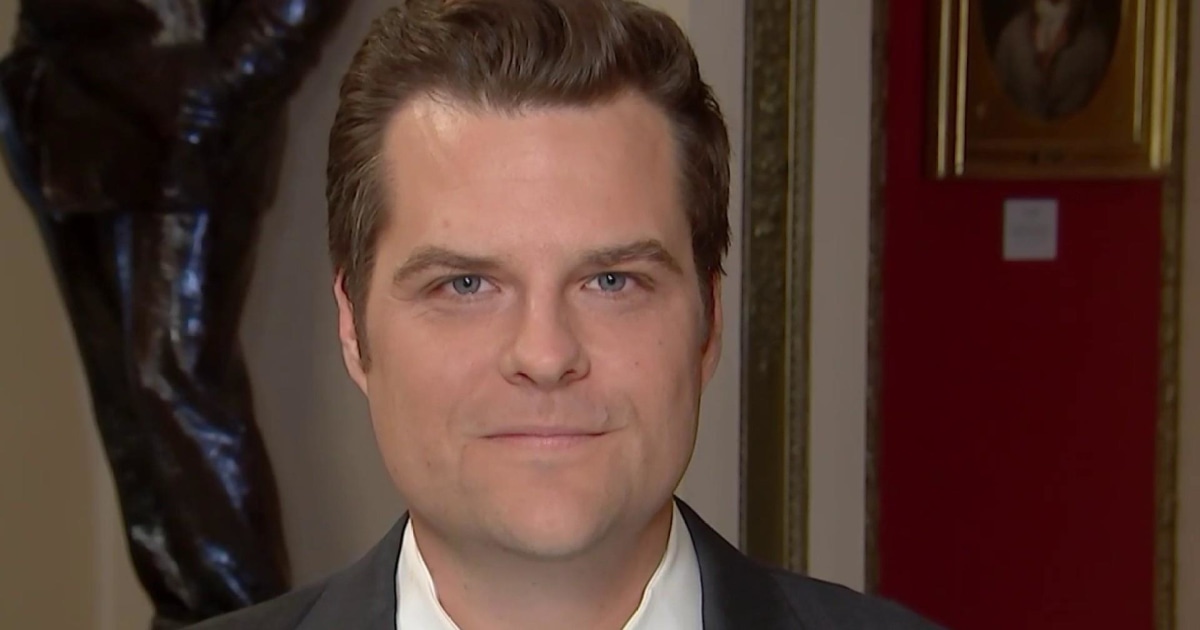
It was the testimony that had as much ramp up and hype as a Superbowl or a Star Wars movie. But last week, after Robert Mueller gave hours of testimony in front of lawmakers in Washington…not much has changed. The Democrats are still crying for impeachment over the obvious intonations of collusion and cooperation with the Russians. On the other side, the Republicans are calling it vindication – a truth they knew all along. So, two years later and 16 months before the next election – where to know? Is impeachment the right path for Democrats still looking for blood? Do both sides need to focus on governing and ensuring the economy doesn’t turn? Is it time no for policy and ideas as we all look towards 2020? We are living in interesting times, and if you are a journalist covering this topic – let us help! Mark Caleb Smith is the Director of the Center for Political Studies at Cedarville University. Mark is available to speak with media, simply click on his icon to arrange an interview.


‘Bottom-line mentality’ can lead to loss of employee respect and loyalty, research shows Supervisors driven by profits could actually be hurting their coveted bottom lines by losing the respect of their employees, who counter by withholding performance, according to a new study led by Baylor University. The study, “The Influence of Supervisor Bottom-Line Mentality and Employee Bottom-Line Mentality on Leader-Member Exchange and Subsequent Employee Performance,” is published in the journal Human Relations. “Supervisors who focus only on profits to the exclusion of caring about other important outcomes, such as employee well-being or environmental or ethical concerns, turn out to be detrimental to employees,” said lead researcher Matthew Quade, Ph.D., assistant professor of management in Baylor University’s Hankamer School of Business. “This results in relationships that are marked by distrust, dissatisfaction and lack of affection for the supervisor. And ultimately, that leads to employees who are less likely to complete tasks at a high level and less likely to go above and beyond the call of duty.” While other studies have examined the impact of bottom-line mentality (BLM) on employee behavior, Quade said this is the first to identify why employees respond with negative behaviors to supervisors they perceive to have BLM. The research team surveyed 866 people. Half of those surveyed were supervisors; the other half were their respective employees. Data was collected from those who work in a range of jobs and industries, including financial services, health care, sales, legal and education. Researchers measured supervisor BLM, employee BLM, task performance and leader-member exchange – the rating employees gave of their relationships with their supervisors. Employees rated their supervisors’ BLM by scoring on a scale statements like: “My supervisor treats the bottom line as more important than anything else” and “My supervisor cares more about profits than his/her employees’ well-being.” They rated leader-member exchange via statements such as “I like my supervisor very much as a person” and “My relationship with my supervisor is composed of comparable exchanges of giving and taking.” Supervisors rated their employees by scoring statements such as: “This employee meets or exceeds his/her productivity requirements,” “This employee searches for ways to be more productive” and “This employee demonstrates commitment to producing quality work.” Based on the responses and the data collected and analyzed, the researchers found: High-BLM supervisors create low-quality relationships with their employees. In turn, employees perceive low-quality leader-member exchange relationships. Thus, employees reciprocate by withholding performance. When supervisor BLM is high and employee BLM is low, the damaging effects are strengthened. When both supervisor and employee BLM are high, the negative performance is still evident. The last finding on that list was particularly significant, Quade said, because it contradicts a common belief that when two parties (in this case, supervisors and employees) think alike and have similar values, there will be a positive outcome. Not so much in the case of BLM, the study shows. “When supervisor and employee BLM is similarly high, our research demonstrates the negative effect on performance is only buffered, not mitigated – indicating no degree of supervisor BLM seems to be particularly beneficial,” the researchers wrote. “It seems even if employees maintain a BLM, they would prefer for their managers to focus on interpersonal aspects of the job that foster healthier social exchange relationships with their employees in addition to the bottom line.” The profit-performance relationship can spark a conundrum for companies, Quade said, because organizations want to be profitable, and performance is an important indicator of an organization’s health and vitality. If leaders believe a negative dynamic regarding BLM exists in their organization, the researchers suggest a few practical steps: Be cautious of a BLM approach or emphasizing bottom-line outcomes that could neglect other organizational concerns, such as employee well-being and ethical standards. Managers should be aware of the message they pass along to employees (and the possible performance repercussions) when they tout bottom-line profits as the most important consideration. Organizations that need to emphasize bottom-line outcomes should consider pairing the BLM management style with other management approaches known to produce positive results, such as practicing ethical leadership. “Supervisors undoubtedly face heavy scrutiny for the performance levels of their employees, and as such they may tend to emphasize the need for employees to pursue bottom-line outcomes at the exclusion of other competing priorities, such as ethical practices, personal development or building social connections in the workplace,” the researchers wrote. “However, in doing so they may have to suffer the consequence of reduced employee respect, loyalty and even liking.” ABOUT THE STUDY “The Influence of Supervisor Bottom-Line Mentality and Employee Bottom-Line Mentality on Leader-Member Exchange and Subsequent Employee Performance” is published in the journal Human Relations. Authors are Matthew Quade, Ph.D., assistant professor of management in Baylor University’s Hankamer School of Business; Benjamin McLarty, Ph.D., assistant professor of management, Mississippi State University; and Julena Bonner, Ph.D., assistant professor, Utah State University. ABOUT BAYLOR UNIVERSITY Baylor University is a private Christian University and a nationally ranked research institution. The University provides a vibrant campus community for more than 17,000 students by blending interdisciplinary research with an international reputation for educational excellence and a faculty commitment to teaching and scholarship. Chartered in 1845 by the Republic of Texas through the efforts of Baptist pioneers, Baylor is the oldest continually operating University in Texas. Located in Waco, Baylor welcomes students from all 50 states and more than 90 countries to study a broad range of degrees among its 12 nationally recognized academic divisions. ABOUT HANKAMER SCHOOL OF BUSINESS AT BAYLOR UNIVERSITY At Baylor University’s Hankamer School of Business, integrity stands shoulder-to-shoulder with analytic and strategic strengths. The School’s top-ranked programs combine rigorous classroom learning, hands on experience in the real world, a solid foundation in Christian values and a global outlook. Making up approximately 25 percent of the University’s total enrollment, undergraduate students choose from 16 major areas of study. Graduate students choose from full-time, executive or online MBA or other specialized master’s programs, and Ph.D. programs in Information Systems, Entrepreneurship or Health Services Research. The Business School also has campuses located in Austin and Dallas, Texas. Visit www.baylor.edu/business and follow on Twitter at twitter.com/Baylor_Business.



In what was once a wide field to replace the fallen British Prime Minister Theresa May has now become a race for Boris Johnson to lose. As the outspoken and bold British MP looks to unite his party, pull Britain from the EU by the end of October and defeat Labour in the next election – what will his presence at 10 Downing Street mean for his country, Europe the rest of the world? Britain is one of the cornerstones of the west, but what will a wildcard like Johnson mean? What’s his background and do people need to know more about the man who will reside in the chair as historic figures like Tony Blair, Margaret Thatcher and Sir Winston Churchill? If you are covering and need to no more – that’s where we can help. Dr. Glen Duerr's research interests include nationalism and secessionism, comparative politics, and international relations theory. Glen is available to speak to media regarding Boris, Brexit and Britain – simply click on his icon to arrange an interview.


A vacation free of emails, obligations and answering to the boss – let our expert columnist explain!
UMW’s resident writer for the Lynne Richardson is back with another great piece in The Free Lance-Star – just in time for summer. It’s a call to action for bosses and employers to let their people be free when they’re relaxing away from work on that cherished summer vacation. It’s about taking a time out when they’ve booked that time off. “So, you leave for the big trip. It’s a long flight and when you take your smartphone off of airplane mode, you realize you’re getting emails from your office. A co-worker needs information. Somebody wants to know where you left the file he needs for a meeting tomorrow. Your boss needs you to call him as soon as possible as he’s meeting with his boss tomorrow and needs a refresher on a project you are working on. So, you take a deep breath and respond to each of the requests. After all, you haven’t really disengaged yet from work. But the next day is the same. You continue to receive "emergency" emails. It’s like you cannot leave the office, because folks are tethered to you in some way. So, this is a cautionary tale for supervisors. Your folks need time away. They need to be away in every sense of the word. Please give them permission to not respond to emails while on vacation. There are very few emergencies that would require you to reach out to them. If it means that you, Mr. Supervisor, must wait a few days for some information, so be it.” If you like this – read the rest of the article attached below. So, do you have a plan in place to ‘un-plug’ while off? Should workplaces have mandatory policies about contacting people when they are away? Worry not – our experts can help. Dr. Lynne Richardson is a columnist, mentor and her expertise focuses on leadership management and higher education administration. She is available to speak with media about leadership…and even bad bosses. Simply click on her icon to talk with her and arrange an interview.


Hurricane Season Starts June 01 – Are We Ready?
It’s that time of year again … where the warm winds of summer bring us tropical storms and hurricanes. Forecasters looking at the 2019 Atlantic Hurricane Season are predicting a slower year. It looks like El Niño is currying favor and its cooling temperatures mean less frequency of storms. So far, experts expect 12 to 14 tropical cyclones this season. Of those, five to seven could become hurricanes and two to four are predicted to become major hurricanes. But as we’ve learned from the past, it takes only one storm to devastate an area. In a previous post, Michael Prietula was featured and lent his expertise to show how communities and governments need to be prepared. Michael J. Prietula (PhD, MPH) is Professor in the Goizueta Business School and a senior faculty member in Emory's Center for Neuropolicy. He is an expert in the areas of organizations is crisis and is an expert in preparedness. He is available to speak with media, simply click on his icon to arrange an interview.



In her most recent column with The Free Lance-Star, University of Mary Washington’s Lynne Richardson extols a witty, pointed and yet optimistic piece about bad bosses, why they might be bad and how there’s even a silver lining to each bad boss’ behavior. Here’s a piece from her open letter. “Dear Bad Boss, Your staff complains about you. You’re a micro-manager. Or maybe you’re a detached manager, showing little interest in your people or the work they do. Or maybe you put such pressure on your employees that they feel stressed all the time and hate coming to work. Of course, because of this, productivity suffers. Maybe you have incredibly high expectations that are unachievable, especially because you either don’t know to hire or you don’t train your folks. There is no possible way for the folks in your organization to reach your ridiculous expectations. Whatever the reason your folks don’t respect you, I want to thank you. Say what? Yes, Bad Boss, I appreciate you being bad. And I have two reasons…” If you like this – read the rest of the article attached below. So, do you have a bad boss? Do you know someone who does? Any chance … you just might be a bad boss? Worry not – our experts can help. Dr. Lynne Richardson is a columnist, mentor and her expertise focuses on leadership management and higher education administration. She is available to speak with media about leadership … and even bad bosses. Simply click on her icon to talk with her and arrange an interview.
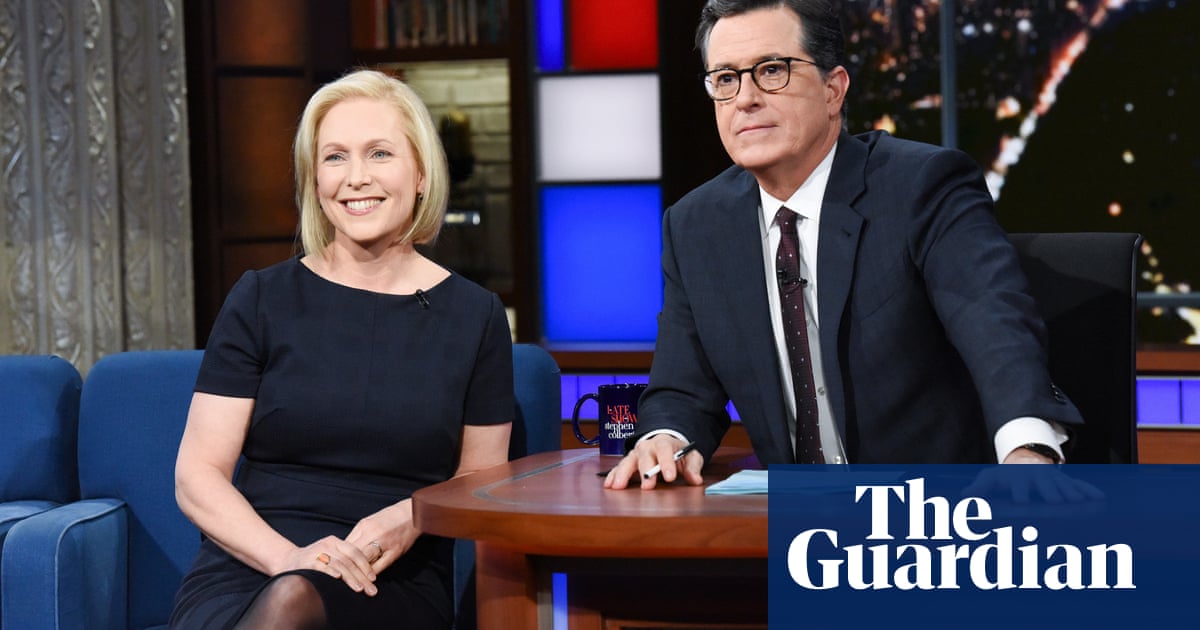
Is Late Night – the Place to Be on TV for Those Running in 2020
It used to be that stopping by a late-night talk show for any political candidate was a just an added bonus of exposure and safe coverage for a campaign. Think of Bill Clinton answering softballs and playing the saxophone on The Arsenio Hall Show a quarter century ago. Now there’s no qualitative proof – but most political scientists will tell you that night helped introduce the then Governor Bill Clinton to a new audience and helped shape his image as that of a cool and relatable candidate. It may have been one of the many factors that saw him win the Whitehouse in 1992. Fast forward to today, and now securing a spot on the sofa beside any of the late-night hosts is a must for any presidential candidate who wants to be taken seriously. What Oprah was once for books and authors, hosts like Stephen Colbert have become for candidates – he’s the perennial gatekeeper for politicians. “Any Democratic candidate who thinks they can ignore Stephen Colbert might as well not run for president,” said Stephen Farnsworth, director of the Center for Leadership and Media Studies at the University of Mary Washington in Fredericksburg, Virginia. “Colbert once joked that the road to the White House runs through his show but it’s no joke; it is exactly so.” - Washington Post, November 2018 In this new era of social media, 24-hour news and even fake news – why is late night suddenly the place to be for politicians? Is it because it is safe? Has comedy suddenly become the only credible and objective place for politicians? Is it because that’s where undecided audiences tune in and can be reached? Or is it because late night is now segmented and postable on YouTube? Is the internet audience after the show just as valuable as the viewers who tune in? There are a lot of questions about what it will take and what we can expect along the long road to the 2020 election – and that’s where the experts from the University of Mary Washington can help. Dr. Stephen Farnsworth is professor of political science and international affairs at the University of Mary Washington. A published author and a media ‘go-to’ on U.S. politics, he is available to speak with media regarding this issue. Simply click on his icon to arrange an interview.


Next Level Thought Leadership and Content Marketing
We are entering an era of elevated thought leadership. Thought Leadership often focuses on a select few in an organization and misses opportunities to showcase everything your organization has to offer. It’s rarely scalable, often expensive and almost always wagers on a small pool of topics in any given quarter. The fact is that you have more expertise operating behind the scenes than you’re showing off. Enter Expertise Marketing, the next generation of content marketing. Opening up a world of new opportunities, here is how Expertise Marketing stacks up against more traditional thought leadership programs. SCOPE Inclusive vs Exclusive Expertise Marketing is designed to engage a diverse set of experts throughout the organization. It focuses on broader coverage of relevant topics that engage a wider variety of audiences and expand your opportunities for valuable connections. Thought Leadership programs tends to focus on fewer select experts. Often designed as a bespoke program aimed at involving only senior executives. TIMING Sustained vs Campaign Focussed Expertise Marketing creates a sustained digital presence that leverages the content that experts are producing across the organization and distributes it across a range of channels. Most Thought Leadership programs tend to align with a specific event (such as a product launch, industry conference or social cause) that maps to a defined budget and timeframe. STRUCTURE Agile vs Controlled The agile nature of good Expertise Marketing provides the ability to quickly mobilize experts to position their expertise in the context of breaking news to create higher engagement with audiences such as the media. This compares to the more controlled approach of a traditional Though Leadership programs that requires careful planning to ensure alignment with corporate strategy and messaging - often missing time-sensitive opportunities. COST Low vs High Expertise Marketing can efficiently leverage client or agency resources and services through technology versus Thought Leadership programs that are often structured as long-term projects that require specialized resources in agencies. Take the steps to transform your content marketing overnight. Download the Expertise Marketing whitepaper or talk to us about how you can evolve quicker and generate a new competitive edge. About ExpertFile For a comprehensive look at how expertise marketing benefits the entire organization and drives measurable return on investment, follow the link below to download an industry-focussed copy of ExpertFile’s Complete Guide to Expertise Marketing: The Next Wave in Digital Strategy.





Top 9 ROI Metrics for Expertise Marketing
When it comes to digital marketing, organizations are looking for data-driven solutions that are proven to support their bottom line. Here are 9 families of quantitative and qualitative metrics that will help you measure and track the success of your organization’s Expertise Marketing. (Taken from Chapter 5 of Expertise Marketing Whitepaper: Next Wave in Digital Strategy) REPUTATION Move Brand Metrics - Position research, client work, thought leadership perspectives and achievements in the context of relevant topics in the news. MARKET AWARENESS Move Search Metrics - Boost search-engine rankings and increase overall breath of search results. LEAD GENERATION Grow Inbound Leads - Increase the number of direct lead inquiries from the following audiences: Customers | Students | Patients | Donors | Patients | Media | Recruits | Conferences | Partners | Alumni | & More... AUDIENCE ENGAGEMENT Drive Engagement Metrics - A single familiar digital touchpoint provides access to all content marketing assets and encourages enhanced content browsing. Download our Free Whitepaper Expertise Marketing: The Next Wave in Digital Strategy TALENT DEVELOPMENT Boost People Performance - Better engage stakeholders, researchers & subject-matter experts in the development and distribution of content. INTERNAL COLLABORATION Improve Teamwork & Internal Efficiency - Better coordinate the knowledge and resources across internal communications teams and other departments as they engage experts. Provide a faster, more efficient way to generate content for breaking news and events. CONTENT CONTRIBUTION Expand Reach - Increase the size of the organization’s digital footprint by aggregating more content and distributing it contextually to multiple websites and third-party databases. EFFICIENCY Deliver More with Less - Help employees get their jobs done faster and more efficiently. Enable them to find information faster, speed up internal processes and foster collaboration among people in multiple locations. LEVERAGE CURRENT & FUTURE INFRASTRUCTURE Extract More Value From Existing Investments - Properly integrated, new technology investments should integrate seamlessly to leverage existing/proposed infrastructure such as content management systems (CMS). What’s most important to you? Get in touch with Deanne and start the conversation about how ExpertFile can begin moving that dial within 6 weeks. Get Your Copy and Get Started Expertise Marketing: The Next Wave in Digital Strategy About ExpertFile ExpertFile is the world’s first Expertise Marketing Platform that helps organizations solve the challenge of creating, managing and amplifying expert content. Our software platform and services help you showcase your people and their insights to the audiences that matter across a range of channels including distribution through the Associated Press to over 15,000 newsrooms. Learn more about ExpertFile.

Election 2018: Wake Forest University experts
From state constitutional amendments to immigration, Wake Forest faculty experts can comment on a variety of 2018 midterm election-related topics. ___________________________________________________________________________________________ John Dinan, professor of political science and international affairs North Carolina Politics State Constitutional Amendments Congressional Redistricting Author of the book, “State Constitutional Politics: Governing by Amendment in the American States,” Dinan is available to comment on amendments appearing on the 2018 ballot in North Carolina and in 28 other states. From voter ID to judicial vacancies, he can place particular amendments in nationwide and historical perspective. Based on his research, he can also address the arguments and issues that routinely surface in campaigns supporting and opposing various amendments. Dinan closely follows North Carolina political races and teaches courses on campaigns and elections, state politics and Congress and policymaking. ___________________________________________________________________________________________ Allan Louden, professor of communication Political Campaigns and Advertising Political Debates Social Media and Politics From presidential debates to political advertising, Louden has provided expert commentary and analysis for a wide range of national and regional media outlets. He follows political advertising and candidates’ debates in presidential, Senate, gubernatorial and high-profile House races. Under Louden’s leadership, Wake Forest University’s debate team won the national debate tournament. He can comment on political advertising strategies and how social media, including viral videos, impacts races. ___________________________________________________________________________________________ John Llewellyn, associate professor of communication Political Speeches Political Scandals Public Apologies Llewellyn focuses on political speeches and rhetoric. He is a scholar of rhetoric whose work includes analyzing persuasive language from the nation’s most prominent politicians, coaches and civil rights leaders. A former speechwriter and public information officer, Llewellyn also specializes in crisis communication, having studied the intersection of politics and public relations for nearly 30 years. He can also comment on political scandals and public apologies. ___________________________________________________________________________________________ Betina Wilkinson, associate professor of political science and international affairs Latina/o/x Voters Wilkinson can offer insights and commentary on Latino voters for the midterm elections. She is an expert on Latino political behavior in the U.S., studies Latinos in U.S. politics, national and local immigration policy, and racial attitudes among Latinos and other ethnic groups. She can discuss the demographics and election-related priorities of Latinos. Wilkinson authored a chapter “North Carolina Latinos: And Emerging Influential Electorate in the South” in the book “The Pivotal Role of the Latino Electorate in the 2012 Election.” She is also the author of “Partners or Rivals? Power and Latino, Black and White Relations in the 21st Century.” ___________________________________________________________________________________________ Katy Harriger, professor of politics and international affairs Young Voters Federal Special Prosecutor/Robert Mueller U.S. Supreme Court A leading national expert on the federal special prosecutor, Harriger can address the influence the Mueller investigation may have on the 2018 elections. She is the author of The Special Prosecutor in American Politics and is regularly interviewed by national media outlets on the use of federal special prosecutors in American government. Harriger also studies political participation and voting among young people (including college students) and is the co-author of “Speaking of Politics: Preparing College Students for Democratic Citizenship through Deliberative Dialogue.” She can provide expert commentary on the latest Supreme Court developments and how they will likely impact midterm elections. She co-authored the book “American Constitutional Law” published in 2017. ___________________________________________________________________________________________ Michael Pisapia, assistant professor of politics and international affairs Gender and Politics Teacher Protests Political Parties and Education Reform Women Running for Congress Gender Equality and Constitutional Law Kavanaugh Hearings Pisapia studies American political development with a focus on women, gender and politics and can comment on tensions between liberal and conservative social groups and the unprecedented number of women who are engaged in political movements, and who are seeking elective office this year. He can also address partisan polarization around education policy, religious freedom and, sex and gender equality in constitutional law, including the significance of the Kavanaugh hearings in the context of the #metoo Movement. Pisapia is working on a book titled, “Educating a Nation: Women’s Empowerment and the Shape of American Federalism. He won the 2013 Carrie Chapman Catt Prize for scholarship on women and politics. He teaches courses on American politics and political thought. ___________________________________________________________________________________________ Hana Brown, associate professor of sociology and Gale Faculty Fellow Immigration Brown studies the effects of immigration and racial divisions on policy outcomes and the micro-level effects of state actions on the lives of racial minorities and immigrants. Her research also focuses on the political origins and political consequences of social inequalities. She teaches courses on political sociology, social inequality, and race and ethnicity in politics. ___________________________________________________________________________________________
