
Experts Matter. Find Yours.
Connect for media, speaking, professional opportunities & more.

Largest Prisoner Swap Since the Cold War
In a unexpected move, the United States and Russia have conducted the largest prisoner swap since the end of the Cold War. Among those exchanged are Wall Street Journal reporter Evan Gershkovich and former US Marine Paul Whelan. This significant exchange marks a unique moment in US-Russia relations opening up numerous avenues for analysis such as: Geopolitical Ramifications: Analyzing how this prisoner exchange might alter the dynamics between the US and Russia and shape future global diplomatic strategies. Domestic Political Considerations: Understanding how the swap might impact public opinion, leadership images, and future policy decisions in both countries, especially in the context of the upcoming US presidential election. Humanitarian Issues: Shedding light on the conditions and treatment of the exchanged prisoners before the swap and the broader human rights concerns that this exchange brings to the forefront. Broader International Effects: Exploring the potential for encouraging hostage diplomacy and other unintended consequences. The following experts are available for media looking for greater insights and commentary on some of the deeper implications of this historic event. Select experts include: For additional experts on related and other topics, visit expertfile.com.


Hofstra Experts Weigh In on the 2024 Presidential Election
Hofstra University boasts a team of distinguished media-ready experts, ready to talk about the newest developments in the 2024 presidential race. They include presidential scholar Meena Bose, constitutional law professor James Sample, media expert and former NBC executive Mark Lukasiewicz, and Lawrence Levy, an expert in suburban studies and suburban voting trends More details on their expertise and recent media appearances are provided below, along with information on how to connect with them for interviews and commentary. Dr Meena Bose Executive Director of the Kalikow Center for the Study of the American Presidency & Professor of Political Science Dr. Meena Bose brings her extensive experience and frequent media presence to discussions on the historic nature of the 2024 presidential race. Recent topics she has been interviewed about include next steps for the Democrats now that President Biden has withdrawn from the 2024 presidential race, former President Donald Trump’s selection of J.D. Vance as his running mate, how the assassination attempt on Trump may have impacted the race, and the Supreme Court’s presidential immunity rulings View Profile & Connect Recent Media Dr. Meena Bose has recently been called on by media to discuss: CNN's Biden-Trump debate; how President Biden may recover from his poor debate performance; and the Supreme Court’s presidential immunity ruling. She has appeared on WABC-TV, WNYW Fox 5, Fox radio stations across the country, and Reuters TV. She is frequently interviewed by Newsday and Newsweek, and her expertise has also been prominently featured in The Washington Post and The New York Times. She is the author of the forthcoming book: Pragmatic Vision: Obama and the Enactment of the Affordable Care Act. James Sample Professor, Maurice A. Deane School of Law James Sample, a constitutional law professor, is a sought-after legal and political commentator on legal challenges facing former President Donald Trump, Supreme Court ethics, the broader implications of presidential immunity, and the guilty verdict delivered in the Senator Robert Menendez trial. He most recently was interviewed about President Biden leaving the race and throwing his support behind VP Kamala Harris. View Profile & Connect Recent Media James Sample is a regular commentator for Reuters, CNN, CBS, WNYW Fox 5, and WCBS on topics like the Supreme Court’s ruling on presidential immunity; ethics questions facing Supreme Court Justices Alito and Thomas; former President Donald Trump’s legal challenges, including the election interference case and the “Hush Money” trial. In addition to his broadcast media interviews, Professor Sample has been interviewed by The New York Times, The Washington Post, The Economist, U.S. News & World Report, the Los Angeles Times, National Public Radio, Salon, USA Today, and The National Law Journal, as well as in leading blogs and regional outlets throughout the country. Mark Lukasiewicz Dean of the Lawrence Herbert School of Communication Mark Lukasiewicz offers his expertise on media coverage of the presidential race, drawing on his vast experience in planning and supervising election coverage. Before joining Hofstra, Dean Lukasiewicz was senior vice president of specials at NBC News, planning and supervising coverage of major breaking news events, including presidential elections and debates from 2004 to 2016. View Profile & Connect Recent Media A former NBC executive, Dean Lukasiewicz is available to speak about media coverage of the 2024 presidential race. Recent examples include the June 27th debate and expectations for President Biden’s interview on July 5 with George Stephanopoulos. Before joining Hofstra, Dean Lukasiewicz was senior vice president of specials at NBC News, planning and supervising coverage of major breaking news events, including presidential elections and debates from 2004 to 2016. He has been interviewed in recent weeks by the Wall Street Journal, Newsday, Tribune News Service, Scripps Morning News, and the AP. Lawrence Levy Associate Vice President and Executive Dean of the National Center for Surburban Studies (NCSS) In his leadership role at NCSS, Dean Levy has worked with Hofstra's academic and local communities to shape an innovative, interdisciplinary agenda for interdisciplinary suburban study. He has commented on a variety of political issues – most recently President Biden dropping his reelection bid and what that means for down-ballot elections. View Profile & Connect Recent Media Prior to joining Hofstra, Dean Levy spent 35 years as a reporter, editorial writer, columnist and PBS host, winning many of journalism's top awards (including Pulitzer finalist) for in-depth works on suburban politics, education, taxation, housing and other key issues. As a journalist, he was known for blending national trends and local perspectives and has covered seven presidential campaigns and 15 national conventions. Visit our Expert Center for a full directory of Hofstra experts insights.


How Do Political Conventions Work?
Political conventions in America are a fundamental aspect of the democratic process, serving as pivotal events where major political parties select their presidential candidates, solidify party platforms, and galvanize their bases ahead of the general election. These conventions are not only newsworthy because of their immediate political significance but also due to their historical, cultural, and strategic importance. They provide a stage for showcasing party unity, leadership vision, and policy priorities, making them crucial for understanding the direction of American politics. Key story angles for journalists could include: Convention History and Evolution: Exploring the origins and historical changes in political conventions, including how their roles and significance have evolved over time. Nomination Process: Examining the mechanics of how delegates are selected, how they vote, and the strategies candidates use to secure their party's nomination. Party Platforms: Analyzing the process of developing and ratifying party platforms, highlighting key policy positions and their implications for voters. Role of Delegates and Superdelegates: Investigating the influence of delegates and superdelegates in the nomination process and their impact on the democratic process within parties. Media and Public Perception: Assessing how conventions are covered by the media, the role of speeches and presentations, and their effect on public opinion and voter behavior. Security and Logistics: Providing insights into the extensive planning and security measures required to host these large-scale events, especially in light of recent public health and safety concerns. By focusing on how political conventions work in America, journalists can provide the public with a comprehensive understanding of these complex and significant events, shedding light on their impact on the democratic process and the broader political landscape. Connect with an expert about the role, purpose and history of political conventions in America: To search our full list of experts visit www.expertfile.com Photo credit: Isai Ramos

Higher education, biotech and innovation - will the future be part of the 2024 campaign?
As the RNC brings national attention to Milwaukee, discussions are expected to cover pivotal topics such as biotechnology, innovation, and higher education. And as the Republican National Convention 2024 begins, journalists from across the nation and the world will converge on Milwaukee, not only to cover the political spectacle but also to dig deeper on the key issues that may decide the election. To help visiting journalists navigate and understand these issues and how and where the Republican policies are taking on these topics our MSOE experts are available to offer insights. Dr. Wujie Zhang, Dr. Jung Lee, Dr. Eric Baumgartner, Dr. Candela Marini, and Dr. John Walz are leading voices nationally on these important subjects and are ready to assist with any stories during the convention. Dr. John Walz President Expertise: Thought leadership on higher education, relevancy and value of higher ed View Profile “Engineering is not a very diverse field,” Walz said. “I want to continue to push those boundaries and make our programs open, to see more and more under-represented students come here and succeed here, and do well here.” MSOE president John Walz works to make 'hidden gem' not so hidden. Milwaukee Journal Sentinel May 17, 2023 Dr. Wujie Zhang Professor, Chemical and Biomolecular Engineering Expertise: Biomaterials; Regenerative Medicine and Tissue Engineering; Micro/Nano-technology; Drug Delivery; Stem Cell Research; Cancer Treatment; Cryobiology; Food Science and Engineering (Fluent in Chinese and English) View Profile “We accidentally noticed that we can make the hydrogel particle red blood cell shaped,” he explains. “We started then to make artificial red blood cells to mimic pretty much all aspects of red blood cells.” You're Somebody's Type MKE Lifestyle January 24, 2020 Dr. Jung Lee Professor, Chemical and Biomolecular Engineering Expertise: Bioinformatics, drug design and molecular modeling. View Profile Dr. Eric Baumgartner Executive Vice President of Academics Expertise: Thought leadership on higher education, relevancy and value of higher ed, role of A.I. in future degrees and workforce development. View Profile MSOE serves as an educational resource to Wisconsin companies is building an A.I.-ready workforce. In 2018 MSOE was the first in the nation to launch a B.S. in Computer Science with a sole focus on A.I. and machine learning. Wisconsin Governor’s Task Force on Workforce and Artificial Intelligence December, 2023 Dr. Candela Marini Assistant Professor Expertise: Latin American Studies and Visual Culture View Profile “Contrary to stereotypical images of Native Americans trying to stop ‘progress’ by fighting against mines and pipelines projects, the Menominees’ sustainable forestry stands out as a clear example of resource management that actually thinks about, and works for, the future,” said Marini. The MSOE Mindset visits the Menominee Indian Reservation MSOE Online April 11, 2019 . . . Media Relations Contact To schedule an interview or for more information, please contact: JoEllen Burdue Senior Director of Communications and Media Relations Phone: (414) 839-0906 Email: burdue@msoe.edu . . . About Milwaukee School of Engineering (MSOE) Milwaukee School of Engineering is the university of choice for those seeking an inclusive community of experiential learners driven to solve the complex challenges of today and tomorrow. The independent, non-profit university has about 2,800 students and was founded in 1903. MSOE offers bachelor's and master's degrees in engineering, business and nursing. Faculty are student-focused experts who bring real-world experience into the classroom. This approach to learning makes students ready now as well as prepared for the future. Longstanding partnerships with business and industry leaders enable students to learn alongside professional mentors, and challenge them to go beyond what's possible. MSOE graduates are leaders of character, responsible professionals, passionate learners and value creators.





The role of the Vice President of the United States is a cornerstone of the nation's political landscape, serving as both a key advisor to the President and a crucial leader in the Senate. This position is not only newsworthy due to its proximity to the highest levels of power but also because it often serves as a springboard for future presidential candidates. The Vice President's influence on policy, governance, and national discourse makes it a pivotal role that impacts numerous aspects of American life. Understanding this role and its implications can provide insights into the dynamics of the U.S. government and its decision-making processes. Key story angles for journalists could include: Historical Evolution: Exploring how the responsibilities and significance of the Vice Presidency have changed over time, from a relatively minor role to a central figure in the administration. Influence on Policy: Examining the Vice President's role in shaping and advocating for major policies, including economic, foreign, and domestic issues. Succession and Stability: Highlighting the importance of the Vice President in the line of presidential succession and their role in ensuring continuity and stability in the government. Senate Leadership: Investigating the Vice President's role as the President of the Senate, including their influence on legislative processes and their ability to cast tie-breaking votes. Public Perception: Analyzing how the public views the Vice President and how this perception can affect their effectiveness and legacy. Vice Presidential Candidates: Covering the selection process for Vice Presidential candidates, including the criteria and considerations that go into choosing a running mate. Photo Credit: Truman Library By focusing on the role of the Vice President of America, journalists can provide the public with a deeper understanding of the intricacies of the U.S. political system and the significance of this influential office. Connect with an expert about the Role and History of US Vice Presidents :
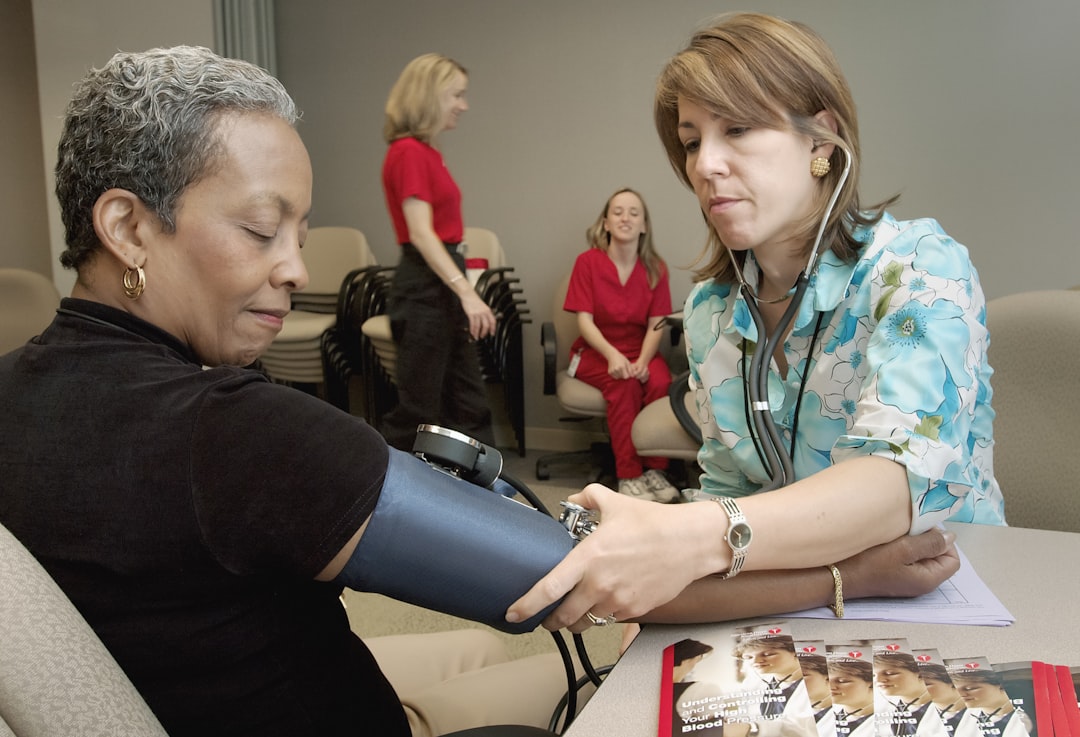
The pandemic and who reacted better has been debate fodder for the campaigns of Donald Trump and Joe Biden already this election. The pandemic, preparing for the next one is just one of several key public health issues that America is dealing with. Opioids, obesity and nutrition are just a few others. And as the Republican National Convention 2024 begins, journalists from across the nation and the world will converge on Milwaukee, not only to cover the political spectacle but also to dig deeper on the key issues that may decide the election. To help visiting journalists navigate and understand the depth of Milwaukee's heritage and modern vibrancy, our MSOE experts are available to offer insights. Robin Gates is a nurse executive with a wide range of experience in community home, health and hospice, organ and tissue donation, managing primary care clinics, and clinical trials involving medical devices and pharmaceuticals. She has also worked as a nurse educator for health care organizations and higher education. . . . Robin Gates Assistant Professor, Nursing Expertise: Population health expert: understanding and addressing the diverse factors that influence health outcomes across different populations. View Profile “Leadership experience in various health care environments provides my ability to empower the next generations of nurses to understand the medical system for nursing practice wholistically,” said Gates. “Nurses are change agents. We are a pivotal part of a multidisciplinary team. I emphasize to nursing students their role in the community, corporations, hospitals, clinics, telehealth, home care and hospice, insurance, government and so on.” MSOE Online February 25, 2022 . . . For further information and to arrange interviews with our experts, please contact: JoEllen Burdue Senior Director of Communications and Media Relations Phone: (414) 839-0906 Email: burdue@msoe.edu . . . About Milwaukee School of Engineering (MSOE) Milwaukee School of Engineering is the university of choice for those seeking an inclusive community of experiential learners driven to solve the complex challenges of today and tomorrow. The independent, non-profit university has about 2,800 students and was founded in 1903. MSOE offers bachelor's and master's degrees in engineering, business and nursing. Faculty are student-focused experts who bring real-world experience into the classroom. This approach to learning makes students ready now as well as prepared for the future. Longstanding partnerships with business and industry leaders enable students to learn alongside professional mentors, and challenge them to go beyond what's possible. MSOE graduates are leaders of character, responsible professionals, passionate learners and value creators.


Decoding Hierarchies in Business: When is Having a Boss a Benefit for an Organization?
Most companies around the world have a leader, whether that title is a President, CEO, or Founder. There’s almost always someone at the very top of a corporate food chain, and from that position down, the company is structured hierarchically, with multiple levels of leadership supervising other employees. It’s a structure with which most people in the working world are familiar, and it dates back as long as one can remember. The word itself—leader—dates back to as far as the 12th Century and is derived from the Old English word “laedere,” or one who leads. But in 2001, a group of software engineers developed the Agile Workflow Methodology, a project development process that puts a priority on egalitarian teamwork and individual independence in searching for solutions. A number of businesses are trying to embrace a flatter internal structure, like the agile workflow. But is it necessarily the best way to develop business processes? That’s the question posed by researchers, including Goizueta Business School’s Özgecan Koçak, associate professor of organization and management, and fellow researchers Daniel A. Levinthal and Phanish Puranam in their recently published paper on organizational hierarchies. “Realistically, we don’t see a lot of non-hierarchical organizations,” says Koçak. “But there is actually a big push to have less hierarchy in organizations.” "Part of it is due to the demotivating effects of working in authoritarian workplaces. People don’t necessarily like to have a boss. We place value in being more egalitarian, more participatory." Özgecan Koçak, Associate Professor of Organization & Management “So there is some push to try and design organizations with flatter hierarchies. That is specifically so in the context of knowledge-based work, and especially in the context of discovery and search.” Decoding Organizational Dynamics While the idea of an egalitarian workplace is attractive to many people, Koçak and her colleagues wanted to know if, or when, hierarchies were actually beneficial to the health of organizations. They developed a computational agent-based model, or simulation, to explore the relationships between structures of influence and organizational adaptation. The groups in the simulation mimicked real business team structures and consisted of two types of teams. In the first type, one agent had influence over the beliefs of rest of the team. For the second type, no one individual had any influence over the beliefs of the team. The hierarchical team vs. the flat structured team. “When you do simulations, you want to make sure that your findings are robust to those kinds of things like the scale of the group, or the how fast the agents are learning and so forth,” says Koçak. "What’s innovative about this particular simulation is that all the agents are learning from their environment. They are learning through trial and error. They are trying out different alternatives and finding out their value." Özgecan Koçak Koçak is very clear that the hierarchies in the simulation are not exactly like hierarchies in a business organization. Every agent was purposefully made to be the same without any difference in wisdom or knowledge. “It’s really nothing like the kinds of hierarchies you would see in organizations where there is somebody who has a corner office, or somebody who is has a management title, or somebody’s making more than the others. In the simulation, it’s nothing to do with those distributional aspects or control, and nobody has the ability to control what others do in (the simulation). All control comes through influence of beliefs.” Speed vs. Optimal Solutions What they found in the simulation was that while both teams solved the same problems presented to them, they achieved different results at different speeds. "We find that hierarchical teams don’t necessarily find the best solution, but they find the good enough solution in the shorter term. So if you are looking at the really long term, crowds do better. The crowds where individuals are all learning separately, they find the best solution in the long run, even though they are not learning from each other." Özgecan Koçak For example, teams of scientists looking for cures or innovative treatments for diseases work best with a flat structure. Each individual works on their own timeline, with their own search methodologies. The team only comes together for status updates or to discuss their projects without necessarily getting influence or direction from colleagues. The long-term success of the result is more important in some cases than the speed at which they arrive to their conclusion. That won’t work for an organization that answers to a board of directors or shareholders. Such parties want to see rapid results that will quickly impact the bottom line of the company. This is why the agile methodology is not beneficial to large-scale corporations. Koçak says, “When you try to think about an entire organization, not just teams, it gets more complicated. If you have many people in an organization, you can’t have everybody just be on the same team. And then you have to worry about how to coordinate the efforts of multiple teams. "That’s the big question for scaling up agile. We know that the agile methodology works pretty well at the team level. However, when firms try to scale it up applied to the entire organization, then you have more coordination problems." Özgecan Koçak Özgecan Koçak (pronounced as ohz-gay-john ko-chuck) is associate professor of Organization & Management at Emory University’s Goizueta Business School. If you're looking to know more about this topic or connect with Özgecan for an interview - simply click on her icon today



Milwaukee-Based Experts Available During 2024 Republican National Convention
Journalists attending the Republican National Convention (RNC) are invited to engage with leading Milwaukee School of Engineering (MSOE) experts in a range of fields, including artificial intelligence (AI), machine learning, cybersecurity, urban studies, biotechnology, population health, water resources, and higher education. MSOE media relations are available to identify key experts and assist in setting up interviews (See contact details below). As the RNC brings national attention to Milwaukee, discussions are expected to cover pivotal topics such as national security, technological innovation, urban development, and higher education. MSOE's experts are well-positioned to provide research and insights, as well as local context for your coverage. Artificial Intelligence, Machine Learning, Cybersecurity Dr. Jeremy Kedziora Associate Professor, PieperPower Endowed Chair in Artificial Intelligence Expertise: AI, machine learning, ChatGPT, ethics of AI, global technology revolution, using these tools to solve business problems or advance business objectives, political science. View Profile Dr. Derek Riley Professor, B.S. in Computer Science Program Director Expertise: AI, machine learning, facial recognition, deep learning, high performance computing, mobile computing, artificial intelligence View Profile Dr. Walter Schilling Professor Expertise: Cybersecurity and the latest technological advancements in automobiles and home automation systems; how individuals can protect their business operations and personal networks. View Profile Milwaukee and Wisconsin: Culture, Architecture & Urban Planning, Design Dr. Michael Carriere Professor, Honors Program Director Expertise: an urban historian, with expertise in American history, urban studies and sustainability; growth of Milwaukee's neighborhoods, the challenges many of them are facing, and some of the solutions that are being implemented. Dr. Carriere is an expert in Milwaukee and Wisconsin history and politics, urban agriculture, creative placemaking, and the Milwaukee music scene. View Profile Kurt Zimmerman Assistant Professor Expertise: Architectural history of Milwaukee, architecture, urban planning and sustainable design. View Profile Biotechnology Dr. Wujie Zhang Professor, Chemical and Biomolecular Engineering Expertise: Biomaterials; Regenerative Medicine and Tissue Engineering; Micro/Nano-technology; Drug Delivery; Stem Cell Research; Cancer Treatment; Cryobiology; Food Science and Engineering (Fluent in Chinese and English) View Profile Dr. Jung Lee Professor, Chemical and Biomolecular Engineering Expertise: Bioinformatics, drug design and molecular modeling. View Profile Population Health Robin Gates Assistant Professor, Nursing Expertise: Population health expert: understanding and addressing the diverse factors that influence health outcomes across different populations. View Profile Water Resources Dr. William Gonwa Professor, Civil Engineering Expertise: Water Resources, Sewers, Storm Water, Civil Engineering education View Profile Higher Education Dr. Eric Baumgartner Executive Vice President of Academics Expertise: Thought leadership on higher education, relevancy and value of higher ed, role of A.I. in future degrees and workforce development. View Profile Dr. Candela Marini Assistant Professor Expertise: Latin American Studies and Visual Culture View Profile Dr. John Walz President Expertise: Thought leadership on higher education, relevancy and value of higher ed View Profile Media Relations Contact To schedule an interview or for more information, please contact: JoEllen Burdue Senior Director of Communications and Media Relations Phone: (414) 839-0906 Email: burdue@msoe.edu About Milwaukee School of Engineering (MSOE) Milwaukee School of Engineering is the university of choice for those seeking an inclusive community of experiential learners driven to solve the complex challenges of today and tomorrow. The independent, non-profit university has about 2,800 students and was founded in 1903. MSOE offers bachelor's and master's degrees in engineering, business and nursing. Faculty are student-focused experts who bring real-world experience into the classroom. This approach to learning makes students ready now as well as prepared for the future. Longstanding partnerships with business and industry leaders enable students to learn alongside professional mentors, and challenge them to go beyond what's possible. MSOE graduates are leaders of character, responsible professionals, passionate learners and value creators.

#ExpertSpotlight: Who is Vladimir Putin?
In the intricate arena of global politics, the life of Vladimir Putin stands as a pivotal narrative, encapsulating the rise of one of the most influential and controversial leaders of our time. This topic is not only newsworthy because of Putin's significant impact on international relations and global security but also due to the profound influence he wields over Russia’s political landscape and its socioeconomic dynamics. Understanding Putin’s life, leadership style, and strategic decisions offers critical insights into current geopolitical tensions, energy politics, and global governance. The biography of Vladimir Putin presents multiple angles that are of substantial interest to a broad audience, including: Early Life and Rise to Power: Exploring Putin's background, education, and career trajectory that led to his ascendancy in Russian politics. Leadership Style and Governance: Analyzing Putin's approach to leadership, his consolidation of power, and the mechanisms he uses to maintain political control. Domestic Policies and Economic Impact: Assessing the domestic policies implemented during Putin’s tenure, their impact on the Russian economy, and public opinion within Russia. Foreign Policy and Geopolitical Influence: Investigating Putin's foreign policy strategies, his influence on international relations, and key events such as the annexation of Crimea and involvement in Syria. Human Rights and Democratic Challenges: Examining issues related to human rights, freedom of speech, and the state of democracy under Putin’s rule. Energy Politics and Economic Leverage: Understanding Russia’s role in global energy markets, Putin's use of energy resources as a tool of political influence, and the economic implications for Europe and beyond. The life of Vladimir Putin offers journalists a rich tapestry of storylines that delve into the complexities of his leadership and its far-reaching consequences on both national and global stages. Connect with an Expert about Russia and Vladimir Putin: Glen Duerr, Ph.D. Professor of International Studies · Cedarville University Lynne Hartnett, PhD Associate Professor and Chair of History | College of Liberal Arts and Sciences · Villanova University Craig Albert, PhD Professor of Political Science and Graduate Director of the Master of Arts in Intelligence and Security Studies · Augusta University Stephen Dyson, Ph.D. Professor of Political Science · University of Connecticut Erica Frantz Assistant professor of political science · Michigan State University To search our full list of experts visit www.expertfile.com Photo credit: ANTIPOLYGON YOUTUBE

Aston University researcher takes on leadership role within biomedical engineering
Dr Antonio Fratini is the new chair of the Institute of Mechanical Engineers Biomedical Engineering Division It is one of the largest group of professional biomedical engineers in the UK The specialism merges professional engineering with medical knowledge of the human body, such as artificial limbs and robotic surgery. An Aston University researcher has been given a leading role within the biomedical engineering sector. Dr Antonio Fratini CEng MIMechE has been elected as the new chair of the Biomedical Engineering Division (BmED) of the Institution of Mechanical Engineers (IMechE), one of the largest groups of professional biomedical engineers in the UK. The IMechE has around 115,000 members in 140 countries and has been active since 1847. Biomedical engineering, also known as medical engineering or bioengineering, is the integration of engineering with medical knowledge to help tackle clinical problems and improve healthcare outcomes. Dr Fratini previously served as chair of the Birmingham centre of the division for five years and as vice-chair of the division for one year. His research includes responsible use of AI, 3D segmentation and anatomical modelling to improve surgical training and planning, motor functions and balance rehabilitation. He leads Aston University’s Engineering for Health Research Centre within the College of Engineering and Physical Sciences and has vast experience in the design, development and testing of new medical devices. Currently he is the University’s principal investigator for the West Midlands Health Tech Innovation Accelerator and he has a growing reputation in the UK and internationally within the biomedical engineering profession. He said: “Biomedical engineering is continuously evolving and our graduates will create the future of health tech and med tech for more effective, sustainable, responsible and personalised healthcare. “I am very honoured of this appointment. This three-year post will be a great opportunity to further develop the biomedical engineering profession worldwide and to show Aston University’s commitment to an inclusive, entrepreneurial and transformational impact within the field.” Professor Helen Meese, outgoing chair of the division, said: “I am delighted to see Antonio take on the chair’s position. He has, over the years, contributed significantly to the growth of the Birmingham regional centre and has actively supported me throughout my tenure as chair. I know how passionate he is about our profession and will undoubtedly continue to drive the division forward over the next three years.” Dr Frattini was presented with his new title on 20 June at the IMECHE HQ at 1 Birdcage Walk, London during the Institution’s technology strategy board meeting. For media inquiries in relation to this release, contact Nicola Jones, Press and Communications Manager, on (+44) 7825 342091 or email: n.jones6@aston.ac.uk

