
Experts Matter. Find Yours.
Connect for media, speaking, professional opportunities & more.

Make Your Expert Profile Stand Out!
Successful organizations know that leveraging their leadership and subject matter experts is important to driving visibility and value for the organization. Most About Us pages and corporate bios fail miserably in their goal of engaging key audiences – and they are often very out of date. Based on our years of working with corporate, professional services clients, academic and healthcare institutions and others, we’ve put together the “Top 5 Tips for Creating a Winning Expert Profile”. By following these simple tips we’re confident you’ll be well on your way to driving better conversations with prospective customers, media, analysts, conference organizers and others. We hope these tips provide you the starting point for better showcasing your people. Tip #1: BE VISUAL Your Headshot Creates a Human Connection Profiles with photos get 14x more views (according to research from LinkedIn). A good head shot humanizes your profile and helps establish trust. Make sure to invest in some professional headshots. Avoid busy backgrounds and lose the props unless they are relevant. Tip #2: BE SEARCHABLE Choose Topics to Help You Get Discovered Pay very close attention to which topics you list on your profile as they help determine search results. Find the right balance between general and specialized terms. For example “tax inversion” is a specialized accounting term. But “offshore tax”, “tax havens’”; and “corporate tax planning” or geographic tags related to specific tax havens such as “Bermuda” are more likely search terms used by various audiences looking for a tax expert. Tip #3: BE APPROACHABLE Create a Tagline that Draws People In Your professional headline (tagline) and biography must create and sustain attention. Don’t misuse this prime real estate to simply restate your current job title. Focus on your value proposition to advertise what you’re trained in and summarize the experience you have. Keep it concise using relevant keywords. Here’s an example of a powerful headline for an accomplished expert: “15 Years Experience in Commercial Real Estate | Author | Adjunct Business Professor | Keynote Speaker | TV & Radio Guest | Architectural Enthusiast.” Tip #4: BE DESCRIPTIVE Focus Your Biography on Accomplishments Keep your biography clear, descriptive and up to date. Describe your responsibilities in concise statements led by strong verbs. Incorporate industry specific keywords and topics. Whenever possible, quantify your accomplishments and responsibilities with numbers or percentages. Don’t forget to mention international experience and any special awards or recognition you received. Remember it’s not your life story or a chronology of all your work experience. Leave that for your resume. Tip #5: BE ENGAGING Multimedia Helps Prove Your Expertise Journalists and conference organizers will often avoid profiles that don’t have multimedia as they need to see how well you present your ideas in front of an audience. Videos, photos and audio of podcasts or interviews provide quick validation of your ability to communicate your ideas. If you’re an author upload a thumbnail of your book. Upload clips of your speaking sessions. Did you appear on TV? License a copy of the interview or upload a screenshot of the broadcast.



Part 1: Collaborating with Faculty Experts: A How-To Guide for Marketing Departments & Deans
“I don’t have time to do this.” “I don’t think I’m the right expert.” “My subject area is too specific.” Have you ever approached a faculty member with an opportunity to speak to the media or perhaps speak at an event, only to hear responses like these? Asking certain faculty members to help serve as experts can be challenging. While it’s becoming more widely accepted by faculty that responding to such requests is a great way to build their personal reputation – as well as the institution’s – there is still work to be done in this area. With my experiences I wanted to share some useful tips to help you better collaborate with your faculty and get more results: 1. Walk the Halls: Stay Connected to Important Faculty Research & Publications Faculty play a key role in helping you tell compelling stories to a variety of audiences such as media, prospective donors and students. Yet it’s amazing how many communications people are disconnected from important discoveries their experts are working on. They get caught up in day-to-day events and struggle to find time to walk the campus. The first step in collaborating with your faculty is showing them you care. Make yourself approachable as a resource to help them communicate their stories and you’ll see dramatic results. While it may be tough, it is worth the time investment. 2. Take Inventory: Assess Which Experts Can Be Most Valuable in Helping You Engage Various Audiences With so many faculty members across the campus involved in a wide range of activities, it’s important to develop a framework that identifies who you should be working with. While faculty have deep subject-matter expertise, not all are suited to helping with certain engagements such as broadcast media interviews. To better assess your faculty look at these key factors: Credibility Does the expert have a deep understanding of their focus area? How respected are they among their peers? Have they conducted research in this area? Have they been published? Have they spoken at conferences or received awards for their work? Relevance Is their field of research relevant to various audiences such as Media, Prospective Students, Donors and Partners? Engagement How are their writing skills? Do they have experience with public speaking to various audiences? Can they conduct an interview with a reporter? Are they willing to participate or get media training? Responsiveness Do they understand the significant value they can contribute in helping you build your institution’s reputation? Are they comfortable with being in the spotlight? Can they be available on short notice (within hours) for media interviews? Are they interested in building their own personal brand? 3. Get Alignment: Get Senior Leadership on the Bus Consulting with Faculty Deans and other leaders on the campus will help you gain important support for your efforts to work more with faculty. Identifying their objectives at a program level will help you ensure that your work isn’t viewed as another “make work” exercise for faculty. Show them how your work with faculty experts will have potential to impact the following: Brand reputation in the community and among peers Media coverage Increased student enrolment Better Alumni engagement Increased donations to the school Government and research funding Corporate partnerships 4. Tap into Peer-to-Peer Power: Focus on Faculty Evangelists We all know who our “go-to” faculty are. The people who will enthusiastically help you try out some new approaches. These are the faculty who are doing great research but also can tell a great story and are respected among their colleagues. Identify a manageable group (a range of 3-6 experts is a good number to start). Assess them using the criteria we discuss in point #2. Then get these select experts to invest a little time with you to work on topic strategies and content development. Explain to them what you are trying to achieve and listen to their feedback. Getting their support, and helping them develop their content and stories is the key to success. As evangelists, they can be vital to getting buy-in across the campus. 5. “Opt-In” your Experts: Look for Different Types of Contribution While media coverage is a big focus for many organizations it often tends to dominate the discussion about experts. Think about the ways your experts can contribute and help you tell your story to a variety of audiences beyond media (see point #3). Faculty can be engaged in a broad spectrum of activities such as: Television Radio Print Research on specific topics Blog posts Podcasts Speaking at conferences Speaking at student recruiting events Attending or speaking at alumni events Attending or speaking at donor events Build a “Contributions List” that outlines activities where you may need support and get faculty to opt-in. Getting this agreement in advance allows you to better assess where you have “bench strength” to plan for specific projects. At the end of the day, you won’t get 100% of the faculty to jump on board, but we have seen that a good plan and collaborative communication raises engagement and participation. READ PART II of Collaborating with Faculty Experts: A How-To Guide for Organizations.



Saint Mary’s University of Minnesota has been awarded a $1,732,643 grant from the Kern Family Foundation for the university’s School of Education Character and Virtue Initiative. Using grant funding, Saint Mary’s will develop an enhanced curriculum for current and future educational leaders that places a strong emphasis on moral character, virtue, and ethics. The course content will be enhanced using the University of Birmingham’s (UK) Jubilee Centre for Character and Virtue framework. It will be customized to align with the Lasallian Virtues of a Teacher and the Cardinal Virtues matrix already informing the university’s mission and practices. “Saint Mary’s is a Lasallian Catholic university with a strong reputation for preparing the majority of our state’s educators and educational administrators, and — thanks to this generous grant from the Kern Family — we will strengthen the licensing programs for principals and superintendents, as well as directors of special education by placing character and virtue education philosophies and practices into current programming,” said Father James P. Burns, IVD, Ph.D., president of Saint Mary’s. “This initiative aims to change the face of education today by equipping educational administrators with the framework for virtue that needs to be at the forefront in our schools, and in the hearts and minds of those leading our schools.” Other components of the initiative include establishing an annual retreat on character and virtue in leadership, developing a Character and Virtue School Leadership Academy, designing a character and virtue professional development series for partner schools, and creating online modules. In addition, Saint Mary’s will explore other program pathways and credentials related to this theme that includes microcredentials, certificates, and additional degrees. “We are incredibly grateful to the Kern Family Foundation for partnering with us on this important initiative,” said Audrey Kintzi, vice president for Advancement and Communication at Saint Mary’s. “School administrators have an arduous but extremely important job and, as they face the many challenges that exist in today’s education systems, our goal is to arm them to lead with integrity and to set an example for their faculties and staff and the students in their care.” "Our School of Education prides itself in being one of the state’s largest providers of principal, superintendent, and director of special education candidates,” said Lynn Albee, Ed.D., interim dean of Education. “Through our collaborative relationship with eduCATE, we are able to positively impact the educational experiences of students in Wisconsin as well. This is an exciting opportunity for Saint Mary's Educational Administration program to really make a difference in the lives of Midwest school leaders, as well as children in schools.” Audrey Kintzi, vice president for Advancement and Communication at Saint Mary’s is available to speak with media regarding this grant from the Kern Family Foundation - simply click on her profile to arrange an interview.


The Spencer Foundation recently awarded Baylor University’s Diana R. Garland School of Social Work a $50,000 grant to study if and how accredited Master of Social Work (M.S.W.) programs incorporate curricula around religion and spirituality (RS) into social work education as well as assessing faculty views around the topic and how universities’ religious affiliations impact M.S.W. education. The School of Social Work’s Edward C. Polson, Ph.D., assistant professor, and Holly Oxhandler, Ph.D., assistant professor and associate dean for research and faculty development, are co-principal investigators for the study, “Graduate Social Work Faculty Views on Preparing Students to Ethically Integrate Clients’ Religion/Spirituality in Practice: A National Survey.” As of spring 2019, there were 290 M.S.W. programs accredited by the Council on Social Work Education (CSWE), but little is known about how or if RS content is delivered within these colleges and universities. “Given that social workers provide the largest proportion of mental healthcare services in the U.S. [according to the Substance Abuse and Mental Health Administration], and clients have expressed a preference for integrating their RS in previous research, this is especially important to consider,” Oxhandler said. “In addition, no study has examined the potential impact religiously-affiliated colleges or universities have on M.S.W. education, including preparing students to ethically integrate clients' RS.” The research team, which will include a graduate assistant from the School of Social Work, will survey the approximately 5,000 full-time faculty across all of the CSWE-accredited M.S.W. programs to answer three questions: 1) How do M.S.W. programs prepare students to ethically integrate clients' RS in practice (if at all)? 2) What are M.S.W. faculty members' views and behaviors related to educating students on RS in social work? 3) In what ways, if any, do colleges' /universities' religious affiliation impact training on CSWE competencies in M.S.W. programs? Over the last few decades, research has shown a growing awareness that RS plays an important role in Americans' lives and the ethical integration of clients' RS in mental health treatment often contributes to positive outcomes. A previous study by Oxhandler revealed social workers held overwhelmingly positive attitudes toward integrating RS into treatment, but few were engaged in the practice. The study indicated only two practitioner characteristics that could predict their orientation toward integrating clients' RS into treatment: intrinsic religiosity (degree to which practitioners are internally motivated by RS) and prior training. This lack of training was reflected through surveys showing only 13 percent of social workers had taken a course in their M.S.W. program. Further, in another study by Oxhandler and Baylor alumna, Kelsey Moffatt, the team found a mere 78 of 257 programs mentioned a course on RS on their school websites in 2018. “We look forward to learning more about how M.S.W. faculty across the US integrate religion and spirituality content into their M.S.W. curricula as an element of clients’ culture and coping skills,” Oxhandler said. “Recognizing that clients tend to prefer their therapist assess and discuss the client’s spirituality as it relates to treatment, coupled with the fact that very few mental health care providers are trained in this area, we saw a need to better understand what's happening within M.S.W. programs.” The Spencer Foundation has been funding education research since 1971 and is the only national foundation focused exclusively on supporting education research. Their Small Research Grants on Education program supports research projects that will contribute to the improvement of education, and their goal is “to support rigorous, intellectually ambitious and technically sound research.” “I am truly grateful for the Spencer Foundation’s support for Dr. Polson and I to carry out this exciting project,” Oxhandler said. ABOUT BAYLOR UNIVERSITY Baylor University is a private Christian University and a nationally ranked research institution. The University provides a vibrant campus community for more than 17,000 students by blending interdisciplinary research with an international reputation for educational excellence and a faculty commitment to teaching and scholarship. Chartered in 1845 by the Republic of Texas through the efforts of Baptist pioneers, Baylor is the oldest continually operating University in Texas. Located in Waco, Baylor welcomes students from all 50 states and more than 90 countries to study a broad range of degrees among its 12 nationally recognized academic divisions. ABOUT THE DIANA R. GARLAND SCHOOL OF SOCIAL WORK AT BAYLOR UNIVERSITY Baylor University’s Diana R. Garland School of Social Work is home to one of the leading graduate social work programs in the nation with a research agenda focused on the integration of faith and practice. Upholding its mission of preparing social workers in a Christian context for worldwide service and leadership, the School offers a baccalaureate degree (B.S.W.);a Master of Social Work (M.S.W.) degree available on the Waco or Houston campuses or online; three joint-degree options, M.S.W./M.B.A., M.S.W./M.Div. and M.S.W./M.T.S., through a partnership with Baylor’s Hankamer School of Business and George W. Truett Theological Seminary; and an online Ph.D. program. Visit www.baylor.edu/social_workto learn more.


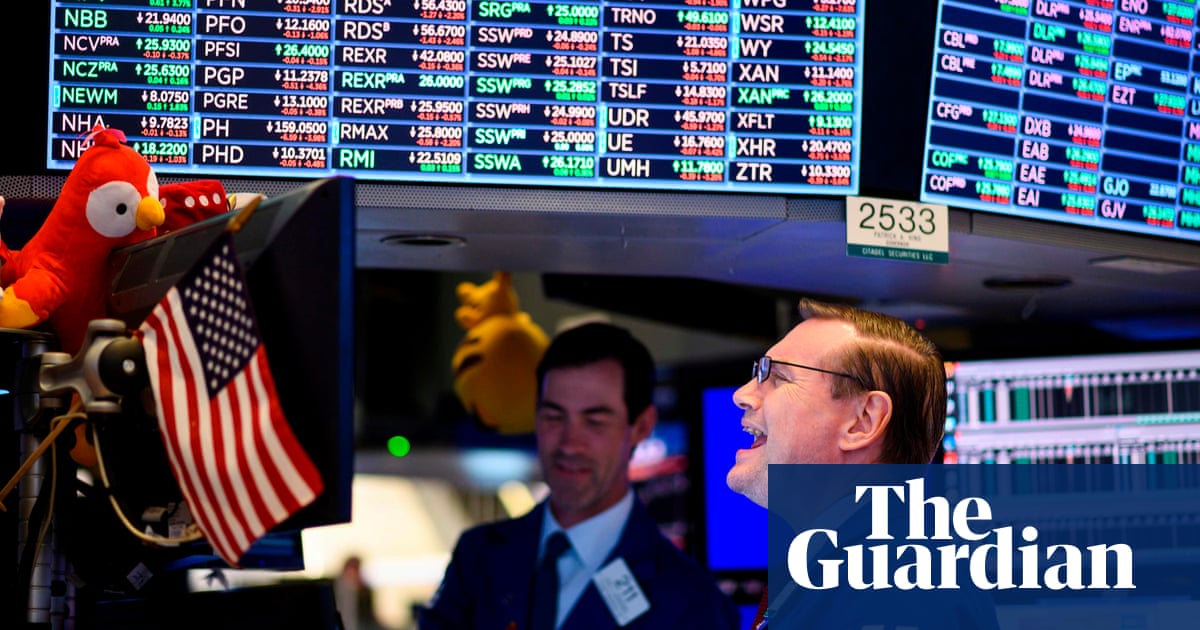
It was a train running full speed and showed no signs of stopping – but America’s economy hit a bump last week and it sent a lot of people from Wall Street and beyond into a panic. The 800-point drop in the Dow Jones seemed to be the first sign of another severe recession. But before everyone cashes out, experts from Western Governors University are hoping we take a look back through the ages before rushing to worry. “What does history teach us? Even before the Great Depression of the 1930s, Nicolai Kondratieff discovered that the capitalist economy, going back to the 18th century was characterized by waves, or business cycles,” says Dr. Rashmi Prasad, Dean and Academic Vice President of Western Governors University's College of Business. “The Federal Reserve, under leadership of Ben Bernanke, claimed that while the business cycle had not been repealed, a ‘Great Moderation’ had emerged in the world post-1982. Independent central banking and the rise of the service economy were among the reasons cited. In a great irony of history, Bernanke was front and center as Chairman of the Federal Reserve during the ‘Great Recession’ of 2008-2009. Business cycles seem to be inevitable for capitalist economies. Will we return to the Great Moderation of 1982-2007, or are we in a new period of regular Great Recessions? Central Banks stabilize and soften the down-cycles of recessions, but the price of managing the Great Recession of 2008-09 has been the dramatic expansion of central bank balance sheets–no new investment cycles–property or finance often leads to recession.” So, where do we stand and what can we expect in the short-term? Prasad adds this perspective: “Conventional economic thinking indicated inflation by now, which may have added to interest rates and constrained the amount of debt that was sustainable. Rapidly rising interest rates posed the risk of a deep and extended downturn. If interest rates can be managed and kept low, then the next down-cycle could be shallowed and prolonged as monetary policy has little scope and fiscal deficits are already very high. Risks for a major downturn exist in extremely high debt levels and central bank balance sheets, but still may be a decade or two away, awaiting triggers that we cannot yet predict.” Are you a journalist covering the economy and do you need expert perspective and opinion for your stories? That’s where Western Governor’s University can help. Dr. Rashmi Prasad is Dean and Academic Vice President of Western Governors University's College of Business. He is an expert in the fields of economic and financial data and business analytics. Dr. Prasad is available to speak with media regarding the state of America’s economy – simply click on his icon to arrange an interview.

It was the testimony that had as much ramp up and hype as a Superbowl or a Star Wars movie. But last week, after Robert Mueller gave hours of testimony in front of lawmakers in Washington…not much has changed. The Democrats are still crying for impeachment over the obvious intonations of collusion and cooperation with the Russians. On the other side, the Republicans are calling it vindication – a truth they knew all along. So, two years later and 16 months before the next election – where to know? Is impeachment the right path for Democrats still looking for blood? Do both sides need to focus on governing and ensuring the economy doesn’t turn? Is it time no for policy and ideas as we all look towards 2020? We are living in interesting times, and if you are a journalist covering this topic – let us help! Mark Caleb Smith is the Director of the Center for Political Studies at Cedarville University. Mark is available to speak with media, simply click on his icon to arrange an interview.


‘Bottom-line mentality’ can lead to loss of employee respect and loyalty, research shows Supervisors driven by profits could actually be hurting their coveted bottom lines by losing the respect of their employees, who counter by withholding performance, according to a new study led by Baylor University. The study, “The Influence of Supervisor Bottom-Line Mentality and Employee Bottom-Line Mentality on Leader-Member Exchange and Subsequent Employee Performance,” is published in the journal Human Relations. “Supervisors who focus only on profits to the exclusion of caring about other important outcomes, such as employee well-being or environmental or ethical concerns, turn out to be detrimental to employees,” said lead researcher Matthew Quade, Ph.D., assistant professor of management in Baylor University’s Hankamer School of Business. “This results in relationships that are marked by distrust, dissatisfaction and lack of affection for the supervisor. And ultimately, that leads to employees who are less likely to complete tasks at a high level and less likely to go above and beyond the call of duty.” While other studies have examined the impact of bottom-line mentality (BLM) on employee behavior, Quade said this is the first to identify why employees respond with negative behaviors to supervisors they perceive to have BLM. The research team surveyed 866 people. Half of those surveyed were supervisors; the other half were their respective employees. Data was collected from those who work in a range of jobs and industries, including financial services, health care, sales, legal and education. Researchers measured supervisor BLM, employee BLM, task performance and leader-member exchange – the rating employees gave of their relationships with their supervisors. Employees rated their supervisors’ BLM by scoring on a scale statements like: “My supervisor treats the bottom line as more important than anything else” and “My supervisor cares more about profits than his/her employees’ well-being.” They rated leader-member exchange via statements such as “I like my supervisor very much as a person” and “My relationship with my supervisor is composed of comparable exchanges of giving and taking.” Supervisors rated their employees by scoring statements such as: “This employee meets or exceeds his/her productivity requirements,” “This employee searches for ways to be more productive” and “This employee demonstrates commitment to producing quality work.” Based on the responses and the data collected and analyzed, the researchers found: High-BLM supervisors create low-quality relationships with their employees. In turn, employees perceive low-quality leader-member exchange relationships. Thus, employees reciprocate by withholding performance. When supervisor BLM is high and employee BLM is low, the damaging effects are strengthened. When both supervisor and employee BLM are high, the negative performance is still evident. The last finding on that list was particularly significant, Quade said, because it contradicts a common belief that when two parties (in this case, supervisors and employees) think alike and have similar values, there will be a positive outcome. Not so much in the case of BLM, the study shows. “When supervisor and employee BLM is similarly high, our research demonstrates the negative effect on performance is only buffered, not mitigated – indicating no degree of supervisor BLM seems to be particularly beneficial,” the researchers wrote. “It seems even if employees maintain a BLM, they would prefer for their managers to focus on interpersonal aspects of the job that foster healthier social exchange relationships with their employees in addition to the bottom line.” The profit-performance relationship can spark a conundrum for companies, Quade said, because organizations want to be profitable, and performance is an important indicator of an organization’s health and vitality. If leaders believe a negative dynamic regarding BLM exists in their organization, the researchers suggest a few practical steps: Be cautious of a BLM approach or emphasizing bottom-line outcomes that could neglect other organizational concerns, such as employee well-being and ethical standards. Managers should be aware of the message they pass along to employees (and the possible performance repercussions) when they tout bottom-line profits as the most important consideration. Organizations that need to emphasize bottom-line outcomes should consider pairing the BLM management style with other management approaches known to produce positive results, such as practicing ethical leadership. “Supervisors undoubtedly face heavy scrutiny for the performance levels of their employees, and as such they may tend to emphasize the need for employees to pursue bottom-line outcomes at the exclusion of other competing priorities, such as ethical practices, personal development or building social connections in the workplace,” the researchers wrote. “However, in doing so they may have to suffer the consequence of reduced employee respect, loyalty and even liking.” ABOUT THE STUDY “The Influence of Supervisor Bottom-Line Mentality and Employee Bottom-Line Mentality on Leader-Member Exchange and Subsequent Employee Performance” is published in the journal Human Relations. Authors are Matthew Quade, Ph.D., assistant professor of management in Baylor University’s Hankamer School of Business; Benjamin McLarty, Ph.D., assistant professor of management, Mississippi State University; and Julena Bonner, Ph.D., assistant professor, Utah State University. ABOUT BAYLOR UNIVERSITY Baylor University is a private Christian University and a nationally ranked research institution. The University provides a vibrant campus community for more than 17,000 students by blending interdisciplinary research with an international reputation for educational excellence and a faculty commitment to teaching and scholarship. Chartered in 1845 by the Republic of Texas through the efforts of Baptist pioneers, Baylor is the oldest continually operating University in Texas. Located in Waco, Baylor welcomes students from all 50 states and more than 90 countries to study a broad range of degrees among its 12 nationally recognized academic divisions. ABOUT HANKAMER SCHOOL OF BUSINESS AT BAYLOR UNIVERSITY At Baylor University’s Hankamer School of Business, integrity stands shoulder-to-shoulder with analytic and strategic strengths. The School’s top-ranked programs combine rigorous classroom learning, hands on experience in the real world, a solid foundation in Christian values and a global outlook. Making up approximately 25 percent of the University’s total enrollment, undergraduate students choose from 16 major areas of study. Graduate students choose from full-time, executive or online MBA or other specialized master’s programs, and Ph.D. programs in Information Systems, Entrepreneurship or Health Services Research. The Business School also has campuses located in Austin and Dallas, Texas. Visit www.baylor.edu/business and follow on Twitter at twitter.com/Baylor_Business.

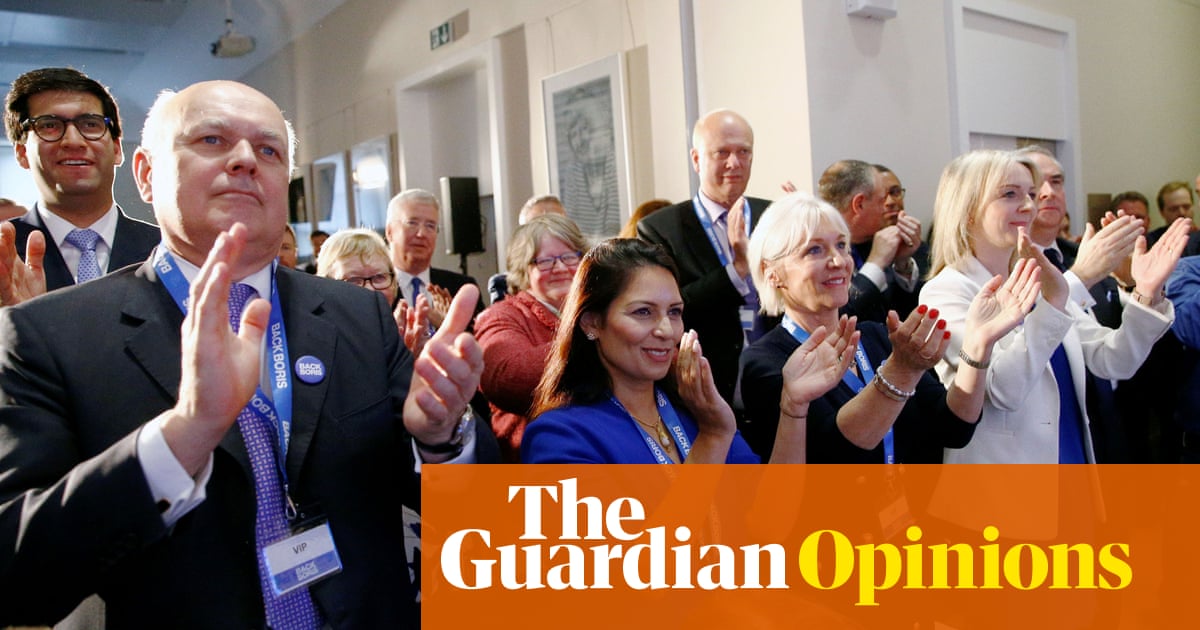
In what was once a wide field to replace the fallen British Prime Minister Theresa May has now become a race for Boris Johnson to lose. As the outspoken and bold British MP looks to unite his party, pull Britain from the EU by the end of October and defeat Labour in the next election – what will his presence at 10 Downing Street mean for his country, Europe the rest of the world? Britain is one of the cornerstones of the west, but what will a wildcard like Johnson mean? What’s his background and do people need to know more about the man who will reside in the chair as historic figures like Tony Blair, Margaret Thatcher and Sir Winston Churchill? If you are covering and need to no more – that’s where we can help. Dr. Glen Duerr's research interests include nationalism and secessionism, comparative politics, and international relations theory. Glen is available to speak to media regarding Boris, Brexit and Britain – simply click on his icon to arrange an interview.


A vacation free of emails, obligations and answering to the boss – let our expert columnist explain!
UMW’s resident writer for the Lynne Richardson is back with another great piece in The Free Lance-Star – just in time for summer. It’s a call to action for bosses and employers to let their people be free when they’re relaxing away from work on that cherished summer vacation. It’s about taking a time out when they’ve booked that time off. “So, you leave for the big trip. It’s a long flight and when you take your smartphone off of airplane mode, you realize you’re getting emails from your office. A co-worker needs information. Somebody wants to know where you left the file he needs for a meeting tomorrow. Your boss needs you to call him as soon as possible as he’s meeting with his boss tomorrow and needs a refresher on a project you are working on. So, you take a deep breath and respond to each of the requests. After all, you haven’t really disengaged yet from work. But the next day is the same. You continue to receive "emergency" emails. It’s like you cannot leave the office, because folks are tethered to you in some way. So, this is a cautionary tale for supervisors. Your folks need time away. They need to be away in every sense of the word. Please give them permission to not respond to emails while on vacation. There are very few emergencies that would require you to reach out to them. If it means that you, Mr. Supervisor, must wait a few days for some information, so be it.” If you like this – read the rest of the article attached below. So, do you have a plan in place to ‘un-plug’ while off? Should workplaces have mandatory policies about contacting people when they are away? Worry not – our experts can help. Dr. Lynne Richardson is a columnist, mentor and her expertise focuses on leadership management and higher education administration. She is available to speak with media about leadership…and even bad bosses. Simply click on her icon to talk with her and arrange an interview.


Hurricane Season Starts June 01 – Are We Ready?
It’s that time of year again … where the warm winds of summer bring us tropical storms and hurricanes. Forecasters looking at the 2019 Atlantic Hurricane Season are predicting a slower year. It looks like El Niño is currying favor and its cooling temperatures mean less frequency of storms. So far, experts expect 12 to 14 tropical cyclones this season. Of those, five to seven could become hurricanes and two to four are predicted to become major hurricanes. But as we’ve learned from the past, it takes only one storm to devastate an area. In a previous post, Michael Prietula was featured and lent his expertise to show how communities and governments need to be prepared. Michael J. Prietula (PhD, MPH) is Professor in the Goizueta Business School and a senior faculty member in Emory's Center for Neuropolicy. He is an expert in the areas of organizations is crisis and is an expert in preparedness. He is available to speak with media, simply click on his icon to arrange an interview.

