
Experts Matter. Find Yours.
Connect for media, speaking, professional opportunities & more.
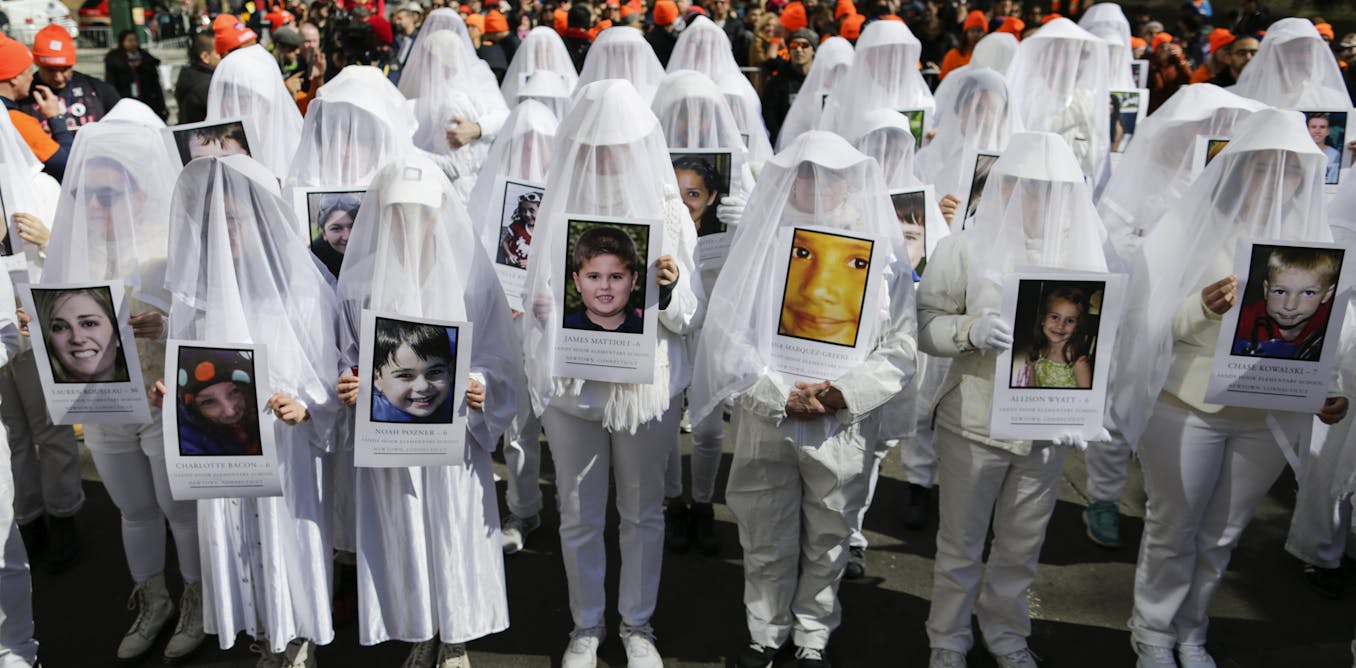
UConn Expert, 10 Years after Sandy Hook, on the Lies that 'Plague the U.S.'
UConn professor and journalist Amanda J. Crawford considers the misinformation that spread like wildfire after tragic school shooting at Sandy Hook Elementary School to be "the first major conspiracy theory of the modern social media age." Ten years after 26 young students and school staff were killed in the massacre, the impact of that day in 2012 continues to reverberate in America today. On this solemn anniversary, Crawford writes about the aftermath of Sandy Hook misinformation in a new essay for The Conversation: Conspiracy theories are powerful forces in the U.S. They have damaged public health amid a global pandemic, shaken faith in the democratic process and helped spark a violent assault on the U.S. Capitol in January 2021. These conspiracy theories are part of a dangerous misinformation crisis that has been building for years in the U.S. While American politics has long had a paranoid streak, and belief in conspiracy theories is nothing new, outlandish conspiracy theories born on social media now regularly achieve mainstream acceptance and are echoed by people in power. Recently, one of the most popular American conspiracy theorists faced consequences in court for his part in spreading viral lies. Right-wing radio host Alex Jones and his company, Infowars, were ordered by juries in Connecticut and Texas to pay nearly $1.5 billion in damages to relatives of victims killed in a mass shooting at Sandy Hook Elementary School a decade ago. Jones had falsely claimed that the shooting was a hoax. As a journalism professor at the University of Connecticut, I have studied the misinformation that surrounded the mass shooting in Newtown, Connecticut, on Dec. 14, 2012 – including Jones’ role in spreading it to his audience of millions. I consider it the first major conspiracy theory of the modern social media age, and I believe we can trace our current predicament to the tragedy’s aftermath. Ten years ago, the Sandy Hook shooting demonstrated how fringe ideas could quickly become mainstream on social media and win support from various establishment figures – even when the conspiracy theory targeted grieving families of young students and school staff killed during the massacre. Those who claimed the tragedy was a hoax showed up in Newtown and harassed people connected to the shooting. This provided an early example of how misinformation spread on social media could cause real-world harm. Amanda J. Crawford is a veteran political reporter, literary journalist, and expert in journalism ethics, misinformation, conspiracy theories, and the First Amendment. Click on her icon now to arrange an interview with her today.


Expert Opinion: Real Fur? It’s Just Not in Vogue Anymore!
Back in 1994, animal rights organization PETA launched what would become one of the most iconic campaigns of the decade – and beyond. “I’d rather go naked than wear fur,” sparked a slew of headlines internationally and won support from celebrities such as Naomi Campbell, Gillian Anderson, Pamela Anderson, and others; many of whom agreed to pose nude or semi-naked in support of the anti-fur movement. Three decades on, in February 2020, PETA announced it was retiring the campaign, saying it was “no longer necessary” and citing the “demise of the trade.” Evidence suggests they are right. Since the early noughties, the use of fur among the world’s foremost luxury fashion houses has steadily declined. The production of mink and other pelts–an industry valued at $1.8 billion in the late 80s–has declined in America by around 45 percent in the last 20 years, according to the Department of Agriculture. Meanwhile, high-end fashion brands like Gucci, Vivienne Westwood, and Stella McCartney have pledged to go fur-free, with Fendi, Saint Laurent, and others set to follow suit in 2022. Fur has never been less fashionable. But can activism alone claim victory in the fight for more ethical fashion practices? Emory’s Giacomo Negro, professor of Organization & Management and professor of sociology (by courtesy), has released new research that suggests another major factor played a key role in the process that led to the abandonment of fur; and it’s none other than perennial style bible, Vogue. When Vogue Speaks, People Listen We know that the use of fur has been dropping off steadily on the supply side, on the part of producers and manufacturers themselves, in the last two decades. What we didn’t know was how much of this was down to pressure from PETA and other highly-visible activism. Or whether there might be other forces at play–industry intermediaries that have a gatekeeping function, such as the fashion press, exerting a more subtle but just as powerful influence on the producers of fur. - Giacomo Negro, professor of Organization & Management Hypothesizing this to be the case, Negro teamed up with INSEAD’s Frederic Godart and Greta Hsu of the University of California. First off, they had to determine the most important and global of fashion’s gatekeepers. “There are other publications, but Vogue is undoubtedly a significant force in fashion. The magazine has long occupied a unique position that is neither an insider nor an outsider in the sense that its editors are intimately connected to the top designers and decision-makers in the industry; simultaneously, it’s an external, independent publication with global reach and singularly powerful influence on fashion’s views and tastes.” If Vogue were to take a certain view of the use of fur in clothing over time, would fashion houses take note and follow suit, the researchers wondered? To test this, Negro et al put together a largescale dataset integrating data from more than 18 years of Vogue’s runway reports: features covering fashion shows in Paris, Milan, London, and New York between Spring 2000 and Fall 2018. The set included 670 fashion houses hosting at least two runway shows in this period, focusing on women’s prêt-à-porter designs. Next, the researchers ran an analysis across the texts published by Vogue after each show. They coded words relating to the moral and ethical dimensions of fur use. “When Vogue publishes a report, you don’t just get a review of the collections,” says Negro. “You also get the magazine’s opinion and appraisal of the clothing.” Fur Ethics and the Decline of a Centuries-Old Industry Parsing the attention to fur ethics expressed in these reports and looking at the frequency of the appearance of fur on runways over time, he and his colleagues found something striking: a clear, quantitative correlation between the magazine’s coverage of fur ethics and a drop off in its use by fashion houses, starting in 2011. “From around 2009, Vogue starts referencing the ethical and social concerns around fur and this continues through to 2014. In 2011, you begin to see a steady decline that follows in the use and appearance of fur on catwalks in the major fashion capitals of the world.” But could this simply be credited to an increase in activism at the same time? Unlikely, says Negro. He and his colleagues also looked at data on media coverage of anti-fur events in France, Italy, the United Kingdom, and the U.S. and failed to establish any meaningful correlation with Vogue’s editorial position over the same period. “What seems most plausible is that as an influential industry gatekeeper, Vogue was driving a change in views on fur ethics and fur use, alongside its own changing position on the ethics of fur,” says Negro. And it’s interesting to remember that fashion, like other creative industries, tends to operate in accordance with its own set of rules and its ‘artistic freedom.’ When activists targeted Jean Paul Gaultier’s Fall Show of 2009, he simply announced that he loved fur and would continue using it. However, when Vogue starts weighing in with an opinion, that’s when designers start following suit. - Giacomo Negro, professor of Organization & Management Which isn’t to say that activism did not have a critical role, he adds. In leading and reshaping the conversation around fur over the last three decades, PETA and others have brought the key issues to the attention of the world’s media like no other, says Godart: “Our findings also suggest that specific forms of anti-fur activism such as advertising campaigns, and legal maneuvers, became effective in influencing fashion houses’ decisions to move away from fur when amplified by Vogue’s references to moral concerns around fur use.” For any business or industry looking to navigate changing perceptions, tastes, or sentiments, gatekeeper entities–intermediaries like experts, media publications, and others–can provide useful signals that can help strategic decision-making, say Negro, Godart, and Hsu. Though in the age of social media, it may become that much more difficult to distinguish signals from noise. Proactive organizations might do well to identify and engage with social movements and gatekeepers ahead of change, they say, rather than bide their time until pressure forces their hand. Interested in learning more? Then let us help with your questions or coverage. Giacomo Negro is a professor of Organization & Management and Professor of Sociology at the Goizueta Business School at Emory University. Simply click on his icon now to connect and arrange an interview.



What's next in Georgia's 2020 election saga?
All eyes are on Georgia once again, but this time it's not about an upcoming election. As we sort through the 2020 election aftermath that saw Georgia in a tug-of-war between lawyers, politicians and pundits, the actions a few important figures may now be coming to light. Rudy Giuliani, the former advisor to President Trump, may be in some serious trouble according to Augusta's leading political expert, Dr. Gregg Murray. "When politicians are involved, there are almost always political calculations," Murray said. "But there’s a lot of information suggesting there may be problematic behavior that he was heavily involved with. There are reports of investigations involving several possible Georgia law violations: solicitation of election fraud, making false statements to local officials, conspiracy, racketeering, violations of oath of office and involvement in violence or threats of violence, according to Voice of America." As for Sen. Lindsey Graham, he, too, has been summoned to appear and explain how he may or may not have attempted to influence the election outcome. A federal judge on Monday turned down Sen. Lindsey Graham’s bid to throw out a subpoena compelling him to testify before the Atlanta-area grand jury investigating Donald Trump’s effort to overturn the 2020 election. “[T]he Court finds that the District Attorney has shown extraordinary circumstances and a special need for Senator Graham’s testimony on issues relating to alleged attempts to influence or disrupt the lawful administration of Georgia’s 2022 elections,” U.S. District Court Judge Leigh Martin May wrote in a 22-page opinion rejecting Graham’s effort and sending the matter back to state courts for further proceedings. Politico, Aug. 15 According to Murray, defying the judge's request might be the likely choice for the senator. "It seems the Republican party is still clearly tied to Trump," Murray adds. "I don’t think he would be hurt politically by not showing up. It’s an interesting question if some people would hold it against him for showing up." This legal wrangling will be long and drawn out, so if you are covering this topic, let our expert help with your story. Dr. Gregg Murray is available to talk about the election audit and what it might mean for voters in Georgia and across the country. Murray’s research focuses on political behavior and psychology with specific interests in voter mobilization and turnout. He is also executive director of the Association for Politics and the Life Sciences. Simply click on Murray's icon to arrange an interview today.


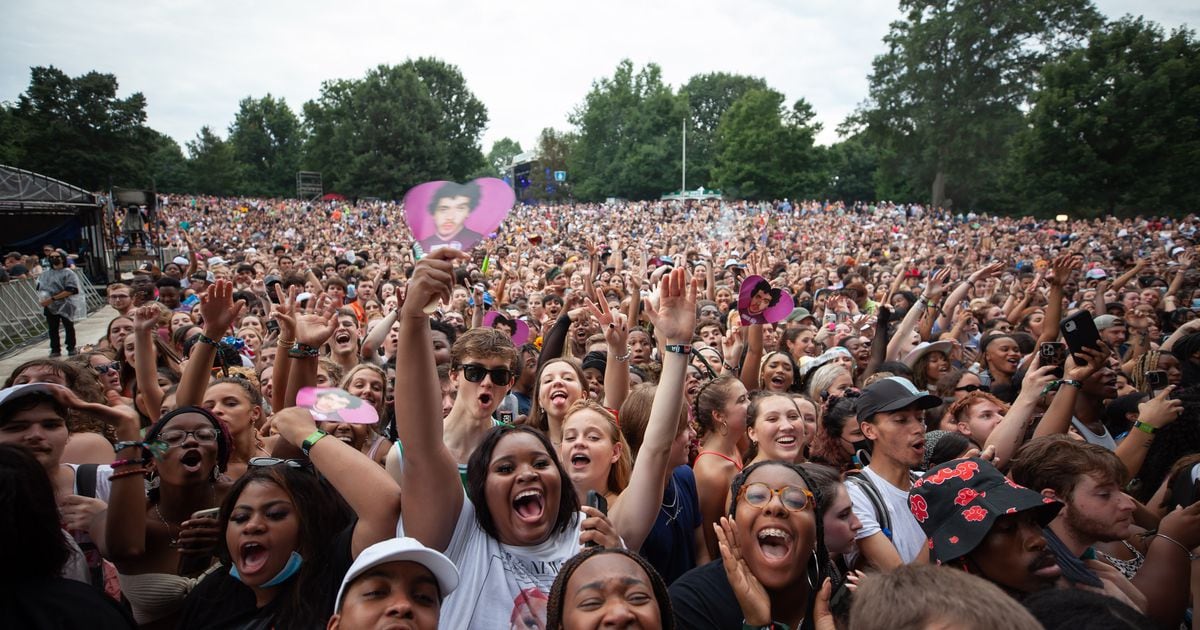
Politics, policy and public safety: Experts explain why a popular Atlanta festival was canceled
A sad tune is being hummed in Atlanta, where it was announced the popular annual Music Midtown festival is not happening, possibly in part due to the state’s laws surrounding guns in public parks. The event's cancellation, which brought tens of thousands of music lovers to the city -- along with the tourism dollars they spend -- has caused disappointment and drawn local and national media coverage. Calling it a “sad day” for the city, Atlanta City Council President Doug Shipman wrote on Twitter that: “Public policy has real impacts and, in this case, economic and social implications on a great tradition.” And state Democrats chastised Republicans for adopting a raft of pro-gun legislation, including a 2022 law that allows Georgians to carry concealed handguns without first getting a license from the state. The governor, who is seeking a second term, did not immediately comment on the festival’s decision. But state Rep. Rick Jasperse, a Jasper Republican who sponsored the 2014 law, said the measure is designed with public safety in mind. He said those intent on “causing chaos and crime in Georgia” won’t care if the festival bans firearms and would try to bring them in regardless. “Good Georgians who can qualify for a permit and carry a weapon do so to protect themselves from that element in our society,” he said. -- The Atlanta Journal Constitution, Aug. 1, 2022 Organizers of events like Music Midtown could look at Georgia’s gun laws and regulation of firearms as a potential legal liability. If there is a firearms incident, organizers may fear being held legally accountable and sued for any potential damages. The companies and their risk management advisors might think twice about holding large events in Georgia. Augusta University's Dr. William Hatcher, an expert when it comes to public administration and social, economic and political institutions in local communities, agrees that event organizers might be rethinking their plans in the state. "Yes. I think so. These types of laws have an impact on the economy and the business decisions of firms. We may see future effects on the economic behavior of individuals and firms." This topic could have further economic impact beyond canceled events, including affecting property values and home prices. If you're a journalist looking to know more, then let us help with your stories. Dr. William Hatcher is a professor of political science and chair of Augusta University’s Department of Social Sciences. He is an expert in the areas of public administration and social, economic and political institutions. Hatcher is available to speak with media regarding this topic. To arrange an interview today, simply click on his icon now.


What the Roe V. Wade Reversal Means for Data Privacy
Following the US Supreme Court decision to overturn Roe V Wade on the 26th June 2022, abortion laws are now changing across states on an almost daily basis. The landmark decision and huge signifier for the rights of women in the United States and across the world of 1973, is now nothing but history. In 13 states with “trigger laws”, abortion laws will take immediate effect, with others being implemented about a month after the ruling. While ‘the patchwork of state laws and barrage of court filings mean that for half the country', the legal status of abortion remains ambiguous, a month on, one thing remains certain - concerns regarding tech companies and the protection of user privacy in regards to abortion cases are only growing. New questions have been raised and existing debates regarding data privacy have been reignited. Debates center on the extent to which tech companies should protect the information of users seeking abortions and the steps that both consumers and companies can take in line with current laws. While many large corporations, including tech companies Microsoft, Apple, Meta, Disney, Uber, Netflix and Amazon have announced they will provide travel expenses for abortions if they are not available in the state, the role of tech companies in protecting private users' information remains unclear. What are the concerns? Location Tracking On Tuesday May 24th, 42 Democratic lawmakers urged Google SEO Sundar Pirchai to stop collecting and keeping unnecessary or non-aggregated location data which could be used against people seeking abortions. Before the overruling, the lawmakers wrote “if abortion is made illegal…it is inevitable that right-wing prosecutors will obtain legal warrants to hunt down, prosecute and jail women for obtaining critical and reproductive health care.” In comparison to Apple, which has demonstrated that smartphone companies do not need to retain customer location data, Google ‘has created a new digital divide’, which makes ‘privacy and security a luxury’. Ultimately, privacy for Americans who cannot afford an iPhone is at greater risk. While Google sent a company-wide email stating they would cover out-of-state travel expenses for abortion, they have still made no statement in response to the Democratic lawmaker's request on customer location data since the rollback of Roe V Wade. Period-Tracking Apps Alongside concerns about location tracking data with companies such as Google, one of the newer sources of anxiety in terms of data privacy is the use of cycle tracking apps. Since the draft decision was leaked in early May, there have been widespread concerns over the use of period-tracking apps and calls for American women to delete them to avoid their data being used against them in court. Danielle Citron, Professor of Law at the University of Virginia School of Law expresses her concern that using such tracking apps could help build a legal case against a woman who has had an abortion. She states "you got your period on X date, you missed your period, then let's say, for example, 20 weeks later you got your period again, and that in that time period your location shows that you went to a clinic either in the state or out of the state — that in so many respects is the circumstantial evidence that a prosecutor needs.” Tech policy researcher Eva Blum-Dumontet tells Insider that if people find period-tracking apps genuinely useful they shouldn’t feel they have to get rid of them ‘because the risk of data being handed to law enforcement is low’. But at the same time, ‘it is not impossible.' One of the main period tracking apps, Flo, has issued a statement in response to Roe V Wade which reads ‘we will do everything in our power to protect the data and privacy of our users', with an additional feature to existing security measures including “anonymous mode”, which allows users to remove their personal identity from their Flo account. Flo has stated that more clarity will be given in the coming weeks and months. Limiting Online Discussion of Abortion Pills and Aid Since the Supreme Court’s verdict, online memes, statuses and posts have exploded, sharing resources and thoughts on the decision. Facebook and Instagram have started removing posts related to abortion pills, following the rise in the discussion of access to them and offers to mail them across the US. Media intelligence firm Zignal Labs records that general mentions of abortion pills, as well as posts mentioning specific versions such as mifepristone and misoprostol, suddenly spiked on Friday morning across Twitter, Facebook, Reddit and TV Broadcasts. Following the release of a screenshot obtained by the Associated Press of an Instagram post from a woman who offered to buy and send abortion pills through the mail, being taken down within a few minutes by Instagram, AP decided to test out how Meta would respond to a similar post on Facebook. On Monday, the AP reporter wrote “If you send me your address, I will mail you abortion pills.” The post was removed in under one minute. Interestingly, when the AP reporter made the same post but ‘swapped out the words “abortion pills” for “a gun”, the post remained untouched.’ Can past cases inform the future? While the response of tech companies in protecting public data regarding the concerns raised above is still relatively ambiguous, we can refer to past cases where smartphone data was used as evidence in cases against women. In 2018, Lattice Fisher was charged with second-degree murder after she experienced a ‘stillbirth at home and a state medical examiner claimed the baby had been born alive and died of asphyxiation, according to Oktibbeha County court records.’ Fisher’s mobile data records allegedly contained a search for “buy abortion pills”, and mifepristone and misoprostol, the two main forms of self-managed abortion medications. Although Fisher got out of jail later in 2018, Laurie Bertram Roberts, co-founder of the Mississippi Reproductive Freedom Fund and the executive director of Yellow Hammer Fund, who had been heavily involved with Fisher’s bail, said that the impact will forever taint Fisher’s life. “Anytime someone Googles her for a job that mugshot with a story of her being indicted for a second-degree murder will always be there.” In 2015, Purvi Patel was prosecuted in Indiana under the state’s feticide law after she took safe, well-known abortion medication. Prosecutors had claimed that the baby was born alive and did not survive. In this case, Patel’s text messages mentioning the abortion pills were the main evidence used against her. She was sentenced to 20 years in prison, but her conviction was overturned and she was released after serving 18 months. Many people had wondered how the case had happened when abortion was a protected right under the constitution. With the right to abortion in the US now only marking a historical moment, the role of tech companies in the protection of user data will only become increasingly pivotal in a post-Roe world.

UCI experts available to discuss Roe v. Wade ruling
With the Supreme Court set to rule on Roe v. Wade, UCI would like to provide experts you can reach out to for comment: • Michele Goodwin, Chancellor of Law at UCI’s School of Law, focuses on constitutional law, torts, health law, and feminist jurisprudence. An internationally renowned pioneer and pathbreaker, She has spoken often to media about reproductive rights issues and the Roe vs. Wade issue. Goodwin has helped to establish the field of health law and subspecialties in law and medicine, including biotechnology and biosciences and the law, as well as race and bioethics. Her scholarship has been cited by courts, congress, civil society organizations, and news media worldwide. If you are interested in speaking with Michele, you can reach her directly at (773) 543- 6160 or mgoodwin@law.uci.edu. • Aziza Ahmed, UCI professor of law, examines the intersection of law, politics, and science in the fields of constitutional law, criminal law, health law, and family law. Her work advances multiple scholarly conversations including those related to law and social movements, race and the law, and feminist legal theory. You can reach Aziza on her mobile at (510) 778-3031 or coordinate with our team for an interview. • Charles Anthony “Tony” Smith, UCI professor of political science and law, received his PhD from the University of California-San Diego and his JD from the University of Florida. His research is grounded in the American judiciary but encompasses work in both comparative and international frameworks using a variety of methodologies. The unifying theme of his research is how institutions, and the strategic interactions of political actors relate to the contestation over rights, law & courts, and democracy. He has published seven books and more than 30 articles on the history and politics of the Supreme Court. You can reach Tony via email casmith@uci.edu. • David Meyer, professor of sociology, political science, and planning, policy & design, can discuss the effect of the decision on political mobilization, especially the anti-abortion and abortion rights movements. He can also talk about those movements and the courts more generally. You can reach David via emaildmeyer@uci.edu.

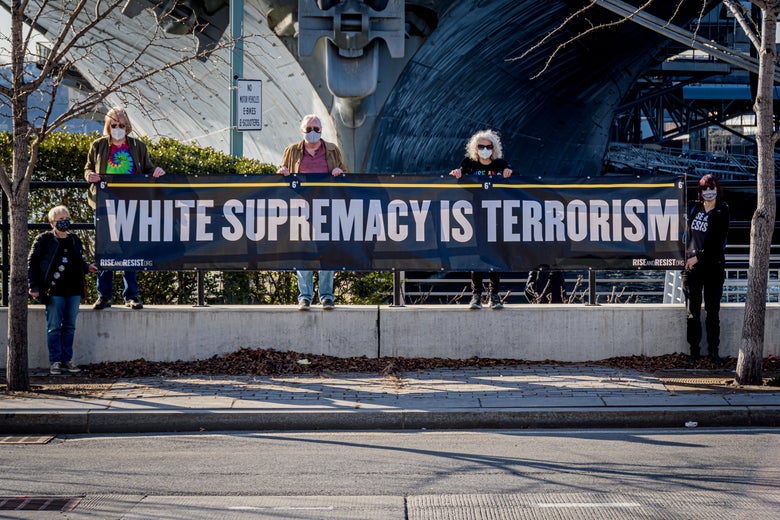
Expert Opinion: Understanding Whiteness to Understand White Supremacy
In the aftermath of last week's tragic shooting in Buffalo, many have described the violence as representative of a mental health crisis, growing extremism, hatred, and bigotry, likening manifestos left by shooters as the racist rhetoric of radicalized individuals. "But that conclusion is a pleasant fiction," writes Matthew Hughey -- a professor of sociology at UConn and a renowned scholar of racism and racial inequality in identity formation, organizations, media, politics, science, religion, and public advocacy -- in a powerful new essay for Slate. As part of his work as a researcher, Hughey examines the manifestos of white-supremacist shooters as well as their intersection with race, knowledge, media, power, religion, and science. To understand white supremacy and the violence it precipitates, Hughey explains, we need to first understand whiteness: The category of whiteness, like “race,” is a biological fiction with a social function. Whiteness emerged early in American history to rationalize exploitation. Early American colonists were slow to develop racial worldviews. But by the mid-1600s, philosophers and scientists like Bernard Varen, John Ray, and François Bernier began to publish ideas about African savagery and European civilization, which were progressively applied to resolve who should be the rulers versus the ruled. These ideas were codified into our legal system. In 1662, for instance, British statutory law conferred slavery with a biological status: Any child born to an enslaved woman would also be a slave. Over time, through a series of laws and social mores, a hierarchy that conferred legal privileges to “white” men, while stripping Black people and Native Americans of their humanity and standing in the legal and political arenas, was cemented. Put another way, whiteness is not an inherent identity so much as a consolidation of lofty biological, legal, and theological notions that serve to buttress the social and political power of people bearing lighter skin. As W.E.B. Du Bois points out in his 1920 essay “The Souls of White Folk,” whiteness is a modern concept: "The discovery of personal whiteness among the world’s peoples is a very modern thing. … The ancient world would have laughed at such a distinction. … This assumption that of all the hues of God whiteness alone is inherently and obviously better than brownness or tan leads to curious acts. … I am given to understand that whiteness is the ownership of the earth forever and ever, Amen! Now what is the effect on a man or a nation when it comes passionately to believe such an extraordinary dictum as this?" The effect is a Faustian bargain. And as a result, whiteness exists in a state of perpetual social anxiety. White people are taught that their biological, cultural, and/or God-given nature is to be “inherently and obviously better” than people of color and to have “ownership of the earth.” These ideals are, of course, so lofty that they are unachievable. Discontent is inevitable. Whiteness is a deal with the devil. Consequently, white people move neither into nor out of moments of racial anxiety, nor do they—despite the popularity of the cliché—experience flashes of “white fragility.” Whiteness does not wax or wane relative to racial pressures, cracking to expose either reactionary political movements or even the occasional mass shooting. Rather, whiteness is an omnipresent imbroglio; it cannot live up to the greatness it assumes it can naturally realize. Reconciling the peril that results from the inability to fully manifest white power necessitates a scapegoat. And so the crisis of whiteness is continually externalized onto racial “others.” This helps to explain why an increasing number of white people now believe they have been cheated out of their birthright—an inheritance of domination stolen by people of color. White nationalism and supremacy could not function under absolutist apartheid; it is an ideology and practice that requires the presence of people of color to justify its own shortcomings. White peril and white power go hand in hand. Professor Hughey is available for interviews -- click on his icon to contact him today.


Disney, DeSantis, and Corporate Dilemmas
The Florida state legislature recently voted to end the Walt Disney Co.’s special tax district, which has permitted the Orlando amusement park to govern its land and save millions each year in taxes. The decision followed a clash between Disney executives and Florida Gov. Ron DeSantis over recent legislation that prohibits instruction on sexual orientation or gender identity for children in kindergarten through Grade 3. UConn's Professor Robert Bird, the Eversource Energy Chair in Business Ethics and past president of the Academy of Legal Studies in Business, sat down with UConn Today to talk about clash between the corporation and Florida government as well as the implications for other companies that may be facing similar moral and ethical dilemmas: Q: There are so many layers to this story, from taxation to self-governance, political power to human rights. What strikes you as most significant? From one perspective, this is a debate over the role of LGBTQ+ education in schools. From another perspective, this raises the broader issue of the implications of private companies speaking and acting on matters of public policy. Corporations can no longer remain neutral or silent on major issues facing American society. Consumers, employees, shareholders, and the public are increasingly expecting companies to take a stand on controversies that matter to them. Just as some companies are being punished for not severing their relationships with Russia, because of Russia’s invasion of Ukraine, so are companies like Disney expected to speak out against public policies that contradict the values of its stakeholders. Q: Why does Disney play an important role in this issue? Disney is an important participant in the underlying “Don’t Say Gay” dispute. Disney has a powerful public brand and takes care to cultivate a family-friendly image worldwide. Disney has also been a long-standing leader in supporting LGBTQ+ rights. Disney has provided health benefits to same-sex partners since 1995, and allowed “Gay Days” at Walt Disney World since 1991. Public opinion was more hostile toward LGBTQ+ rights then, and Disney stood by its values even with the ensuing controversy. For Disney to “stand down” when so many people were advocating for Disney’s support in opposition to the bill, would have eroded its long-standing support of gay rights generally. Q: What message does this send to other CEOs who might be caught in a moral, ethical, or environmental debate with government leaders? The message sent to other companies is that politicians will not remain idle if a company opposes favored legislation or enters the sphere of public debate. Firms need to walk a fine line between standing up for their values and eroding relationships with political leaders. This is an important story, and if you're a reporter looking to know more or would like to schedule and interview with Professor Bird, then let us help. Click on his icon now to arrange an interview today.


Will voters 'hit' or 'hold' on allowing legal gambling in Georgia?
Could we see horse racing and other forms of gambling come to Georgia in the near future? The Georgia state legislature is looking at the possibility of legalizing gambling on horse racing and the decision could land in the hands of the voters. Proponents say there is potential for a billion dollars in economic benefits, from job creation to a boost in revenues. Marsha Loda is an associate professor at Augusta University’s Hull College of Business. She said if approved, it will likely take more than horse racing for a track to survive. Loda cites Kentucky as an example of what tracks are doing there. “A lot of people think of Kentucky as the mecca of horse racing, but they don’t realize it might not exist without historical horse racing machines," said Loda. "HHRs are slot-like machines that let players wager on past horse races by a random number generator.” Many tracks nationwide have also expanded into casino and sports betting. While this isn’t what Georgia is looking to do initially, it’s not far off to think it could be on the horizon, with horse racing being the first step. Loda, who previously served as marketing director at Harrah’s Cherokee Resort in North Carolina, knows if casino gambling is approved in the future, most of those people who visit need to come from out of town. “You need to be able to import your people who are going to bet. That means you’re importing revenue. Otherwise you’re taking what’s already spent in your community and just slicing it up and giving it to different places. You’re not growing the pie at all,” said Loda. She has also seen the benefits of legalized betting, citing the added jobs a casino would offer. One aspect of gambling that has exploded is sports betting. More than two dozen states have legalized sports betting. Loda thinks if sports betting was on a ballot and went in front of the public for a vote, it would stand a better chance of passing. “I wouldn’t be surprised to see Georgia pass sports betting. I think sports betting has been very well accepted. I think they would come much closer to getting more voters to approve it if it were sports betting than if it’s horse racing or casino gambling.” This is an important topic with many angles to cover, and if you are a reporter looking to know more, then let our experts help. Loda is a leading marketing expert helping businesses in the hospitality industry bounce back from crises, including the COVID-19 pandemic, and also has had extensive experience in the gambling industry. She is available to speak with media regarding the idea of gambling coming to Georgia. Simply click on her icon now to arrange an interview today.


Operation Allies Welcome -- the official name for the American government's ongoing effort to assist vulnerable Afghans following the U.S. withdrawal from Afghanistan -- is the most significant U.S. resettlement effort since 1975. As of February 2022, some 65,000 Afghans have evacuated and settled in American communities. UConn School of Social work professors Kathryn Libal and Scott Harding have extensively studied the refugee resettlement process in America. In a recent essay for The Conversation, they detailed the resettlement process that refugees face -- and the challenges that individuals, families, agencies, and volunteers are enduring as the effort strains an already overburdened system. U.S. agencies brought in Afghans under humanitarian parole, rather than standard refugee procedures, because of the urgency of the evacuation. But the consequences may be profound. Some parolees had to wait weeks or months for the government or social service organizations to file paperwork granting them the right to work. Another challenge for parolees is securing family members’ admission to the U.S., which requires a high level of proof of threat to that particular individual. Many Afghan parolees should eventually qualify for asylum, but applying is a lengthy and complex process that generally requires significant legal assistance. More than 400,000 asylum cases are pending in the U.S. asylum system. Refugee resettlement organizations and voluntary groups that could normally help with filing asylum claims are already stretched thin. Evacuees’ advocates have called for approval of the Afghan Adjustment Act, which would allow Afghans to apply for lawful permanent resident status without waiting for the asylum system to rule on their cases or processing of special immigrant visa applications. Governors, businesses, celebrities, universities, military members, veterans and individuals across the U.S. have stepped in to support recent Afghan evacuees – many in locales with no history of resettling refugees. The responsibilities of resettlement, however, extend beyond helping evacuees in their first few weeks, to helping them secure a stable future. -- The Conversation, February 18, 2022 An associate professor of social work and human rights, Kathryn Libal is the director of UConn's Human Rights Institute and is an expert on human rights, refugee resettlement, and social welfare. She is available to speak with media – click on her icon now to arrange an interview.
