Experts Matter. Find Yours.
Connect for media, speaking, professional opportunities & more.

On the morning of Saturday, November 7, Joe Biden was announced by numerous media outlets as the projected winner of the 2020 U.S. presidential election. President-elect Biden will be only the second Roman Catholic to occupy the nation's highest office. Massimo Faggioli, PhD, is a professor of historical theology at Villanova University. He recently discussed the significance of Biden being only the second Catholic elected president and the work he has in front of him. "Biden is a 'Pope Francis Catholic'—much more aligned to the political culture of the pontificate than John Kerry was as a 'Pope John Paul II Catholic' in 2004, or Kennedy, a good Catholic in 1960. When Kennedy, the first Catholic president, was elected in 1960, U.S. Catholicism was much less divided and in much better relations with the Vatican compared to today," Dr. Faggioli said. "It's the first time we have a Catholic president since the return of religion in the public square." "Anti-Francis Catholicism in the U.S. goes much deeper than Trump Catholics and includes a number of U.S. bishops. It will be difficult for Biden to navigate the triangular relations between Vatican-White House-U.S. bishops," continued Dr. Faggioli. "The U.S. Conference of Catholic Bishops is paralyzed and—especially on social issues—it is difficult to take distance from a rhetoric that is very similar to the GOP, and this will show in dealing with a Biden presidency. Biden as a Catholic will have against him a powerful Catholic media system in the U.S. that makes no mystery of its fierce opposition against Biden's and Francis' Catholicism."


The tug between protecting privacy and building brand loyalty
The coronavirus pandemic has put much of normal life on hold, but it hasn’t stopped hackers. According to Securityboulevard.com, in the first quarter of 2020, more than 8.4 billion records from healthcare institutions, technology, software, social media, and meal delivery companies were exposed — a 273 percent increase from Q1 2019. While data breaches are costly to companies — a recent Ponemon Institute data breach report found that data breaches cost organizations an average of $7 million in the U.S. — their frequency is enough to cause some consumers to wonder if their private information is safe with their favorite brands. The increase in data breaches is concerning, noted Jesse Bockstedt, associate professor of information systems & operations management, but several studies have found that the out-of-pocket expense to consumers due to identity theft is less than $1,000. “Which isn’t zero, but it’s not like a few years ago when [identity theft] ruined your life and destroyed your credit,” Bockstedt said. As for the companies, he added, “It’s not a brand killer anymore.” Yet despite consumers’ growing unease, Goizueta faculty say the relationship between privacy and brand loyalty is a bit more intricate. While a data breach can nick a firm’s reputation, it’s the data that is purposely collected beyond the name and vital statistics that worry consumers more. Our experts found the following key points were necessary when it comes to finding the safe ground between privacy and brand loyalty. In fact, we have an expert from Goizueta who can explain each one: Building digital trust “Companies are increasingly worried that people will buy less from their brand if they’re perceived to be fast and loose with customer data,” said Daniel McCarthy, assistant professor of marketing. For instance, after political data-analytics firm Cambridge Analytica secretly collected data on roughly 87 million Facebook users, back-lash followed. In an effort to regain users’ trust, Facebook founder and CEO Mark Zuckerberg laid out a “privacy-focused vision” for Facebook, but those efforts were widely criticized as not going far enough. Advertising boycotts followed. Trust: the key to customer loyalty Minus regulatory guardrails, the differentiating factor is trust, explained Jagdish Sheth, the Charles H. Kellstadt Chair in Marketing. “Trust is built over time by doing what you promise to do and by company behavior that is considered appropriate or right,” Sheth said. Loyalty programs such as those with airlines, hospitality companies and grocery stores are founded on a relationship between a consumer and a brand. “Loyalty programs mean relationships, and in all relationships, trust and commitment are key,” he added. Let’s make a deal “Brands that are able to deliver a personalized experience in a privacy-friendly manner will have a competitive advantage,” explained David Schweidel, professor of marketing, in a recent “Goizueta Effect” podcast. “Putting a premium on privacy means forgoing the benefits that come from allowing organizations to collect data they use to deliver a better experience. From a commercial standpoint, the onus is on the marketers to make the case that the benefits outweigh privacy concerns.” We’ve attached a full article with even more advice and helpful information from our experts – but if you are looking to learn more or cover this topic, we can help. All of our faculty are available to speak with media, simply click on either expert’s icon now – to book an interview today.



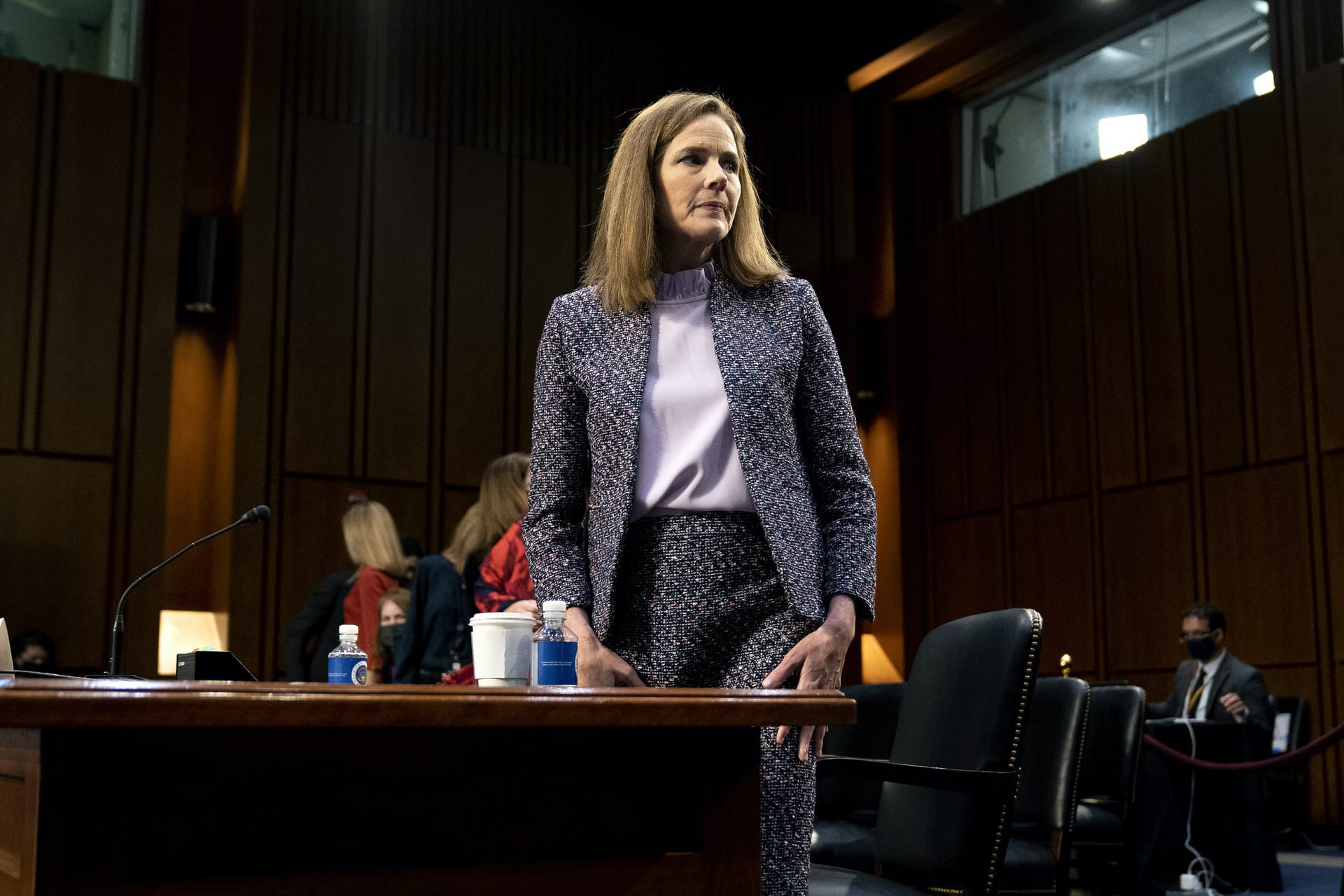
How will the newest pick to the Supreme Court impact America for decades to come?
It was quick, controversial and the outcome was all but obvious once set into motion, but this week Amy Coney Barret t became the youngest female sworn in as a Supreme Court Justice. A sitting judge, a former professor at Notre Dame Law School and mother of seven became President Donald Trump’s third appointee to America’s highest court during his term. The confirmation has left Democrats concerned that the now conservative make-up may sway some very important upcoming decisions. Barrett's confirmation has left Democrats concerned about the fate of the nation's health care law, the Affordable Care Act, and Roe v. Wade, the landmark decision allowing women to have access to abortions. The court will be hearing a case on the constitutionality of the ACA's individual mandate in November. Barrett could also end up weighing in on a general election-related case involving the man who nominated her, should the results of the race between President Trump and Joe Biden come before the Supreme Court. October 26 - CBS News In an election that may see several lawsuits about voting, mail-in ballots and other key elements that could decide the fate of a state or even the presidential election – the Supreme Court where Donald Trump may have a say indecisions and outcomes. If you are a journalist covering this ongoing story, that’s where our experts on this topic can help. Dr. Martha Ginn, professor of political science at Augusta University, is an expert on the judicial process, constitutional law and the U.S. Supreme Court. Dr. Ginn is available to speak with media about this topic – simply click on her icon now to arrange an interview today.

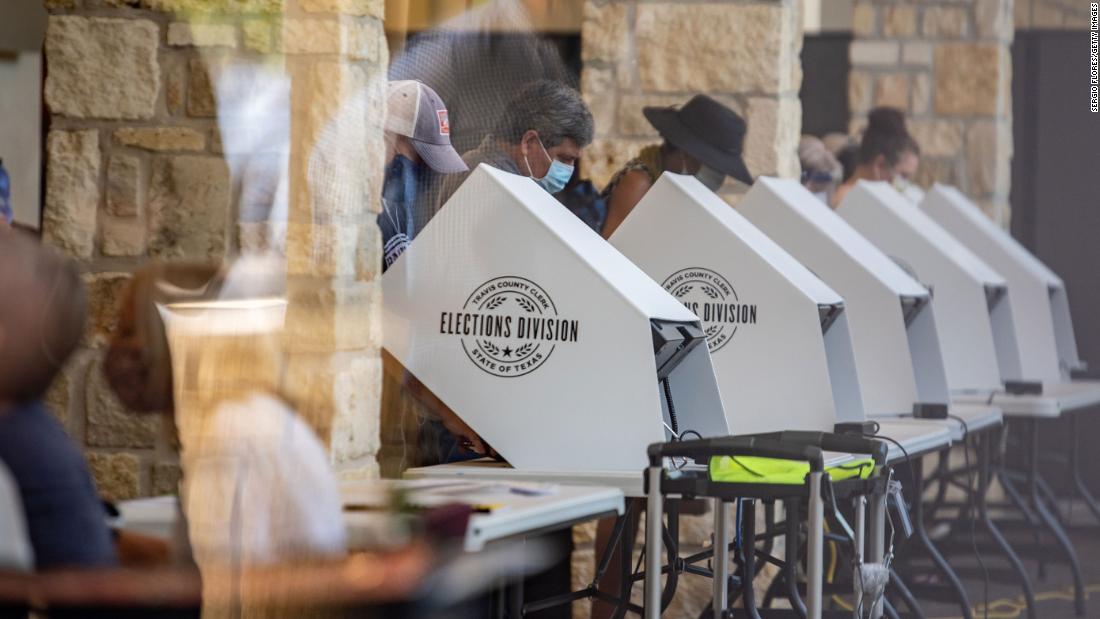
It’s finally here. The campaigns are on their final push and as of Tuesday night – the results will start rolling in. This has been one of the most unique elections in modern history. A divisive and bitter campaign fought during a global health crisis. Texas, which has 38 electoral college votes, second only to California in number – may be in play. Though Texas has not swung blue since 1976, Tuesday night a lot of eyes will be watching Texas to see what role it takes in deciding the outcome of the election. If you are a reporter covering the election in Texas, the key issues in the state and what motivates it to vote for either candidate – then let our experts help. Jim Riddlesperger is professor of Political Science at TCU and focuses on American politics, with emphasis in the presidency, Congress, and Texas politics. Professor Adam Schiffer writes and speaks on media bias, presidential nomination contests, political news, elections, and public opinion. Both are available to speak with media – simply click on either expert’s icon to book an interview today.


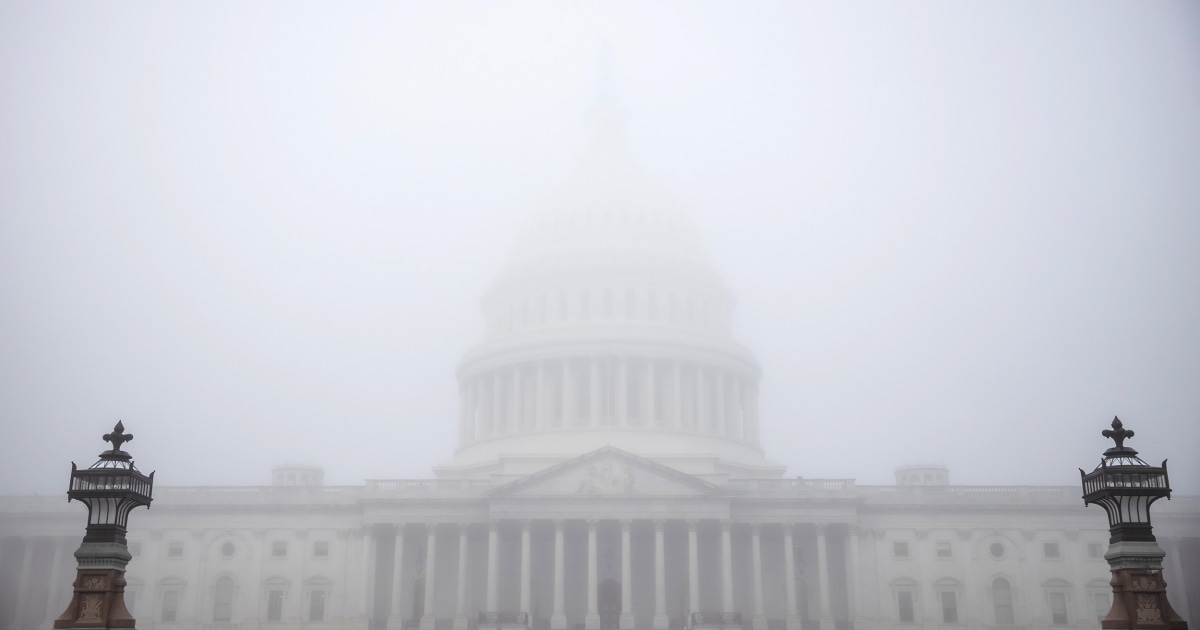
Is a reckoning coming to Washington's once most invincible politicians?
With all eyes on next Tuesday, America could be seeing a serious change in the make-up of the Senate and House of Representatives. With a divided country and an electorate on edge and looking for change, the usual gift of incumbency and re-election is now a far from guaranteed blessing for those Washington veterans for whom re-election is usually a given. According to NBC, there are more than a handful of high-profile and once thought to be invincible politicians on the ropes. But can popular politicians sustain the thirst for change when voters cast their ballots? Susan Collins, John Cornyn, Lindsey Graham and even Mitch McConnell may be looking for work in 2021. It’s a fascinating angle to what has been a truly unique time in American politics. And if you are a journalist covering the election and the balance of power in Congress, then let our experts help. Dr. Stephen Farnsworth is a sought-after political commentator on subjects ranging from presidential politics to the local Virginia congressional races. He has been widely featured in national media, including The Washington Post, Reuters, The Chicago Tribune and MSNBC. Dr. Rosalyn Cooperman, associate professor of political science at the University of Mary Washington and member of Gender Watch 2018, is an expert on women in politics. Both experts are available to speak to media – simply click on either icon to arrange an interview.




MEDIA RELEASE: Stay Alert Stay Safe: Daylight saving time ends soon
CAA South Central Ontario ( CAA SCO) is reminding all motorists and pedestrians to stay alert as daylight saving time ends at 2 a.m. on Sunday, November 1. The return to standard time means fewer daylight hours and reduced visibility for all road users. “We know that typically, in November, there is a spike in collisions between motorists and pedestrians. Road safety and pedestrian safety are a shared responsibility. Taking precautions and being aware of other road users helps us all arrive at our destinations safely,” says Raymond Chan, manager of government relations, CAA SCO. While pedestrian incidents increase every year at this time, the latest research indicates the potential for harm is even higher today due to COVID-19. Earlier this year, CAA SCO conducted a study of 1500 Ontario licenced drivers that found, because of COVID-19, people are most comfortable driving their vehicles, walking or cycling to get around over the coming months. The study also found that: Respondents were more likely walking one to three times a week before the pandemic but are more likely to walk four to seven times per week during the pandemic. These numbers are in line with a CAA National survey that also found 30 per cent of cyclists increased their activity. “Our study also showed that not yielding to cyclists/pedestrians and drivers running stop signs or red lights were the most reckless driving behaviours seen within city limits during the pandemic," says Chan. "We are facing additional challenges this year. Physical distancing means pedestrians may step out onto the road to keep their distance from others or may take longer to cross at intersections. It is important now more than ever to remind road users to follow the rules of the road and be patient." What motorists can do to stay safe: Always look for pedestrians crossing the road. Be alert and attentive while driving and yield to pedestrians who are stepping on to the road to maintain physical distancing. Mind your blind spots. Be aware of blind spots when making turns at intersections. Stay focused and vigilant behind the wheel. Avoid distractions inside and outside of your vehicle. Slow down in school zones. Reduce your speed and obey speed limits in school zones and residential neighbourhoods. Prepare for the unexpected. Residential streets and school zones have different types of obstacles, such as children playing outdoors, riding bikes, skateboarding, etc. Be cautious and considerate. Be alert around stopped transit vehicles and be courteous to pedestrians with different mobility needs that may require more time. Use your lights. Motorists should use their full lighting system when it gets dark and in low visibility situations. What pedestrians can do to stay safe: Be careful when physical distancing on the sidewalk. Try to avoid stepping out onto road and if you end up stepping on the road, ensure there are no vehicles in the lane. Always be aware of your surroundings. Avoid distractions and be alert while crossing the street and stepping onto the road. Follow the flow. Follow signals and cross at designated locations or crosswalks. Stop, look, and listen. Ensure all traffic has come to a complete stop before crossing the road. Keep an eye out. Make eye contact with motorists—never assume that drivers can see you or know your intentions. Be visible. Pedestrians should wear bright or reflective clothing or accessories at night to help with visibility. Additionally, motorists should take extra caution on Halloween as some regions could have trick or treaters and they may have the added visual restrictions of wearing a mask or face shield. CAA SCO is offering free reflector tags at CAA Stores that can be attached to backpacks and jackets. Find your nearest CAA Store here and stop by to get up to four free tags per family.


Want to save on home loans? Just talk to your peers!
For most of us, finance is complex. Yet making financial decisions is part of day-to-day life. Take mortgages. Around 60 percent of U.S. households have a home mortgage, but how many actually understand its real value? Calculating things like interest rate trade-offs or closing costs is not easy, and research finds that a majority of families make financial mistakes because they fail to understand benefits or savings that might be open to them in refinancing. There are ways to overcome this kind of “information friction”—the obstacles to understanding that make it hard for people to process complex financial ideas and concepts. One of these is education. Ensuring that people have direct access to clear information can help inform household decisions. That seems pretty basic. Another, perhaps less understood, mechanism is the “peer effect”—the way we learn from and are influenced by what our peers or colleagues say or do. A new paper published in the Review of Financial Studies by Gonzalo Maturana, associate professor of finance, takes a fresh look at how the peer effect can help households make better decisions about their mortgages. And he finds that work colleagues and associates can actually have a far greater positive impact on our financial outcomes than we might expect. Together with Jordan Nickerson from MIT’s Sloan School of Management, Maturana ran a large-scale study of a particular U.S. peer group: public school teachers employed by the state of Texas. Here’s what the study found: Where there was a lot of mortgage refinancing going on among teachers in a particular school, individuals were a stunning 20.7 percent more likely to refinance their own mortgage. In other words, they were far more disposed to investigate alternatives and take advantage of the better deals on offer. The peer effect was also a critical factor in their subsequent choice of mortgage lender. Maturana and Nickerson also found that the more savings a particular peer group was making in mortgage repayments, the more refinancing activity there was in that school or teacher network. It is clear. With financial decisions, the network effect can create a positive feedback loop, said Maturana. Household finance and mortgages are top of mind and play a part in most American families – and if you are a journalist looking to cover this topic – then let our experts help. Gonzalo Maturana is an Associate Professor of Finance at the Goizueta Business School. He is an expert in the areas of corporate, household and real estate finance. Gonzalo is available to speak to media regarding this topic – simply click on his icon now to arrange an interview today.

The new initiative is in addition to the $100 Auto Insurance Relief Benefit and 10 per cent rate reduction announced earlier in the year. CAA Insurance Company is introducing a $50 relief benefit for its active auto policies in effect as of October 28, 2020. No action is required by insureds or their brokers to receive the benefit. Eligible policyholders should expect a $50 cheque in the mail, just in time for the holiday season. “As the pandemic continues, so do the financial hardships faced by many households,” says Matthew Turack, president of CAA Insurance Company. “Ontarians have been looking to their insurance companies to help them save on their insurance premiums. We are very proud that CAA Insurance continues to lead the industry by helping drivers save on auto insurance costs and provide financial relief to families impacted by the pandemic.” President & CEO of CAA Group, Jay Woo further adds, "We fully recognize that insurance is among the highest costs of every household and we are pleased to provide this additional financial relief to our valued Members. All throughout the CAA group of companies, we are continuing to find more ways to help our Members and Customers get through this global crisis." Earlier this year, CAA Insurance was the first and only insurance company to offer both a 10 per cent rate reduction on home and auto policies for the duration of a 12-month policy term, and a $100 rebate for all active auto policies. In total, including this latest benefit, CAA Insurance will have given back over $60 million to help policyholders manage their expenses during these difficult times. In a recent study, the Financial Services Regulatory Authority of Ontario (FSRA) examined rate relief measures by insurance companies during the pandemic (through June 30, 2020). CAA Insurance was identified as the top insurer, providing the highest percentage of rate relief to its policyholders. In April 2020, a survey conducted by CAA South Central Ontario found that auto insurance is the area where Members (43 per cent) are most likely looking to reduce costs because of COVID-19, exceeding groceries, telecommunications and mortgages/rent payment. CAA Insurance agents and brokers continue to assist customers in finding additional ways to adjust coverage and reduce payments to reflect changes in driving behaviour such as: CAA MyPace, Canada’s first and only pay-as-you-go auto insurance program, so you only pay for the kilometres you are using Reducing annual mileage amounts on policies Insurance adjustments for multiple cars that aren’t being driven A discount for drivers that install four matching winter tires for use during the winter months Ontario drivers are encouraged to check with their agent or broker and make sure they explore all available options, as every insurance company is taking a different approach during the COVID-19 pandemic.

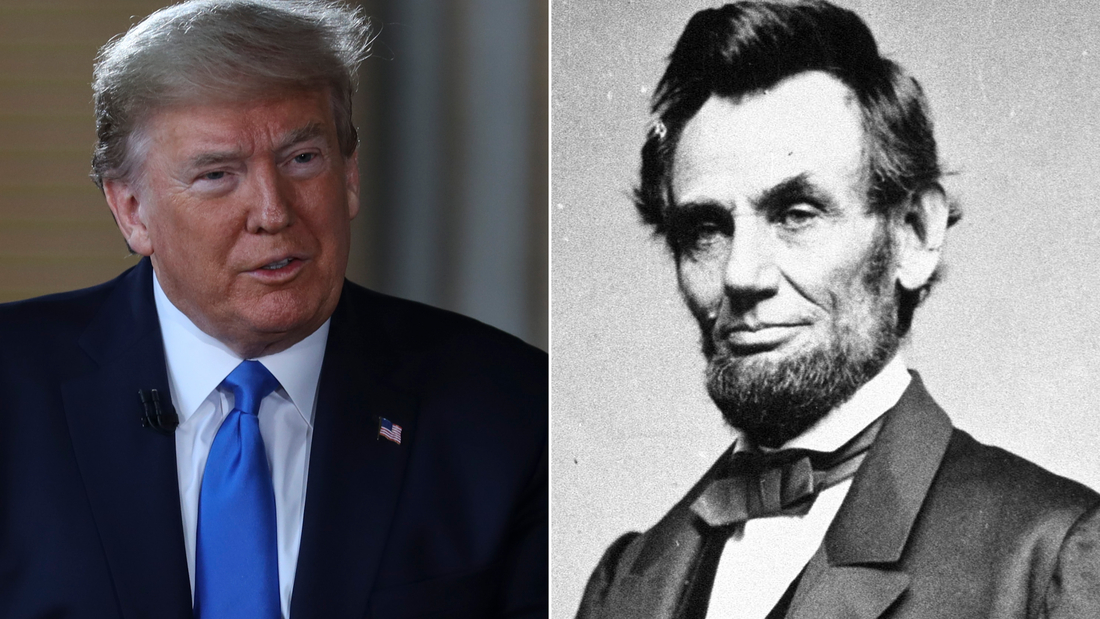
Is this the biggest election since 1860? Let our expert explain why
The upcoming U.S. presidential election is happening in unprecedented times and during what could be the most divisive era in more than a century and a half. This week, one of the University of Connecticut’s historical experts, Manisha Sinha, was featured by CNN to explain her point that America is indeed facing its biggest election in 160 years. “The 2020 presidential election is certainly as consequential as that of 1860. It is, as Biden is fond of saying, a battle for the 'soul of America.' The fate of the American republic once again hangs in the balance. Like the slaveholders of the 1850s, Trump, his followers and enablers are in a position to pose an existential threat to American democracy. Like many slaveholders, Trump refuses to commit to a peaceful transfer of power if he loses. "If history appears first as tragedy, then as farce, the counterparts of southern secessionists and proslavery theorists today are QAnon conspiracy theorists, neo Confederates, and the right-wing Boogaloo boys. Much of the contemporary Republican Party that refuses to repudiate Trump is like those southern Whites who may not have had a direct stake in slavery but went with their states, who ultimately chose slavery before the republic. The choice -- as the Republicans of the Lincoln Project, who have broken with their party, put it -- is between America and Trump.” Dr. Sinha’s full op-ed is available on CNN.com and is a must-read for anyone looking to put this year’s election into historical context. And, if you are a journalist looking to cover this topic, let our experts help with your coverage. Manisha Sinha is the Draper Chair in American History at the University of Connecticut and the author of "The Slave's Cause: A History of Abolition." She is available to speak with media regarding this topic – simply click on her icon now to arrange an interview today.



Playing dirty in 2020 – but does negative advertising actually work in elections?
2020 has been a historic year – on so many fronts. And as the summer of an election year approaches – soon we will be inundated with speeches, policies, promise and advertisements for what might be the most hotly contested and divisive election on record. Political advertising comes in many forms. Social media will be the new battle ground but hundreds of millions of dollars will be spent between now and November in traditional areas like television, radio and print. As we all know, no one ‘wants’ to go negative. In fact, most campaigns make (and soon break) their first promise to run a clean and positive campaign. But usually, the inevitable happens and the ads go negative. Now that the June primaries are in the books except for the June 23 runoffs, the countdown to November’s election is underway. You’ll gradually see more and more political advertising. On the state and national levels, most of the pitches to date have been building up a particular candidate. Negativity has not been at the level of elections in the past. Look for that to change. It was true then and it will be true now. Writing ahead of the 2018 midterm election, a reporter for InsideSources.com, Andrew Solender, cited a study shedding light on why negative advertising is so prevalent in elections. Michael Lewis and David A. Schweidel of Emory University and Yanwen Wang of the University of British Columbia initially planned to look at using social media as a tool for predicting election results. But as social media rapidly became commonplace in elections, they shifted their focus to the impact and efficacy of negative advertising, a staple of elections. “For forever, voters have expressed disgust with the level of negative advertising,” Lewis said, “but we see a lot of it. So, [the question was] does it actually work?” According to the data their study produced, it does. But under certain conditions. Looking at correlations between the volume of negative ads and the vote shares achieved by U.S. Senate candidates in 2010 and 2012, the researchers found that “while positive political advertising does not affect two-party vote share, negative political advertising has a significant positive effect on two-party vote shares.” However, they also found that the source of the ads makes a difference in the ads’ efficacy, noting “negative advertising sponsored by PACs is significantly less effective than that sponsored by the candidate or party in affecting two-party vote shares.” June 18 - The Times and Democrat The road to the White House, and just about every other elected office up for grabs this November will be under heavy scrutiny and lots of coverage. If you’re a journalist covering this topic – then let our experts help. Professor Michael Lewis is an Associate Professor of Marketing at Emory University’s Goizueta Business School. Professor Lewis is an expert in political marketing and is available to speak to media – simply click on his icon to arrange an interview today.