
Experts Matter. Find Yours.
Connect for media, speaking, professional opportunities & more.
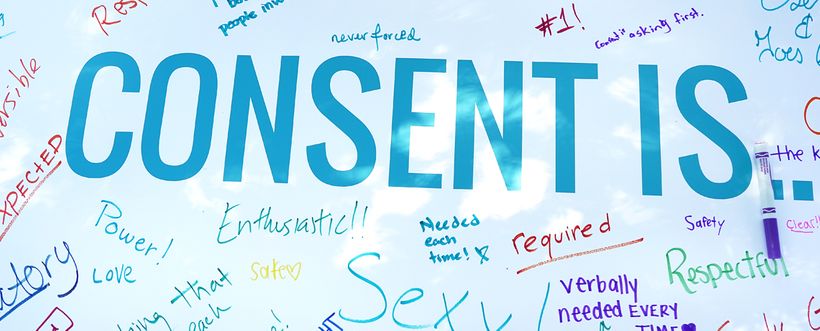
Women often don't label their sexual assaults as rape. Our experts can explain.
Many sexual violence survivors do not label their experiences as rape but instead use more benign labels, such as “bad sex” or “miscommunication.” Laura C. Wilson, an assistant professor of psychology at the University of Mary Washington, led a review of 28 academic studies to estimate how often women who’ve been sexually assaulted do not label their experience as rape. Across the studies, the researchers find that 60.4 percent of women, on average, did not recognize their experience as rape even though it fit the definition — an unwanted sexual experience obtained through force or the threat of force or a sexual experience they did not consent to because they were incapacitated. “This finding has important implications because it suggests that our awareness of the scope of the problem may underestimate its true occurrence rate, depending on the type of measurement,” the authors write. “This impacts policy reform, allocations of mental health services, survivors’ perceptions of their experiences, and society’s attitudes toward survivors.” For more information on this study, visit: http://journals.sagepub.com/doi/abs/10.1177/1524838015576391 Laura C. Wilson is available to speak with media regarding this topic and study. To contact her, simply click on her icon to arrange an interview.



Ethics Quandary? Women in PR More Apt to Seek Allies Before Giving Execs Advice
Women in public relations are more likely than men to seek allies and form coalitions before they give ethics counsel to senior leaders, while men are more likely to rely on presenting research, according to a Baylor University study. The study also showed that while senior public relations executives in the study overall tend to use “rational approaches,” such as research, case studies and appeals about what is right and lawful, success depends on building relationships with colleagues in other departments so that they have backup when ethical issues arise. “A PR person can be the conscience, but are they listened to? Are they respected? Are they at the table?” one woman said. “You can be doing everything right, but if nobody is listening to you, it really doesn’t matter a whole lot. Except that you can sleep at night.” The study — “The Use of Influence Tactics by Senior Public Relations Executives to Provide Ethics Counsel” — is published in the Journal of Media Ethics. The article highlights the need for younger PR practitioners to seek out senior PR executives as mentors before and during confrontation of ethics issues, said lead author Marlene Neill, Ph.D., assistant professor of journalism, public relations and new media in Baylor’s College of Arts & Sciences and author of the book “Public Relations Ethics: PR Pros Tell Us How to Speak Up and Keep Your Job.” “What inspired us to conduct this research were findings from a study I conducted in 2016 with Millennials working in public relations,” Neill said. “Survey results indicated that Millennials did not feel prepared to provide ethics counsel, were unlikely to speak up and did not even expect to face ethical dilemmas. We decided to conduct this study to instruct them how to do this effectively based on the experiences of senior executives working in our industry.” Researchers conducted through in-depth interviews with an elite selection of 55 public relations executives, many of them with Fortune 500 companies. They included members of the *Public Relations Society of America (PRSA) College of Fellows and The Arthur W. Page Society, with the combined sample averaging 33 years in PR. They represented 19 states and industries including government, healthcare, telecommunications, financial services and energy. Interviewees discussed ways to exert influence, ethics training and whether they are of value as an ethics counselor. “Some see it as being of little use; some recommend the PR practitioner take a modest role in encouraging consideration of ethics among multiple leaders,” Neill said. But others felt strongly that they should be an “organizational conscience” when they think company actions might pose an ethical dilemma with troubling consequences. One reason to do so is that without “boat-rocking” with straightforward tactics an organization, some may turn outside the company by whistleblowing or leaking information to stakeholders, media or government officials. “Our study found that building relationships was critical for practitioners to ensure that other executives would listen to and respect their counsel,” Neill said. “That doesn’t mean they always won the debate, but relationship building has to do with building respect and trust.” While the interviewees’ most common approach to influencing was rational, followed by coalition-building, “some said they relied on persistence and assertiveness if they felt an issue was so objectionable they could not stay silent,” Neill said. “A few people turn to ingratiation, such as flattery.” When it comes to differences in how genders approach the role of ethics counselor, one reason women may recruit allies is that they tend to be outnumbered by men in the boardroom, Neill said. One woman said that “Going in force can help your case. But sometimes it can backfire . . . you know, if somebody wants to kill the messenger. But if several people come to you with the same messaging, I think you take notice.” Another woman said that she was “reprimanded for being so forthright. So, I didn’t do it that way anymore.” Some women were wary of using emotional appeals. Because of stereotypes about women being emotional in the workplace, “I probably erred in the other direction,” one woman said. Men, meanwhile, were more likely to prefer informational sources of power such as research and case studies, Neill said. But both genders said they ask questions, discuss, listen, share alternatives or solutions and recommend. A few men and women used more confrontational descriptions, such as saying, “We absolutely put our foot down” and “Tell them it’s wrong.” But in the case of women, “some of these more confrontational accounts were used in connection with allies or coalitions,” Neill said. In a few cases, men and women gave examples of resigning accounts or refusing to accept new clients if they decided the client’s business was not worth the ethical cost. Many interviewees said they had received ethics training through PRSA. A few said they had received training through their employer, college courses, personal study and mentors. A few pointed to their religious upbringing. Some of the more common ethics issues centered around communication, such as open disclosure of information, inaccurate information or sending fake letters to an editor. But others were business challenges, such as abusive behavior toward subordinates, misuse of public funds, smear campaigns and conflicts of interest. Neill said that because the study was limited to 55 individuals, a larger study and surveys of senior PR executives in other nations would be valuable. She and a colleague next plan to study to women’s leadership experiences. *PRSA College of Fellows is an exclusive group of approximately 350 senior professionals, each with a minimum of 20 years of experience in PR, Accreditation in Public Relations and recognition for distinguished careers. The Arthur W. Page Society is open by invitation to chief communications officers of Fortune 500 corporations and leading nonprofit organizations, chief executive officers of PR agencies and senior professors from business and communications schools. The study was funded by The Arthur W. Page Center for Integrity in Public Communication and supported by the PRSA Board of Ethics and Professional Standards and PRSA College of Fellows. Co-author is Amy Barnes, associate professor in the School of Mass Communications at the University of Arkansas at Little Rock and co-author of “Public Relations Ethics: PR Pros Tell Us How to Speak Up and Keep Your Job.” ABOUT BAYLOR UNIVERSITY Baylor University is a private Christian University and a nationally ranked research institution. The University provides a vibrant campus community for more than 17,000 students by blending interdisciplinary research with an international reputation for educational excellence and a faculty commitment to teaching and scholarship. Chartered in 1845 by the Republic of Texas through the efforts of Baptist pioneers, Baylor is the oldest continually operating University in Texas. Located in Waco, Baylor welcomes students from all 50 states and more than 80 countries to study a broad range of degrees among its 12 nationally recognized academic divisions. ABOUT BAYLOR COLLEGE OF ARTS & SCIENCES The College of Arts & Sciences is Baylor University’s oldest and largest academic division, with 25 academic departments and seven academic centers and institutes. The more than 5,000 courses taught in the College span topics from art and theatre to religion, philosophy, sociology and the natural sciences. Faculty conduct research around the world, and research on the undergraduate and graduate level is prevalent throughout all disciplines.



Sainthood and the legacy of Oscar Romero in El Salvador
If you’re covering the Canonization of Archbishop Oscar Romero, consider Rick Jones, who’s spent his entire career working on poverty and social justice issues in El Salvador. Rick knows first-hand that Romero’s messages are as relevant and necessary as ever. As he puts it: Changing repressive policies, calling on gangs and organized criminal groups to stop the killing, denouncing human rights abuses and caring for the victims is as urgent today as when Romero was archbishop. Based in El Salvador for more than 20 years, Rick works closely with the Church in Latin America on justice issues, including migration, internal displacement and youth violence. He understands well the poverty, violence and political divisions that compelled Romero to defend human rights in the face of death threats and even opposition from his colleagues in the Church. Oscar Romero was Archbishop of San Salvador until he was brutally assassinated on March 24, 1980 while celebrating Mass in the chapel of the Divine Providence cancer hospital where he lived. More than three decades later he was declared a martyr of the Church, killed out of hatred of the faith, and was beatified on May 23, 2015. Rick is available to speak with media regarding Romero’s legacy and what his sainthood represents for El Salvador and Latin America. To arrange an interview, simply click on his icon and we will be in touch immediately.

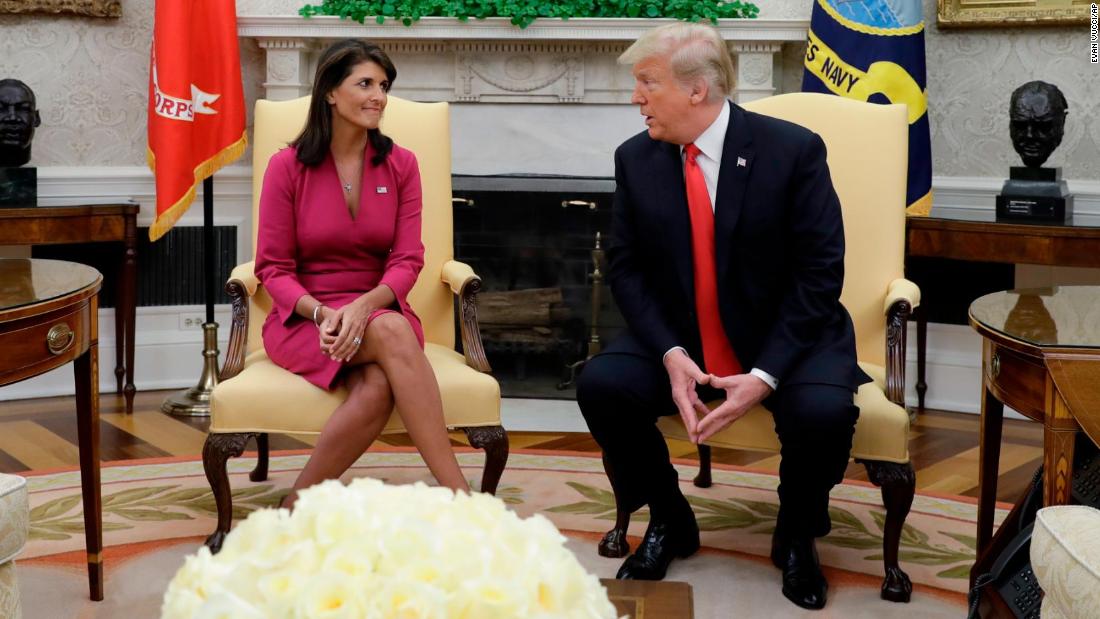
Ivanka to the United Nations? Ask our experts if it is possible!
One of the few shining stars is fading from the Washington skyline – and Nikki Haley’s departure as America’s Ambassador to the United Nations has the beltway speculating on her replacement. President Trump had eyebrows raised and tongues wagging when he trial-ballooned his daughter Ivanka as a suitable replacement. There’s also talk of Dina Powell, the well respected former Deputy National Security Advisor for Strategy to President Donald Trump. But who else is on the list and how key of a role is this as America reshapes its foreign policy. There are a lot of questions and a lot of educated guessing going on right now and that’s where the experts from Cedarville University can help. Dr. Glen Duerr’s expertise and research interests include nationalism and secession, comparative politics and international relations theory. Dr. Duerr is available to speak to media regarding this topic – simply click on his icon to arrange an interview.


With the legalization of cannabis less than two weeks away, CAA South Central Ontario (CAA SCO) is releasing new research showing that 1.9 million Ontario motorists have driven under the influence of cannabis, and over 735,000 have done so in the last three months. The statistically representative study, commissioned by CAA and conducted by Ipsos in July 2018, surveyed 1000 Ontarians over the age of 19 who own, lease or drive a vehicle and have a valid driver’s license. One of the big issues uncovered is the prevalence of ‘poly-users’, people who consume cannabis and alcohol or other mixed substances during the same time period. CAA’s research shows that 205,800 Ontario drivers admit to drinking alcohol and using cannabis before getting behind the wheel in the last 3 months. Those who have driven a car under the influence of cannabis and alcohol, tended to do so in social settings such as gatherings with family and friends and at bars/clubs/pubs. “Road safety needs to be prioritized as a leading issue as cannabis becomes legal in the coming weeks, but it’s clear that the focus can’t solely be on cannabis-impaired driving,” said Elliott Silverstein, manager, government relations, CAA SCO. “We need to take an integrated view of the dangerous behaviours that impact road safety in Ontario and focus public education and enforcement efforts accordingly.” Source:



Cloudhopper - What is it and should we worry?
Earlier this week, the Department of Homeland Security issued a warning that a Beijing based group of hackers -dubbed ‘cloudhopper’ was mounting a potential cyber-attack on American based institutions. The Chinese government has denied these claims vigorously and stated that China does not support hacking. So, what is cloudhopper? What businesses and institutions are most vulnerable? And does America need to increase its focus on cyber-security and digital threats? There are a lot of questions – and only a few leading experts who can help explain the situation. That’s where Cedarville can help. Dr. Seth Hamman is an assistant professor of computer science at Cedarville. Seth is an expert in cybersecurity education. Dr. Hamman is available to speak with media – simply click on his icon to arrange an interview.
Bigly: the effect of Trump's rhetoric on national security
Going against the findings of his own intelligence community, President Donald Trump has called Russian meddling into the 2016 U.S. presidential election a “hoax.” In a recent turn of events, though, the president accused China of interfering with the midterm elections. Has President Trump’s rhetoric on the intelligence community and hesitancy to hold Russia accountable influenced countries, such as China, to also try meddling in U.S. elections? “If people and foreign officials start believing President Trump’s rhetoric, there is a possibility, that we will face issues of doubt and trust concerning U.S. policy and commitments,” said Craig Albert, an expert in U.S.-Russian security affairs, director of the master of arts in intelligence and security studies and associate professor of political science at Katherine Reese Pamplin College of Arts, Humanities and Social Sciences at Augusta University. “Also, President Trump’s rhetoric helps prop up Vladimir Putin as being equal in stature to the leader of the free world and gives Kremlin and Putin greater credibility with Russian citizens and the near abroad.” Midterm elections are on the horizon, and Putin will continue election meddling regardless of Trump’s actions or rhetoric, Albert said. “Russia, under Putin’s leadership, will continue to increase its cyber activity against all sectors of the U.S., including and especially into the cognitive hacking of our electoral process,” he said. Cognitive hacking is when fake sources are used to spread fake news on social media. The success of Russia’s meddling in the 2016 election is emboldening other actors, like China. “Non-state actors like ISIS and Al Qaeda feel empowered to engage in both cognitive and source hacking in order to shift American public opinion,” Albert said. “We already believe China and Iran have engaged in similar operations. It won’t be long before ISIS utilizes the same type of intelligence operations because they are low risk, extremely high reward operations. Albert is available to discuss: • How President Trump’s rhetoric affects the U.S. intelligence community • How Trump’s apparent support for Russia empowers Putin and the Kremlin to continue meddling into U.S. elections • How Russia’s actions are emboldening other non-state actors • Why Trump’s denial of Russian meddling into U.S. elections can further damage U.S. relations with its allies Contact us to schedule an interview with Albert or to learn more about his expertise. Source:


Latest push in fake news is pushing fake experts
During the 2016 presidential election, hundreds of fake sources used social media to spread fake news. Many of these posts were traced back to the Internet Research Agency, a Russian troll farm that used social networks to create divides among Americans and influence the election. This is known as cognitive hacking and is the real scandal of the 2016 election, said Dr. Craig Albert, director of the Master of Arts in Intelligence and Security Studies program and associate professor of political science at Katherine Reese Pamplin College of Arts, Humanities, and Social Sciences at Augusta University. Fake sources using social media to spread fake news are often able to reach a large audience who may never realize the stories are false, Albert said. In some instances, entire organizations and groups have been created under false pretenses and have had millions of social media followers. “When so many people see fake news on their newsfeeds, they become a product of their belief in a fake story,” Albert said. “So, a fake story controls their opinions.” Now, Russia is taking fake news a step farther. The newest trend is creating a false persona to push fake news on U.S. news organizations. “They will have an expert create a story, and they will create credentials and a website to give credibility to this individual,” Albert said. “When media outlets try to ascertain the credibility of a person they typically visit the individual’s website or look at their resume. It appears legitimate, so the source is validated, and news outlets run the story.” In many cases, though, these are false stories by individuals with fake credentials. Albert calls this source hacking. Dr. Albert is an expert on American politics and political philosophy. He has experience with all forms of local and national news organizations and is available to speak to media regarding cognitive and source hacking. Contact us to schedule an interview with Dr. Albert or to learn more about his expertise. Source:

Will gun control be a ballot box issue this November?
This week celebrated National Voter Registration Day, a cross-country effort to encourage those who have not registered to vote in the upcoming elections to take a mere three minutes to register. With Washington divided and both houses competing for power, November’s mid-terms will be a showdown between parties, ideas and polices. Gender may also play a part in how the results come out. Rosalyn Cooperman, a member of Gender Watch 2018, a non-partisan project to track, analyze and illuminate gender dynamics in Election 2018, writes that the difference between men and women voters on guns matter in the midterms. A recent poll of registered voters by Morning Consult and Politico shows there are important differences in attitudes about gun control measures among and between Democratic, Republican, and Independent men and women voters. This may be one of the most contentious and hard-fought elections in history. That’s where our experts can help. Dr. Rosalyn Cooperman's expertise focuses on women in politics. She is available to speak with media regarding this issue in America. Simply click on Rosalyn’s icon to arrange an interview. Source:


Real solutions to the world’s refugee crisis
Just last week, the United States announced its lowest refugee cap in history. Meanwhile, for the fifth year in a row, globally, we have reached a record number of displaced people around the world whose displacement will likely last decades. Refugees are increasingly living outside of camps in middle to low-income countries where they struggle to get their footing. At the same time, the communities that host them are burdened by the influx of a needy population and the tension that can arise when aid bypasses local organizations. Recently, a panel hosted by Catholic Relief Services invited key industry leaders to discuss these challenges and how responding agencies, governments and donors can better support the local communities in ways that promote safety, dignity, and lasting solutions. Bill O'Keefe is the Vice President for Government Relations and Advocacy with Catholic Relief Services and oversees the efforts to impact U.S. foreign policy in ways that reduce poverty overseas. Bill is available to speak to media regarding refugees and how those lasting solutions can be found. Simply click on his icon to arrange an interview. Source: