
Experts Matter. Find Yours.
Connect for media, speaking, professional opportunities & more.

Why Did NATO Assembly Select Dayton, Ohio?
Why was Dayton, Ohio selected to host the 2025 Spring NATO Parliamentary Assembly? Ohio's Gem City will host 282 NATO members and nearly 100 partner legislators for gathering. This is the first time in 20 years that a U.S. city held this meeting. The NATO civilians are gathering at The NATO Village, a secure location in downtown Dayton, to discuss critical issues in relation to NATO's defense and security agenda. They will also be examining the war in Ukraine. Two logistical reasons for why Dayton was selected is its proximity to Wright-Patterson Air Force Base, a base that focuses on national security, and Dayton is the location where the Dayton Peace Accords were signed 30 years ago. The Accords aided in the ending of the Bosnian War. Congressman Mike Turner (OH-10), head of the U.S. delegation to the NATO Parliamentary Assembly, has been the driving force behind getting the Parliamentary Assembly to Dayton. During this five-day event NATO leaders will examine membership, defense funding, increasing fiscal contributions, strategic deterrence and transatlantic security bond. It is expected that at least two new plans will be proposed to assist in the aforementioned goals. The leaders wish to ensure Ukraine of their support in their fight for freedom and will be considering ways to enforce their support. Dr. Glen Duerr, professor of international studies at Cedarville University and a citizen of the United Kingdom, Canada, and the United States, is a nationally known expert on this subject and is available to speak to media regarding the NATO Spring Parliamentary Assembly and the implications is has for the U.S. and Dayton, Ohio. To schedule an interview, email Mark D. Weinstein, executive director of public relations at Cedarville University at mweinstein@cedarville.edu or click on his icon.


Could China Beat America in the Race to Get Boots Back on the Moon?
Call it a matter of pride, national security or a desire for astronomical dominance; there's a sense of urgency within the U.S. government to return to the moon, sparked by China's team of taikonauts, who could land there before American astronauts get back to the lunar surface. The latest space race is a topic that is making national news. Florida Tech's experts are lending their opinions and insights about the likelihood of a lunar return, and what it might mean. NASA, with the urging of many politicians, has been racing to get astronauts back to the moon — before the Chinese land taikonauts on the lunar surface. But what’s the rush to return to a place the United States has already been and left 53 years ago? Especially when Mars looms as an enticing option for interplanetary travel. Space experts say there’s plenty of reasons for the urgency: national pride and national security. But also returning to the moon and building habitats would mean long term dominance in space and ensure access to resources that NASA didn’t know where there when the Apollo missions flew. Now with the Chinese making significant progress in human space exploration, the clock is ticking. “The Chinese in the last 20 years have made amazing strides in all aspects of space. They’re sending robots to the moon on a very regular basis. Now they’re doing some pretty amazing activities even on the far side of the moon, and they have a Chinese space station now in Earth orbit,” said Don Platt, associate professor of space systems at Florida Tech. Can China beat NASA to the moon? “The Chinese have really caught up,” said Platt. “I do believe that the Chinese are definitely advancing their efforts on the moon, and are identifying it as a critical aspect of their strategic future in space." When asked about the prospect of Chinese astronauts making it to the moon before NASA's planned Artemis III mission, Platt said he believes it’s a possibility and he cited the efforts China is making to highlight the importance of the nation's space efforts to its own populace. “They have some amazing videos. They’re really engaging the Chinese public, and really using it to do what what we’ve always done in space, and that is to inspire the next generation and to show the world the technical abilities of the Chinese,” said Platt. May 21 - USA Today The race is on, and it's getting a lot of attention. If you're a journalist following this ongoing story, let us help with your coverage. Dr. Don Platt's work has involved developing, testing and flying different types of avionics, communications and rocket propulsion systems. He also studies astrobiology and biotechnology systems and human deep space exploration tools. Don is available to speak with media anytime. Simply click on the icon below to arrange an interview today.


When Luis Quiroga-Nuñez, Ph.D was appointed director of Florida Tech’s Ortega Observatory and its primary tenant – a non-functioning, 32-inch telescope – in 2023, he decided it was time to provide astronomy students and others a window to space. The observatory is already a base for research across a spectrum of cosmic exploration through disciplines such as astronomy and astrophysics, heliophysics, planetary science and astrobiology. However, current students have yet to see the stars up close, as the aging telescope, commissioned in 2008, has sat dormant for the last several years. With restoration, the telescope could be a powerful tool to train students to use professional telescopes and make observations – critical skills that will help prepare them for their future careers. It soon became apparent, however, that this was no simple task. The restoration would necessitate reverse engineering on a large scale to even understand how to fix and upgrade the telescope, much less actually repair it. It would also, as Quiroga-Nuñez wisely recognized, be its own powerful educational opportunity, providing unique hands-on learning opportunities for students in the College of Engineering and Science. “We are an institute of technology. We have perfectly capable people, like these young students, ready to join hands-on projects, get crazy and start to be creative.” Luis Quiroga-Nuñez With various issues to tackle and eager to support home-grown expertise, Quiroga-Nuñez and Lee Caraway, Ph.D, an instructor in the department of electrical engineering and computer science, recruited students with varied backgrounds, from astronomy to electrical engineering and computer science. Students could apply what they learned in class and grow their portfolios with a real-world project, the sort of experiential learning that is a hallmark of a Florida Tech education. Some improvements have been made, but the project remains an exciting puzzle for students and faculty alike. Here’s how they are doing it. An Interdisciplinary Project In January 2023, Quiroga-Nuñez partnered with Caraway to rebuild the telescope from the inside out. They say the conversation started over lunch, sketching ideas on a napkin. With various issues to tackle and eager to support home-grown expertise, Caraway and Quiroga-Nuñez recruited students with varied backgrounds, from astronomy to engineering to computer science. “This is about as real-world as you can get without leaving school. We have this giant piece of technology that is not working. Figure out why,” said recent graduate Adrianna Agustin ’24, who helped update the telescope’s communication system. “All of those problem-solving skills will directly translate to wherever we go in the future.” The project’s multidisciplinary nature also boosts collaboration between both sides of the college. “We keep integrating different parts of the university and involving students in a project that we were blinded by,” Quiroga-Nuñez says. “We sit between the scientists and the engineers.” And there’s no shortage of tasks. In addition to the refurbishment, Quiroga-Nuñez and Caraway are also completing routine telescope maintenance, with students taking on adjacent projects around the observatory. With the telescope repair, each student is given their own task, such as redesigning a small clip that supports the dome’s electric current, reviewing the conditions of the finder’s lens or understanding how analog devices control the telescope’s focus. This allocation allows each student to claim their own individual contribution to the greater telescope puzzle. Opening a Time Capsule The telescope’s biggest issues were mechanical and electrical, all exacerbated by age. Its motors were decades old and naturally failing, Caraway said. These motors controlled the telescope’s right ascension and declination – essentially, its ability to move. The chaotic interior also involved multiple individual systems with dozens of wires. And the circuits controlling the motors, which dated back to the 1980s, were also failing due to age. As Caraway noted, his students are sweeping off “dust older than them.” “The technology back then simply did not exist to control the motors, run the diagnostics and make it all happen,” Caraway explained. “They’re not designed to run 30 years.” Additionally, the computer program that controlled the motors was outdated and did not meet to the university’s security requirements. Given all this, the team needed to develop a new communication system for the telescope, starting with the computer software. They decided instead of purchasing an upgraded computer system, they could build and program their own in-house from scratch. Next, once the new computer was up and running, it needed motors to command. Marisa Guerra ’24 worked on a senior design project involving a robotic arm whose motor structure was the same as the telescope’s. She crafted a blueprint for the telescope’s new motors using what she learned for her capstone project. At the same time, Agustin worked on developing a cleaner communication system between the computer to the motors. Her senior design research focused on electric vehicles and their internal circuit systems, and she could replicate something similar within the telescope – but not without digging through the decaying electronics first. “We had to reverse engineer and actually redraw the circuits, which was good practice because a lot of the time, for senior design at least, you don’t really have to design a new circuit. You are just kind of puzzle-piecing it together,” Agustin said. “But with this circuit, all of them were bad.” Using Guerra’s and Agustin’s senior design research, the team reprogrammed the telescope’s circuits. What once took 20 wires to operate now only takes two. They also reduced the weight of the telescope’s motors from 40 pounds to just 2 pounds. Once the communication system was finished, the team was just waiting for mobility. And on a day in Spring 2024, thanks to the refurbished system, they were able to create movement within the telescope for the first time in years. “I didn’t even know if that device could move internally,” Quiroga-Nuñez says. The moment was celebrated, but the team knew this success triggered a new challenge. It was time to tackle high astrometric precision – a crucial element of properly tracking movement in space. “We are pointing to tiny points in the sky. If we do not track that properly, we are going to be lost in the universe,” Quiroga-Nuñez says. The Value of Time Perfecting precise movement is expected to take some time, but that’s not a bad thing, Quiroga-Nuñez says. He believes that a lengthy timeline will offer more value in the long run because it will give even more students a chance to get involved. Besides, its primary purpose will be to teach students how to use a telescope and allow them to make observations and prepare for their future careers. Ultimately, Quiroga-Nuñez predicts that the telescope could pick up its first image from space in about a year if everything stays on track. However, the team still has a lot of ground within the telescope to uncover, with an unpredictable number of potential troubleshooting challenges. For example, while rebuilding the motor, they discovered that the internal mirror that illuminates the telescope’s visuals was in poor condition – it needed cleaning and new aluminum to reflect enough light to see the telescope’s imagery, Agustin explains. So, the team had to remove the mirror and ship it to New York for refurbishment – a process that took several months. Once the mirror is reinstalled, they can return to their quest for better precision. The mirror is just one example of unpredictability in reverse-engineering. Ultimately, dedicating more time to understanding and solving the unforeseen challenges allows more students to participate in the telescope’s journey, Quiroga-Nuñez says. “This is like a big Lego for them,” he says. “They are learning the process, and the students, I think, will have found a very valuable life experience.” If you're interested in connecting with Luis Quiroga-Nuñez, director of Florida Tech’s Ortega Observatory - simply contact Adam Lowenstein, Director of Media Communications at Florida Institute of Technology at adam@fit.edu to arrange an interview today.
NASA Asks Researchers to Help Define Trustworthiness in Autonomous Systems
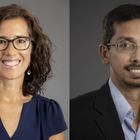
A Florida Tech-led group of researchers was selected to help NASA solve challenges in aviation through its prestigious University Leadership Initiative (ULI) program. Over the next three years, associate professor of computer science and software engineering Siddhartha Bhattacharyya and professor of aviation human factors Meredith Carroll will work to understand the vital role of trust in autonomy. Their project, “Trustworthy Resilient Autonomous Agents for Safe City Transportation in the Evolving New Decade” (TRANSCEND), aims to establish a common framework for engineers and human operators to determine the trustworthiness of machine-learning-enabled autonomous aviation safety systems. Autonomous systems are those that can perform independent tasks without requiring human control. The autonomy of these systems is expected to be enhanced with intelligence gained from machine learning. As a result, intelligence-based software is expected to be increasingly used in airplanes and drones. It may also be utilized in airports and to manage air traffic in the future. Learning-enabled autonomous technology can also act as contingency management when used in safety applications, proactively addressing potential disruptions and unexpected aviation events. TRANSCEND was one of three projects chosen for the latest ULI awards. The others hail from Embry-Riddle Aeronautical University in Daytona Beach – researching continuously updating, self-diagnostic vehicle health management to enhance the safety and reliability of Advanced Air Mobility vehicles – and University of Colorado Boulder – investigating tools for understanding and leveraging the complex communications environment of collaborative, autonomous airspace systems. Florida Tech’s team includes nine faculty members from five universities: Penn State; North Carolina A&T State University; University of Florida; Stanford University; Santa Fe College. It also involves the companies Collins Aerospace in Cedar Rapids, Iowa and ResilienX of Syracuse, New York. Carroll and Bhattacharyya will also involve students throughout the project. Human operators are an essential component of aviation technology – they monitor independent software systems and associated data and intervene when those systems fail. They may include flight crew members, air traffic controllers, maintenance personnel or safety staff monitoring overall system safety. A challenge in implementing independent software is that engineers and operators have different interpretations of what makes a system “trustworthy,” Carroll and Bhattacharyya explained. Engineers who develop autonomous software measure trustworthiness by the system’s ability to perform as designed. Human operators, however, trust and rely on systems to perform as they expect – they want to feel comfortable relying on a system to make an aeronautical decision in flight, such as how to avoid a traffic conflict or a weather event. Sometimes, that reliance won’t align with design specifications. Equally important, operators also need to trust that the software will alert them when it needs a human to take over. This may happen if the algorithm driving the software encounters a scenario it wasn’t trained for. “We are looking at how we can integrate trust from different communities – from human factors, from formal methods, from autonomy, from AI…” Bhattacharyya said. “How do we convey assumptions for trust, from design time to operation, as the intelligent systems are being deployed, so that we can trust them and know when they’re going to fail, especially those that are learning-enabled, meaning they adapt based on machine learning algorithms?” With Bhattacharyya leading the engineering side and Carroll leading the human factors side, the research group will begin bridging the trust gap by integrating theories, principles, methods, measures, visualizations, explainability and practices from different domains – this will build the TRANSCEND framework. Then, they’ll test the framework using a diverse range of tools, flight simulators and intelligent decision-making to demonstrate trustworthiness in practice. This and other data will help them develop a safety case toolkit of guidelines for development processes, recommendations and suggested safety measures for engineers to reference when designing “trustworthy,” learning-enabled autonomous systems. Ultimately, Bhattacharyya and Carroll hope their toolkit will lay the groundwork for a future learning-enabled autonomous systems certification process. “The goal is to combine all our research capabilities and pull together a unified story that outputs unified products to the industry,” Carroll said. “We want products for the industry to utilize when implementing learning-enabled autonomy for more effective safety management systems.” The researchers also plan to use this toolkit to teach future engineers about the nuances of trust in the products they develop. Once developed, they will hold outreach events, such as lectures and camps, for STEM-minded students in the community. If you're interested in connecting with Meredith Carroll or Siddhartha Bhattacharyya - simply click on the expert's profile or contact Adam Lowenstein, Director of Media Communications at Florida Institute of Technology at adam@fit.edu to arrange an interview today.

Do We Need to Worry About Safety at the United States' Busiest Airports?
For the second time in two weeks, air traffic controllers directing planes into the Newark, New Jersey, airport briefly lost their radar. The outages have sparked travel chaos, with hundreds of flight delays and cancellations after the FAA slowed air traffic to ensure safety. The country's aging air traffic control system is in the spotlight. Media, politicians and the public are demanding both solutions for the system and answers on how safe traveling is at the moment. To provide insight, Florida Tech's Margaret Wallace is lending her expert opinion and perspective on the issue. Margaret Wallace is Assistant Professor of Aviation Management at Florida Institute of Technology, where she teaches Air Traffic Control and Airport Management courses. She spent over 15 years in the industry prior to teaching as an Airport Manager (4 years) at Ramstein Air Base in Germany and an Air Traffic Controller (10+ years) in the U.S. Air Force. “The recent communication failure at Newark Liberty International Airport has raised serious concerns about the safety and dependability of air traffic control systems in the United States. On April 28, 2025, the Newark air traffic facilities lost all radio communication with approximately 20 airplanes for up to 90 seconds due to an equipment breakdown. During the outage, pilots and controllers were unable to communicate. Controllers were unable to maintain aircraft separation during crucial flight phases, and pilots were unable to receive air traffic clearances and instructions. Situations like this, as well as aircraft incidents, bring stress and trauma to the controller's mental state. Most people cannot fathom how much mental stress the controller experiences in everyday job settings. Situations with defective equipment, combined with lengthy work hours due to a scarcity of controllers, appear to have taken their toll based on the fact that several controllers have taken leave for mental stress. This situation posed a safety risk to all planes and passengers. Fortunately, there were no incidents, and everyone remained safe. However, this demonstrated some of the flaws in the outdated air traffic system equipment. Sean Duffy, the new Transportation Secretary, has acknowledged the critical need to improve our current technology. While air travel is generally safe, our current administration must continue to prioritize the upgrade of air traffic systems and increasing the staffing in air traffic facilities. To ensure safety, I believe we should consider having airlines restrict the number of flights available and the Air Route Traffic Command Center to introduce delays to avoid overloading the system.” Margaret Wallace If you're interested in connecting with Margaret Wallace about the ongoing issues at airports across the country, let us help. Contact Adam Lowenstein, Director of Media Communications at Florida Institute of Technology, at adam@fit.edu to arrange an interview today.
Experts in the Media: With Kemp bowing out of mid-terms is Georgia staying blue?
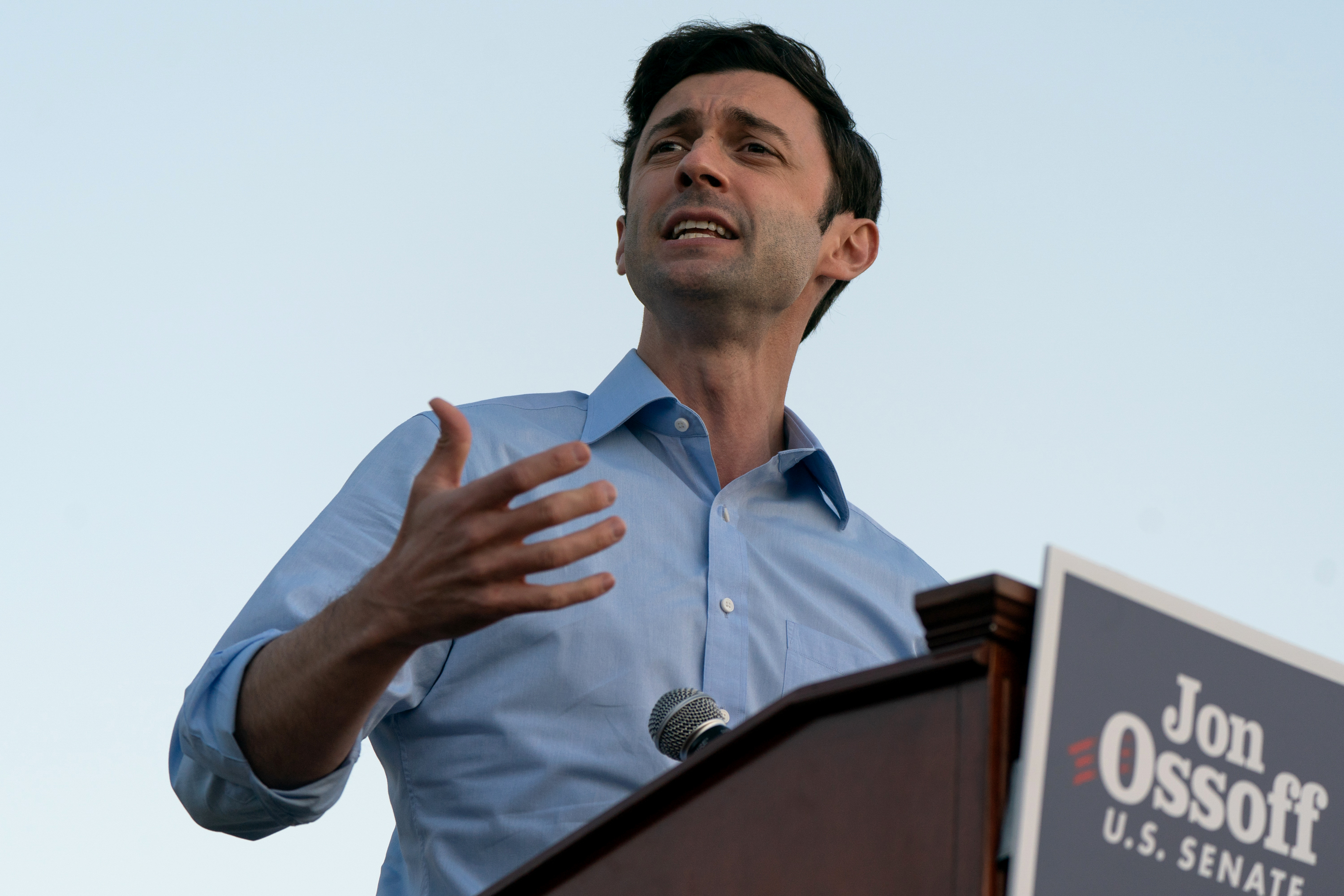
Control of the Senate is key for most administrations, and with a razor-thin edge favoring the Republicans, any pickup to keep control of the Senate after the mid-term elections is a priority. However, with a heavy favorite in Gov. Brian Kemp stepping away from the chance to run for the GOP, many are speculating the once traditionally Republican stronghold could stay blue under the Democrats with the re-election of Sen. Jon Ossoff. It's a topic that has political watchers and media trying to cover and figure out as parties get ready to get back on the campaign trail for next year. It's also why journalists and news outlets like Newsweek are connecting with experts like William Hatcher, PhD, for expert opinion and perspective. An award-winning scholar, Hatcher is the chair of the Department of Social Sciences and a professor of political science. His research focuses on the connection between public administration and the development of local communities. Kemp's decision not to challenge Ossoff in the state's 2026 Senate race could be a boon to Democrats' chances of holding the seat in the battleground state, according to recent polls... Kemp's announcement follows months of speculation about whether he would challenge Ossoff, a Democrat first elected in 2020. Polls suggest Kemp would have been the strongest candidate against Ossoff and that other potential Republicans trail the incumbent senator in a hypothetical matchup. "Given that Kemp was perhaps the strongest candidate to face Ossoff, his decision to not run will make it difficult to find another candidate that would be as competitive. However, the election is over a year away, and in politics, a lot can happen in that amount of time," William Hatcher, chair and professor of social sciences at Augusta University, told Newsweek on Tuesday. A poll from the Atlanta Journal-Constitution found that Kemp led Ossoff by 3.3 points (49% to 45.7%), Ossoff led three other prospective challengers. That poll surveyed 1,426 respondents from April 24 to April 27, 2025, and had a margin of error of plus or minus 2.9 percentage points. Hatcher said the state Republicans face a "limited" bench to challenge Ossoff, but whoever prevails will eventually have to defend Trump's "unpopular economic policies that will most likely adversely affect states like Georgia, particularly his recent commentary on leveling tariffs on the film industry – a industry that has a significant presence in Georgia." May 06 - Newsweek The race is obviously already on for the mid-term elections in November of 2026, and if you're a journalist looking to cover Georgia politics, let us help. William Hatcher, PhD, is available to speak with media - simply click on his icon now to arrange an interview today.


Most companies around the world have a leader, whether that title is a President, CEO, or Founder. There’s almost always someone at the very top of a corporate food chain, and from that position down, the company is structured hierarchically, with multiple levels of leadership supervising other employees. It’s a structure with which most people in the working world are familiar, and it dates back as long as one can remember. The word itself—leader—dates back to as far as the 12th Century and is derived from the Old English word “laedere,” or one who leads. But in 2001, a group of software engineers developed the Agile Workflow Methodology, a project development process that puts a priority on egalitarian teamwork and individual independence in searching for solutions. A number of businesses are trying to embrace a flatter internal structure, like the agile workflow. But is it necessarily the best way to develop business processes? That’s the question posed by researchers, including Goizueta Business School’s Özgecan Koçak, associate professor of organization and management, and fellow researchers Daniel A. Levinthal and Phanish Puranam in their recently published paper on organizational hierarchies. “Realistically, we don’t see a lot of non-hierarchical organizations,” says Koçak. “But there is actually a big push to have less hierarchy in organizations.” Part of it is due to the demotivating effects of working in authoritarian workplaces. People don’t necessarily like to have a boss. We place value in being more egalitarian, more participatory. Özgecan Koçak, Associate Professor of Organization & Management “So there is some push to try and design organizations with flatter hierarchies. That is specifically so in the context of knowledge-based work, and especially in the context of discovery and search.” Decoding Organizational Dynamics While the idea of an egalitarian workplace is attractive to many people, Koçak and her colleagues wanted to know if, or when, hierarchies were actually beneficial to the health of organizations. They developed a computational agent-based model, or simulation, to explore the relationships between structures of influence and organizational adaptation. The groups in the simulation mimicked real business team structures and consisted of two types of teams. In the first type, one agent had influence over the beliefs of rest of the team. For the second type, no one individual had any influence over the beliefs of the team. The hierarchical team vs. the flat structured team. “When you do simulations, you want to make sure that your findings are robust to those kinds of things like the scale of the group, or the how fast the agents are learning and so forth,” says Koçak. What’s innovative about this particular simulation is that all the agents are learning from their environment. They are learning through trial and error. They are trying out different alternatives and finding out their value. Özgecan Koçak Koçak is very clear that the hierarchies in the simulation are not exactly like hierarchies in a business organization. Every agent was purposefully made to be the same without any difference in wisdom or knowledge. “It’s really nothing like the kinds of hierarchies you would see in organizations where there is somebody who has a corner office, or somebody who is has a management title, or somebody’s making more than the others. In the simulation, it’s nothing to do with those distributional aspects or control, and nobody has the ability to control what others do in (the simulation). All control comes through influence of beliefs.” Speed vs. Optimal Solutions What they found in the simulation was that while both teams solved the same problems presented to them, they achieved different results at different speeds. We find that hierarchical teams don’t necessarily find the best solution, but they find the good enough solution in the shorter term. So if you are looking at the really long term, crowds do better. The crowds where individuals are all learning separately, they find the best solution in the long run, even though they are not learning from each other. Özgecan Koçak Özgecan Koçak (pronounced as ohz-gay-john ko-chuck) is associate professor of Organization & Management at Emory University’s Goizueta Business School. She holds a Ph.D. in organizational behavior from the Graduate School of Business at Stanford University. For example, teams of scientists looking for cures or innovative treatments for diseases work best with a flat structure. Each individual works on their own timeline, with their own search methodologies. The team only comes together for status updates or to discuss their projects without necessarily getting influence or direction from colleagues. The long-term success of the result is more important in some cases than the speed at which they arrive to their conclusion. That won’t work for an organization that answers to a board of directors or shareholders. Such parties want to see rapid results that will quickly impact the bottom line of the company. This is why the agile methodology is not beneficial to large-scale corporations. Koçak says, “When you try to think about an entire organization, not just teams, it gets more complicated. If you have many people in an organization, you can’t have everybody just be on the same team. And then you have to worry about how to coordinate the efforts of multiple teams. That’s the big question for scaling up agile. We know that the agile methodology works pretty well at the team level. However, when firms try to scale it up applied to the entire organization, then you have more coordination problems. Özgecan Koçak “You need some way to coordinate the efforts with multiple teams.” The Catch: Compensation Makes a Difference The simulation did not take into account one of the biggest parts of a corporate hierarchical structure—incentives and reward. The teams in the simulation received no monetary compensation for their leadership or influence. That is not something that happens in real life. Koçak says, “If you built up an organization with just influence, you just say we’re not going to have any authority, and we’re not going to give anybody the right to control anybody else’s actions. If we’re not going to be rewarding anyone more than the other, there’s not going to be any marks of status, etc. We’re just going to have some people influence others more. I would guess that would automatically lead to a prestige hierarchy right away. The person with more influence, you would start respecting more.” It’s almost like we’re incapable of working in a flat society, because somebody always wants to be or naturally becomes a leader and an influencer whether they planned on it or not. Özgecan Koçak The paper concludes that both methodologies, with either hierarchical and flat organization of teams, reach their goals. They just arrive at different times with different end results. If an organization has the luxury of time and money, a flat, agile methodology organization might be the right structure for that company. However, even agile workflow needs some coordination, according to Koçak. “There are also some search tasks that require coordination. You can’t always be searching on your own independently of others. There are some situations in which search needs to be done in a coordinated fashion by more than one person in teams. That’s because many of the knowledge-based settings where we do discovery require some division of labor, some specialization by expertise.” Communication is Key The key to any successful workflow, whether it be agile or hierarchical, is coordination and communication. Looking back to the example of scientific researchers, Koçak said, “You have scientific teams working independently of one another without a common boss dictating what they do research on or how they do it. Instead, they explore and experiment on their own. They write up their results, share their results, and learn from each other, because they are in the long-term game. The goal is to find the truth, however long it takes. “But when you look closely at a scientific team where everybody’s exploring, there is still some need for coordination. A lot of that happens through communication, and a lot of times projects will have a lead. Not necessarily somebody who knows better than the others, but somebody who’s going to help with coordination.” The leaner, flatter organizational structures in businesses might be gaining popularity. This simulation done by Koçak and colleagues, however, shows that it isn’t a perfect fit for every company, Further, some form of hierarchical workflow is necessary to maintain communication and coordination. Hierarchical structures don’t always find the best solution to a problem, but it’s almost always a good solution in a timelier fashion. Looking to know more? Özgecan Koçak is associate professor of Organization & Management at Emory University’s Goizueta Business School. She is available to speak with media about this topic - simply click on her icon now to arrange an interview today.



Today, on CAA’s National Slow Down, Move Over Day, the Government of Manitoba, the RCMP and CAA representatives came together at the Manitoba Legislature to remind motorists about the importance of Manitoba’s Slow Down, Move Over law (SDMO), a life-saving law designed to protect emergency responders and roadside workers. “We are pleased that the Manitoba government has proclaimed May 13th as Slow Down Move Over Day to help bring awareness to the laws designed to protect emergency responders, tow operators, and highway workers who are stopped on the side of the road to save lives on Manitoba roadways,” said Ewald Friesen, manager of government relations for CAA Manitoba. Minister of Transportation and Infrastructure Lisa Naylor stated, “Every day, workers risk their lives to keep our roads safe and we are asking Manitoba drivers to take one simple, life-saving action: slow down and move over.” The timing is especially important as Canada Road Safety Week begins on May 13, shining a broader spotlight on making Canadian roads safer for all. CAA has been the leading advocate in Canada to ensure that 'Slow Down, Move Over' laws include tow trucks, along with police, ambulance and fire. "Most drivers tend to slow down and move over for police cars, ambulances, and fire trucks, but this is lower for tow trucks. It's important to always remember that for many, the side of the road is someone's workplace, and everyone deserves a safe place to work. Slow Down, Move Over laws protect our roadside rescuers, and the stranded drivers we serve every day,” reinforced Friesen. CAA’s research shows that Manitobans care deeply about the safety of emergency vehicles, drivers and stranded motorists. Data also shows that 8 in ten CAA Members have heard of the Slow Down, Move Over law, and 99 per cent support it. Just over half, however, know the definition of the law, underscoring that there is still important work to do to help drivers understand exactly what the law requires a driver to do. Over 1/3 of members are not aware of specific penalties, though they do know a penalty exists and 4 in ten Manitobans aged 65 and above are unaware of any penalties. Sergeant Mark Hume, Unit Commander, North West Traffic Services, Manitoba RCMP highlighted, “Violators can be charged under Section 109.1(2) of the Highway Traffic Act ($298 fine) at a minimum. Aggravated circumstances can result in more severe charges.” The consequences of neglecting these laws can be tragic, not only for roadside workers but also for drivers and passengers. The hope is that this initiative will help remind drivers of the importance of safe driving behaviours and encourage everyone to do their part to keep Manitoba’s roads and highways safe. “Through education and awareness of ‘Slow Down, Move Over’ laws, we wish to support drivers in their crucial role in preventing incidents and fostering a culture of care and safety on Manitoba's highways,” continued Friesen. If you see an emergency vehicle or tow operator up ahead, reduce your speed and move to an open lane if it is safe to do so. If the posted speed limit is less than 80 km/h you are required to slow down to 40 km/h. If the posted speed limit is 80 km/h or higher you are required to slow down to 60 km/h. For more information about the Slow Down, Move Over law, visit: https://www.caamanitoba.com/advocacy/government-relations/slow-down The online survey was conducted by via an online quantitative survey with 916 CAA Members in Manitoba between February 3 and February 11, 2025. Based on the sample size of n=916 and with a confidence level of 95%, the margin of error for this research is +/- 3.24%.)



The Hidden Power of Invisible Experts
In a fast-moving landscape shaped by AI, hybrid work, and constant information shifts, organizations can’t afford to overlook their own expertise. Yet many still do — because the most valuable voices are often hiding in plain sight. We call them "invisible experts". These aren’t just the well-known thought leaders or executives quoted in media. They’re the researchers, engineers, clinicians, analysts, and project leads quietly shaping strategy, driving innovation, and influencing outcomes every day. They have deep knowledge, practical insight, and the credibility to build trust — but they’re often left out of the spotlight. And that’s a problem. --- The Expertise Gap Many organizations, both corporate and institutional struggle to define what makes someone an “expert”. Without a clear framework, expertise is often equated with job title, seniority, or public visibility. But in reality, expertise is multidimensional. It includes formal education, yes — but also lived experience, community influence, original research, and the ability to explain complex ideas clearly. If your organization wants to stay competitive, earn media attention, attract speaking engagements, partnerships, or influence your industry, you need a deeper bench of visible expertise. And it starts by identifying who your real experts are — not just the obvious ones. --- 7 Dimensions of Expertise Here are seven ways to think about expertise beyond the traditional credentials: Authority – Known as a go-to source in their domain. Advocate – Actively supports and elevates their professional community. Educator – Shares knowledge through teaching, speaking, or mentoring. Author – Publishes original insights or thought leadership content. Researcher – Contributes new data, analysis, or findings in their field. Practitioner – Applies knowledge in real-world contexts daily. Graduate – Has academic or technical training in a focus area. Not every expert is made for the stage or the media spotlight — and that’s okay. Some are best behind the scenes, helping create compelling content, briefing spokespeople, or surfacing insights from the field. Your job is to recognize the different ways people can contribute and make that part of your strategy. --- Visibility ≠ Seniority In the era of LinkedIn, personal branding, and AI-powered content, professional visibility is no longer tied to hierarchy. A mid-career professional, with a sharp take on current events might be more discoverable — and more in demand — than a long-tenured exec with little digital presence. That’s why organizations need to shift from thinking about expertise as a ladder, to thinking of it as an ecosystem. Not every expert wants to build a personal brand, but many are ready to contribute — if they’re supported and recognized. Here’s the truth: If you don’t tell your story, someone else will. And if you don’t help your experts show up in the right places — search engines, newsrooms, speaker directories, donor meetings — opportunities will go elsewhere. --- Give Your Experts a Digital Home Even after you've identified your internal experts, the next question is: Where do they live online? Too many organizations treat expert content like an afterthought — scattered across bio pages, outdated PDFs, or buried in press releases. To unlock the real value of your expertise, you need to give it a proper home. That means: Expert Profiles that showcase credentials, insights, and media-friendly info Expert Posts that surface their latest research, commentary, and thought leadership Searchable Directories that help media, partners, and the public find the right voice fast Inquiry Management tools that streamline incoming requests and drive results A centralized platform makes it easier for both internal teams and external audiences to discover, engage, and activate your expertise — whether it’s for media interviews, event invitations, donor conversations, or strategic partnerships. Without it, you're leaving visibility and value on the table. --- Is Your Organization Ready? Expertise is one of your most valuable and underutilized assets — but turning it into impact requires more than a list of names. You need to take stock of your internal bench strength, identify the experts who are ready to lead, and invest in the systems that make their voices heard. Start by asking: Who in our organization has untapped insight? Who’s already engaging audiences but flying under the radar? What tools, platforms, and support can we provide to amplify them? Recognizing your invisible experts is just the first step. Giving them a digital home and helping them engage with the right audiences — that’s how you turn knowledge into opportunity. Learn more about how ExpertFile helps organization's shine the light in these Invisible Experts.



Rural health documentary earns Peabody Award for Georgia Southern professor
Georgia Southern University Professor Matthew Hashiguchi has won a Peabody Award for his documentary, “The Only Doctor,” which focuses on rural health and the services provided by a single doctor in southwest Georgia. The Peabody Awards are prestigious accolades in storytelling across television, radio, streaming and other digital mediums. Categories for winning a Peabody include journalism, social video, interactive documentary, gaming and more. The nearly hour-long feature received the award in the Public Service category, which recognizes projects that address or respond to public health concerns, enhance public engagement or educate the public. For Hashiguchi, the award represents a personal and career accolade. “This award isn’t just a professional achievement, but also represents a moment in my life where I became a father,” said Hashiguchi. “I started filming right before my first daughter was born, and finished right after the second. While this award is an incredible acknowledgment of my work, it means even more to me as a priceless moment from their childhood.” The documentary focuses on Karen Kinsell, M.D., the sole physician serving 3,000 citizens in Clay County, Georgia, near the Georgia-Alabama border. The film spotlights the plight of a community in need of medical assistance and the dedicated doctor fighting to keep her clinic’s doors open. Hashiguchi delves into Kinsell’s sacrifices for her clinic’s operations, revealing her commitment to her patients. “Dr. Kinsell gets calls at home at all hours of the day and night,” Hashiguchi said. “She, at times, has had to pay the bills from her own bank account. But I’d say the biggest sacrifice is that she’s a doctor who does not have breaks.” The final cut of “The Only Doctor” is a bit different from the angle Hashiguchi took when he began work on it several years ago. He initially started the project to better understand the risks associated with maternal health care and childbirth when he and his wife were expecting their first child. Through his work, he learned of a more complex issue of health care access in rural communities. The documentary first premiered on the PBS program Reel South and is now available internationally on Al Jazeera’s documentary series “Witness.” Hashigchi’s work earned him a 2019 Gucci Tribeca Documentary Fund award and a 2021 American Stories Documentary Fund award from Points North Institute. The film’s world premiere took place at the 2023 Hot Docs International Documentary Film Festival in Toronto, Canada, and was awarded Best Documentary Feature at the 2024 South Georgia Film Festival, Best Feature at the 2023 Newburyport Documentary Film Festival and Award of Merit at the 2023 University Film and Video Association Conference. His rise to media prominence wasn’t on his radar early in his academic career. He described himself as a “C student,” and still sees himself as that young boy struggling with math and science courses. With one of the nation’s highest media honors, he can show his students new paths to success as well as the skills it takes to win a Peabody. “I want my students to know how I failed and know that I struggled,” he said. “I tell them that if they want to excel, they really have to put in hard work. That’s very much who I am now as I devote myself to these films.” If you're interested in learning more and want to book time to talk or interview with Matthew Hashiguchi then let us help - simply contact Georgia Southern's Director of Communications Jennifer Wise at jwise@georgiasouthern.edu to arrange an interview today.
