
Experts Matter. Find Yours.
Connect for media, speaking, professional opportunities & more.

Is South Florida soon to be the next Las Vegas? Our expert can tell you if it's a good a bet or not?
There's a lot of buzz in Florida around gambling right now. Legal sports betting, live roulette and live craps might soon become a reality in the Sunshine State, adding to the economic bonanza and possible social consequences that comes with allowing these activities to expand. Expectations are high, and it's an idea getting a lot of coverage. In less than a month, in-person sports betting, craps and roulette will, presumably, begin at all South Florida casinos and elsewhere in the state, though that anticipated launch may hinge on a favorable ruling from the Florida Supreme Court. The launch is expected to drive tourists and businesses to South Florida and elsewhere in the state, create jobs, and bring in billions of dollars in revenue. Though investors and hotel owners might not want to push all their chips in just yet. There are serious legal issues that still need to be overcome as well as opposition from the Seminole Tribe and the anti-casino group No Casino. The idea though, has media contacting local experts like Florida Atlantic's Peter Ricci for perspective and insight. Peter Ricci, a Florida Atlantic University professor who specializes in hospitality and tourism industry trends, thinks that South Florida will see an uptick heading into the Super Bowl, but most of what he hears from local businesses and hospitality employees is uncertainty rather than excitement. “What I’ve heard is questions about ‘when is it starting?'” he said. ” … ‘Are they hiring for blackjack dealers? What does this mean? Will they expand the hotel?’ All these questions but nothing specifically pro or con about actual sports betting itself.” November 13 - Sun Sentinel Whether Florida can become the next Las Vegas is up to the courts, but if you are a reporter following this ongoing story - we're here to help. Peter Ricci is the Director of the Hospitality and Tourism Management program in Florida Atlantic University’s College of Business. He is a hospitality industry veteran with more than 20 years of managerial experience in segments including food service, lodging, incentive travel and destination marketing. Peter is available to speak with the media about tourism in Florida and the potential for gambling. Simply click on his icon to arrange an interview.



Public health workers faced unprecedented threats during the pandemic
A new study led by Jennifer Horney, founder of the University of Delaware's Epidemiology program, shows that threats to public health workers nearly doubled after the COVID-19 vaccine was released in August 2021. The results, recently published in an open-access commentary in Public Health in Practice, demonstrate a strong need for expanded legal protections for all frontline workers. They also illustrate a need to boost the resilience of the public health workforce, which can be achieved through training, coping, protective services and media management. While public health workers have always received threats, including during the SARS and Zika outbreaks, the COVID-19 pandemic threats were different. “These threats were more personal in nature,” said Horney, a professor in UD's College of Health Sciences. “Due to the proliferation of social media and the politicization of the pandemic, for the first time, public health leaders were finding protesters on their doorsteps or were being doxed.” Horney and her team surveyed staff at state and local health departments in 23 states – most of them epidemiology or communicable disease staff. The initial online survey found that 25% of respondents said someone in their public health agency had received personal threats. That percentage practically doubled to 41% in a follow-up survey. Of those, respondents said nearly all the personal threats were lodged by members of the public. Almost 40% reported receiving political threats. The threats reported by public health workers who responded to the survey ranged from death threats to blame for COVID-19 deaths due to incompetence. Horney is available for interviews to discuss the study and other topics related to the public health response to COVID-19 and the impacts of natural disasters on public health. Click on her profile below to contact Horney and the UD media relations team.


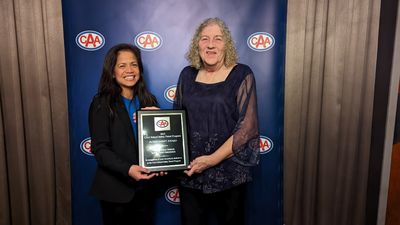
[ Left to Right: Kathryn Gratton, Elementary School Resource Coordinator and Deputy Chief Jason Saunders, Brantford Police Service. ] CAA South Central Ontario (CAA SCO) is proud to recognize two of its CAA School Safety Patrol® (SSP) program partners, the Brantford Police Service and, Windsor-Essex Schools Safety Patrol Association (WESSPA) for their outstanding contribution and dedication to the program. “CAA takes the safety of children and pedestrians very seriously and we work closely with our community and police partners to protect, educate and empower elementary school students to help keep their peers safe travelling to and from school.” says Tracy Marshall, manager of community relations at CAA SCO. “We are proud to celebrate this year’s CAA School Safety Patrol Program Achievement Award winners for their commitment to the program’s mission of keeping school zones safe,” adds Marshall. Kathryn Gratton, a civilian who works for the Brantford Police Service was recognized for going above and beyond to ensure program participants in her community were never left behind. Gratton has served her community through the CAA SSP program for four years and has trained over 2,300 Patrollers. This year, when other local regions were unable to train Patrollers, Gratton sprung into action to ensure students wouldn't miss out on the program. She continued training her schools and voluntarily offered to train other schools as well. From the 2022/23 school year alone, she has trained 26 schools and over 500 Patrollers. She also attended each school individually and had a pizza party with snacks and drinks for the Patrollers to show her appreciation for their hard work throughout the year. Through her proud involvement in the program, Gratton has clearly demonstrated the Brantford Police Service mission statement of being committed to enhancing safety for all. Brantford Police Service have been participating in the SSP program for over 50 years. [ Left to Right: Bernadette Arreola Community Program Consultant, CAA SCO and Linda Dowell, Windsor-Essex Schools Safety Patrol Association (WESSPA) ] Linda Dowell, who has been with the WESSPA for 18 years as the SSP regional partner, was recognized for her exceptional leadership that has directly impacted the program’s success. After a two-and-a-half-year hiatus due to the pandemic, the WESSPA brought back the CAA SSP program in September 2022 with 55 schools and over 1,000 Patrollers. Through Dowell’s leadership, WESSPA was able to re-integrate all their program components and incentives. This included ensuring Patrollers, bus operators and local police partners received extensive school bus safety and foot patrol training as well as hosting special events for program participants. Despite being retired, Dowell has chosen to continue serving her community through the SSP program because of her passion and commitment to school zone safety. The WESSPA have been participating in the SSP program for over 80 years. The CAA School Safety Patrol® program has helped keep students safe in school zones since the 1920s by assisting at school crossings and on school buses. Every year, approximately 900 schools in Ontario participate in the CAA SSP program and CAA SCO partners with local partners to deliver the program. For more information, visit www.caaschoolsafetypatrol.com.



Cold and winter weather is about to settle in and CAA South Central Ontario (CAA SCO), Toronto Police Service (TPS), Ontario Provincial Police (OPP), and the Ontario Government want to know: are you winter ready? The four organizations have joined forces to help inform Ontarians that now is the time to get your winter tires installed, check your car battery and stock your car with an emergency kit with all the essentials needed for the winter months. “Our weather can be unpredictable, especially in the winter. It’s important to think ahead and prepare before driving conditions become hazardous,” says Nadia Matos, Manager External Communications, CAA SCO. “It all comes down to safety and there’s no time like the present to ensure you and your car are properly equipped.” TPS, OPP and the Ontario Government are also reinforcing the importance of driver behaviour. "The safety of Ontario’s roads is always a top priority, and we are continuing to work closely with our road safety partners to promote safe driving habits this winter season,” says Prabmeet Sarkaria, Minister of Transportation. “Road safety is everyone’s responsibility, so when you’re heading out, always remember to slow down and drive according to weather and road conditions. Together, we can keep Ontario’s roads and highways safe for everyone this winter.” “Winter driving can be stressful. Motorists need to be alert at all times when on the road, even in the most routine circumstances like driving to and from work,” says Police Constable Sean Shapiro, Toronto Police Service. “That includes slowing down and driving according to weather conditions and ensuring you give yourself plenty of time to get to your destination.” This year motorists also need to be aware of new amendments to the Highway Traffic Act. “It is now illegal to pass snowplows working side by side on Ontario highways. Only pass a snowplow if the lane is completely clear of any part of the plow, including its blade,” says Sargeant Kerry Schmidt, Ontario Provincial Police. Offenders may face a fine ranging from $150 to $1,000. This winter, before heading out on the road motorists can download and use the 511 app to check the weather and road conditions before they leave home. The 511 app can be found at 511on.ca or in the app store on your mobile device. Motorists should also refer to some other tips to help make their winter drive a safer one: Keep your gas tank at least half full at all times. Cold weather causes condensation in the system, which can lead to fuel-line freeze-up and can prevent your car from starting. Remove excess snow from your car before driving off. Any snow left on the roof might slide down onto the windshield and obstruct your vision. Keep your wiper fluid full. Keep extra fluid in your trunk. Make sure it’s rated for -40℃. Pack a fully stocked emergency kit. The kit should include a flashlight and extra batteries, warning devices (e.g., flares, reflective vests/strips), a first aid kit, blankets, jumper cables, non-perishable food and water plus a phone charger. Be sure to also keep an ice scraper, small shovel and snow brush handy in your car at all times.


Ask Our Expert: Why it’s important to get a flu vaccination
As cold and flu season approaches, it’s time to take proactive steps to ensure the health and well-being of everyone. Getting a flu vaccination is be the best defense in staying healthy this time of year. Klaus Ley, MD, founding co-director of the Immunology Center of Georgia, part of the Medical College of Georgia at Augusta University, emphasizes the significance of getting vaccinated against the flu. “The flu can have serious consequences and by getting vaccinated, you protect yourself and those around you,” Ley said. “It’s a simple yet effective way to prevent the spread of this contagious virus.” Flu vaccination is not only a responsible choice but also a crucial step in maintaining public health. The World Health Organization records about 1 billion cases of influenza each year. Severe cases often result in hospitalizations, contributing to up to 650,000 respiratory-related deaths globally. Worried about potential side effects from the vaccine? Ley said that’s a minor concern compared to the effects of the full-blown flu. According to the Centers for Disease Control and Prevention, life-threatening allergic reactions to flu shots are very rare. While severe reactions are uncommon, it’s important to let your health care provider know if you have a history of allergy or severe reaction to vaccines before getting a flu shot. “Common side effects from a flu shot could include soreness or swelling at the site of the injection, headache, low-grade fever, nausea, muscle aches or fatigue. Those minor side effects are an indication your immune system is responding as it should to the vaccination. You will experience much more severe fever, aches and other symptoms if you catch the flu without being vaccinated against it,” said Ley. Klaus Ley, MD, is the Georgia Research Alliance Bradley Turner Eminent Scholar in Immunology, founding co-director of the Immunology Center of Georgia, and a professor in the Department of Physiology at the Medical College of Georgia at Augusta University. He's available to speak with media regarding flu season and vaccinations - simply click on his icon now to arrange an interview today.


Where Will Millennials Take Us?
They’ve been described as entitled, self-centered and shallow. “Selfie-stick wielding, ‘KeepingUp with the Kardashians’-watching, soft-in-the-middle whiners” – Psychology Today. Worldwide, though, millennials (to whom also are attributed awesome characteristics like adaptability and creativity) are 1.8 billion strong, the most populated age group in modern history. And they’re soon to be our political, economic and social leaders. Where will they take us? How will their views shape our world? Jared McDonald’s new book, Citizens of the World, Political Engagement and Policy Attitudes of Millennials Across the Globe, uses data to examine this generation, born into technology, the “war on terror,” global interconnectedness and high unemployment. Published by Barnes & Noble in October 2022, the text looks at millennials’ attitudes about lifestyle, family life, gender roles, politics, religion and the future to better understand how governance might change under their leadership … and the influence they already wield. Millennials are a hot topic ... and for better or worse always in the news it seems as journalists, employers, parents and even professors work to figure this generation out. And if you'd like to know more - that where we can help. Published author and Assistant Professor of Political Science and International Affairs, Jared McDonald is available to speak with media - simply click on his icon now to arrange an interview today.



Research explores recreational shark fishing's impact on protected species
In Delaware, recreational shark fishing is popular, with anglers taking part in half- and full-day shark fishing trips. However, they are prohibited from keeping protected species of sharks. A University of Delaware research team led by Aaron Carlisle, assistant professor in UD's School of Marine Science and Policy (SMSP), is studying the impact of releasing these sharks, aiming to understand their post-release survival and how fishing operations handle them. Carlisle, graduate student Bethany Brodbeck and Ed Hale, assistant professor and aquaculture specialist for Delaware Sea Grant, are conducting the field research for the study, riding along with recreational fishing vessels to better understand what happens to sharks when they are caught and released. Another component to the research is being led by George Parsons, E.I. du Pont Professor at UD’s College of Earth, Ocean and Environment, who is looking at the economic aspect, using survey-based research to value the shark fishery and study anglers’ perceptions and attitudes toward sharks and their management. Carlisle said the two concurrent studies will help gauge the biological and economic impacts of the shark fishery in Delaware. “We want to find out how much money the fishery is actually drawing to the economy,” Carlisle said. “We also want to find out how the fishery is actually impacting the populations of sharks in Delaware, especially the protected ones.” The research was funded by Delaware Sea Grant, which helps communities wisely use, manage and conserve coastal resources. To arrange an interview with Carlisle, simply click on the link to his profile. Pressing the contact button and using the form will send your request directly to him and a member of UD's media relations team.

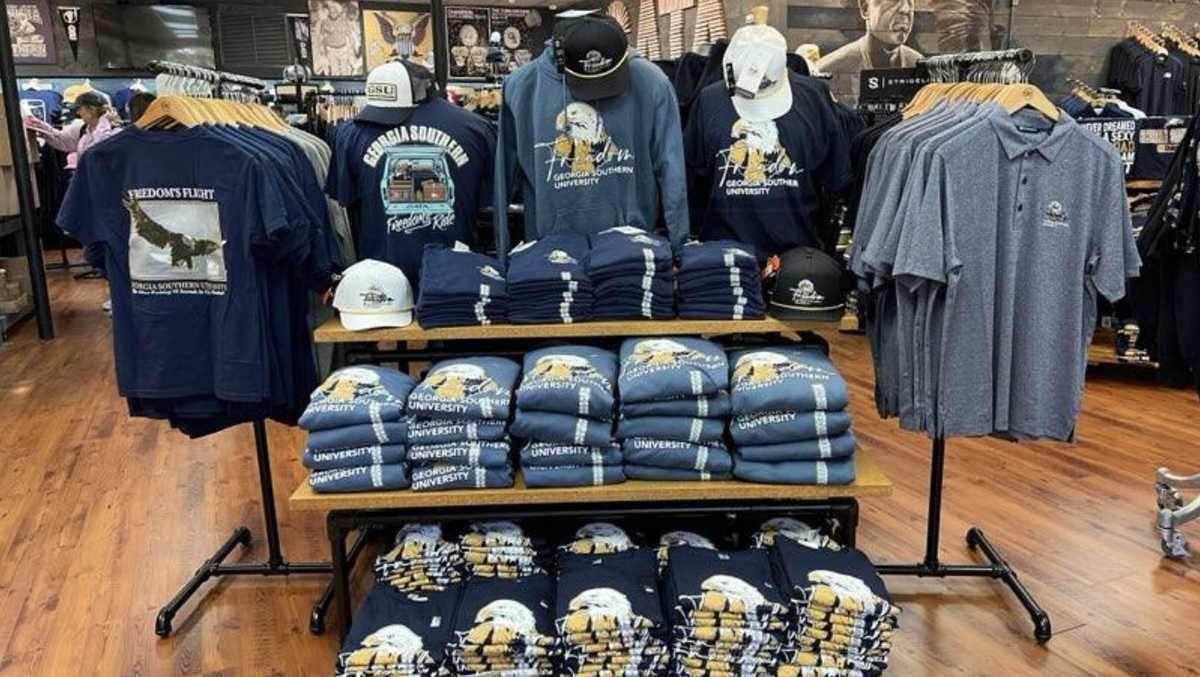
It's been called the most exciting 30 seconds in college football - and recently Freedom, Georgia Southern University’s live bald eagle mascot that flies before each home game was flying high with some serious media attention on TV, radio and print. Unable to survive on his own because of an injury to his beak as a newborn, Freedom came to Georgia Southern in 2004 and now lives at the University’s Center for Wildlife Education in Statesboro alongside other eagles, raptors, reptiles and waterfowl. He will celebrate his 20th birthday this December. The school recently launched a new line of merchandise - and the news soon went viral putting Freedom and his handler, Wildlife Center Executive Director Steve Hein in the spotlight. The coverage was tremendous and if you're looking to know more about Freedom - let us help. Simply click on Wildlife Center Executive Director Steve Hein's icon now or Contact Georgia Southern's Director of Communications Jennifer Wise at jwise@georgiasouthern.edu to arrange an interview today.


Expert Insight: Fake News, Fake Reviews: Building Trust with Online Shoppers
Online customer reviews have become a critically important cog in the sales conversion process in recent years. Studies show that 97 percent of consumers read product reviews and ratings, and that positive reviews can almost triple the likelihood of making a purchase. As customers do more and more of their shopping online, they are turning in droves to the likes of Yelp, TripAdvisor, and Google Reviews to seek out opinions, recommendations, and feedback from other users before pushing through the final part of the sales funnel. As a result, these third-party review sites have experienced exponential growth. But there’s a caveat: and it’s trust. The success of Yelp and its competitors is wholly contingent on how trustworthy their users perceive them to be; on the transparency and authenticity of the content published and the sources of that content. In an era of disinformation with fake reviews and AI mass-generated content precipitously on the rise, securing—and keeping—user trust is paramount. The Five Keys to Fighting Fakery Goizueta Business School’s Sandy Jap has some suggestions. Together with colleagues Ben Beck of Brigham Young University’s Marriott School of Business and Stefan Wuyts of Penn State’s Smeal College of Business, Jap, who is the Sarah Beth Brown Professor of Marketing, put together a series of studies to test the kinds of measures and mechanisms that platforms can deploy to win user confidence. And it turns out there’s one tactic that works more effectively than any other: actively monitoring the authenticity of user reviews. That and being open and transparent about doing so. Jap and her colleagues scoured the latest research and data on marketing, governance, and identity disclosure to pinpoint the mechanisms that best mitigate online fakery, while simultaneously building trust among platform users. They identified five. “We worked through the literature and were able to whittle these down to five core practices that are robustly effective at building trust,” says Jap. “They are monitoring, exposure, community building, status endowment and identity disclosure. Doing these five things can signal to your users that you are committed to being a guardian of their trust, so to speak.” Monitoring or evaluating reviews for their authenticity and exposing firms that pay for and propagate fake content are mechanisms directed at the rogue firms that spread fakery and misinformation, explains Jap. Meanwhile community building and status endowment focus on reviewers. Community building is about enabling authentic, transparent interactions between consumers and reviewers. An example of this might be allowing consumers to ask questions and reviewers to respond directly. “Status endowment is where a platform verifies and acknowledges the credibility or helpfulness of a reviewer in some way. Yelp and others use things like badges or reviewer ratings which are earned over time and which make it hard for fake reviewers to game their systems,” says Jap. Identity disclosure is the practice of having reviewers provide personal information—their name, picture, or location, for instance—before they can post content. And while this approach can keep fabrication and false profiles in check, it also raises certain tradeoffs, says Jap. “Anonymity online has long been understood as something of an un-inhibitor—a factor that enables users to speak more freely and openly. It can be democratizing in the sense that it removes or lessens prejudice and bias around things like race, social class, or physical appearance,” she says. “Of course, having people share personal data on your platform can also open up a can of worms around privacy and identity theft which are major considerations; so there’s a balancing act needed with this.” To test the efficacy of all five trust building policies, including identity disclosure, Jap and her colleagues ran a series of experiments and studies. They invited volunteers to rate how the presence or absence of these mechanisms impacted the trustworthiness of a platform. One study saw them parse things like domain authority and traffic across 25 online review sites against how many (or few) of the five mechanisms each deployed. Elsewhere, the team used surveys to assess how users ranked the different mechanisms in terms of platform trust, above and beyond other factors such as the quantity of reviews published say, or the expertise of different reviewers. The Bottom Line: Bust Bogus Reviews After crunching the data, Jap and her co-authors found that while all five trust-building mechanisms were valued and important to platform users, the practice of monitoring for fake reviews and reviewers—and broadcasting the fact clearly—was by far the most effective. “Doing all of these five things—monitoring, exposing, community building, status endowment and ID disclosure—are important if you want to earn and keep the trust of your users,” says Jap. “We found that the more of these mechanisms that platforms incorporate, the better their domain authority, Alexa site ranking, backlinks, and organic site traffic.” Based on our findings, monitoring your content and communicating that you’re doing this is by far the most powerful cue that you are trustworthy. So that’s where we’d say platforms might want to focus their spend. Many of the biggest review platforms have already taken note of these insights. Yelp recently shared a post to its official blog welcoming the finding that of the 25 sites analyzed in Jap’s study, theirs is one of two platforms that actively implement all five mechanisms. “After examining 25 review platforms, the study found that Yelp is one of two platforms that applies all five mechanisms and as the research states, has become a guardian of trust for review information.” Meanwhile, Jap stresses that these findings should be relevant to any business that is focused on “combating online review fakery.” “All businesses today face the challenge of managing their word-of-mouth reputation. Any firm interested in sharing and leveraging points of view around its products or services, be it a small online retail store or an Amazon, is going to want to go the distance—and be seen to do so—in going to war on fakery and disinformation.” Are you a journalist interested in learning more about the importance and trustworthiness of online reviews? Sandy Jap is available to speak with media - simply click on her icon now to arrange an interview today.



• Rice straw could be a fuel of the future in rural Philippines • Across Asia 300 million tonnes of rice straw go up in smoke every year • New proposals includes scaling up harvesting system with straw removal, biogas-powered rice drying and storage and efficient milling. An Aston University bioenergy researcher has been explaining how rice straw could be a fuel of the future in rural Philippines. Dr Mirjam Roeder who is based at the University’s Energy & Bioproducts Research Institute (EBRI) is collaborating with the UK company Straw Innovations Ltd, Southeast Asian Regional Center for Graduate Study and Research in Agriculture (SEARCA) and Koolmill Systems Ltd to showcase their research. The Food and Agriculture Organisation (FAO) states that rice is the number one food crop globally and 91% of it is produced and consumed in Asia. As a crop it is responsible for 48% of global crop emissions and for every kilogram of rice, a kilo of straw is produced. Across Asia 300 million tonnes of rice straw go up in smoke every year when burnt after harvest, releasing emissions and air pollutants that triple risks of increased respiratory diseases and accelerate climate change. To raise awareness of sustainable uses for rice straw Dr Roeder has travelled to the sixth International Rice Congress in Manila, Philippines to explain the potential of the emerging technology. Rice straw is an underdeveloped feedstock and can be collected and digested to produce biogas, unlocking sustainable straw management options and renewable energy for farmers using anaerobic digestion (AD) from rice straw. Dr Roeder has been working with Straw Innovations on their UK Innovate project demonstration facility in the Philippines, the Rice Straw Biogas Hub, which is scaling up a complete harvesting system with straw removal, biogas-powered rice drying and storage, together with efficient milling. Craig Jamieson, Straw Innovations said: “The International Rice Congress is only held every four years and is a key event for coordinating and tracking progress in rice research. “Our partnership with Aston University and SEARCA adds independent, scientific rigour to the work we do and amplifies our message to government policy makers. We are grateful to Innovate UK for their ongoing support through the Energy Catalyst Programme, which is accelerating our development.” At the conference Dr Roeder has been explaining how independent environmental and social research can increase farmer incomes, equality of opportunity, food security and decarbonisation benefits. She said: “Engaging with stakeholders and working in partnership across organisations is vital to the successful adoption of new technologies. I am delighted to have had the opportunity to host an event with our project partners at this prestigious conference, bringing the cutting-edge research of using rice straw for clean energy to the forefront of the rice research community and supporting the pathway to net zero.” Dr Glenn B Gregorio, Center Director of SEARCA, added: "We are gaining insights into the environmental impact of rice straw utilisation and implementing policies to unleash its potential to empower us to make informed decisions that are instrumental to climate change mitigation and decarbonisation," Professor Rex Demafelis, University of the Philippines, is also working with SEARCA and is leading the project on life cycle analyses and measurements of rice straw greenhouse gas emissions. He said: “Rice straw is a valuable resource, and we are grateful to be part of this team which seeks to harness its full potential and promote circularity, which would ultimately contribute to our goal of reducing our greenhouse gas emissions.” ENDS The Supergen Bioenergy Hub works with academia, industry, government and societal stakeholders to develop sustainable bioenergy systems that support the UK’s transition to an affordable, resilient, low-carbon energy future. The Hub is funded jointly by the Engineering and Physical Sciences Research Council (EPSRC) and the Biotechnology and Biological Sciences Research Council (BBSRC) and is part of the wider Supergen Programme. For further information contact Rebecca Fothergill and Catriona Heaton supergen-bioenergy@aston.ac.uk Follow us on Twitter @SuperBioHub Visit our website at supergen-bioenergy.net Visit our YouTube Channel to watch the video on Carbon Balance FAO: RICE PRODUCTION IN THE ASIA-PACIFIC REGION: ISSUES AND PERSPECTIVES - M.K. Papademetriou* (fao.org) https://www.fao.org/3/x6905e/x6905e04.htm About Aston University For over a century, Aston University’s enduring purpose has been to make our world a better place through education, research and innovation, by enabling our students to succeed in work and life, and by supporting our communities to thrive economically, socially and culturally. Aston University’s history has been intertwined with the history of Birmingham, a remarkable city that once was the heartland of the Industrial Revolution and the manufacturing powerhouse of the world. Born out of the First Industrial Revolution, Aston University has a proud and distinct heritage dating back to our formation as the School of Metallurgy in 1875, the first UK College of Technology in 1951, gaining university status by Royal Charter in 1966, and becoming The Guardian University of the Year in 2020. Building on our outstanding past, we are now defining our place and role in the Fourth Industrial Revolution (and beyond) within a rapidly changing world. For media inquiries in relation to this release, contact Nicola Jones, Press and Communications Manager, on (+44) 7825 342091 or email: n.jones6@aston.ac.uk

