
Experts Matter. Find Yours.
Connect for media, speaking, professional opportunities & more.

Homes heated by human sewage could be a reality thanks to Aston University
Project to transform sewage sludge into clean water and energy awarded a share of £4.5 million by Ofwat Involves extracting energy from the waste produced during sewage and water treatment Gases obtained can be used to power engines or heat people’s homes. An Aston University project that could transform sewage sludge into clean water and energy has been awarded a share of £4.5 million by Ofwat. The University project with engineering consultancy ICMEA-UK involves extracting energy from the waste produced during sewage and water treatment and transforming it into hydrogen and/or methane. The gases can then be used to power engines or heat people’s homes. The aim is to create a sustainable and cost-efficiently run wastewater processes, plus extra energy. The initiative was one of ten winners of Ofwat’s Water Discovery Challenge, of which the Aston University scientists and two industrial partners have been awarded £427,000. Dr Jude Onwudili based at Aston University’s Energy and Bioproducts Research Institute (EBRI) is leading the team of scientists who will work with the partners to develop a trial rig to transform solid residues from wastewater treatment plants to hydrogen and/or methane. The two-stage process will involve the initial transformation of organic components in the sludge into liquid intermediates, which will then be converted to the fuel gases in a second stage. The project is called REvAR (Renewable Energy via Aqueous-phase Reforming), and Dr Onwudili will be working with lead partner and engineering consultancy company ICMEA-UK Limited and sustainable infrastructure company Costain. REVAR combines the use of hot-pressurised water or hydrothermal conditions with catalysts to achieve high conversion efficiency. The technique can treat sewage sludge in just minutes, and it is hoped that it will replace existing processes. In 2013, a Chartered Institution of Water and Environmental Management report stated that the sector is the fourth most energy intensive industry in the UK. Dr Onwudili said: “This project is important because millions of tonnes of sewage sludge are generated in the UK each year and the water industry is struggling with how to effectively manage them as waste. “Instead, they can be converted into valuable feedstocks which are used for producing renewable fuel gases, thereby increasing the availability of feedstocks to meet UK decarbonisation targets through bioenergy. “We will be taking a waste product and recovering two important products from it: clean water and renewable energy. Overall, the novel technology will contribute towards meeting UK Net Zero obligations by 2050 and ties in with the University’s purpose to make our world a better place through education, research and innovation.” The Water Discovery Challenge aims to accelerate the development and adoption of promising new innovations for the water sector. Over the next six months, winners will also receive non-financial support and will be able to pitch their projects to potential water company partners and/or investors. The 10 winning teams are from outside the water industry and were chosen because of their projects’ potential to help solve the biggest challenges facing the sector. The competition is part of the Ofwat Innovation Fund, run by the water regulator Ofwat, with Challenge Works, Arup and Isle Utilities and is the first in the water sector to invite ideas from innovators across industries. Helen Campbell, senior director for sector performance at Ofwat, said: “This competition was about reaching new innovators from outside the sector with different approaches and new ideas, and that’s exactly what the winners are doing. “The products and ideas recognised in this cross-sector challenge will equip water companies to better face challenges of the future – including achieving sustainability goals and meeting net zero targets – all while providing the highest-quality product for consumers.” ENDS A Blueprint For Carbon Emissions Reduction in the UK Water Industry The Chartered Institution of Water and Environmental Management https://www.ciwem.org/assets/pdf/Policy/Reports/A-Blueprint-for-carbon-emissions-reductions-in-the-water-industry.pdf Ofwat Innovation Fund Ofwat, the Water Services Regulation Authority for England and Wales, has established a £200 million Innovation Fund to grow the water sector’s capacity to innovate, enabling it to better meet the evolving needs of customers, society and the environment. The Innovation Fund, delivered in partnership with Challenge Works (formerly known as Nesta Challenges) and supported by Arup and Isle Utilities, is designed to complement Ofwat’s existing approach to innovation and to help deliver against Ofwat’s strategy which highlights the role of innovation in meeting many of the challenges the sector faces. About ICMEA-UK Based in Sheffield, in the North of England, ICMEA-UK is the UK arm of an established Italian innovative engineering company - ICMEA SRL. They are an innovative Engineering consultancy company, and work in partnership with a range of other organisations to provide innovative, bespoke solutions to problems where an Engineering solution is required. About Costain Costain helps to improve people’s lives by creating connected, sustainable infrastructure that enables people and the planet thrive. They shape, create, and deliver pioneering solutions that transform the performance of the infrastructure ecosystem across the UK’s energy, water, transportation, and defence markets. They are organised around their customers anticipating and solving challenges and helping to improve performance. By bringing together their unique mix of construction, consulting, and digital experts they engineer and deliver sustainable, efficient, and practical solutions. About Aston University For over a century, Aston University’s enduring purpose has been to make our world a better place through education, research and innovation, by enabling our students to succeed in work and life, and by supporting our communities to thrive economically, socially and culturally. Aston University’s history has been intertwined with the history of Birmingham, a remarkable city that once was the heartland of the Industrial Revolution and the manufacturing powerhouse of the world. Born out of the First Industrial Revolution, Aston University has a proud and distinct heritage dating back to our formation as the School of Metallurgy in 1875, the first UK College of Technology in 1951, gaining university status by Royal Charter in 1966, and becoming The Guardian University of the Year in 2020. Building on our outstanding past, we are now defining our place and role in the Fourth Industrial Revolution (and beyond) within a rapidly changing world. For media inquiries in relation to this release, contact Nicola Jones, Press and Communications Manager, on (+44) 7825 342091 or email: n.jones6@aston.ac.uk



Covering the Anniversary of the Coronation of King Charles today? Our experts can help
As we mark the anniversary of the coronation of King Charles, we delve into a pivotal moment in history that shaped the trajectory of a nation and its monarchy. This event not only carries historical significance but also holds relevance in contemporary discourse, shedding light on themes of continuity, tradition, and the evolving role of monarchy in modern society. Key story angles that may pique public interest include: Historical Reflections: Exploring the coronation ceremony's historical context, significance, and its enduring impact on the British monarchy. Monarchy in the Modern Age: Analyzing the role and relevance of monarchy in contemporary Britain amidst calls for reform and debates surrounding constitutional monarchy. Cultural Heritage and Identity: Examining how the coronation anniversary fosters a sense of national identity and pride, celebrating traditions and customs that define British heritage. Royal Legacy and Public Perception: Investigating public sentiment towards King Charles's reign, his accomplishments, challenges, and the monarchy's portrayal in the media. Societal Implications: Discussing the monarchy's influence on governance, diplomacy, and national unity, and its role in shaping perceptions of leadership and authority. Global Perspectives: Considering international reactions to the coronation anniversary, its resonance beyond British shores, and its implications for global monarchies and ceremonial traditions. Connect with an Expert about King Charles: Carolyn Harris Historian, Author, Royal Commentator, Instructor, University of Toronto School of Continuing Studies · Helen Wood Professor in Media and Cultural Studies · Aston University Rachel C. Boyle Dean of School · Leeds Beckett University Ruth McClelland-Nugent, PhD Chair History, Anthropology & Philosophy · Augusta University To search our full list of experts visit www.expertfile.com Photo Credit: Samuel Regan-Asante

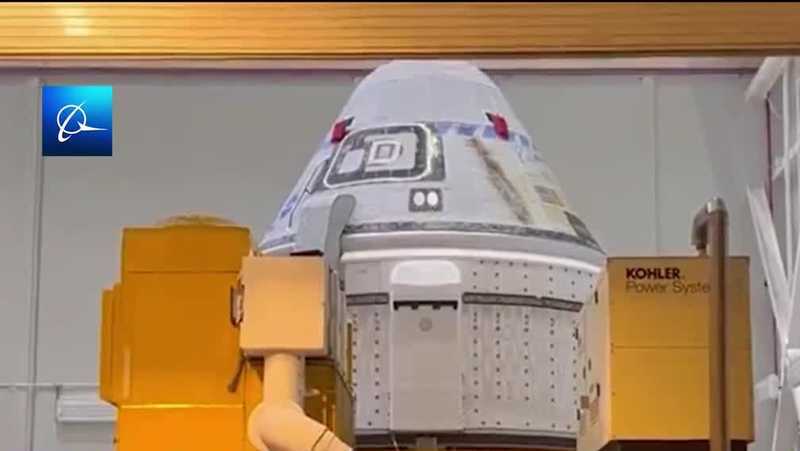
Ready for takeoff! The Starliner is set for its first mission to the ISS
Since 2011, any American astronaut looking to get to or from the International Space Station (ISS) had to lift off from the Baikonur Cosmodrome, a spaceport operated by Russia within Kazakhstan. It was the only way to get up into space - for now. It's why almost a decade ago private sector companies Boeing and SpaceX were engaged by NASA to develop a new way to get to the ISS from American soil. All of that is about to change, and all eyes have been on Boeing's Starliner as it readies to take flight with a crew for the first time. Florida's Tech's Don Platt , the Director of the Spaceport Education Center, has also been busy as the media coverage has been intense. “In this case, NASA is truly buying a service and it’s up to the company to get it all right. With just some oversight," said Don Platt, of Florida Tech. Starliner rolled out to Launch Complex 41 in the early morning on Tuesday. It will be positioned atop a ULA Atlas 5 rocket for the planned liftoff on May 6 from the Cape Canaveral Space Force Station. As Platt explained, Starliner is a critical second option for NASA. “With all the success of SpaceX has had recently, we can’t simply rely on SpaceX to provide all services to the American space program," Platt said. This is the first flight of Starliner with a crew onboard so it’ll be the first time for it to fly in this configuration. During these test missions, there are always lessons to be learned. “We are all aware of some of the issues the Boeing company has experienced in the last couple of years. And to have a successful test flight here with astronauts onboard is a definite plus from PR aspect,” Platt said. Two seasoned NASA astronauts will be the first to take a ride in Starliner up to the ISS; Suni Williams and Barry “Butch” Wilmore. They’ll be up there for eight days on this test mission and if all goes well, the first Starliner mission on NASA crew rotation up to the ISS will come next spring. -- April 16 - NBC News Getting to the ISS, Moon and even Mars are getting a lot of attention lately. If you're a journalist look to cover the topic, let us help. Dr. Don Platt's work has involved developing, testing and flying different types of avionics, communications, rocket propulsion systems as well as astrobiology/biotechnology systems and human deep space exploration tools. Don is available to speak with media anytime. Simply click on the icon below to arrange an interview today.


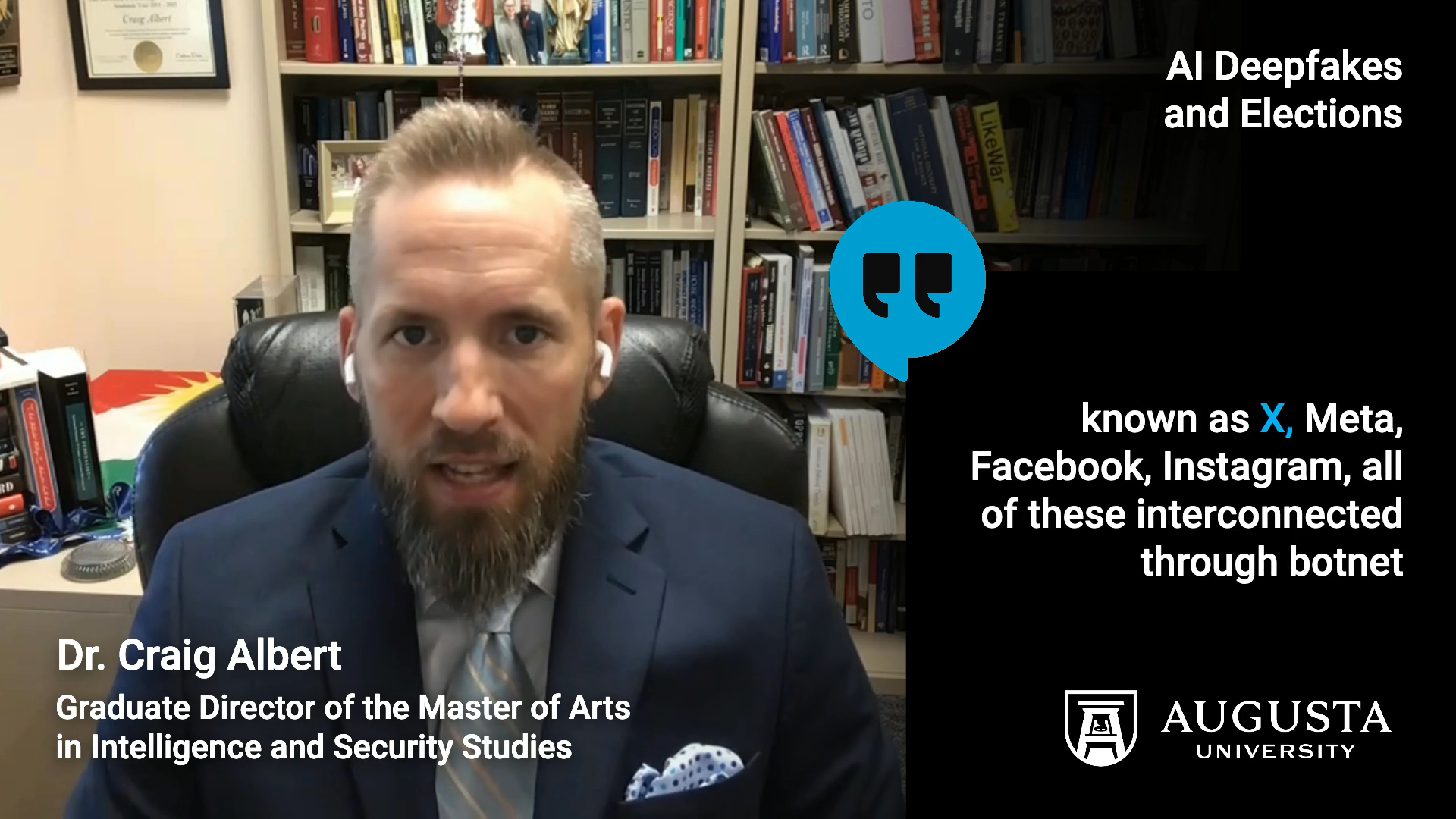
#ExpertSpots: AI, Deepfakes and Elections
The election in November is coming fast. And with voters divided and with what could be a small margin of Americans deciding who wins or loses in the race for the Whitehouse - the worry over misinformation and election interference has never been higher. It's why Dr. Craig Albert is here to break down just how AI and deepfakes might be used against any of the candidates leading up to November 05. Craig Albert, PhD, is director of the Master of Arts in Intelligence and Security Studies at Augusta University. He is a leading expert on war, terrorism and American politics. AI and the upcoming election is a serious topic. Albert is available to speak with media – simply click on his name to arrange an interview today.


Sunday is Cinco de Mayo. Do you know the history behind the day?
Celebrated annually on May 5th, Cinco de Mayo commemorates the Mexican army's victory over French forces at the Battle of Puebla in 1862. While often associated with festive gatherings and cultural celebrations, Cinco de Mayo also holds significant relevance beyond its historical origins, offering various story angles that appeal to a broad audience. Cultural significance and heritage preservation: Explore the historical context of Cinco de Mayo and its importance in Mexican culture, highlighting the traditions, food, music, and art associated with the holiday. Immigration and identity: Examine how Cinco de Mayo is celebrated in different parts of the world, particularly in the United States, and its role in shaping the Mexican-American identity and fostering cross-cultural understanding. Political implications and national pride: Investigate the political undertones of Cinco de Mayo, considering its significance in Mexican nationalism and its portrayal in international relations. Economic impact and tourism: Analyze the economic implications of Cinco de Mayo festivities, including the boost in tourism, sales of Mexican-themed products, and the commercialization of cultural heritage. Education and historical awareness: Discuss the educational value of Cinco de Mayo in schools and communities, examining how it promotes historical awareness, tolerance, and multiculturalism. Social justice and activism: Explore how Cinco de Mayo intersects with social justice movements, addressing issues such as immigration reform, cultural appropriation, and representation in media and politics. By covering these angles, journalists can provide their audiences with a deeper understanding of Cinco de Mayo beyond its surface-level festivities, fostering meaningful dialogue and engagement with the holiday's historical, cultural, and societal significance. Connect with an Expert about Cinco de Mayo: Margarita R. Ochoa Associate Professor and Associate Chair of History · Loyola Marymount University Timothy Matovina Chair, Department of Theology · University of Notre Dame Rodrigo Vargas Professor, Ecosystem Ecology and Environmental Change · University of Delaware Heather Chiero, PhD Associate Professor of History, Anthropology and Philosophy · Augusta University To search our full list of experts visit www.expertfile.com Photo Credit: Daniel Lloyd Blunk-Fernández

Dr Carl Senior identified two types of smile – affiliative and reward – given by political leaders during the last UK general election in 2019 The eventual winner, Boris Johnson, was found to display the affiliative smile, which acts to align voter behaviour The study is the first to look at how supporters of election losers react to the eventual winner. New research led by Aston University’s Dr Carl Senior has found that the type of smile used by a political leader can influence voters to support them and their political agenda. There are many different types of smile, and the researchers, which also included Professor Patrick Stewart from the University of Arkansas, US, Professor Erik Bucy from Texas Tech University, US, and Professor Nick Lee from Warwick Business School at the University of Warwick, UK, focused on two in particular – the ‘reward’ smile and the ‘affiliative’ smile. They used videos from political leaders from the 2019 UK general election, which was won by the Conservative party, then led by Boris Johnson. The Labour party, then led by Jeremy Corbyn, came second. Jo Swinson was the leader of the third-placed Liberal Democrat party. The ‘reward’ smile is the genuine, or felt smile, associated with joy and enthusiasm. It is the smile most likely to be contagious with onlookers, and has been linked to higher levels of trust. The ‘affiliative’ smile, meanwhile, communicates approachability, acknowledgement, and appeasement. It is associated with an affinity towards the onlooker and is thought to be important for developing cooperative relationships. The researchers selected volunteers professing to be supporters of each of the three main parties and showed them the same video footage of the three leaders – Johnson, Corbyn and Swinson – before and after the 2019 election. The team assessed the emotional response to the different smiles for the candidates, whether positive (happiness and affinity) or negative (anger and distress). When shown footage of election winner Johnson’s affiliative smile after the election, people in all groups showed an increase in happiness and affinity compared to when they were shown the footage before the election. Supporters of the losing parties showed an overall decrease in the negative effect. It was only this affiliative smile which was found to act as a mechanism to align voter feelings and behaviour to the dominant, or winning, political message. The reward smile did not have the same effect. Supporters of Labour showed an increased level of anger and distress when viewing Johnson’s reward smile after the election compared to before it. The effects for Corbyn and Swinson were less marked, showing that they failed to significantly change voters’ responses to them. Their appeal was somewhat fixed and failed to match Johnson’s charm. Johnson tapped into the voters’ feeling of annoyance about the slow Brexit process with his ‘Get Brexit done’ slogan, while Corbyn’s position was ambiguous. Swinson’s party was pro-Europe but lacked Johnson’s performative abilities to link a strong message to his nonverbal communication. Previous work by various researchers has shown that observers judge leadership traits and behaviour, or a lack thereof, from non-verbal cues such as facial expressions. However, there has, until now, been little research outside the US on the effect of facial displays on voter behaviour. Dr Senior said: “The human smile can convey both rewarding and affiliative social intent and thus has significant utility in politics, where the ability to bond with and reassure voters is vital to electoral success. We are in an unprecedented year as there are numerous elections scheduled to take place across several continents. The outcome of these campaigns will have a significant impact on millions of people across vast geopolitical regions. Given that almost all politicians involved in these election campaigns will make full use of broadcast media to reach voters, it is crucial to understand the effectiveness of their non-verbal displays in shifting voting preference.” Professor Lee said: “The individual appeal of party leaders has become increasingly influential. A smile can’t win an election on its own. But Johnson’s personal appeal transcended party policies, connecting with people who hadn’t planned to vote for him. “The upside for today’s politicians is that charisma is not an innate quality. It can be taught. By paying attention to their facial behaviour and ensuring they display the right smile in the right context, they can still leverage the power of emotional responses. It is something leaders of all organisations can learn.” The researchers say more work is required to understand how smiles work together with other verbal and nonverbal displays to generate affinity in voters and convey social dominance to other leaders. PLOS ONE DOI: 10.1371/journal.pone.0301113

New book explores minority languages in the digital age
Heritage Languages in the Digital Age. The Case of Autochthonous Minority Languages in Western Europe offers invaluable insights for educators, activists, policymakers and researchers The book describes the challenges faced by minority languages in today's interconnected world and asks whether digital communication could potentially reverse the decline of smaller and lesser used languages A researcher from Aston University has co-edited a book that explores the intricate relationship between technology, language policy and cultural identity, presenting case studies of digital communication in smaller languages such as Breton, Gaelic, Faroese, Frisian, Lombard, Low German, and Welsh. Heritage Languages in the Digital Age asks whether digital communication can help to prevent language loss of smaller languages and offers invaluable insights for educators, activists, policymakers and researchers navigating the challenges faced by minority languages in today's interconnected world. Edited by Gertrud Reershemius, a professor of linguistics and language contact at Aston University, and Birte Arendt from Greifswald University in Germany, the book's central focus is on minority languages which are facing a declining number of speakers and a loss of communicative domains in an increasingly globalising world. As these languages contend with the dominance of majority languages, stakeholders such as teachers, language activists, planners and researchers are re-evaluating traditional media strategies, language policies and teaching methodologies to counteract language shift trends. The book also discusses how online communities influence language usage and cultural exchanges for minority speakers and advocates for adaptive language policies and innovative teaching methods to support minority languages and bilingualism while fostering linguistic pride and identity. Professor Gertrud Reershemius said: “The languages examined in this book are still spoken by a considerable number of speakers and enjoy varying forms of institutional, legal, financial and ideological support. “While the overall numbers of speakers may be declining, their significance in identity construction and cultural commodification processes is undeniably growing. “As the global discourse on language diversity and cultural preservation gains momentum, this book serves as a comprehensive resource for understanding and addressing the multifaceted challenges and opportunities facing minority language communities.” You can purchase a copy of Heritage Languages in the Digital Age here.

The research team asked one group of participants to follow healthy eating accounts and another to follow interior design accounts After just two weeks, participants following healthy eating accounts ate more fruit and vegetables and less junk food Even minor tweaks to social media accounts could result in substantial diet improvements in young adults. Researchers from Aston University have found that people following healthy eating accounts on social media for as little as two weeks ate more fruit and vegetables and less junk food. Previous research has shown that positive social norms about fruit and vegetables increases individuals’ consumption. The research team sought to investigate whether positive representation of healthier food on social media would have the same effect. The research was led by Dr Lily Hawkins, whose PhD study it was, supervised by Dr Jason Thomas and Professor Claire Farrow in the School of Psychology. The researchers recruited 52 volunteers, all social media users, with a mean age of 22, and split them into two groups. Volunteers in the first group, known as the intervention group, were asked to follow healthy eating Instagram accounts in addition to their usual accounts. Volunteers in the second group, known as the control group, were asked to follow interior design accounts. The experiment lasted two weeks, and the volunteers recorded what they ate and drank during the time period. Overall, participants following the healthy eating accounts ate an extra 1.4 portions of fruit and vegetables per day and 0.8 fewer energy dense items, such as high-calorie snacks and sugar-sweetened drinks, per day. This is a substantial improvement compared to previous educational and social media-based interventions attempting to improve diets. Dr Thomas and the team believe affiliation is a key component of the change in eating behaviour. For example, the effect was more pronounced amongst participants who felt affiliated with other Instagram users. The 2018 NHS Health Survey for England study showed that only 28% of the UK population consumed the recommended five portions of fruit and vegetables per day. Low consumption of such food is linked to heart disease, cancer and stroke, so identifying ways to encourage higher consumption is vital. Exposing people to positive social norms, using posters in canteens encouraging vegetable consumption, or in bars to discourage dangerous levels of drinking, have been shown to work. Social media is so prevalent now that the researchers believe it could be an ideal way to spread positive social norms around high fruit and vegetable consumption, particularly amongst younger people. Dr Thomas said: “This is only a pilot intervention study at the moment, but it’s quite an exciting suite of findings, as it suggests that even some minor tweaks to our social media accounts might lead to substantial improvements in diet, at zero cost! Our future work will examine whether such interventions actually do change our perceptions of what others are consuming, and also, whether these interventions produce effects that are sustained over time.” Dr Hawkins, who is now at the University of Exeter, said: “Our previous research has demonstrated that social norms on social media may nudge food consumption, but this pilot demonstrates that this translates to the real world. Of course, we would like to now understand whether this can be replicated in a larger, community sample.” Digital Health DOI: 10.1177/20552076241241262


How misinformation spreads online and shapes behavior
With the Internet as a font of information, particularly during a major crisis or conflict, a simple Google search can produce a stream of conjecture, conspiracy and alternative facts. Then there’s the firehose of “news” flooding social media feeds. By headlines alone, it’s near impossible to separate wheat from chaff. Coupled with that user frustration is a vulnerability to bad actors who push agendas under the guise of news. Indeed, on its worst days, the internet is a disinformation machine. Understanding that dynamic and its impact on our moods and behavior is NJIT’s Julie Ancis, a behavioral psychologist who’s a pioneer in the field of cyberpsychology. Her research examines how disinformation spreads and shapes how we act online and in person. As she explains on her blog for Psychology Today: “The speed and flow of information online has enabled information to be transferred on a mass global scale, galvanizing social movements such as the Arab Spring, Occupy Wall Street and #MeToo. In short, the ways in which we consume information and communicate with others both locally and globally have fundamentally changed.” To interview Ancis, click on the button below.


Covering Earth Day - Our Experts can Help | Media Advisory
As we commemorate Earth Day, the urgency to address environmental challenges and foster sustainable practices has never been more critical. Earth Day serves as a reminder of our collective responsibility to protect and preserve our planet for future generations. This event matters to the public because it highlights the interconnectedness of environmental issues with our daily lives and underscores the importance of taking action. Here are several sub-topics that could be of interest to a broad audience: Climate change mitigation efforts and their impact on local communities Innovative technologies and initiatives for renewable energy sources Conservation efforts to protect endangered species and habitats Sustainable practices in agriculture and food production The role of businesses and corporations in promoting environmental sustainability Government policies and regulations aimed at addressing environmental challenges Connect with an Expert about Earth Day: For journalists with questions or looking to cover the streaming wars, here is a select list of experts. Bryan W. Brooks, Ph.D. Distinguished Professor, Environmental Science and Biomedical Studies; Director of Environmental Health Science · Baylor University Jase Bernhardt Associate Professor of Geology, Environment, and Sustainability · Hofstra University Saleem Ali Professor of Energy and the Environment Geography and Spatial Sciences; Biden School of Public Policy and Administration · University of Delaware Francis Galgano, PhD Associate Professor, Geography and the Environment | College of Liberal Arts and Sciences · Villanova University To search our full list of experts visit www.expertfile.com Photo Credit:Fateme Alaie