
Experts Matter. Find Yours.
Connect for media, speaking, professional opportunities & more.
988: What is it and who will it help?
Starting July 16, anyone experiencing substance use issues, a suicidal crisis, or mental health-related distress and seeking support can now simply dial “988” and connect directly with the National Suicide Prevention Lifeline. 988’s implementation will strengthen and expand the current lifeline call-center infrastructure and capacity to ensure that trained crisis counselors are available via call, text, and chat 24 hours a day. CARF proudly joins the National Action Alliance for Suicide Prevention and more than 250 partner organizations collaborating as promoters of the 988 Messaging Framework. About 988 988 is confidential, free, and available 24/7/365, connecting those experiencing a crisis with a network of trained crisis counselors located throughout the U.S. Access is available through every landline, cell phone, and voice-over-internet device in the nation. 988 call services are available in Spanish, along with interpretation services in multiple languages. Text and chat are currently available in English only. A long-term goal of 988 is building a robust nationwide crisis response system that links callers to community-based providers that can deliver a full range of crisis care services (e.g., mobile crisis teams or stabilization centers), if needed. And if you're a reporter looking to know more about the new 988 call services, or the role CARF and other organizations are playing in this nationwide effort, let us help with your questions and coverage. Michael Johnson is Senior Managing Director of Behavioral Health at CARF and is an expert in treatment strategies for mental health and substance use disorders. Michael is available to speak with media regarding this topic; simply click on his expert icon to arrange an interview today.


What the Roe V. Wade Reversal Means for Data Privacy
Following the US Supreme Court decision to overturn Roe V Wade on the 26th June 2022, abortion laws are now changing across states on an almost daily basis. The landmark decision and huge signifier for the rights of women in the United States and across the world of 1973, is now nothing but history. In 13 states with “trigger laws”, abortion laws will take immediate effect, with others being implemented about a month after the ruling. While ‘the patchwork of state laws and barrage of court filings mean that for half the country', the legal status of abortion remains ambiguous, a month on, one thing remains certain - concerns regarding tech companies and the protection of user privacy in regards to abortion cases are only growing. New questions have been raised and existing debates regarding data privacy have been reignited. Debates center on the extent to which tech companies should protect the information of users seeking abortions and the steps that both consumers and companies can take in line with current laws. While many large corporations, including tech companies Microsoft, Apple, Meta, Disney, Uber, Netflix and Amazon have announced they will provide travel expenses for abortions if they are not available in the state, the role of tech companies in protecting private users' information remains unclear. What are the concerns? Location Tracking On Tuesday May 24th, 42 Democratic lawmakers urged Google SEO Sundar Pirchai to stop collecting and keeping unnecessary or non-aggregated location data which could be used against people seeking abortions. Before the overruling, the lawmakers wrote “if abortion is made illegal…it is inevitable that right-wing prosecutors will obtain legal warrants to hunt down, prosecute and jail women for obtaining critical and reproductive health care.” In comparison to Apple, which has demonstrated that smartphone companies do not need to retain customer location data, Google ‘has created a new digital divide’, which makes ‘privacy and security a luxury’. Ultimately, privacy for Americans who cannot afford an iPhone is at greater risk. While Google sent a company-wide email stating they would cover out-of-state travel expenses for abortion, they have still made no statement in response to the Democratic lawmaker's request on customer location data since the rollback of Roe V Wade. Period-Tracking Apps Alongside concerns about location tracking data with companies such as Google, one of the newer sources of anxiety in terms of data privacy is the use of cycle tracking apps. Since the draft decision was leaked in early May, there have been widespread concerns over the use of period-tracking apps and calls for American women to delete them to avoid their data being used against them in court. Danielle Citron, Professor of Law at the University of Virginia School of Law expresses her concern that using such tracking apps could help build a legal case against a woman who has had an abortion. She states "you got your period on X date, you missed your period, then let's say, for example, 20 weeks later you got your period again, and that in that time period your location shows that you went to a clinic either in the state or out of the state — that in so many respects is the circumstantial evidence that a prosecutor needs.” Tech policy researcher Eva Blum-Dumontet tells Insider that if people find period-tracking apps genuinely useful they shouldn’t feel they have to get rid of them ‘because the risk of data being handed to law enforcement is low’. But at the same time, ‘it is not impossible.' One of the main period tracking apps, Flo, has issued a statement in response to Roe V Wade which reads ‘we will do everything in our power to protect the data and privacy of our users', with an additional feature to existing security measures including “anonymous mode”, which allows users to remove their personal identity from their Flo account. Flo has stated that more clarity will be given in the coming weeks and months. Limiting Online Discussion of Abortion Pills and Aid Since the Supreme Court’s verdict, online memes, statuses and posts have exploded, sharing resources and thoughts on the decision. Facebook and Instagram have started removing posts related to abortion pills, following the rise in the discussion of access to them and offers to mail them across the US. Media intelligence firm Zignal Labs records that general mentions of abortion pills, as well as posts mentioning specific versions such as mifepristone and misoprostol, suddenly spiked on Friday morning across Twitter, Facebook, Reddit and TV Broadcasts. Following the release of a screenshot obtained by the Associated Press of an Instagram post from a woman who offered to buy and send abortion pills through the mail, being taken down within a few minutes by Instagram, AP decided to test out how Meta would respond to a similar post on Facebook. On Monday, the AP reporter wrote “If you send me your address, I will mail you abortion pills.” The post was removed in under one minute. Interestingly, when the AP reporter made the same post but ‘swapped out the words “abortion pills” for “a gun”, the post remained untouched.’ Can past cases inform the future? While the response of tech companies in protecting public data regarding the concerns raised above is still relatively ambiguous, we can refer to past cases where smartphone data was used as evidence in cases against women. In 2018, Lattice Fisher was charged with second-degree murder after she experienced a ‘stillbirth at home and a state medical examiner claimed the baby had been born alive and died of asphyxiation, according to Oktibbeha County court records.’ Fisher’s mobile data records allegedly contained a search for “buy abortion pills”, and mifepristone and misoprostol, the two main forms of self-managed abortion medications. Although Fisher got out of jail later in 2018, Laurie Bertram Roberts, co-founder of the Mississippi Reproductive Freedom Fund and the executive director of Yellow Hammer Fund, who had been heavily involved with Fisher’s bail, said that the impact will forever taint Fisher’s life. “Anytime someone Googles her for a job that mugshot with a story of her being indicted for a second-degree murder will always be there.” In 2015, Purvi Patel was prosecuted in Indiana under the state’s feticide law after she took safe, well-known abortion medication. Prosecutors had claimed that the baby was born alive and did not survive. In this case, Patel’s text messages mentioning the abortion pills were the main evidence used against her. She was sentenced to 20 years in prison, but her conviction was overturned and she was released after serving 18 months. Many people had wondered how the case had happened when abortion was a protected right under the constitution. With the right to abortion in the US now only marking a historical moment, the role of tech companies in the protection of user data will only become increasingly pivotal in a post-Roe world.


ChristianaCare is out to revolutionize health care. One of the country’s most dynamic health care systems, ChristianaCare is partnering with two leaders in medical and therapy services to provide comprehensive, integrated virtual health services 24/7 to colleges, universities and other institutions of higher education. Together with PursueCare and SimpleTherapy, ChristianaCare created a bundled health care product that combines general medical services from ChristianaCare’s Center for Virtual Health, mental health and addiction treatment programs from PursueCare and hyper-personalized musculoskeletal care from SimpleTherapy. ‘The future of health care is virtual’ “At ChristianaCare, we know that the future of health care is virtual,” said Sharon Anderson, MS, RN, FACHE, ChristianaCare’s chief virtual health officer and president of ChristianaCare’s Center for Virtual Health. “When college students are able to access medical, behavioral health and musculoskeletal services through their phone or laptop, from their dorm room or a private space on campus, they’ll be more likely to get help when they need it. This is about delivering care to students on their terms, so that they can be healthy and supported with high-quality care throughout their college experience.” Personalized virtual health solutions will be available to students at participating higher education institutions through a customized portal accessible from any computer or mobile device. Students will be able to access assessments, resources and virtual treatment via modules or telemedicine sessions with licensed providers. The offering provides students with unlimited, on-demand care from a multidisciplinary team solving for a multitude of conditions. “For college and university student health services and administrators, this partnership offers a powerful new way to provide comprehensive, affordable health solutions that benefit students,” Anderson said. “In a highly competitive recruiting environment, these solutions are easy to implement and can add tremendous value. We are excited to partner with colleges and universities to strengthen their student health programs by creating a comprehensive virtual care solution to meet their student’s health care needs.” Through a single digital portal, participating students can access internal and family medicine providers from ChristianaCare’s Center for Virtual Health. PursueCare’s Joint Commission-accredited mental health, psychiatric and medication-assisted treatment providers, and SimpleTherapy’s licensed physical therapists specializing in musculoskeletal care, acute or chronic pain management, and strength and mobility training can all be accessed through the portal. Students will also have the option of using PursueCareRx for their pharmacy needs. PursueCareRx is a competitively priced full-service pharmacy that accepts most major insurance and delivers directly to customers. “Young adults face an escalating mental health and substance use crisis,” said Nick Mercadante, founder, and CEO of PursueCare. “Colleges and universities are frequently unable to comprehensively serve the increased need, and research suggests substance use, mental health and suicide carry a significant social stigma. Our goal is to work collaboratively with campus health resources to bring a low-barrier solution students can access privately, any time, on their terms. Additionally, partnering with a world-class health system like ChristianaCare means we can help support whole-person care needs.” “Chronic musculoskeletal disorders have never been more prevalent and traditional care pathways are often ineffective and costly,” said Arpit Khemka, co-founder and CEO of SimpleTherapy. "SimpleTherapy removes barriers for students allowing them to take control of their musculoskeletal health, reducing their need for high-cost, high-risk services, such as surgery and opioids, to manage pain. This results in higher compliance rates and more successful outcomes." Customized and co-branded product The product is designed for colleges, universities and all other higher education institutions. For a flat fee, a school will be able to offer care that is customized and co-branded with school-specific content to be an extension of existing campus health services. It provides curated resources for rapid pre-assessment, on-demand chat and discreet, personalized access to care for students on or off-campus. The innovative patient portal aims to improve and strengthen how schools offer health care solutions to their student population while reducing any potential interruptions of academic and athletic pursuits by making it possible for students to conveniently access care from anywhere. In addition, the offering eliminates social stigma and other access obstacles for students who are at-risk or potentially at-risk, making it more likely that students will avail themselves of treatment options and remain in school. These services are currently licensed to operate in Delaware, New Jersey, Pennsylvania and Maryland. Applications for licenses are underway in other states. ChristianaCare has long been a trailblazer in virtual health. Among its achievements, during the COVID-19 pandemic, ChristianaCare developed a COVID-19 virtual monitoring program that helped 37 companies in 14 states safely reopen with daily symptom monitoring, testing and connections to care for more than 10,000 employees. It’s Center for Virtual Health makes receiving care radically convenient, offering a full continuum of virtual care delivery programs. These programs include virtual primary care, specialty care programs and a Hospital Care at Home Program bringing hospital level of care to a patient’s home. The Center for Virtual Health cares for thousands of patients using state-of-the-art virtual care capabilities supporting patients in receiving care anytime, anyplace, including in the comfort of their own homes. For more information about the program, visit StudentCareSolutions.com.


Beyond the Media Pitch: How to Secure Better Coverage in Today’s Noisy Market
At our webinar earlier this month, we were joined by Wilf Dinnick, a communications and media professional with more than 25 years of global experience as a journalist working in national broadcast, digital and early-stage startups. Wilf has covered major stories for news networks including ABC News, CNN, CBC News and Al Jazeera and is a past winner of the prestigious Edward R. Murrow Award. This vast experience on both sides of the camera has given him a keen understanding of what it takes to secure media coverage in today’s environment. Here are 3 key takeaways you missed: #1 The Odds of your Media Pitch Resulting in Coverage are Disappointingly Low - And the Trend is Not Good Wilf Dinnick discussed the sobering stats from a study of over 400,000 pitches conducted by Propel media that reveal that only ⅓ of emails sent to journalists are opened. But equally disappointing is the fact that only 3% of pitches result in coverage and this trend appears to be continuing. What Dinnick went on to explain is that “journalists see many pitches as an interruption as most fail to clearly demonstrate relevance to the stories they want to publish for their audience. #2 Journalists are Busier than Ever. So You Need to Connect with Them In Places they are Going for Story Ideas and Expert Sources Dinnick also shared some important data that reveals how journalists are spending their time. Where they get their story ideas and how they search for experts. This helps explain the diminishing rate of return on traditional media pitches. For instance, Twitter remains dominant as a platform used by journalists to quickly discover trending stories. So making your story ideas more discoverable with appropriate hashtags on social is an important way to promote your experts in the flow of the conversation as a story is breaking or emerging. Wilf also highlighted the importance of dialling into the daily news cycle by looking in the same areas journalists are going for their ideas. The latest research reveals that journalists find newspapers and magazines most valuable. Why? Sites such as the Washington Post, CNN, BBC, New York Times and Axios are well funded and resourced to develop the longer format, well-researched stories. They often focus on exclusive stories and break important news that is echoed through other outlets. And they set the pace of the news cycle as it echos through regional news outlets where journalists look to localize the story for their audiences. Closely monitoring these sites allows you to be in touch with the key stories and offer clear value to journalists, by offering your experts who can help explain key developments in the context of their research or localize the story for a regional audience. #3 There are Ways to Beat the Odds and Improve your Media Coverage by Following Proven Best Practices When Pitching Despite the poor odds when pitching journalists, there is hope for media relations and PR pros. Dinnick unpacked a number of important best practices that can substantially improve your odds. Drawing on research from a number of media organizations that track journalist engagement, he laid out a number of guidelines that you should be following when putting together your media pitches. Some of these included: Timing Your Pitch Journalists are more receptive to pitches early in the day between the hours of 5am and 11am. This is when the stories are breaking and work is being assigned - and journalists are looking for expert sources. Also, there is evidence that pitching earlier in the week on a Monday or Tuesday yields better results. Keeping it Brief The research Dinnick presented on the profound changes that have been happening in Newsrooms and the overload that journalists are experiencing underscores the importance of being to the point with journalists. That begins with understanding how journalists are spending their day - glued to mobile devices. “This impacts how you need to write subject lines that generate curiosity and fit into mobile devices, given the limited set of characters they can display,” said Dinnick. He also shared stressed research that shows the body copy of a pitch should be under 200 words. Mind the Links Loading a journalist up with lots of links to research, videos, and media coverage in the body copy of your pitch may seem like a good idea to help them evaluative a story idea But this is a no-no. It creates unnecessary clutter and detracts from the key messages you want them to focus on. Instead, journalists report they want as few links as possible. Wilf Dinnick recommends 1-2 links max. It’s important to note that this will present a challenge if you don’t have your content organized into comprehensive expert profiles which include important information that journalists want to see such as past media and speaking appearances, research, publications, education/credentials, affiliations etc. There was a lot to take away from this session which was jam-packed with research and best practices for media relations and PR pros. However, perhaps the most important lesson was how to ”flip” the traditional approach to pitching 180 degrees - starting the pitch process by first developing “owned” content that gets published to your website. As Wilf Dinnick stated, “you have to think like a journalist” as you approach the story ideas you want to pitch. Start with owned content and publish stories that focus on your experts which clearly show them to be relevant and credible while making their work more engaging and human through visual media helps “set the table for the journalist.” If it’s well structured and engaging, it gives journalists the added context they need to immediately understand how your pitch is relatable to their audience. What’s most powerful about this approach is that it helps media relations and PR pros avoid the “earned media trap.” Instead of being overly focused on coverage, we can think more strategically about the value we bring to the organization as storytellers to create quality “owned” content that boosts search engine (SEO) authority and PageRank as well as site engagement with visitors to boost reputation, relationships and revenues. It was clear from the many examples shared by healthcare organizations, universities and associations that this approach is where the real gains can be made. And how media relations and PR pros can show more tangible value to their organizations. Stay tuned for more on this topic of owned content and how it helps improve your media coverage as we explore this in our next post. To see the entire webinar, make sure to sign up for BrightTalk to watch the full webinar here.


UCI experts available to discuss Roe v. Wade ruling
With the Supreme Court set to rule on Roe v. Wade, UCI would like to provide experts you can reach out to for comment: • Michele Goodwin, Chancellor of Law at UCI’s School of Law, focuses on constitutional law, torts, health law, and feminist jurisprudence. An internationally renowned pioneer and pathbreaker, She has spoken often to media about reproductive rights issues and the Roe vs. Wade issue. Goodwin has helped to establish the field of health law and subspecialties in law and medicine, including biotechnology and biosciences and the law, as well as race and bioethics. Her scholarship has been cited by courts, congress, civil society organizations, and news media worldwide. If you are interested in speaking with Michele, you can reach her directly at (773) 543- 6160 or mgoodwin@law.uci.edu. • Aziza Ahmed, UCI professor of law, examines the intersection of law, politics, and science in the fields of constitutional law, criminal law, health law, and family law. Her work advances multiple scholarly conversations including those related to law and social movements, race and the law, and feminist legal theory. You can reach Aziza on her mobile at (510) 778-3031 or coordinate with our team for an interview. • Charles Anthony “Tony” Smith, UCI professor of political science and law, received his PhD from the University of California-San Diego and his JD from the University of Florida. His research is grounded in the American judiciary but encompasses work in both comparative and international frameworks using a variety of methodologies. The unifying theme of his research is how institutions, and the strategic interactions of political actors relate to the contestation over rights, law & courts, and democracy. He has published seven books and more than 30 articles on the history and politics of the Supreme Court. You can reach Tony via email casmith@uci.edu. • David Meyer, professor of sociology, political science, and planning, policy & design, can discuss the effect of the decision on political mobilization, especially the anti-abortion and abortion rights movements. He can also talk about those movements and the courts more generally. You can reach David via emaildmeyer@uci.edu.


Privacy implications of contact tracing for COVID-19
Contact tracing is the process of identification of persons who may have come into contact with an infected person and subsequent collection of further information about these contacts Contact tracing is a key public health response to battle infectious diseases such as COVID-19. Mobile technologies offer robust options for contact tracing through the use of GPS, Bluetooth, cellular information and AI-powered big data analytics. Together, this information can help manage the spread of COVID-19. Several countries have rolled out contact-tracing apps and solutions, such as the UK, Israel and South Korea among others. However, preserving personal privacy is critical toward maintaining public trust and protecting users during this crisis. Kurt Rohloff, assistant professor of computer science at New Jersey Institute of Technology and co-founder of Duality Technologies, is an expert in areas concerning privacy and the implications of contact tracing, and how technologies exist to both protect private information and support contact tracing. Duality Technologies has developed a prototype solution for privacy-preserving contact tracing that uses the open-source PALISADE homomorphic encryption library that Rohloff developed at NJIT with funding from DARPA. To speak with Rohloff directly on issues related to privacy and contact tracing, click on the button below to arrange an interview.


Has your cell phone data ever inexplicably slowed down? Worse still, perhaps you’ve had a mobile bill come in way higher than you expected. Keeping track of your data usage can be tough, especially when the billing mechanisms routinely deployed by digital service providers are often more complex than they seem. Things like three-part tariffs bundle a certain amount of “free” data or services into a fixed monthly fee, with an excess charge payable whenever you go over your allocation. These packages are usually marketed to consumers as being simple as well as attractive (who after all doesn’t love the sound of “free data?”) but in reality, they can be hard for people to manage—and failing to do so, punitive. Exceed your allotted data and you end up with subpar services or unwanted costs. Underutilize your allocation and you’re leaving money on the table. Meanwhile, in a world where we use digital services to do any number of things—from scrolling to streaming to storing and beyond—how can we accurately track just how much of our allowance we’re getting through? To address this, service providers are increasingly sending usage notifications to customers at different points of the billing cycle. These nudges are designed to help us to act in our own best interest: to take stock and modify our usage accordingly. But do they work? It depends, says Anandhi Bharadwaj, Vice-Dean for Faculty and Research at Goizueta. She and her colleagues have published a study that looks at the impact of these nudges, and they’ve found that they do help all customers adjust their behavior to stay within their allowance, irrespective of how attentive or inattentive they might be to their consumption speed in general. But there are provisos. First off, these consumption nudges seem to be significantly more effective with customers who have purchased higher data allowance than those who opt for low-capped packages. Then, the timing of nudges matters. When notifications arrive later in the billing cycle—right before a bill is due, say—they have significantly more impact across the board, says Bharadwaj. Companies should take note. “Ours is the first study to really unpack the efficacy of nudges in the digital services space, and it shows that who and when are important factors that service providers will need to take into account if they want to improve customer experiences.” Interested in knowing more - let us help. Anandhi Bharadwaj is an information systems expert bringing a wide range of development and executive training experience to the classroom. Her research examines the adoption, use, and impact patterns associated with technological change. Anandhi is available to speak with reporters - simply click on her icon now to arrange an interview today.



Social media interaction and well-being during a public health crisis
Yvette Wohn, assistant professor at New Jersey Institute of Technology, examines how social media and mobile technologies are used for social support, which includes emotional, informational and financial support — managing both personal and professional relationships. Wohn‘s research area is in human-computer interaction (HCI) and computer-mediated communication. She studies the role of algorithms and social interactions in livestreaming, esports and social media and how they influence well-being. Wohn is conducting research on how physical and social space influences the well-being and productivity of people living or working in enclosed spaces. Some of her experiments look at the effects of simulated nature via digital windows. As Wohn notes, "Seeing nature is important to maintain well-being. In a nutshell, seeing nature on a big screen, even if you know it is fake, can help elevate mood." Wohn is also the principal investigator of two NSF-funded projects examining the role of content moderators on social media, whose role is to keep online spaces positive and factual. Wohn is available to speak with media on topics related to how people use different technologies and social media to connect during these times. To request an interview, click on the button below.

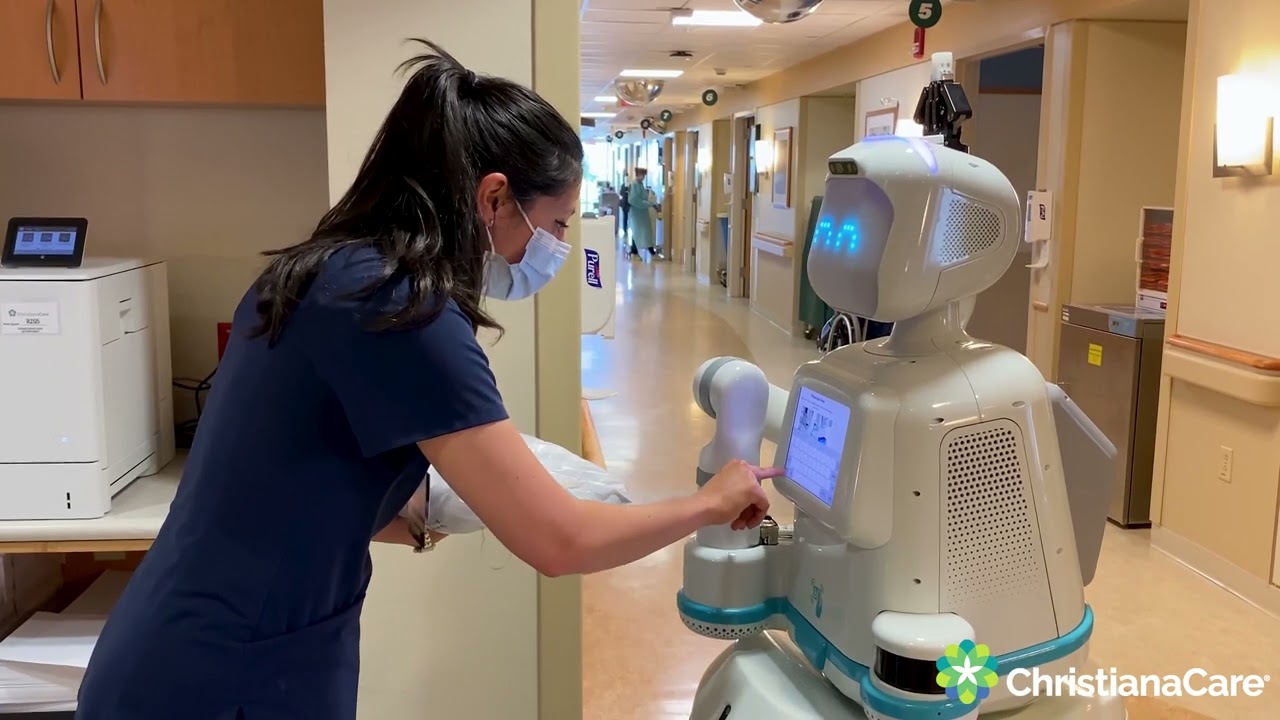
ChristianaCare is the first health system in the Philadelphia region piloting an innovative tool called Moxi, a collaborative robot — or “cobot”— that can assist in the hospital by making deliveries and performing other non-clinical tasks so that nurses and other clinical staff can spend more time focused on what they do best—caring for patients. With a landmark $1.5 million grant from the American Nurses Foundation, ChristianaCare will deploy a total of five Moxi cobots at Christiana Hospital. It is the largest single grant in the history of Nursing at ChristianaCare. Research published in the Journal of Nursing Management shows that nurses spend a significant amount of time — up to 33% of their shifts — on time-consuming but simple tasks such as dropping off lab specimens, collecting supplies or picking up medications from the pharmacy. By taking over these time-consuming but simple tasks, Moxi enables nurses to focus on patient care, where their skills are most needed. “Nurses need the time and space to deliver care and patient education at the top of their license,” said Ric Cuming, Ed.D., MSN, RN, NEA-BC, FAAN, chief nurse executive and president, ChristianaCare HomeHealth. “Moxi will be doing those hunting and gathering tasks such as getting equipment and supplies, which nurses are doing today but don’t need to be doing.” Cobots are designed to share workspace and interact directly with people. In ChristianaCare’s initiative, the Moxi cobots will be integrated with the Cerner Corporation electronic health record (EHR) platform and use artificial intelligence to proactively identify when nurses will need equipment, supplies, medications and lab tests. The Moxi cobots will be deployed to 11 inpatient units, partnering with more than 400 nurses. The American Nurses Foundation grant will enable ChristianaCare to evaluate the impact of cobots on nursing practice with the goal of scaling the technology if successful. “Moxi is not a replacement for a nurse or nursing position — or any position,” Cuming said. “It is an additional resource for nurses and their teams. “With robotic technology, we are using resources wisely and effectively, creating more efficient workflows, reducing repetitive tasks and freeing up nurses’ time for the complex clinical work that they excel at doing.” Reimagining Nursing ChristianaCare is one of 10 grant recipients from the American Nurses Foundation Reimagining Nursing (RN) Initiative. “We are proud that the American Nurses Foundation has the confidence in bold nurse-led ideas that will lead to large-scale, replicable change,” said Katherine Collard, MS, RN-BC, chief nursing informatics officer at ChristianaCare. “This grant will support nurses at ChristianaCare and our nursing colleagues across the nation in realizing their full potential, giving them the tools, resources and power to improve health care now and in the future.” With the American Nurses Foundation grant, ChristianaCare will conduct research on driving nursing outcomes through robotics. “We have a transformative opportunity to generate new knowledge and to move the science forward around robotics in nursing and in health care,” said Susan Birkhoff, Ph.D., RN, nurse scientist at ChristianaCare. “Through research, we will study Moxi’s impact to nursing caregivers that will have broad implications for nursing practice, workforce and education,” she said. ChristianaCare began exploring the potential of robotics to support Nursing with two Moxi cobots acquired in February, funded through the generosity of donors including Good Samaritan, Inc. and E.J. “Woody” Rice. With the grant, said Birkhoff, ChristianaCare will take Moxi to the next “bold frontier,” adding three more cobots with the goal of automating and optimizing nurses’ workflow without interrupting care. With five total cobots, ChristianaCare will be home to the largest number of Moxi robots in health care. The Little Bot That Can Before Moxi can become fully part of the care team, it must learn to navigate the hospital and respond to the nurses’ needs. Using artificial intelligence, Moxi is mapping out Christiana Hospital through sensors and other machine-learning technology so that the cobots can ultimately navigate and work autonomously. “When the Moxi cobots are fully integrated, we anticipate that they will complete up to 200 delivery tasks a day,” Collard said. “By making point-to-point deliveries, Moxi can save nurses hours of time and thousands of steps.” Designed to be compatible with the busy environments of hospitals, Moxi’s features include: Social intelligence: Moxi won’t bump into people or objects in hallways, waves when it sees someone new and happily poses for selfies. Mobile manipulation: Moxi can learn to use its robotic arm to operate existing automatic doors and elevator panels. Human-guided learning: The more Moxi is used, the more Moxi learns and adapts to the environment and specific ways of doing things. Friendly and safe design: With heart-shaped eyes and a friendly appearance, Moxi is designed to navigate safely and get the job done so nurses can focus on patient care. “What Moxi is doing in health systems like ChristianaCare is really transforming the way we think about health care and allowing staff to focus on the people in the hospital as opposed to the tasks,” said Dr. Andrea Thomaz, CEO and co-founder of Diligent Robotics, which created Moxi. “Robots are not something way in the future. Our robots work side-by-side with humans to ease the stress and workload of one of the most demanding jobs in society, nursing. The partnership between Diligent and ChristianaCare shows that the future is now.” Hospital Helper Directly from the Cerner EHR, Moxi will be able to anticipate clinician and patient needs and perform tasks without human involvement. Examples could include: Delivering items to patients based on nurses’ order requests. Making rounds across units to deliver lab samples on collections completed in the electronic health record. Making just-in-time deliveries of pharmaceuticals not stocked on the floor. Prioritizing tasks based on the nursing workload in a unit, so that the busiest nurses will get help first. “Connecting Moxi to the existing technology that clinicians use on a daily basis is key to making it easier to anticipate needs so clinicians can spend more time on patient care,” says Eva Karp, DHA, MBA, RN-BC, senior vice president, chief clinical and patient safety, Cerner. “Moxi could make a real difference in a nurse’s day — alleviating burnout and staffing shortages, which have become especially prevalent since the pandemic.” Incorporating the electronic health record into Moxi is part of the study funded by the American Nurses Foundation. “It’s absolutely in the best interest of our patients that Moxi can work alongside nurses so we can spend more time working directly with our patients to do what we do best,” said Pam Owen, MSN, RN-BC, nurse manager on 7E, one of the pilot units. “And Moxi brings a smile to people’s faces.” Fast Facts About Moxi Works in 22-hour shifts. Needs only two hours of charging time. Weighs about 300 pounds. Can carry a total weight of 70 pounds. Gender-neutral. Pronouns are “it” for a single Moxi cobot and “they” for more than one. Named one of America’s Greatest Disruptors in 2021 by Newsweek and one of the Best Inventions of 2019 by Time Magazine. About ChristianaCare Headquartered in Wilmington, Delaware, ChristianaCare is one of the country’s most dynamic health care organizations, centered on improving health outcomes, making high-quality care more accessible and lowering health care costs. ChristianaCare includes an extensive network of primary care and outpatient services, home health care, urgent care centers, three hospitals (1,299 beds), a freestanding emergency department, a Level I trauma center and a Level III neonatal intensive care unit, a comprehensive stroke center and regional centers of excellence in heart and vascular care, cancer care and women’s health. It also includes the pioneering Gene Editing Institute. ChristianaCare is nationally recognized as a great place to work, rated by Forbes as the 2nd best health system for diversity and inclusion, and the 29th best health system to work for in the United States, and by IDG Computerworld as one of the nation’s Best Places to Work in IT. ChristianaCare is rated by Healthgrades as one of America’s 50 Best Hospitals and continually ranked among the nation’s best by U.S. News & World Report, Newsweek and other national quality ratings. ChristianaCare is a nonprofit teaching health system with more than 260 residents and fellows. With its groundbreaking Center for Virtual Health and a focus on population health and value-based care, ChristianaCare is shaping the future of health care.


MEDIA RELEASE: CAA reminds motorists that now is the time to swap out winter tires
With winter weather in the rearview mirror and temperatures reaching a consistent 7°C, CAA South Central Ontario (CAA SCO) is reminding motorists that it’s time to change your tires and begin spring vehicle maintenance. When making the switch from winter to all-season tires, CAA suggests one item to keep in mind that may not be on your list, is checking your tires for potential wheel separation. Experts say that most wheel separation incidents happen in May, coinciding with the seasonal tire switch and are a result of loose wheel fasteners – the lug nuts or bolts that hold the wheel on the vehicle. “Once you have changed your tires, it’s best practice to have your fasteners re-tourqued after driving a short distance," says Kaitlynn Furse, director, communications, CAA SCO. “Motorists are urged to pay careful attention and ensure all four tires have been properly changed whether you or your local repair facility make the switch.” If you are unsure about any part of the wheel installation, be sure to take the vehicle to a qualified service provider or enlist the help of CAA’s Mobile Tire Change service. From now until May 31, members can book a hassle-free at-home seasonal tire change performed by expert technicians. The Mobile Tire Change is available in the majority of cities in south-central Ontario. Members can view a full list of participating cities on caasco.com/auto/mobile-tire-change. Motorists can ensure their vehicles are in good shape after the harsh winter season by following these spring maintenance tips: Change tires. Switch to your all-season tires and rotate them to prevent uneven wear. Wipe it down. Give your vehicle a thorough cleaning to remove all the salt and sand accumulated over the winter months. Change fluids. Change your oil and top up your fluids to help keep your car running trouble-free. Replace wipers. Replace your blades if they are worn or damaged. Check lights. Check all lights to ensure they are in good working condition. Replace hoses and belts. Check for ones that have become cracked or frayed. Test the battery. Inspect your vehicle’s battery to make sure all the connections are clean and dry. The CAA Mobile Tire Change service is offering complimentary battery tests on all tire changes.

