Experts Matter. Find Yours.
Connect for media, speaking, professional opportunities & more.

University of Delaware's Center for Political Communication unveils new vision, goals and leadership
The University of Delaware's Center for Political Communication (CPC) is excited to announce a transformative new chapter with the unveiling of its updated vision, goals and leadership for 2024 and beyond. Since its founding in 2010, the CPC has been at the forefront of innovative public opinion research on politics and media, always with an eye towards protecting and improving American democracy. With this new chapter, the CPC is actively integrating political psychology (the study of how and why people make political judgments and form political beliefs) into the study of public opinion and media effects. “Our vision is responsible democracy-centered journalism informed by our rigorous research on Americans’ thoughts, feelings, knowledge and behaviors,” says Dr. Dannagal Young, incoming Director of the Center for Political Communication. “In a few weeks, will be releasing new data on Americans’ knowledge and beliefs about abortion – an issue on which there are widespread misperceptions. Later this fall we are also launching an interdisciplinary initiative to understand the relationship between Americans’ personal wellbeing and their support for democratic institutions and norms.” By producing high-quality research at the intersection of media, politics and psychology, the CPC strives to elevate public conversations and inform news coverage to improve democratic health. Additionally, the Center seeks to serve as a vital resource for journalists, offering expert commentary and empirical data to encourage democratically responsible journalism. With this new direction comes new leadership, bringing together a team of esteemed scholars from Political Science, Communication and Journalism: Director Dr. Dannagal Young, Professor in the Departments of Communication and Political Science and International Relations, TED speaker, and author of Wrong: How Media, Politics, and Identity Drive our Appetite for Misinformation (Johns Hopkins, 2023) and Irony and Outrage: The Polarized Landscape of Rage, Fear, and Laugher in the U.S. (Oxford, 2020). Areas of Expertise: Misinformation, Political Satire, American Politics, the Psychology of Media Effects. Associate Director Dr. Erin Cassese, Professor in the Departments of Political Science and International Relations, Communication, and Women and Gender Studies, co-author of Abortion Attitudes and Polarization in the American Electorate (Cambridge, 2024). Areas of Expertise: Gender, Abortion, Public Opinion, Campaigns and Elections. Director of Research Dr. Phil Jones, Associate Professor in the Department of Political Science and International Relations, current Editor-in-Chief at Public Opinion Quarterly. Areas of Expertise: Electoral Politics and Public Opinion. Director of Engagement Dr. Lindsay Hoffman, Associate Professor in the Departments of Communication and Political Science and International Relations, and research leader for the American Council of Trustees and Alumni two-year Braver Angels project funded by the John Templeton Foundation. Areas of Expertise: Communication across Difference, Media Technologies, and Political Participation. Delaware Politics Director Dr. Paul Brewer, Professor in the Departments of Communication and Political Science and International Relations, co-author of Science in the Media: Popular Images and Public Perceptions (Routledge, 2021), former editor of the International Journal of Public Opinion Research. Areas of Expertise: Delaware Politics, Media effects, Political and Science Communication, Public Opinion, and Perceptions of Science. Delaware Debate Director: Nancy Karibjanian, Director of the University of Delaware’s Journalism program, faculty member in the Department of Communication, and former Director of the CPC with 30 years of broadcast experience. Areas of Expertise: Broadcast Journalism, and Delaware Debates. The CPC’s goals reflect its commitment to a vibrant and collaborative research environment that engages scholars and students at all levels. The CPC will continue to spearhead interdisciplinary research across the domains of communication, political psychology, public opinion, media effects, and public policy. The Center offers applied research opportunities for both graduate and undergraduate students in communication and political science, as well as an undergraduate minor in political communication, thus mentoring the next generation of scholars and practitioners. The CPC is proud to put its academic research to work in service of American democratic health.


Arguing Over Hot Mics During Debate
Mark Lukasiewicz, dean of the Lawrence Herbert School of Communication, was interviewed by KNX news radio in Los Angeles about quibbling between the camps of Kamala Harris and Donald Trump in the weeks leading up to their September 10 debate on ABC-TV. The Harris campaign wants both candidates’ microphones to be live throughout the full broadcast. The Trump campaign wants the debate to be conducted by the same rules agreed to when Joe Biden was the Democratic candidate. That would mean muted microphones. Lukasiewicz is a veteran producer, journalist, and media executive who has spent his professional career telling important stories to worldwide audiences and helping media organizations deal with transformational change. He is available to speak with media regarding this important debate. Simply click on his icon now to arrange an interview today.



Expert Perspective: UMW's Steven E. Harris lends his opinion to The Russia File
The following piece was written by Steven E. Harris published by the Wilson Center in April 2024 Sanctions Are Spoiling Russia’s Plans to Make Its Own Airplanes Putin’s regime is feeling confident these days. Advances on the battlefield in Ukraine, expansions in armaments production, and the dithering of Republicans in the U.S. Congress show the war has turned in Russia’s favor. A well-orchestrated presidential election and some real public support buoy the regime. Political opponents are either dead, in prison, or in exile. Putin’s regime has also declared victory in blunting Western sanctions and now plans to permanently thwart them with programs of import substitution. Nowhere is this better seen than in aviation, where the state proclaims it will produce over a thousand new airplanes to replace the foreign aircraft its airlines have long flown. But this bold vision for aviation autarky has little chance of succeeding. Russia’s Short-Term Success in Blunting Aviation Sanctions Thus far, Putin’s regime has weathered aviation sanctions through a two-pronged strategy. First, Russian airlines illegally kept about 400 foreign airplanes—primarily Airbuses and Boeings—owned by foreign leasing companies. Second, the state bankrolled settlement claims in order to purchase some of these airplanes so that airlines could fly them abroad without risk of repossession and reduce their foreign debt. To date, approximately 170 foreign airplanes have been legally acquired in this fashion, and the Ministry of Transportation recently asked for more cash to continue settling claims on the remaining 230 foreign planes. The next question is how long Russian airlines, from the state-owned flag carrier Aeroflot to private companies such as S7 and Ural Air Lines, can continue flying their foreign planes. As I wrote in late October, safety has been degraded far less than predicted. But in the absence of spare parts, software updates, and thorough maintenance by foreign providers, Russian airlines have about two years before they will have to ground Boeings and Airbuses for major repairs performed using third-party spare parts. Anticipating the eventual retirement of foreign planes, Putin’s regime has embarked on a massive program to make all-Russian airplanes. This program promises independence from Western technology and leasing companies but reveals the success of sanctions and fundamental weaknesses in state capacity. The 2030 Aviation Manufacturing Plan Announced in June 2022, the program calls for the state-owned industrial conglomerate Rostec to manufacture 1,036 airplanes with only Russian parts by 2030. In January 2024, the state allocated 283 billion rubles (U.S. $3.1 billion) to help finance the production of 609 airplanes and prioritize medium-haul aircraft in the overall manufacturing plan. Before sanctions, Russian manufacturers produced a small number of narrow body, medium-haul airplanes such as the MC-21 and the Superjet-100 (SSJ-100) with Western components. Twelve SSJ-100s were manufactured in 2021 and ten the following year. Among the aircraft slated to replace Boeings and Airbuses, the plan called for production in 2023 of three medium-haul Tupolev-214 (Tu-214) airplanes and two Superjet-NEW planes (Superjet-100s with all-Russian parts). None of these were built. In fact, the state-owned United Aircraft Corporation (UAC) failed to manufacture a single passenger airplane in 2023. More recently, the UAC conceded further delays of up to two years for rollout of the MC-21, SSJ-NEW, and Tu-214, as well as of smaller, short-haul aircraft such as the Ilyushin-114 (Il-114) and the “Baikal.” The transition to total import substitution is proving difficult, making it impossible to fulfill early targets of the manufacturing plan. By withdrawing access to Western technology critical for manufacturing, sanctions have successfully shut down production. Russian manufacturers will produce at best inferior aircraft that fly shorter routes using more fuel. At its current rate, the UAC is unlikely to manufacture more than a dozen or so showcase narrow body airplanes before 2030. The manufacturer may have better luck producing simpler planes, such as the Baikal, but the state’s injection of 283 billion rubles doesn’t target its production or that of two other short-haul airplanes. Since the UAC will likely not meet the plan’s annual targets any time soon, Russia’s airlines will have to make do with their aging foreign airplanes and acquire spare parts from third parties. Putin admitted as much at his call-in event in December 2023, during which he praised the import-substitution plan but added that the government would continue to purchase illegally held foreign planes. What Will Russia’s Aviation Manufacturing Plan Actually Produce? Rather than produce new aircraft, the immediate purpose of the state’s manufacturing plan is political theater. The infusion of 283 billion rubles was meant to show the public, before the presidential elections, that Putin’s regime is serious about securing commercial aviation and to generate a sense of normalcy in the midst of war. In the long run, the manufacturing plan is more likely to produce further distortions in Russia’s political economy. These include corruption, secrecy, technologically backward aircraft, and even more state control over commercial aviation. The 283 billion rubles will help Rostec keep state-run subsidiaries such as the United Engine Corporation operating with soft budget constraints and favorable contracts that now lack any competition from Western firms. Executives will siphon off their share of the funds, while Putin’s regime will turn a blind eye as long as everyone remains loyal. If the manufacturing plan continues to falter, state-owned manufacturers will have more incentive to keep their failures secret. In 2023, for example, the Ural Civil Aviation Factory kept hidden cost overruns for the Baikal. When news of a 48 percent increase was finally publicized, Putin’s point man for the Far East region, Yuri Trutnev, was incensed and proclaimed, “Our people are like that: they don’t like to share information.” For now, Putin’s regime allows the Russian business media to report fairly openly about the country’s aviation industry on issues such as spare parts and safety, state subsidies, and shortfalls in production. But if commercial flying becomes more precarious and the manufacturing plan remains unfulfilled, the government will likely limit what the public knows about its airlines and long-term plans to maintain them. As the economic historian Mark Harrison shows in his recent book, Secret Leviathan, secrecy in the Soviet era significantly degraded state capacity in many areas, including production. Post-Soviet autocrats face a similar “secrecy/capacity tradeoff,” while newer techniques of disinformation further erode capacity. In attempting to revive the Soviet Union’s autarkic aviation industry, Putin’s regime will find it hard to avoid similar reductions in capacity. Insofar as Russia’s commercial aviation industry is concerned, the lesson for the West is that it pays to play the long game. Russia has effective tools for blunting sanctions in the short run, but in the long run it faces structural obstacles and the absence of Western technology, both of which will degrade this economic sector. The main question remains whether the United States and its allies can keep up the pressure by enforcing sanctions.



Amid Detainees' Release, Putin Flaunts Power and Flouts Western Influence
On August 1, the United States, Russia, Germany and three other European nations engaged in an historic 24-person East-West prisoner exchange. The largest such swap since the end of the Cold War, the multi-country deal secured the release of three prominent American detainees: Wall Street Journal correspondent Evan Gershkovich, corporate security executive Paul Whelan and Radio Free Europe/Radio Liberty editor Alsu Kurmasheva. It also freed a dozen Russian opposition leaders, incarcerated in their native country for challenging Vladimir Putin and his authoritarian regime. Lynne Hartnett, PhD, is the chair of Villanova University’s Department of History and an expert on modern Russia, protest movements and dissidents in exile. Recently, she shared some insights on the Kremlin's decision to release the American and Russian prisoners—as well as the egotism, oppressive tendencies and political posturing that drove their detention. Q: The arrests and sentencings of Gershkovich, Whelan and Kurmasheva have been described as "outrageous," "a mockery of justice" and reflective of "a total disregard for basic freedoms." What prompted Putin and the Russian government to detain these individuals? Dr. Hartnett: For Putin, seizing Gershkovich, Whelan and Kurmasheva was a power play. They were pawns for him to use when he deemed it convenient. If they could be used in a prisoner swap, they would be. But if that time never arrived, their incarceration, suffering and even potential deaths were inconsequential to him. Their arrests were also a signal that, in Russia, Putin's authority is uncontested. These were American citizens, and around the world, a U.S. passport opens doors: It holds power; it provides access; and it affords its holder protection. But the arrests of Gershkovich, Whelan and Kurmasheva were Putin’s attempt to demonstrate the limits of American influence. They were meant as a signal that, in Russia, a U.S. passport becomes meaningless if it serves Putin to make it so. Q: In recent years, the Russian government has seemingly worked to rehabilitate the reputations of figures like Josef Stalin, who infamously used the Soviet Gulag to stifle opposition and criticism. Is Putin's use of detentions as a political cudgel similar? DH: The show trials of the Stalinist era are frequently referenced. However, it should be stressed that those were largely intended for domestic consumption. They were used to justify the Communist elites' repression of fellow citizens by broadcasting "evidence" that enemies lurked within. The trials of Americans like Gershkovich and Brittney Griner [a professional basketball player detained on smuggling charges] were designed to show the world, not just Russians, that Putin's regime would not be cowed—even if the person being tried had fame and a powerful enterprise, like the Wall Street Journal or the WNBA, supporting them. Q: The New York Times recently ran a piece on the Russian dissidents released, claiming "hopes are high [they] will breathe new life into a fragmented opposition force." What do you anticipate these political players' activism will look like in the coming years, especially in exile? DH: As in the Imperial and Soviet periods, Russian censorship prevents any news or opinions that are not the government's from coming to light. As Putin has dismantled political opposition in Russia and tightened his grip on any vestiges of civil society in the country, there is little hope that a powerful opposition movement can gain momentum without outside support. This is where the Russian dissidents living abroad come in. They will ensure that a vision for another type of Russia is articulated. At the end of the 19th and the beginning of the 20th centuries, political exiles smuggled illegal newspapers and journals into the Russian empire to instill hope in their compatriots, to give them some indication that a nation beyond the autocracy was achievable. This, in my opinion, is the role that Russian dissidents living in exile must have today. They must provide the vision. They must provide the hope. While they cannot change the system on their own—they need a movement en masse—the dissidents abroad are needed to demonstrate that a nation without Putin and his repressive regime is possible. This is certainly not an easy venture, and it will require extraordinary sacrifices to be made a reality. However, it may be the Russian people's only hope.


VP Harris Picks Gov. Tim Walz as Her Running Mate
Dr. Meena Bose talked to NY1 Spectrum News about Vice President Kamala Harris selecting Minnesota Governor Tim Walz as her presidential running mate. The interview was conducted by Hofstra alum and NY1 news anchor Shannan Ferry ’14. Dr. Bose is a professor of political science, executive dean of the Public Policy and Public Service program, and executive director of the Kalikow Center for the Study of the American Presidency. Dr. Meena Bose is available to speak with media - simply click on her icon now to arrange an interview today.


More on VP Kamala Harris Speaking Out
Professor of Constitutional Law James Sample appeared on WNYW Fox 5 and on WABC-TV Eyewitness News to discuss next steps for the Democratic party and Vice President Kamala Harris’s first public appearance since President Joe Biden dropped his reelection bid and endorsed her for president. James is available to speak with media - simply click on his icon now to arrange an interview today.


Lawrence Levy, associate vice president and executive dean of the National Center for Suburban Studies, was interviewed by Spectrum News and National Public Radio about President Biden dropping his bid for reelection and how that might impact down-ballot elections this fall. Lawrence Levy is available to speak with media - simply click on his icon now to arrange an interview today.

#Expert Insight: Political Fandom
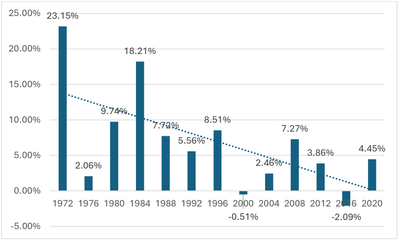
The 2024 Presidential campaign has been a roller coaster ride this summer. The upheavals are so fast and unprecedented that the reaction to each event often seems too muted. An assassination attempt and sudden pre-convention withdrawal? In a past generation, these events would be decisive, but in 2024, they seem like just the latest blip in the news cycle. The polls never seem to move more than a couple of points. In such an oddly volatile but also stable environment, our best bet to understanding what is going to transpire during the last 100 days of the election cycle is to look at data that gets to the heart of how voters view the candidates. My choice of fundamental data or essential metric is candidate fandom. Fandom is an unusual metric in politics, but it should be more common. Fandom is about passion for and loyalty to a cultural entity, be it a team, singer, university, or even politician. In fact, MAGA Trump supporters and Bernie Bros share many characteristics with Swifties and Lakers fans. Fans of all these things show up, spend, wear branded apparel, and fiercely defend the object of their fandom. The politicians who inspire fandom, such as AOC, Donald Trump, Barack Obama, and Marjorie Taylor Green, enjoy many advantages and are the celebrities of the political world. Fandom is critical in politics because fans are loyal, engaged, and resilient. Fans are not casual potential voters who may change preferences and are unlikely to make an effort to stand in line to vote. Fans are the voters who will show up rain or shine and who can’t be swayed. In 2024, a fan will interpret a conviction of their candidate as political “lawfare” rather than evidence of criminality. Also, in 2024, a fan will make excuses for signs of aging that would result in children taking a senior’s car keys. The flip side of fandom, anti-fandom, is also a powerful political force. Indeed, politics may be the cultural context in which anti-fandom has the most impact. Taylor Swift may have haters, but these anti-Swifties are not buying tickets to see Katy Perry in protest. But in politics, hatred of a candidate might be as powerful a tool for generating a vote as fandom. Joe Biden’s 2020 campaign was notoriously bad at drawing crowds, suggesting he inspired little passion. In contrast, Trump’s rallies looked like rabid sports crowds complete with matching hats. However, the hatred and fear of Donald Trump inspired sufficient anti-fandom to make Biden competitive. Of course, fandom doesn’t entirely decide elections. In most elections, there isn’t all that much fandom or passion. Beyond the presidency and senatorial contests, most candidates are barely known, and identity factors (race, gender, party affiliation) and candidate awareness are the determining factors. Even in presidential elections, get-out-the-vote efforts (ballot harvesting) and election regulations (voter suppression) combined with effective marketing to the few percent of swing (low information) voters are often the determining factors. Looking toward the future, fandom may be an increasingly salient political metric for multiple reasons. First, the last two decades have witnessed many candidates raised quickly from obscurity with somehow Hollywood-worthy origin stories (Barack Obama, AOC, JD Vance, etc.). In the modern media environment, candidates’ reputations (brands) are increasingly the product of marketing narratives rather than a lifetime of real-world accomplishments. In this new world of politics, fandom will be a critical metric. Second, with the increasing diversity of the American electorate, voting will be increasingly based on identity rather than ideology. Identity-based voting segments are likely to be driven by fandom (and anti-fandom) rather than policy. We see a form of this in 2024, as high inflation has barely made a dent in voters’ preferences for the two parties. A fragmented electorate comprised of racial and gender segments whose preferences are driven by fandom and anti-fandom will lead to increasingly negative campaigns featuring ads highlighting the threat of the non-preferred party’s candidates. When voters are focused on identity, negative advertising becomes the ideal method to use fear to create anti-fandom (hate) to motivate turnout. Kamala Harris versus Donald Trump Barring further disruptions, the matchup is set for the 2024 presidential contest (as of this writing, we do not know the Democratic VP). We do know the matchup between Donald Trump and Kamala Harris is a contest between polarizing figures. Donald Trump is a movement candidate who has redefined the Republican party. He inspires passionate fandom from his followers and amazing antipathy from major media and cultural outlets. Harris is also polarizing. In the immediate aftermath of Biden’s withdrawal, Harris received massive media and donor support. However, Harris has not demonstrated any significant national voter appeal, and her time as VP has generated ample blooper real material. My approach to assessing the race is to examine each candidate's fandom and anti-fandom. Fandom is the candidate’s core, resilient support, while anti-fandom is about antipathy. Fandom and anti-fandom are especially powerful metrics for a candidate because they are relatively fixed after a candidate gains high awareness. Once an individual identifies with the candidate (e.g., they are on the same team), an attack on the candidate is an attack on the individual. This means attack ads do not work because fans feel they are being attacked. Anti-fans are also important because they constrain a candidate’s support. A Trump anti-fan is unpersuadable by efforts from the Trump campaign because their identity is steeped in opposition to him. Fans and anti-fans are trapped in a cycle of confirmation bias where all information is processed to fit their fandom. I use data from the Next Generation Fandom Survey to assess candidate fandom and anti-fandom. The Next Generation Fandom Survey involves a nationwide sample of the U.S. population regarding fandom for sports and other cultural entities. In the 2024 edition, political figures such as Donald Trump, Joe Biden, Kamala Harris, and RFK Jr were included. The survey captured responses from 2053 subjects split evenly across the four primary generations (Gen Z, Millennials, Gen X, and Baby Boomers), and the sample is representative in terms of racial background. The survey does not focus on likely or registered voters, so the results reflect overall societal sentiments rather than the electorate's opinions. The critical survey question asks subjects to rate how much of a fan they are of a celebrity on a 1 to 7 scale. In the following discussion, individuals who rated their fandom a 6 or 7 on the 7-point scale are categorized as Fans, while those who rate their fandom a 1 or 2 are classified as Anti-Fans. Table 1 shows the Fandom and Anti-Fandom rates for the entire sample. Donald Trump has a 27% fandom rate compared to Harris's 21%. The fandom rate is crucial because it identifies the candidate's core support. It also indicates something important about the candidate’s potential likability. In terms of anti-fandom, Harris has a slightly higher Anti-Fandom rate. Anti-Fandom is also critical as it shows the percentage of people who hate a candidate. The data suggests that Americans find Harris to be more dislikable than Trump. Notably, the anti-fandom rates are significantly higher than the fandom rates. The American public has significant disdain for politicians. The high anti-fandom rates are both the product of past negative advertising and the cause of future negative campaign strategies. Table 1: Candidate Fandom and Anti-Fandom Table 2 reports fandom rates based of the two gender segments. Trump has a 7%-point advantage with men and a surprising 4% advantage with women. This is a stunning result as Trump is generally regarded as having weakness with female voters. However, this weakness shows up in the anti-fandom rates. In the male segment, Trump has a 5%-point advantage in anti-fandom (fewer anti-fans), but a 3% disadvantage in the female segment. This reveals that Trump is polarizing to women, and almost half of women find Trump to be highly dislikable. This finding is why the Harris campaign is likely to use advertising that casts Trump as misogynistic or a threat to women to motivate turnout by female voters. Table 2: Candidate Fandom by Gender Table 3 shows the fandom rates for the two younger demographic segments: Gen Z and Millennials. This Table also shows Trump’s relative performance versus Biden (in parentheses in the last column). Trump enjoys higher fandom and lower anti-fandom than Harris in both the Gen Z and Millennial segments. In terms of fandom, Trump is plus 6% in Gen Z and plus 11% with Millennials. Critically, Harris outperforms Biden. The Gen Z anti-fandom gap between Trump and Biden favored Trump by 6% points. However, this gap shrinks to just 1% point when Harris is the comparison. The data suggests that Harris is stronger with Gen Z than Biden. Table 3: Candidate Fandom in Younger Generations Table 4 reports the fandom rates based on a racial segmentation scheme. Specifically, the sample is divided into White and Non-White categories. This is a crude segmentation, but it illustrates some essential points. Trump enjoys a significant 14% positive fandom advantage in the White demographic. He also enjoys a 10-point edge in (lower) anti-fandom. The pattern essentially reverses in the Non-White segment, as Harris has a 10-point advantage in fandom and a 17-point edge in anti-fandom. Trump’s anti-fandom in the Non-White segment is critical to the campaign. Nearly half of this segment has antipathy or hate for Trump. This high anti-fandom suggests an opportunity for the Harris campaign to emphasize racial angles in their attacks on Trump. Table 4: Candidate Fandom by Race In addition to fandom and anti-fandom rates across demographic categories, insights can be gleaned by looking at segmentation variables that reflect cultural values or personality. Table 5 shows fandom and anti-fandom rates for Trump and Harris for segments defined by fandom for Taylor Swift (Swifties) and Baseball. The Swifties skew towards Harris. The implication is that young women engaged in popular culture have more positive fandom for Harris and more negativity toward Trump. This is unsurprising given the content of the popular culture and Swift’s personal liberalism. The Swiftie segment shows a much stronger skew for Harris than all but the Non-White segment. Examining the data at a cultural level is vital as it indicates that it isn’t necessarily youth or gender where Harris has an advantage but a combination of youth, gender, and a specific type of cultural engagement. The table also includes fandom rates for baseball fans. In the Baseball Fan segment, Trump enjoys an 8% point fandom advantage and a 7% anti-fandom advantage (lower anti-fandom). Like the case of the Swifties, the fandom rates of Baseball Fans reveal something about Trump’s core support. Baseball is a very traditional game with an older fan base, and traditionalism is probably the core value of Trump fans. Trump’s negative advertising is likely to focus on the threats to traditional values (i.e., Harris is a San Francisco liberal). Table 5: Candidate Fandom and Cultural Segments Commentary and Prediction Fandom is a powerful metric for predicting political success, but like most data points, it doesn’t tell the whole story. Fandom is a measure of unwavering core support while anti-fandom measures the group that will never support and is likely to show up to vote against a candidate. Examining fandom rates across multiple segments reveals that Harris’ core support is concentrated in specific cultural and racial segments. The analysis also suggests that Trump's core support is broader than is usually acknowledged and that his main problem is significant anti-fandom with women and minorities. Harris’ problem is a lack of love, while Trump’s is too much hate. Notably, I am not paying too much attention to the current wave of excitement and enthusiasm surrounding Harris. The recent enthusiasm is likely more a manifestation of the Democratic base’s hopes and a relentless media onslaught than an actual increase in passion for Harris. Maybe there will be a permanent shift upward in Harris’s fandom, but I don’t see any logic for why this would occur. Harris isn’t suddenly more likable or aspirational than she was last month. The argument that the American people are becoming more acquainted with her is dubious, given that she has been the Vice President or a major presidential candidate for almost five years. What are the implications for the upcoming election? Voting is not only about fandom or hate, so we must consider some additional factors. For instance, many potential voters lack passion and knowledge and are more prone to vote based on identity rather than ideology. If a region or demographic segment consistently votes for a party 75% of the time, that’s voting more based on fixed identities than current societal conditions. The American electorate has many of these types of fixed-preference voter segments. Furthermore, as the American electorate becomes more diverse, identity-based voting seems to be making presidential contests more predictable. The baseline seems to be that the Democratic candidate will win the popular vote by a few percentage points, and the Electoral College will come down to a few states, such as Michigan, Pennsylvania, and Wisconsin. Examining past electoral maps shows far more shifting of states across elections. Now, all but a handful of states are regarded as non-competitive. The Figure below shows the presidential popular vote margins for the last 50 years. It shows a trend towards smaller margins for the winning candidate, which is at least partly due to growing ethnic diversity and more fixed (at least in the near and medium terms) identity-based voting. Over the last 13 cycles, the margin of victory has dropped by about 1% every four years. Demographic change has also locked in a high baseline level of support for Democratic candidates. The last time a Republican won the popular vote was in 2004, with George Bush as the incumbent. Figure 1: Presidential Vote Margin 1972 to 2020 In addition to shrinking election margins, demographic change promises to change future campaign tones. The increasing relevance of fandom and anti-fandom, combined with the growing diversity of the electorate, will make 2024 an extremely negative campaign. The 2024 election will be determined by identity-based demographic trends and negative (anti-fandom) marketing campaigns. Demographics are destiny, and America is changing rapidly in ways that make it increasingly difficult for the Republicans to win the popular vote. It doesn’t matter if the Democrat is Harris, Newsom, Clinton, or Whitmer while the Republican is Rubio, Haley, Cruz, or Burgum. The baseline is probably 52% to 48%, D to R. Candidate fandom and anti-fandom probably shift the vote 2 or 3 percent in either direction. The correlation of demographic traits with voting behaviors creates incentives for campaign strategies that focus on identity. Republicans are eager to shift some percentage of Black or Hispanic voters to their cause because it simultaneously reduces the Democrats' base and grows Republican totals. In contrast, Democrats need to motivate marginal voters in the female, Black, and Hispanic segments to turn out. Fear-based appeals are the most effective tool for both parties' goals. Negative messaging is also prevalent because of the general view of politicians. Politicians tend to inspire more antipathy (anti-fandom) than admiration (fandom). The fandom data shows this, as both candidates have far more anti-fans than fans (this holds with other politicians) . The modern election calculus is, therefore, focused on aggressive negative ads that inspire marginal voters to take the initiative to vote against a hated candidate. Passion drives behavior, and it's far easier to drive fear and hatred of a candidate than to inspire passion and admiration. Considering the fandom data and the current electorate, I have two predictions. First, we will witness an incredibly nasty race. Harris’s best bet is to demonize Trump to motivate the anti-Trump voters to turn out. The American culture of 2024 includes constant repetition that many Democratic voting constituencies are marginalized and threatened. These segments are best motivated by using messages that cast the Republicans as the danger or oppressor. Women will fear losing reproductive rights, and African Americans will be primed with threats to voting rights. Trump will also employ negative messaging, but Trump’s adoption of a negative campaign comes from a slightly different motivation. Trump’s core support consists of conservatives who are frustrated by a lack of cultural power and representation. This group is looking for someone who will fight for their values. This desire for a “fighting advocate” explains much of Trump’s appeal, as his supporters are enthusiastic about his “mean tweets and nicknames.” There will also be fear-based advertising as Harris will be positioned as wanting to defund police and open the border. Second, Trump wins in a close contest. Comparing Trump’s and Harris’ fandom and anti-fandom suggests the Harris campaign faces an uphill challenge. Despite the current blitz of enthusiasm for Harris as a replacement for a failing Joe Biden, her “brand” has not shown an ability to stimulate passion, and her dislike levels exceed Trump's. It seems unlikely that she will be able to inspire fans. While Trump has a significant fanbase and weaknesses in terms of strong anti-fandom levels in minority and cultural segments, he probably beat Clinton in 2016 because her anti-fandom was equivalent to his. In contrast, he lost to Biden because Biden had less anti-fandom (in 2020). Kamala Harris seems more like Clinton than Biden, so look for a similar outcome as in 2016. The bottom-line prediction: An exceptionally negative campaign, with Trump’s greater baseline fandom and Harris’s charisma deficit leading to a narrow Trump victory. As in 2016,Trump wins the Electoral College while losing the popular vote. Addendum: Future Fandom Lesson The structure of the American electorate and the propensity of people to vote based on identity rather than ideology mean that negative campaigns are the standard in the near future. The essential observation is that demographic trends create an electorate that is more a collection of identity segments than a homogeneous population that varies in ideology. An increasingly diverse electorate likely means increasingly negative presidential campaigns as negative or fear-based appeals are especially effective when elections focus on threats to identity groups. The tragedy of this situation is that the negative messages of campaigns amplify racial division and acrimony. When the next election occurs, the electorate is even more polarized, and negative or fear-based appeals are again the most effective. Mike Lewis is an expert in the areas of analytics and marketing. This approach makes Professor Lewis a unique expert on fandom as his work addresses the complete process from success on the field to success at the box office and the campaign trail. Michael is available to speak with media - simply click on his icon now to arrange an interview today. Interested in following Future Fandom! Subscribe for free to receive new posts.


Examining Biden's Decision to Forgo a 2024 Presidential Run in Historical Perspective
Presidential historian Meena Bose talked to Reuters, The New York Times, Voice of America, WCBS-AM radio, and News 12 Long Island about President Joe Biden’s historic withdrawal from the 2024 race and next steps for the Democrats as the DNC approaches. Dr. Bose is a professor of political science, executive dean of the Public Policy and Public Service program, and executive director of the Kalikow Center for the Study of the American Presidency. She is available to speak with media - simply click on her icon now to arrange an interview today.

Expert Q&A: Ralph Carter Speaks on the Politics of the Olympic Games
The 2024 Summer Olympics in France are a celebratory time for many – including a record nine Horned Frogs competing – but the Games are against the backdrop of dynamic circumstances throughout the globe. TCU News spoke to Ralph Carter, Piper Professor of political science, about viewing the Olympics through the lens of current affairs. Q: Between the Russia/Ukraine conflict, the Israel/Palestine conflict and more, the Olympics are occurring during a tumultuous time in our world. Would you share your observations on that as a political scientist? The Olympics always take place against a backdrop of international politics. They often generate a surge in nationalism on the part of participating countries. There could be demonstrations for or against certain countries or their athletes that get the attention of the media, but the conflicts currently underway in the world will be largely unaffected. Q: This is not new. Do any other Games stick out in your mind that occurred during disruption? The 1980 Olympics were held in Moscow less than a year after the Soviet Union’s invasion of Afghanistan. As a result, many countries boycotted participating in those games, including the United States. Ultimately, 67 countries chose not to participate in 1980. In retaliation, the Soviet Union boycotted the 1984 Olympics held in Los Angeles along with a handful of pro-Soviet or anti-US countries. Nonetheless, 140 countries participated in 1984, making it the largest number of participating countries up to that point. Q: Do you feel the Olympic Games happening during times like these helps or hurts? Do you feel it brings a respite or instead makes things more uncomfortable? It magnifies both the good and bad emotions that arise with heightened nationalism. However, this is usually short-lived, and relationships return to their prior state pretty quickly. Q: For years the Olympics have looked past differences in governments, societies, politics, even human rights. From a historical and political standpoint, what do you think the impact of the Games has been? The Olympics are a mirror of current realities in international politics. The fact that in 1936 four Olympic gold medals were won in Berlin by a Black American – Jesse Owens – did not change Adolf Hitler’s racism. The 1980 boycott of the Moscow games did not result in a Soviet withdrawal from Afghanistan. In short, the Olympics have minimal impact on global politics, if that. Q: Anything else you would like to add? In the past, many countries have gone on spending sprees to host an Olympics, building arenas and sporting facilities, “Olympic villages” of apartments, etc. Many of those countries have failed to recoup any meaningful return on their investments. Oftentimes, those facilities fall into disrepair and lead one to wonder how those financial resources could be better invested for the people of that country. Only a limited number of countries have the in-place sporting facilities and hospitality infrastructure to host such events. It’s long past time, in my opinion, for there to be some changes in the decision-making process regarding host countries. Ralph Carter is available to speak with media about the upcoming Olympic Games - simply click on his icon now to arrange an interview today.