
Experts Matter. Find Yours.
Connect for media, speaking, professional opportunities & more.

Researchers to explore how AI can help urban mobility planners They are to investigate AI-driven policy tools’ potential to create greener cities Project to benefit from expertise of five European universities. A European group of researchers led by Aston University is taking the first steps to explore how AI can help urban mobility planners. As city populations grow causing strain on resources, the experts are to investigate AI-driven policy tools’ potential to create greener cities. The team have received £10,000 in funding from the British Academy which they hope will set them on the road to further research. Taking part in the project will be experts from University College London, Ruralis University in Norway, the University of Turin, Italy and Lisbon University Institute, Portugal. Dr Dalila Ribaudo from the Centre for Business Prosperity at Aston Business School and Dr Alina Patelli from the Aston Centre for Artificial Intelligence Research and Application will co-lead a UK-EU consortium consolidation project. The interdisciplinary project will benefit from expertise in applied business and specialist insight into global economics, policymaking and urban transport planning. Dr Patelli said “Policymakers and society could all benefit from our research into innovative ways of managing the strain on urban infrastructures and resources. "The AI-powered policy tools we are developing are meant to support decision managers at all levels of urban governance with reducing emissions, optimising transportation as well as predicting and preventing environmental hazards. Such changes would improve the quality of life for the millions of people living in towns and cities across the UK, Europe and, in the long term, the entire world.” Following the successful bid for the British Academy pump priming grant the team will apply for Horizon Europe funding to continue developing impactful AI-driven policy tools for greener cities.


University-wide mental health services strengthened by Georgia Southern’s JED Campus initiative
As a result of Georgia Southern’s commitment to increasing student awareness and access to mental health resources, the University has recently been named a full JED Campus (JED) Member university. Georgia Southern recently completed a four-year partnership with JED, a national collegiate mental health program that guides colleges through a collaborative process of building comprehensive systems, programs and policy development with customized support to build upon existing student mental health, substance use and suicide prevention efforts. Along with the JED efforts, Georgia Southern has significantly increased student awareness and access to mental health resources. A recent report shows that 83% of Georgia Southern University students agree that the administration is listening to the concerns of students around health and wellness. This is a 15% increase since 2020. In 2020, the University System of Georgia launched several system-wide initiatives and resources to increase the mental health awareness and resources for all of its institutions. One of these initiatives was to fund the enrollment of all institutions in the JED Campus program. This included the creation of a JED campus team, an initial campus mental health climate study conducted by the Healthy Minds Institute on behalf of JED, the completion of a Georgia Southern self-study, a campus site visit by JED and the development and completion of a four-year strategic plan. “Engaging in the four-year JED Campus process has enabled Georgia Southern to strengthen and expand its university-wide commitment to the mental health of our students, faculty and staff,” said Jodi K. Caldwell, Ph.D., Counseling Center executive director & JED Campus team lead. “The JED team remains committed to growing Georgia Southern’s efforts in providing awareness, education, resources and support for the well-being of our community. We are grateful to the University System of Georgia, whose support funded this opportunity for all USG institutions and to the support of our Georgia Southern administration.” Recently, the University has increased awareness and resources through programs like the H.E.R.O. Folder. Students aware of mental health outreach efforts grew from 40% to 60%, and those knowing where to seek professional help increased from 78% to 84%, according to the JED feedback report. Additional findings can be found in the full report at the bottom of this article. Georgia Southern will now be considered an alumni of the program, and will continue several of the programs and initiatives launched with JED. If you're interested in learning more about Georgia Southern's partnership with JED and want to book time to talk or interview with Jodi Caldwell then let us help - simply click on her icon now contact Georgia Southern's Director of Communications Jennifer Wise at jwise@georgiasouthern.edu to arrange an interview today.


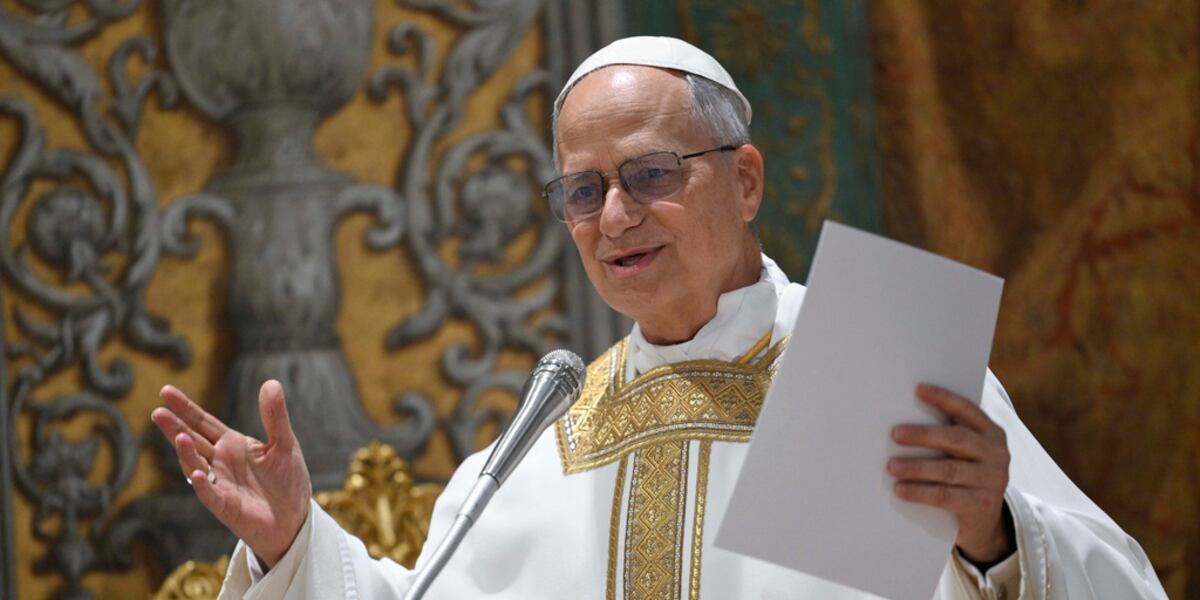
Expert Q& A: ‘The Pope is also a monarch’
Kathleen Comerford, Ph.D., professor of history at Georgia Southern University, specializes in Catholic history in the 16th and 17th centuries. She is also an associate editor for the Journal of Jesuit Studies, which focuses on the work of the Society of Jesus (Jesuits), a religious order within the Catholic Church. Pope Francis was the church’s first Jesuit pope. With the global significance and rarity of the conclave, Comerford answered frequently asked questions about how the conclave works, how the conclave process has evolved over time, and what the passing of a pope means for the Catholic Church and the world. Question: What does the passing of a pope mean for the world? Comerford: Multiple things! First of all, there are 1.4 billion Catholics in the world scattered in many different countries. The pope is a unifying figure for all of the Catholics. He represents something immediate in the sense that he’s the head of the church and is a recognizable figure. The pope is also a monarch. I was just talking with my classes about this. He is the head of the government of the Vatican City State, which is the smallest independent state in the world. It has a very long history itself. Pretty much everybody who lives in Vatican City works for the Vatican. The pope is one of the few elected monarchs in history. He is responsible for financial and political decisions, and he has ambassadors around the world as a result of his role in global policy. Question: How is a new pope selected? Comerford: The College of Cardinals will meet for an election called a conclave, and they actually stay in a dormitory-like place in Vatican City for it. They are sequestered from the public, and they take some time to meet, pray and vote. The cardinals aren’t supposed to be sitting around talking about who would be a really good pope, but we don’t know whether they do because they’re sequestered and nobody is supposed to talk about it. They will likely take a vote on the first day, but that’s not required. Every subsequent day, they can take a maximum of four votes; two in the morning and two in the afternoon until a candidate gets a two-thirds majority. Question: What does the voting look like? Comerford: There are ballots, and the cardinals write their preferred candidate on the ballot, and then they put their vote in a chalice. To count the votes, there’s a group of three people who are in charge of counting and then announcing the results to the fellow cardinals. There are 252 cardinals, but only 135 of them are eligible to vote because anyone over the age of 80 is ineligible. The procedure where only cardinals can elect the pope dates from 1059. The secret ballot and the two-thirds majority requirement is from 1621. The sequestration for the process dates from 1271 because they argued about who the new pope would be for two years and nine months; a total of 33 months. And so, they decided that the only way to make sure that this didn’t happen again would be to create this scenario with the cardinals locked in a room with a key. Question: When one of the candidates receives a two-thirds majority and becomes the next pope, how will it be announced? Comerford: Well, this is kind of fun, because they have four votes every day until one of the candidates receives a two-thirds majority. After they take the votes, the papers used to vote are burned. How the news is shared to the crowds outside is based on the color of smoke. If the smoke is black, that means no one received the majority and there’s no new pope yet. If there’s white smoke, it means there’s a new pope. This practice really only dates to the early 19th century. At first, it was just if there was smoke, there was no pope; if there was no smoke, then there was a pope. In 1914, they changed this aspect of the election so that black smoke means “no pope” and white smoke means “new pope.” Question: It’s expected that the next pope will be one of the cardinals in the room when they vote, yes? Comerford: Yes, but it doesn’t have to be. There have been a lot of popes, but in the last 200-300 years, there hasn’t been somebody who wasn’t in the conclave that was elected. Theoretically, they could nominate somebody who’s not a cardinal and the whole room could say, “yes, that’s the person we want as pope.” However, they don’t vote by acclamation anymore. They stopped doing that in the 19th century. Question: Pope Francis appointed 108 of the cardinals, so that’s a total of 80% of those eligible to vote for the next pope. How likely is it that we see a pope similar to the late Francis, considering he provided the electorate for his successor? Comerford: First of all, he deliberately went out and created cardinals in places where there had never been cardinals before. And he didn’t do that by saying, “I’m going to find somebody who’s like-minded to me.” He just said, “There are a lot of Catholics in Myanmar and they’ve never had a cardinal. So I’m going to make sure that there’s a cardinal now.” Most of these new cardinals are in places like Rwanda, Cape Verde, Tonga, Myanmar, Mongolia and so on. So these are non-European cardinals. Now, less than 40% of the voting cardinals are European. So to speculate on how similar they are to Francis, you have to break down what Francis was. There has been his entire pontificate about how he’s the first American pope, but his parents were born in Italy. He didn’t grow up speaking Italian, but it was a dialect of Italian as well as Spanish, because he grew up in Argentina. He was the most European you can get and still be an American. Another part of the question is, will the new pope be somebody who is of a similar mind to Francis in terms of his governance, which was very devolved. He introduced this idea of “synodality,” which is about fairly consistent communication with groups of people. Pope Francis was not particularly monarchical or hierarchical. There is also the aspect of his thinking that leans more to the left than the right on a number of social issues like immigration, women’s rights, the rights of minorities and immigration. He opened a lot of conversations, which the very right leaning portions of the church have been very uncomfortable with. If you're interested in learning more about this topic and want to book time to talk or interview with Kathleen Comerford then let us help - simply contact Georgia Southern's Director of Communications Jennifer Wise at jwise@georgiasouthern.edu to arrange an interview today.

ExpertSpotlight: The Ottawa Treaty, the Anti-Personnel Mine Ban Convention
The Ottawa Treaty, formally known as the Anti-Personnel Mine Ban Convention, stands as one of the most impactful humanitarian disarmament agreements of the modern era. Signed in 1997 and led by Canada, the treaty prohibits the use, stockpiling, production, and transfer of anti-personnel landmines—deadly remnants of war that continue to kill and maim civilians decades after conflicts end. The treaty’s global significance lies not only in its lifesaving goals but also in how it redefined international diplomacy by empowering civil society and survivors in disarmament efforts. As ongoing conflicts and global security threats evolve, revisiting the treaty’s legacy and future relevance is more important than ever. Journalists may find timely and meaningful angles through: The origins of the Ottawa Treaty and Canada’s leadership in humanitarian disarmament The continuing global impact of landmines and the status of mine clearance efforts Survivor stories and the long-term effects of landmine injuries on communities How the treaty reshaped international diplomacy and civil society’s role in negotiations The intersection of armed conflict, environmental degradation, and unexploded ordnance Countries that have not joined the treaty and the geopolitical implications This treaty is a powerful example of global cooperation aimed at protecting civilians, offering rich opportunities for human-interest stories and international policy analysis. Connect with our experts about the Ottawa Treaty and landmines Check out our other experts here : www.expertfile.com


Retirement: For Better, For Worse, and for Much More Time Together
Retirement is supposed to be your golden reward—freedom from alarm clocks, endless Zoom meetings, and performance reviews. But no one warned you about the relationship performance review that arises when you and your partner suddenly find yourselves spending over 100 hours a week together. For some, it’s bliss; for others, it feels like a full-time job without an HR department. While grey divorce (divorce after age 50) is on the rise in Canada, separation isn’t inevitable. However, marital harmony is also not guaranteed. The truth lies somewhere in between—and that’s where things become interesting. Retirement isn't merely a lifestyle change—it’s a complete identity shake-up, which can create stress even in the strongest relationships. Grey Divorce: An Increasing Trend Though Canada’s overall divorce rate reached a 50-year low in 2020, divorce among people over 50 is increasing—this trend is dubbed grey divorce. According to Statistics Canada, this demographic is increasingly re-evaluating their relationships as they retire (CBC News, 2024). The same pattern is unfolding south of the border, with the AARP reporting a steady rise in senior divorces in the U.S. Grey divorce isn’t just emotionally taxing—it can be financially devastating. Women, in particular, bear the brunt. A study by the National Center for Family & Marriage Research found that divorced women over 50 have 45% less wealth than their married peers. In Canada, the Canadian Institute of Actuaries has warned that divorce later in life can significantly erode retirement savings and delay or derail financial plans. Role Confusion One retired executive shared that after decades of being chauffeured to work, he assumed retirement meant his wife would now be his driver. “I thought she’d just take over that role, as he climbed into the back seat,” he said, genuinely confused. She had other plans that did not involve sitting behind a wheel, taking coffee orders, or navigating roundabouts. He had not yet made the emotional or physical shift from being served to becoming equal. That transition is more complicated than it sounds—and more common than you'd think. When one partner’s identity is career-driven and the other manages the home, retirement necessitates a complete recalibration. Power dynamics shift, control issues surface, and resentment simmers if left unacknowledged. Housework ≠ Heartwork If you're home full-time now, guess what? You’re not a guest anymore. The dishes, the vacuuming, the grocery runs—these are now shared responsibilities. Nothing breeds resentment faster than an unequal workload. Retirement doesn’t mean “relax”; rather, it signifies redistributing the work of life. Unspoken truths will find their voice. Let’s face it—decades of unexpressed frustrations don’t remain buried. They begin to comment on how someone folds laundry, stacks the dishwasher, or leaves the cap off the toothpaste. Retirement magnifies everything: the quirks you used to laugh off? Mansplaining! What habits did you ignore because life was busy? Now they’re front and center. And what bad habits did you have before? They don’t improve with age—they get worse. Emotional and Mental Health Insights Relationship difficulties can trigger anxiety, depression, and loneliness, especially among men who may have smaller support networks outside their marriages. A 2020 study in the Journal of Gerontology found that post-divorce social isolation is closely linked to declining physical and mental health in later life. Not all couples want to—or need to—divorce to find peace. Increasingly, older Canadians are exploring “Living Apart Together” (LAT) arrangements, where partners maintain separate residences while remaining in a committed relationship. Research by the Vanier Institute and AARP suggests that LAT relationships allow for autonomy while maintaining emotional connection—a potential middle ground for couples who struggle with full-time togetherness in retirement. For many, retirement means the loss of structure, identity, and purpose, particularly for those who have closely tied their sense of self to their professional roles. This loss can create irritability, aimlessness, and tension in a partnership. As Harvard Business Review put it, retirement can be especially tough for men because “so many men are bad at retirement” (HBR, 2021). This emotional void often spills over into the relationship, testing its resilience. Retirement often brings a sudden reshuffling of roles at home. Many men who may have spent decades focused on their careers struggle to adjust to a more balanced domestic lifestyle. The Canadian Centre for Policy Alternatives notes that retirement can expose long-standing gendered inequalities in household labour, leading to friction, resentment, and, at times, relationship breakdown. How to Thrive—Together or Apart The goal isn’t perfection; it’s peace, fulfillment, and ample personal space to breathe. Here’s how to get there: creatively, practically, and honestly. 1. Have the Real Conversations Ask the questions you avoided when life was too busy: • “Are we happy?” • “What do you want out of the next ten years?” • “Are there things we’ve never talked about that matter now?” Unspoken expectations are relationship landmines. Bring them to light—gently and often. 2. Separate Bedrooms, United Front Don’t frown; they are more common than you might think and less scandalous than it sounds. Separate sleep equals better rest, less irritation, and sometimes a more intentional intimate life. Please don’t consider it a breakup; position it as a better mattress strategy. 3. The Basement Suite or In-Law Apartment Plan This represents the sweet spot between staying together and going entirely separate. Living in the same house with clearly defined zones provides each partner with breathing room and independence, especially when you’ve grown apart but don’t want to disrupt finances or family. Ground rules are essential: • Who is responsible for what costs? • Shared meals or separate? • New partners—yay or nay? It’s not perfect, but it can be practical. 4. A Second Space: Cottage, Trailer, or Tiny Cabin A humble trailer or rustic cabin might save your marriage. It’s not about luxury—it’s about space, autonomy, and silence when needed. Whether alternating weekends or solo sabbaticals, having a backup place to go can restore harmony at home. 5. Travel Separately (Sometimes) One of you wants to hike Machu Picchu, while the other prefers to nap in Muskoka. You don’t have to compromise; you can take turns. Alternate between solo trips, friend getaways, or short solo retreats. You’ll both return refreshed—and more engaged. 6. Discover New Purpose (or Income) A restless, lost, or bored partner can quietly sabotage the household. Encourage: • Volunteering • Consulting or part-time work • Mentoring • Taking courses or teaching others • Rediscovering old passions If Divorce Is the Best Option At times, the most honest act is to end a marriage with kindness. If this is the only option, there are important factors to consider: Financial Reality Check • Assets will be divided, including the house, pensions, RRSPs, etc. • Expenses double: two homes, two insurance policies, and two fridges to stock. • Retirement income may not be sufficient for both lives. • Legal costs and timing matter more than ever now—because the time to recover financially is limited. There are no pensions in tears. Therefore, if you choose this route, plan ahead. Family Impact • Adult children might feel shocked—or even angry. • Grandchildren can pose challenging questions. • Long-term friendships may weaken. • Shared traditions may require reinvention. This process can be amicable. A new term has emerged among women caring for their ill or aging ex-husbands: “Wasbands.” These women step up with empathy rather than obligation. Vows no longer bind them; instead, they are guided by compassion. Honestly, humanity wins in these situations. There is still love, respect, and history—even if it’s no longer romantic. That is not failure; it is growth. Rewrite the Rules Retirement is not a dead end; it’s a creative reawakening—if you approach it that way. Retirement is a significant life transition—not just financially, but relationally. Like any other chapter in life, it requires renegotiation, mutual respect, and a willingness to evolve. Some couples find deeper intimacy, while others redefine their relationships entirely. The good news? Whether it's under one roof or two, retirement can still be a time of connection, discovery, and, yes, romance. But it also requires some good, old-fashioned adulting. Yes, *adulting*—that modern word we usually reserve for paying bills, booking dental appointments, and reading the fine print. It turns out it’s equally essential in retirement. Emotional maturity, communication, boundary-setting, and a shared approach to evolving roles are all keys. Think of it like the Sonnet Insurance commercials that cheekily remind us adulting is hard but worth it. Retirement is also a factor, especially when approached with intention and a sense of humour. This is your last chapter. Make it a good one. Whether you stay together, sleep apart, live separately under one roof, or consciously uncouple, do it with clarity, kindness, and courage. The goal isn’t a perfect love story; it’s a fulfilling life for both of you. When in doubt, take a walk (alone if necessary). Share a joke. Communicate like adults. And for the love of long-term care insurance, remember: resentment compounds faster than interest. If you enjoyed this article or thought, “Oh wow, this is exactly what my friend/parent/relative needs to read,” please share it. You can also subscribe to the Retirement Literacy newsletter for more smart, candid, and occasionally cheeky insights on navigating life after full-time work. Let’s make retirement not just the end of work, but the start of something meaningful, fulfilling, and a little fabulous. Don’t Retire…Rewire! p.s. Know someone who’s about to retire?— Why not share this worksheet? It’s the best pre-retirement checklist they never knew they needed. 6 Questions to Ask Before Retiring Together Retirement reshapes your schedule, your identity—and your relationship. Before you hand in your keycard, ask these candid questions with your partner. Because the toughest part of retirement isn’t money—it’s time. And you’ll be spending a lot more of it together. 1. What Do You Want This Chapter of Life to Look Like? Dreams misaligned can lead to daily friction. Do you crave adventure while your partner seeks peace and quiet? Map it out—together. 2. How Much Time Do We Really Want to Spend Together? “Always together” sounds sweet—until it feels stifling. Define your ideal balance between shared time and personal space. 3. What Roles Are We Playing Now—And Do They Need to Change? Retirement often means rebalancing housework, caregiving, and emotional labor. What’s fair now that you’re both at home? 4. Are There Any Long-Standing Frustrations We’ve Avoided Talking About? Retirement shines a spotlight on old resentments. It's better to talk than to silently stew over how the dishwasher is loaded. 5. How Will We Handle Money Decisions as a Team? With changing income and more shared expenses, financial transparency and joint planning are more crucial than ever. 6. What Will Give Each of Us a Sense of Purpose—Individually? A restless or bored partner can bring tension into the home. Talk about passions, volunteer work, or part-time pursuits that bring meaning. Want more smart, candid insights? Visit www.retirementliteracy.com to start rewriting your next chapter with clarity and confidence.


President Trump Marks 100 Days in Office
Dr. Meena Bose, Hofstra University professor of political science, executive dean of the Public Policy and Public Service program, and director of the Kalikow Center for the Study of the American Presidency, was interviewed by multiple media outlets about President Donald Trump’s first 100 days in office. Dr. Bose spoke to CBS Radio; WNYW-TV Fox 5; and Newsday.


Education expert: Delaware needs to reform its education funding system
In the next year, residents of Delaware will have the opportunity to voice their opinions about school funding in support of the students and teachers in the state's public schools. School funding reform is urgently needed. Delaware has an unusually high number of students requiring additional resources to succeed — including students with disabilities, students living in poverty, and English learners. While Delaware spends more than the national average on public education, the funding is not sufficient to meet the needs of these students and their teachers. The evidence is clear. Compared to other states, Delaware ranks near the bottom in reading and math performance, according to the Nation’s Report Card (the National Assessment of Educational Progress). Reading and math scores have been declining for the past decade, with 8th grade reading reaching an all-time low in 2024. Delaware’s spending has not kept up with student needs, and the state struggles to compete with neighboring states for top teaching talent. Beginning teacher salaries are the lowest among nearby states, with even lower salaries in less wealthy communities. Unlike every other state, Delaware does not allocate more funds to districts with less property wealth, further deepening disparities. The stakes are high. Delaware’s students and teachers deserve strong support, and the state’s economy — including businesses, employers, and universities — depends on graduates who are well-prepared for careers and higher education. Delaware’s current school funding system, largely unchanged for 80 years, lags behind reforms enacted in other states. Many states have shifted funding to prioritize student needs and address inequities, resulting in measurable improvements in academic achievement, graduation rates, school climate, and college and career readiness. In the coming months, the Public Education Funding Commission will complete its review and present recommendations to update the funding system. When Governor Matt Meyer — a champion for Delaware’s public schools — sends his recommendations to the General Assembly for consideration, public understanding and engagement will be crucial. –––– Gary Henry is a professor at the University of Delaware and a commissioner on the Public Education Funding Commission. He specializes in education policy, educational evaluation, educator labor markets, and quantitative research methods. He is available for interviews on education funding, accountability and related policy changes, helping ensure Delawareans are fully informed as they prepare to voice their views on this important investment in the state’s future. He has advised various states on education funding including Virginia, North Carolina, Georgia and Texas.


An Expert Guide to the Papacy and Pope Francis
The death of Pope Francis marks a pivotal moment for the Catholic Church, ending a papacy that redefined the Church's relationship with the modern world. As the College of Cardinals prepares to gather in conclave, Catholics across the globe are closely watching to see whether the next pontiff will build upon Francis' legacy or chart a new course. The following experts are available to provide insight into a range of related topics, including Pope Francis' enduring impact and what lies ahead for the world's 1.4 billion Catholics: Massimo Faggioli, PhD Professor, Theology and Religious Studies Dr. Massimo Faggioli is a world-renowned expert on the history and administrative inner workings of the Catholic Church, with specific expertise in the papacy, Vatican II, the Roman Curia, liturgical reform, new Catholic movements and Catholicism and global politics. As quoted on NPR: "Historically, we see in different conclaves a certain swinging of the pendulum. What the conclave and the next pope cannot do is to ignore and deny the changing features of global Catholicism, which is much less European, much less white, less North American and more Global South..." Kevin Hughes, PhD Chair, Theology and Religious Studies Dr. Kevin Hughes is a leading historical theologian, offering insights into the life, legacy and impact of Pope Francis. He can also speak to the significance of the Pope in Catholicism and the influence of his teachings on the global Catholic Church. As quoted on Scripps News: "[Pope Francis' selection] was really the Church extending beyond the limits of its European imagination. His Latin American identity was really crucial to embracing a new moment within the Church and opening the door in so many ways, and I think he bore witness to that throughout his papacy." Jaisy Joseph, PhD Assistant Professor, Systematic and Constructive Theology Dr. Jaisy Joseph is a trained ecclesiologist, able to address a wide range of topics relating to the papacy, conclave process and Catholic Church. Previously, she has commented on the Church's presence in Asia and the Global South, offering expert commentary on its growth, challenges and shifting influence. As quoted by ABC News Digital: "[The election of someone from the Global South would be] a move in that direction of how to be a global church. That move from a Eurocentric church to a truly global church—I think that's what Francis really inaugurated." Patrick Brennan, JD Professor of Law; John F. Scarpa Chair in Catholic Legal Studies Professor Patrick Brennan is an expert on the conclave process and the main rules that govern it. He can also speak to topics such as the contemporary and historical importance of secrecy in the conclave, what the cardinals may be looking for in the next Pope and the factors that cause similarities and differences from one conclave to the next. As quoted on Fox 29's Good Day Philadelphia: "The purpose of the general congregation is for the cardinals, who don't know each other in some cases, to get to know each other better as they learn about the current state of the Church and together decide on the needs of the Church and priorities for the new pontificate." Brett Grainger, ThD Associate Professor, Study of Spirituality and American Religious History Dr. Brett Grainger is a go-to source for discussions of the changing face and role of modern spirituality in America. He serves as an expert on contemporary religious trends and can also speak to the broader public reaction to Pope Francis' passing, especially outside of the Catholic faith. As quoted by Courthouse News Service: "People are disaffiliating from a tradition—that doesn't necessarily mean in fact that they don't believe in God anymore...What's more important is 'Is this giving me life? Is this making my life more meaningful? Is this giving me the kind of energy and purpose that I'm looking for?' That's where religion is going." Michael Moreland, JD, PhD Professor of Law and Religion; Director, Eleanor H. McCullen Center for Law, Religion and Public Policy Dr. Michael Moreland is a renowned scholar of constitutional law, religious freedom, public policy and ethics. He can provide expert commentary on items related to the Catholic right and the state of religious politics in the United States. As featured on NBC News Digital: Michael Moreland said the mass appeal of "Conclave" captured how, even in a secular modern age, there is still pervasive intrigue around "the ancient rituals of the Catholic Church." "The significance of the theological and spiritual aspects of Catholicism and this process of electing a pope was kind of reduced into partisan politics," he said. Ilia Delio, OSF, PhD Josephine C. Connelly Endowed Chair in Christian Theology Sister Ilia Delio addresses topics in her work such as theology and evolution, technology and human becoming and understandings of Catholicity in a world of complexity. She can provide expert insight into Laudato si', Pope Francis' position on the environment, the relationship between science and religion and integral ecology. As featured in the National Catholic Reporter: "We are clearly an Earth in crisis," with a reversal necessary to secure a sustainable future, said Ilia Delio... Delio posed a series of questions: about the relationship between religion and science; what Laudato si', and Christianity more broadly, can offer ecological movements; and whether the concept of kinship or creation as family might better reflect humanity's place within nature than "care for creation." To speak with any of these faculty experts, please contact mediaexperts@villanova.edu.





Trump Holds Firm on Resolving Trade Deficit with China
Dr. Meena Bose, Hofstra University professor of political science, executive dean of the Public Policy and Public Service program, and director of the Kalikow Center for the Study of the American Presidency, was featured on Fox News Radio stations around the country, talking about President Trump’s unwillingness to negotiate with China on tariffs. He said that the United States’ trade deficit with China amounts to more than $1 trillion, and he’s not open to making a deal with them until that surplus is resolved. Dr. Bose appeared on WTVN in Columbus, OH; KFTK in St. Louis, MO; WFRK in Florence, SC; WILS in Lansing, MI; WBAP in Dallas, TX; WJR in Detroit, MI; and WHO Des Moines, IA.

Are test-optional colleges being straight with students when they say the absence of SAT and ACT scores on an application won’t affect a student’s chances of being admitted? “Colleges are not trying to trick or trap applicants,” says Robert Alexander, who oversees the admissions process at the University of Rochester, where he is a vice provost and the dean of enrollment management. “No one is trying to fool anyone into thinking, ‘I don’t have to submit a test score,’ when that test score is secretly make-or-break.” Much more important in any academic assessment, Alexander says, is and always has been the four years of academic performance detailed in an applicant’s high school transcript. He says most colleges, including Rochester, take a deep dive into the transcript to not only consider the student’s grade point average, but also the rigor of the high school and its curriculum and why the student selected certain courses. “Some students are limited by the opportunities offered at their schools,” Alexander says. “In that case, colleges look for what they have done to utilize their resources and push beyond those limitations.” The University of Rochester has a test-optional policy. The average standardized test score of incoming students has been trending upward, in part because the students who are most likely to submit their scores on their applications are those with strong scores. Alexander says prospective students and their families can use the average test scores at the college or university they’re considering as a barometer, but not the arbiter of whether a student will gain acceptance. “I think admissions officers are being as transparent as possible in telling students what they require,” Alexander says. Alexander is an expert in undergraduate admissions and enrollment management who speaks on the subjects to national audiences and whose work has been published in national publications. Click his profile to reach him.

