Experts Matter. Find Yours.
Connect for media, speaking, professional opportunities & more.
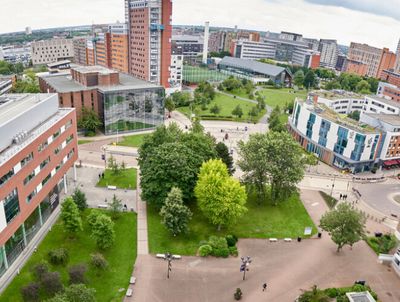
Aston University wins share of £118m funding to accelerate its research impact
The Impact Acceleration Account (IAA) investment over three years focuses on maximising impact, knowledge exchange, translation and commercialisation potential within research organisations Funding allows researchers to unlock the value of their work, including early-stage commercialisation of new technologies The University will receive over £580,000 ‘to accelerate UK bright ideas into global opportunities'. Aston University has won a share of £118m in UK Research and Innovation (UKRI) funding. The Impact Acceleration Account (IAA) investment over three years focuses on maximising impact, knowledge exchange, translation and commercialisation potential within research organisations. Funding allows researchers to unlock the value of their work, including early-stage commercialisation of new technologies and advancing changes to public policy and services such as NHS clinical practice. UKRI, a government body responsible for delivering £8bn research and innovation funding each year, is investing £118 million in the latest round of IAAs to translate research across 64 universities and research organisations. Aston University was successful in gaining both Engineering and Physical Sciences Research Council (EPSRC) and Biotechnology and Biological Sciences Research Council (BBSRC) IAA funding – the latter one of only 15 IAA full awards nationally. Luke Southan, technology transfer manager at Aston University, said: “This funding will be transformational for Aston University’s capacity to get the best good from the research it carries out. “We have a pipeline of world-changing inventions, medical treatments, net-zero initiatives and spinout companies that we can give the greatest chance of success through these highly prestigious pots of funding.” UKRI director of commercialisation, Tony Soteriou, said: “The UK is home to some of the brightest, most innovative and creative research teams in the world. They have the ideas and they have the entrepreneurial energy to create businesses and services that could turn sectors on their head. “What they need, what every great commercial idea needs, is support in the critical early stages. The Impact Acceleration Account is the catalyst that allows projects to grow to the next level, attracting investment, forging partnerships and creating jobs. “The breadth of UKRI allows us to work right across the UK’s world-class research and innovation system to ensure it builds a green future, secures better health, ageing and wellbeing, tackles infections, and builds a secure and resilient world.”


There's some important research taking place by an expert at Georgia Southern University - and the findings could result in serious and positive changes to nutrition for those living in rural, remote and under-served communities in Latina America and around the world. Ana Palacios, Ph.D., assistant professor in the Department of Public Policy and Community Health in the Jiann Ping Hsu College of Public Health, is working on a clinical trial with a community in Honduras to find out whether giving eggs to kids between the age of 6 to 24 months will help them in terms of growth, food security and dietary diversity. Her work was recently featured in Forbes Magazine. "My heart, of course is in Latin American populations, and I have a community-based trial in Honduras that is assessing the effectiveness of an egg intervention," she says, adding that this community-based participatory research project is covering about 600 young children from more than 30 rural under-served communities in the Honduras Highlands. "Some evidence has shown that eggs can improve linear growth in some populations of Latin America," she says, "We are passionate in that this will provide a replicable, inexpensive, scalable and sustainable alternative to improve young children's nutrition, dietary diversity, food insecurity, economic development and overall reduce disparities." Palacios hopes the study will provide a solution that can be used in a wide variety of contexts in under-served rural areas throughout Latin America and the Caribbean, and other regions around the globe. June 16 - Forbes It's a fascinating topic - and research that could truly be impactful on a global scale. The full article about Palacios' work is attached. If you are a journalist looking to know more about this research - then let us help. Palacios' research is focused on addressing disparities in access to nutrition, health, and education in under-served populations. She is available to speak with media - simply reach out to Georgia Southern Director of Communications Jennifer Wise at jwise@georgiasouthern.edu to arrange an interview today.


Professor Jun Du and Dr Oleksandr Shepotylo from Aston University analysed the effects of the end of the Brexit transition period on UK exports This equals to a nearly 16% of UK total exports in the first half of 2019 and 70% of the documented total reduction in the EU exports in the same period The research suggests non-tariff measures (NTMs) are responsible for the fall in trade between the UK and EU. New research by experts at Aston University for the Enterprise Research Centre (ERC) has found that UK exports experienced a large, negative, statistically significant decline in 2021 at the end of transition after the EU-UK Trade and Cooperation Agreement (TCA) was put in force. The TCA is a free trade agreement signed on 30 December 2020 between the European Union (EU), the European Atomic Energy Community (Euratom) and the United Kingdom (UK). Professor Jun Du and Dr Oleksandr Shepotylo used a Synthetic Difference in Differences (SDID) estimator to construct a counterfactual of the UK had it not exited the EU and entered the TCA, to compare its trading performance. This was done by comparing the actual performance of the UK with the modelled performance in 2021 with the same periods of 2018-2020. They also examined the extent to which the overall TCA effect has been due to the increased frictions due to non-tariff measures (NTMs). They estimate that this amounts to a 22 per cent reduction in exports to the EU and a 26 per cent reduction in imports from the EU over the first half of 2021, relative to the counterfactual scenario of the UK remaining in the EU. The research confirmed that NTMs are responsible for the adverse TCA effect on UK trade with the EU and that the magnitude of loss was significant. It was equivalent to a reduction of £12.4 billion in UK exports over the first six months period of 2021, notably in food and drink, wood and chemicals sectors. This equals to 15.6% of UK total exports in the first half of 2019, and 70% of the documented total reduction in the EU exports in the same period. Jun Du, professor of economics at Aston University, lead on internationalisation research at the ERC and director of the Centre for Business Prosperity (CBP), said: “These results underscore the heavy costs of erecting trade barriers on the UK’s side with its largest trade partner. “Trade frictions, due to sanitary and phytosanitary (SPS) measures (measures to protect humans, animals, and plants from diseases, pests, or contaminants), are acute problems due to the EU exit. “Reducing some of the NTMs between the EU-UK, by exploring mechanisms such as equivalence in SPS measures or other ways to reduce businesses’ burden to the minimum level possible. “More complicated and challenging are the technical barriers to trade, but they could potentially cause significant damage to the UK economy. Maintaining and broadening the established arrangements of the current TCA provision, despite being limited, through some form of mutual recognition of specific practices or international regulations for selected sectors, should be the ambition of UK government to ease the TBT (technical barriers to trade). “Future EU-UK co-operation is critical and mutually beneficial but requires political will and strong leadership.” Dr Oleksandr Shepotylo, a senior lecturer in Economics, Finance and Entrepreneurship Department at Aston Business School, co-wrote the working paper and said: “Continued alignment with the EU regulations was a demand from many businesses throughout the Brexit process, and it is expected to be still important post Brexit. This must be conveyed to policy makers. “In the short term, preparedness and adaptability have rewarded and will continue to reward businesses facing challenges and disruptions. The need for learning and training remains paramount. “In the medium and longer term, businesses will have to stay competitive to retain access to the global market, to perform better in it, and to gain more benefit from it. This is the case for all firms even if the ways to achieve it may differ. In addition, businesses need to consider adopting new business models through which they can balance the need for lean production with resilience, as well as weighing up economic, social, and environmental gains. Despite the many considerable challenges, there are boundless avenues where opportunities for breaking through are present.” You can read the full report on the ERC website here.


It Works on TV - Do Property Rehabs Drive Up Prices in Surrounding Neighborhoods?
When a house is distressed, the negative impact tends to ricochet around its surrounding neighborhood. Distressed homes (e.g. foreclosures) can significantly bring down the value of other homes in the area, as these properties are often poorly maintained and then typically sold at discounted prices In the past, and particularly in the wake of the 2008 subprime crisis, federal and local governments sought to mitigate this negative effect by incentivizing the rehabilitation of distressed properties through programs like the Neighborhood Stabilization Program (NSP). Until now, there has been some skepticism as to whether or not these kinds of initiatives actually work. New research by Goizueta Foundation Term Associate Professor of Finance Gonzalo Maturana and Goizueta’s Assistant Professor of Finance Rohan Ganduri might change the narrative definitively. They have analyzed new data that shows that rehabilitation projects not only help to stabilize housing prices in affected neighborhoods but can also actually increase the value of neighboring properties by as much as four percentage points. Using highly robust, non-parametric statistical analysis methods, Maturana and Ganduri parsed more than 10 years of information on rehabilitated property transactions and real estate prices across the United States. The effect of renovating dilapidated or derelict houses in these areas pushes prices up between 2.3 and four percentage points in their surrounding blocks, they find. And that’s not all. While the average amount spent by authorities on these renovations comes in at roughly $36,000, their study estimates a societal welfare gain of $134,000 per rehabilitated property—almost four times the cost of the rehabilitation. These insights should provide interesting food for thought for the U.S. Congress and local governments, Maturana notes. After the housing crash in 2008, Congress allocated $6.9 billion in funding to the NSP to help stabilize communities affected by high vacancy and foreclosure rates, but the Department of Housing and Urban Development didn’t find any positive impact on local housing markets at the time. “Our findings suggest that rehabilitation projects do drive a positive uptick in prices that can help revitalize distressed neighborhoods,” says Maturana. “And they provide very timely support for policy interventions, such as President Biden’s infrastructure spending program which proposes an allocation of $20 billion to rehabilitate 500,000 single-family homes in low-income neighborhoods in the United States.” With the current economy facing some uncertain times - this is a topic that is important for everyone. And if you're a reporter looking to know more then let us help. Gonzalo Maturana is an associate professor of finance at the Goizueta Business School. He is an expert in the areas of corporate, household and real estate finance. Rohan Ganduri's research interests include banking, credit risk, real estate, household finance, and corporate finance. Both Gonzalo and Rohan are available to speak to media regarding this topic – simply click on either icon now to arrange an interview today.



For two years during the COVID-19 pandemic, U.S. public schools have been able to provide free meals for all students, including to-go meals in the summer. But on June 30, 2022, the federal waivers that expanded the school lunch program will expire. In a recent Q&A published by The Conversation, Marlene Schwartz, a professor of Human Development and Family Sciences at the University of Connecticut and the director of the Rudd Center for Food Policy & Health, discusses how these changes will affect children and families and how food pantries can help: What are the effects of making school meals free for all students? The findings are pretty clear that when students have universal free meals, participation in school meals programs goes up, so more children eat them. And research shows that the meals that are provided through the school meal program are of higher nutritional quality than the meals that children bring from home or get from other places. Some studies have found that when you provide universal free meals, you have improvements in academic performance, particularly for students who are at higher risk. There is also evidence in some studies that universal free school meals help improve family food insecurity rates. When a family knows that their child can get breakfast and lunch every day at school, it really allows them to save their food budget to purchase other foods for the house. And that helps them be more food-secure. What is the role of food banks and pantries in shaping the diet and health of vulnerable children and families? Within the charitable food system, there’s been a real shift in thinking that has been a change from giving away as many pounds of food as possible to really looking at the nutritional quality of those pounds. That’s thanks in part to Feeding America, which is a national network of food banks, and Partnership for a Healthier America, which is part of Michelle Obama’s Let’s Move initiative. Both of them are working with food banks around the country to really help them track the nutritional quality of their food and set goals for themselves in terms of maximizing the most nutritious foods they are able to distribute. Dr. Schwartz is an expert on school wellness and nutrition programs and food insecurity. She's available to speak with media - simply click on her icon now to arrange a time today.


Sustainable consumption in the age of CO2
Experts like NJIT’s Maurie Cohen are looking beyond electric cars and alternative sources of energy to combat the rapid rise of carbon dioxide emissions. Their approach is more fundamental and societal, touching everything from the size of our homes to where we work and what we buy. The global pandemic sparked new ways of living and working, bringing previously niche approaches into the mainstream, including: Working from home Tiny houses Local swap meets Live nomadically, work digitally Cohen, co-founder of the international Sustainable Consumption Research and Action Initiative and author of “The Future of Consumer Society,” is no newcomer to such ideas. He has studied sustainable consumption and its relationship to environmental policy for 20+ years, bringing a long-term perspective to addressing the carbon crisis. As seen in stories from Fortune, Fast Company, Vice and Yahoo News, Cohen can speak cogently about the implications of behavioral trends such as Facebook “no buy” groups, digital nomads and the shift toward working from home. To reach Cohen, simply click on the button below.


Studying glaciers . . . from Florida
By Emma Richards On the surface, the University of Florida seems an unlikely place to find cutting-edge research on ice sheets. But Emma “Mickey” MacKie says this is the perfect place for her work — thanks in large part to HiPerGator, one of the fastest supercomputers in higher education. MacKie, an assistant professor of geological sciences and glaciologist, joined UF in August 2021 and said her decision hinged largely on access to HiPerGator and the university’s focus on machine learning and artificial intelligence technologies. MacKie uses machine learning methods to study subsurface conditions of glaciers in polar regions and access to a powerful supercomputer is crucial given the large data sets her research generates. “I'm very happy to be in a place with lots of people who are working on different types of problems and are interested in developing these different tools,” MacKie said. “There are a number of members of my department in geology who are studying glacial geology through different lenses. And so, there's all of this complementary geological and machine learning knowledge at UF that I'm very excited to bring together.” MacKie has set up the Gator Glaciology Lab, where she and a team of seven undergraduate students from the fields of geology, computer science, physics, math and data science are using AI to analyze what lies beneath glaciers and how they are moving and melting. “Our work is part of a bigger effort in the glaciology community to start working on quantifying our uncertainty in future sea-level rise projections so that we can give policy makers this information.” It’s a very difficult challenge, MacKie said, because of limited access to polar regions and the miles-thick ice covering the ground. Then there is the scale of ice sheets; Antarctica, for example, is the size of U.S. and Mexico combined. Measurements of the topography below such glaciers are gathered using radars mounted on airplanes to “see” through ice. Her team then uses HiPerGator to simulate realistic looking topography in places where there are gaps or blank spots in the measurements. They generate hundreds of maps to represent different possible ice sheet conditions, which could be used to determine numerous possible sea level rise scenarios. “Our work is part of a bigger effort in the glaciology community to start working on quantifying our uncertainty in future sea-level rise projections so that we can give policy makers this information,” she said. Earlier this spring, MacKie swapped out her flip-flops for snow boots to study subsurface glacial conditions in Svalbard, which is next to northeastern Greenland. Visiting Svalbard will help her test and develop data collection and analysis techniques that could be applied to Antarctica or Greenland, which both contain large ice sheets that could have serious environmental impacts if they experience significant melting. In Svalbard, MacKie and Norwegian researchers from the University of Bergen and the University Centre in Svalbard took seismic and radar measurements of glaciers that will be used to make estimates about conditions beneath the ice. Among glaciers of concern is the Thwaites “Doomsday Glacier,” which is losing the most ice of any glacier in Antarctica. There are signs showing Thwaites’ ice shelf could start to break in the next few years. MacKie said it will likely be a few hundred years before the glacier could undergo significant collapse and jeopardize the West Antarctica Ice Sheet, leading to several meters of sea level rise. The effects of Thwaites and other ice sheet melts in Antarctica and Greenland will become apparent in decades to come, with the potential for a meter of sea level rise by the end of the century, which MacKie and other researchers hope to predict more accurately. “The state of Florida has the most to lose when sea level rises,” she said in an episode of the From Florida podcast. “And so, I think we have a lot of skin in the game and it’s really important to be studying this question here in Florida.” To hear more about MacKie’s work, listen to From Florida at this link.


Expert opinion: Why aren't mass shootings considered acts of terrorism?
With tragic news of a mass shooting in Buffalo this past weekend, and along with it evidence that the massacre was racially motivated, some leaders and citizens alike are calling to have this crime considered an act of terrorism. Though that may be the immediate reaction of some, Augusta University's Dr. Lance Hunter, associate professor of political science in the Katherine Reese Pamplin College of Arts, Humanities, and Social Sciences, explains why there's a lot to consider before rushing to brand an action as terrorism. “We argue that it’s very important to consider these acts of domestic terrorism if they fit the definition, because it’s easier for governments to monitor individuals that may possibly carry out these attacks,” said Hunter. “Looking at the incident in Buffalo, in my estimation and based on the evidence that I’ve seen, it fits all the criteria to be considered a form of domestic terrorism.” If that's the case, then why are people reluctant to consider mass shootings an act of terrorism? “I think individuals at times tend to have a preconception that terrorism tends to be something that’s carried out by ISIS or Al Qaeda, or a group of organizations such as that, and if it’s an individual outside of those organizations, it may not be considered terrorism. But when you look at the actions, they clearly fit the criteria for terrorism. Secondly, I think it’s the form of the attack type that does matter a lot, regarding people’s perceptions.” When it comes to domestic terrorism, what about privacy rights? What about an invasion of privacy? "We’re not arguing to create a policy saying we are constantly monitoring people for no reason at all," said Hunter. "What we’re arguing is someone who’s showing extremist tendencies and then also a tendency to possibly violently harm people, are there warning signs? In a lot of cases of mass murders, there are warning signs. If these individuals are monitored more closely, it’s not 100% guarantee these attacks will be prevented, but the likelihood will be much greater it could have possibly been prevented and we’ve seen this throughout a lot of cases and our research.” Dr. Lance Hunter is an assistant professor of political science with a background in international relations. His research focuses on how terrorist attacks influence politics in democratic countries and how political decisions within countries affect conflicts worldwide. Hunter is available to speak with media about this important topic - simply click on his icon to arrange an interview today.


The Centre for Research in Ethnic Minority Entrepreneurship (CREME) has partnered with NatWest for the Time to Change report It sets out ten evidence-based recommendations for advancing the growth potential of ethnic minority businesses (EMBs) including increasing their GVA contribution from the current £25 billion a year to £100 billion The report is being launched at a special event on 10 May at NatWest Conference Centre in London with keynote speaker Sir Trevor Philips OBE. A new report from Aston University has set out a plan for advancing the growth potential of ethnic minority businesses (EMBs) in the UK. The Centre for Research in Ethnic Minority Entrepreneurship (CREME) has partnered with NatWest for the Time to Change report which sets out ten evidence-based recommendations to promote greater success and inclusion of ethnic minority businesses (EMBs) in finance and business support in the UK. Experts say the implementation of the recommendations could help tackle the multiple barriers faced by EMBs, particularly in accessing finance, markets and quality business support, and could increase their GVA contribution from the current £25 billion a year to £100 billion, highlighting the significant potential of EMBs to the UK economy. The report says that to combat racial inequality, there should be a UK-wide support for ethnic led businesses should be a standard feature of all future plans. This includes integrating them into broader policy agendas of inclusive growth, productivity and innovation. A more inclusive approach to enterprise is key to tackling wider social structural barriers such as unequal access to employment opportunities and product markets, and gender and ethnicity pay gaps. Concerted action is needed to support the growth ambitions of EMBs, particularly in light of damaging consequences of the pandemic for ethnic minority communities. The report calls for a strong action to eliminate the longstanding challenge of discouragement of ethnic minority entrepreneurs from seeking finance and business support. It found EMBs have been particularly hit hard by the Covid-19 pandemic due to the sectors in which they tend to operate and recommends recovery support is focussed on the businesses that need it most. The report also highlights the need for greater accountability of organisations across public, private and third sectors, including business support agencies, finance providers and large purchasing organisations, for their business engagement with EMBs. Professor Monder Ram, director of the Centre for Research in Ethnic Minority Entrepreneurship at Aston Business School, said: “This major report sets out an ambitious yet practical agenda to realise the potential of UK’s ethnic minority businesses. “The entrepreneurial ambition of ethnic minorities can play a crucial role in the UK Government’s vision of ‘Levelling Up’ prosperity across regions, promoting trade opportunities of ‘Global Britain’ and creating a more cohesive society. “Drawing on the latest research and examples of international best practice, the report presents a comprehensive approach to tackling the barriers faced by firms owned by ethnic minority communities. “We pinpoint key challenges and present recommendations – informed by extensive consultation with business support practitioners and entrepreneurs – that invite policy-makers, corporations and entrepreneurs to collaborate in a new partnership to advance entrepreneurial activities and the UK’s diverse communities.” The report calls for central government and local decision makers to develop clear objectives for inclusive entrepreneurship, informed by evidence, and ensure that EMBs can access quality business support that helps them grow. Dr Eva Kašperová, a research fellow at CREME, said: “To address the barriers faced by EMBs and help them realise their entrepreneurial potential will require commitment and leadership from the government as well as local business support ecosystem actors. “The current lack of an explicit UK-wide policy on inclusive entrepreneurship could mean that some parts of the country are left behind in terms of tackling structural inequalities and enabling entrepreneurs from ethnic minority communities and other under-represented or disadvantaged groups to access finance, wider markets and quality business support. “If past experience is a guide, ensuring commitment from key stakeholders may be the biggest challenge.” Andrew Harrison, head of Business Banking at NatWest Group, said: “As the UK’s biggest bank for business, we’re committed to championing small businesses and supporting growth, but we know that there are barriers which disproportionately affect Ethnic Minority Businesses (EMBs). “This is why we aim for at least 20% of the places on our 13 nationwide accelerator hubs to be for ethnic minority entrepreneurs. In 2021, 26% of businesses in our hubs were EMBs. “Only close collaboration can deliver meaningful change to ensure EMBs get the support they need to reach their full potential. Now is the time to accelerate action, and at NatWest we commit to playing an integral role in the change that is required.” The Centre for Research in Ethnic Minority Entrepreneurship (CREME) will share this report, inviting policy-makers, corporations and entrepreneurs to come together in a collaborative and strategic partnership to champion enterprise and advance entrepreneurial activities and the UKs diverse communities, further building an inclusive entrepreneurial eco-system supporting businesses to thrive at a launch event at NatWest Conference Centre in London on 10 May.


How should we measure faculty expertise? This week the UK provides its answer to this question via its highly significant and formal (government-directed) assessment of academic research - which grades academic teams on a scale of 1* to 4* for their ability to deliver, share and create impact globally outstanding research. This process is known as the REF (the Research Excellence Framework) - and the results will be publicly released this Thursday (12th May) with universities themselves finding out how they’ve performed in advance today (Monday 9th May). The process was last carried out 8 years ago and has been delayed by a year due to the pandemic. Why is the Research Excellence Framework (REF) Significant? The Research Excellence Framework steers the level of UK public funds - allocated via research councils - that will be invested in research for each academic department (or so-called “Unit of Assessment”) for the next few years. It is also a way of comparing performance against other universities that are offering similar research expertise, and of strengthening (or weakening) global research reputations. During the next three days, UK universities will be digging into the detail of their REF gradings and the accompanying feedback. There will be some very nervous university leaders and research heads delving into why this peer-assessed review of their research has not gone as well as they expected and why their percentages in each of the four grade areas have dropped - or even been given the “unclassified” career-damaging stamp. How are the REF Scores for Universities Determined? The measurement process is based on three aspects: Quality of outputs (such as: publications, performances, and exhibitions), Impact beyond academia The environment that supports research The preparation, participation, and assessment process takes a massive amount of time, attention and energy. Last time (2014) there were 1,911 submissions to review. Research teams, designated REF leaders and senior staff will have spent long hours across many months preparing their submissions and making sure they are presenting hard evidence and the best case possible to meet the above criteria at the highest possible level. There are 34 subject areas that are covered in the latest REF - and three tiers of expert panels (some with about 20 or more senior academics, international subject leaders, and research users) will have reviewed each submission and compared notes to come to decisions. How do these Key Categories within the REF Contribute to the Rating for a University? The Research Excellence Framework is actually an intensive and highly important approach to expert assessment. These are the key factors and their definitions (with the assigned weighting of each of the criteria in steering final grades): Outputs (60%): the quality of submitted research outputs in terms of their ‘originality, significance and rigour’, with reference to international research quality standards. This element will carry a weighting of 60 per cent in the overall outcome awarded to each submission. Impact (25%): the ‘reach and significance’ of impacts on the economy, society, culture, public policy or services, health, the environment or quality of life that were underpinned by excellent research conducted in the submitted unit. This element carries a weighting of 25 per cent. Environment (15%): the research environment in terms of its ‘vitality and sustainability’, including the approach to enabling impact from its research, and its contribution to the vitality and sustainability of the wider discipline or research base. This element accounts for 15 per cent. Taking a Closer Look at the Categories - Are We Focusing Enough on Research Impact? In 2014 a formal review was carried out in order to improve and evolve the REF process which made a number of recommendations. Most notably the weighting for “impact” was increased by five percent, with “outputs” being reduced by the same percentage. This is certainly a recognition that the external contribution difference that research makes is more important - but is it enough? Should there be greater emphasis on the return on investment from a beneficiaries and user experience perspective? Many argue that academic research should retain a strong element of ‘”blue sky” experimentation - where outright evidence of impact may take several years (even decades) and so can’t demonstrate such immediate value. A particularly notable benefit of the timing of the COVID-19 pandemic and the effect of this in REF deadlines has allowed the extended assessment period for ‘proof of impact’ from 1 August 2013 to 31 December 2020. This is an extension from the previous end date of 31 July 2020. The extension has been put in place to enable case studies affected by, or focusing on the response to, COVID-19 to be assessed in REF 2021. Going back to the original question: how should we measure faculty expertise? It will be interesting to monitor the views and responses of university leaders and faculty members at the end of this week as to whether they feel that - standing back from it all - this UK-centric method of measurement is the best that can be done, a neat compromise or isn’t really what we really need. For more information on the Research Excellence Framework visit www.ref.ac.uk/ Justin Shaw Justin is UK and Ireland Development Director for ExpertFile and Chief Higher Education Consultant at Communications Management. An authority on University strategy and communications, he has worked in and with leadership teams at UK universities for over 30 years. In his role he has advised universities on how to promote their expertise and on communications strategies related to the REF.