
Experts Matter. Find Yours.
Connect for media, speaking, professional opportunities & more.
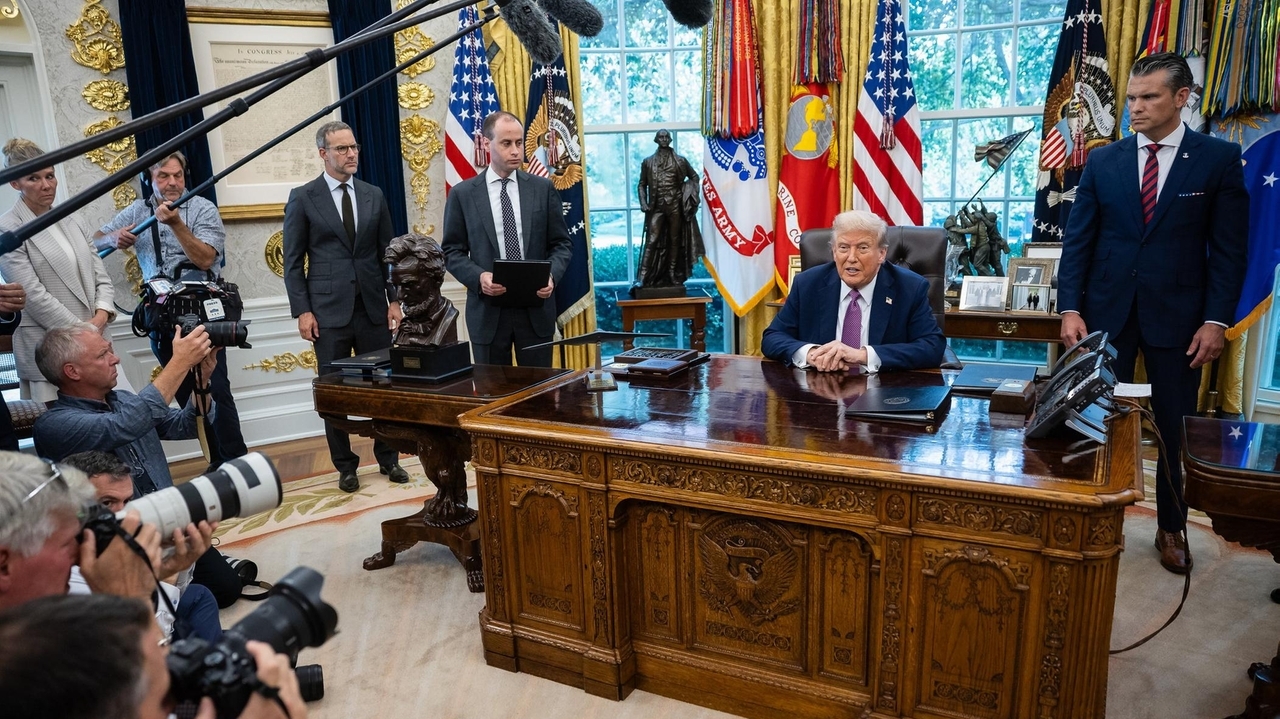
President Plans to Launch More of His Agenda in Year 2 of His Term
Newsday interviewed Hofstra presidential scholar Meena Bose about the issues President Donald Trump is most focused on in this second year of his second term. In the article, Dr. Bose explained, “In the modern presidency the window of opportunity for action is greatest in the first 12 to 18 months.” After that period the midterms and the focus on the next presidential election, “start to overshadow policy and legislative prospects.” Dr. Bose is a Hofstra University professor of political science, executive dean of the Public Policy and Public Service program, and director of the Kalikow Center for the Study of the American Presidency.



When Betting Goes Mobile: The Hidden Cost to Young Adults’ Finances
As online gambling and sports betting surge across the United States, concerns are mounting about the financial and social consequences—particularly for young people. Dr. Jared Pincin, Associate Professor of Economics at Cedarville University, offers journalists a data-driven economic lens on how the rapid expansion of digital gambling is reshaping personal finances and increasing financial risk among younger Americans. What's Happening Mobile betting apps have transformed gambling into an always-available activity, accessible anywhere and at any time. With aggressive marketing tied to professional and collegiate sports, online gambling has become normalized—especially among young adults. As participation rises, so do reports of debt, financial instability, and problem gambling, raising questions about consumer protection, regulation, and long-term economic impact. Dr. Jared Pincin primary research interests explore the intersection of public choice economics with foreign aid as well as issues in sports economics. Pincin has published in popular publications such as The Hill, Real Clear Markets, Foxnews.com, and USA Today and scholarly journals such as Oxford Development Studies, Applied Economic Letters, and the Journal of Sport and Social Issues. View his profile here Key Insights Online Gambling Is Built for Continuous Spending Modern gambling platforms are designed to encourage repeated engagement. Gamified interfaces, instant wagers, and constant prompts make it easy for users to lose track of spending, increasing the likelihood of financial loss over time. Young Adults Face Elevated Risk Young people, particularly college-age students and adults in their twenties, are among the fastest-growing users of online betting platforms. Limited financial experience, combined with easy credit access and social pressure, makes this group especially vulnerable to poor financial outcomes. Personal Finances Are Directly Impacted Gambling losses often come at the expense of savings, rent, tuition, and long-term financial planning. Dr. Pincin emphasizes that gambling platforms generate profit only when users lose, making sustained participation a negative-sum financial activity for individuals. Economic Incentives Drive Expansion From an economic standpoint, gambling growth is fueled by state revenue incentives and private profit motives. Dr. Pincin helps explain how these incentives can conflict with consumer well-being, particularly when regulatory safeguards lag behind technological innovation. About Jared Pincin Dr. Jared Pincin is an Associate Professor of Economics at Cedarville University. He holds a Ph.D. in economics and specializes in public choice, behavioral economics, and sports economics. His work examines how incentives shape individual decision-making and how policy choices affect financial outcomes at both the personal and societal levels. Let Us Help with Your Coverage Jared Pincin can assist reporters by: Explaining why online gambling participation has risen so quickly among young people Breaking down the economic mechanics of betting platforms and personal financial risk Providing context on the long-term financial consequences of habitual gambling Contributing expert insight to stories on regulation, advertising, and consumer protection Why This Matters As gambling becomes increasingly embedded in American culture, its financial consequences are no longer limited to isolated cases. Understanding how online gambling affects young people’s financial stability is essential for informed public reporting. Dr. Pincin offers clear, accessible analysis that helps audiences understand the economic realities behind the headlines.



As tensions escalate over the possibility of the United States seeking control of Greenland — including threats of annexation that have drawn international backlash — seasoned international relations expert Glen Duerr, Ph.D. offers critical context for journalists reporting on the diplomatic, legal, and geopolitical dimensions of this unfolding crisis. What's Happening In early 2026, high-level rhetoric from U.S. political figures has revived debates about Greenland’s status as a strategic territory. What began as discussions of acquisition has evolved into broad international concern over sovereignty, alliance cohesion, and Arctic security. Denmark and Greenland have reaffirmed their commitment to autonomy, while NATO allies and the European Union warn that any forceful move by the U.S. could undermine alliance unity and violate international norms — raising profound questions about territorial integrity, international law, and the politics of national interest. Dr. Glen Deurr's teaching and research interests include nationalism and secession, comparative politics, international relations theory, sports and politics, and Christianity and politics. View his profile here How Dr. Glen Duerr Can Help Journalists Cover This Story 1. Understanding Strategic National Interests Dr. Duerr’s expertise in international relations provides journalists with a framework to explain why Greenland has become such a focal point for U.S., European, and Arctic security policy — from its strategic location to its role in broader defense calculations. 2. Explaining Nationalism, Sovereignty & Self-Determination His research on nationalism and secession is especially relevant as Greenlanders and Danish authorities assert self-determination and reject external control, a central narrative in the current debate. 3. Contextualizing International Norms & Legal Constraints As commentators and policymakers discuss potential annexation, treaty obligations, and alliance commitments, Dr. Duerr can unpack how international law, treaties (such as NATO agreements), and norms against territorial conquest shape policy choices and diplomatic responses. 4. Making Sense of Geopolitical Fallout With European leaders labeling aggressive claims as a form of “new colonialism” and threatening economic countermeasures, Dr. Duerr can help journalists interpret how Greenland could become a flashpoint affecting transatlantic relations, alliance politics, and global perceptions of U.S. foreign policy. About Glen Duerr, Ph.D. Dr. Glen Duerr is a Professor of International Studies at Cedarville University with deep expertise in international relations theory, nationalism, secession, and comparative politics. He holds a Ph.D. in Political Science and Government and is widely available to speak with media on geopolitics, sovereignty disputes, and the intersection of national interest and international order. Why This Matters The evolving crisis over Greenland is not merely a diplomatic dispute — it touches on fundamental questions of sovereignty, global strategic balance, alliance credibility, and international legal norms. Dr. Duerr is positioned to help journalists go beyond headlines, offering analysis that clarifies motivations, stakes, and implications for audiences tracking one of the most talked-about international issues of 2026.


Why homelessness is more than a housing issue for students
More than 4,400 students in Delaware were identified as experiencing homelessness during the 2022–23 school year, a number that continues to rise. Ann M. Aviles, associate professor in the University of Delaware’s College of Education and Human Development, studies education equity, social policy and services for children and families. She is co-author of a new book, "Serving Students Who Are Homeless: A Resource Guide for Schools, Districts, Educational Leaders, and Community Partners", which offers practical guidance for educators navigating the challenges of student homelessness. Nationwide, more than 1.3 million school-aged children experience homelessness annually. While housing instability is often viewed as a social services issue, research shows it has direct and profound consequences for student learning, engagement and well-being. Housing instability affects every aspect of a student’s daily life. Students may be worried about where they will sleep, whether they will have food or how they’ll get home after school. That uncertainty makes it much harder to focus on learning, Aviles said. A key recommendation in Aviles’ new book is stronger collaboration between schools and community organizations. She encourages districts to develop community resource maps that identify local food pantries, shelters, health providers and other support services. She also emphasizes the importance of public understanding of homelessness as a systemic issue shaped by policy, affordability and access to services. To speak with Aviles further, email mediarelations@udel.edu.

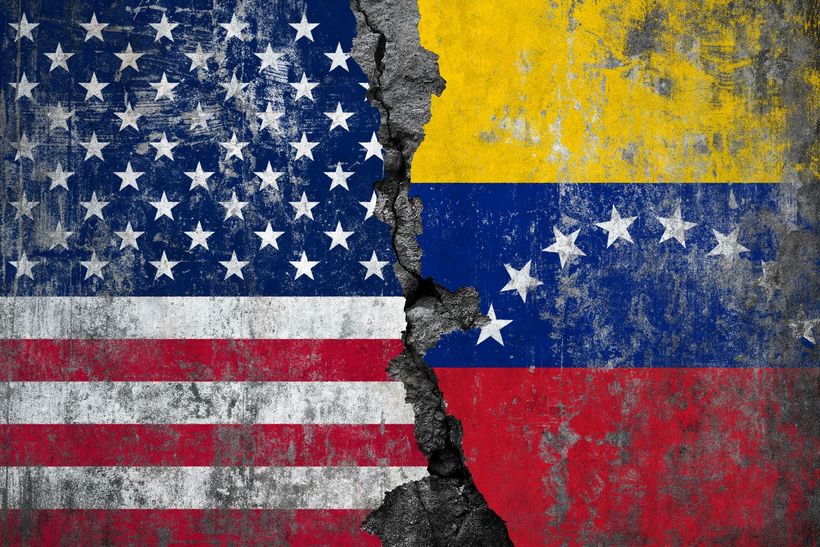
Venezuela: Why Regime Change Is Harder Than Removing A Leader
With global attention on Venezuela following the U.S. removal of Nicolás Maduro, one of the central questions is whether taking out a leader actually changes the political system that put him in power. Two University of Rochester political scientists — Hein Goemans and Gretchen Helmke — study different sides of this issue, and can shed light on why authoritarian regimes often survive even when leaders fall and what the U.S. intervention means for Venezuela and the world order. Goemans specializes in how wars begin and end, regime survival, and why so-called “decapitation strategies” — removing a leader without dismantling the broader power structure — so often fail to produce stable outcomes. His research draws on cases ranging from Iraq and Afghanistan to authoritarian regimes in Latin America. In a recent interview with WXXI Public Media, Goemans warned that removing Maduro does not resolve the underlying system of military and economic control that sustained his rule. Without changes to those institutions, he said, power is likely to remain concentrated among the same elite networks. “The problem isn’t just the leader,” Goemans explained. “It’s the structure that rewards loyalty and punishes defection. If that remains intact, the politics don’t fundamentally change.” Helmke, a leading scholar of democracy and authoritarianism in Latin America, emphasizes that legitimacy, not just force, determines whether democratic transitions take hold. Her research helps explain why democratic breakthroughs so often stall after moments of dramatic change, and why outside interventions can unintentionally weaken domestic opposition movements by shifting power toward regime insiders. “When the institutions and elites remain in place, uncertainty — not democratic transition — often becomes the dominant political reality,” she said. For journalists covering the fast-moving situation, Goemans and Helmke are available to discuss why removing leaders rarely brings the political transformation policymakers expect and what history suggests comes next. They can address: • Why regime-change operations so often backfire, even when dictators are deeply unpopular • What sidelining democratic opposition means for legitimacy • Whether U.S. claims that Maduro is illegitimate hold up under international and U.S. law • How prosecuting a foreign leader in U.S. courts could reshape norms of sovereignty • The risks the U.S. intervention poses to the rules-based international order and NATO • How interventions affect international norms, including sovereignty and the rule of law, and why short-term tactical successes can create long-term strategic risks. • Why treating global politics as a series of “one-off” power plays misunderstands how states actually enforce norms over time • How competing factions inside the U.S. administration may be driving incoherent foreign policy Geomans also brings rare insight into the internal dynamics of U.S. policymaking, having taught and observed Stephen Miller, one of President Donald Trump’s closest aides who is helping shape the administration’s worldview. (Goemans taught Miller at Duke University in 2003.) Click on the profiles for Goemans and Helmke to connect with them.



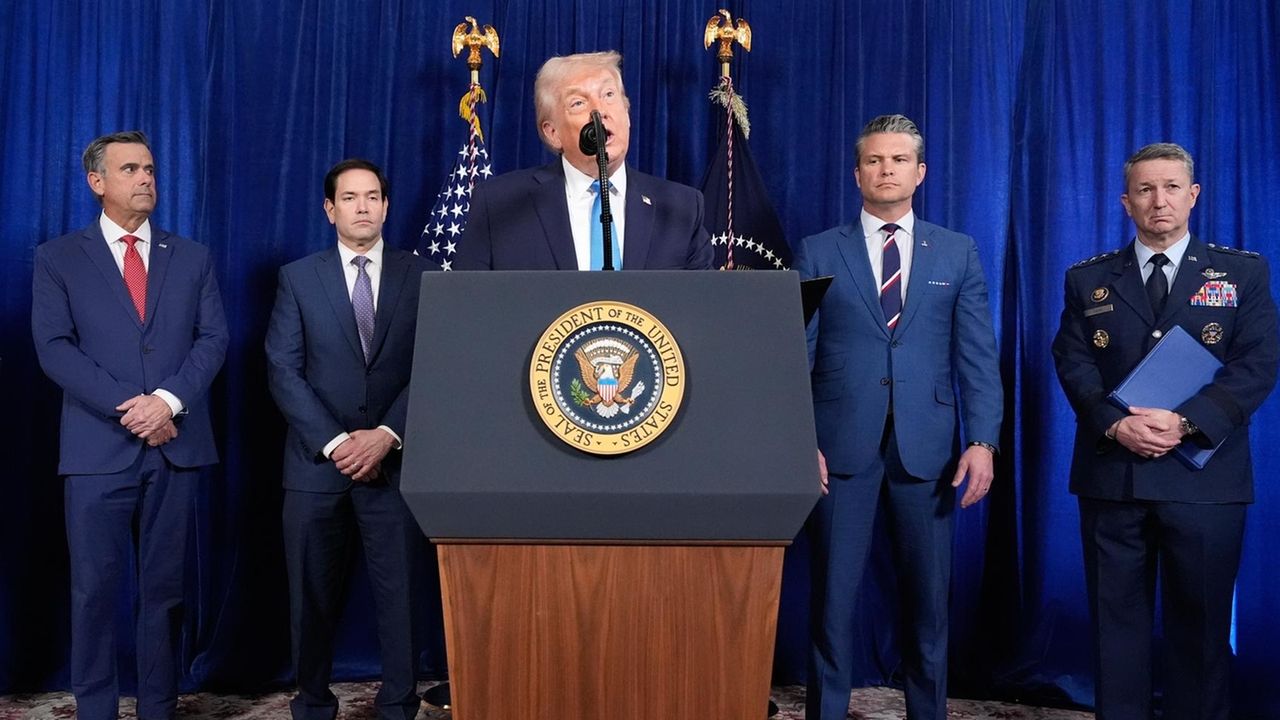
Is Maduro Ouster In Line with Trump’s “America First” Mantra?
In an article about the U.S.-led ouster of Venezuelan leader Nicolás Maduro, Dr. Meena Bose told Newsday that President Donald Trump’s foreign policy positions have undergone an “evolution” between his first and second terms. “When he first ran for president and started campaigning in 2015, he was very much opposed to U.S. intervention abroad,” said Dr. Bose. “His America First policy was very much against the Iraq War. He called for … economic U.S. primacy in the world, but to also kind of step back from direct engagement. And yet, we’ve seen multiple efforts from the first term and the second where the administration has been engaged in airstrikes and military action abroad.”

Always On, Never Present: How Work Takes Over Your Life
In many workplaces, being “good at your job” has quietly become synonymous with being constantly reachable. Slack on the laptop, email on the phone, DMs on every platform and a creeping expectation that you’ll answer “just one more thing” at night, on weekends, and even on vacation. Psychotherapist Harshi Sritharan, MSW, RSW and Offline.now founder Eli Singer say this culture is pushing knowledge workers into a state of continuous partial attention: always connected, never fully present. “Most of my high-performing clients don’t have a time-management problem,” says Sritharan. “They have a boundary problem — and their phones are the device enforcing it. Every ping is a tiny dose of dopamine and a tiny spike of stress, and their nervous system never really shuts off.” Research on digital and media multitasking backs up what she sees clinically. Studies have linked frequent task-switching between apps and notifications to: Reduced sustained attention and working memory Slower task performance and more errors Greater mental fatigue and perceived stress Neuroscience and cognition papers also describe how multitasking conditions the brain to seek novelty and micro-rewards, making it harder to tolerate the “boredom” of deep work — exactly the kind of focus most knowledge jobs actually require. Singer argues that the issue isn’t just individual burnout; it’s organizational self-sabotage. Offline.now’s behavioral data show that people now spend about 10 of their 16 waking hours on screens — roughly 63% of the day — and that 8 in 10 want a healthier relationship with tech but feel too overwhelmed to know where to start. “We’ve built workplaces that confuse constant availability with value,” Singer says. “But when you look at the cognitive science, an always-on culture is actually an anti-productivity policy. ‘Do Not Disturb’ isn’t a luxury — it’s the competitive advantage most teams are missing.” The term “continuous partial attention” coined to describe the state of being perpetually attuned to the possibility of new information has been linked in emerging research and commentary to chronic stress, shallow thinking, and emotional exhaustion in modern knowledge work. “The moment you stop treating rest and focus as perks and start treating them as infrastructure, everything changes,” Singer says. “Teams ship better work, people make fewer mistakes, and employees don’t feel like they have to burn their nervous system to keep their job.” For journalists covering work culture, productivity, burnout, or the future of work, this story connects the dots between work apps, multitasking science and mental health and offers a concrete alternative to the “always on” norm. Featured Experts Harshi Sritharan, MSW, RSW – Psychotherapist specializing in ADHD, anxiety, burnout and digital dependency. She helps high-achieving professionals understand how constant notifications, late-night work and screen habits disrupt dopamine, sleep, and emotional regulation — and what sustainable boundaries actually look like. Eli Singer – Founder of Offline.now and author of Offline.now: A Practical Guide to Healthy Digital Balance. He brings proprietary behavioral data on digital overwhelm, the Offline.now Matrix framework, and case examples of organizations reframing “Do Not Disturb” as a strategic asset, not a sign of disengagement. Expert interviews can be arranged through the Offline.now media team.




Power, Politics, and Petroleum: The Story of Venezuela
After gaining independence from Spain in the early 19th century under the leadership of Simón Bolívar, the country spent much of the next century marked by political instability and military rule. Everything changed in the early 20th century with the discovery of vast oil reserves, which rapidly transformed Venezuela into one of the world’s leading petroleum exporters and shifted power toward a centralized state funded almost entirely by oil revenue. By the mid-20th century, oil had become both Venezuela’s greatest asset and its greatest vulnerability. Democratic governments that emerged after 1958 used oil income to expand social programs and infrastructure, but also built an economy dangerously dependent on a single commodity. When oil prices fell in the 1980s and 1990s, economic inequality and public frustration surged, creating the conditions that brought Hugo Chávez to power in 1999. Chávez reoriented the political system around a state-controlled oil sector, using petroleum revenues to fund social initiatives while consolidating political authority and weakening independent institutions. Under Chávez and his successor Nicolás Maduro, oil remained the backbone of the state—but declining production, corruption, and mismanagement hollowed out the industry itself. As oil revenues collapsed, so did public services, democratic norms, and economic stability. Venezuela’s history illustrates a central paradox: immense natural wealth paired with fragile governance. Control of oil has repeatedly shaped political power, domestic policy, and Venezuela’s relationship with the world—making energy inseparable from the country’s political story. Journalists covering Venezuela, Latin American politics, energy markets, or resource-driven economies are encouraged to connect with experts who can provide historical context, explain the role of oil in shaping political outcomes, and assess how Venezuela’s past continues to influence its uncertain future. Our experts can help! Connect with more experts here: www.expertfile.com

Maduro is gone; expert details potential impact on the Caribbean
Globally, the ousting of Nicolás Maduro in Venezuela has been met with a mix of reactions and cautious optimism. The University of Delaware’s Kalim Shah can discuss how regime change will play across the Caribbean and the spillover effect that will ripple throughout the region – and the world – in the years and decades to come. Shah, professor of energy and environmental policy and an expert on the island nations of the Caribbean, says that although public statements have been muted and restrained, there is a shared understanding. “For small island states that have absorbed the effects of Venezuelan collapse for more than two decades, this moment represents the possible end of a long and destabilizing chapter,” Shah said. Caribbean governments are not celebrating regime change, Shah said. Rather, they are responding to the prospect of reduced systemic risk. “A Venezuela that no longer exports large-scale displacement, opaque energy leverage and permissive criminal governance is objectively preferable for the region.” Shah can discuss several aspects of Venezuela’s political history, how the nation has arrived where it is, where it might be headed and the impact this will have on the Caribbean as a whole. Those include: • Venezuela’s political and economic deterioration during the Chávez–Maduro era and how that has translated directly into pressures felt across the Caribbean in the form of migration, fiscal exposure, security risks and regional uncertainty. • How the nation’s institutional collapse coincided with deepening organized crime activity across the Caribbean basin. Data from the United Nations Office on Drugs and Crime consistently places the region within major cocaine trafficking corridors linking South America with North American and European markets. For Caribbean governments, this meant higher interdiction costs, increased exposure to transnational criminal networks and growing pressure on already limited security institutions. • This moment invites a reassessment of China’s expanding footprint in the Caribbean, Shah says. He can discuss the ways in which Beijing has deepened its presence throughout the region. Shah says that as this transition unfolds, five policy developments will determine whether the cautious optimism proves warranted: • The impact on Venezuelan outward migration to the Caribbean. • Whether Caribbean public systems receive durable support rather than short-term humanitarian fixes. • Organized crime and drug trafficking pressures in the Caribbean basin. • External security engagement in the Caribbean. • Whether the region avoids a return to dependency-driven energy and infrastructure politics. “For the Caribbean, hope today is not naïve. It is conditional. The Chávez–Maduro years imposed real costs on the region. Their end creates an opening…but only if policy follows through,” Shah said. To contact Shah directly for interviews, visit his expert page and click on the "contact" button. Interested reporters can also send an email to mediarelations@udel.edu.

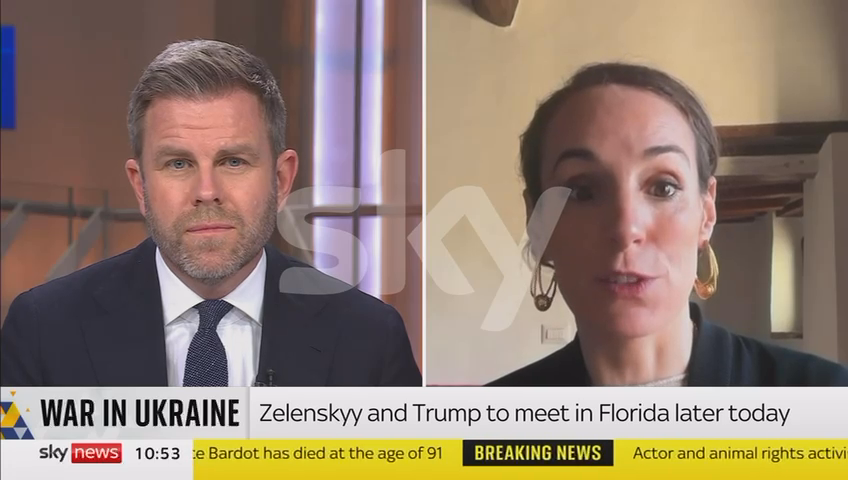
In a recent interview, Livia Paggi of J.S. Held discussed the implications of reported discussions between President Donald Trump and President Volodymyr Zelensky about a potential peace plan aimed at ending the war in Ukraine. The conversation focused on what these talks signal politically, what pressure points may be shaping each leader’s approach, and why the timing and framing of any “peace plan” matters as much as the details themselves. Paggi emphasized that peace-plan conversations at this level often have multiple audiences at once: domestic political constituencies, international allies, and adversaries assessing resolve and leverage. She explored how diplomatic positioning can influence the credibility of negotiations and how public messaging, even before formal agreements exist, can shift perceptions on the battlefield, at the negotiating table, and across NATO-aligned capitals. The interview also examined the risks embedded in any peace-plan narrative. Paggi highlighted that negotiation efforts can introduce uncertainty for markets, governments, and populations when expectations outpace realities. She discussed how the mechanics of ending a war extend beyond a headline announcement, including enforcement, guarantees, verification, and the long-term stability of whatever framework is proposed. When we look at what Trump is likely to do, he's going to try to go back and forth, favor different political actors and see what he can do to unlock the situation. A copy of the full interview is below: For journalists following the Ukraine war, shifting diplomatic strategies, or the real-world consequences of peace negotiations, Livia Paggi offers a clear, practical lens on what these discussions could mean next. Her perspective helps reporters move beyond political theatre and toward the key questions: what’s being signaled, who gains leverage, what conditions would make an agreement durable, and what risks emerge if the process breaks down. Looking to connect with Livia Paggi? Livia is a sought-after speaker and regularly provides commentary on global political trends for the media, including for the BBC, Bloomberg TV, CNN, and the Financial Times. Livia is the recipient of numerous awards for her work. Most recently, she was named by Management Today as one of Britain’s top women in business under 35 and Bloomberg TV named her as one of the top female foreign policy commentators. Click on her profile icon to arrange an interview or get deeper insights into geopolitical risk, government relations, and business impacts.

